
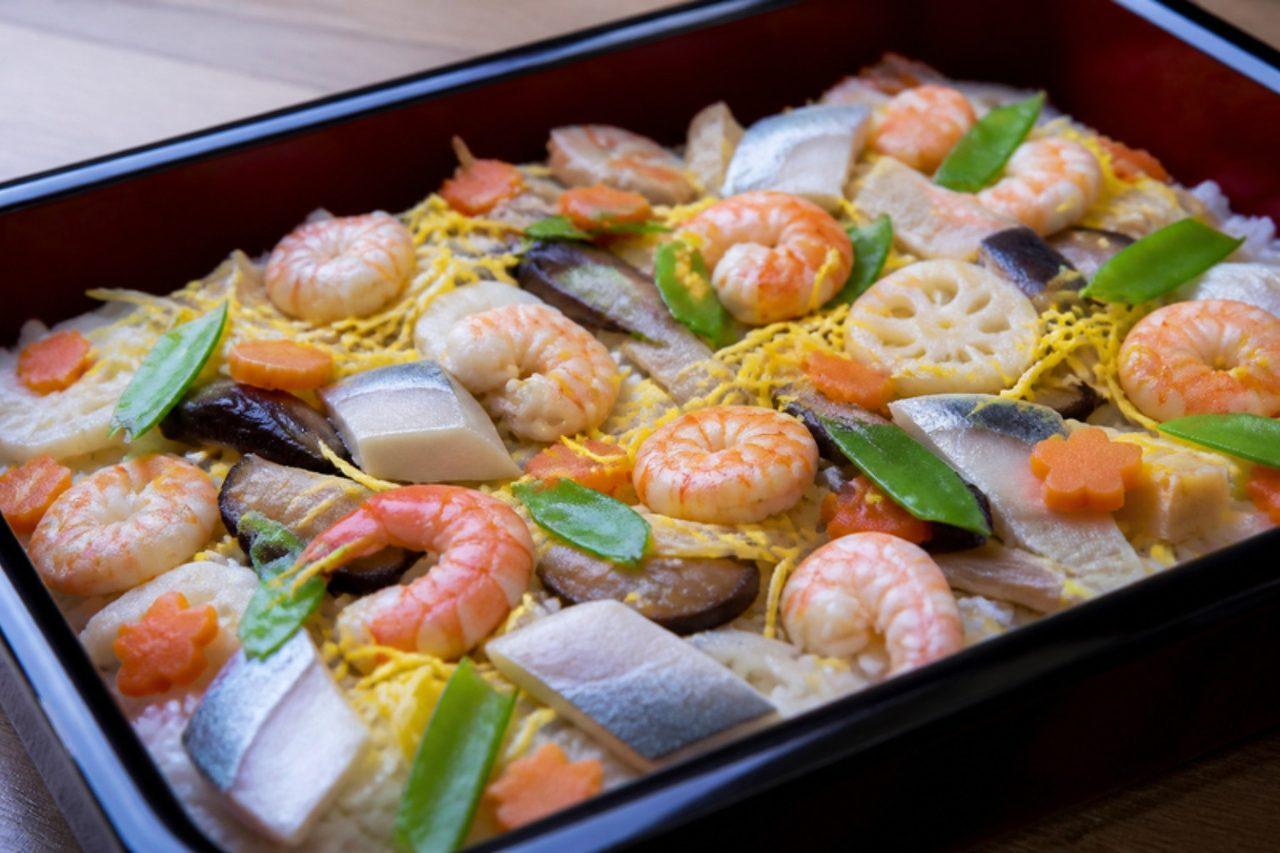
AI-generated image
Okayama barazushi
ばら寿司: festive scattered sushi with simmered vegetables, prawns, squid, egg threads and vinegared mackerel
Okayama families make a big shallow platter of barazushi for the autumn shrine festivals, Girls' Day in March and other celebrations, and it is sold in station lunch boxes all year. A local story says it began when a lord ordered people to eat only one side dish, so cooks hid everything in the rice instead. The seasoned rice is mixed with simmered vegetables and topped with seafood from the Seto Inland Sea. This version uses cooked prawns, gently simmered squid and egg threads, plus ready-made vinegared mackerel, which is cured but not cooked. Use very fresh, sushi-grade fish from a trusted fishmonger; not for pregnant women, young children or anyone with a weakened immune system. Leave the mackerel out, or add extra prawns, to make it fully cooked. Chef's tip: fold the vinegar into the rice while it is hot and fan it as you go; the rice soaks up the seasoning and turns glossy instead of wet.
- Total time
- 60 min
- Difficulty
- medium
- Serves
- 4
Ingredients
For the sushi rice
For the simmered vegetables
For the toppings
Method
0/16 doneStep 1: Rinse the 16 oz Japanese short-grain rice until the water runs almost clear and drain. Put it in a pan with the 2 ¼ cups water and ⅛ oz kombu (dried kelp) and soak for 20 minutes while you prepare the vegetables.
20 minStep 2: Lift the 4 dried shiitake mushrooms from their water (keep 150 ml of it), cut off the stems and slice thinly. Put them in a small pan with the 1 carrot, the saved soaking water, 2 tbsp soy sauce, 1 ½ tbsp sugar and 1 tbsp mirin. Mirin adds a little alcohol, most of which cooks off; for alcohol-free, use 1 extra teaspoon of sugar instead.
Step 3: Simmer the vegetables over a medium heat for 10 to 12 minutes, until the liquid has almost gone and the carrot is tender. Leave to cool.
12 minStep 4: In another small pan, simmer the 3 ½ oz lotus root slices in 100 ml water with the 2 tbsp rice vinegar, for the lotus root and a pinch of the sugar for 3 minutes, until crisp-tender and white. Drain.
3 minStep 5: Cook the rice: remove the kombu, bring to the boil, cover, cook over the lowest heat for 13 minutes, then rest off the heat, covered, for 10 minutes.
23 minStep 6: While the rice cooks, stir the ¼ cup rice vinegar, 3 tbsp sugar and 1 ½ tsp salt together in a jug until dissolved.
Step 7: Boil the 12 raw king prawns, peeled with tails on in salted water for 2 minutes, until pink all over and opaque right through. Lift out with a slotted spoon.
2 minStep 8: Drop the 5 ½ oz cleaned squid tubes rings into the same water for 1 minute, just until they turn opaque white and firm slightly. Drain. Overcooked squid turns rubbery, so do not leave it longer.
1 minStep 9: Blanch the 12 mangetout for 1 minute, cool in cold water and slice on the diagonal.
1 minStep 10: For the egg threads, beat the 3 eggs with the 1 tsp sugar and a pinch of salt. Wipe a non-stick frying pan with the 1 tsp vegetable oil and heat over a medium-low heat. Pour in a thin layer, tilting the pan, and cook for 1 minute until set, then flip for 10 seconds. Repeat to make 3 or 4 thin omelettes.
6 minStep 11: Roll the omelettes up and slice very thinly into threads.
Step 12: Tip the hot rice into a large wide bowl or wooden tub. Pour the vinegar mixture over a spatula so it spreads evenly. Common mistake: stirring and mashing the rice. Use a slicing and folding motion only, or the grains break and the rice turns sticky and pasty.
2 minStep 13: Keep folding while you fan the rice with a piece of card for 2 to 3 minutes, until it is glossy and has cooled to about body temperature.
3 minStep 14: Fold the simmered shiitake and carrot evenly through the rice and spread it on a large platter.
Step 15: Scatter the egg threads over the rice, then arrange the prawns, squid, lotus root, 3 ½ oz ready-made vinegared mackerel (shime saba) (if using) and mangetout on top. Add 1 oz pickled sushi ginger on the side.
Step 16: Serve at room temperature on the day it is made. Keep it covered in a cool place for up to 4 hours; leftovers go in the fridge and should be eaten the next day.
Nutrition per serving
- Calories
- 620 kcal
- Protein
- 30 g
- Carbs
- 104 g
- Fat
- 9 g
- Fibre
- 4 g
Nutrition values are estimates.
KrazyBadal
Good to know
- How long does okayama barazushi take?
- About 60 minutes in total: 25 minutes to prepare and 35 minutes to cook.
- How many people does it serve?
- 4 as written. Change the servings above the ingredients and every amount scales to match.
- Can I make it ahead?
- Yes. It keeps well, so you can cook it earlier in the day or the day before and reheat it.
- What can I use instead of japanese short-grain rice?
- Any long-grain rice, same amount.
- What can I use instead of rice vinegar?
- Cider vinegar with a pinch of sugar, same amount.
Reviews
No reviews yet. Be the first to cook it.
Rate this recipe
Sign in to rate and review this recipe.
You might also like
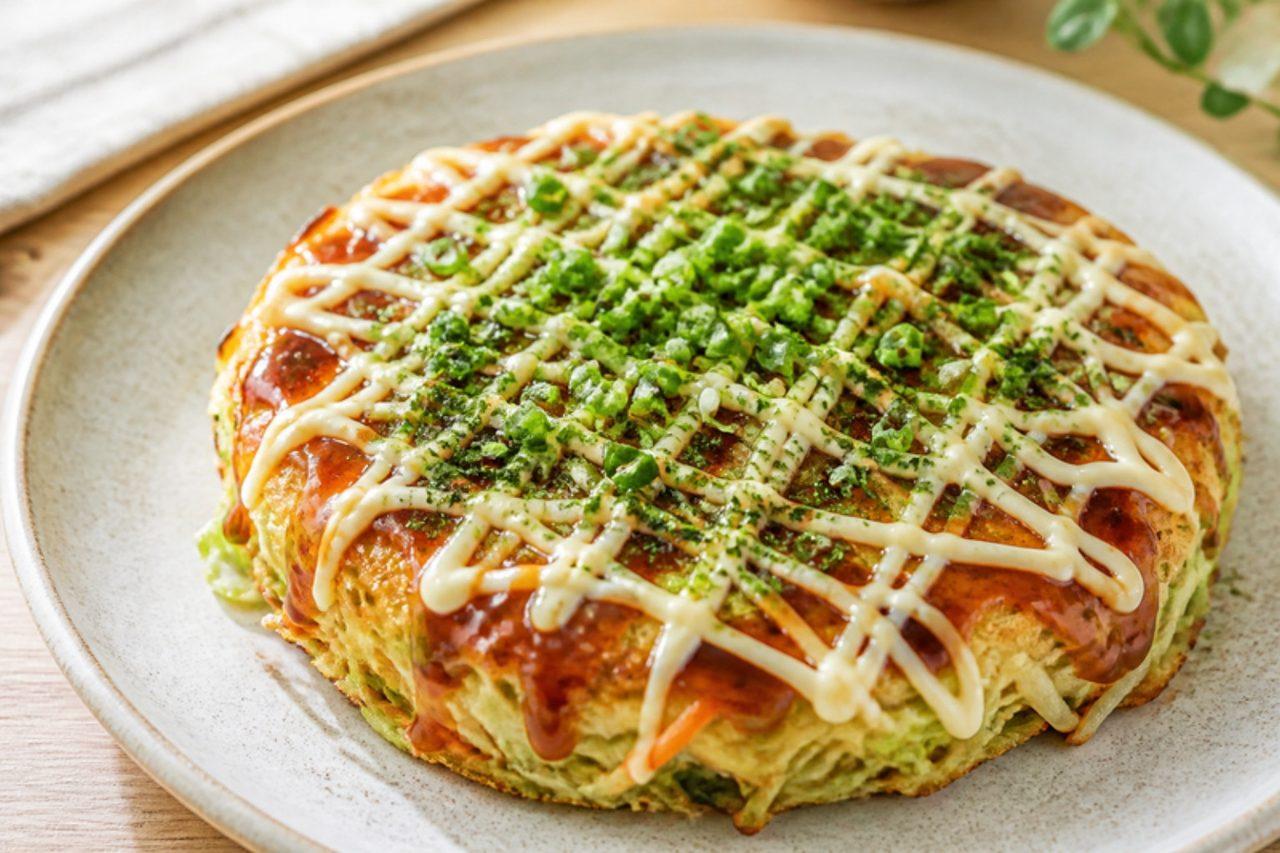
Okonomiyaki
Okonomiyaki (お好み焼き, 'grilled as you like it') is the pride of Osaka, where it's cooked on hot iron griddles in lively restaurants. Finely shredded cabbage is folded into a light batter with egg and spring onion, then fried into a thick, soft pancake with a crisp outside. It's painted with a fruity brown sauce and zigzagged with mayonnaise. Bonito flakes are usual on top; this vegetarian version uses seaweed flakes and pickled ginger instead. Chef's tip: don't press the pancake down with your spatula while it cooks. Osaka cooks leave it alone so the cabbage steams inside and stays light and fluffy; pressing squeezes out the air.
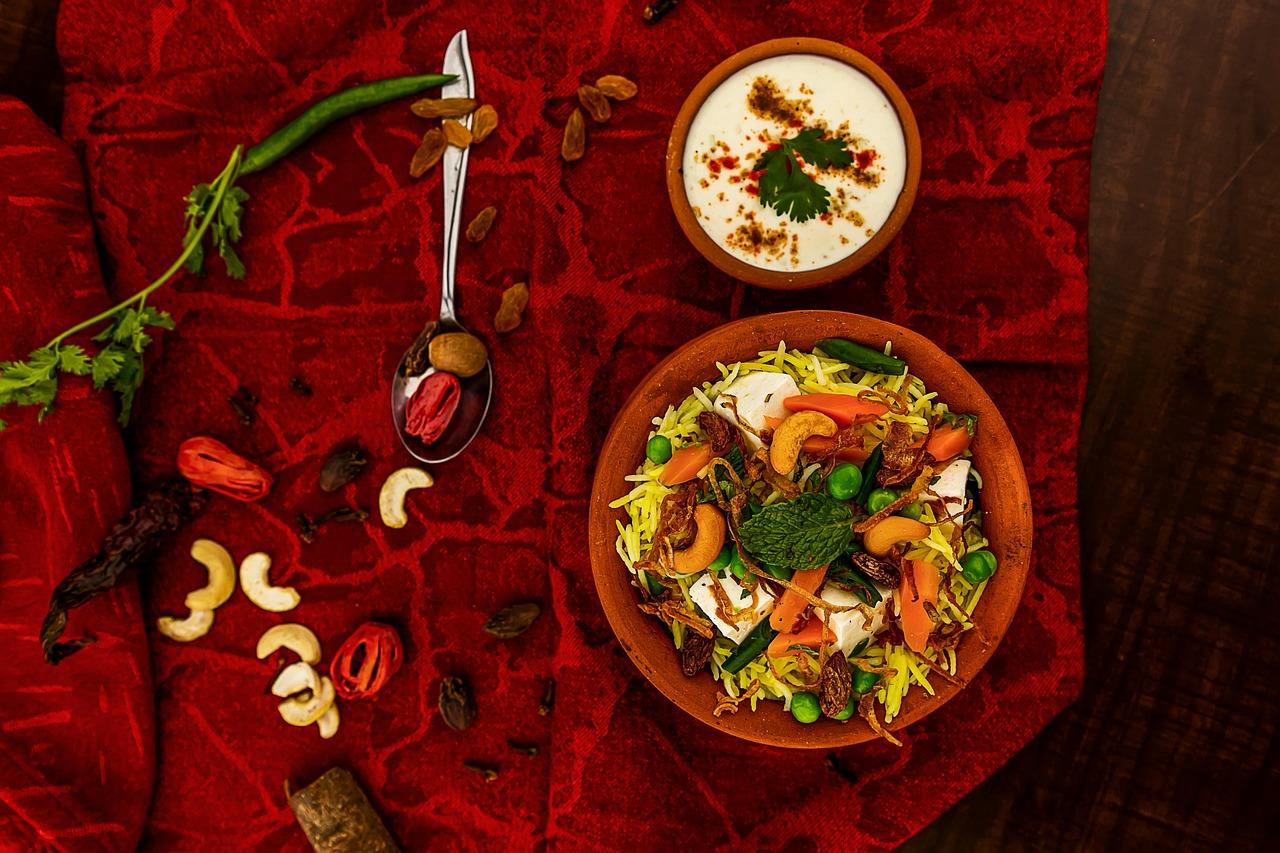
Paneer biryani
A mild, creamy biryani: rice and husked green gram roasted in ghee, then cooked in coconut milk with peas, carrots, potatoes, peanuts and cashews, and finished with soft fried paneer and a fresh coriander yogurt. Serve hot, garnished with more fried cashews and paneer.


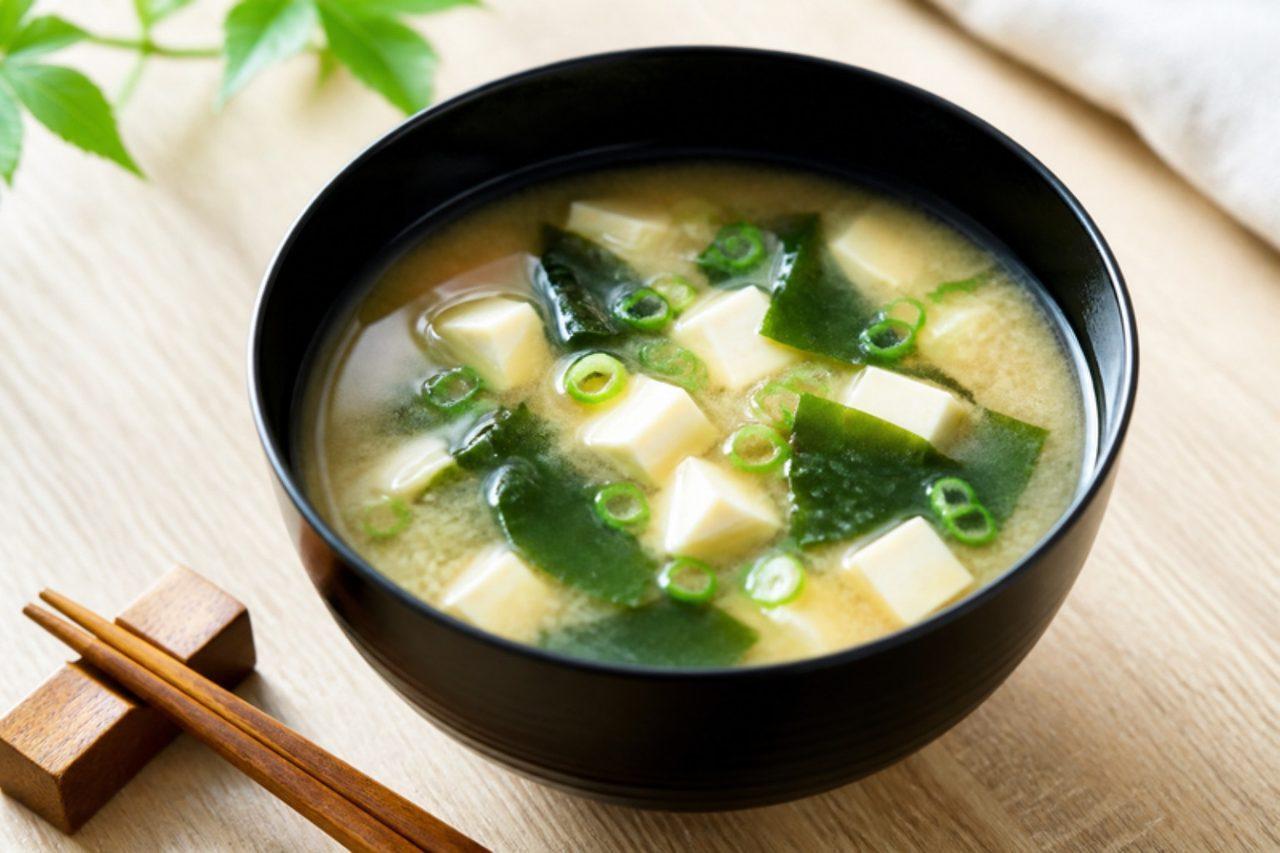
Miso soup
Miso soup (味噌汁) is drunk every day in homes all over Japan, at breakfast as well as dinner, beside a bowl of rice. The base is dashi; this vegan version uses kombu and dried shiitake instead of bonito, which gives it a deep, rounded flavour. Silken tofu and wakame seaweed are the classic fillings. It takes ten minutes; just remember not to boil the miso. Chef's tip: add the miso at the very end and never let it boil. Boiling kills the miso's fresh, fermented aroma; Japanese cooks say the soup should only 'smile', with the surface barely trembling.
