
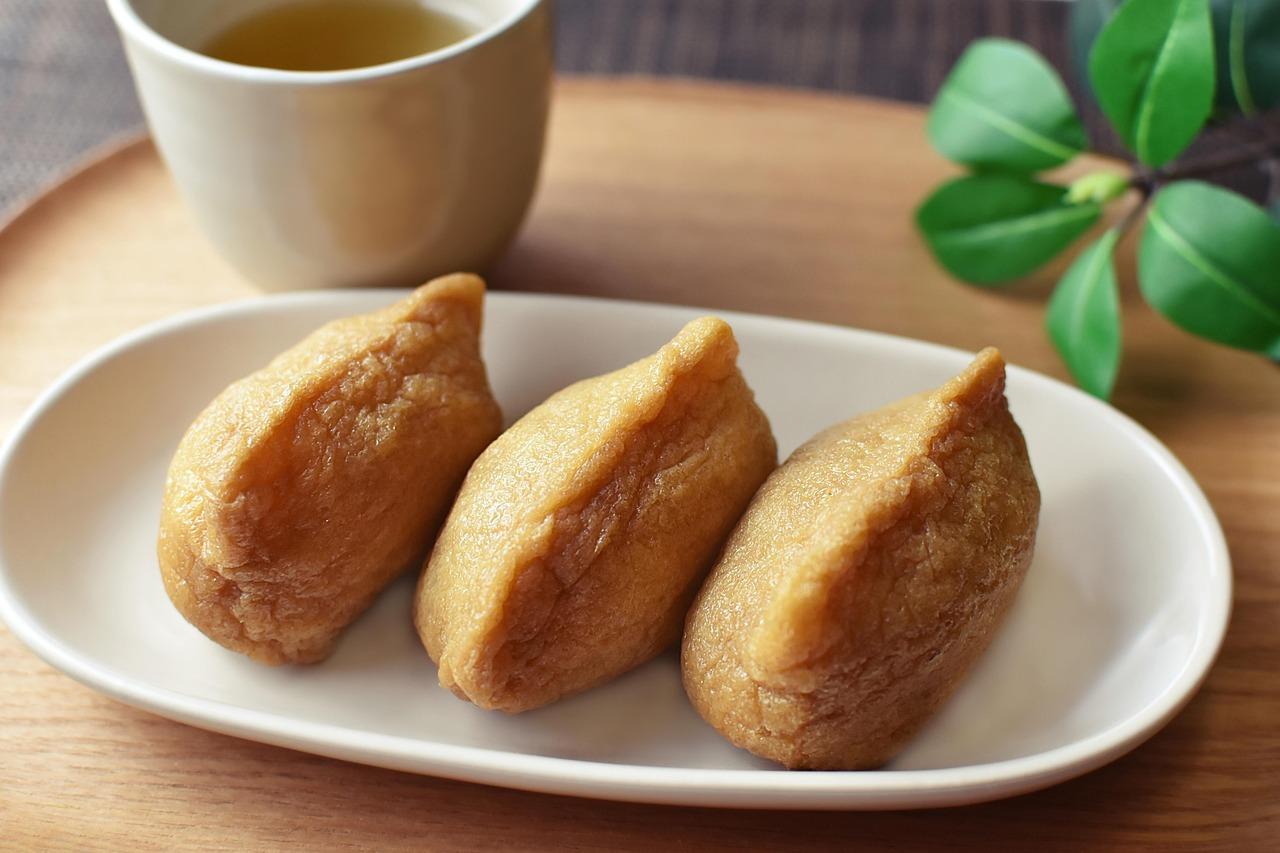
Inarizushi
Tofu pouch sushi
Inarizushi (稲荷寿司): sweet fried tofu pouches stuffed with sesame sushi rice


Named after the Inari shrines, whose fox messengers are said to love fried tofu, inarizushi are sold by the dozen in Tokyo department-store food halls and packed for school sports days, picnics and long train rides. Thin aburaage pouches are simmered in a sweet soy broth, then filled with vinegared rice and sesame, giving a juicy, sweet-salty bite. Mirin contains alcohol; see the note for an alcohol-free swap. The common mistake is squeezing the pouches dry after simmering; leave them moist so they stay juicy, but drain them enough that they don't drip. Chef's tip: roll a chopstick firmly over each sheet before cutting it, which loosens the layers so the pouch opens without tearing.
- Total time
- 70 min
- Difficulty
- medium
- Serves
- 4
Ingredients
For the pouches
- 6 aburaage (thin fried tofu sheets)rectangular sheets
- 1 cup kombu-shiitake dashifish-free; see the shojin dashi recipe, or soak 5 g kombu and 2 dried shiitake in water overnight
- 3 tbsp sugar
- 2 ½ tbsp soy sauce
- 1 tbsp mirincontains alcohol; for alcohol-free use 1 tsp sugar per tbsp, dissolved in 1 tbsp water
For the rice
- 10 ½ oz Japanese short-grain rice
- 1 ½ cups water
- 3 tbsp rice vinegar
- 1 tbsp sugarfor the rice
- 1 tsp salt
- 2 tbsp toasted white sesame seeds
To serve
- 1 oz pickled ginger (gari) (optional)
Shop this recipe on Amazon
What you'll need
Spices & pantry
Fresh ingredients (1)
Links open Amazon in a new tab. As an Amazon Associate, WhatToEat.Today earns from qualifying purchases.
Method
0/8 doneStep 1: Rinse 10 ½ oz Japanese short-grain rice in several changes of cold water until it runs almost clear, drain for 15 minutes, then cook with 1 ½ cups water in a rice cooker or covered pan (12 minutes on low after boiling, then 10 minutes resting off the heat).
40 minStep 2: Roll a chopstick over each 6 aburaage (thin fried tofu sheets) sheet, then cut each in half to make 12 squares. Gently ease each half open into a pocket with your thumbs.
Step 3: Put the pockets in a pan of boiling water for 1 minute to remove excess oil, then drain and press lightly.
2 minStep 4: Bring 1 cup kombu-shiitake dashi, 3 tbsp sugar, 2 ½ tbsp soy sauce and 1 tbsp mirin to a simmer in a wide pan. Add the pouches, cover with a drop-lid and simmer over a low heat for 12–15 minutes, until most of the liquid is absorbed and they are a rich brown. Cool in the pan.
15 minStep 5: Stir 3 tbsp rice vinegar, 1 tbsp sugar and 1 tsp salt together until dissolved.
Step 6: Tip the hot rice into a wide bowl, sprinkle over the vinegar mix and cut it through with a rice paddle while fanning, until the rice is glossy and at body temperature. Fold in 2 tbsp toasted white sesame seeds.
5 minStep 7: With damp hands, shape the rice into 12 loose ovals, about 35 g each.
Step 8: Lift each pouch from the pan and press gently so it isn't dripping. Slip a rice oval inside, push it into the corners and fold the open edges over to close, or leave them open for a 'Kansai-style' look. Serve with 1 oz pickled ginger (gari), at room temperature, within a day.
Nutrition per serving
- Calories
- 390 kcal
- Protein
- 11 g
- Carbs
- 70 g
- Fat
- 8 g
- Fibre
- 2 g
Nutrition values are estimates.
KrazyBadal
Good to know
- How long does inarizushi take?
- About 70 minutes in total: 30 minutes to prepare and 40 minutes to cook.
- How many people does it serve?
- 4 as written. Change the servings above the ingredients and every amount scales to match.
- Is it vegan?
- Yes. It has no meat, fish, dairy or eggs.
- Can I make it ahead?
- Yes. It keeps well, so you can cook it earlier in the day or the day before and reheat it.
- What can I use instead of sugar?
- Caster sugar, same amount.
- What can I use instead of soy sauce?
- Tamari, same amount (gluten free).
Reviews
No reviews yet. Be the first to cook it.
Rate this recipe
Sign in to rate and review this recipe.
You might also like
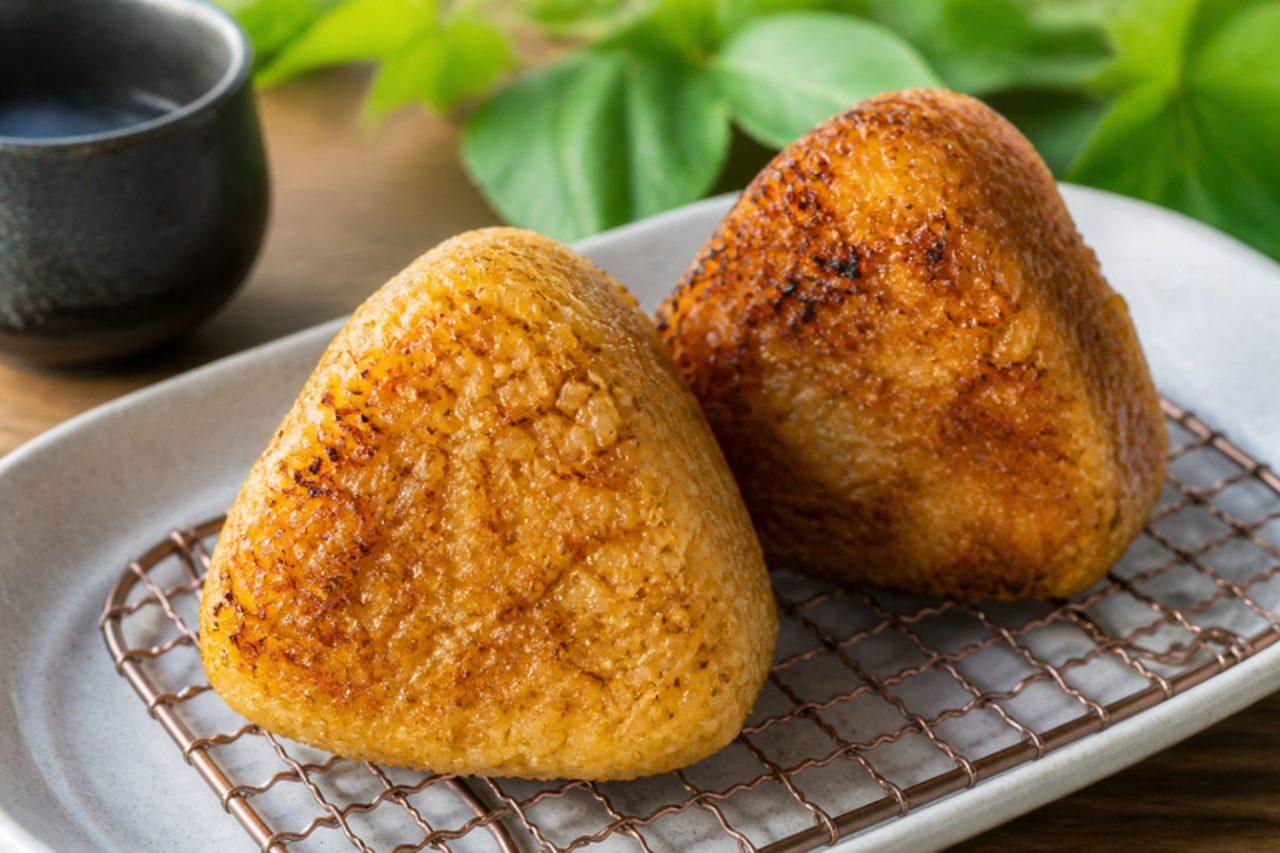
Yaki onigiriGrilled rice balls
Yaki onigiri (焼きおにぎり) are rice balls grilled until they form a crisp, toasty crust, then brushed with soy sauce glaze. They are eaten all over Japan, at izakaya, at barbecues and from the freezer section, as a snack or with miso soup. The inside stays soft and steamy while the outside crackles. Best eaten hot, straight from the pan. Chef's tip: let the shaped rice balls dry for 10 minutes before they go in the pan. A drier surface forms a better crust and won't stick, and the glaze goes on only at the end so it doesn't burn.

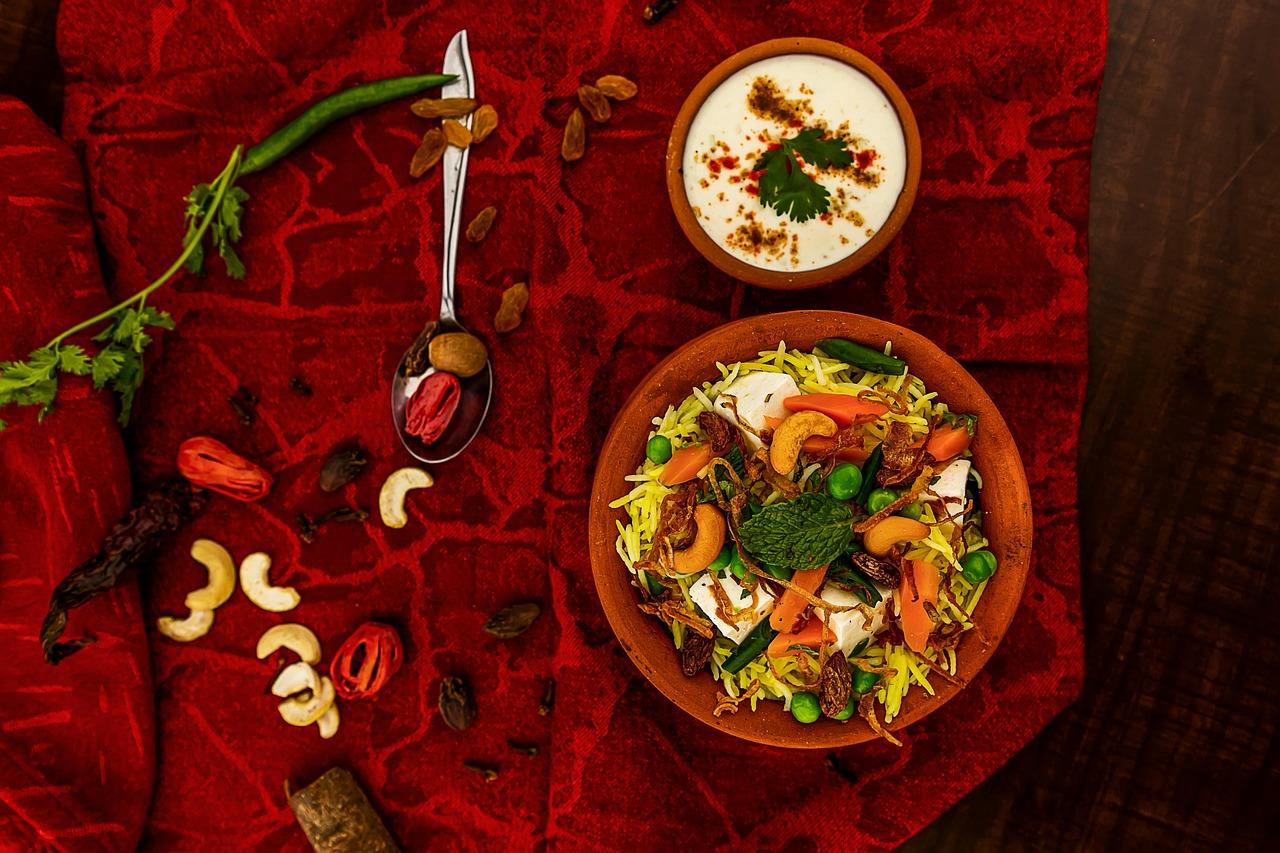
Paneer biryaniRice and moong dal in coconut milk
A mild, creamy biryani: rice and husked green gram roasted in ghee, then cooked in coconut milk with peas, carrots, potatoes, peanuts and cashews, and finished with soft fried paneer and a fresh coriander yogurt. Serve hot, garnished with more fried cashews and paneer.
 Indian

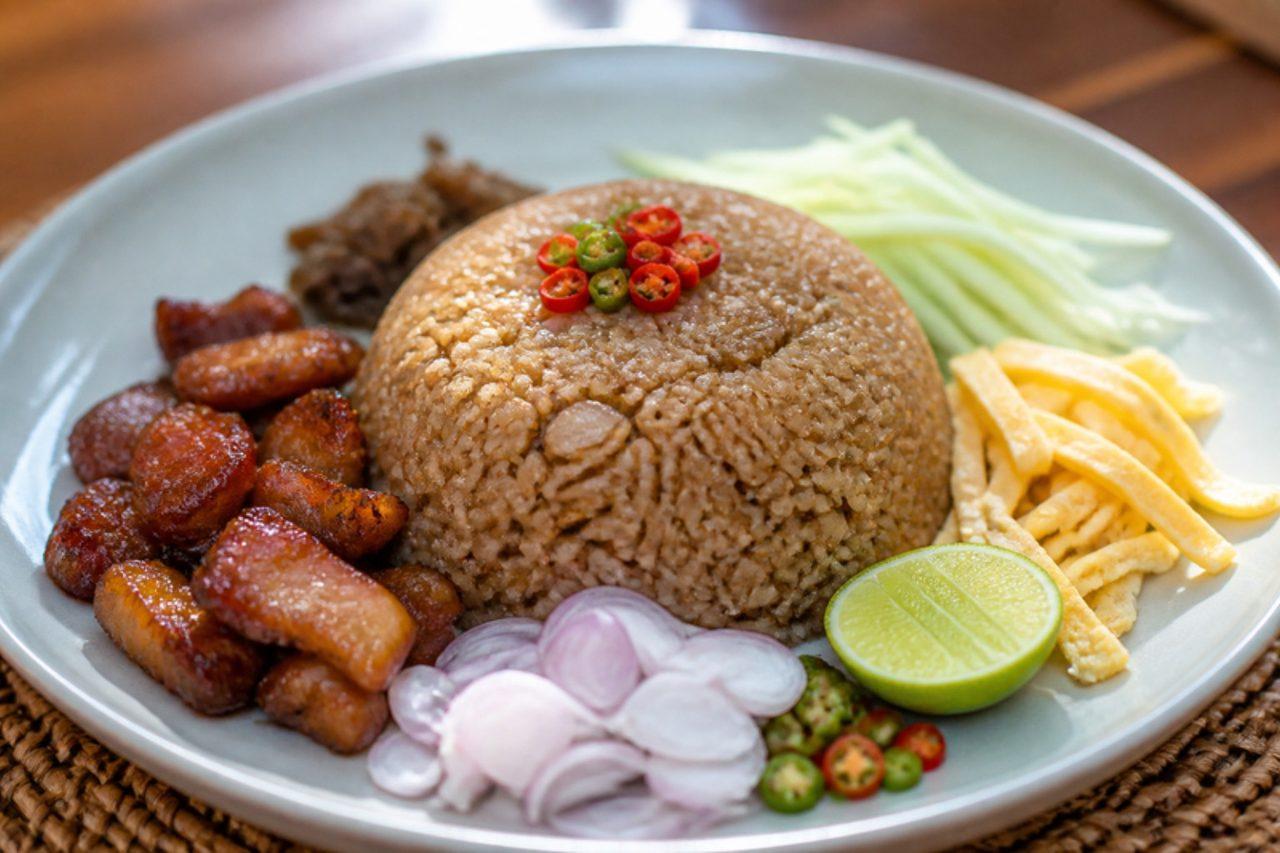
Khao kluk kapiShrimp paste rice
Everything on this central Thai plate is arranged in little heaps around a mound of rice tossed with garlic and fermented shrimp paste: sticky caramelised pork (moo wan), threads of sour green mango, shallots, chillies, sliced long beans, crisp dried shrimp and ribbons of thin omelette. You mix a bit of each into every spoonful, so salty, sweet, sour and hot arrive together. It's a favourite at Bangkok's curry-and-rice shops and a clever way to use up yesterday's rice at home; lime wedges and cucumber cool it down. Chef's tip: use day-old jasmine rice straight from the fridge, because freshly cooked rice clumps and smears the shrimp paste instead of coating each grain.
 Thai
Perfect for:Party & potluckPicnic & travel