
AI-generated image
Senmaizuke
千枚漬け: Kyoto's 'thousand-sheet' pickle of paper-thin turnip, sweet vinegar and slippery kombu, at its best in deep winter


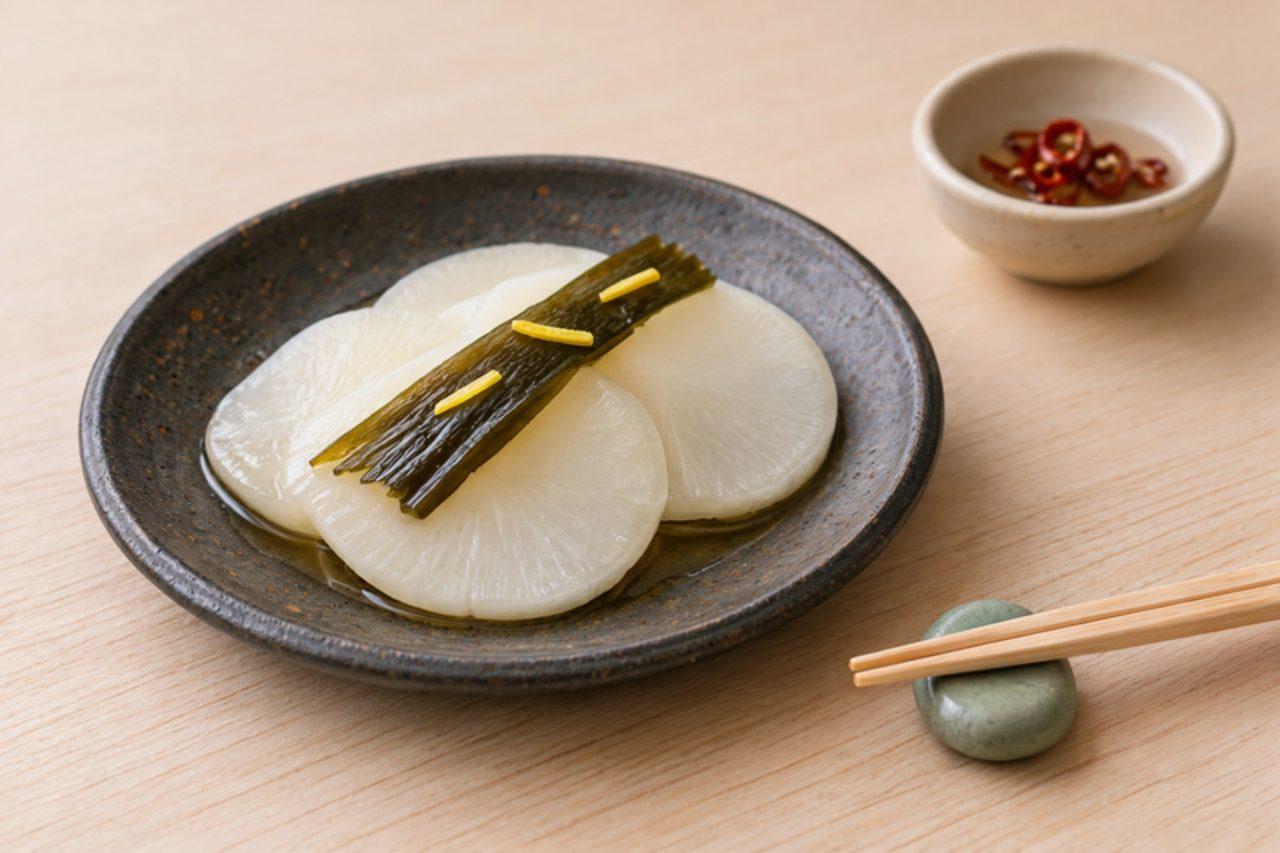
Senmaizuke is the pickle Kyoto sends home with winter visitors: great white Shogoin turnips, sliced so thin you can read through them, layered in fan shapes with kombu and a mild sweet vinegar. Pickle shops along Nishiki Market start making it in November, when the turnips swell and sweeten in the cold, and it stays on New Year tables and beside winter rice through February. It tastes gently sweet and sour with a deep savoury note from the kombu, which turns slightly sticky and coats each slice; the turnip stays crisp at the edge and silky in the middle. Outside Japan use large, firm white turnips (or a young daikon); avoid woody, spongy ones. The common mistake is skipping the first salting: unsalted slices weep water into the vinegar, dilute it and go limp. Salt them, press for an hour and squeeze gently first. It is ready when the slices are translucent, bend without breaking and the kombu feels slick. It is a fridge pickle, not a shelf one. Chef's tip: slice on a mandoline at 2 mm and keep the slices in order, so you can stack them back into a 'turnip' shape for a pretty presentation.
- Total time
- 35 min
- Difficulty
- easy
- Serves
- 8
Ingredients
For the turnips
- 1 ¾ lb large white turnipsShogoin turnip if you can find it; otherwise firm large turnips or a young daikon
- 0.6 oz fine sea salt2% of the turnip weight
For the sweet vinegar
- ¾ cup rice vinegarat least 4% acidity
- 2 ⅛ oz sugar
- 2 tbsp mirin
- ½ tsp fine sea salt
- ½ oz kombua 10 × 15 cm sheet
- 1 dried red chilli (optional)seeds removed, cut into rings
- 1 tbsp yuzu peel (optional)thin strips; lemon peel works
Shop this recipe on Amazon
What you'll need
Links open Amazon in a new tab. As an Amazon Associate, WhatToEat.Today earns from qualifying purchases.
Method
0/8 doneStep 1: Clean the jar or container and lid: wash in hot soapy water, rinse, then dry in a 250°F oven for 10 minutes (or pour boiling water over and in it and air-dry upside down). Let it cool; it must be completely dry.
Step 2: Peel the 1 ¾ lb large white turnips thickly, down past the fibrous outer ring, and slice into 2 mm rounds on a mandoline, keeping them in order.
10 minStep 3: Layer the slices in a shallow dish, sprinkling 0.6 oz fine sea salt evenly between the layers. Cover with a plate and a weight about the same as the turnips (a bag of water works) and leave for 1 hour, until the slices bend without snapping and a pool of water has collected.
60 minStep 4: Meanwhile, warm ¾ cup rice vinegar, 2 ⅛ oz sugar, 2 tbsp mirin and ½ tsp fine sea salt in a small pan over a low heat, stirring, just until the sugar dissolves and it starts to steam, about 2 minutes; it will smell sharp and sweet and the alcohol from the mirin cooks off. Cool completely.
3 minStep 5: Wipe the ½ oz kombu with a damp cloth (keep the white powder, it is flavour) and soak it in 3 tbsp of the cooled sweet vinegar for 10 minutes, until soft enough to cut. Cut into thin strips about 3 mm wide.
10 minStep 6: Tip away the water from the turnips and squeeze the slices gently in handfuls; they should feel soft and slightly springy, not mushy.
Step 7: Layer the slices in the clean container, overlapping like fallen cards, scattering kombu strips, and 1 dried red chilli and 1 tbsp yuzu peel if using, between the layers. Pour the sweet vinegar over and press down so everything is submerged.
5 minStep 8: Cover with cling film pressed onto the surface, close and refrigerate. It is good after 1 day and best after 2–3 days, when the slices are translucent and the kombu is slippery. Keeps 1 week in the fridge; take it out with clean chopsticks. Throw it away if it fizzes, smells rotten, turns slimy or grows mould.
Nutrition per serving
- Calories
- 45 kcal
- Protein
- 1 g
- Carbs
- 10 g
- Fat
- 0 g
- Fibre
- 2 g
Nutrition values are estimates.
KrazyBadal
Good to know
- How long does senmaizuke take?
- About 35 minutes in total: 30 minutes to prepare and 5 minutes to cook.
- How many people does it serve?
- 8 as written. Change the servings above the ingredients and every amount scales to match.
- Is it vegan?
- Yes. It has no meat, fish, dairy or eggs.
- Is it gluten free?
- Yes, as written. Check the labels on stock, sauces and spice mixes, which sometimes contain gluten.
- Can I make it ahead?
- Yes. It keeps well, so you can cook it earlier in the day or the day before and reheat it.
- What can I use instead of rice vinegar?
- Cider vinegar with a pinch of sugar, same amount.
- What can I use instead of sugar?
- Caster sugar, same amount.
Reviews
No reviews yet. Be the first to cook it.
Rate this recipe
Sign in to rate and review this recipe.
You might also like
Okonomiyaki
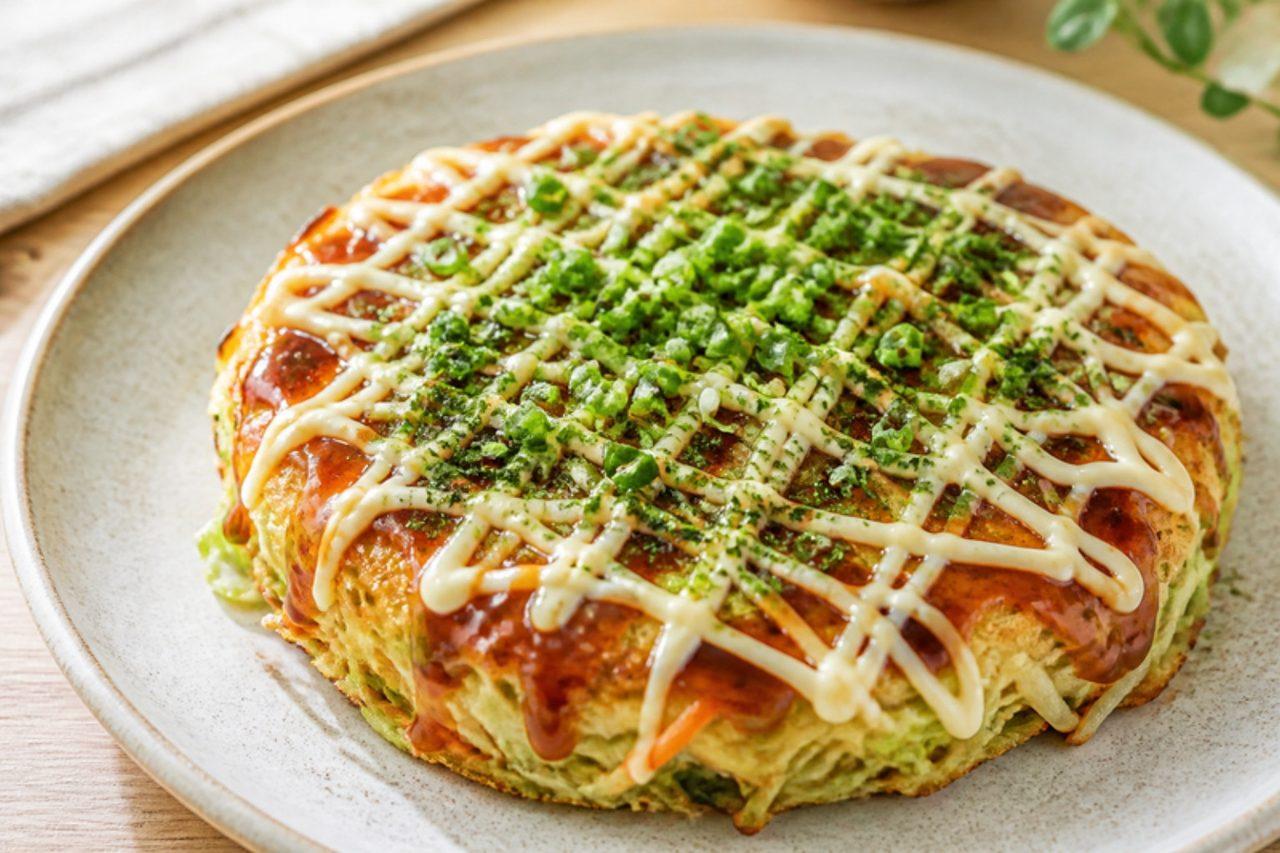
Okonomiyaki (お好み焼き, 'grilled as you like it') is the pride of Osaka, where it's cooked on hot iron griddles in lively restaurants. Finely shredded cabbage is folded into a light batter with egg and spring onion, then fried into a thick, soft pancake with a crisp outside. It's painted with a fruity brown sauce and zigzagged with mayonnaise. Bonito flakes are usual on top; this vegetarian version uses seaweed flakes and pickled ginger instead. Chef's tip: don't press the pancake down with your spatula while it cooks. Osaka cooks leave it alone so the cabbage steams inside and stays light and fluffy; pressing squeezes out the air.
Vegan nuoc cham
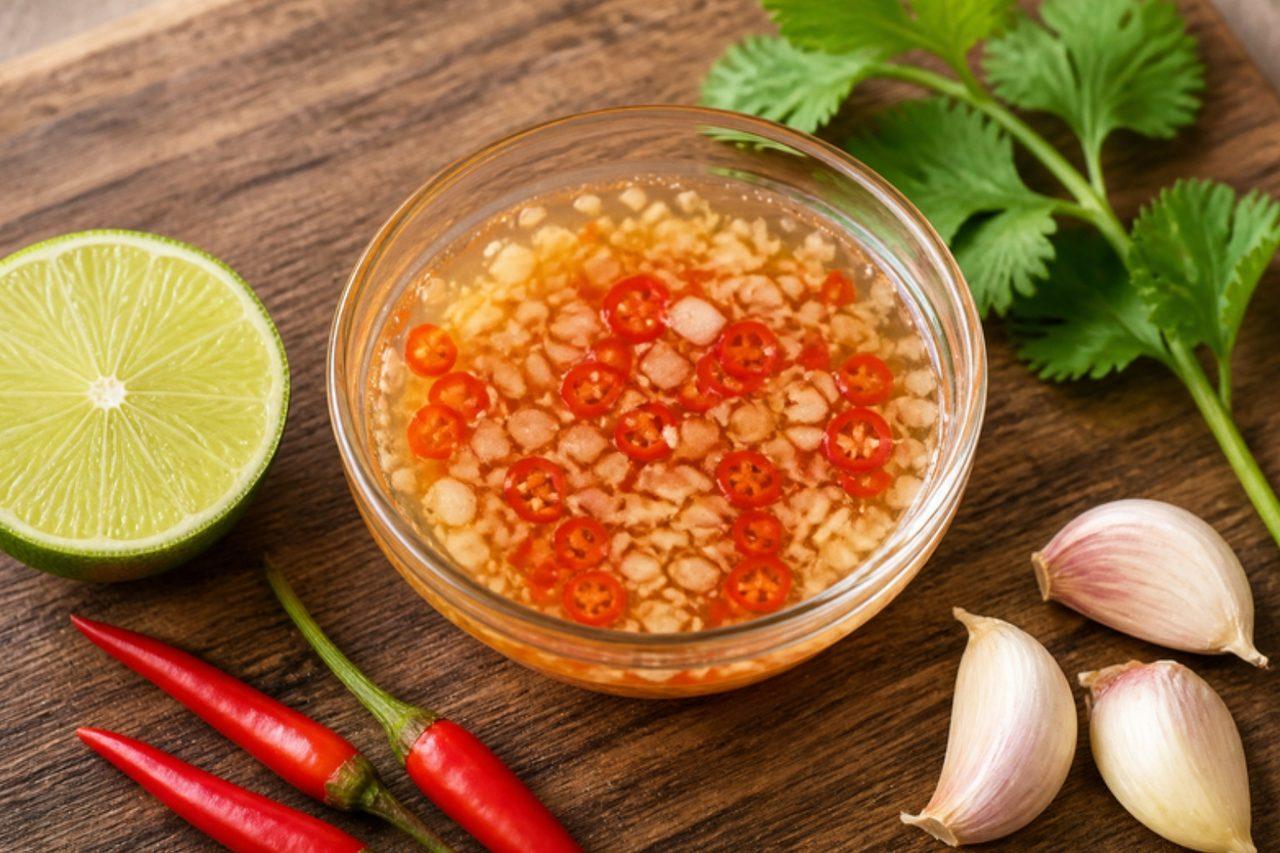
Nước chấm is the dipping sauce that goes with almost everything in Vietnam: spring rolls, bánh xèo, noodle salads and broken rice. Buddhist vegetarian cooks, all over the country, make it without fish sauce, using light soy sauce and a little coconut water for the deep, rounded taste. It should be thin, clear and pale amber, with flecks of garlic and chilli floating on top. Chef's tip: dissolve the sugar in the warm water first, then add the lime and soy, and stir in the garlic and chilli last, pounded with a pinch of sugar, so they float on the surface instead of sinking.
 Vietnamese

Mint and onion chutney
Onions fried gently until soft and sweet, then blended with fresh mint, green chilli and lemon juice. It's a mellow, fresh-tasting chutney that is great with bhajias, samosas, kebabs and tikka, or spread in sandwiches.
 Indian
