
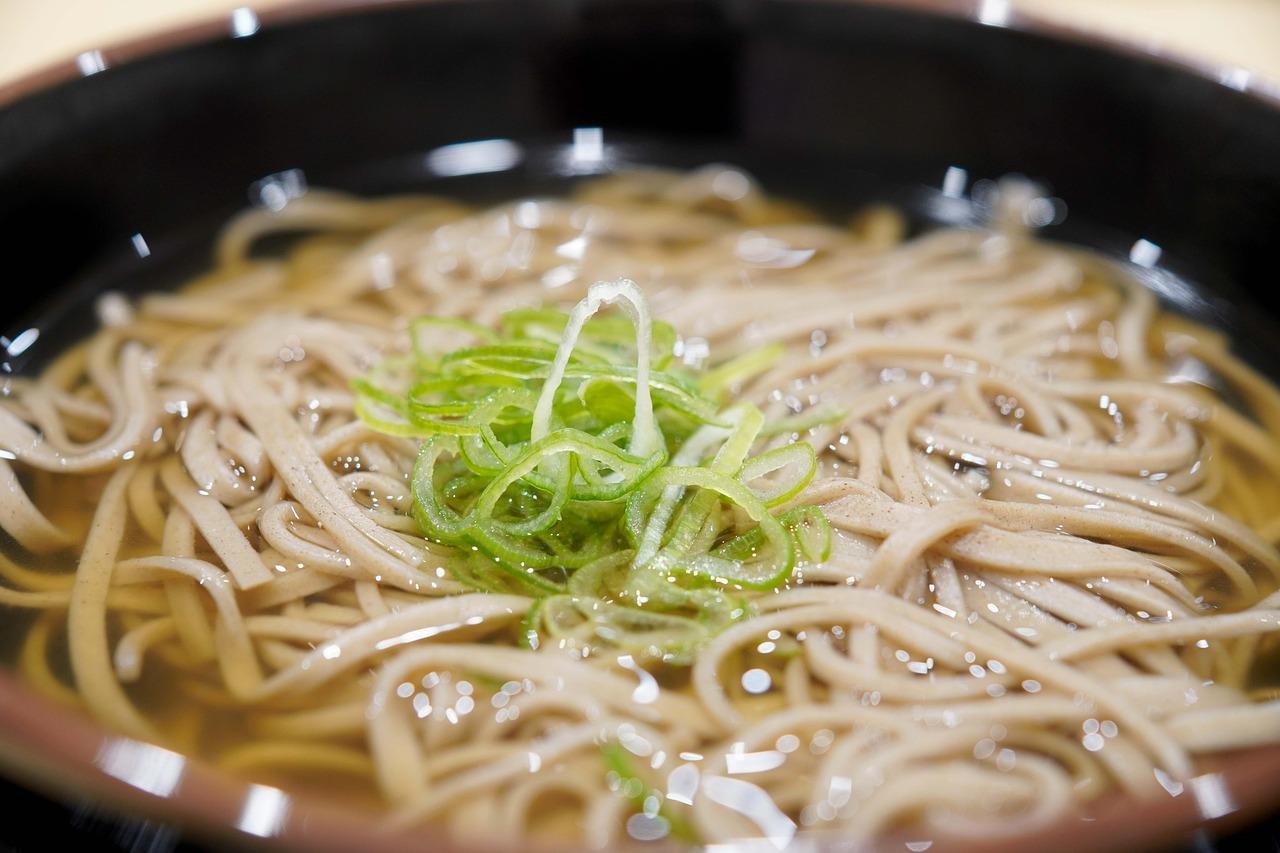
Kake soba
Buckwheat noodles in hot broth
Kake soba: buckwheat noodles in a hot soy and dashi broth, topped with nothing but spring onion

Kake soba is the bare, honest bowl served at the stand-up noodle counters inside Tokyo railway stations, slurped in a few minutes by commuters on the way home and made at home on cold nights when nobody wants to cook. Grey-brown buckwheat noodles sit in a dark, savoury broth of bonito dashi, soy sauce and mirin, with a heap of sliced spring onion on top. The broth uses mirin, a sweet rice wine; it simmers briefly so most of the alcohol cooks off, and for an alcohol-free bowl use 2 tsp sugar instead. The usual mistake is skipping the cold rinse: unrinsed soba is coated in starch, turns gummy and clouds the broth. Chef's tip: pour a ladle of the hot noodle water into each bowl while the soba cooks, then tip it out, so the warm bowls keep the broth steaming to the last mouthful.
- Total time
- 13 min
- Difficulty
- easy
- Serves
- 2
Ingredients
- 7 oz dried soba noodles
- 3 cups water
- 1 ½ tsp instant dashi powderbonito dashi
- 3 tbsp soy sauce
- 2 tbsp mirinor 2 tsp sugar for no alcohol
- 1 tsp sugar
- 2 spring onionsthinly sliced
- ¼ tsp shichimi togarashi (optional)to sprinkle
Shop this recipe on Amazon
What you'll need
Fresh ingredients (1)
Links open Amazon in a new tab. As an Amazon Associate, WhatToEat.Today earns from qualifying purchases.
Method
0/5 doneStep 1: Bring a large pan of unsalted water to the boil for the noodles, from a kettle to save time.
3 minStep 2: In a second pan bring 3 cups water to a simmer with 1 ½ tsp instant dashi powder, 3 tbsp soy sauce, 2 tbsp mirin and 1 tsp sugar. Simmer for 2 minutes, then keep it hot on the lowest heat. Taste: it should be savoury and gently sweet, saltier than you would drink as soup on its own.
3 minStep 3: Add 7 oz dried soba noodles to the boiling water, stir so the strands separate and cook for the time on the packet, usually 4–5 minutes, until tender with no hard white core when you bite one.
5 minStep 4: Drain into a sieve and rinse under cold running water, rubbing the noodles with your hands for 30 seconds until they no longer feel slippery. Dip the sieve briefly back into hot water to rewarm them.
Step 5: Divide the noodles between two warmed bowls, ladle over the hot broth and top with 2 spring onions. Sprinkle with ¼ tsp shichimi togarashi if you like heat and eat at once.
Nutrition per serving
- Calories
- 330 kcal
- Protein
- 13 g
- Carbs
- 64 g
- Fat
- 2 g
- Fibre
- 4 g
Nutrition values are estimates.
KrazyBadal
Good to know
- How long does kake soba take?
- About 13 minutes in total: 3 minutes to prepare and 10 minutes to cook.
- How many people does it serve?
- 2 as written. Change the servings above the ingredients and every amount scales to match.
- What can I use instead of soy sauce?
- Tamari, same amount (gluten free).
- What can I use instead of mirin?
- Rice vinegar with ½ tsp sugar per tbsp.
Reviews
No reviews yet. Be the first to cook it.
Rate this recipe
Sign in to rate and review this recipe.
You might also like
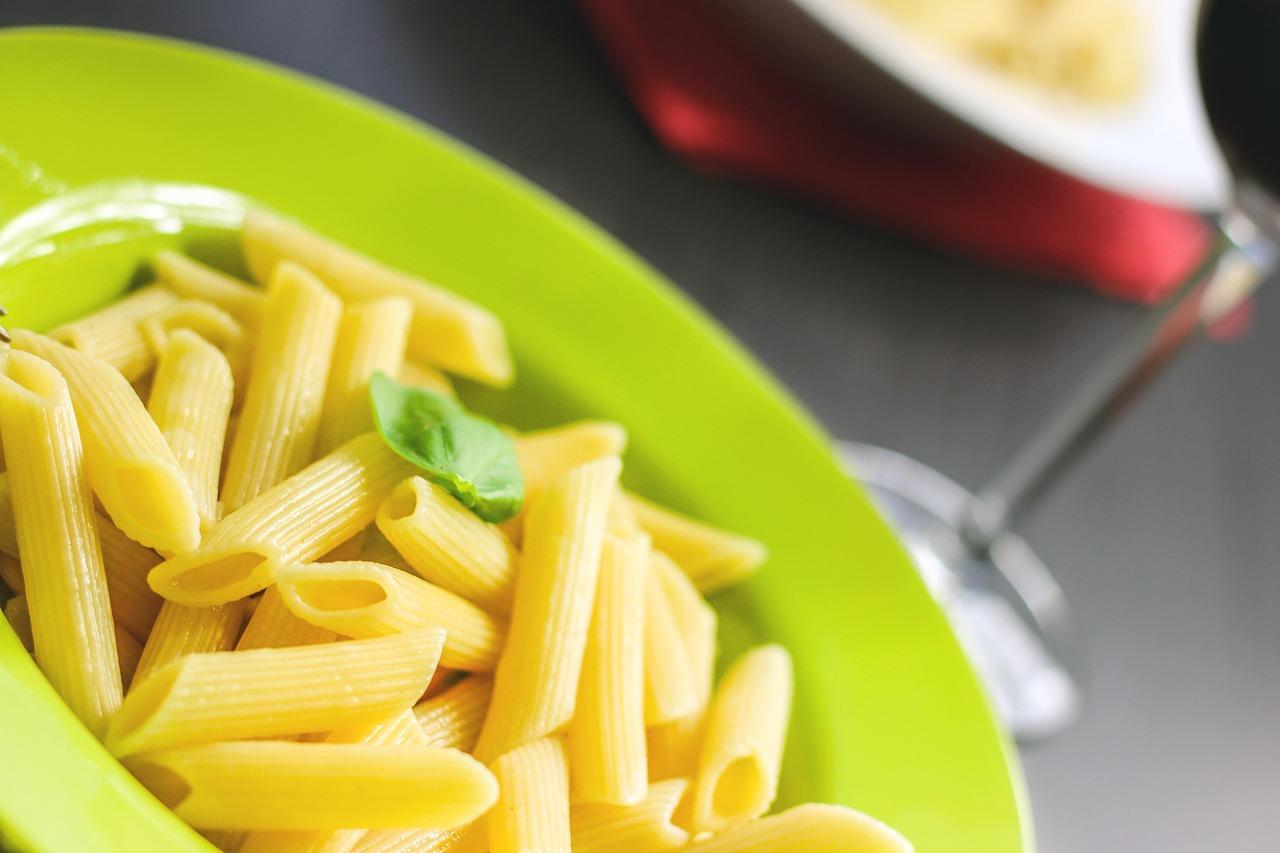
Boiled pasta
The basic method for any dried pasta, from penne to spaghetti. A large pan of salted boiling water keeps the pasta from sticking, and you cook it only until just done, with a little bite left. Use it in salads, bakes or with any sauce.
 Italian

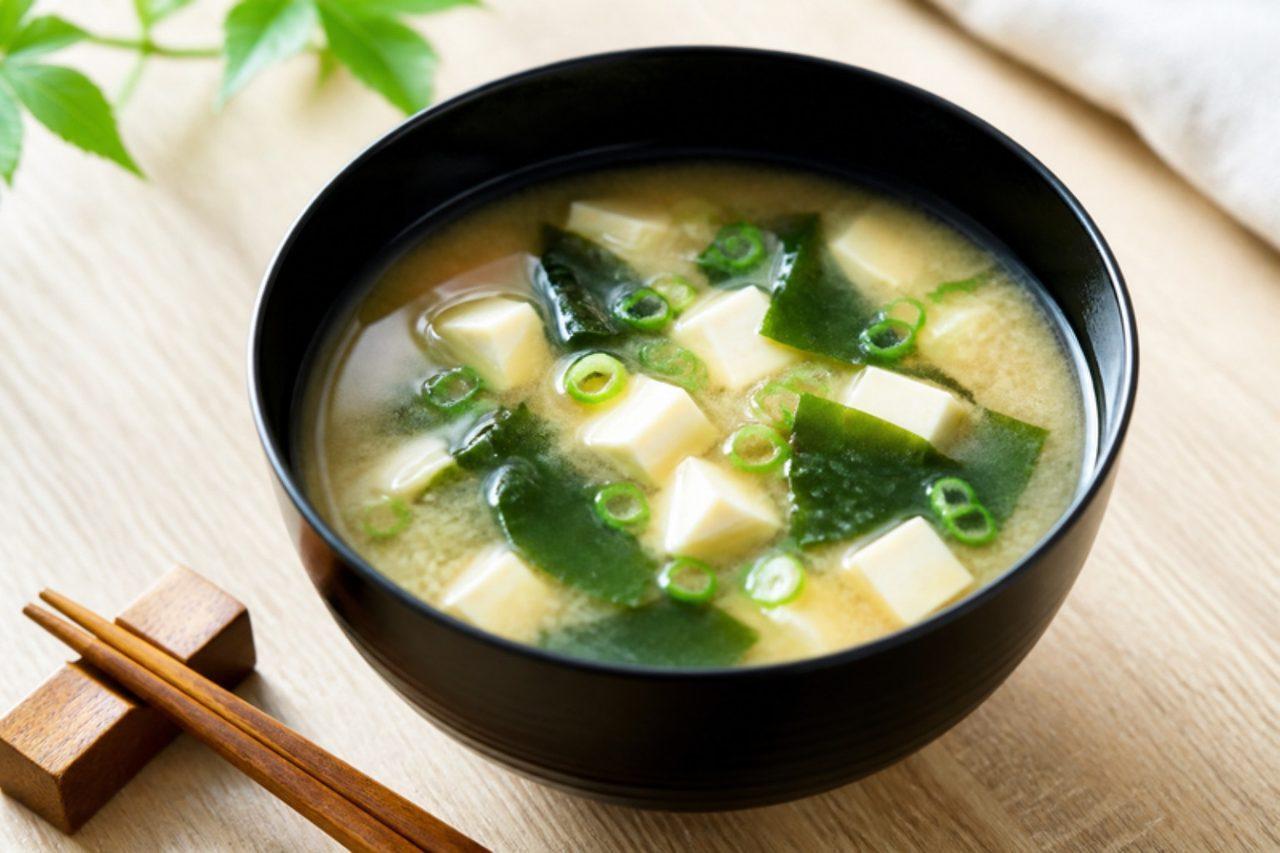
Miso soup
Miso soup (味噌汁) is drunk every day in homes all over Japan, at breakfast as well as dinner, beside a bowl of rice. The base is dashi; this vegan version uses kombu and dried shiitake instead of bonito, which gives it a deep, rounded flavour. Silken tofu and wakame seaweed are the classic fillings. It takes ten minutes; just remember not to boil the miso. Chef's tip: add the miso at the very end and never let it boil. Boiling kills the miso's fresh, fermented aroma; Japanese cooks say the soup should only 'smile', with the surface barely trembling.
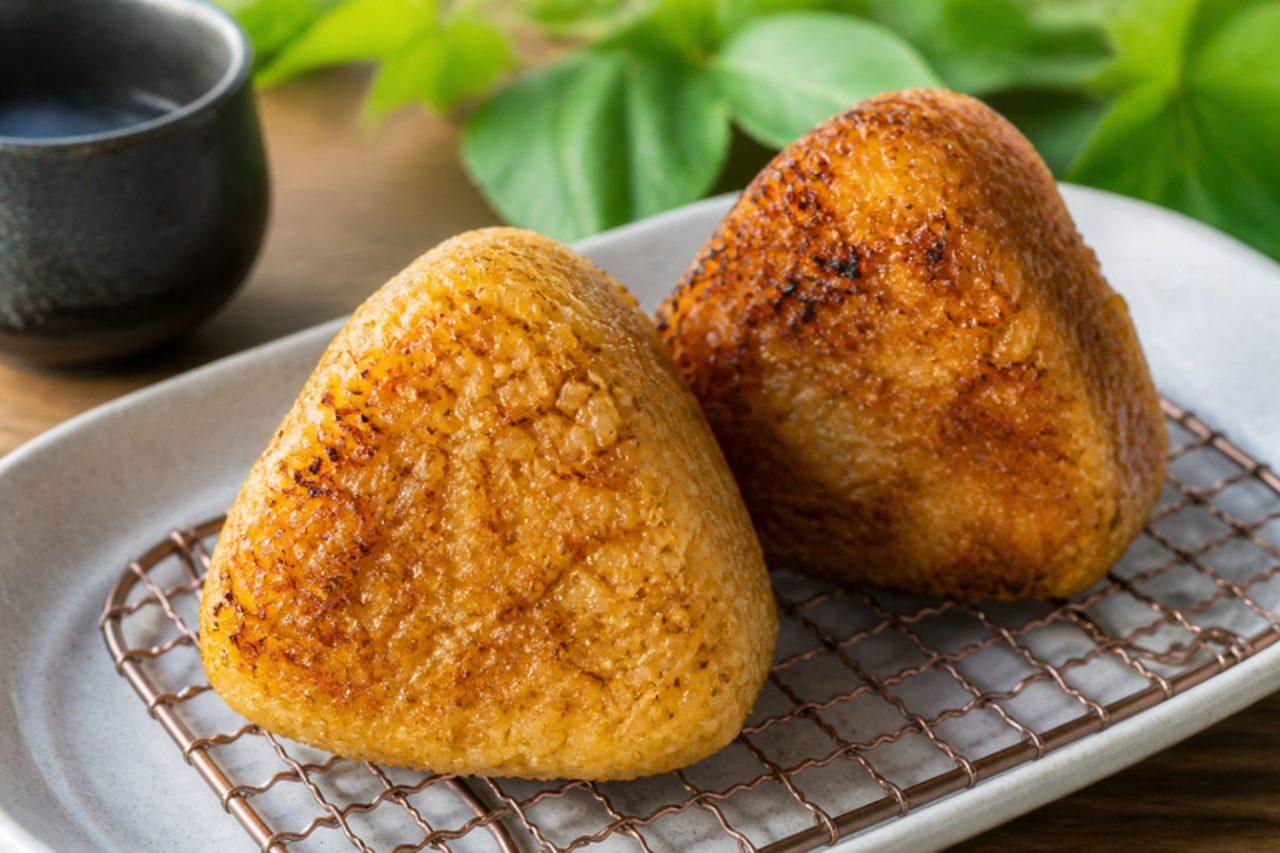
Yaki onigiriGrilled rice balls
Yaki onigiri (焼きおにぎり) are rice balls grilled until they form a crisp, toasty crust, then brushed with soy sauce glaze. They are eaten all over Japan, at izakaya, at barbecues and from the freezer section, as a snack or with miso soup. The inside stays soft and steamy while the outside crackles. Best eaten hot, straight from the pan. Chef's tip: let the shaped rice balls dry for 10 minutes before they go in the pan. A drier surface forms a better crust and won't stick, and the glaze goes on only at the end so it doesn't burn.