
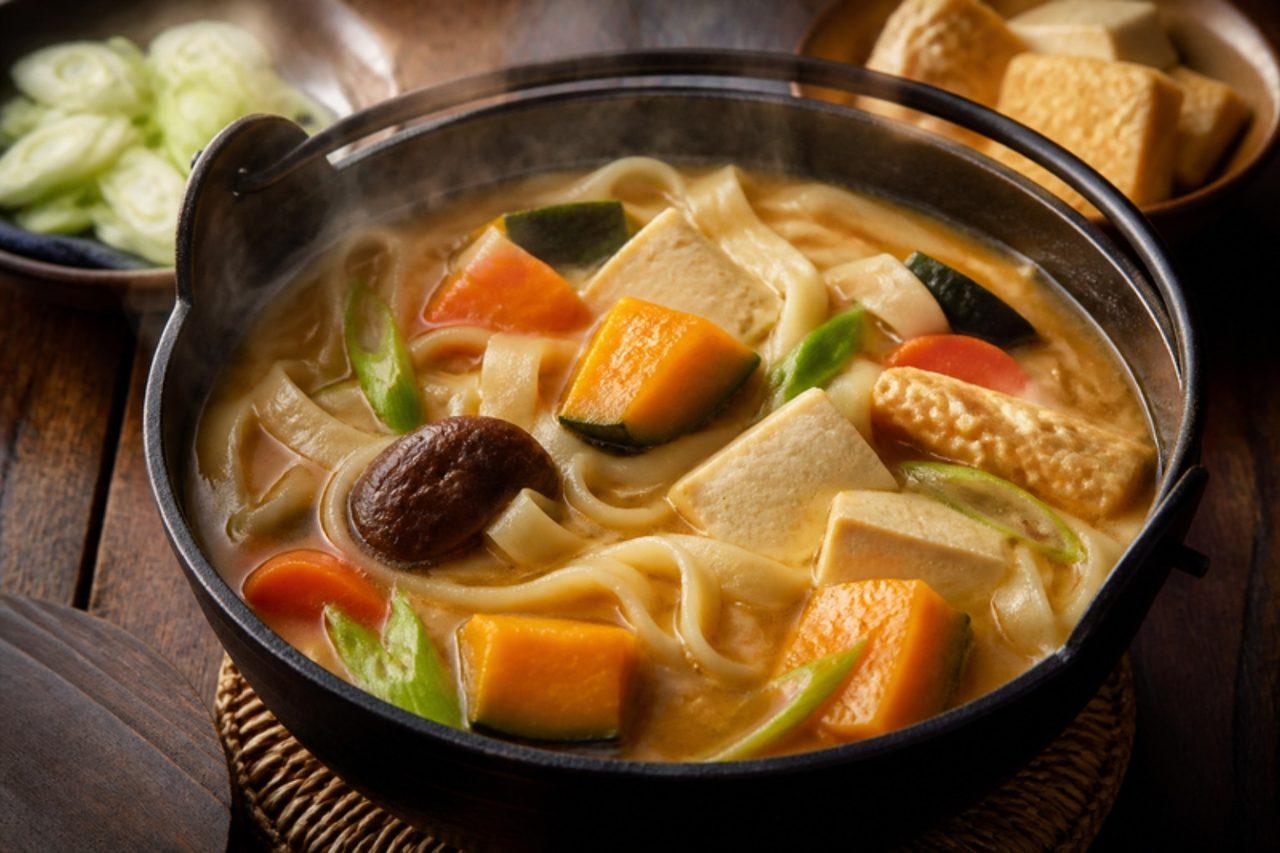
AI-generated image
Hōtō
Thick noodles in miso soup
Hōtō (ほうとう): Yamanashi's thick flat noodles simmered in miso broth with kabocha and tofu


Hōtō is the winter pot of Yamanashi, at the foot of Mount Fuji, served bubbling in iron pans in Kofu restaurants after a cold day on the slopes. Thick, wide, unsalted wheat noodles go into the miso broth raw, with kabocha squash that half melts and thickens everything. This vegetarian version uses kombu-shiitake dashi and adds firm tofu and fried tofu pouches, so a bowl gives about 22 g of protein, from the tofu, wheat noodles and miso. The common mistake is boiling the noodles separately or salting the dough; hōtō noodles are cooked in the pot so their starch makes the broth silky. Rest the dough for 30 minutes before rolling. Chef's tip: dissolve the miso in a ladle of broth and add it in two goes, half early for depth and half at the end for aroma, and never let it boil hard afterwards.
- Total time
- 80 min
- Difficulty
- medium
- Serves
- 4
Ingredients
For the noodles
- 10 ½ oz plain flourplus extra for dusting
- ½ cup water
For the broth
- ½ oz kombu
- 1.6 litres water
For the pot
- 14 oz kabocha squashseeded, cut into 3 cm chunks, skin on
- 5 ½ oz daikoncut into thin half-moons
- 1 carrotsliced
- 1 onionsliced
- 3 ½ oz shimeji mushroomsseparated
- 5 ½ oz napa cabbagecut into 4 cm pieces
- 7 oz firm tofucut into 2 cm cubes
- 2 aburaage (fried tofu pouches)cut into strips
- 2 ⅞ oz miso
- 2 spring onionscut into 3 cm lengths
Shop this recipe on Amazon
Spices & pantry
Fresh ingredients (7)
Links open Amazon in a new tab. As an Amazon Associate, WhatToEat.Today earns from qualifying purchases.
Method
0/7 doneStep 1: Soak ½ oz kombu and 4 dried shiitake mushrooms in 1.6 litres water for at least 30 minutes.
30 minStep 2: Mix 10 ½ oz plain flour and ½ cup water into a firm dough and knead for 5 minutes, until smooth. Do not add salt. Wrap and rest for 30 minutes while the dashi soaks.
5 minStep 3: Roll the dough on a well-floured board to 3 mm thick. Dust well, fold loosely and cut into strips 1 cm wide. Shake them out and toss in flour.
10 minStep 4: Heat the dashi slowly, removing the kombu just before it boils. Slice the shiitake and return them to the pot.
8 minStep 5: Add 5 ½ oz daikon, 1 carrot, 1 onion and 14 oz kabocha squash and simmer for 10 minutes, until the squash is nearly tender. Whisk half of 1 ⅜ oz miso with a ladle of broth and stir it in.
10 minStep 6: Shake excess flour off the noodles and drop them in, stirring so they don't clump. Add 3 ½ oz shimeji mushrooms, 5 ½ oz napa cabbage, 7 oz firm tofu and 2 aburaage (fried tofu pouches). Simmer gently, stirring now and then, for 12–15 minutes, until the noodles are soft and chewy all the way through and the broth has thickened. Some squash should collapse.
15 minStep 7: Whisk the rest of 1 ⅜ oz miso with a ladle of broth and stir it in with 2 spring onions. Heat for 1 minute without boiling. Taste: it should be rich and savoury. Serve straight from the pot.
1 min
Nutrition per serving
- Calories
- 530 kcal
- Protein
- 22 g
- Carbs
- 80 g
- Fat
- 11 g
- Fibre
- 9 g
Nutrition values are estimates.
KrazyBadal
Good to know
- How long does hōtō take?
- About 80 minutes in total: 45 minutes to prepare and 35 minutes to cook.
- How many people does it serve?
- 4 as written. Change the servings above the ingredients and every amount scales to match.
- Is it vegan?
- Yes. It has no meat, fish, dairy or eggs.
- What can I use instead of plain flour?
- Self-raising flour, same amount (then leave out the baking powder).
- What can I use instead of dried shiitake mushrooms?
- Aubergine, diced, same weight.
Reviews
No reviews yet. Be the first to cook it.
Rate this recipe
Sign in to rate and review this recipe.
You might also like
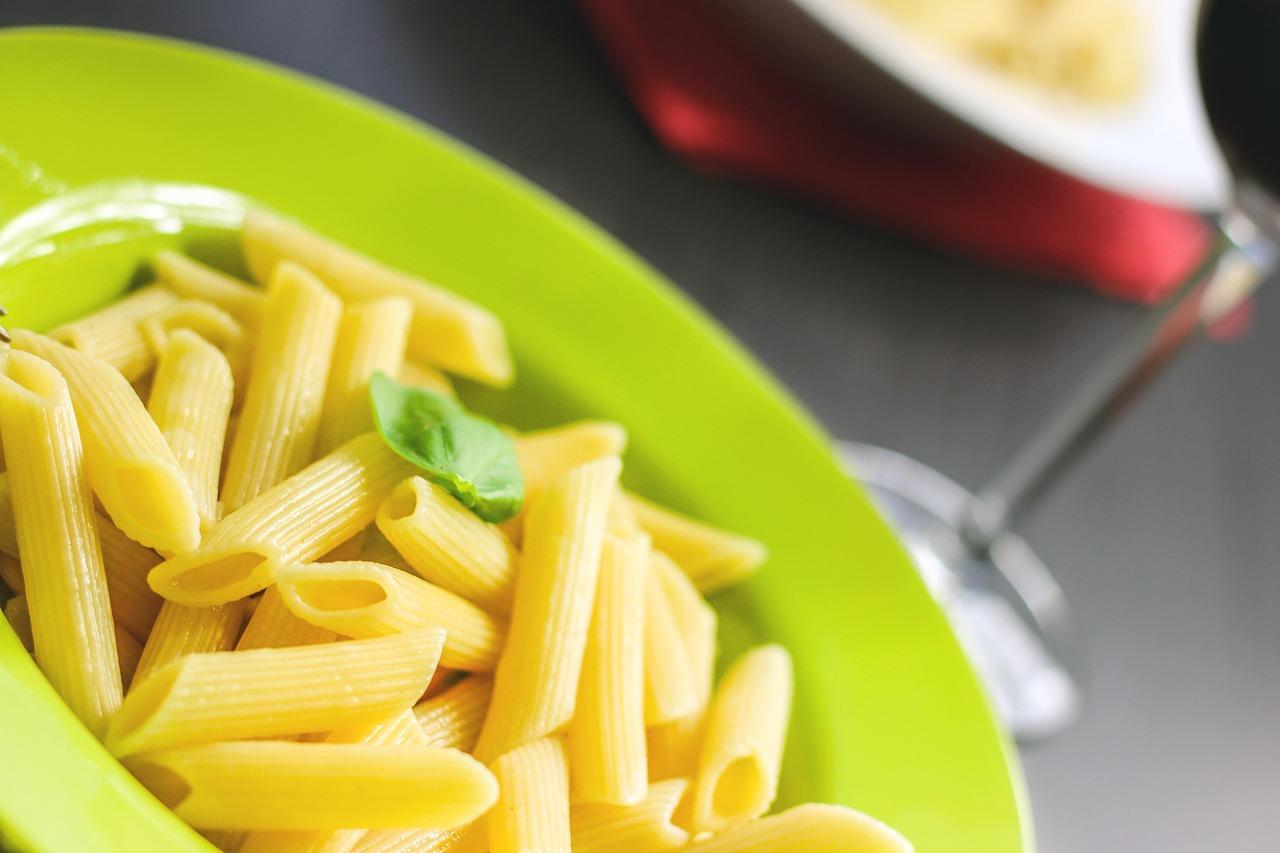
Boiled pasta
The basic method for any dried pasta, from penne to spaghetti. A large pan of salted boiling water keeps the pasta from sticking, and you cook it only until just done, with a little bite left. Use it in salads, bakes or with any sauce.
 Italian

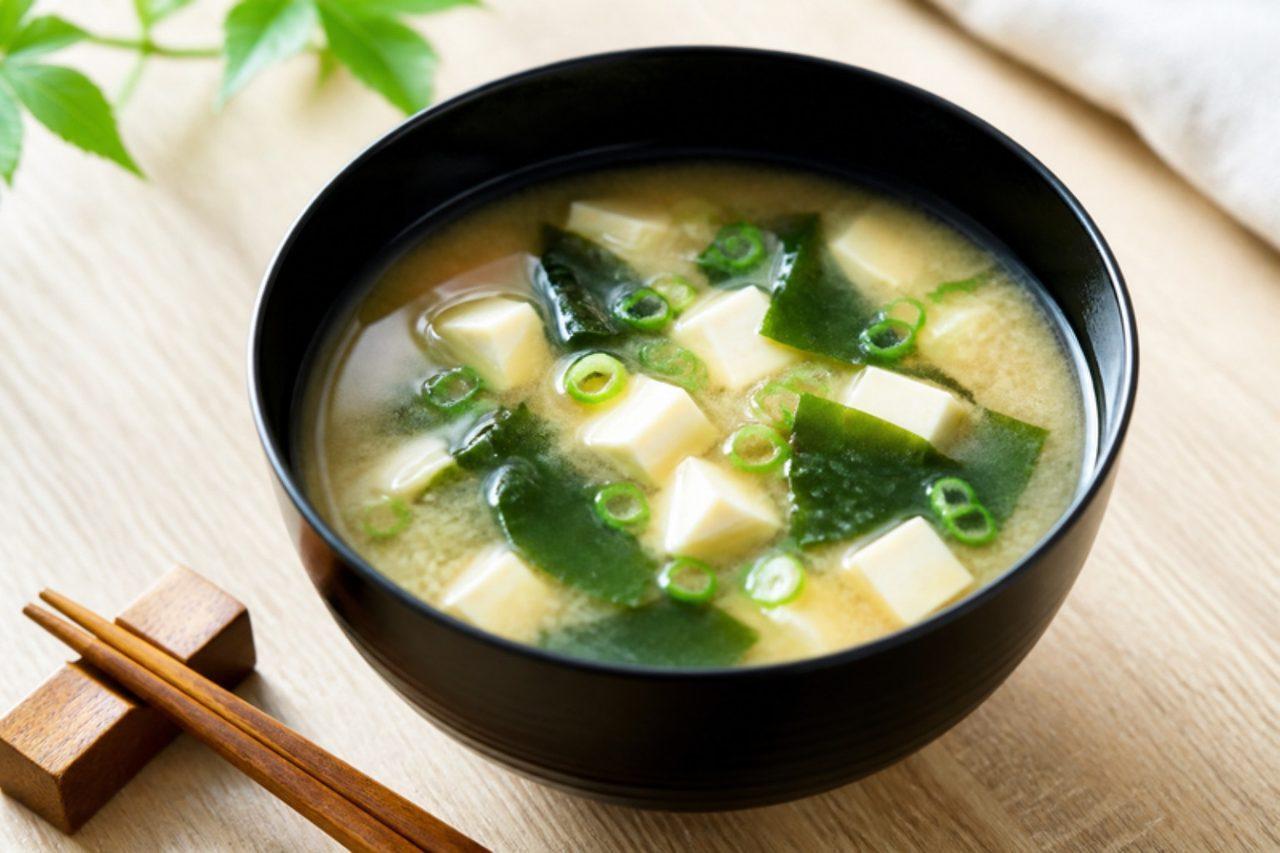
Miso soup
Miso soup (味噌汁) is drunk every day in homes all over Japan, at breakfast as well as dinner, beside a bowl of rice. The base is dashi; this vegan version uses kombu and dried shiitake instead of bonito, which gives it a deep, rounded flavour. Silken tofu and wakame seaweed are the classic fillings. It takes ten minutes; just remember not to boil the miso. Chef's tip: add the miso at the very end and never let it boil. Boiling kills the miso's fresh, fermented aroma; Japanese cooks say the soup should only 'smile', with the surface barely trembling.
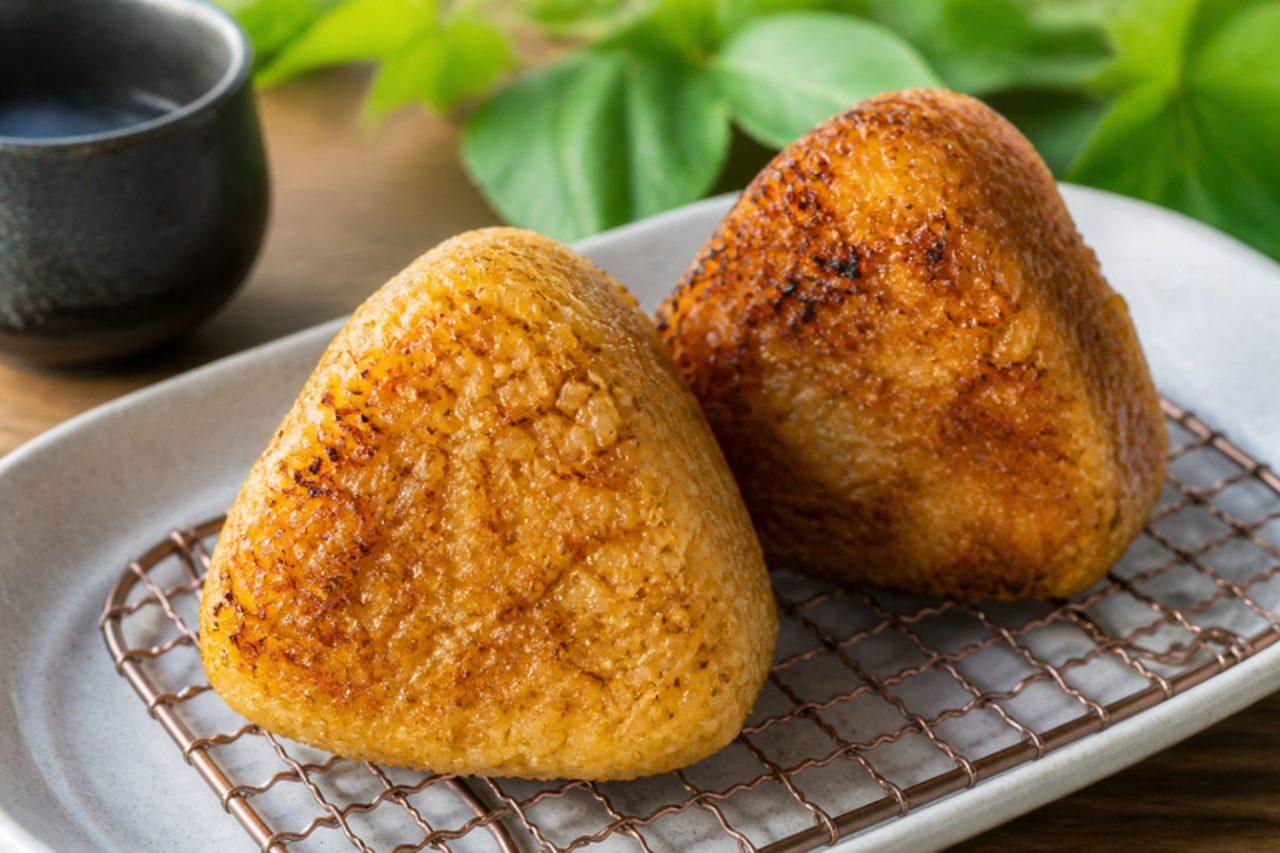
Yaki onigiriGrilled rice balls
Yaki onigiri (焼きおにぎり) are rice balls grilled until they form a crisp, toasty crust, then brushed with soy sauce glaze. They are eaten all over Japan, at izakaya, at barbecues and from the freezer section, as a snack or with miso soup. The inside stays soft and steamy while the outside crackles. Best eaten hot, straight from the pan. Chef's tip: let the shaped rice balls dry for 10 minutes before they go in the pan. A drier surface forms a better crust and won't stick, and the glaze goes on only at the end so it doesn't burn.