
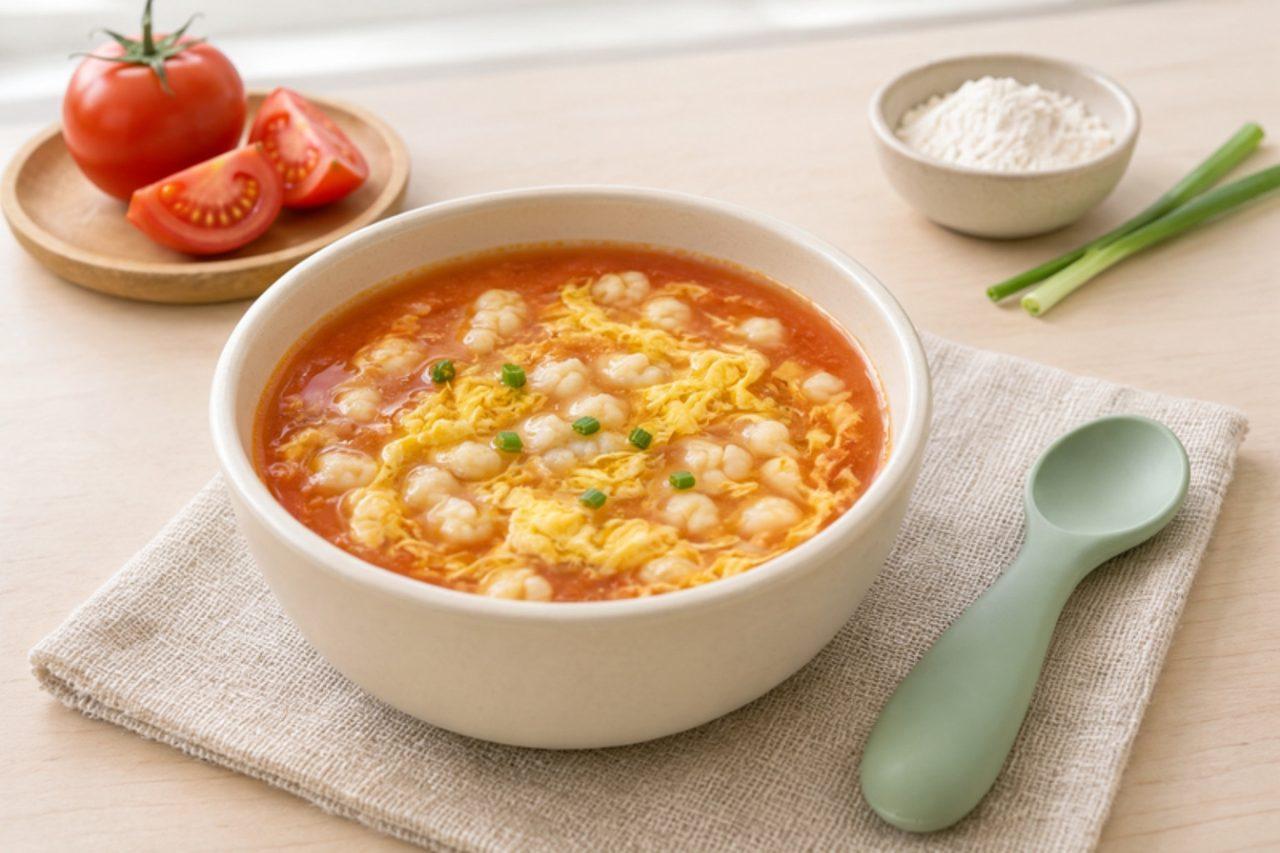
AI-generated image
Gē da tāng (flour-knot soup with tomato and egg)
12m+ · Tiny flour knots simmered in a soft tomato broth with ribbons of fully set egg

Gē da tāng is the soup of northern Chinese homes, from Beijing hutongs to the kitchens of Hebei and Shandong, made on cold evenings or when someone is under the weather. Water is dripped onto flour until it forms little knots, which are rained into a broth of soft tomatoes and finished with egg, so the bowl is part soup, part tiny dumpling. For toddlers from 12 months it is cooked without salt or soy sauce, and the egg is simmered until fully set. It contains wheat (gluten) and egg, and sesame if you add the oil; there is no milk, nuts or soya. Chef's tip: drip the water in a thin trickle while stirring with chopsticks, so you get rice-sized knots, not a paste.
- Total time
- 20 min
- Difficulty
- easy
- Serves
- 3
Baby & toddler safety
- Age: from 12 months+.
- Allergens: contains egg, gluten (wheat, barley, rye or oats). Offer one new allergen at a time, in the morning, so you can watch for a reaction.
- Texture and choking: purée or mash smoothly for 6–9 months, then soft, finger-sized pieces that squash between your fingers. Cut round foods such as grapes and cherry tomatoes into quarters lengthways, never give whole nuts, and always stay with your child while they eat.
- Under 1: no honey, no added salt or stock cubes, and no added sugar.
Every child is different. If you are unsure, especially about allergies, check with your health visitor or paediatrician.
Ingredients
- 2 ⅞ oz plain flour
- 3 ½ tbsp cold water
- 2 tsp sunflower oil
- 2 ripe tomatoesskinned and finely chopped
- 2 ½ cups water
- 1 eggbeaten
- 1 spring onion, green part (optional)very finely chopped
- ¼ tsp toasted sesame oil (optional)contains sesame
Shop this recipe on Amazon
Spices & pantry
Fresh ingredients (3)
Links open Amazon in a new tab. As an Amazon Associate, WhatToEat.Today earns from qualifying purchases.
Method
0/8 doneStep 1: Put 2 ⅞ oz plain flour in a bowl. Hold a tap or jug over it and drip in 3 ½ tbsp cold water very slowly while stirring with chopsticks, until all the flour forms little knots the size of rice grains with almost no dry flour left.
3 minStep 2: Common mistake: adding the water too fast. The flour clumps into big doughy lumps that stay raw in the middle; if it happens, rub the lumps through your fingers to break them up.
Step 3: Heat 2 tsp sunflower oil in a saucepan over a medium heat and cook 2 ripe tomatoes for 4–5 minutes, pressing with a spoon, until they collapse into a thick sauce.
5 minStep 4: Add 2 ½ cups water and bring to the boil.
3 minStep 5: Shake the knots over the boiling soup a little at a time, stirring, so they don't stick together. Simmer for 3–4 minutes, until they float and are soft and chewy all the way through.
4 minStep 6: Pour 1 egg in a thin stream while stirring gently, then simmer for a full 1–2 minutes, until the egg ribbons are completely set and opaque with no runny bits.
2 minStep 7: Stir in spring onion and sesame oil if using. Cool to warm before serving. Adults can add salt and white pepper to their own bowls.
Step 8: Cool any leftovers quickly, cover and keep in the fridge for up to 2 days, or freeze in small portions for up to 1 month. The knots soften further; it doesn't freeze well, so it's best eaten within 2 days Reheat only once, until piping hot all the way through, then let it cool to warm before serving.
Nutrition per serving
- Calories
- 150 kcal
- Protein
- 5 g
- Carbs
- 24 g
- Fat
- 4 g
- Fibre
- 2 g
Nutrition values are estimates.
KrazyBadal
Good to know
- How long does gē da tāng (flour-knot soup with tomato and egg) take?
- About 20 minutes in total: 5 minutes to prepare and 15 minutes to cook.
- How many people does it serve?
- 3 as written. Change the servings above the ingredients and every amount scales to match.
- Is it vegetarian?
- Yes. It has no meat or fish.
- What can I use instead of plain flour?
- Self-raising flour, same amount (then leave out the baking powder).
- What can I use instead of ripe tomatoes?
- Tinned chopped tomatoes: a 400g tin for about 6 tomatoes (in cooked dishes, not salads).
Reviews
No reviews yet. Be the first to cook it.
Rate this recipe
Sign in to rate and review this recipe.
You might also like
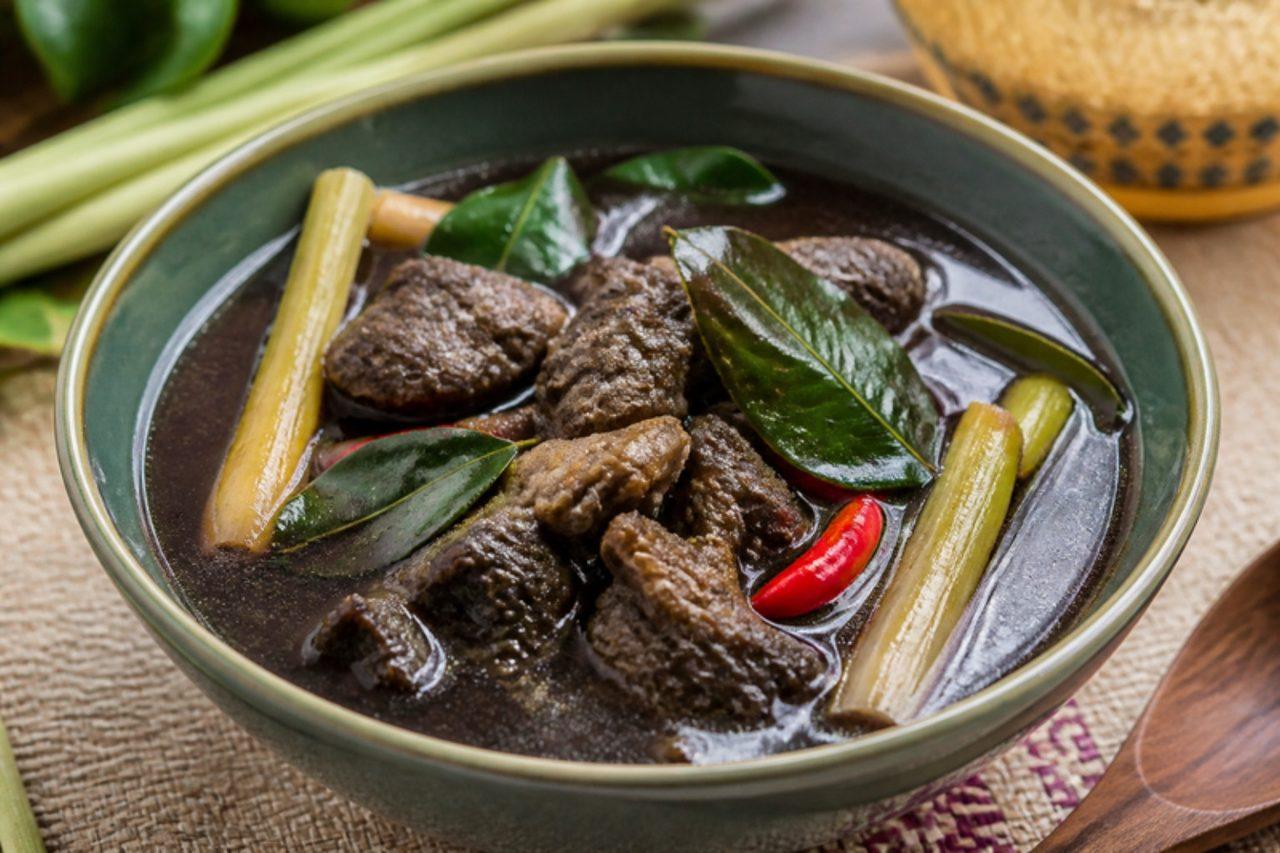
Tiyula itumBlack beef soup
Tiyula itum, 'black soup', is the pride of the Tausug people of Sulu in the far south of the Philippines, cooked for weddings, Eid celebrations and when guests come home. Beef (it is a halal, pork-free dish) is simmered with ginger, lemongrass and turmeric, then darkened with pamapa itum, a paste of grated coconut toasted until almost black and pounded with spices. The broth looks dramatic but tastes smoky, earthy and gently peppery, with heat from chillies. Serve it with plain rice. Chef's tip: toast the coconut slowly, stirring all the time, until it is very dark brown but not ashy; burnt-to-ash coconut tastes bitter and ruins the soup.
 Filipino

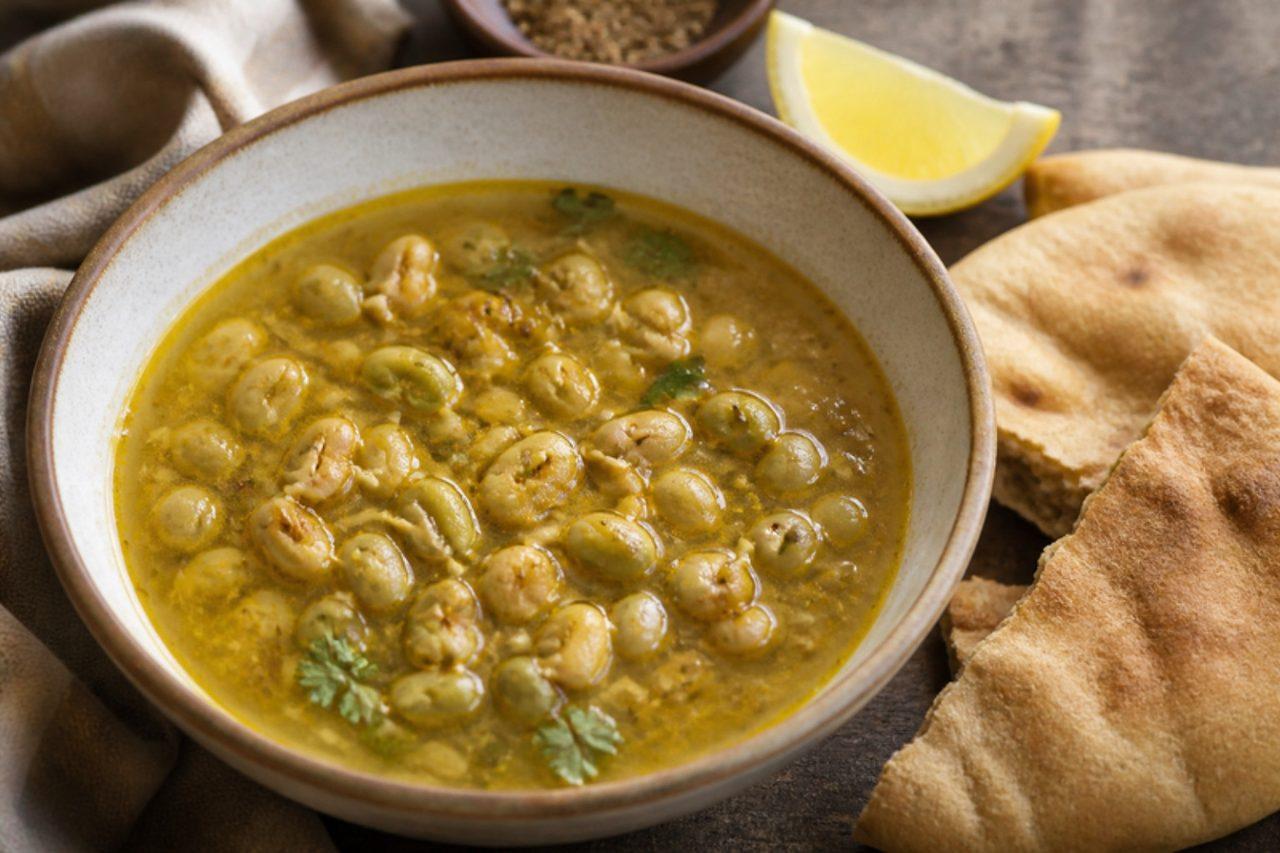
Ful nabitSprouted fava bean soup
Sprouted beans are ladled out with their cooking liquor in Cairo homes when the weather turns cold or someone is feeling run down, and Egyptians swear by the broth as a pick-me-up. The beans are soaked and left to sprout for a few days, then simmered with onion, garlic and cumin into a light, earthy soup that is sharpened at the table with plenty of lemon. You can eat the beans with a spoon or pop them from their skins. Allow 3 to 4 days for sprouting, although the hands-on work is only about 20 minutes. People with G6PD deficiency (favism) must not eat fava beans. Chef's tip: stop the sprouting when the shoots are about 1 cm long; longer sprouts taste grassy and bitter.
 Egyptian

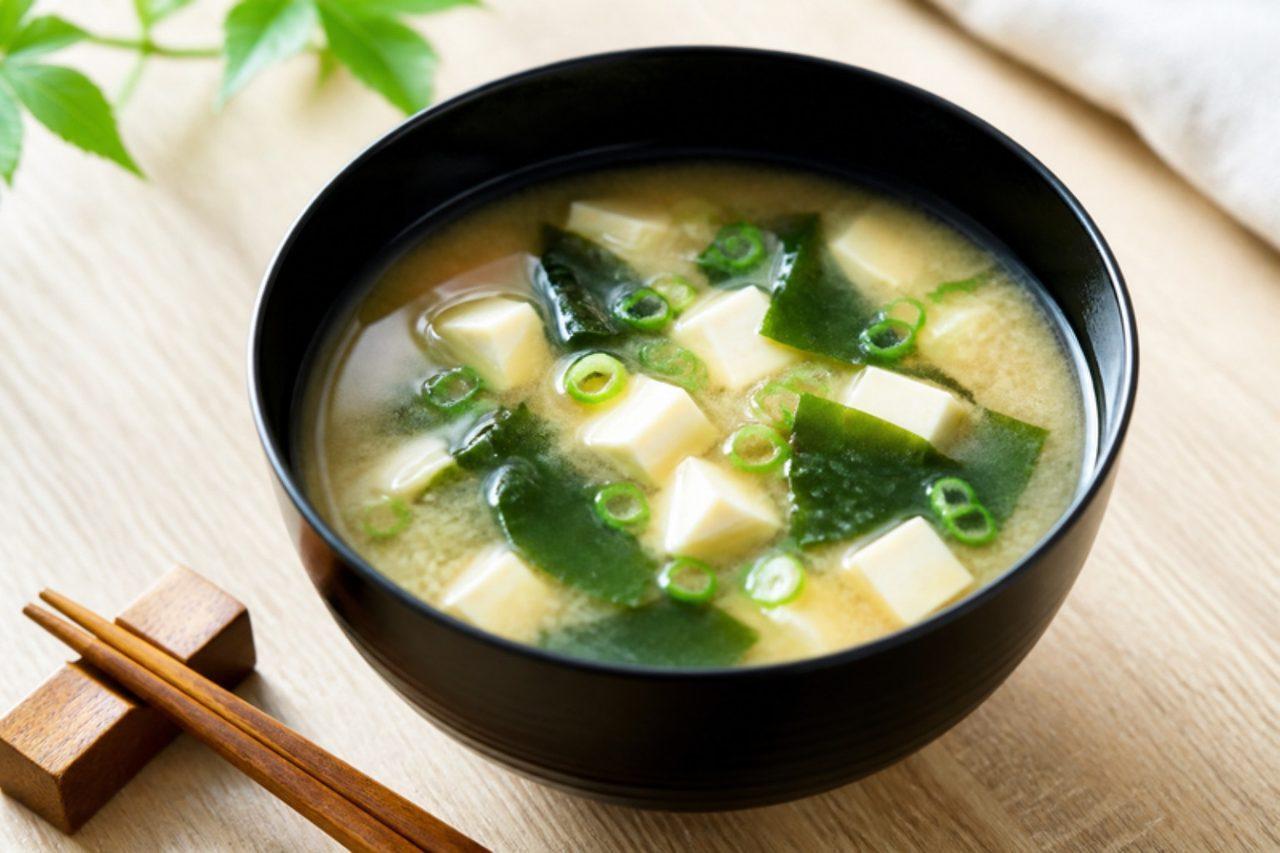
Miso soup
Miso soup (味噌汁) is drunk every day in homes all over Japan, at breakfast as well as dinner, beside a bowl of rice. The base is dashi; this vegan version uses kombu and dried shiitake instead of bonito, which gives it a deep, rounded flavour. Silken tofu and wakame seaweed are the classic fillings. It takes ten minutes; just remember not to boil the miso. Chef's tip: add the miso at the very end and never let it boil. Boiling kills the miso's fresh, fermented aroma; Japanese cooks say the soup should only 'smile', with the surface barely trembling.
 Japanese