
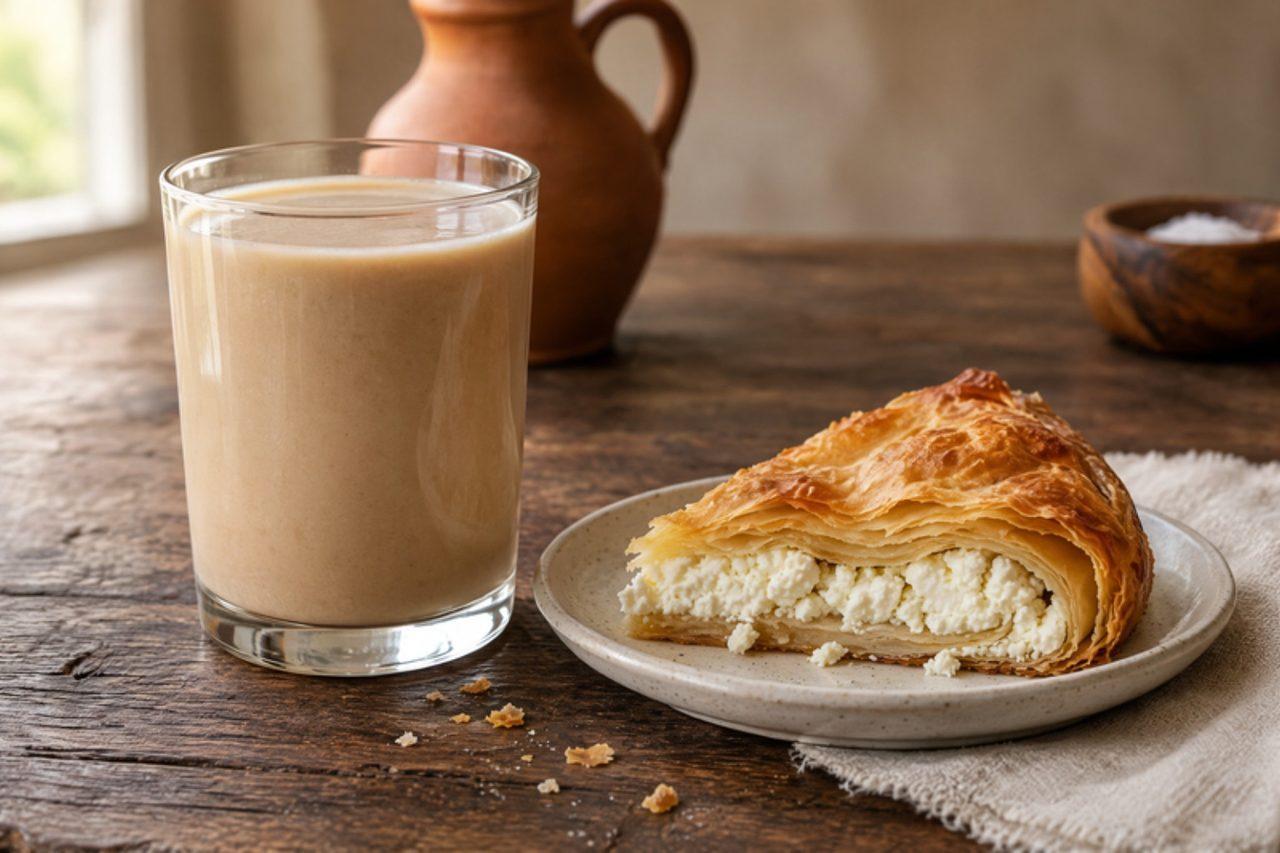
AI-generated image
Boza
Боза: thick, tangy-sweet fermented millet drink, poured from the bottle with a hot banitsa on winter mornings


In Bulgaria boza is a breakfast habit: a plastic bottle of it from the corner pastry shop and a slice of hot, flaky banitsa, bought on the way to work or school, especially from autumn through to spring. Towns such as Radomir, Plovdiv and Sofia argue over whose is best. It is the colour of milky coffee, thick enough to coat the glass, sweet up front with a sour, bready finish and a faint prickle. Like every fermented grain drink it makes a trace of alcohol, well under 1% when drunk young. The base is millet flour, toasted for flavour, cooked into a thin porridge, then fermented for about a day before being strained and sweetened. The common mistake is adding the yeast while the porridge is still hot, which kills it and leaves you with sweet gruel; wait until it feels only just warm on your wrist. It is ready when the surface is covered in small bubbles, it smells like fresh bread with a sour edge and tastes pleasantly tangy. Chef's tip: keep back a glass of each batch in the fridge and use it instead of yeast next time; boza made from an old starter is rounder and more sour.
- Total time
- 70 min
- Difficulty
- medium
- Serves
- 8
Ingredients
For the base
- 5 ½ oz millet flouror hulled millet ground fine in a spice grinder
- 1 oz plain wheat flourgives body; use more millet if you prefer
- 8 ¼ cups water
For fermenting and sweetening
- 7 oz white sugar
- ½ tsp instant dried yeastor 150 ml boza from a previous batch
To serve
- ¼ tsp ground cinnamon (optional)a pinch per glass
Shop this recipe on Amazon
What you'll need
Links open Amazon in a new tab. As an Amazon Associate, WhatToEat.Today earns from qualifying purchases.
Method
0/9 doneStep 1: Toast 5 ½ oz millet flour and 1 oz plain wheat flour together in a dry, heavy pan over a medium-low heat, stirring constantly, until the flour turns a pale biscuit colour and smells like toasted bread. Do not let it scorch.
10 minStep 2: Tip the warm flour into a bowl and whisk in 500 ml of the 2 cups water, a little at a time, to a smooth, lump-free batter.
3 minStep 3: Bring the rest of the 6 ¼ cups water to the boil in a large pot. Whisk in the batter and simmer over a low heat, stirring often and scraping the bottom, until it thickens into a thin, glossy porridge that coats a spoon.
40 minStep 4: Take off the heat and leave until only just warm to the touch, about 86°F. Test on the inside of your wrist: if it feels hot, wait longer, because heat kills the yeast.
60 minStep 5: Stir in 50 g of the 1 ¾ oz white sugar and the ½ tsp instant dried yeast. Cover with a clean cloth and leave at warm room temperature (22–79°F) for 18–24 hours, stirring once or twice. It is ready when the top is full of small bubbles, it smells sour and bready and tastes pleasantly tangy.
Step 6: Press through a fine sieve into a large jug, pushing with a ladle to get all the thick liquid through; discard the gritty bran left behind.
10 minStep 7: Stir in the rest of the 5 ½ oz white sugar until dissolved, then taste: it should be clearly sweet with a sour finish. Add a splash of water if it is too thick to pour.
3 minStep 8: Pour into clean plastic bottles, leaving a quarter empty, and refrigerate. It keeps 3–5 days in the fridge and gets sourer and slightly more alcoholic each day. Open the caps once a day to release pressure (a firm, swollen plastic bottle tells you it is building). Throw it away if you see mould, it turns slimy or it smells rotten rather than sour.
Step 9: Shake well and serve cold in glasses, with a pinch of ¼ tsp ground cinnamon on top if you like, alongside banitsa.
1 min
Nutrition per serving
- Calories
- 150 kcal
- Protein
- 2 g
- Carbs
- 33 g
- Fat
- 1 g
- Fibre
- 1 g
Nutrition values are estimates.
KrazyBadal
Good to know
- How long does boza take?
- About 70 minutes in total: 20 minutes to prepare and 50 minutes to cook.
- How many people does it serve?
- 8 as written. Change the servings above the ingredients and every amount scales to match.
- Is it vegan?
- Yes. It has no meat, fish, dairy or eggs.
- Can I make it ahead?
- Yes. It keeps well, so you can cook it earlier in the day or the day before and reheat it.
- What can I use instead of white sugar?
- Caster sugar, same amount.
Reviews
No reviews yet. Be the first to cook it.
Rate this recipe
Sign in to rate and review this recipe.
You might also like
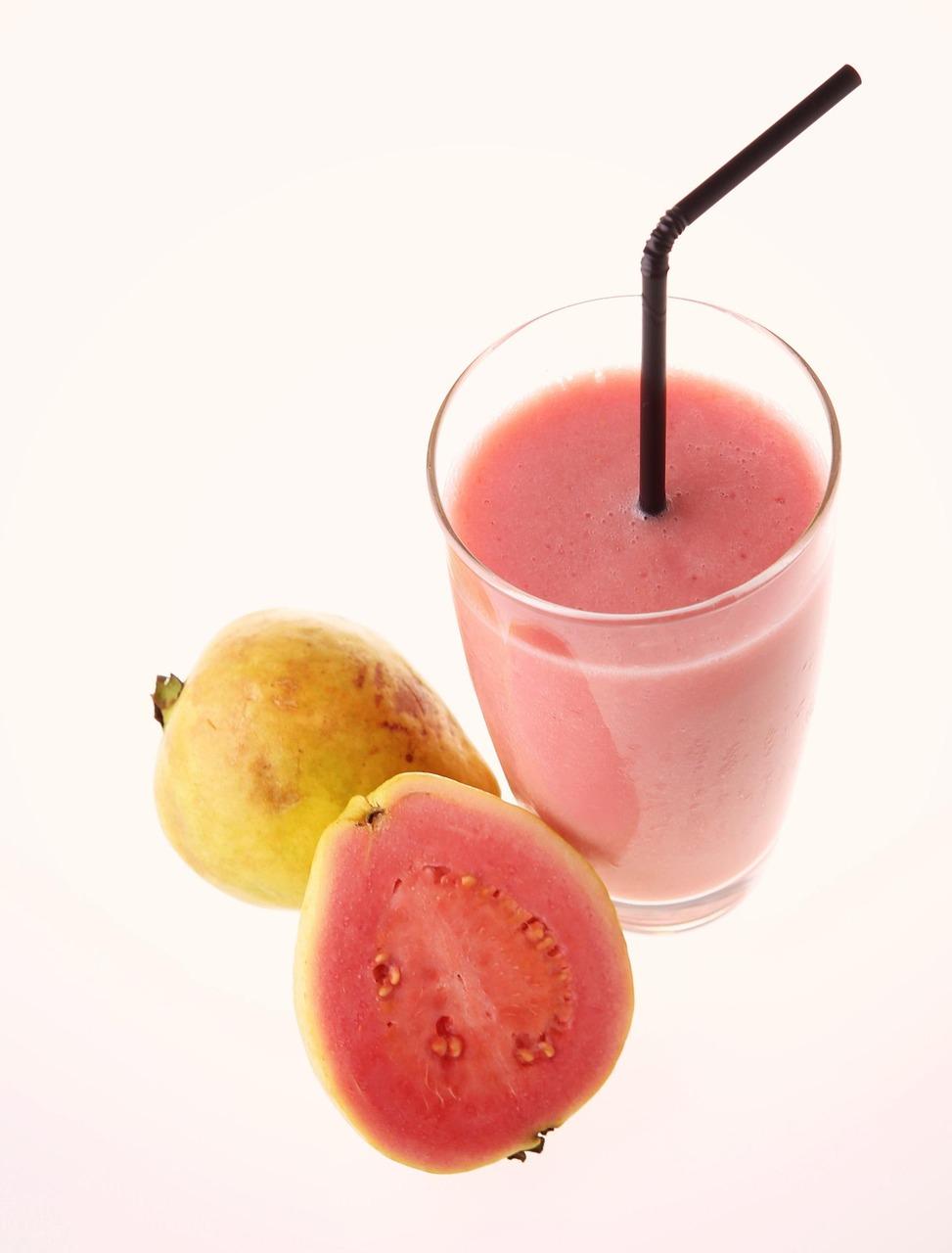
Guava delight
A thick, fragrant blend of ripe guava, mango and banana, boosted with a spoonful of guava powder from the health shop. The book calls it a modern-day vitality drink, drawing on guava's long use in traditional Indian medicine. Serve it well chilled; sieve it if you don't like the little guava seeds.


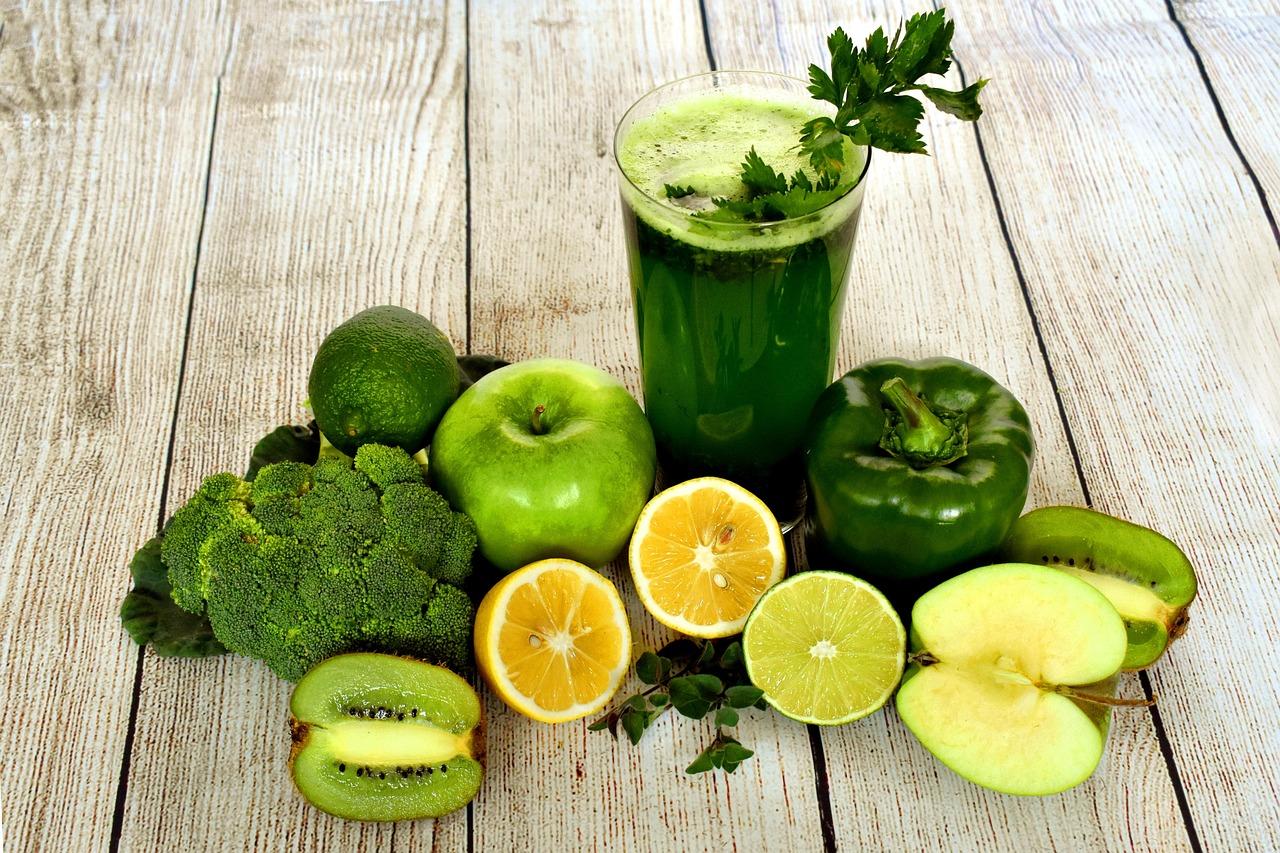
Power pack
A sweet, energising juice of apples, pears and kiwi fruit with a stick of celery, all used unpeeled for extra goodness. It's naturally sweet, so it needs no sugar. Serve well chilled.
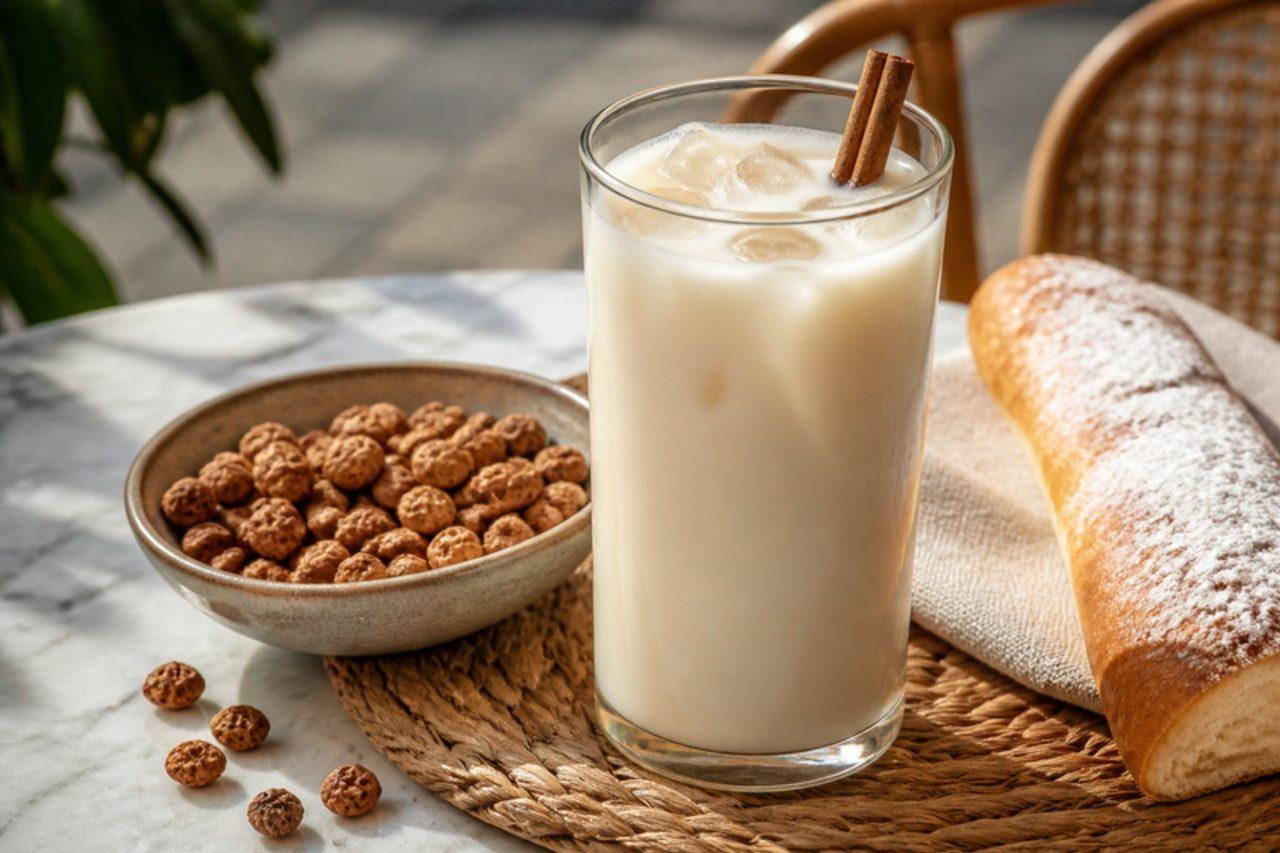
Horchata de chufa
Horchata de chufa is the drink of Valencia's summer, sold ice-cold in the city's horchaterías with long, soft fartons pastries for dipping. It is made from chufas, or tiger nuts: small wrinkled tubers grown around the village of Alboraya just north of Valencia, which have their own protected designation of origin. Soaked, ground with water, strained and sweetened, they give a creamy, nutty, naturally dairy-free milk with a hint of cinnamon. Valencians drink it very cold, or half-frozen as 'granizada'. Chef's tip: soak the tiger nuts for a full 24 hours and change the water once; they must be plump and soft enough to blend into a fine pulp, or the horchata will be thin and taste of raw starch.
 Spanish