Skip to content

Recipes with boiled bamboo shoot

3 recipes that use boiled bamboo shoot, with photos, step-by-step instructions and cook times. The quickest, Chin baung kyaw, takes 30 minutes. It is most often cooked with sugar, dried shiitake mushroom and kombu.

Got a few things in the fridge? Search by everything you have

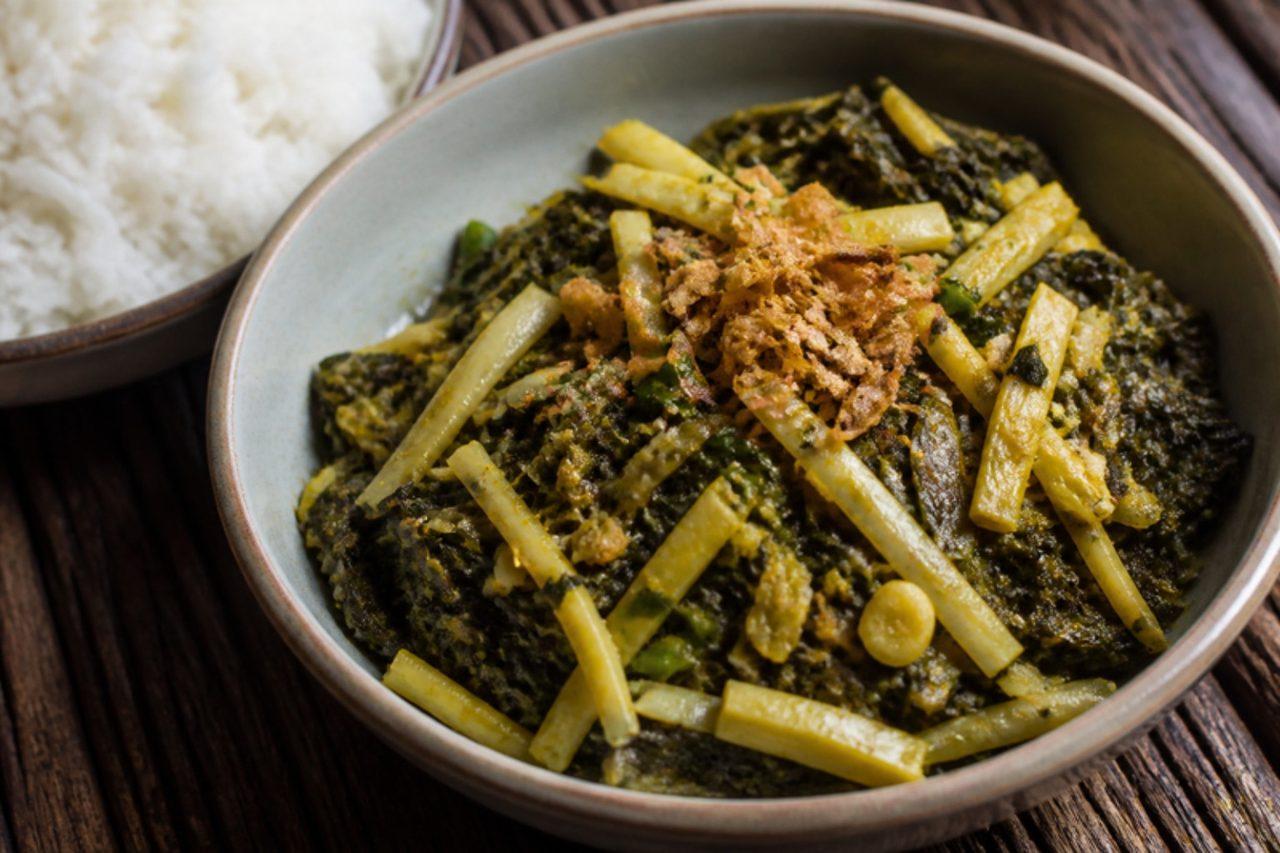
Chin baung kyawStir-fried roselle leaves

Chin baung, the tart leaf of the roselle plant, is so loved in Myanmar that it is sometimes called the national vegetable, and chin baung kyaw is cooked in homes from Yangon to Mandalay as a sharp, garlicky side for rice and a bowl of light soup. The leaves collapse into a dark, tangy, almost jammy relish with bamboo shoot and chilli. The usual version has dried shrimp or a little fish sauce; this one is vegetarian, using fried shallots and a pinch of salt for savour. It is a side with about 3 g of protein per portion. The common mistake is under-cooking: the leaves should be fried until the liquid has gone and the oil separates, or the sourness tastes raw. If you can't find roselle leaves, use sorrel or spinach with a squeeze of lime. Chef's tip: let the garlic and shallots turn properly golden before the leaves go in; their sweetness balances the sourness.

by KrazyBadal 0 views

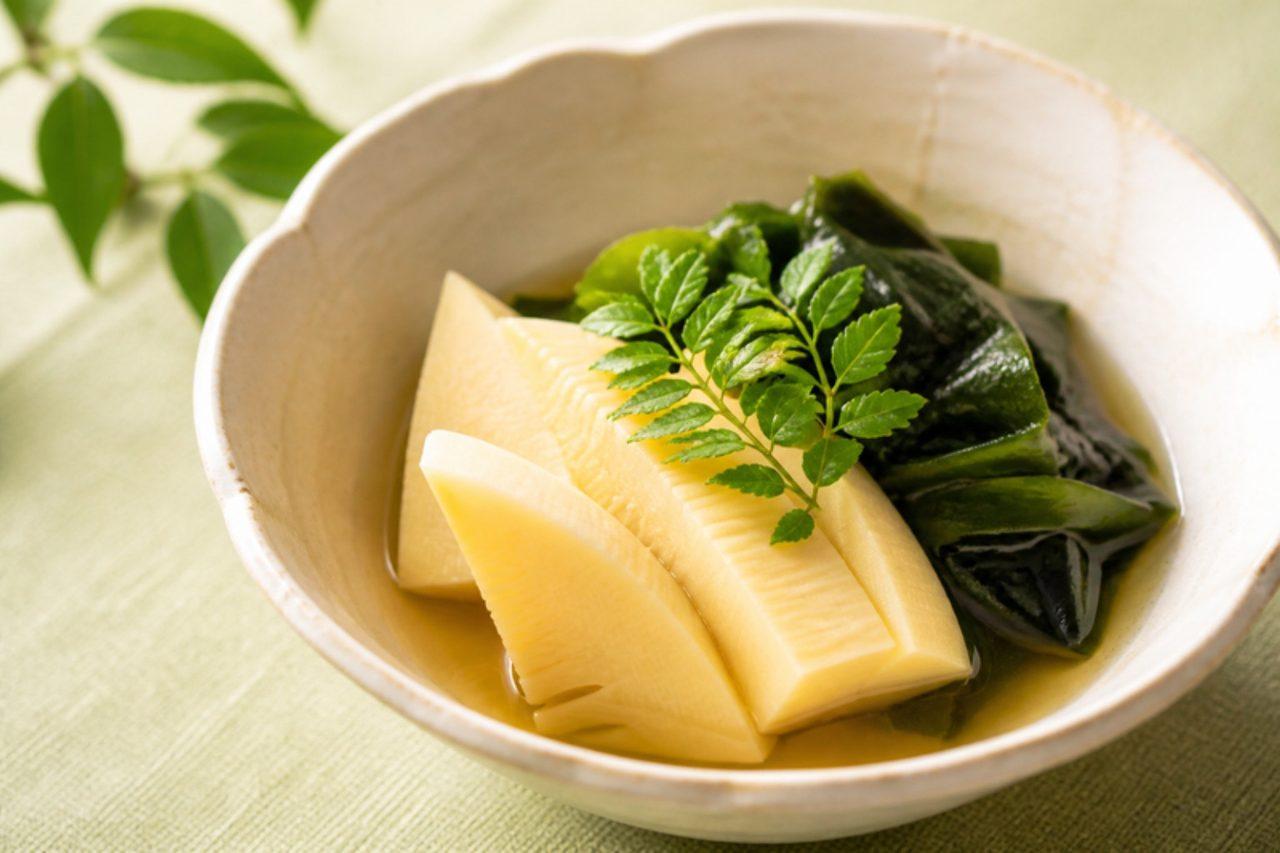
Wakatake-niBamboo shoot and wakame simmer

Wakatake-ni means 'young bamboo simmer', and in Kyoto it marks the few weeks of April when fresh shoots arrive from the hills around Rakusai; it is served in small bowls at home and in kaiseki menus as a quiet taste of spring. Tender bamboo shoot is simmered in a pale, lightly seasoned broth, and soft wakame goes in at the very end, so the bowl is all clean, sweet and sea flavours. Classic recipes use bonito dashi; this one uses kombu and dried shiitake, and sugar instead of mirin, so it is vegan and alcohol-free. It is a light side dish of about 4 g of protein per portion. The common mistake is boiling the wakame with the bamboo: it turns slimy and drab, so it needs only a minute. Chef's tip: cool the bamboo in the broth for 10 minutes before reheating; it drinks up the seasoning far better than it does while boiling.

by KrazyBadal 0 views

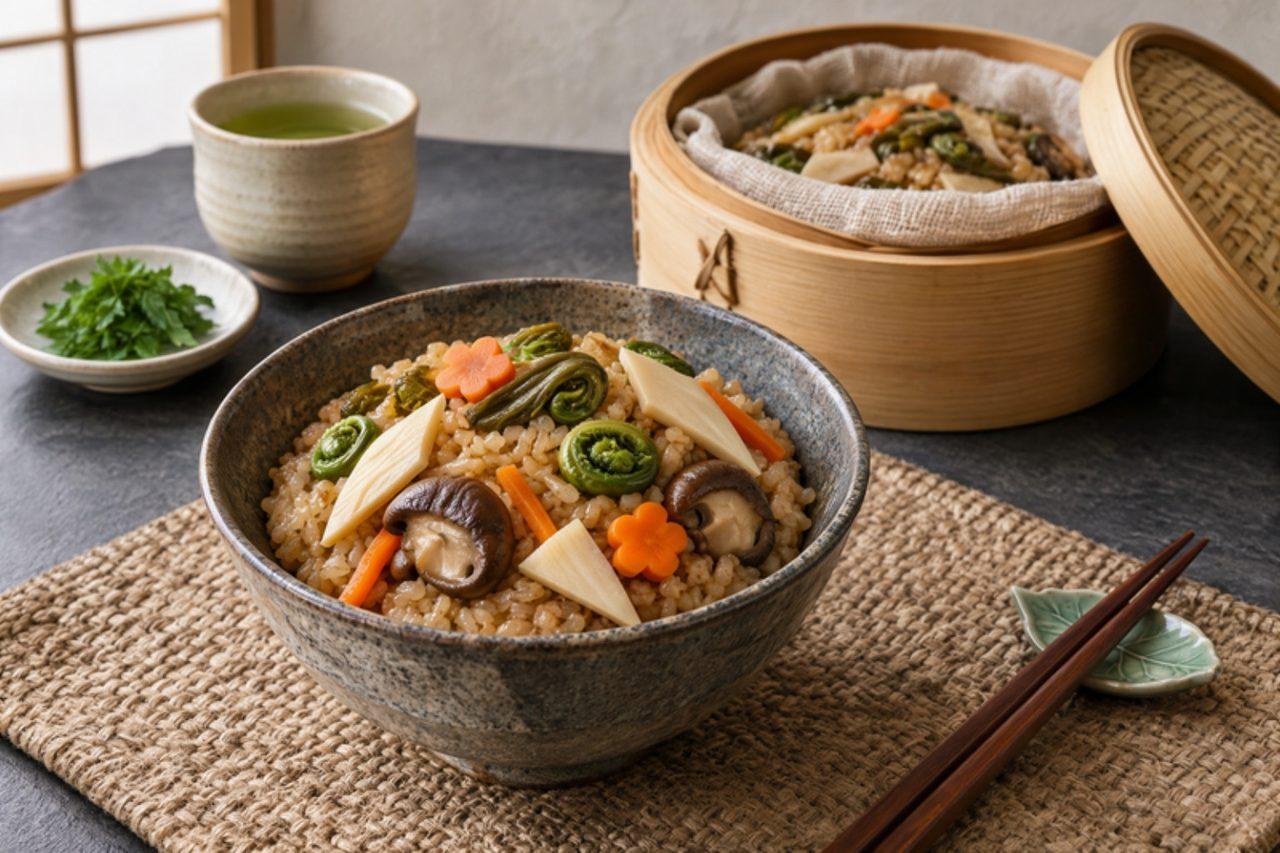
Sansai okowaSticky rice with mountain vegetables

In the snowy valleys of Yamagata, Niigata and Nagano, sansai okowa is what families cook in late spring when bracken, royal fern and bamboo shoots come down from the hills, and it turns up again in autumn rice-ball lunchboxes and at temple festivals. Soaked glutinous rice soaks up a soy and shiitake broth and cooks to a chewy, glossy, gently savoury pile studded with crunchy, slightly bitter greens. Eat it warm or at room temperature with miso soup and pickles, or shape it into onigiri. The usual mistake is giving sticky rice as much water as ordinary rice: it turns into paste, so use much less and let the soaking do the work. Chef's tip: buy the boiled, vacuum-packed mixed sansai sold in Japanese shops, and rinse it well, as it is often stored in brine.

by KrazyBadal 0 views

Goes well with boiled bamboo shoot