
AI-generated image
Yaki nasu
Grilled aubergine
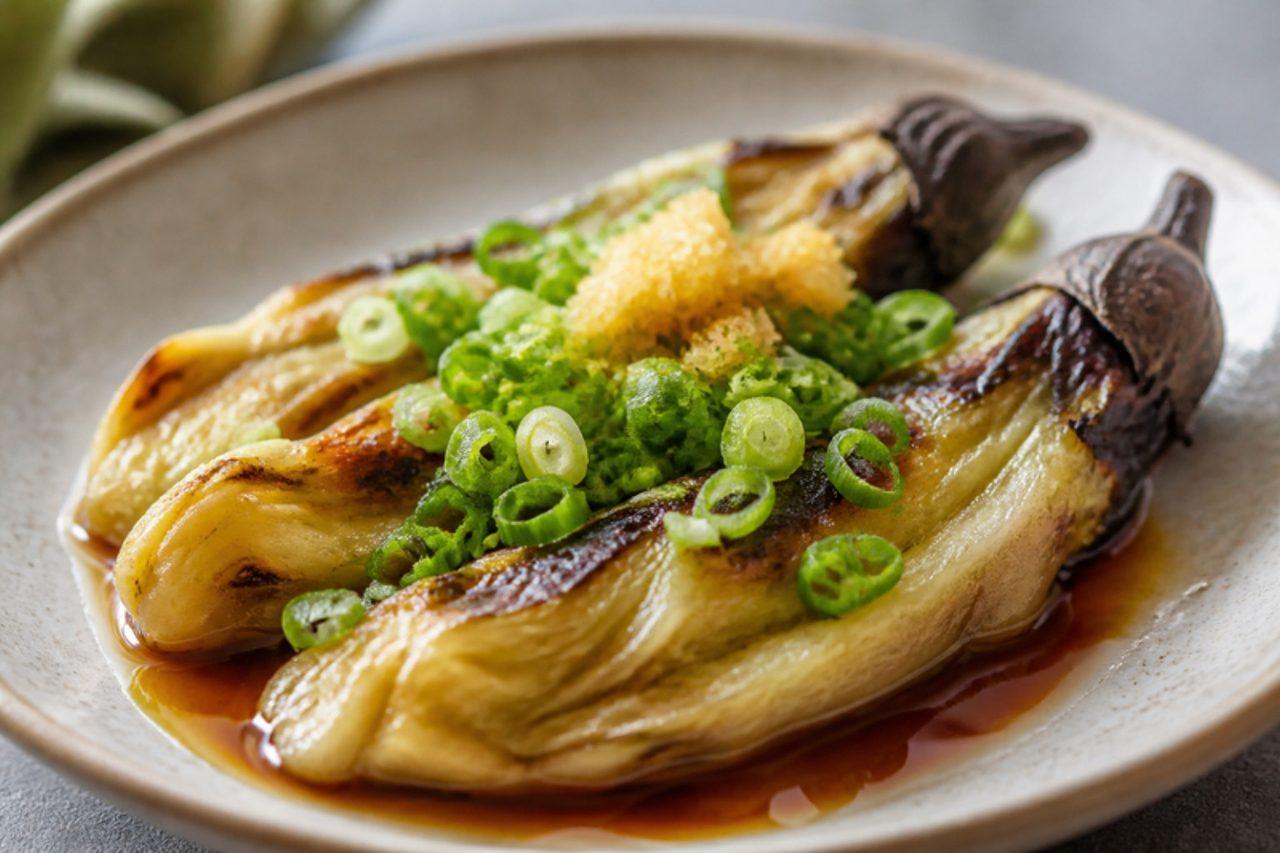
Yaki nasu (焼きなす): charred, peeled aubergine with ginger and soy (vegetarian version)


Summer evenings in Japanese homes and izakaya often bring a plate of yaki nasu: whole aubergines blackened over a flame until the skin is burnt and the inside collapses into smoky, silky strands. Peeled while hot, they are served chilled or warm with grated ginger, soy and spring onion. The classic topping is bonito flakes; this vegetarian version uses toasted sesame and a kombu–shiitake dashi in the dressing instead. The common mistake is pulling the aubergine off the flame too early, leaving a firm, bitter centre; it should feel completely floppy. Chef's tip: plunge the charred aubergines into iced water for a few seconds only, which makes them easy to peel without washing away the smoky flavour.
- Total time
- 25 min
- Difficulty
- easy
- Serves
- 2
Ingredients
- 4 slim Japanese auberginesor 2 medium aubergines
- ⅓ oz fresh gingerfinely grated
- 1 spring onionfinely sliced
For the dressing
- 1 ½ tbsp soy sauce
- 2 tbsp kombu-shiitake dashifish-free; see the shojin dashi recipe, or soak 5 g kombu and 2 dried shiitake in water overnight
To finish
- 1 tsp toasted white sesame seeds (optional)
Shop this recipe on Amazon
What you'll need
Spices & pantry
Fresh ingredients (3)
Links open Amazon in a new tab. As an Amazon Associate, WhatToEat.Today earns from qualifying purchases.
Method
0/5 doneStep 1: Prick each 4 slim Japanese aubergines a few times with a skewer so it doesn't burst. Set them straight on a gas flame, under a very hot grill or on a barbecue.
1 minStep 2: Cook for 12–18 minutes, turning every few minutes, until the skin is charred black all over and the aubergines are completely limp when pressed with tongs.
18 minStep 3: Dip them in a bowl of iced water for a few seconds, then peel off the skin from the stem end with your fingers. Cut off the stems and tear the flesh lengthways into strips.
Step 4: Mix 1 ½ tbsp soy sauce with 2 tbsp kombu-shiitake dashi.
Step 5: Arrange the aubergine on a plate, top with ⅓ oz fresh ginger, 1 spring onion and 1 tsp toasted white sesame seeds, and spoon the dressing over. Serve warm, or chill for an hour and serve cold.
Nutrition per serving
- Calories
- 70 kcal
- Protein
- 3 g
- Carbs
- 12 g
- Fat
- 1 g
- Fibre
- 6 g
Nutrition values are estimates.
KrazyBadal
Good to know
- How long does yaki nasu take?
- About 25 minutes in total: 5 minutes to prepare and 20 minutes to cook.
- How many people does it serve?
- 2 as written. Change the servings above the ingredients and every amount scales to match.
- Is it vegan?
- Yes. It has no meat, fish, dairy or eggs.
- What can I use instead of fresh ginger?
- ¼ tsp ground ginger per tbsp fresh (add it with the spices).
- What can I use instead of spring onion?
- Chives, or a little finely sliced onion.
Reviews
No reviews yet. Be the first to cook it.
Rate this recipe
Sign in to rate and review this recipe.
You might also like
Yaki onigiriGrilled rice balls
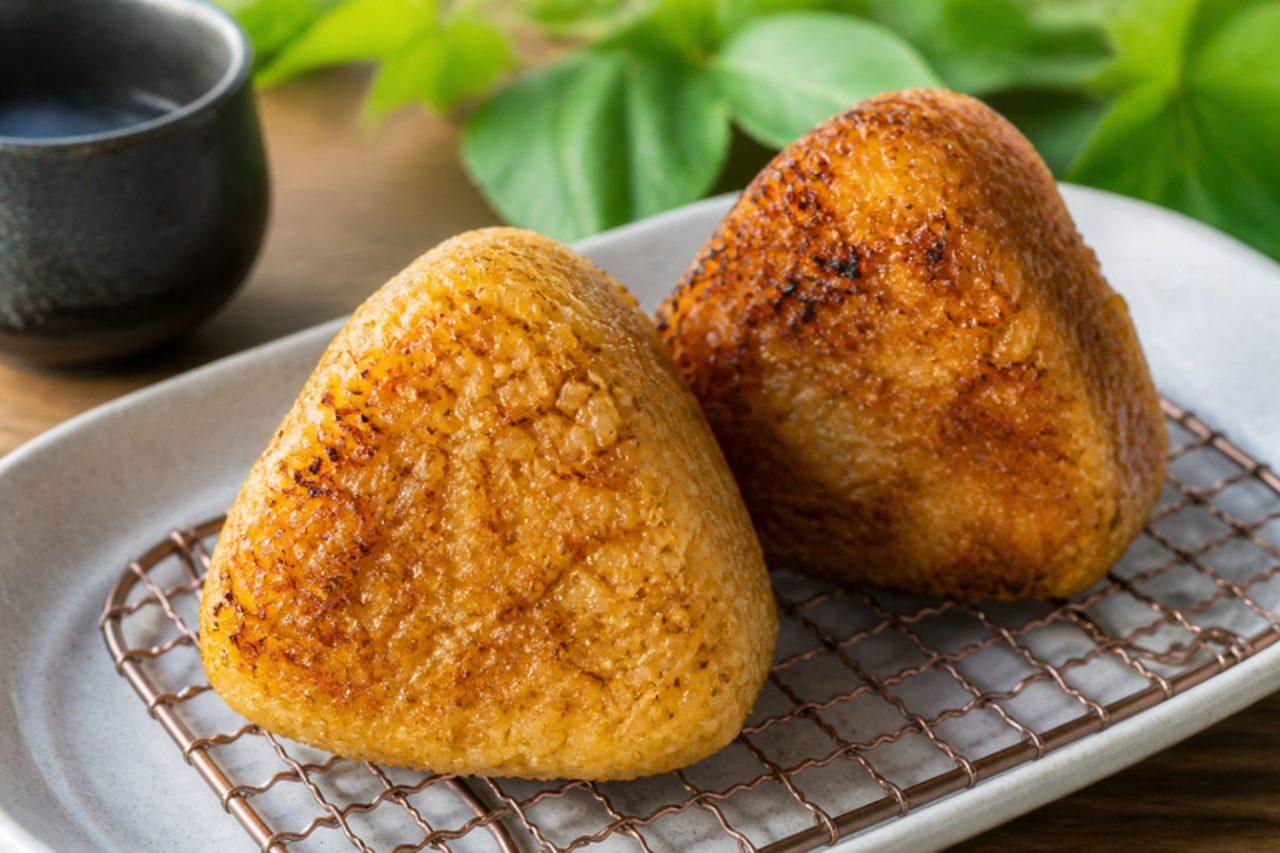
Yaki onigiri (焼きおにぎり) are rice balls grilled until they form a crisp, toasty crust, then brushed with soy sauce glaze. They are eaten all over Japan, at izakaya, at barbecues and from the freezer section, as a snack or with miso soup. The inside stays soft and steamy while the outside crackles. Best eaten hot, straight from the pan. Chef's tip: let the shaped rice balls dry for 10 minutes before they go in the pan. A drier surface forms a better crust and won't stick, and the glaze goes on only at the end so it doesn't burn.

Miso soup
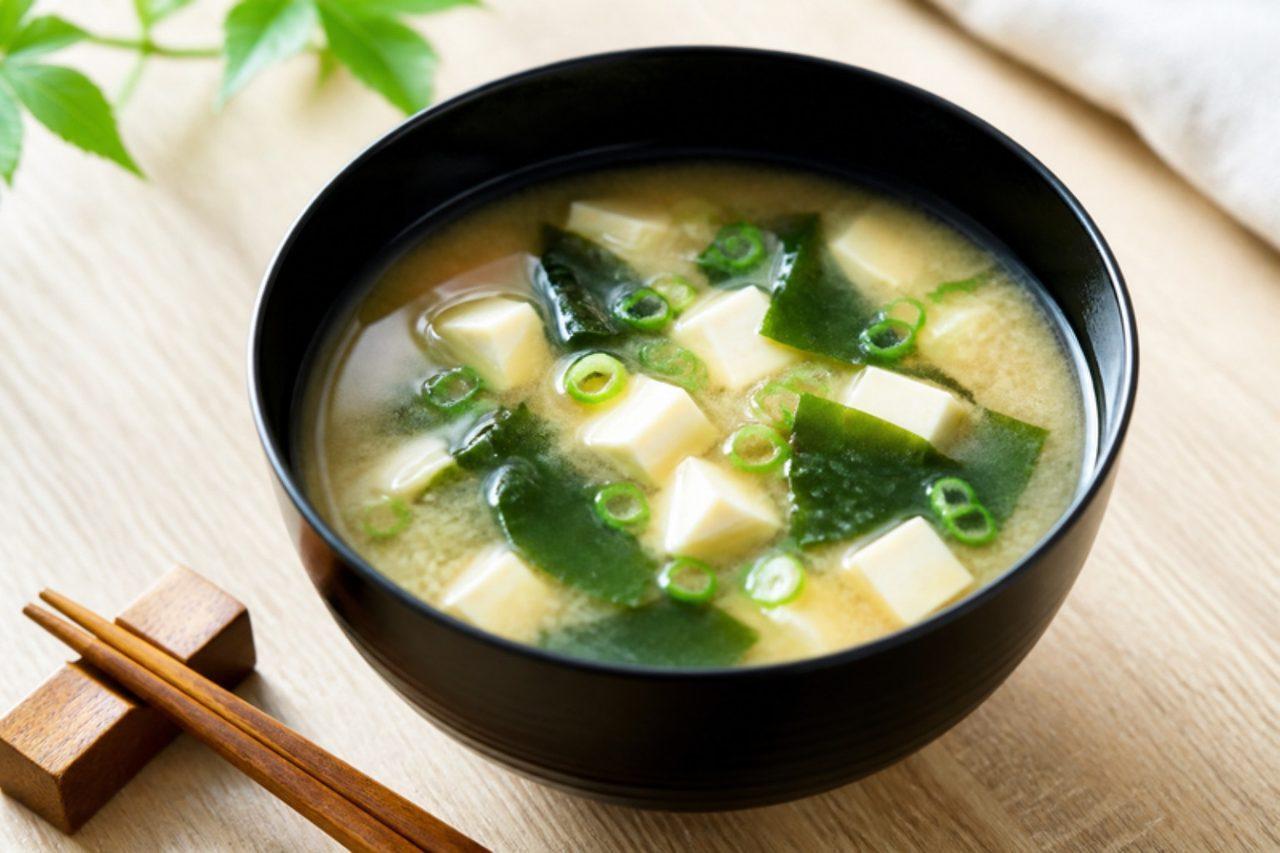
Miso soup (味噌汁) is drunk every day in homes all over Japan, at breakfast as well as dinner, beside a bowl of rice. The base is dashi; this vegan version uses kombu and dried shiitake instead of bonito, which gives it a deep, rounded flavour. Silken tofu and wakame seaweed are the classic fillings. It takes ten minutes; just remember not to boil the miso. Chef's tip: add the miso at the very end and never let it boil. Boiling kills the miso's fresh, fermented aroma; Japanese cooks say the soup should only 'smile', with the surface barely trembling.
TashmijabiMashed potatoes with stretchy cheese
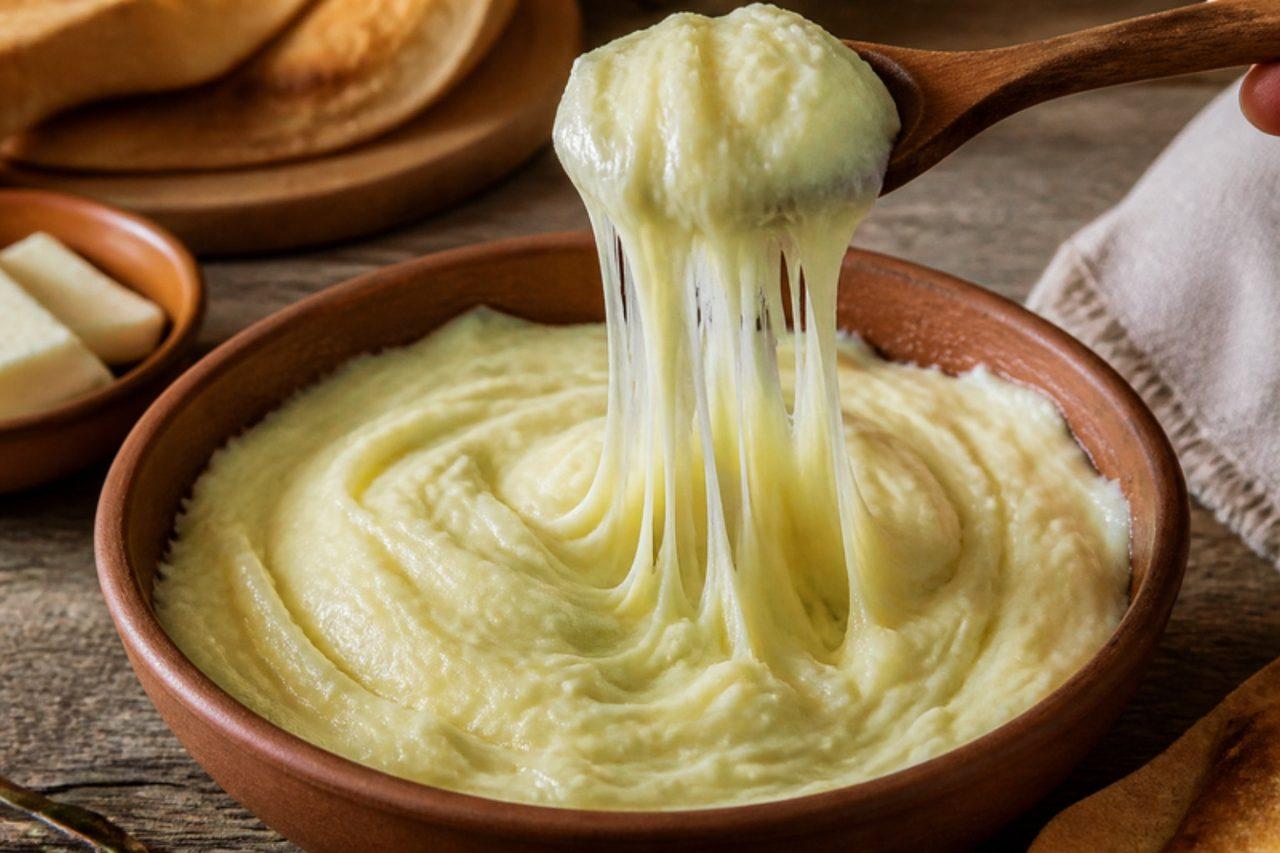
Potatoes grow well in the cold valleys of Svaneti, and tashmijabi is how families around Mestia turn them into a feast dish: they are mashed hot, then beaten with handfuls of young sulguni until the purée becomes glossy and stretches from the spoon in long strands. It is served with grilled meat, kubdari or simply with pickles and Svan salt. A common mistake is letting the potatoes cool before adding the cheese; they must be piping hot for the cheese to melt and stretch. Chef's tip: keep the pan on a low heat while you beat, and use a firm wooden spoon. Most sulguni uses animal rennet; choose a vegetarian one or use mozzarella.
 Georgian
