
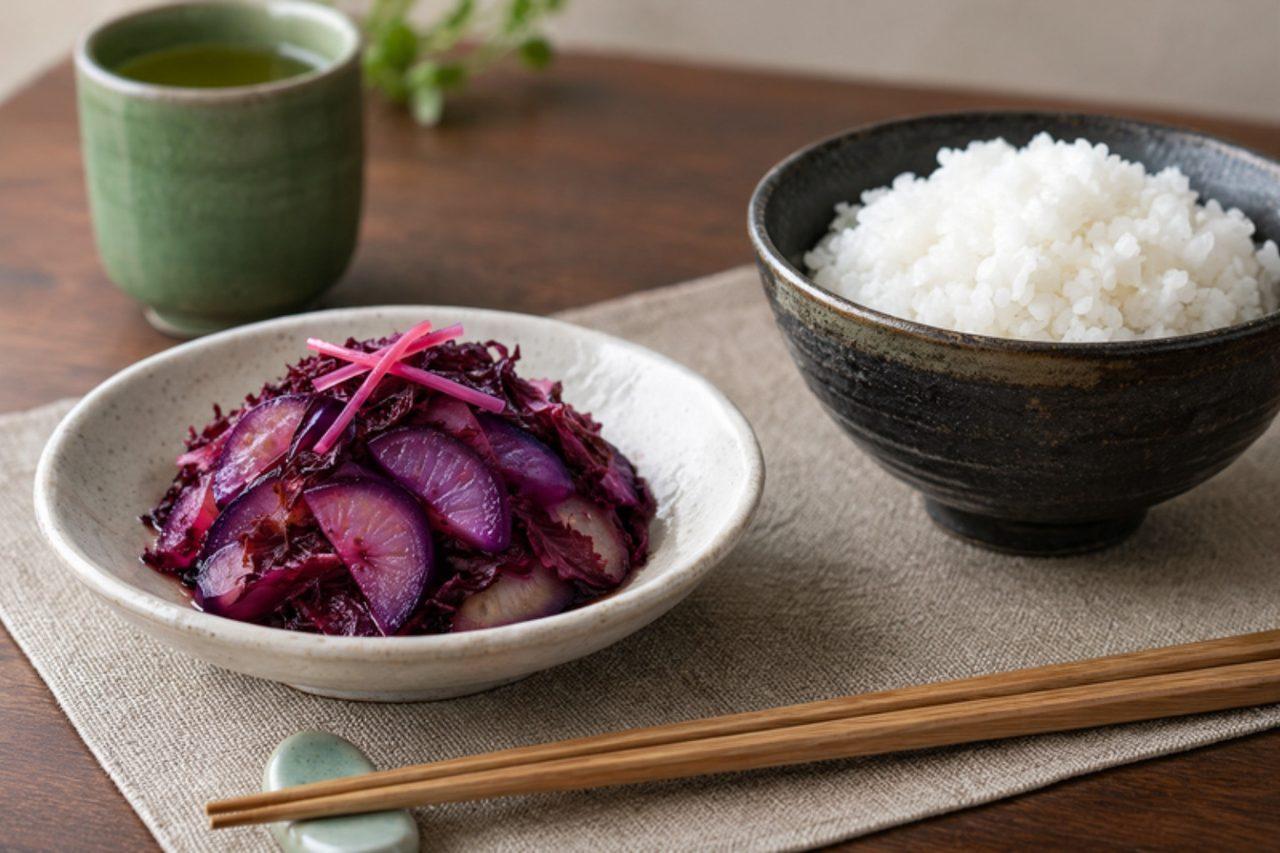
AI-generated image
Shibazuke
Shibazuke (しば漬け): Kyoto's purple pickle of aubergine and cucumber with red shiso


Shibazuke comes from Ohara, in the hills north of Kyoto, where summer aubergines, cucumbers and myoga ginger are pressed with salt and red shiso leaves until everything turns a vivid purple and pleasantly sour. A few slivers sit beside the rice in Kyoto bento boxes. This home version is lightly fermented for a day under a weight. The common mistake is too little weight: the vegetables must sit under their own brine or they spoil instead of souring. Chef's tip: rub the shiso with salt and squeeze out its first dark, bitter juice before it ever touches the vegetables.
- Total time
- 30 min
- Difficulty
- easy
- Serves
- 6
Ingredients
- 2 Japanese aubergineabout 250 g
- 2 Japanese or mini cucumbersabout 200 g
- 2 myoga ginger buds (optional)or 15 g young ginger
- 1 oz red shiso leavesabout 30 leaves
- 4 tsp saltdivided
- 1 tbsp rice vinegar
Shop this recipe on Amazon
Spices & pantry
Fresh ingredients (3)
Links open Amazon in a new tab. As an Amazon Associate, WhatToEat.Today earns from qualifying purchases.
Method
0/6 doneStep 1: Halve 2 Japanese aubergine lengthways and cut into 3 mm half-moons. Slice 2 Japanese or mini cucumbers into 3 mm rounds and 2 myoga ginger buds into thin strips, if using.
Step 2: Put the vegetables in a bowl with 3 tsp salt and toss well. Leave for 20 minutes, until they are limp and sitting in liquid.
20 minStep 3: Meanwhile, wash 1 oz red shiso leaves and rub it hard with the remaining 1 tsp salt until purple-black juice runs out. Squeeze and throw that juice away.
Step 4: Squeeze the vegetables gently and mix them with the shiso and 1 tbsp rice vinegar. The vinegar sets the bright purple colour.
Step 5: Pack into a clean bowl or pickle press, cover with cling film on the surface and put a weight of about 1 kg on top (a bag of rice or water-filled jar). Leave somewhere cool, or in the fridge in hot weather, for 24 hours, until the brine covers the vegetables and they taste pleasantly sour.
Step 6: Drain, chop roughly and keep in a lidded jar in the fridge for up to 1 week. Pack a spoonful beside bento rice.
Nutrition per serving
- Calories
- 15 kcal
- Protein
- 1 g
- Carbs
- 3 g
- Fat
- 0 g
- Fibre
- 1 g
Nutrition values are estimates.
KrazyBadal
Good to know
- How long does shibazuke take?
- About 30 minutes in total.
- How many people does it serve?
- 6 as written. Change the servings above the ingredients and every amount scales to match.
- Is it vegan?
- Yes. It has no meat, fish, dairy or eggs.
- Is it gluten free?
- Yes, as written. Check the labels on stock, sauces and spice mixes, which sometimes contain gluten.
- Can I make it ahead?
- Yes. It keeps well, so you can cook it earlier in the day or the day before and reheat it.
- What can I use instead of japanese or mini cucumbers?
- Courgette, same weight (in salads, use young ones).
- What can I use instead of rice vinegar?
- Cider vinegar with a pinch of sugar, same amount.
Reviews
No reviews yet. Be the first to cook it.
Rate this recipe
Sign in to rate and review this recipe.
You might also like
Okonomiyaki
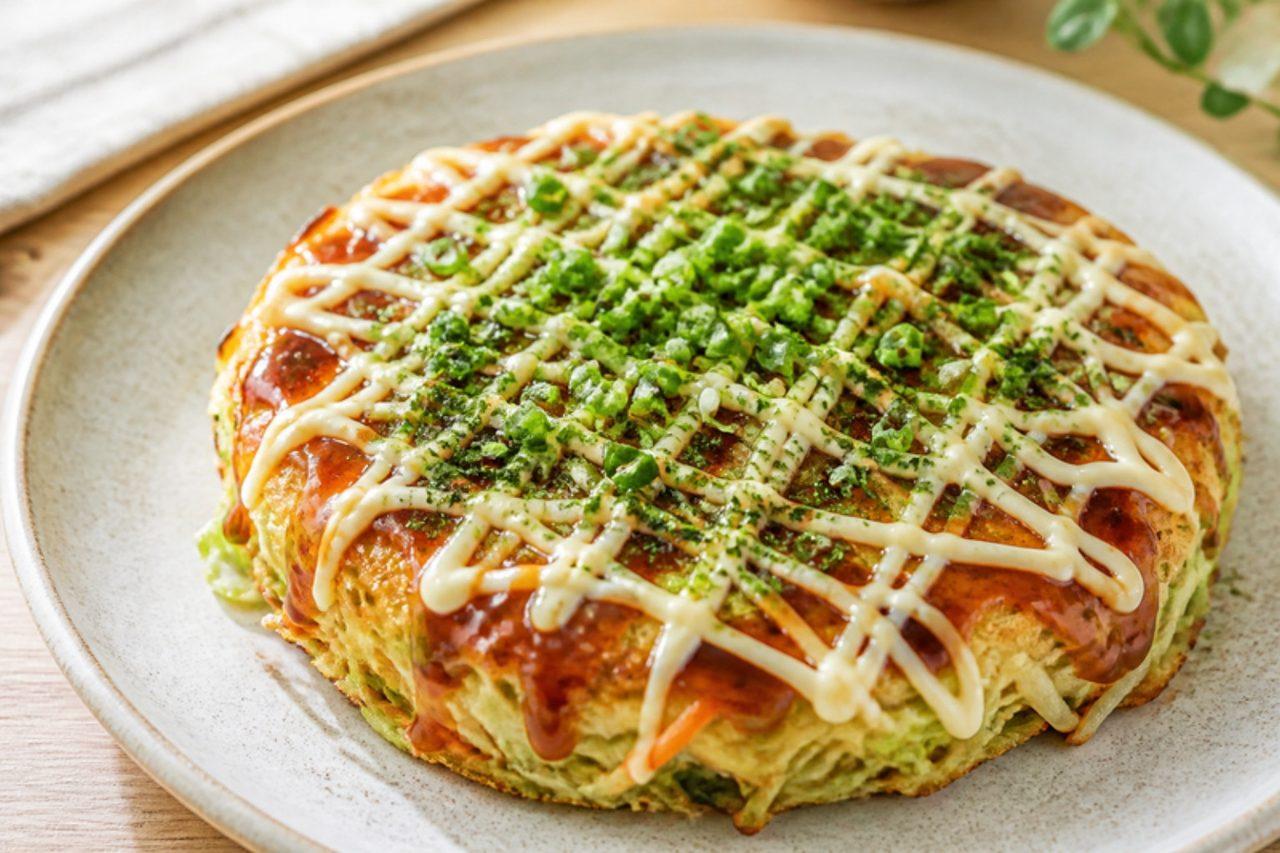
Okonomiyaki (お好み焼き, 'grilled as you like it') is the pride of Osaka, where it's cooked on hot iron griddles in lively restaurants. Finely shredded cabbage is folded into a light batter with egg and spring onion, then fried into a thick, soft pancake with a crisp outside. It's painted with a fruity brown sauce and zigzagged with mayonnaise. Bonito flakes are usual on top; this vegetarian version uses seaweed flakes and pickled ginger instead. Chef's tip: don't press the pancake down with your spatula while it cooks. Osaka cooks leave it alone so the cabbage steams inside and stays light and fluffy; pressing squeezes out the air.
Miso soup
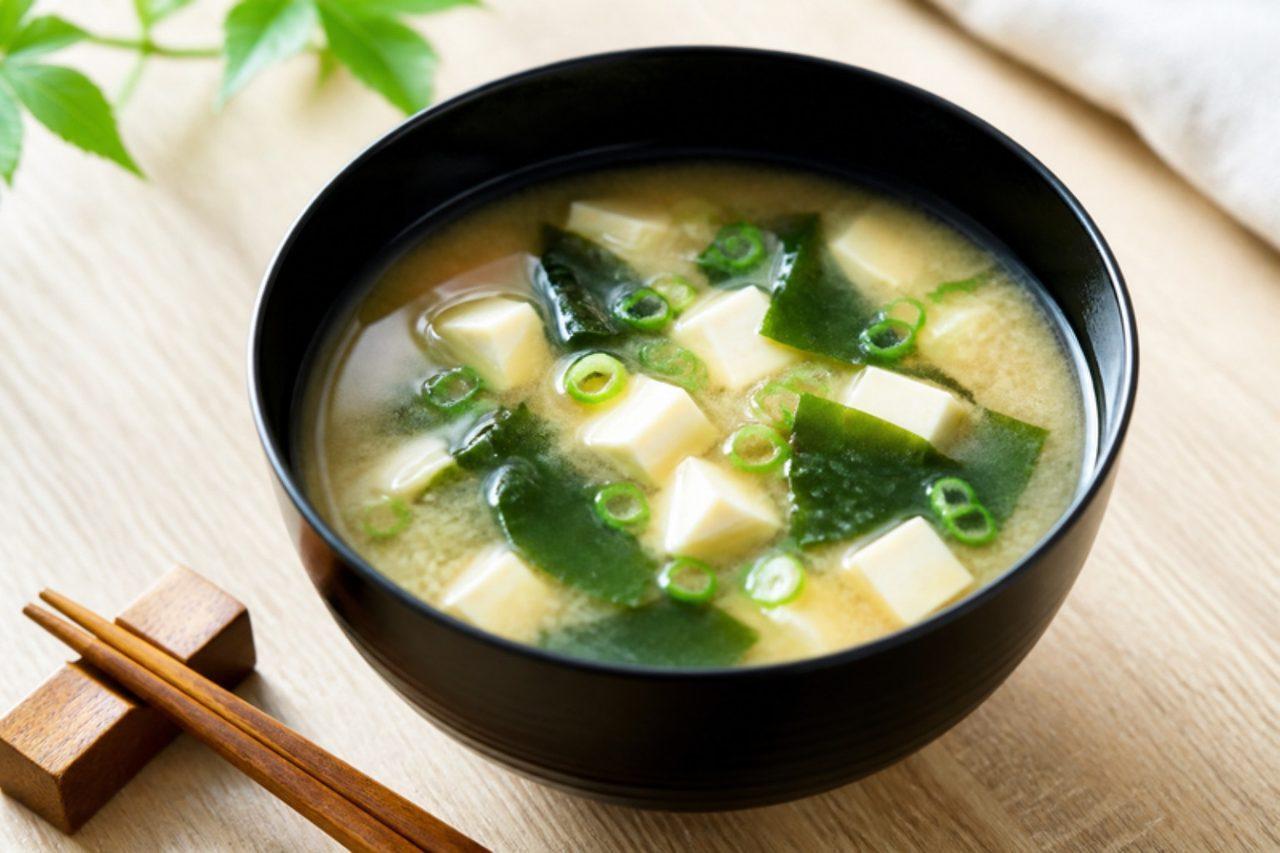
Miso soup (味噌汁) is drunk every day in homes all over Japan, at breakfast as well as dinner, beside a bowl of rice. The base is dashi; this vegan version uses kombu and dried shiitake instead of bonito, which gives it a deep, rounded flavour. Silken tofu and wakame seaweed are the classic fillings. It takes ten minutes; just remember not to boil the miso. Chef's tip: add the miso at the very end and never let it boil. Boiling kills the miso's fresh, fermented aroma; Japanese cooks say the soup should only 'smile', with the surface barely trembling.

Agedashi tofu
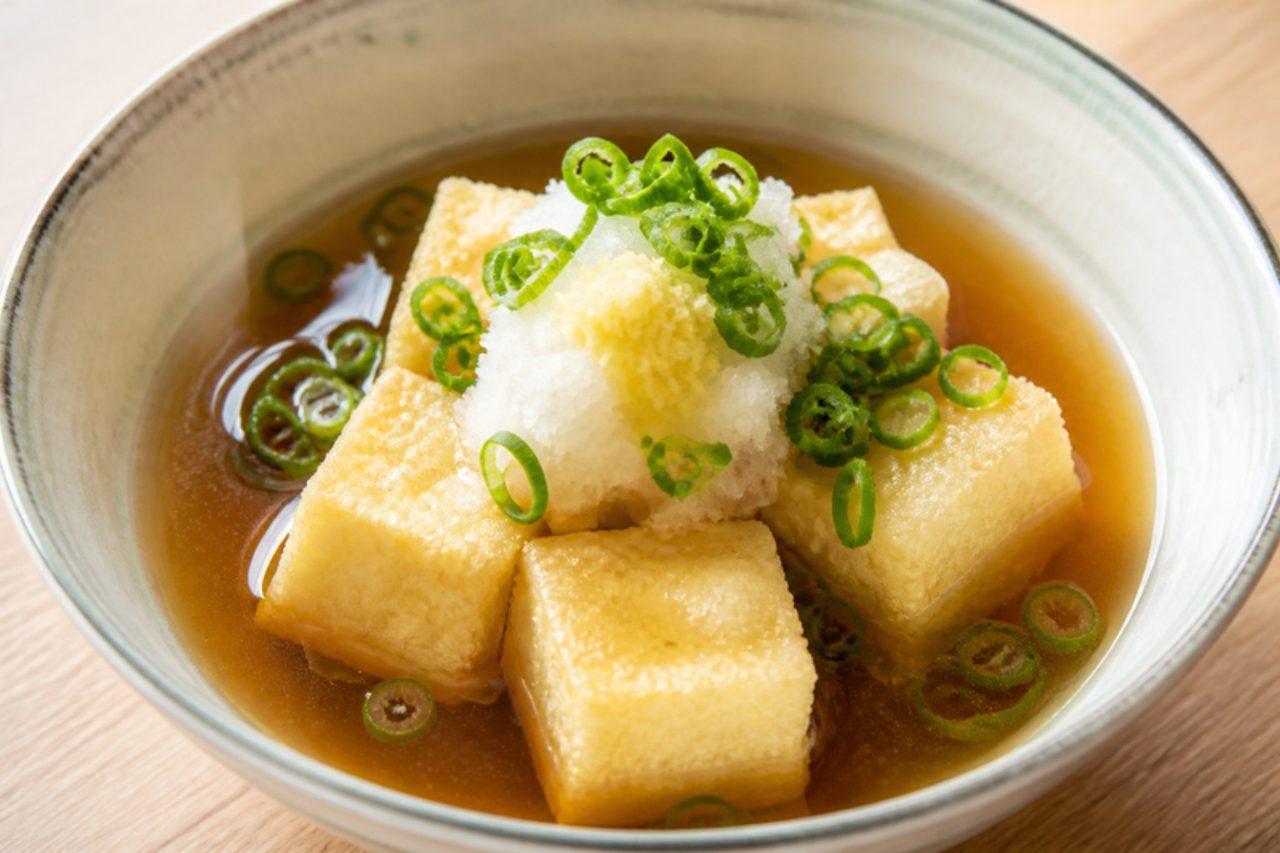
Agedashi tofu (揚げ出し豆腐) is a classic izakaya dish eaten all over Japan: cubes of soft tofu dusted in potato starch, fried until they form a thin, crisp shell, then bathed in a hot, savoury broth. The coating turns silky as it soaks up the sauce while the tofu inside stays creamy. Usually topped with bonito flakes; here it's grated daikon, ginger and spring onion with a kombu-shiitake broth instead. Chef's tip: coat the tofu in starch right before it goes into the oil, not ahead of time; if it sits, the starch turns damp and the coating fries up gummy instead of crisp.