
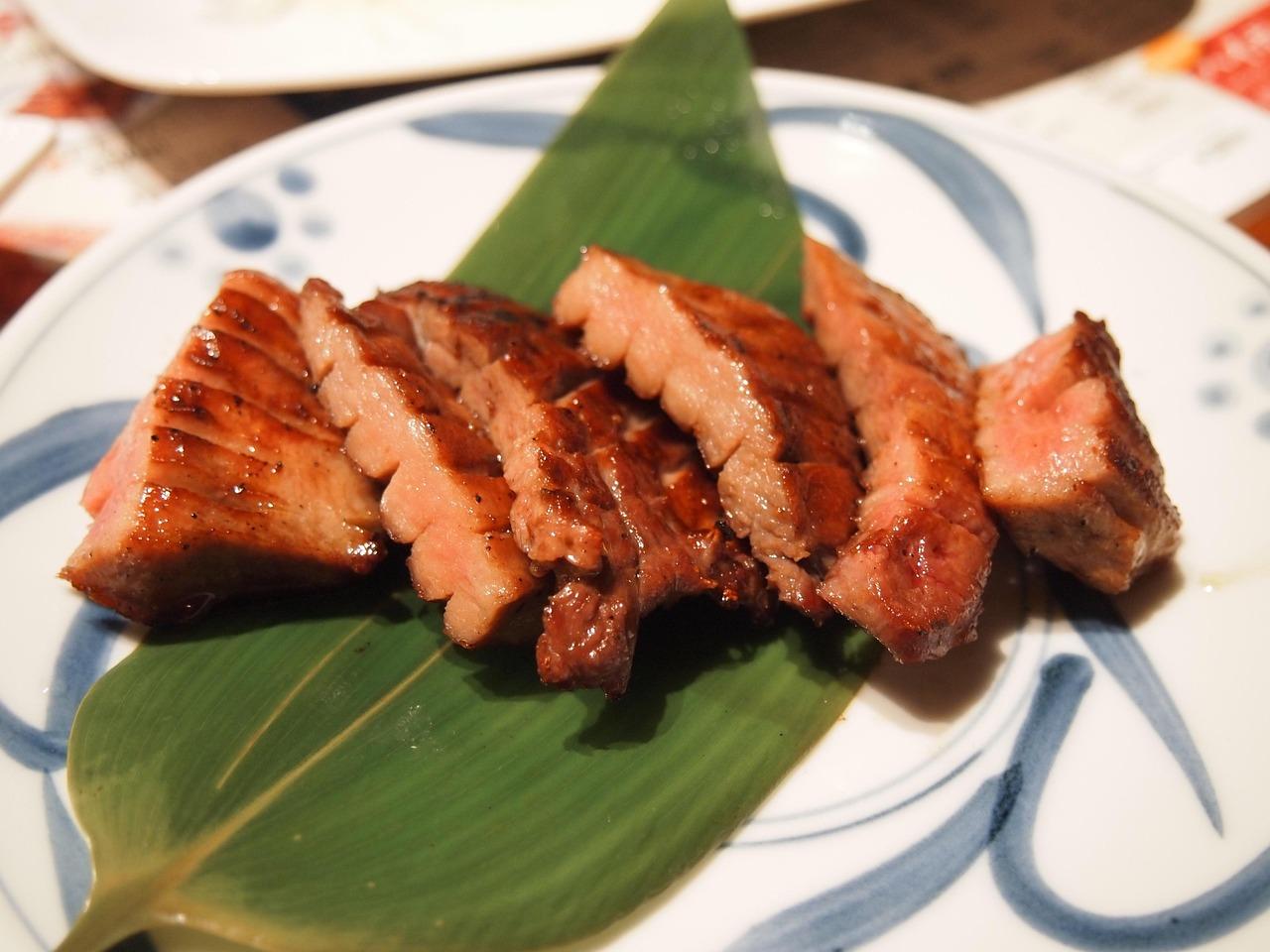
Gyutan (Sendai grilled beef tongue)
牛タン: thick, salt-seasoned slices of beef tongue grilled until springy, with barley rice and a simple clear soup
Sendai, the biggest city in Miyagi prefecture, turned beef tongue into its signature dish in the years after the Second World War. Specialist gyutan restaurants line the streets around Sendai Station, and the classic set is always the same: grilled tongue, a bowl of rice cooked with barley, a clear oxtail soup and a few pickles with a green chilli miso. This home version uses tongue sliced by a butcher, a short salt cure and a very hot pan, with a quick clear beef soup in place of the long-simmered oxtail. The meat should be chewy in a pleasant, bouncy way, with a smoky crust. Chef's tip: ask the butcher to peel the tongue and cut it into 1 cm slices; thick slices with shallow cuts on both sides stay juicy, while thin ones dry out in seconds.
- Total time
- 60 min
- Difficulty
- medium
- Serves
- 2
Ingredients
For the tongue
For the barley rice
For the clear soup (optional)
To serve
Method
0/10 doneStep 1: Rinse the 6 ½ oz Japanese short-grain rice and 1 oz pressed barley (oshimugi) or pearl barley together in a sieve until the water runs almost clear. Put them in a pan or rice cooker with the 1 cup water and leave to soak for 30 minutes while the tongue cures.
30 minStep 2: Pat the 12 ½ oz beef tongue, peeled slices dry with kitchen paper. Make 3 or 4 shallow cuts, about 2 mm deep, across each side of every slice; this stops them curling and makes them easier to bite.
Step 3: Season both sides of the slices with 1 tsp salt and ½ tsp black pepper, lay them on a plate, cover and leave in the fridge for 30 minutes (at the same time as the rice soaks). The salt seasons the meat right through and firms the surface.
30 minStep 4: Cook the rice: bring the pan to the boil over a medium-high heat, cover, turn to the lowest heat and cook for 13 minutes. Turn off the heat and leave covered for 10 minutes. In a rice cooker, use the normal setting.
23 minStep 5: For the soup, if making it, heat the 2 cups beef stock with the ¼ tsp salt over a medium heat until just simmering. Keep it hot on the lowest heat.
5 minStep 6: Heat a heavy cast-iron pan or griddle over a high heat until it smokes lightly, then wipe it with the 1 tsp vegetable oil. Take the tongue out of the fridge 10 minutes before cooking.
3 minStep 7: Lay the slices in the pan in one layer, leaving gaps (cook in two batches if needed). Cook for 2 to 3 minutes without moving them, until the underside has a deep brown crust.
3 minStep 8: Turn the slices and cook for another 2 minutes, until both sides are browned and the meat is firm and springy and reaches 145°F/145 °F in the centre. Common mistake: cooking the slices over a medium heat. They stew in their juices and turn grey and rubbery instead of crisping at the edges.
2 minStep 9: Move the tongue to a warm plate and rest for 3 minutes before serving.
3 minStep 10: Fluff the barley rice with a rice paddle. Stir the 2 spring onions and 1 pinch white pepper into the soup. Serve the tongue with the rice, the soup, the 2 ⅞ oz Japanese pickled cabbage or other pickles and ½ lemon wedges for squeezing.
2 min
Nutrition per serving
- Calories
- 640 kcal
- Protein
- 32 g
- Carbs
- 72 g
- Fat
- 24 g
- Fibre
- 3 g
Nutrition values are estimates.
KrazyBadal
Good to know
- How long does gyutan (Sendai grilled beef tongue) take?
- About 60 minutes in total: 35 minutes to prepare and 25 minutes to cook.
- How many people does it serve?
- 2 as written. Change the servings above the ingredients and every amount scales to match.
- What can I use instead of japanese short-grain rice?
- Any long-grain rice, same amount.
Reviews
No reviews yet. Be the first to cook it.
Rate this recipe
Sign in to rate and review this recipe.
You might also like
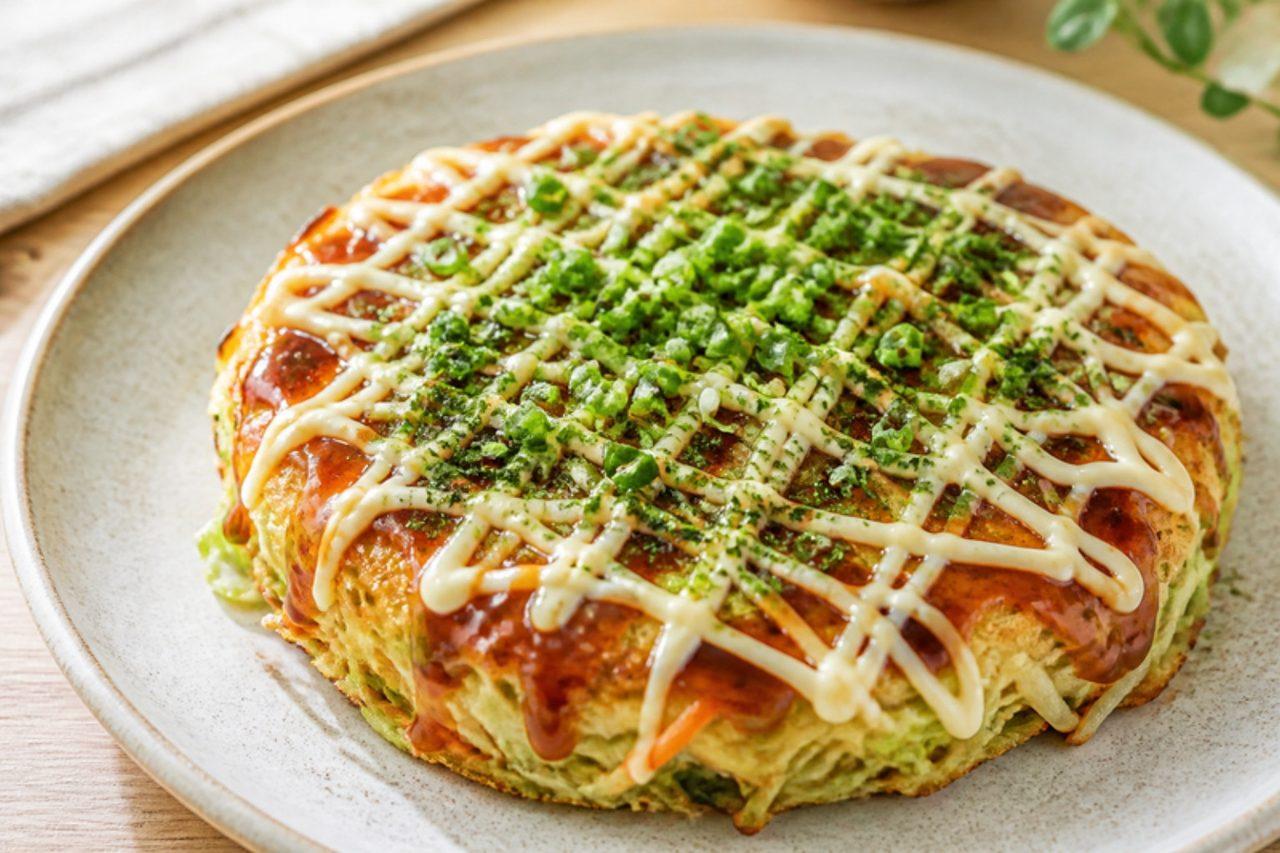
Okonomiyaki
Okonomiyaki (お好み焼き, 'grilled as you like it') is the pride of Osaka, where it's cooked on hot iron griddles in lively restaurants. Finely shredded cabbage is folded into a light batter with egg and spring onion, then fried into a thick, soft pancake with a crisp outside. It's painted with a fruity brown sauce and zigzagged with mayonnaise. Bonito flakes are usual on top; this vegetarian version uses seaweed flakes and pickled ginger instead. Chef's tip: don't press the pancake down with your spatula while it cooks. Osaka cooks leave it alone so the cabbage steams inside and stays light and fluffy; pressing squeezes out the air.
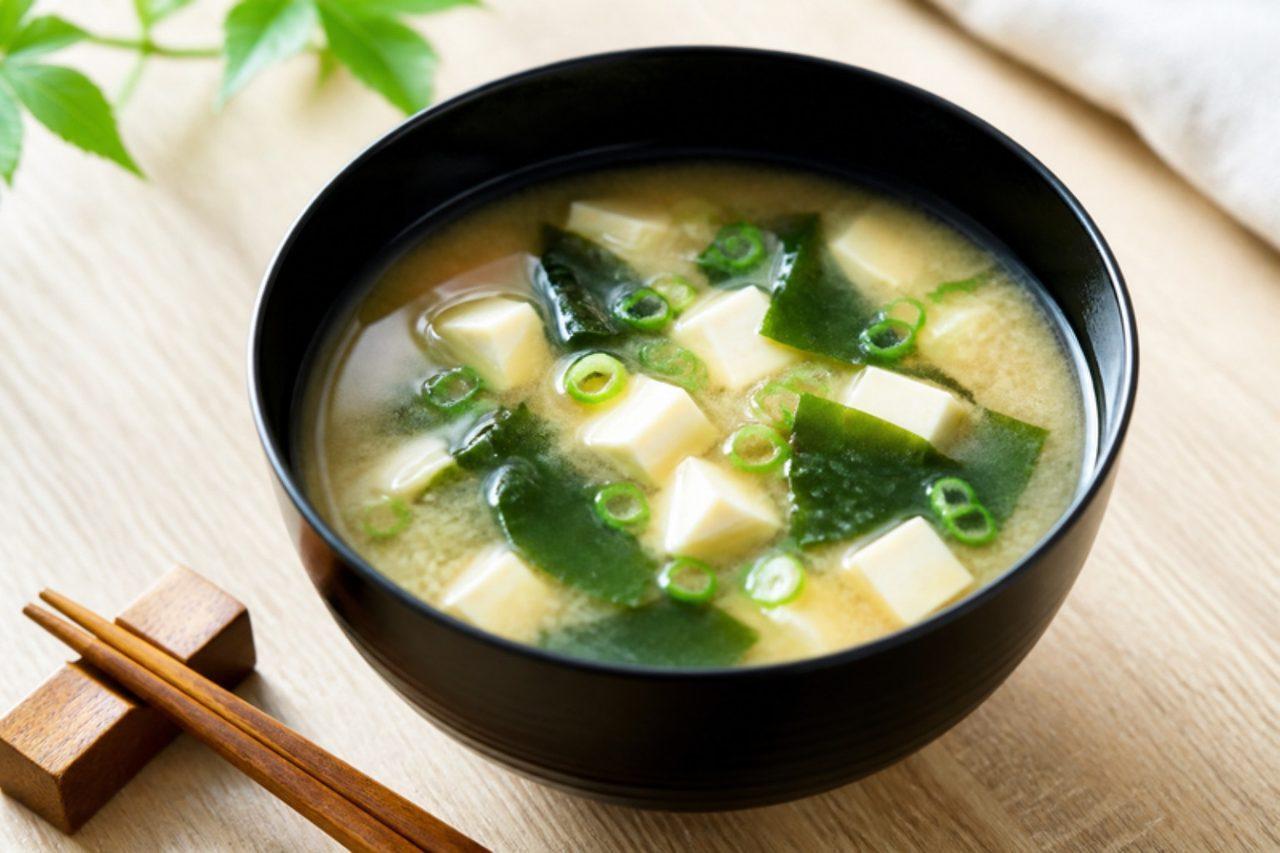
Miso soup
Miso soup (味噌汁) is drunk every day in homes all over Japan, at breakfast as well as dinner, beside a bowl of rice. The base is dashi; this vegan version uses kombu and dried shiitake instead of bonito, which gives it a deep, rounded flavour. Silken tofu and wakame seaweed are the classic fillings. It takes ten minutes; just remember not to boil the miso. Chef's tip: add the miso at the very end and never let it boil. Boiling kills the miso's fresh, fermented aroma; Japanese cooks say the soup should only 'smile', with the surface barely trembling.

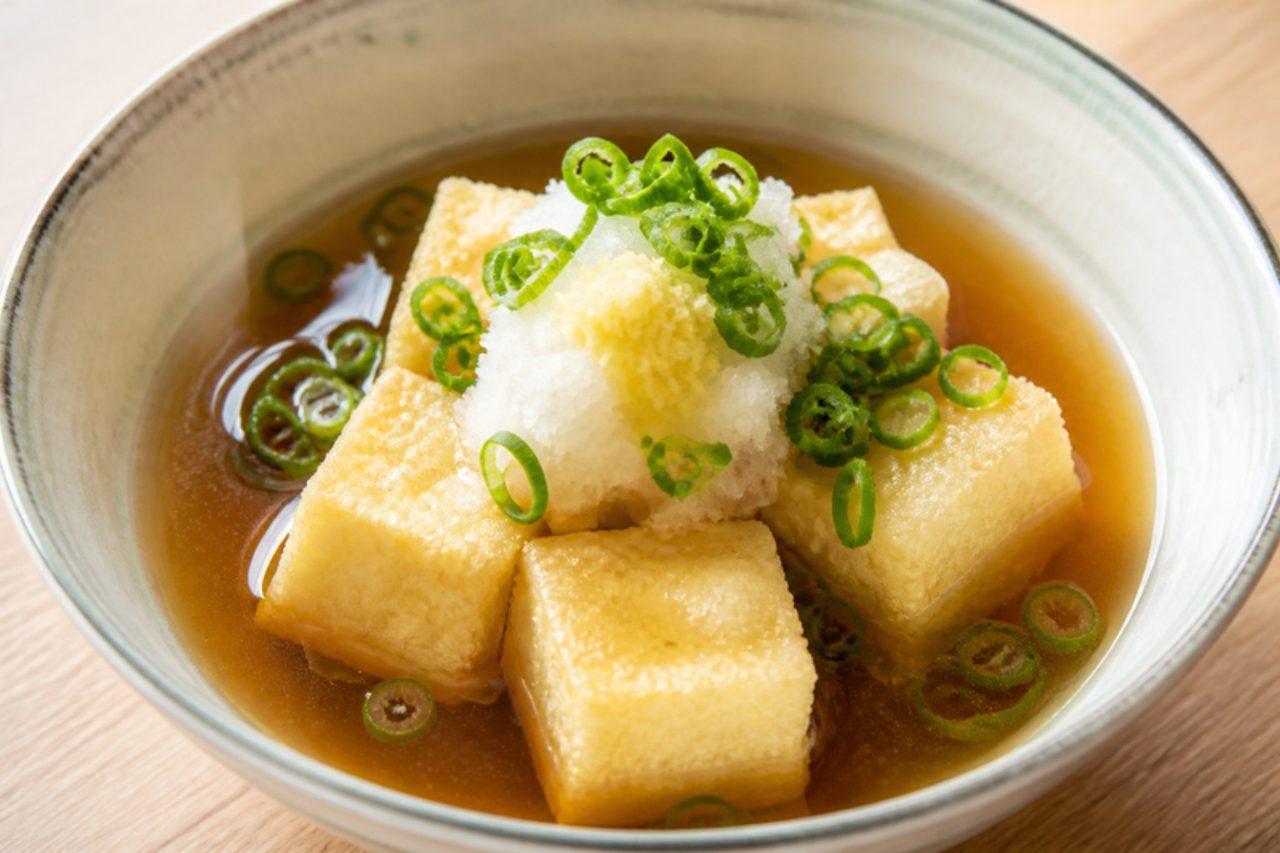
Agedashi tofu
Agedashi tofu (揚げ出し豆腐) is a classic izakaya dish eaten all over Japan: cubes of soft tofu dusted in potato starch, fried until they form a thin, crisp shell, then bathed in a hot, savoury broth. The coating turns silky as it soaks up the sauce while the tofu inside stays creamy. Usually topped with bonito flakes; here it's grated daikon, ginger and spring onion with a kombu-shiitake broth instead. Chef's tip: coat the tofu in starch right before it goes into the oil, not ahead of time; if it sits, the starch turns damp and the coating fries up gummy instead of crisp.