
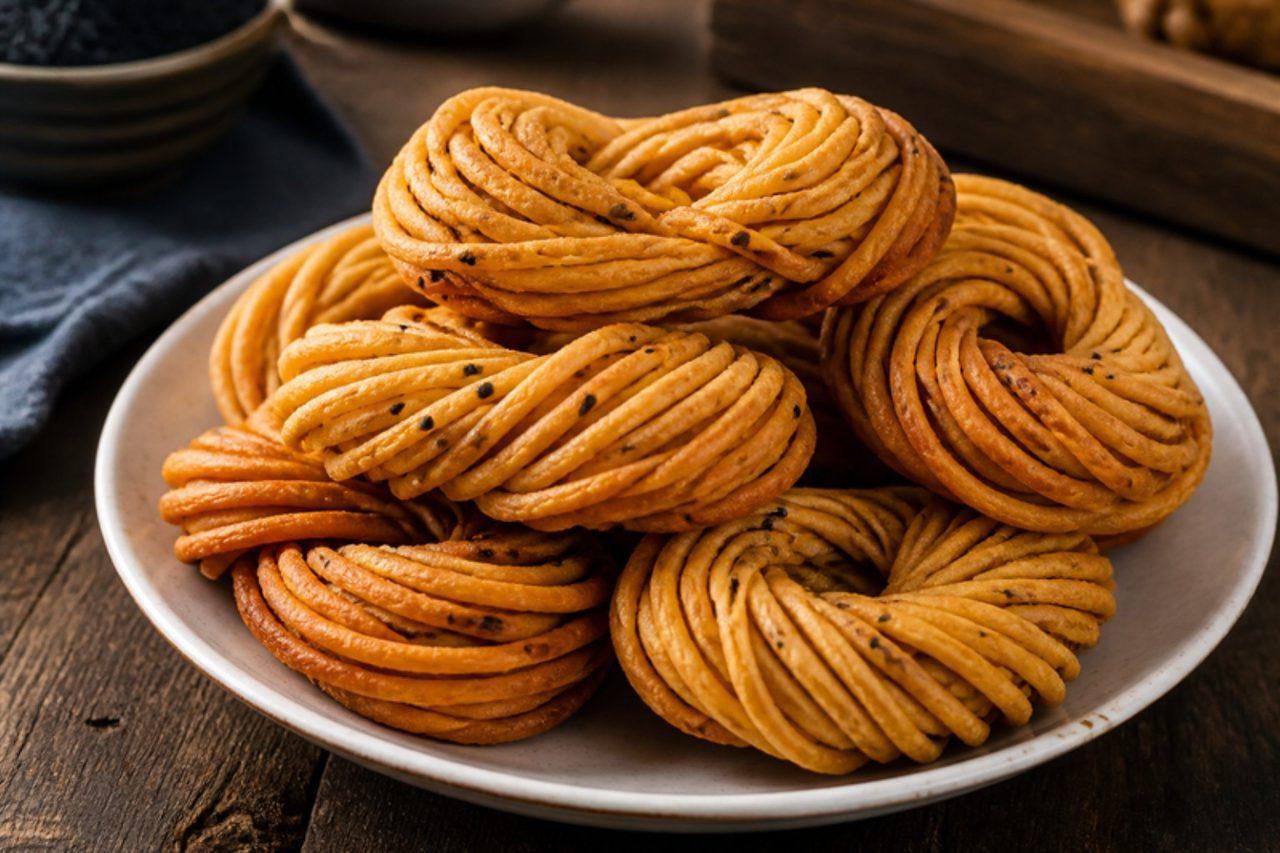
AI-generated image
Sanzi (fried dough threads)
馓子: fine hand-pulled dough strands looped into coils and fried golden and crisp


Sanzi are lacy coils of fried dough threads, made across Jiangsu and Shandong and by Hui and Uyghur cooks in Xinjiang. They belong to Hanshi, Cold Food Day, just before Qingming, when old custom forbade lighting the stove, so families fried them in advance to eat cold; the shatteringly crisp coils keep well for days and stand for the care taken to prepare for the remembrance. The dough is lightly salted and the strands snap like thin crackers, with a nutty note from sesame. Break them over congee or soy milk, or eat them on their own with tea. Chef's tip: rest the oiled ropes properly; relaxed dough stretches to thread-thin without snapping.
- Total time
- 120 min
- Difficulty
- hard
- Serves
- 8
Ingredients
For the dough
- 1 ⅛ lb plain flour
- 1 tsp salt
- 1 tbsp sugar
- 1 tbsp black sesame seeds
- 1 cup warm water
For stretching and frying
- ½ cup neutral oilfor coating the ropes
- 6 ¼ cups oil for deep-frying
Shop this recipe on Amazon
What you'll need
Links open Amazon in a new tab. As an Amazon Associate, WhatToEat.Today earns from qualifying purchases.
Method
0/10 doneStep 1: Dissolve 1 tsp salt and 1 tbsp sugar in 1 cup warm water. Mix with 1 ⅛ lb plain flour and 1 tbsp black sesame seeds into a soft dough and knead for 8 minutes, until smooth.
10 minStep 2: Cover and rest for 20 minutes, then knead again briefly; the dough should feel silky and elastic.
20 minStep 3: Roll the dough into a 2 cm thick sheet and cut into 1.5 cm wide strips. Roll each strip under your palms into a rope about 1 cm thick.
10 minStep 4: Coil the ropes in a deep dish, pouring ½ cup neutral oil over each layer so every part is coated. Cover and rest for 30 minutes; the ropes must go soft and slack.
30 minStep 5: Heat 6 ¼ cups oil for deep-frying in a wok or deep pan to 350°F; a chopstick dipped in should fizz steadily with small bubbles. Keep a lid and a tray lined with kitchen paper nearby, and never leave the hot oil.
10 minStep 6: Take one end of a rope and wind it loosely around the spread fingers of both hands 10–12 times, pulling gently as you go so the strand thins to about 3 mm. Pinch the two ends together.
3 minStep 7: Slip the loops onto two long chopsticks and pull them apart so the coil is taut. Common mistake: stretching dough that has not rested enough; it snaps and the strands come out uneven, half raw and half burnt.
2 minStep 8: Lower the coil into the oil and hold it stretched for 30 seconds until it sets, then twist the chopsticks to fold it in half and fry for 1–2 minutes more, until evenly golden, crisp and no longer bubbling hard.
3 minStep 9: Lift out, drain upright on the paper and repeat with the rest, letting the oil come back to 350°F between coils.
25 minStep 10: Cool completely, until they snap cleanly. Store airtight at room temperature for up to 2 weeks.
10 min
Nutrition per serving
- Calories
- 330 kcal
- Protein
- 7 g
- Carbs
- 50 g
- Fat
- 11 g
- Fibre
- 2 g
Nutrition values are estimates.
KrazyBadal
Good to know
- How long does sanzi (fried dough threads) take?
- About 120 minutes in total: 90 minutes to prepare and 30 minutes to cook.
- How many people does it serve?
- 8 as written. Change the servings above the ingredients and every amount scales to match.
- Is it vegan?
- Yes. It has no meat, fish, dairy or eggs.
- Can I make it ahead?
- Yes. It keeps well, so you can cook it earlier in the day or the day before and reheat it.
- What can I use instead of plain flour?
- Self-raising flour, same amount (then leave out the baking powder).
- What can I use instead of sugar?
- Caster sugar, same amount.
Reviews
No reviews yet. Be the first to cook it.
Rate this recipe
Sign in to rate and review this recipe.
You might also like
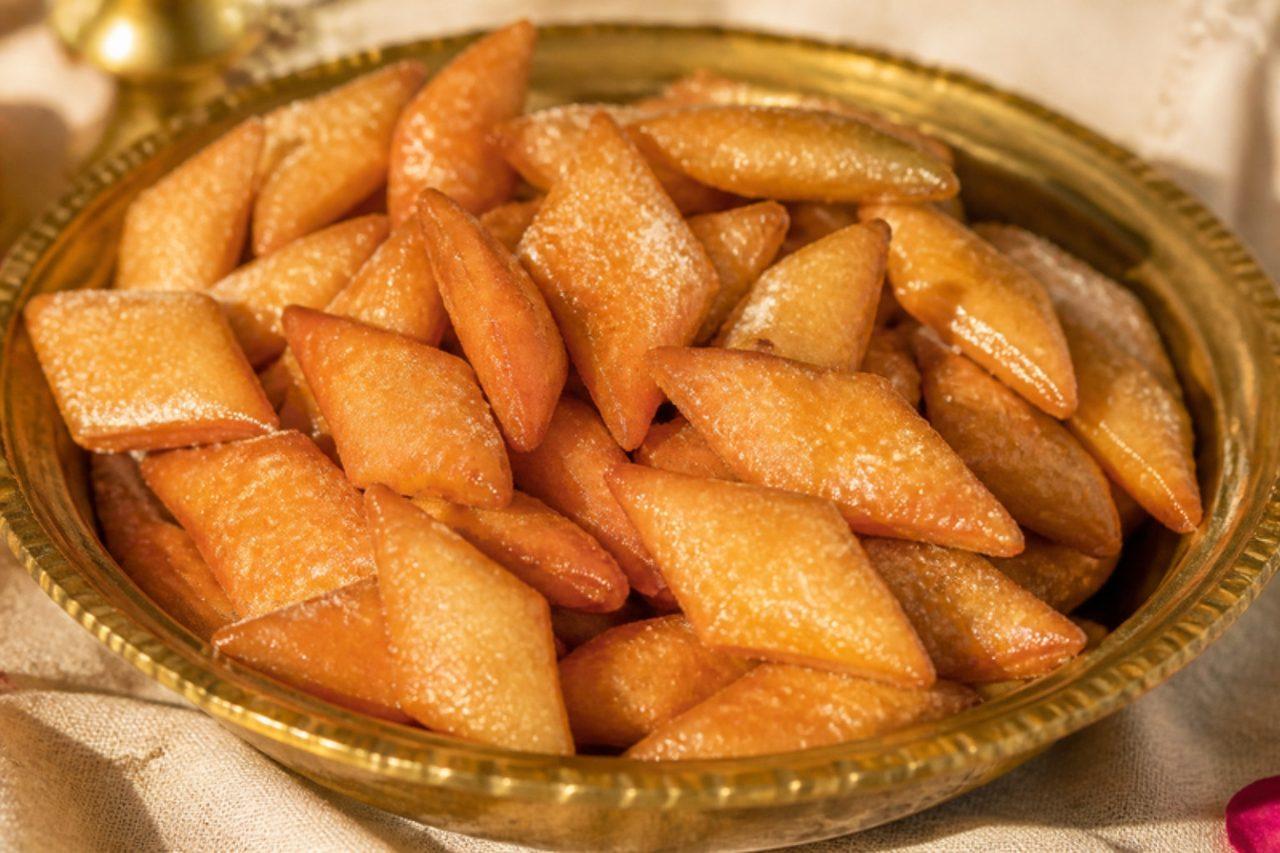
SakarpadaSweet fried dough diamonds
Sakarpada (shakarpara) are little sweet diamonds of a rich dough made with ghee, milk and sugar, fried until golden and crunchy. They are a Diwali favourite with tea, and the cubes go into bhusu too. They keep for weeks in an air-tight tin.
 Indian
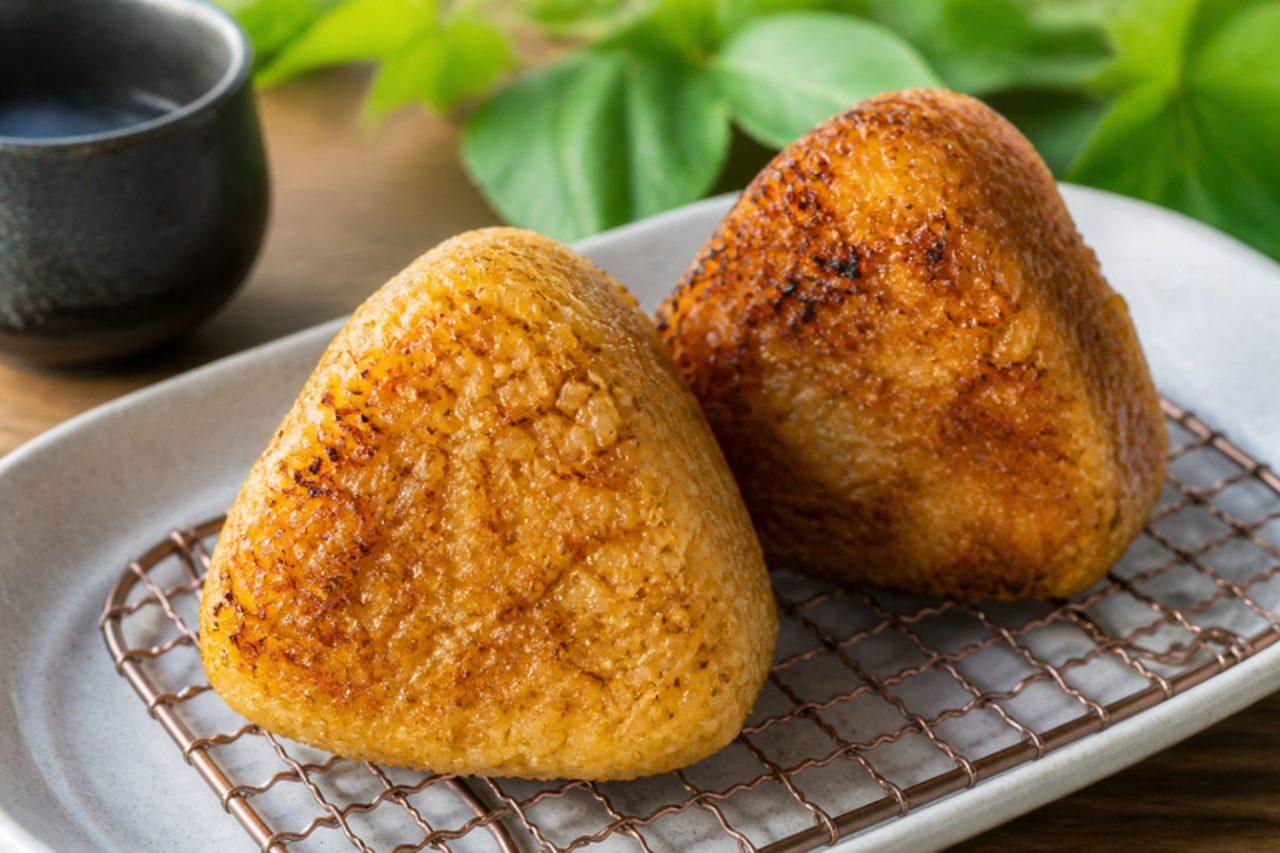
Yaki onigiriGrilled rice balls
Yaki onigiri (焼きおにぎり) are rice balls grilled until they form a crisp, toasty crust, then brushed with soy sauce glaze. They are eaten all over Japan, at izakaya, at barbecues and from the freezer section, as a snack or with miso soup. The inside stays soft and steamy while the outside crackles. Best eaten hot, straight from the pan. Chef's tip: let the shaped rice balls dry for 10 minutes before they go in the pan. A drier surface forms a better crust and won't stick, and the glaze goes on only at the end so it doesn't burn.
 Japanese

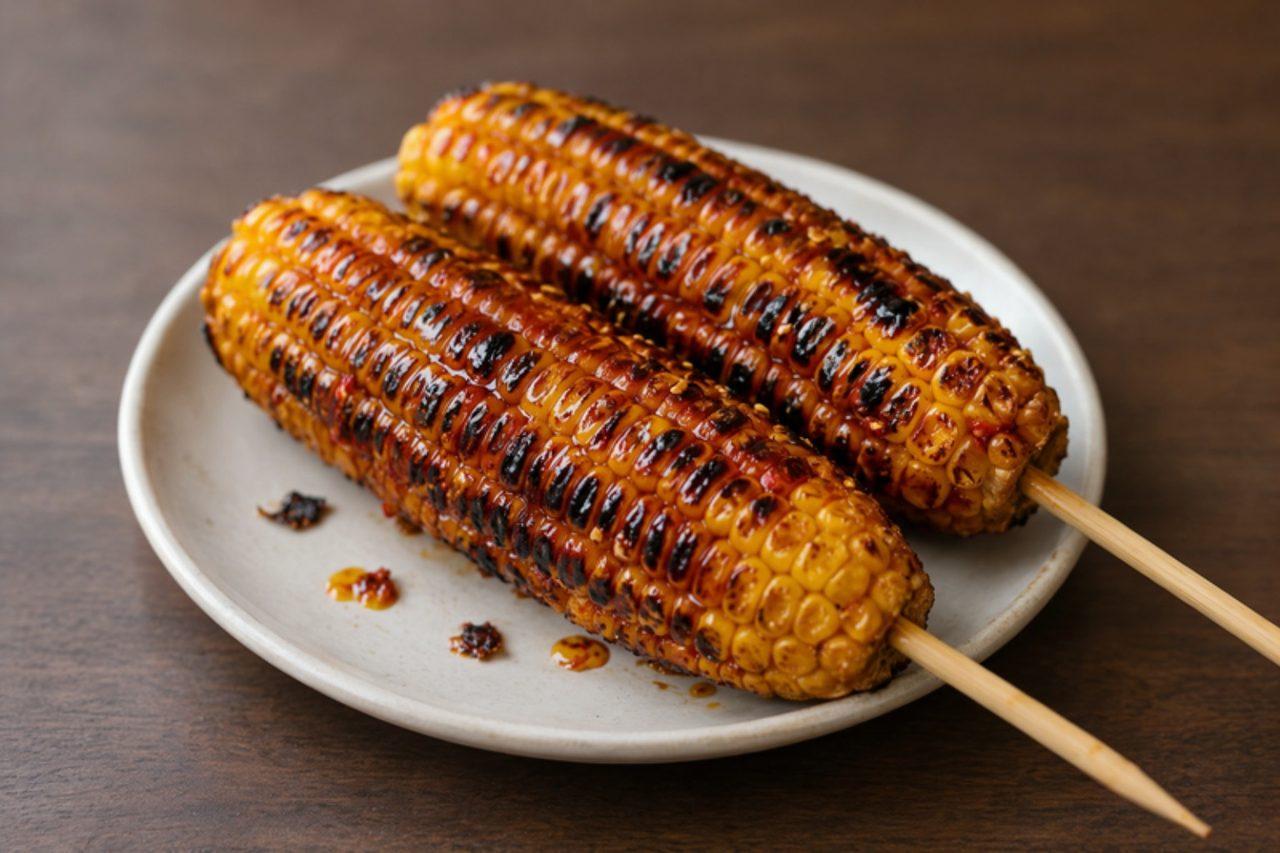
Taiwanese grilled corn
At Raohe and Shilin night markets the grilled-corn stalls are easy to find: look for the queue and the smoky, sweet smell. Cobs are par-cooked, then turned slowly over charcoal while the cook brushes them with a dark glaze of sacha sauce, thick soy paste, garlic and chilli, layer after layer, until the kernels are sticky, slightly charred and deeply savoury. It is eaten hot from a paper sleeve while walking the market. Sacha (shacha) sauce, a Taiwanese barbecue paste, usually contains dried fish and shrimp; vegetarian sacha is sold in Asian shops. Contains soy, wheat and fish. Chef's tip: brush thin coats and turn often; one thick coat burns before the corn chars.
 Taiwanese