
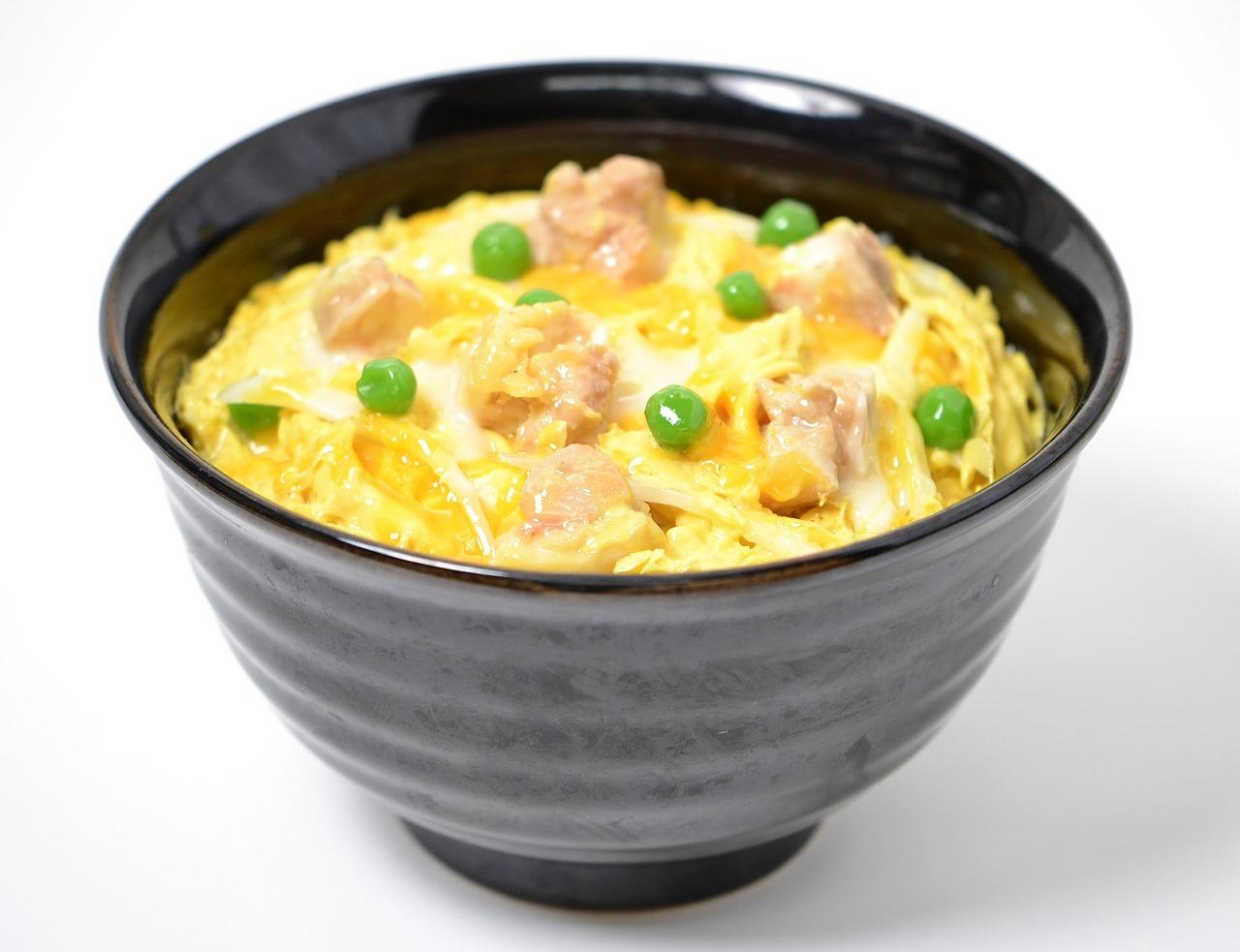
Oyakodon
親子丼: chicken and soft egg simmered in sweet dashi over rice
The name means 'parent and child bowl', a gentle joke about cooking the chicken and the egg together. A Nihonbashi chicken restaurant in Tokyo says it first served the dish in the 1890s, and today it is a staple lunch in soba shops, office canteens and home kitchens all over the country. Thigh meat and sliced onion simmer briefly in sweet soy dashi, then beaten egg goes in and is taken off the heat while still soft and glossy. Everything slides onto a bowl of hot rice so the sauce seeps into the grains. Chef's tip: beat the eggs with just a few strokes of chopsticks, leaving streaks of white and yolk, as that marbled look and silky texture is what you're after.
- Total time
- 25 min
- Difficulty
- easy
- Serves
- 2
Ingredients
For the simmering sauce
For the topping
To serve
Method
0/7 doneStep 1: Put ¾ cup dashi stock, 2 tbsp soy sauce, 2 tbsp mirin and 1 tsp sugar in a 24 cm frying pan with a lid and bring to a simmer over a medium heat. Mirin contains alcohol; for an alcohol-free sauce, leave it out and use 2 tsp sugar and 1 tbsp water instead.
2 minStep 2: Add ½ onion and simmer for 3 minutes until it starts to soften and turn translucent.
3 minStep 3: Add 10 ½ oz boneless, skinless chicken thighs in a single layer and simmer for 6–7 minutes, turning once, until the thickest piece reaches 165°F/165 °F and the juices run clear when cut.
7 minStep 4: Crack 4 eggs into a bowl and break them up with chopsticks in 4 or 5 strokes, no more.
Step 5: Pour two-thirds of the egg evenly over the chicken. Cover and cook over a medium heat for 1 minute, until the edges have set. Common mistake: pouring all the egg in at once and stirring it. You end up with scrambled egg; two pours give you a set base and a soft, silky top.
1 minStep 6: Pour over the rest of the egg, cover and turn off the heat. Leave for 30–60 seconds, until the top is just set but still glossy. The egg stays soft; for anyone pregnant, very young, elderly or with a weakened immune system, keep the lid on over a low heat for 2–3 minutes more until the egg is fully set.
1 minStep 7: Divide 14 oz hot cooked Japanese short-grain rice between two deep bowls. Slide half of the chicken and egg onto each with a spatula, spoon over the remaining sauce and scatter with 2 tbsp mitsuba or spring onion and 1 pinch shichimi togarashi (seven-spice). Eat at once.
Nutrition per serving
- Calories
- 640 kcal
- Protein
- 42 g
- Carbs
- 82 g
- Fat
- 15 g
- Fibre
- 2 g
Nutrition values are estimates.
KrazyBadal
Good to know
- How long does oyakodon take?
- About 25 minutes in total: 10 minutes to prepare and 15 minutes to cook.
- How many people does it serve?
- 2 as written. Change the servings above the ingredients and every amount scales to match.
- What can I use instead of soy sauce?
- Tamari, same amount (gluten free).
- What can I use instead of mirin?
- Rice vinegar with ½ tsp sugar per tbsp.
Reviews
No reviews yet. Be the first to cook it.
Rate this recipe
Sign in to rate and review this recipe.
You might also like
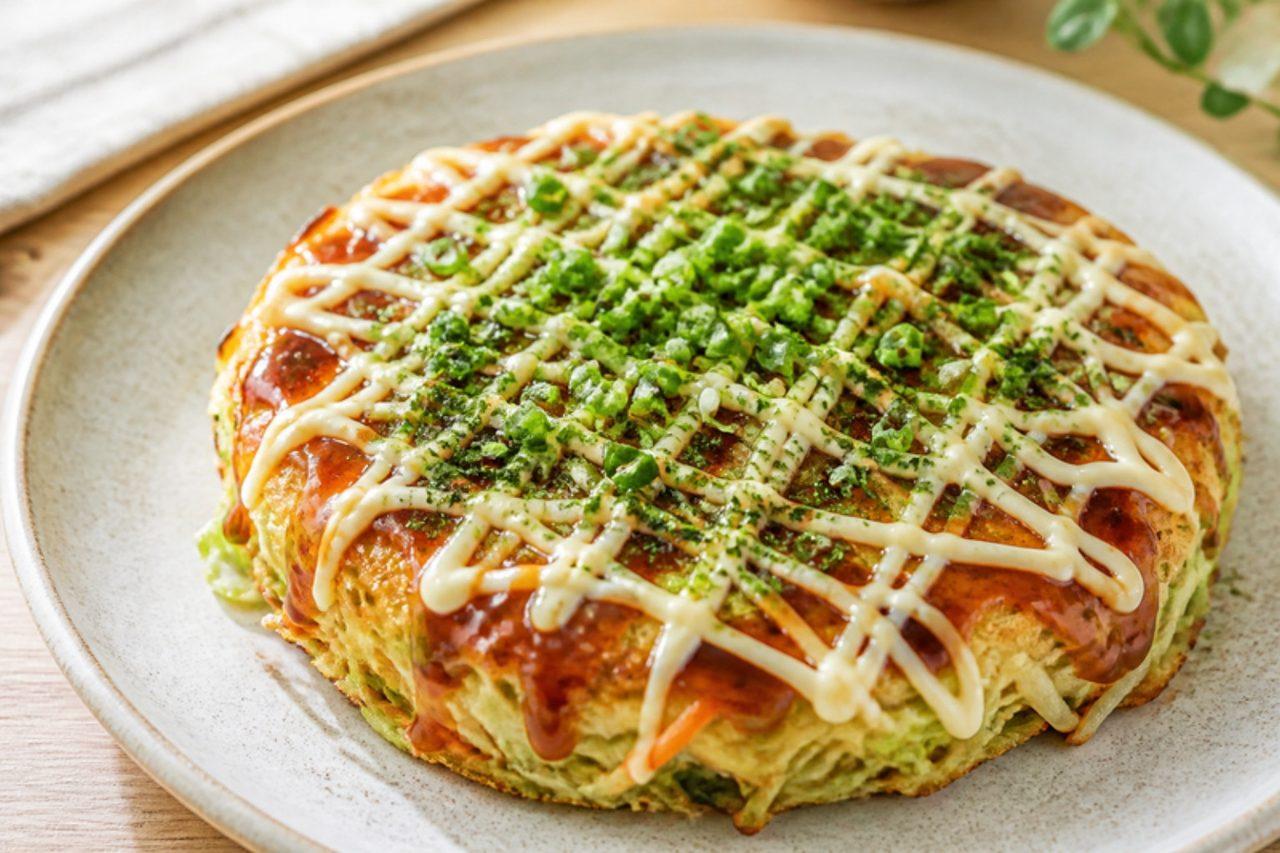
Okonomiyaki
Okonomiyaki (お好み焼き, 'grilled as you like it') is the pride of Osaka, where it's cooked on hot iron griddles in lively restaurants. Finely shredded cabbage is folded into a light batter with egg and spring onion, then fried into a thick, soft pancake with a crisp outside. It's painted with a fruity brown sauce and zigzagged with mayonnaise. Bonito flakes are usual on top; this vegetarian version uses seaweed flakes and pickled ginger instead. Chef's tip: don't press the pancake down with your spatula while it cooks. Osaka cooks leave it alone so the cabbage steams inside and stays light and fluffy; pressing squeezes out the air.
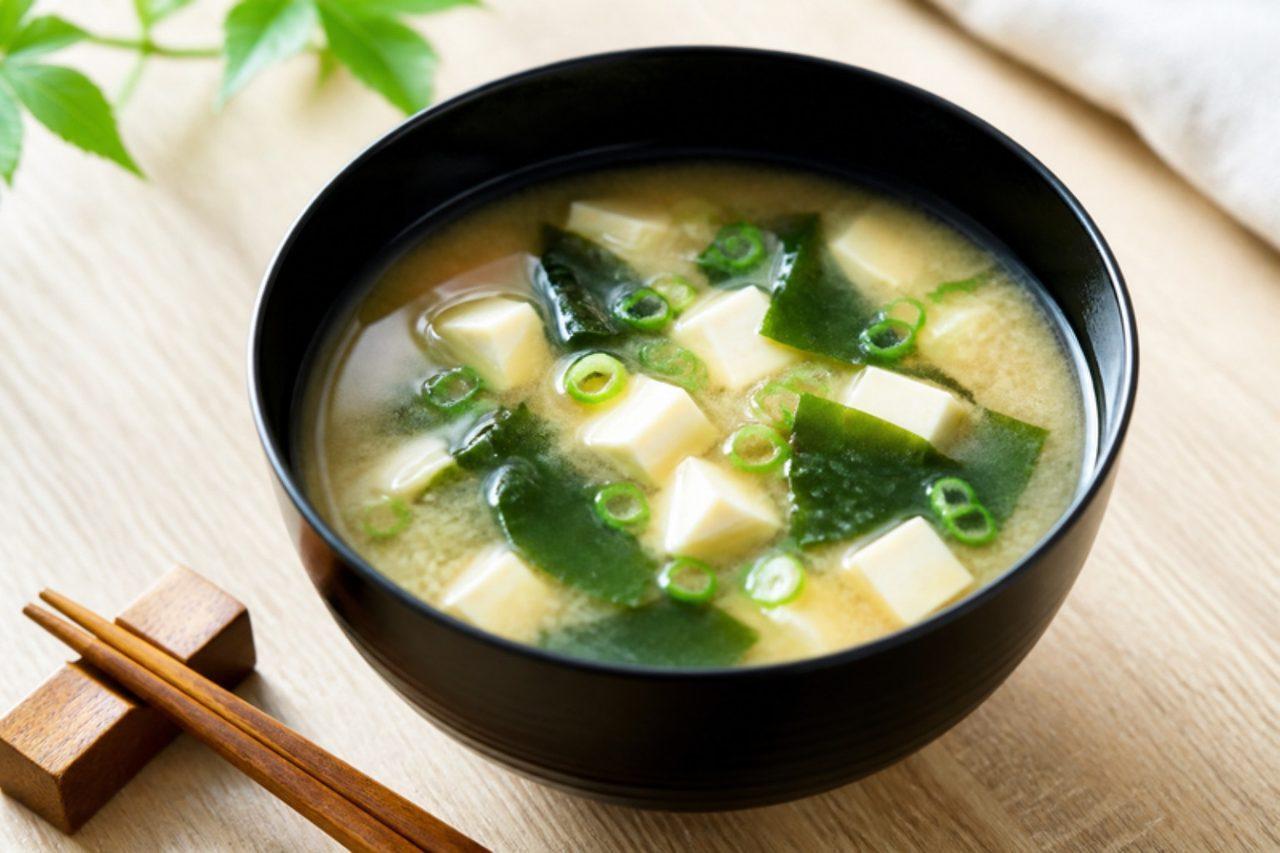
Miso soup
Miso soup (味噌汁) is drunk every day in homes all over Japan, at breakfast as well as dinner, beside a bowl of rice. The base is dashi; this vegan version uses kombu and dried shiitake instead of bonito, which gives it a deep, rounded flavour. Silken tofu and wakame seaweed are the classic fillings. It takes ten minutes; just remember not to boil the miso. Chef's tip: add the miso at the very end and never let it boil. Boiling kills the miso's fresh, fermented aroma; Japanese cooks say the soup should only 'smile', with the surface barely trembling.

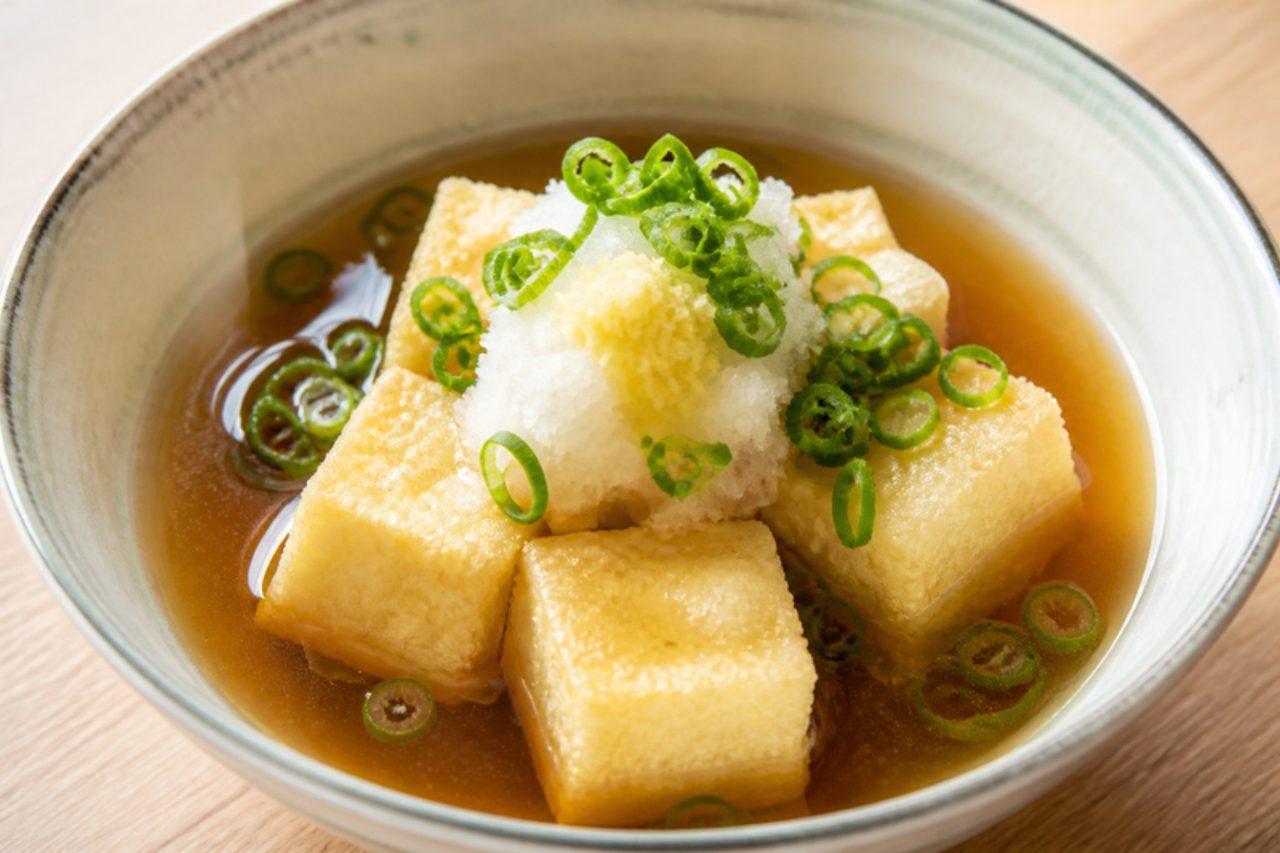
Agedashi tofu
Agedashi tofu (揚げ出し豆腐) is a classic izakaya dish eaten all over Japan: cubes of soft tofu dusted in potato starch, fried until they form a thin, crisp shell, then bathed in a hot, savoury broth. The coating turns silky as it soaks up the sauce while the tofu inside stays creamy. Usually topped with bonito flakes; here it's grated daikon, ginger and spring onion with a kombu-shiitake broth instead. Chef's tip: coat the tofu in starch right before it goes into the oil, not ahead of time; if it sits, the starch turns damp and the coating fries up gummy instead of crisp.