
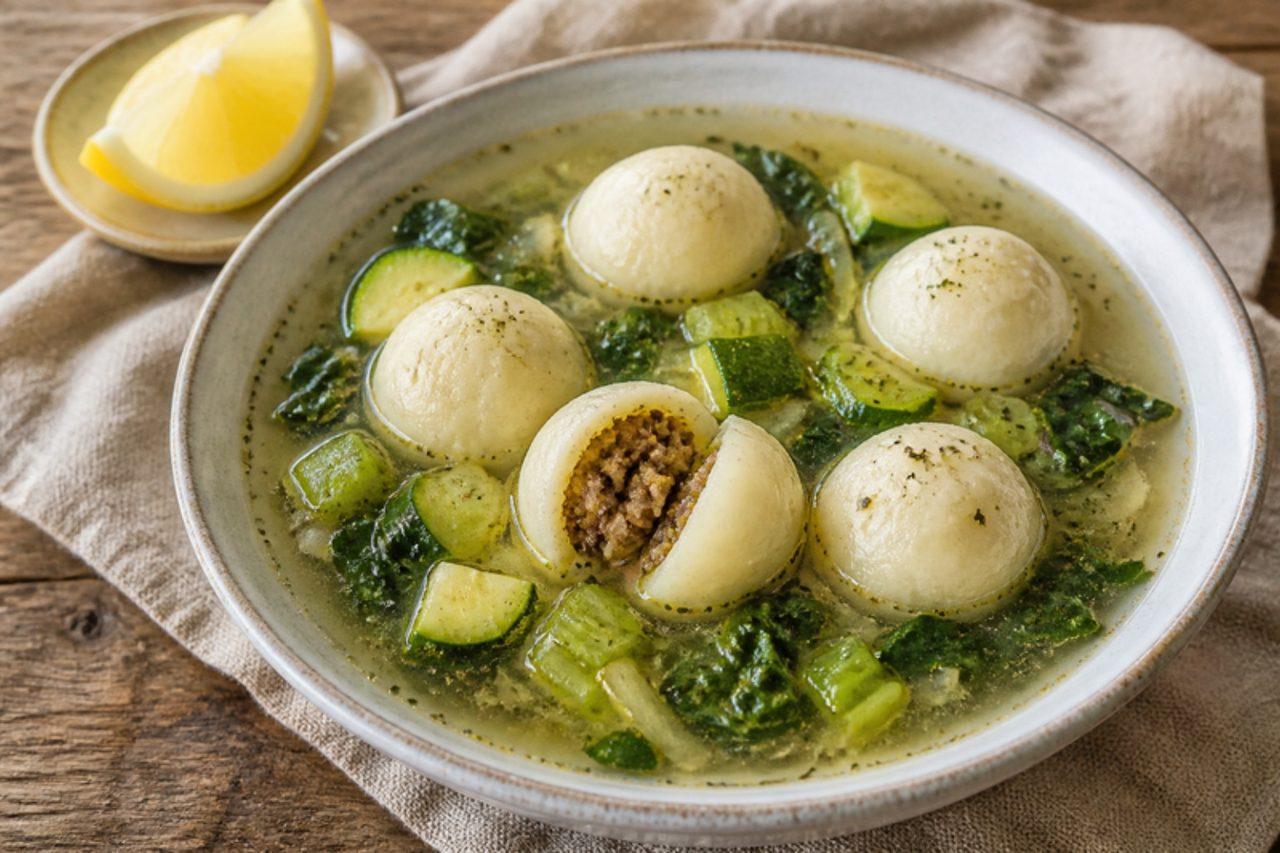
AI-generated image
Kubbeh hamusta
Kubbeh hamusta (כובה חמוסטה): Kurdish and Iraqi-Jewish sour lemon soup with stuffed semolina dumplings
 Israeli
In Jerusalem's Mahane Yehuda market, small kubbeh restaurants ladle out kubbeh hamusta at lunchtime, a bright yellow-green soup of chard, courgette and celery soured with plenty of lemon, carrying semolina dumplings stuffed with spiced beef. It came with Kurdish and Iraqi Jews and is cooked at home on Thursdays and Fridays, often in a big pot that lasts until Shabbat. The broth is sharp, garlicky and light, the dumplings chewy outside and juicy within. Thick semolina shells are the most common mistake; press them thin so they cook through in the soup. Chef's tip: add the lemon in two goes, half at the start and half at the end, so the soup keeps a fresh sour edge.
- Total time
- 120 min
- Difficulty
- hard
- Serves
- 6
Ingredients
For the dumplings
- 10 ½ oz fine semolina
- ¾ cup warm water
- ½ tsp salt
- 10 ½ oz minced beef
- 1 oniongrated and squeezed
- 2 tbsp celery leavesfinely chopped
- 1 tsp baharat
- ½ tsp salt
For the soup
- 3 tbsp vegetable oil
- 1 onionchopped
- 6 garlic clovescrushed
- 3 celery stickssliced
- 3 courgettescut into chunks
- 10 ½ oz Swiss chardstalks sliced, leaves shredded
- 8 ¼ cups chicken stock
- ¾ cup lemon juiceabout 4 lemons
- 1 tsp sugar
- 1 ½ tsp salt
- 1 tsp dried mint (optional)
Shop this recipe on Amazon
Spices & pantry
Fresh ingredients (6)
Links open Amazon in a new tab. As an Amazon Associate, WhatToEat.Today earns from qualifying purchases.
Method
0/7 doneStep 1: Mix 10 ½ oz fine semolina, ½ tsp salt and ¾ cup warm water into a soft dough. Cover and rest for 30 minutes so the semolina softens.
30 minStep 2: Mix 10 ½ oz minced beef, 1 onion, 2 tbsp celery leaves, 1 tsp baharat and ½ tsp salt. Keep in the fridge until needed.
Step 3: Heat 3 tbsp vegetable oil in a large pot over a medium heat. Fry 1 onion and 6 garlic cloves for 5 minutes, add 3 celery sticks and chard stalks from 10 ½ oz Swiss chard and cook for 5 more.
10 minStep 4: Add 8 ¼ cups chicken stock, 3 courgettes, 1 tsp sugar, 1 ½ tsp salt and half of ¼ cup lemon juice. Bring to a simmer and cook for 15 minutes.
15 minStep 5: Meanwhile, with wet hands roll the dough into walnut-sized balls. Flatten each into a thin disc about 7 cm across, put a teaspoon of raw filling in the centre, close it up and flatten slightly into a patty. Makes about 24.
Step 6: Add the chard leaves and lower the kubbeh into the simmering soup. Cook gently for 20 minutes, until the dumplings float and the shells are tender; cut one open to check the meat is cooked through, no pink (160°F).
20 minStep 7: Stir in the rest of ¼ cup lemon juice and 1 tsp dried mint. Taste: it should be clearly sour. Serve hot, 4 kubbeh per bowl, with rice if you like.
Nutrition per serving
- Calories
- 420 kcal
- Protein
- 22 g
- Carbs
- 52 g
- Fat
- 14 g
- Fibre
- 4 g
Nutrition values are estimates.
KrazyBadal
Good to know
- How long does kubbeh hamusta take?
- About 120 minutes in total: 60 minutes to prepare and 60 minutes to cook.
- How many people does it serve?
- 6 as written. Change the servings above the ingredients and every amount scales to match.
- What can I use instead of onion?
- 2 shallots per onion.
- What can I use instead of onion?
- 2 shallots per onion.
Reviews
No reviews yet. Be the first to cook it.
Rate this recipe
Sign in to rate and review this recipe.
You might also like

Soto Banjar
Along the rivers of Banjarmasin in South Kalimantan, breakfast often means soto Banjar eaten at a wooden riverside warung, sometimes after a dawn trip to the floating market. Unlike the turmeric sotos of Java, this broth is pale and clear, perfumed with the sweet spices that traders brought up the river centuries ago: cinnamon, cloves, star anise, cardamom and nutmeg. Shredded chicken, glass noodles, carrot and a boiled egg go into the bowl with rice cakes, and lime and a little chilli sharpen it at the table. Chef's tip: toast the whole spices in the pan for a minute before the paste goes in; it brings out their sweetness without the dusty edge of ground spice.
 Indonesian

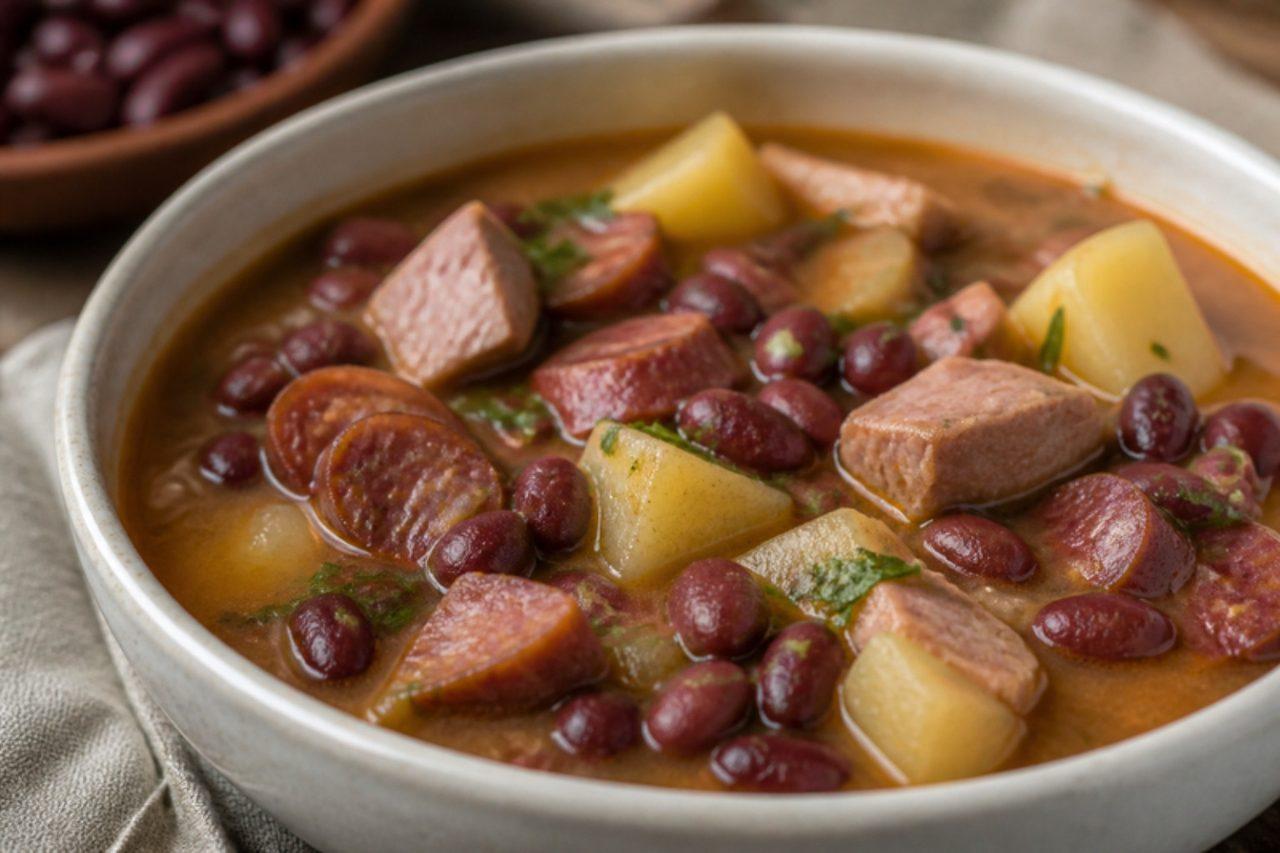
Sopa da pedra
Almeirim, a market town in the Ribatejo, is the capital of this soup; its restaurants serve it every day, and each bowl arrives with a clean stone at the bottom, after the folk tale of a friar who 'made soup from a stone' by talking villagers into giving him everything else. This is a pork soup: red kidney beans simmer with chouriço, morcela blood sausage and a piece of pork belly, then potatoes, carrots and coriander finish it into a thick, hearty bowl. Chef's tip: cook the sausages whole and slice them at the end, so they stay juicy and don't turn the broth greasy.
 Portuguese

Miso soup
Miso soup (味噌汁) is drunk every day in homes all over Japan, at breakfast as well as dinner, beside a bowl of rice. The base is dashi; this vegan version uses kombu and dried shiitake instead of bonito, which gives it a deep, rounded flavour. Silken tofu and wakame seaweed are the classic fillings. It takes ten minutes; just remember not to boil the miso. Chef's tip: add the miso at the very end and never let it boil. Boiling kills the miso's fresh, fermented aroma; Japanese cooks say the soup should only 'smile', with the surface barely trembling.
 Japanese
