
AI-generated image
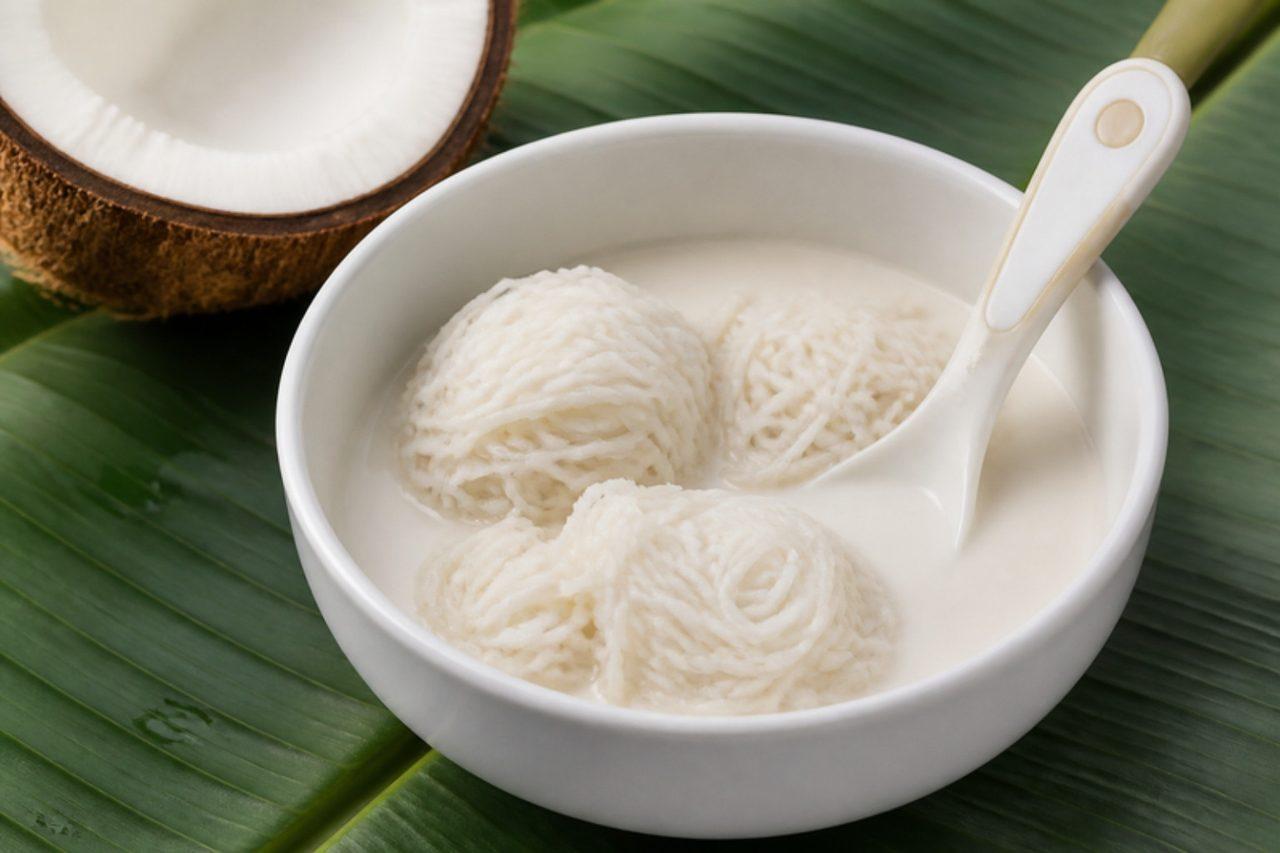
Idiyappam with coconut milk
9m+ · Soft steamed rice-noodle nests soaked in fresh coconut milk, a Kerala first finger food


Idiyappam, lacy nests of rice noodles pressed and steamed, is a breakfast across Kerala and Tamil Nadu, and soaked in fresh coconut milk it is one of the first 'proper' foods many South Indian babies eat, from about nine months. The strands are soft, a little springy and taste of sweet coconut. Grown-ups add salt to the dough and children over one often have a little jaggery stirred into the coconut milk; for babies both are left out. It has none of the common allergens (milk, egg, gluten, peanut, tree nuts, soya, sesame, fish), though coconut can rarely cause a reaction. Chef's tip: the water must be at a rolling boil when it hits the flour, or the dough is crumbly and won't press.
- Total time
- 35 min
- Difficulty
- medium
- Serves
- 4
Baby & toddler safety
- Age: from 9 months+.
- Allergens: none of the common allergens found in the ingredients. Offer one new allergen at a time, in the morning, so you can watch for a reaction.
- Texture and choking: purée or mash smoothly for 6–9 months, then soft, finger-sized pieces that squash between your fingers. Cut round foods such as grapes and cherry tomatoes into quarters lengthways, never give whole nuts, and always stay with your child while they eat.
- Under 1: no honey, no added salt or stock cubes, and no added sugar.
Every child is different. If you are unsure, especially about allergies, check with your health visitor or paediatrician.
Ingredients
For the idiyappam
- 4 oz roasted rice flouridiyappam or appam flour
- ¾ cup waterboiling
- 1 tsp coconut oil
To serve
- ¾ cup coconut milkfresh or tinned, unsweetened
- 1 pinch ground cardamom (optional)
Shop this recipe on Amazon
What you'll need
Spices & pantry
Links open Amazon in a new tab. As an Amazon Associate, WhatToEat.Today earns from qualifying purchases.
Method
0/7 doneStep 1: Put 4 oz roasted rice flour in a bowl with 1 tsp coconut oil. Pour in ¾ cup water a little at a time while it is still boiling, stirring with a spoon, until it forms a soft dough that holds together.
3 minStep 2: When the dough is cool enough to touch, knead it for 2 minutes until smooth and soft, like play dough. If it cracks, add a spoonful of hot water.
2 minStep 3: Grease an idli plate or a steamer tray. Fill an idiyappam press fitted with the finest disc and press out small circles of noodles onto the plate, one nest per mould.
Step 4: Steam over boiling water for 8–10 minutes, until the strands look glossy and no longer floury white and a strand pinched between your fingers is soft all the way through.
10 minStep 5: Warm ¾ cup coconut milk gently with 1 pinch ground cardamom, if using, until steaming but not boiling, as it can split.
2 minStep 6: Break a nest into a bowl, pour over a few spoonfuls of the coconut milk and let it soak for 2 minutes. For a baby, snip the strands into short 2–3 cm lengths; the common mistake is serving whole long strands, which are hard to manage. Older babies can pick up the soaked pieces with their fingers.
Step 7: Cool leftover nests quickly and keep them covered in the fridge for up to 2 days, or freeze for up to a month; keep the coconut milk separately in the fridge. Re-steam the nests until piping hot, then cool before soaking and serving.
Nutrition per serving
- Calories
- 150 kcal
- Protein
- 2 g
- Carbs
- 24 g
- Fat
- 6 g
- Fibre
- 1 g
Nutrition values are estimates.
KrazyBadal
Good to know
- How long does idiyappam with coconut milk take?
- About 35 minutes in total: 20 minutes to prepare and 15 minutes to cook.
- How many people does it serve?
- 4 as written. Change the servings above the ingredients and every amount scales to match.
- Is it vegan?
- Yes. It has no meat, fish, dairy or eggs.
- Is it gluten free?
- Yes, as written. Check the labels on stock, sauces and spice mixes, which sometimes contain gluten.
- What can I use instead of coconut milk?
- Single cream, same amount (not dairy free).
Reviews
No reviews yet. Be the first to cook it.
Rate this recipe
Sign in to rate and review this recipe.
You might also like
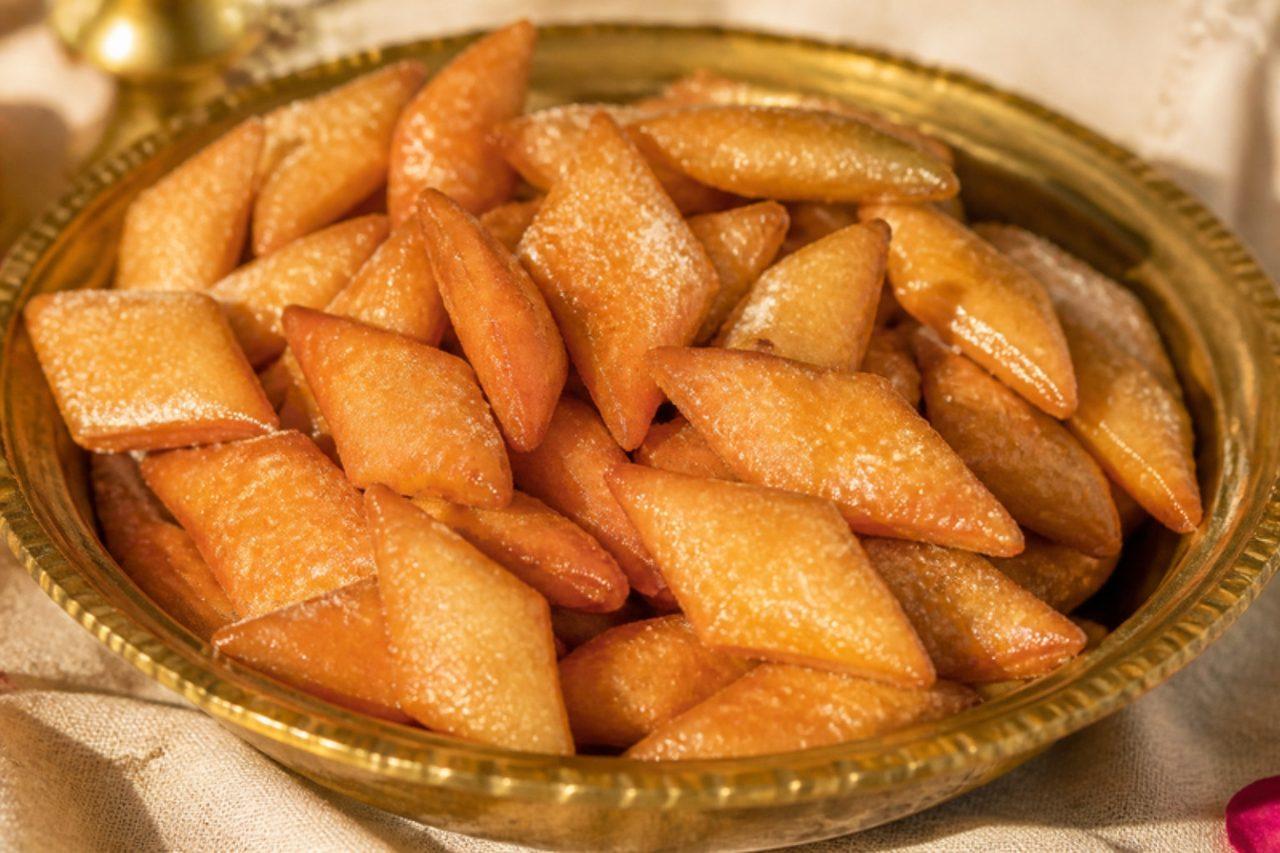
SakarpadaSweet fried dough diamonds
Sakarpada (shakarpara) are little sweet diamonds of a rich dough made with ghee, milk and sugar, fried until golden and crunchy. They are a Diwali favourite with tea, and the cubes go into bhusu too. They keep for weeks in an air-tight tin.
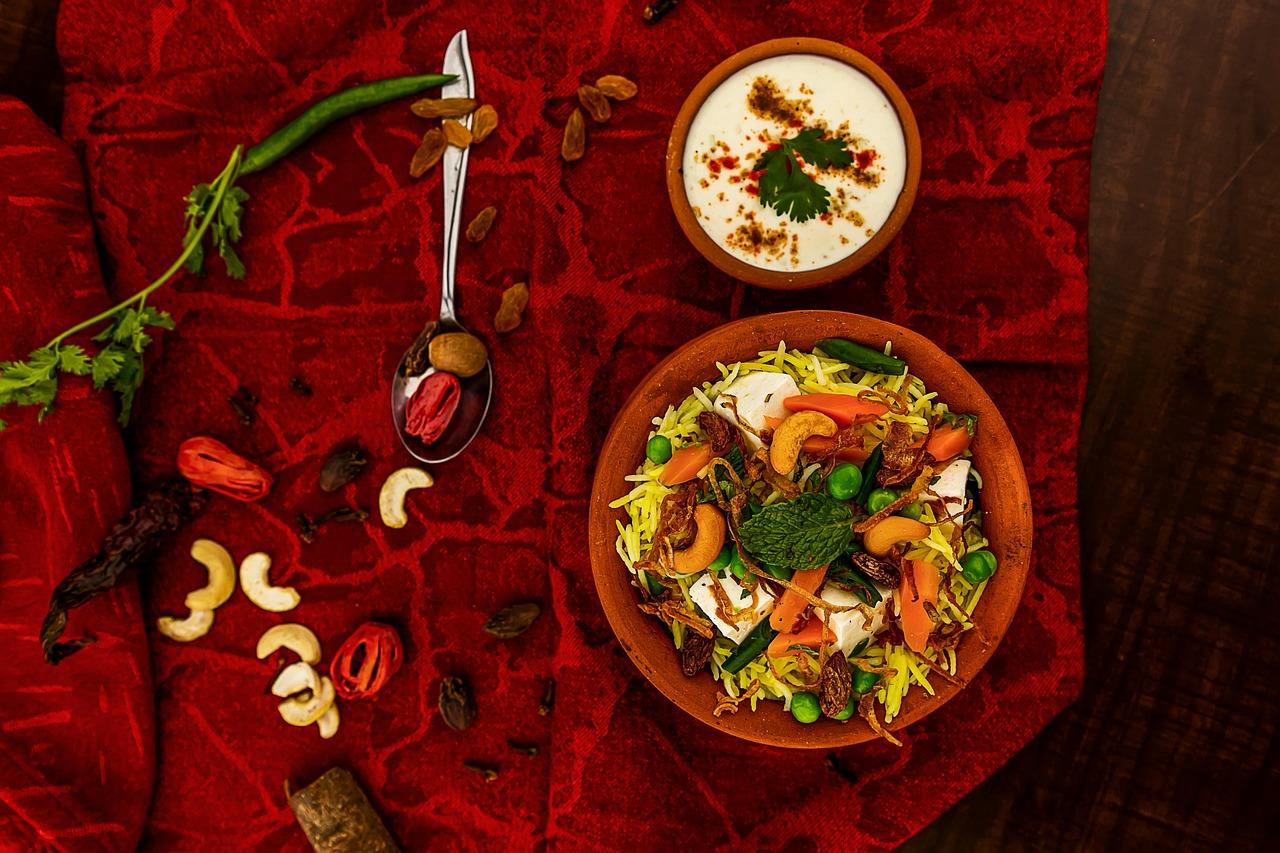
Paneer biryaniRice and moong dal in coconut milk
A mild, creamy biryani: rice and husked green gram roasted in ghee, then cooked in coconut milk with peas, carrots, potatoes, peanuts and cashews, and finished with soft fried paneer and a fresh coriander yogurt. Serve hot, garnished with more fried cashews and paneer.

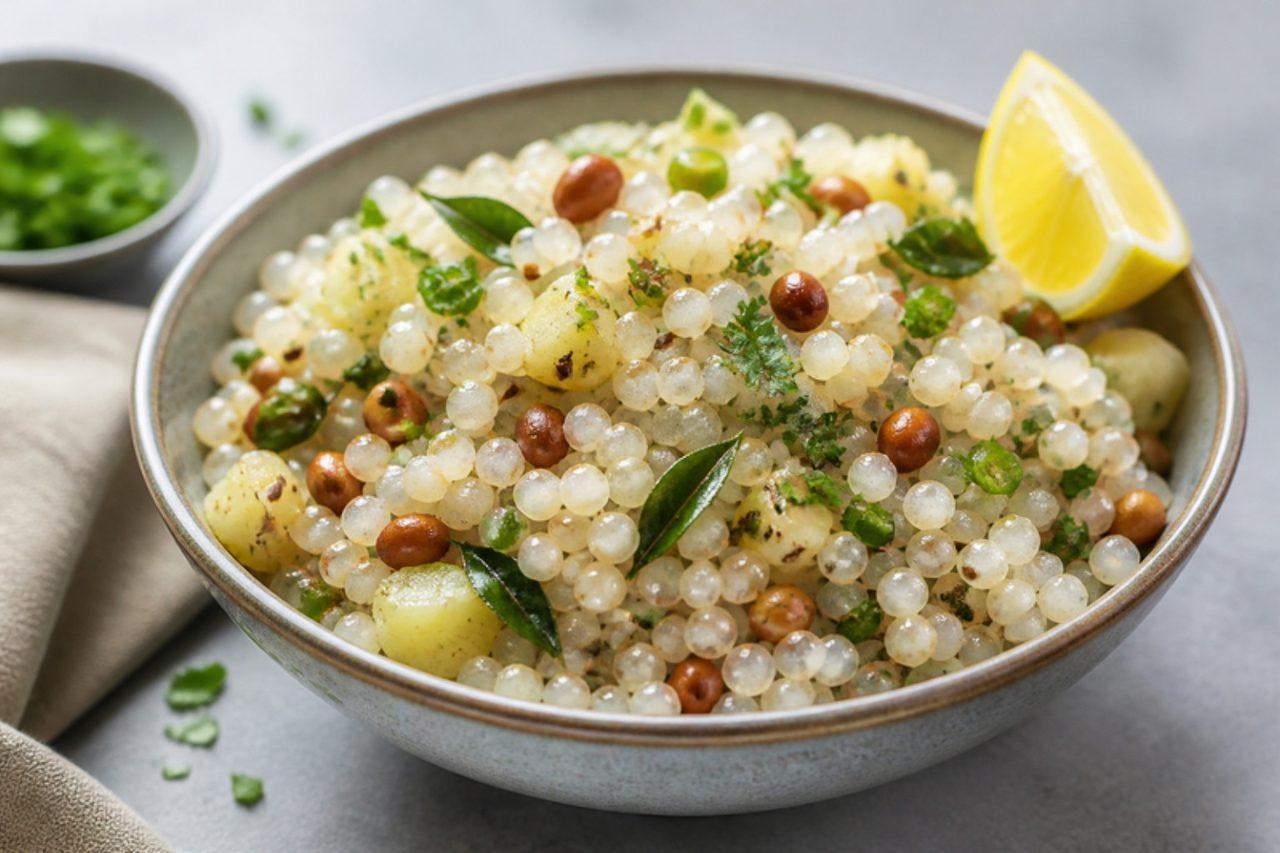
Sabudana khichdiSago with peanuts and potato
Sabudana khichdi is the dish that sees Maharashtra through every vrat (fast), from Navratri to Ekadashi, but it's so good that people eat it any day of the week. Soaked sago pearls are tossed in a pan with crushed roasted peanuts, cubes of potato, cumin and green chilli until each pearl turns glassy and separate, then finished with lemon and coriander. It's soft, chewy, nutty and gently hot. Fasting rules vary from family to family, so check yours; this version uses rock salt and no asafoetida, onion or garlic. Traditionally it's cooked in ghee; use ghee instead of oil if you aren't keeping it vegan. Chef's tip: soak the sago in just enough water to cover by the height of the pearls themselves, no more; too much water is the reason khichdi turns into one sticky lump.
