
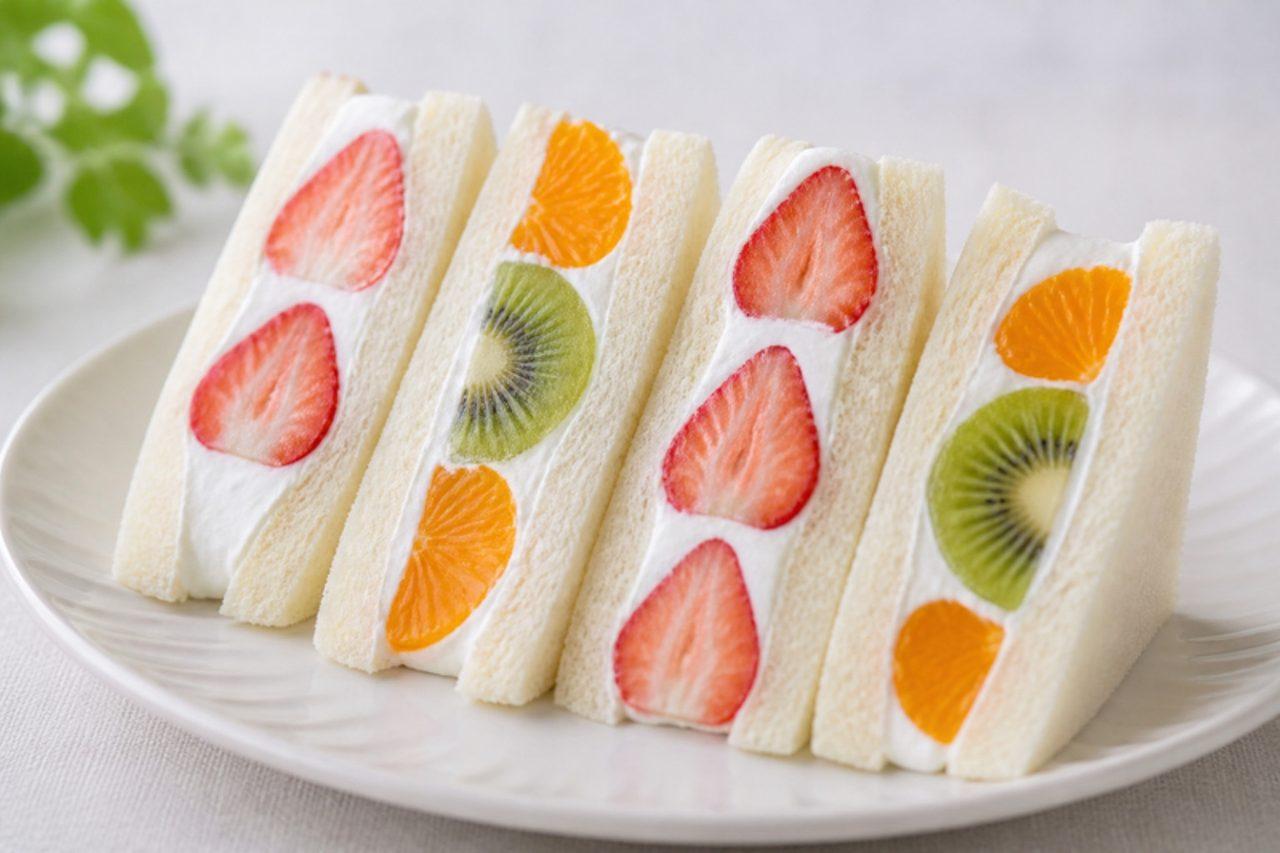
AI-generated image
Fruit sando
Soft milk bread with lightly sweetened cream, strawberries, kiwi and mandarin

Japanese fruit sandwiches started in the fruit parlours of Tokyo and are now sold in every convenience store, but they are just as much a home treat for a sunny weekend or a special after-school snack. Pillowy crustless bread holds a thick layer of barely sweetened whipped cream and whole pieces of fruit arranged so that each cut reveals a neat pattern. It contains gluten and milk (and often egg, in milk bread). Chef's tip: plan the cut before you arrange the fruit, laying the strawberries along the diagonal line you will slice through.
- Total time
- 20 min
- Difficulty
- easy
- Serves
- 2
Ingredients
- 4 slices soft white sandwich bread or milk breadthick-cut
- ¾ cup double creamwell chilled
- 2 tsp icing sugar
- 4 strawberrieshulled
- 1 kiwi fruitpeeled, cut into thick wedges
- 1 mandarinpeeled, segmented, pith removed
Shop this recipe on Amazon
Spices & pantry
Fresh ingredients (3)
Links open Amazon in a new tab. As an Amazon Associate, WhatToEat.Today earns from qualifying purchases.
Method
0/6 doneStep 1: Whip ¾ cup double cream with 2 tsp icing sugar until it holds firm peaks that stand up when you lift the whisk. It must be stiff, a little firmer than for a dessert, or the fruit slides out when you cut.
Step 2: Pat 4 strawberries, 1 kiwi fruit and 1 mandarin dry with kitchen paper; wet fruit makes the cream weep.
Step 3: Spread a thick layer of cream over 2 slices of 4 slices soft white sandwich bread or milk bread. Press the fruit into the cream along a diagonal line from corner to corner, with the strawberries in the middle, then fill the gaps with more cream until the fruit is covered.
Step 4: Top with the remaining bread and press gently. Wrap each sandwich tightly in cling film and mark the direction of the diagonal on the film.
Step 5: Chill for at least 30 minutes so the cream firms up. The common mistake is slicing straight away: soft cream squashes and smears the pattern.
30 minStep 6: Unwrap, cut off the crusts with a sharp serrated knife, then cut along the diagonal, wiping the knife between cuts. Eat the same day, kept cool.
Nutrition per serving
- Calories
- 420 kcal
- Protein
- 7 g
- Carbs
- 40 g
- Fat
- 26 g
- Fibre
- 3 g
Nutrition values are estimates.
KrazyBadal
Good to know
- How long does fruit sando take?
- About 20 minutes in total.
- How many people does it serve?
- 2 as written. Change the servings above the ingredients and every amount scales to match.
- Is it vegetarian?
- Yes. It has no meat or fish.
- What can I use instead of double cream?
- Whipping cream, same amount (less rich; whips softer).
- What can I use instead of icing sugar?
- Caster sugar, same amount.
Reviews
No reviews yet. Be the first to cook it.
Rate this recipe
Sign in to rate and review this recipe.
You might also like
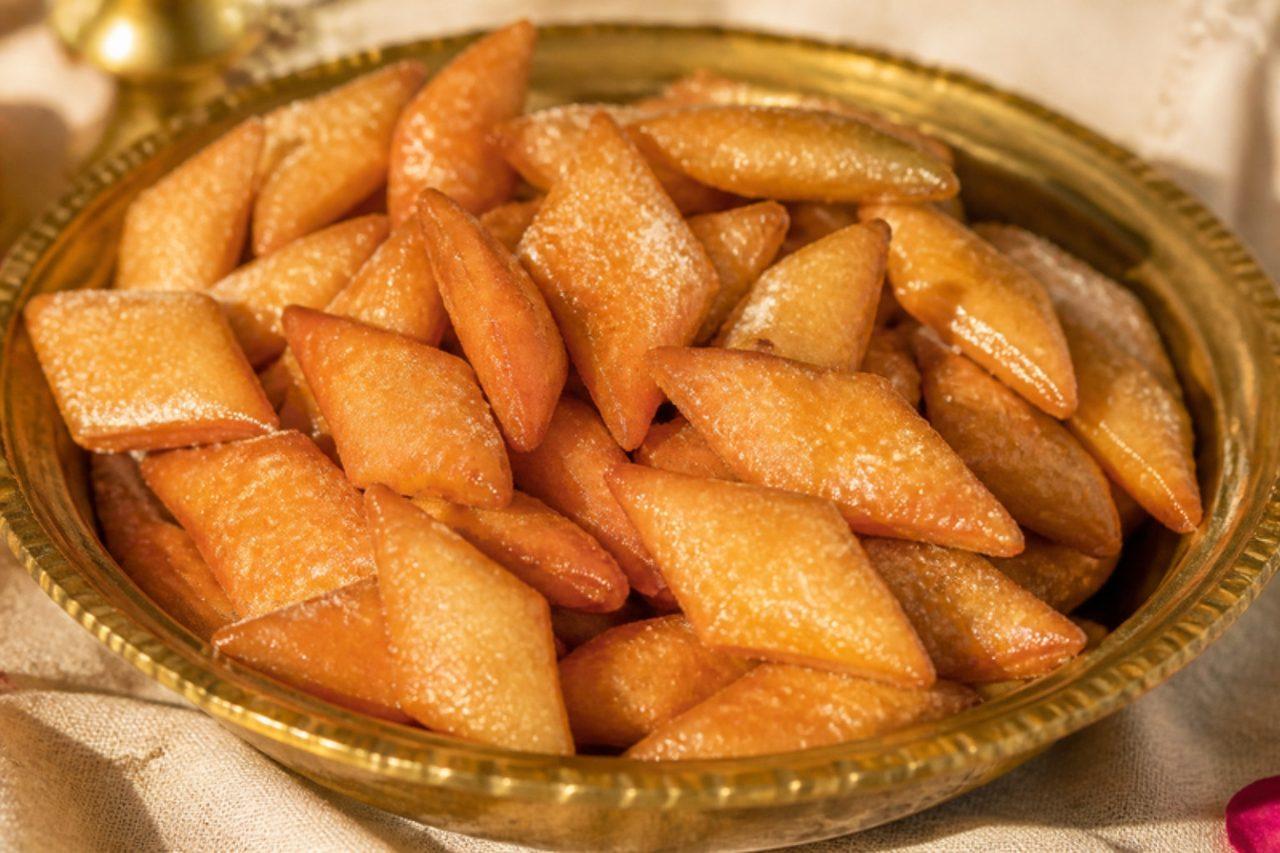
SakarpadaSweet fried dough diamonds
Sakarpada (shakarpara) are little sweet diamonds of a rich dough made with ghee, milk and sugar, fried until golden and crunchy. They are a Diwali favourite with tea, and the cubes go into bhusu too. They keep for weeks in an air-tight tin.
 Indian
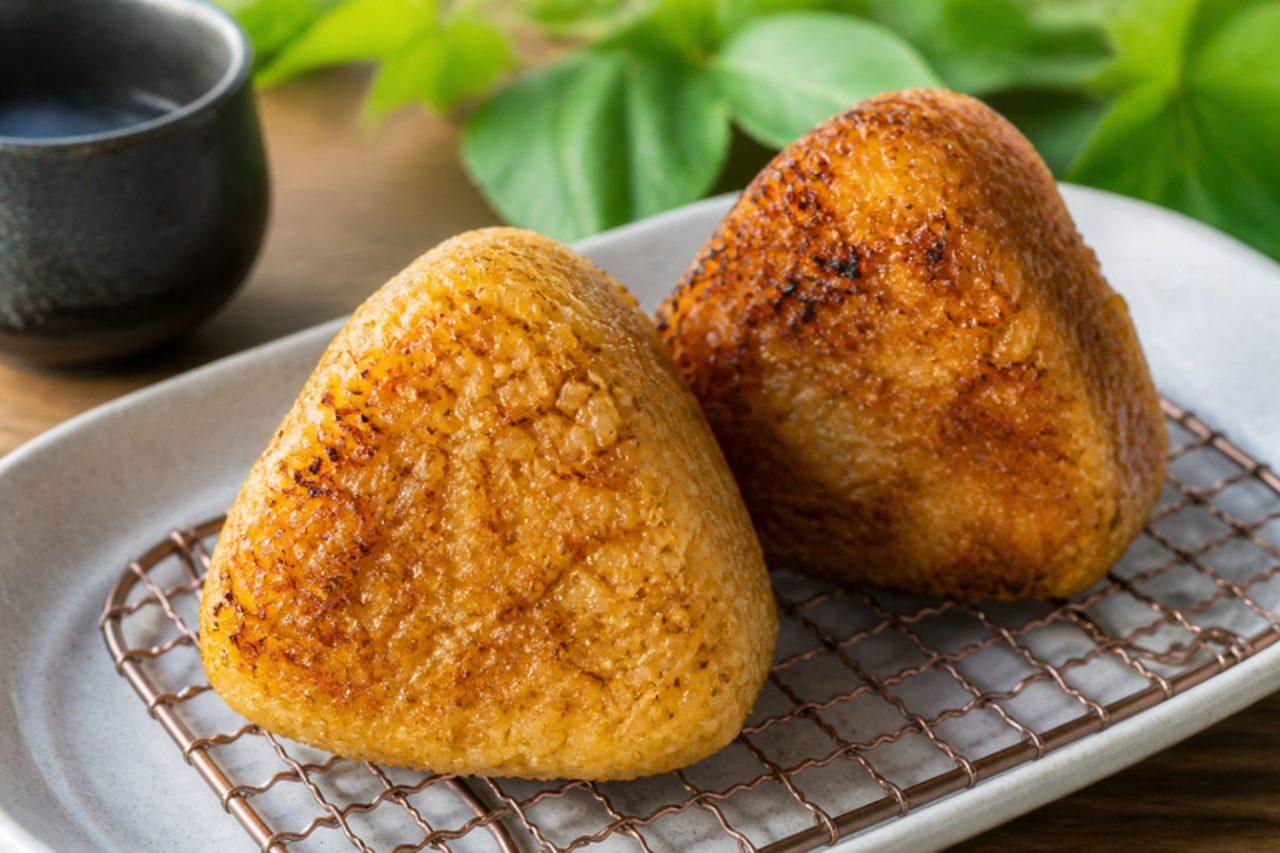
Yaki onigiriGrilled rice balls
Yaki onigiri (焼きおにぎり) are rice balls grilled until they form a crisp, toasty crust, then brushed with soy sauce glaze. They are eaten all over Japan, at izakaya, at barbecues and from the freezer section, as a snack or with miso soup. The inside stays soft and steamy while the outside crackles. Best eaten hot, straight from the pan. Chef's tip: let the shaped rice balls dry for 10 minutes before they go in the pan. A drier surface forms a better crust and won't stick, and the glaze goes on only at the end so it doesn't burn.

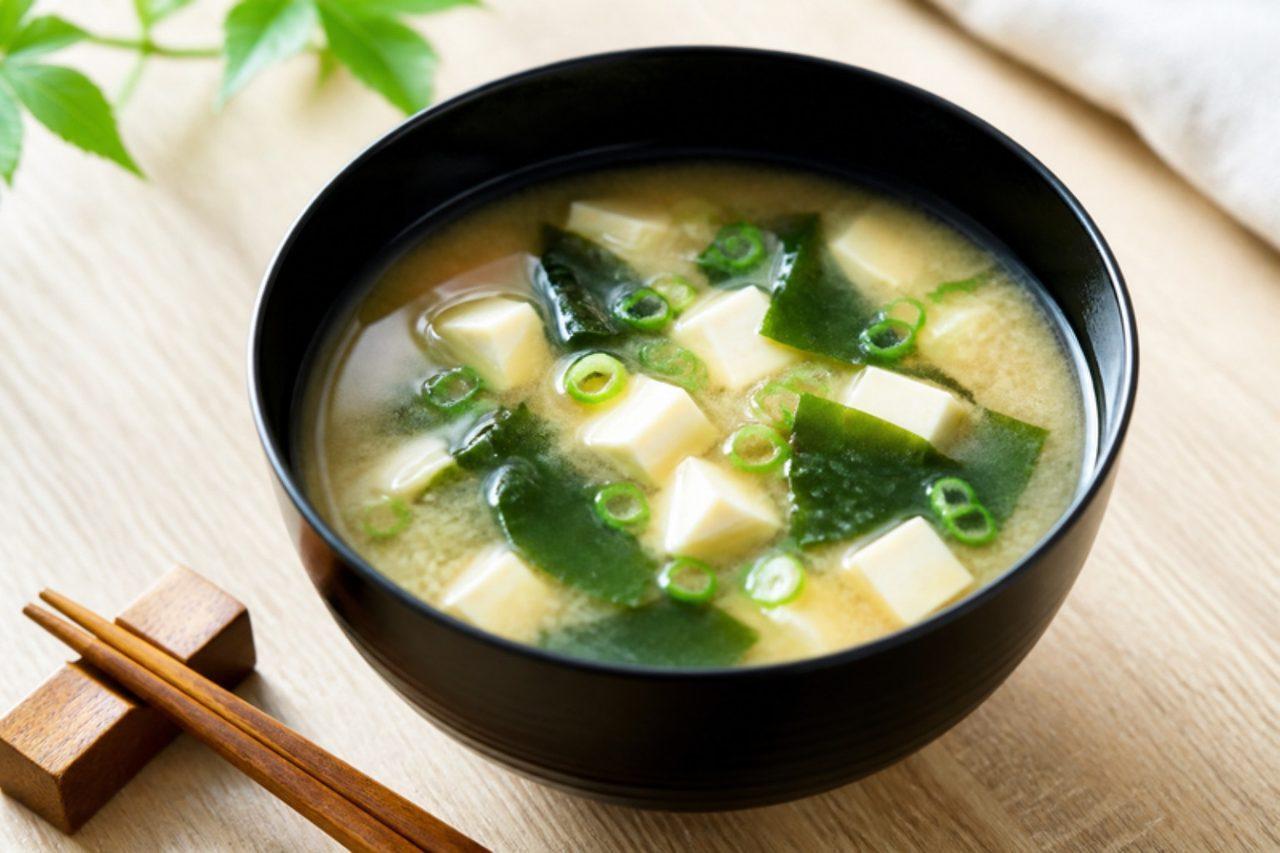
Miso soup
Miso soup (味噌汁) is drunk every day in homes all over Japan, at breakfast as well as dinner, beside a bowl of rice. The base is dashi; this vegan version uses kombu and dried shiitake instead of bonito, which gives it a deep, rounded flavour. Silken tofu and wakame seaweed are the classic fillings. It takes ten minutes; just remember not to boil the miso. Chef's tip: add the miso at the very end and never let it boil. Boiling kills the miso's fresh, fermented aroma; Japanese cooks say the soup should only 'smile', with the surface barely trembling.