
AI-generated image
Czernina
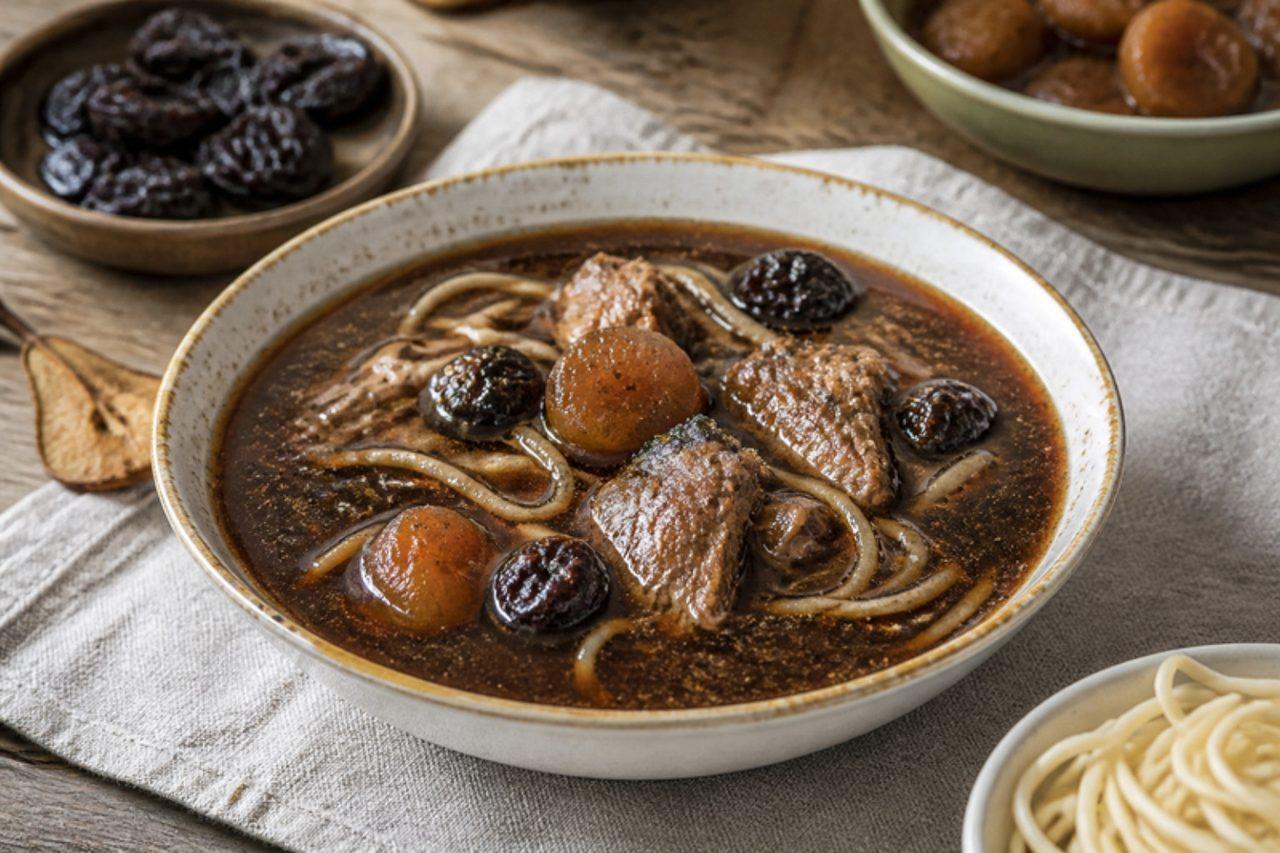
Czarnina: sweet-sour duck broth thickened with duck blood, with dried fruit and noodles
 Polish
Few soups divide a Polish table like czernina, the dark, glossy duck broth of Greater Poland and Kashubia, tinted chocolate-brown with duck blood and sharpened with vinegar, then sweetened with dried plums, pears and apples. Farm families made it when a duck was killed in autumn, and in old Polish custom a suitor served czernina knew his proposal had been turned down. The taste is rich, sweet-sour and deeply savoury, with fine egg noodles to soak it up. Safety matters here: buy fresh duck blood from a butcher, already mixed with vinegar so it does not clot, keep it at fridge temperature and use it within a day. Undercooked blood is not for pregnant women, young children or anyone with a weakened immune system. People often let the soup boil hard after the blood goes in, and it turns grainy. Chef's tip: temper the blood with hot broth before stirring it into the pot, then heat gently to a steady simmer.
- Total time
- 150 min
- Difficulty
- hard
- Serves
- 6
Ingredients
For the broth
- 10 ½ cups watercold
- 2 carrotspeeled
- 1 parsley rootpeeled
- 3 ½ oz celeriacin a chunk
- 1 onionhalved and charred in a dry pan
- 2 tsp salt
For the fruit and thickening
- 3 ½ oz pitted prunes
- 3 ½ oz dried pears or appleschopped
- 1 cup fresh duck blood, mixed with vinegar at the butcherkept at 0–4 °C, used within 24 hours
- 3 tbsp spirit vinegar (10%)or to taste
- 2 tbsp plain flour
- 2 tbsp sugaror to taste
To serve
- 9 oz fine egg noodles
- ½ tsp dried marjoram (optional)
Shop this recipe on Amazon
Spices & pantry
Fresh ingredients (4)
Links open Amazon in a new tab. As an Amazon Associate, WhatToEat.Today earns from qualifying purchases.
Method
0/9 doneStep 1: Put the 2 ⅝ lb duck pieces (legs, wings, neck, back) and cold 10 ½ cups water in a large pot and bring to a boil over a high heat, skimming the foam carefully for the first 10 minutes.
15 minStep 2: Add the 2 carrots, 1 parsley root, 3 ½ oz celeriac, 1 onion, 3 bay leaves, 6 allspice berries, 8 black peppercorns and 2 tsp salt. Lower the heat and simmer, uncovered, for 1 hour 15 minutes, until the duck meat falls away from the bone (well past 165°F).
75 minStep 3: Strain the broth into a clean pot; you need about 1.8 litres. Pick the meat from the bones in shreds and slice the carrot; discard the rest.
10 minStep 4: Add the 3 ½ oz pitted prunes and 3 ½ oz dried pears or apples to the broth and simmer over a medium-low heat for 20 minutes, until plump and soft.
20 minStep 5: Meanwhile cook the 9 oz fine egg noodles in salted water according to the packet, drain and keep aside.
8 minStep 6: In a bowl, whisk the cold 1 cup fresh duck blood, mixed with vinegar at the butcher with the 2 tbsp plain flour, 3 tbsp spirit vinegar (10%) and 2 tbsp sugar until smooth. Whisk in a ladle of hot broth, then a second, to warm it gently.
3 minStep 7: Pour the blood mixture into the pot in a thin stream, stirring all the time. Heat over a medium-low heat for 5 minutes, stirring, until it returns to a gentle simmer and the soup is steaming hot throughout, thickened and dark brown. Do not let it boil hard.
5 minStep 8: Taste and balance with more vinegar, sugar or salt: it should be clearly sweet and sour. Return the shredded duck and carrot to warm through for 2 minutes.
2 minStep 9: Put noodles in each bowl, ladle the hot czernina over with some fruit and meat, and add a pinch of ½ tsp dried marjoram if you like.
2 min
Nutrition per serving
- Calories
- 480 kcal
- Protein
- 29 g
- Carbs
- 52 g
- Fat
- 17 g
- Fibre
- 4 g
Nutrition values are estimates.
KrazyBadal
Good to know
- How long does czernina take?
- About 150 minutes in total: 30 minutes to prepare and 120 minutes to cook.
- How many people does it serve?
- 6 as written. Change the servings above the ingredients and every amount scales to match.
- What can I use instead of carrots?
- Parsnip or sweet potato, same weight.
- What can I use instead of onion?
- 2 shallots per onion.
Reviews
No reviews yet. Be the first to cook it.
Rate this recipe
Sign in to rate and review this recipe.
You might also like
Soto Banjar
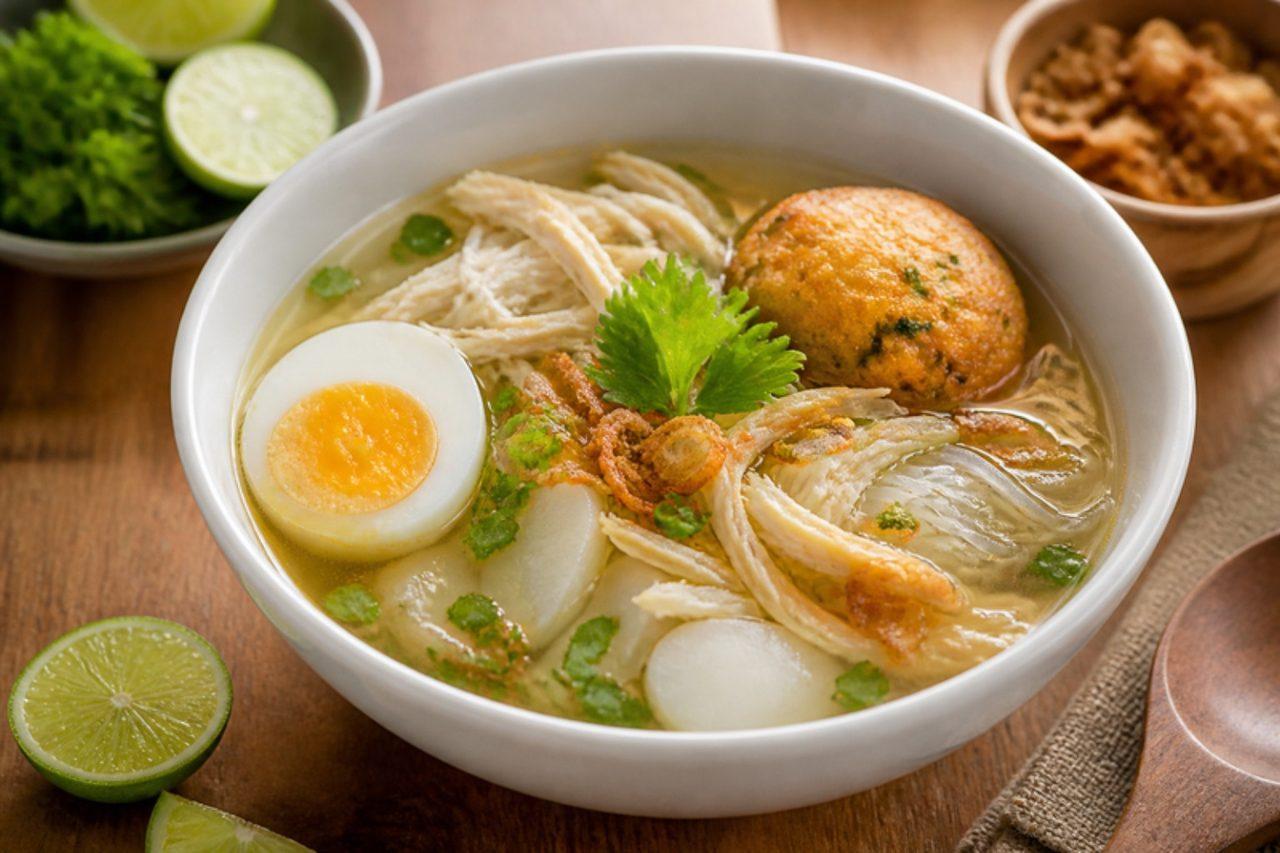
Along the rivers of Banjarmasin in South Kalimantan, breakfast often means soto Banjar eaten at a wooden riverside warung, sometimes after a dawn trip to the floating market. Unlike the turmeric sotos of Java, this broth is pale and clear, perfumed with the sweet spices that traders brought up the river centuries ago: cinnamon, cloves, star anise, cardamom and nutmeg. Shredded chicken, glass noodles, carrot and a boiled egg go into the bowl with rice cakes, and lime and a little chilli sharpen it at the table. Chef's tip: toast the whole spices in the pan for a minute before the paste goes in; it brings out their sweetness without the dusty edge of ground spice.
 Indonesian

Sopa da pedra
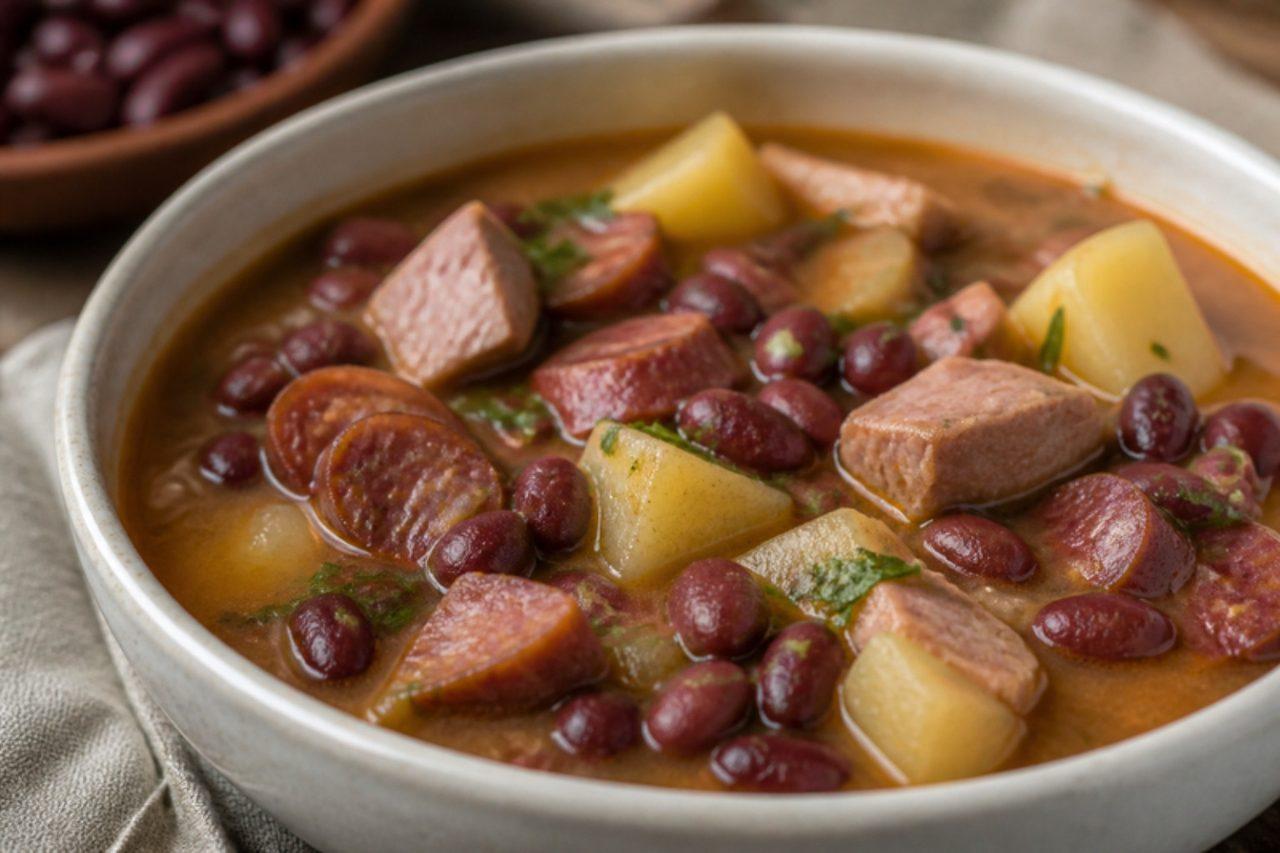
Almeirim, a market town in the Ribatejo, is the capital of this soup; its restaurants serve it every day, and each bowl arrives with a clean stone at the bottom, after the folk tale of a friar who 'made soup from a stone' by talking villagers into giving him everything else. This is a pork soup: red kidney beans simmer with chouriço, morcela blood sausage and a piece of pork belly, then potatoes, carrots and coriander finish it into a thick, hearty bowl. Chef's tip: cook the sausages whole and slice them at the end, so they stay juicy and don't turn the broth greasy.
 Portuguese
Miso soup
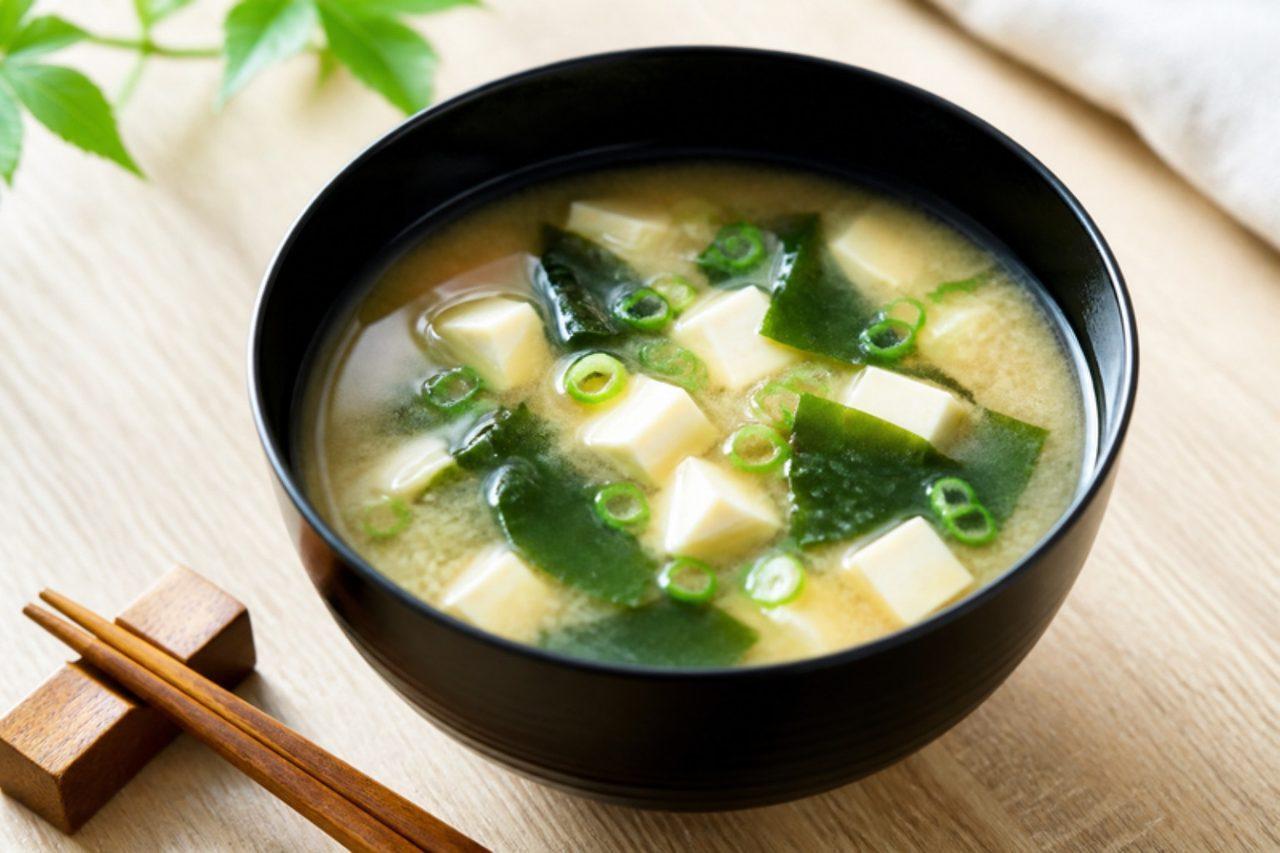
Miso soup (味噌汁) is drunk every day in homes all over Japan, at breakfast as well as dinner, beside a bowl of rice. The base is dashi; this vegan version uses kombu and dried shiitake instead of bonito, which gives it a deep, rounded flavour. Silken tofu and wakame seaweed are the classic fillings. It takes ten minutes; just remember not to boil the miso. Chef's tip: add the miso at the very end and never let it boil. Boiling kills the miso's fresh, fermented aroma; Japanese cooks say the soup should only 'smile', with the surface barely trembling.
 Japanese
