Skip to content

Recipes with yuzu peel

3 recipes that use yuzu peel, with photos, step-by-step instructions and cook times. The quickest, Hakusaizuke, takes 30 minutes. It is most often cooked with kombu, coarse sea salt and dried red chilli.

Got a few things in the fridge? Search by everything you have

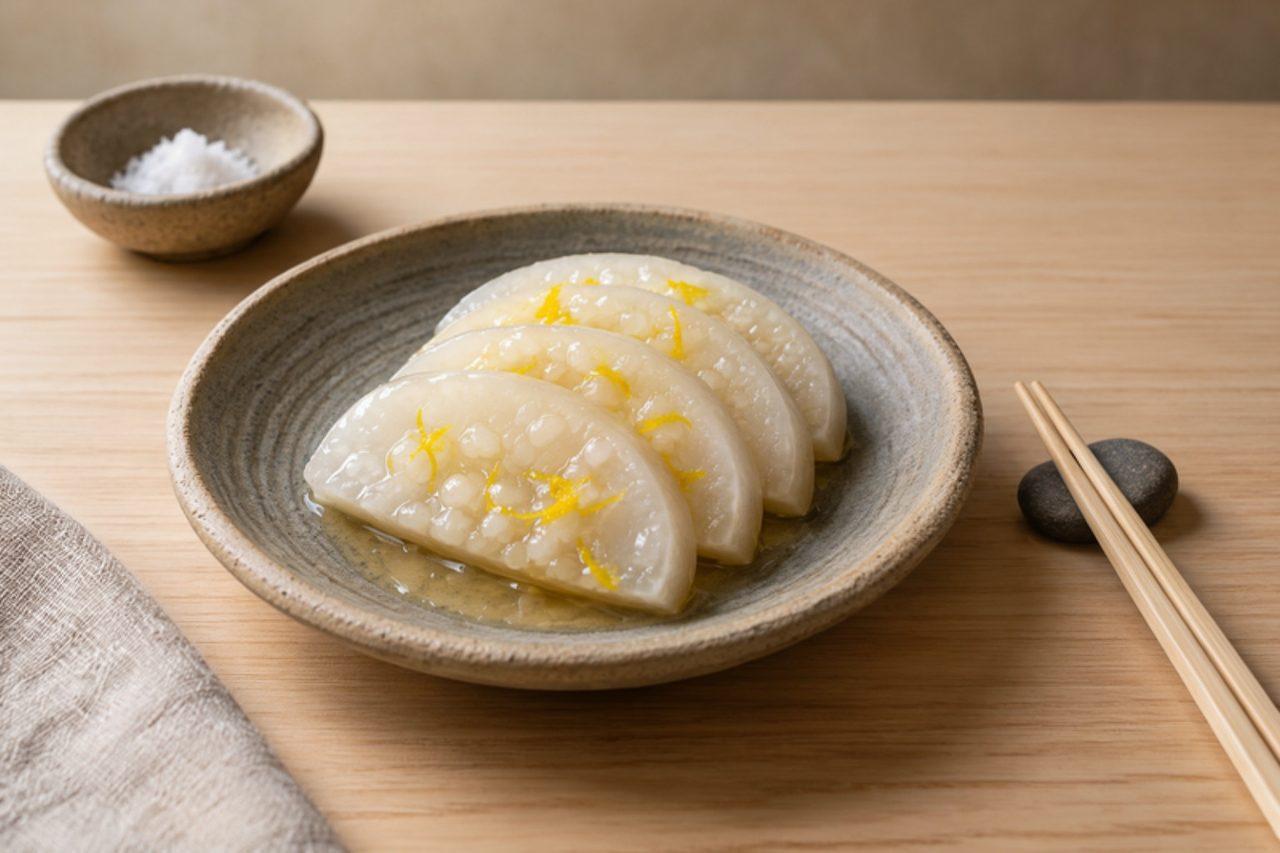
Senmaizuke

Senmaizuke is the pickle Kyoto sends home with winter visitors: great white Shogoin turnips, sliced so thin you can read through them, layered in fan shapes with kombu and a mild sweet vinegar. Pickle shops along Nishiki Market start making it in November, when the turnips swell and sweeten in the cold, and it stays on New Year tables and beside winter rice through February. It tastes gently sweet and sour with a deep savoury note from the kombu, which turns slightly sticky and coats each slice; the turnip stays crisp at the edge and silky in the middle. Outside Japan use large, firm white turnips (or a young daikon); avoid woody, spongy ones. The common mistake is skipping the first salting: unsalted slices weep water into the vinegar, dilute it and go limp. Salt them, press for an hour and squeeze gently first. It is ready when the slices are translucent, bend without breaking and the kombu feels slick. It is a fridge pickle, not a shelf one. Chef's tip: slice on a mandoline at 2 mm and keep the slices in order, so you can stack them back into a 'turnip' shape for a pretty presentation.

by KrazyBadal 0 views

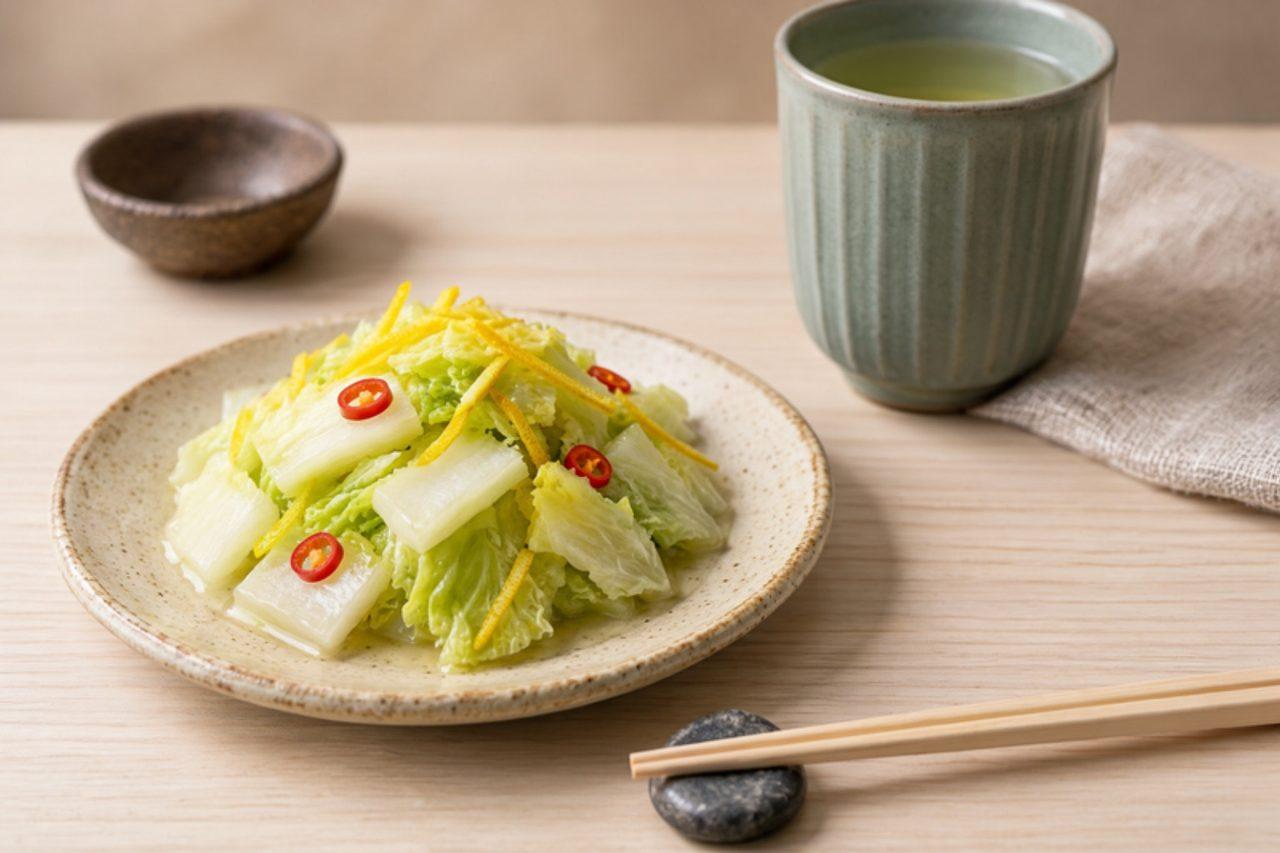
Hakusaizuke

In Japanese homes from Hokkaido to Kyushu, hakusaizuke appears when napa cabbage is cheap and sweet, from November through February. Big heads are quartered, dried for half a day on a sunny veranda, then salted in a wooden tub with kombu, dried chilli and slivers of yuzu peel, and pressed under a stone. A few days later the leaves are crisp, juicy, lightly salty and fragrant with citrus, and after a week they turn pleasantly sour. It is the everyday pickle beside breakfast rice and miso soup, or chopped into a hot-pot. Use about 3% salt by weight; less and it can spoil, more and it is too salty to enjoy. The common mistake is too light a weight at the start: the brine must rise over the cabbage within a day, so begin with twice the cabbage's weight and halve it once the liquid appears. It is ready when the white ribs are translucent and bend, the brine is clear to faintly cloudy, and it smells fresh and briny. If you cannot get yuzu, use strips of lemon peel with a little orange peel. Chef's tip: squeeze a slice firmly before serving and add a few drops of tamari and some toasted sesame seeds.

by KrazyBadal 0 views

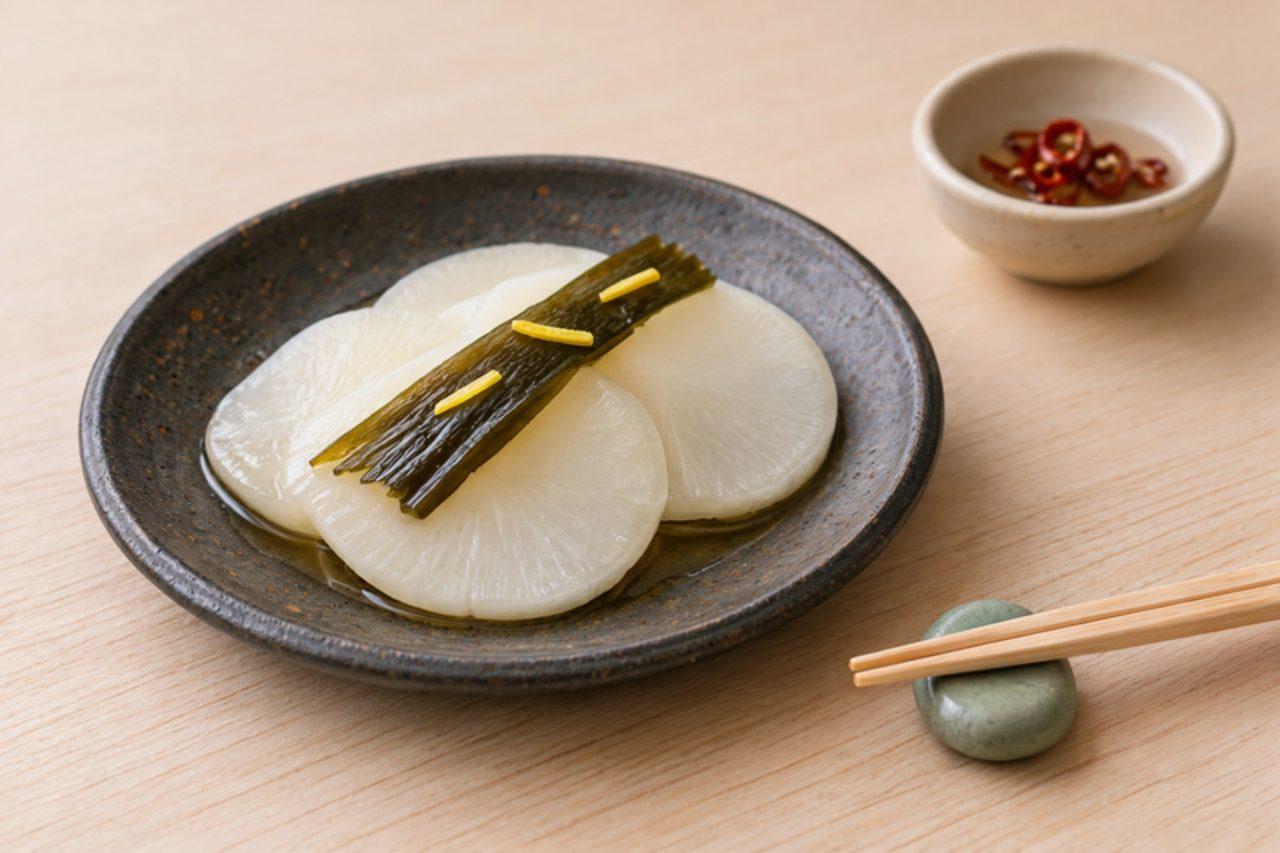
Bettarazuke

Every 19 and 20 October, the lanes around Takarada Ebisu Shrine in Nihonbashi fill with stalls for the Bettara-ichi, Tokyo's old pickle fair, where vendors hold up whole daikon dripping with rice koji and passers-by try not to get 'bettari', sticky. The pickle has been an Edo favourite since the 1700s: daikon salted, then buried in amazake, the sweet porridge that koji makes from rice. It tastes mild, sweet and fresh, with a clean crunch and a faint fermented, sake-lees perfume, which makes it a favourite with children and a pause between salty dishes. Bettarazuke is low in salt and acid, so it lives in the fridge from start to finish. The common mistake is adding the daikon while the amazake is still warm: it cooks the surface and softens the crunch, so cool it fully. It is ready when the daikon is translucent at the edges, juicy, and the koji coating tastes sweet with a light tang. Chef's tip: make the amazake in a rice cooker on keep-warm with the lid ajar and a cloth over it, so it holds about 60 °C; a thermometer helps the first time.

by KrazyBadal 0 views

Goes well with yuzu peel