Skip to content

Recipes with split mustard seeds

5 recipes that use split mustard seeds, with photos, step-by-step instructions and cook times. The quickest, Gajar marcha nu athanu, takes 18 minutes. It is most often cooked with gluten-free asafoetida, lemon juice and turmeric.

Run out of split mustard seeds? Cumin seeds, same amount.

Got a few things in the fridge? Search by everything you have

Kachi haldi ka achar

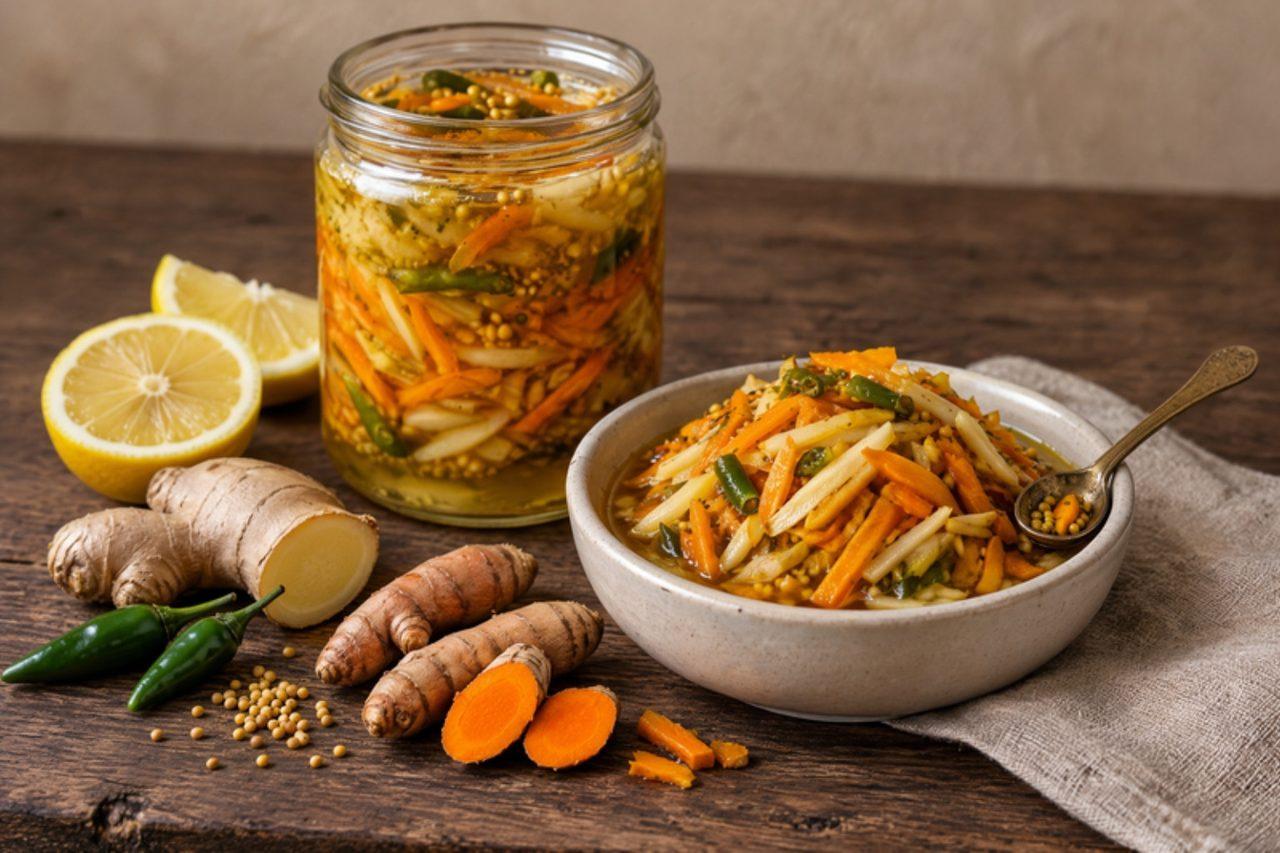
From December to February, fresh turmeric root turns up in heaps in the mandis of Jaipur, Jodhpur and Udaipur, bright orange inside and earthy-sweet. Rajasthani families eat it as a warming winter food, cooked in ghee as kachi haldi ki sabzi or, more simply, as this fresh pickle with ginger and green chilli. The slivers stay crisp and juicy; they taste peppery and slightly bitter, with sharp lemon and the nose-tingling bite of split mustard seed. It sits beside bajra roti, dal and a winter sabzi, and a few pieces with lunch is the whole point. The common mistake is cutting thick chunks: turmeric is fibrous, so slice it into matchsticks or thin coins so the lemon can soak in. It is ready to eat after 2 days, when the slivers have turned a shade softer and the juice has gone golden. Because it contains fresh ginger and chilli, keep it fully covered in the lemon juice and store it in the fridge, where it keeps for about 4 weeks. Wear gloves and use a steel or glass bowl, as turmeric stains wood, plastic and fingers for days. Chef's tip: pick plump, firm roots with smooth skin; wrinkled ones are dry and woody.

by KrazyBadal 0 views

Lehsun ka achar

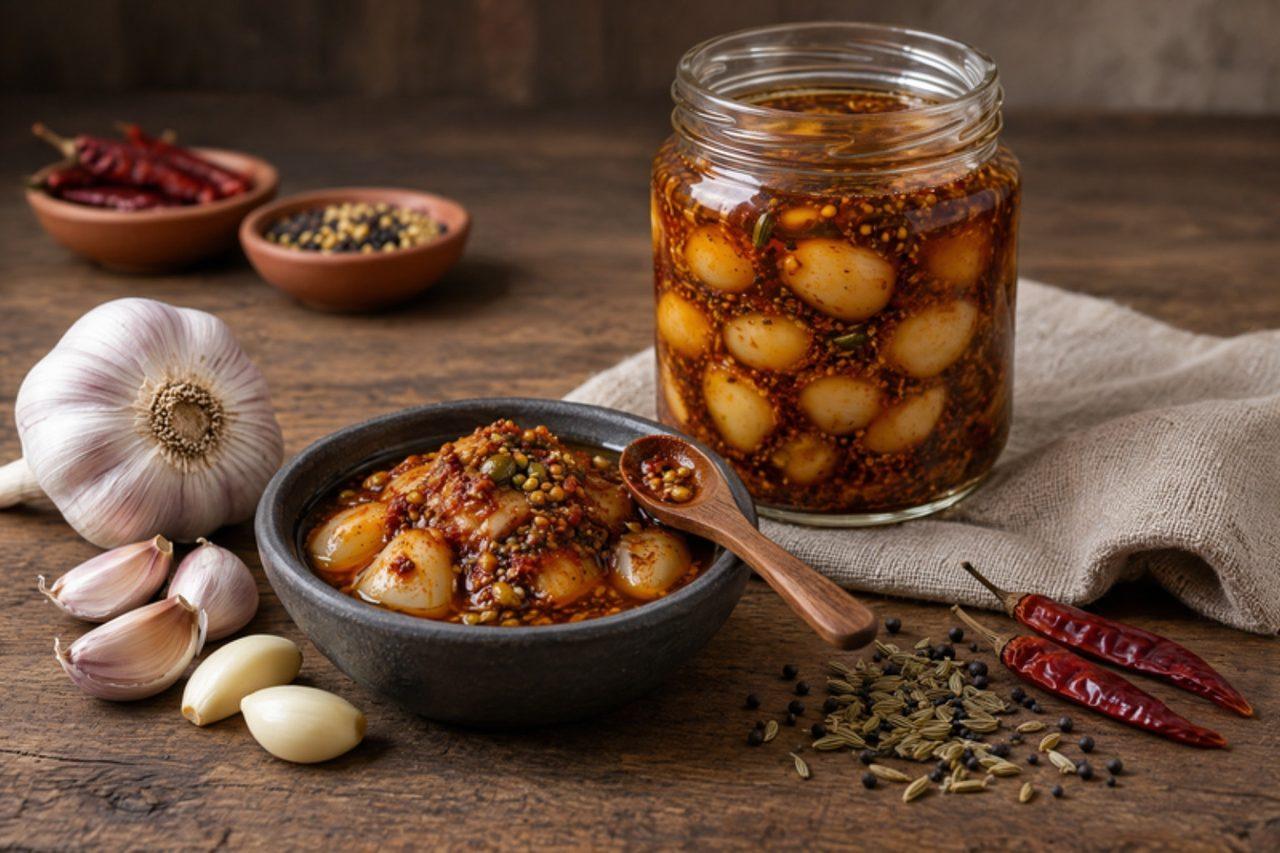
Rajasthani homes put up garlic pickle in the dry months after the new crop comes in, and it is the pickle that turns a plain plate of bajra roti and kadhi into a meal. Whole cloves sit in a coarse masala of saunf, methi, mustard, chilli and amchur bound with mustard oil; after a week they are mellow and tender-crisp, pungent and sour with a slight sweetness. Traditionally the jar matures in the sun for days, but garlic in oil at room temperature can carry botulism, so this version is adapted: the cloves are first soaked in lemon juice and vinegar for a day to make them properly acidic, and the pickle matures and lives in the fridge. Use vinegar of at least 5% acidity, never diluted. Don't worry if a few cloves turn blue-green; that is a harmless reaction between garlic and acid. The common mistake is skipping the acid soak to save time; do not. It is ready after a week, when the cloves have lost their raw burn and taste of the masala right through. Keep it in the fridge for up to a month. Chef's tip: choose small, firm desi garlic with tight skins; big soft cloves go limp in the acid.

by KrazyBadal 0 views

Chana methi nu athanu

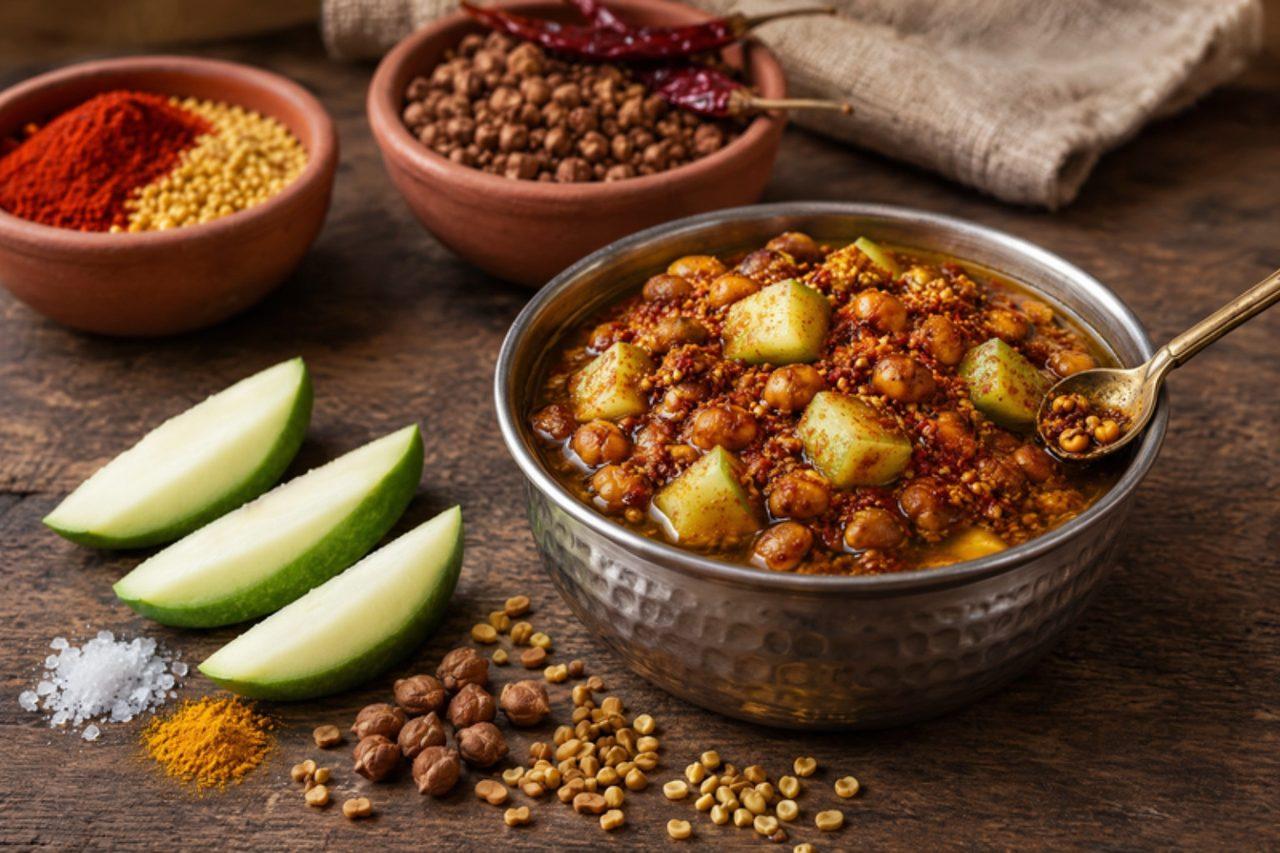
This is the thrifty, protein-rich pickle of Kathiawad and the Gujarati countryside, made in the May pickle season alongside methia keri. Brown chickpeas and fenugreek seeds are soaked until plump, then mixed with salted raw mango, split mustard, chilli and hing and sealed under oil. Over a few days the chana and methi drink up the sour mango juice and soften to a pleasant bite; the methi seeds lose most of their bitterness and turn nutty. The pickle is sour, hot and pungent, with plenty of crunch. A spoonful brightens khichdi-kadhi, bajra rotla or a plain dal-bhaat-shaak lunch. The common mistake is mixing in chickpeas that are still wet after soaking: dry them on a cloth for a few hours or the pickle will turn mouldy. It is ready in 4–5 days, when the chickpeas can be bitten through easily and taste sour all the way in. Because soaked pulses are low in acid, keep this one in the fridge once it is mixed, where it lasts up to 3 months, with the oil always covering the top. Chef's tip: use kala chana (small brown chickpeas); they stay firmer than large white ones.

by KrazyBadal 0 views

Gajar marcha nu athanu

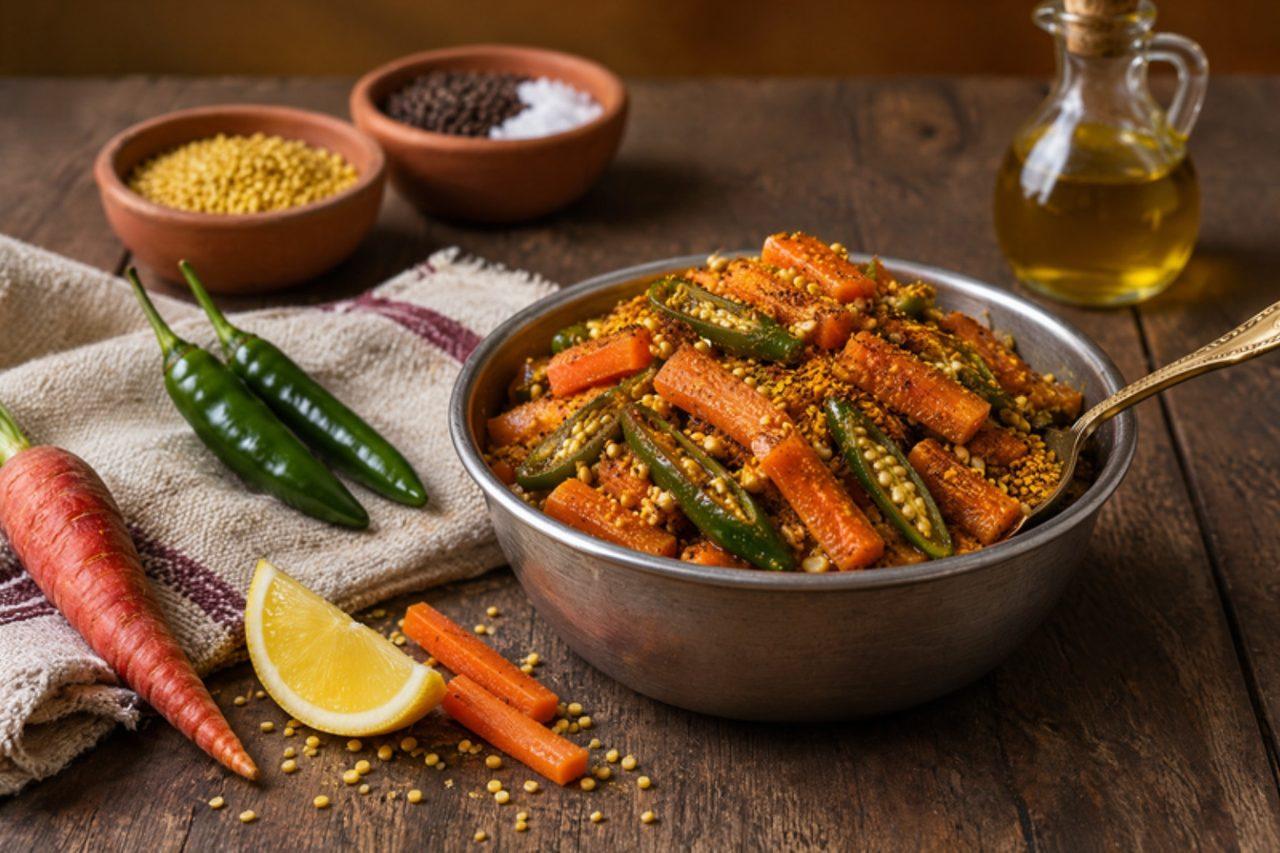
Every Gujarati thali, from Ahmedabad homes to Surat lunch houses, has a little bowl of something fresh and sharp to cut through the dal, kadhi and sweet shaak, and in the cold months it is very often this instant carrot and chilli athanu. Winter brings the sweet, deep red desi carrots and fat, mild bhavnagri chillies, and the pickle is mixed in ten minutes: sticks of both coated in split mustard seed, turmeric, hing, salt and lemon, then dressed with warm oil. It is crunchy, juicy and bright, with the nose-tingling pungency of rai kuria and a clean lemon tang. Eat it with rotli, thepla, khichdi or a full thali. The common mistake is pouring smoking-hot oil straight on, which cooks the mustard and makes it bitter; let the oil cool until just warm. It is ready when the mustard has softened and the carrots look glossy, about an hour after mixing, though it is good straight away. With fresh chilli and no long cure, keep it in the fridge and eat within a week. Chef's tip: if bhavnagri chillies are hard to find, use a mix of mild long green peppers and a couple of hot green chillies.

by KrazyBadal 0 views

Kerda nu athanu

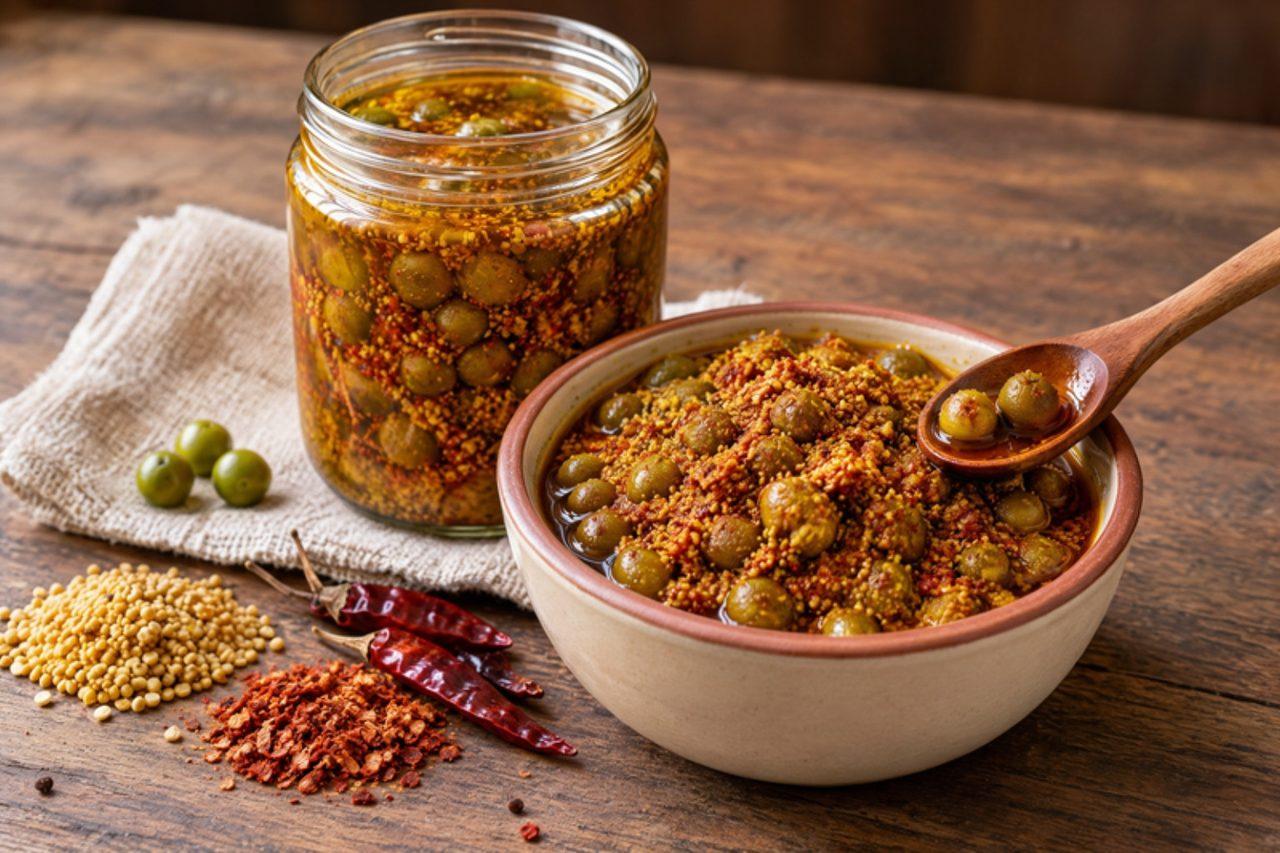
Ker is a leafless desert shrub that grows wild across Kutch and the Thar, and in April and May, before the monsoon, it is covered in small green berries that families pick by hand. Fresh ker are fiercely bitter, so they are soaked and boiled until the bitterness fades, then pickled with split mustard, split fenugreek, chilli and lemon juice and covered in oil. The berries are firm, pea-sized and slightly chewy, with a sour, earthy, caper-like flavour under the mustard heat. In Kutch the pickle goes with bajra rotlo and buttermilk, or is mixed into khichdi; across Rajasthan the same berries go into ker sangri. The common mistake is rushing the soaking: if the water is not changed several times the pickle stays harsh. Taste a berry: it should be pleasantly sour-bitter, like an olive, not acrid. It is ready to eat after 3–4 days, once the berries have absorbed the lemon. Boiled ker are low in acid, so the lemon matters and the pickle lives in the fridge, where it keeps up to 2 months. Abroad, use dried ker from Indian grocers (they swell back well), or, at a pinch, capers soaked to remove the salt. Chef's tip: add a few cubes of raw mango in season for extra sourness.

by KrazyBadal 0 views

Goes well with split mustard seeds