Skip to content

Recipes with seedless tamarind

5 recipes that use seedless tamarind, with photos, step-by-step instructions and cook times. The quickest, Tamarind and date chutney, takes 35 minutes. It is most often cooked with jaggery, cumin seeds and dried red chillies.

Got a few things in the fridge? Search by everything you have

Pandu mirapakaya pachadi

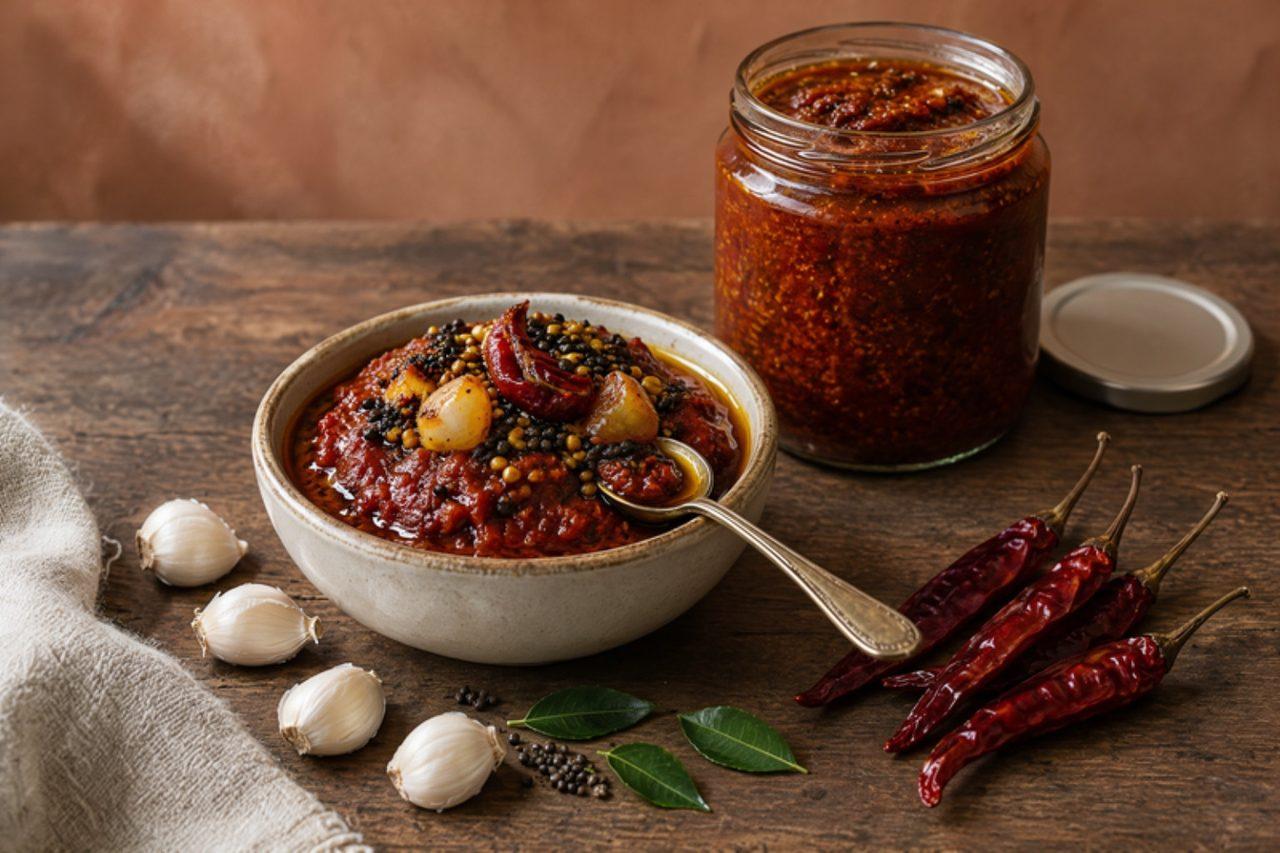
Guntur is chilli country, and when the fields turn red between January and March, Andhra kitchens buy fresh, fully ripe red chillies by the kilo for this pachadi. The chillies are chopped, salted and packed with tamarind for two days, then ground coarse with roasted fenugreek and sealed under a tempering of gingelly oil, mustard and hing. The result is brick red, fiery and fruity rather than smoky, with a sour backbone from the tamarind and a faint bitterness from the methi. A teaspoon is mashed into hot rice with a spoon of ghee or sesame oil, and it is just as good beside idli, dosa or pesarattu. The big mistake is washing the chillies and grinding them while still damp: water is what makes this pachadi spoil, so wipe them dry and leave them on a cloth for a few hours. It is ready when the paste is thick and glossy and the oil pools on top. Salt here is high on purpose, about 12 g for every 100 g of chillies, and the tamarind makes it acidic; even so, keep it in the fridge, where it lasts up to 6 months. Chef's tip: mix in a few Byadgi or Kashmiri chillies with the hot Guntur ones for a deeper red without extra fire.

by KrazyBadal 0 views

Tomato oorugaya

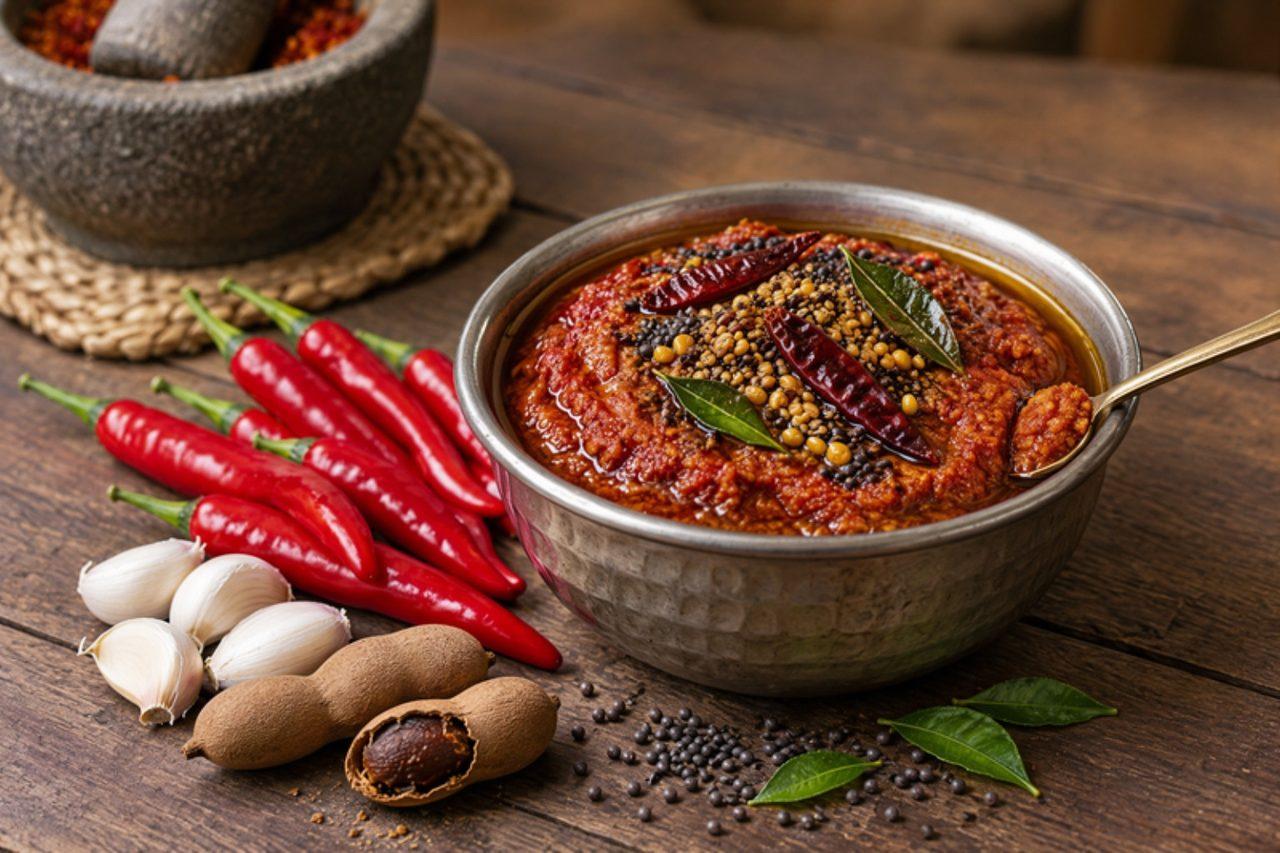
When tomatoes flood the Madanapalle and Kurnool markets in the hot months and prices drop, Andhra cooks turn them into this deep red oorugaya. Chopped tomatoes are salted and cooked down with tamarind until most of the water has gone, then simmered in sesame oil with chilli, garlic and a freshly roasted fenugreek-mustard powder. The texture is a thick, almost jammy paste; the taste is tangy, salty and hot, with the slight bitterness of methi lifting the sweetness of ripe tomato. Mash a spoonful into steaming rice with ghee, or serve it with dosa, upma and curd rice. The common mistake is stopping too early: if water is left in the paste the pickle will spoil within days. Keep cooking until the paste holds together, leaves the sides of the pan and the oil separates and shines on the surface. Because it has garlic and tomatoes are not as acidic as tamarind alone, store it in the fridge, where it keeps up to 2 months. Chef's tip: use firm, fully ripe country tomatoes rather than watery salad ones; you will cook for less time and get a richer colour.

by KrazyBadal 0 views

Tetul achar

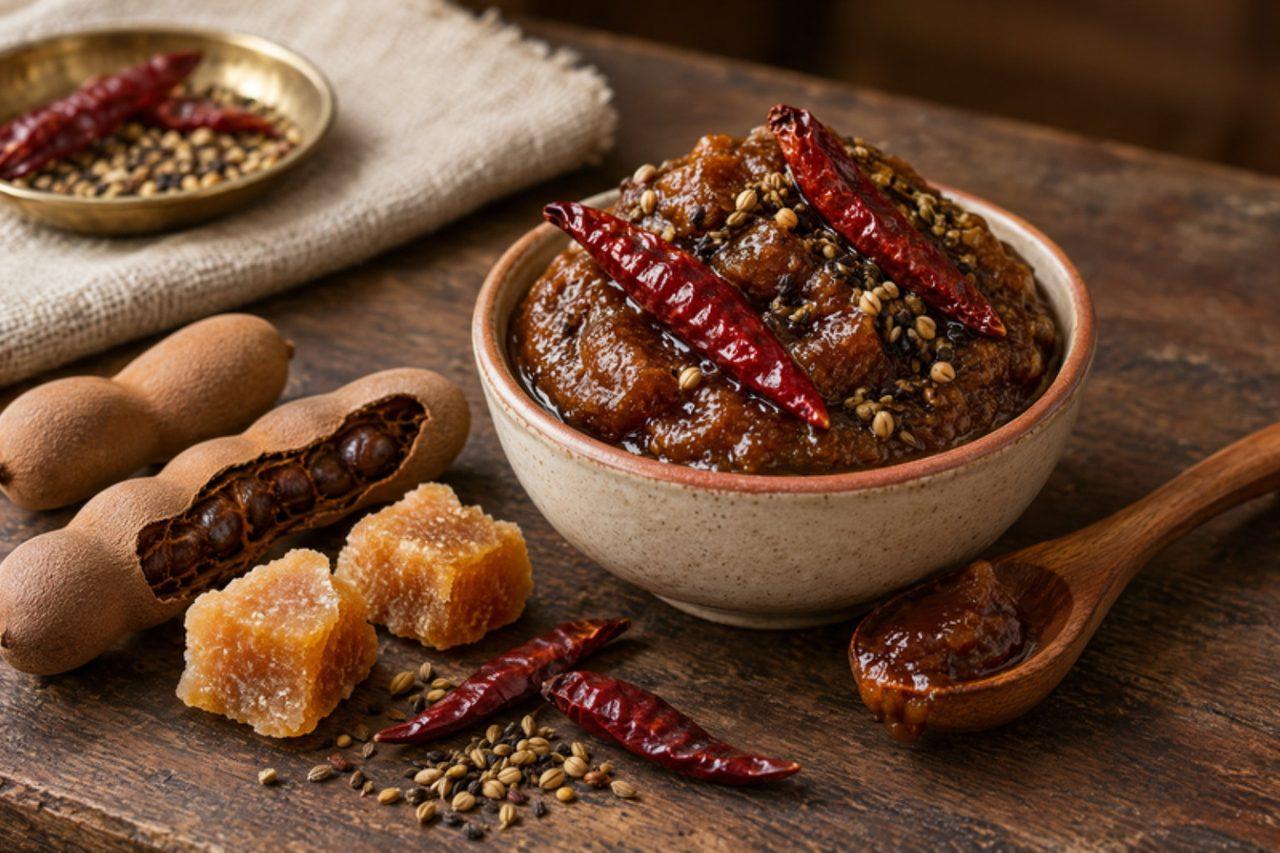
Ask anyone who grew up in Kolkata or a Bengal village about tetul achar and they will remember winter afternoons on the roof, sneaking spoonfuls from jars drying in the sun. Tamarind pulp is cooked down with jaggery, salt and a mustard-oil tempering of panch phoron and dried chilli until it turns sticky, dark and glossy. It tastes sweet and sour in one bite, with a little heat and the bittersweet crackle of fenugreek and nigella from the five-spice. Eat it as a teatime treat, with khichuri, or as the sweet-sour note at the end of a Bengali lunch. The common mistake is cooking it too hard: like toffee, tamarind and jaggery go from glossy to burnt quickly, so keep the heat low near the end and stir. It is ready when it falls from the spoon in a thick ribbon and leaves a trail across the pan; it firms up a lot as it cools. Being very sweet and acidic, it keeps 2 months in a dry jar in a cool cupboard and longer in the fridge. Chef's tip: in winter use khejur gur (date palm jaggery) for a smoky, caramel depth.

by KrazyBadal 0 views

Babru

Ask anyone who grew up in Shimla about babru and they will mention a paper plate of them in the Lower Bazaar, still puffing from the oil, with a ladle of dark tamarind chutney poured over. Unlike Uttar Pradesh's flaky urad kachori, babru is made from a soft, yeasted wheat dough, so it fries up light and bready, and it is pressed flat and wide rather than shaped into a ball. The filling is whole black gram, soaked and ground with ginger and green chilli. In Himachal homes it is a tea-time and festival snack, and it travels well in a tiffin. Chef's tip: grind the dal coarse and thick, like hummus; a runny paste leaks and makes the babru greasy.

by KrazyBadal 0 views

Tamarind and date chutney

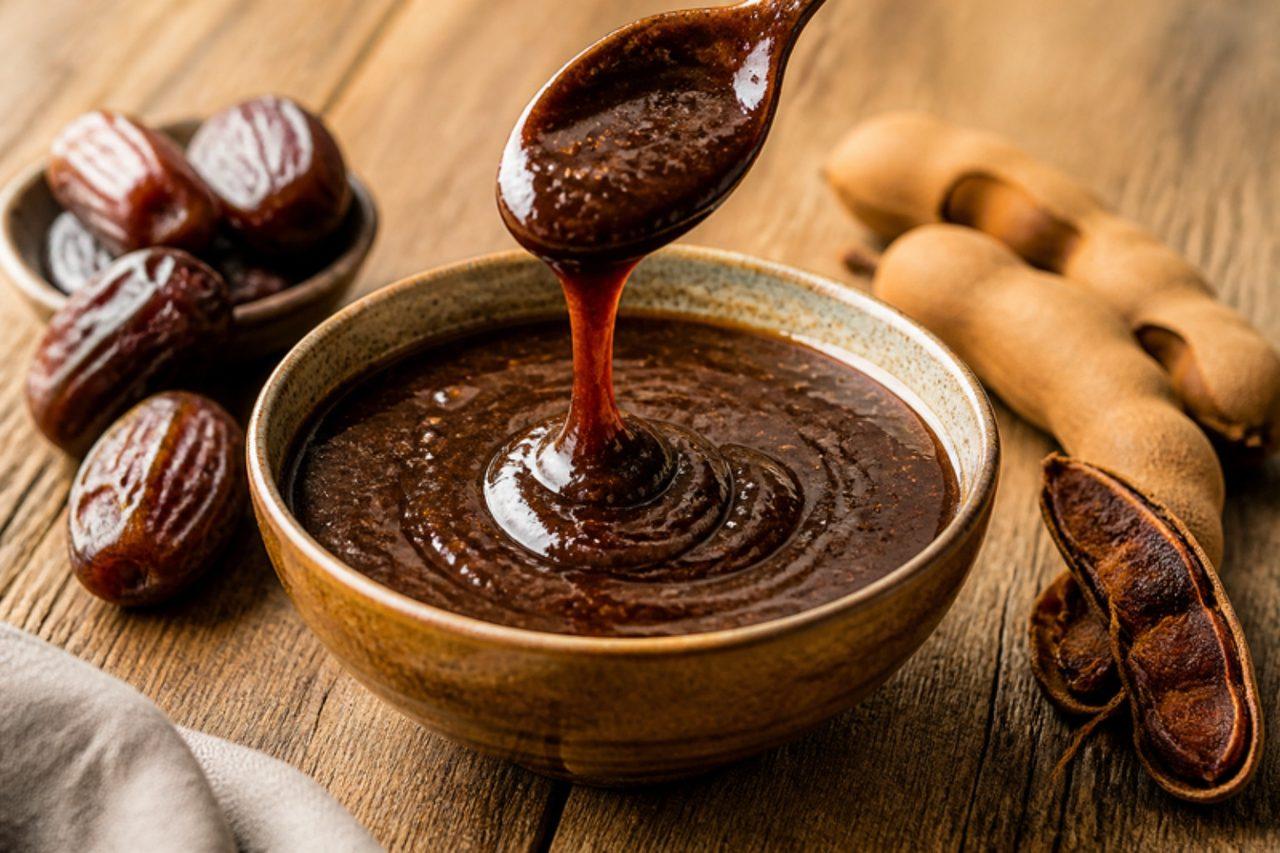
The sweet, sour, glossy brown chutney that makes chaat: tamarind and dates boiled soft, blended and sieved, then sweetened with jaggery and spiced with cumin and red chilli. Drizzle it over samosas, bhel, pani puri, dahi vada and pakoras. It keeps for a month in the fridge or longer in the freezer.

by KrazyBadal 0 views

Goes well with seedless tamarind