Skip to content

Recipes with raw green mangoes with hard stones

3 recipes that use raw green mangoes with hard stones, with photos, step-by-step instructions and cook times. The quickest, Bellam avakaya, takes 45 minutes. It is most often cooked with gingelly, red chilli powder and turmeric.

Got a few things in the fridge? Search by everything you have

Bellam avakaya

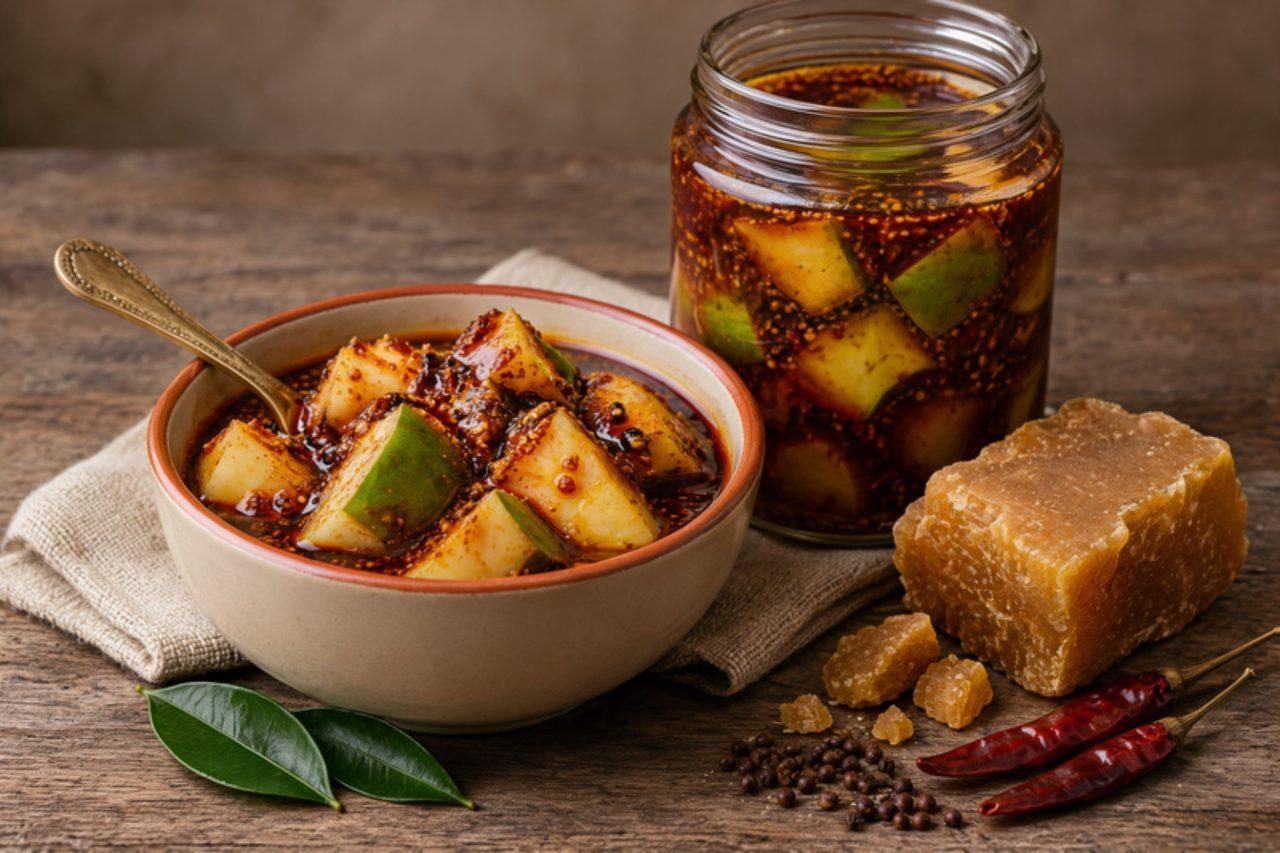
In the Godavari districts of coastal Andhra, the same May afternoon that produces a jar of fiery avakaya usually produces a second jar of bellam avakaya for the children and anyone who likes it sweet. The mangoes are hacked into chunks with their skin and the hard shell of the stone still attached, then tossed with chilli, mustard powder, salt and plenty of grated jaggery. Over three or four days the jaggery melts into a dark, glossy syrup that clings to every piece. It tastes sweet first, then the mustard catches the nose and the chilli warms the back of the throat; the mango stays firm and sour. Eat it with pesarattu, dosa, chapati or curd rice. The salt is about 8% of the mango weight and the fruit is acidic, so it keeps all year under oil in a dry jar. Common mistake: cutting the mangoes wet or leaving sap and water on them; any moisture invites mould, so dry each piece with a cloth. It is ready when no jaggery grains remain and a film of oil rises to the top. Chef's tip: wipe off the milky sap at the stalk end before cutting; it stings the skin and tastes bitter.

by KrazyBadal 0 views

Pesara avakaya

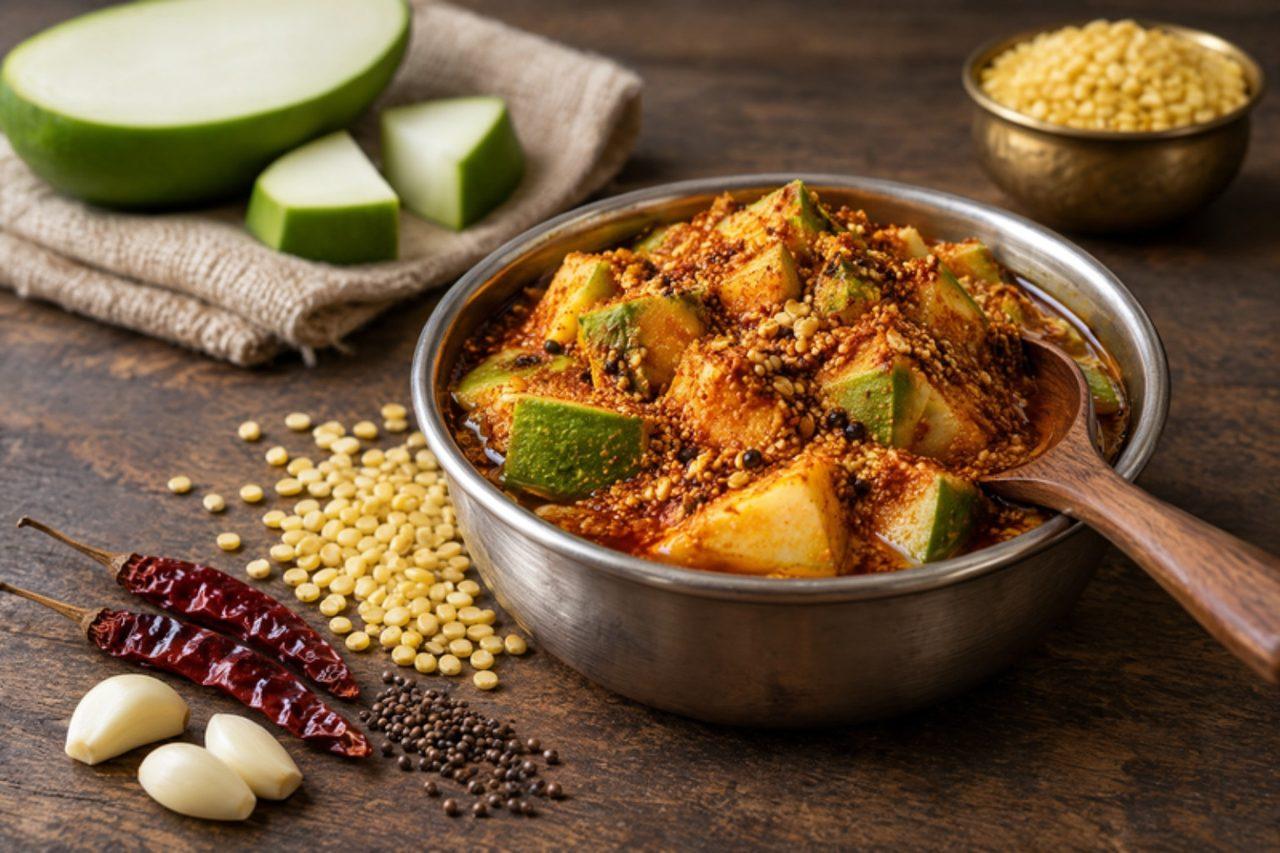
Pesara avakaya is the Krishna and Guntur districts' answer for anyone who finds classic avakaya too sharp. It is cut and mixed in the same summer weeks, from the same sour mangoes, but finely ground raw yellow moong dal replaces most of the mustard. The dal swells in the mango juice and oil and turns the masala thick, nutty and almost creamy, so it clings to each piece, while a little mustard keeps a hint of nose-tingle. It is still properly hot from the chilli. Eat it with hot rice and ghee, with pesarattu, or alongside a plate of curd rice. Some families add garlic; if you do, the jar must live in the fridge. Common mistake: grinding the dal coarsely, which leaves a gritty masala; sift it and regrind the bits. Another is skimping on oil: the dal absorbs a lot, so top up until the pickle is covered. The salt is about 9% of the mango weight. It is ready after three days, when the masala is thick and clinging and oil has risen to the surface. Chef's tip: warm the dal in a dry pan for 2–3 minutes without colouring it; it grinds finer and keeps better.

by KrazyBadal 0 views

Menthi avakaya

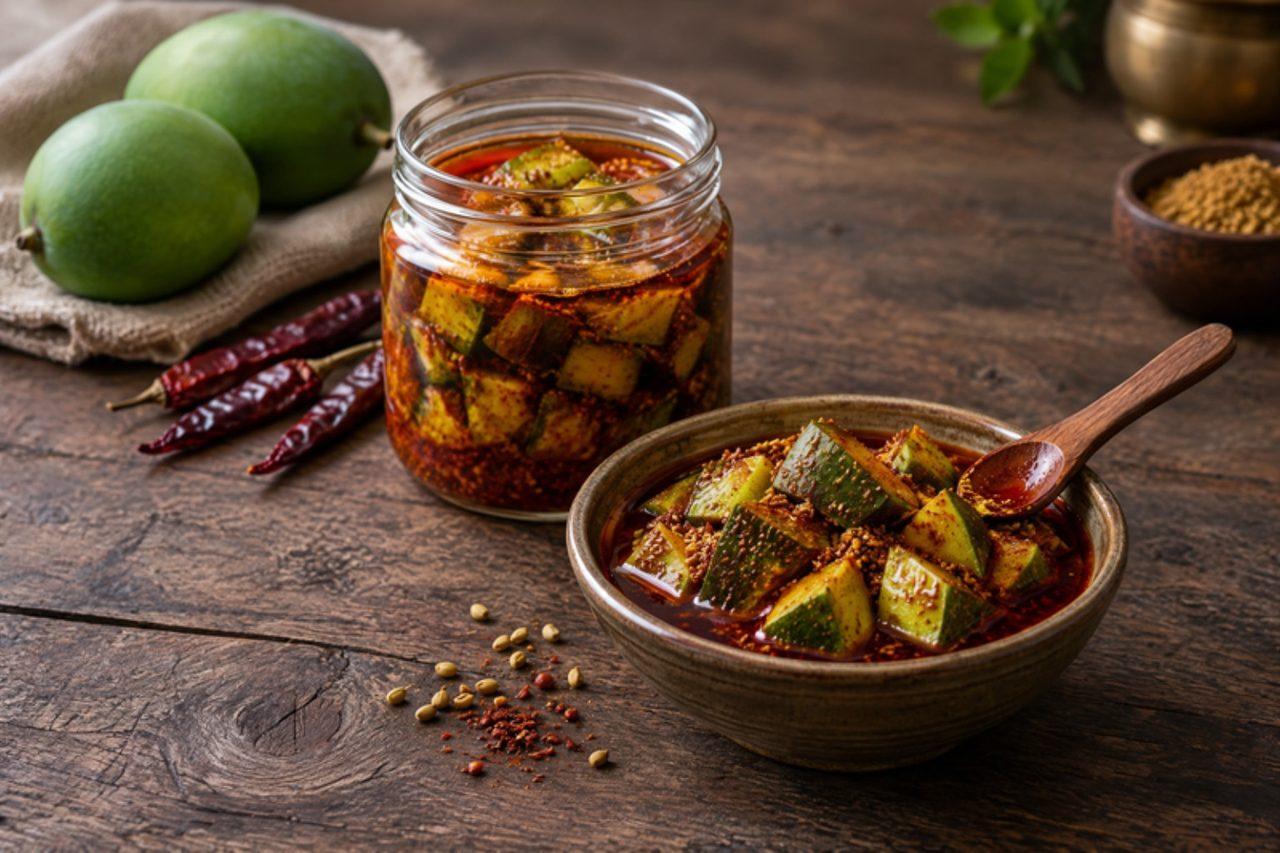
In East Godavari kitchens menthi avakaya is the mango pickle for people who love bitterness: instead of a mustard-heavy masala, it is built on fenugreek seeds roasted until golden and ground, with red chilli, salt and a tempering of mustard seeds and asafoetida in gingelly oil. Families make it in the hottest weeks of May, when the mangoes are at their sourest, and it is traditionally eaten through the summer with hot rice, ghee and a dal. The fenugreek gives a toasty, almost maple-like aroma and a pleasant bitter edge that sits against the sour mango and the chilli heat. The salt is about 9% of the mango weight, and the pickle keeps for a year under oil in a dry jar. Common mistake: roasting the fenugreek too dark; it turns acrid, and that bitterness spreads through the whole jar. Roast it slowly until golden and fragrant, then let it cool before grinding. It is ready after two or three days, when the mango has darkened, the fenugreek smell has mellowed and oil sits on top. Chef's tip: grind the fenugreek only when completely cold, or it turns pasty and clumps.

by KrazyBadal 0 views

Goes well with raw green mangoes with hard stones