Skip to content

Recipes with gingelly

17 recipes that use gingelly, with photos, step-by-step instructions and cook times. The quickest, Dosavakaya, takes 23 minutes. It is most often cooked with turmeric, gluten-free asafoetida and garlic.

Got a few things in the fridge? Search by everything you have

Vadouvan

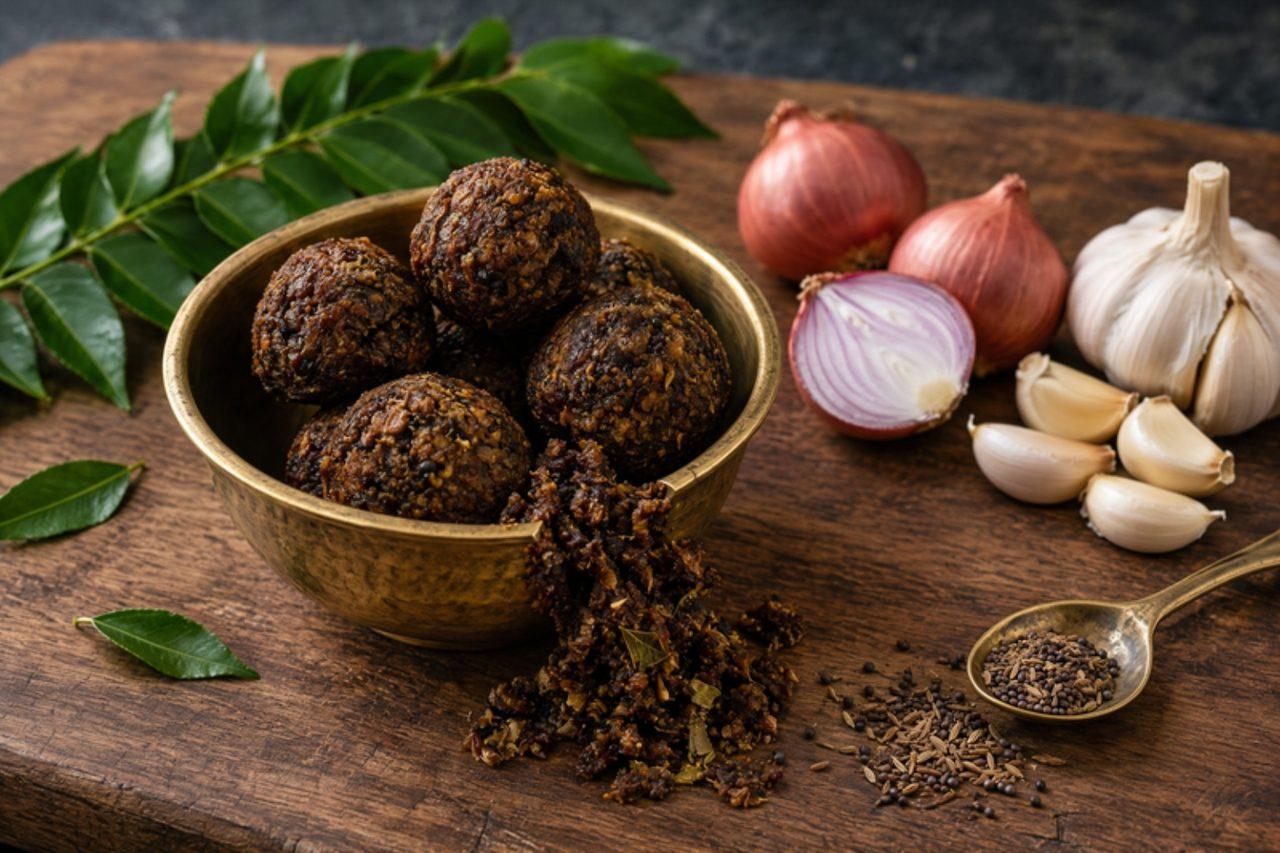
Vadagam, called vadouvan in Puducherry's French-Tamil kitchens, is a seasoning made in the hot months: shallots and garlic are pounded with mustard seeds, cumin, fenugreek, curry leaves and castor or gingelly oil, rolled into balls and dried in the sun for days. A piece crumbled into hot oil at the start of a sambar, a kuzhambu, a poriyal or even buttered vegetables gives a deep, sweet, smoky onion flavour. This version finishes the drying in a low oven, which is safer and quicker in cooler kitchens. The common mistake is storing the balls before they are bone dry; any softness inside can turn mouldy, so break one open to check. Chef's tip: crush a ball and warm it in ghee, then toss with roast carrots for a very Pondicherry side dish.

280 minIndianBasicsVeganGluten free
by KrazyBadal 0 views
Magaya

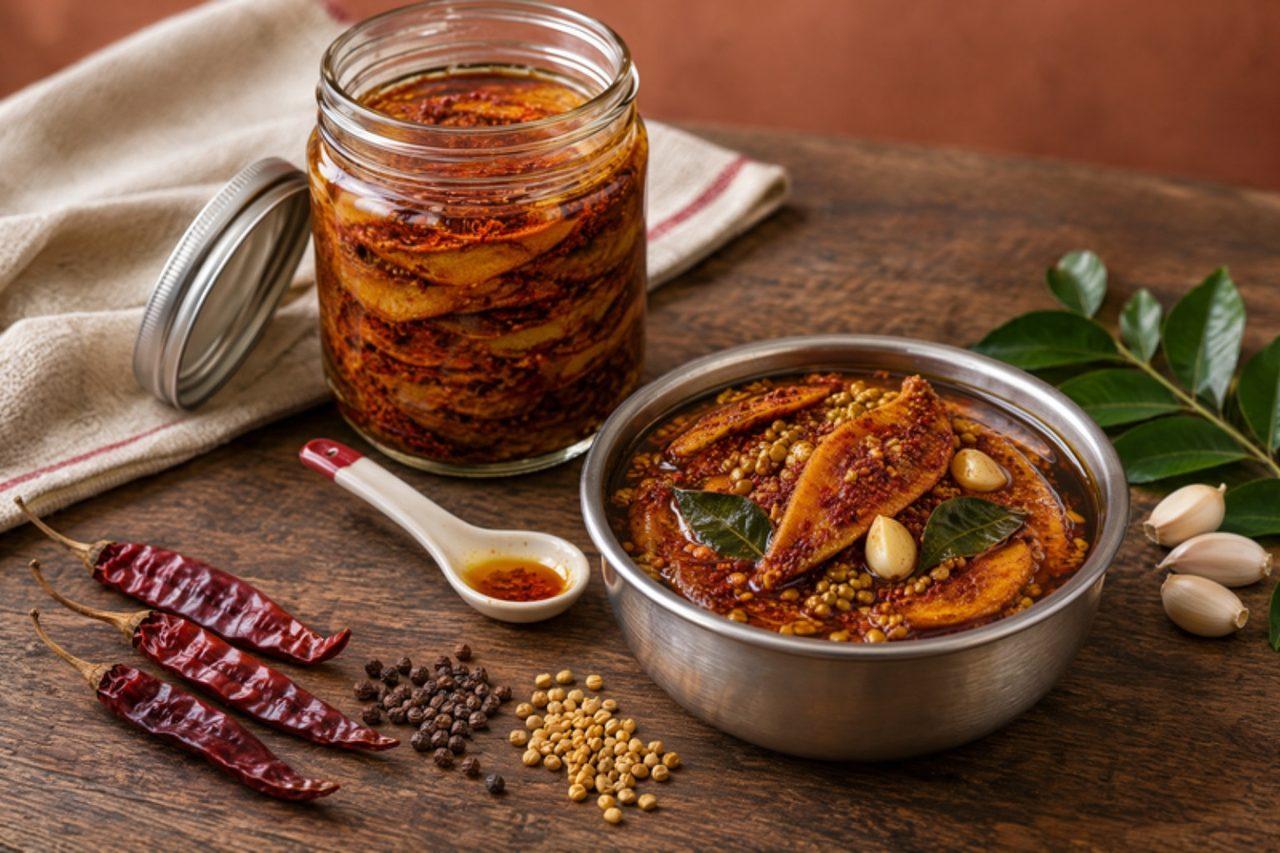
In Andhra Pradesh the pickle season opens around Ugadi, and long before the fiery avakaya is cut, many homes make magaya, the gentler mango pickle. Peeled raw mango is sliced thin and salted until it weeps a yellow brine (magaya ooru), the slices are dried in the hot April sun until leathery, then mixed back into the brine with mustard powder, chilli and fenugreek and sealed under a tempering of gingelly oil. After a week the slices are chewy and soft, tangy and salty, with a rounder heat than avakaya. It is eaten with hot rice and a spoon of ghee, stirred into curd rice, or turned into a raita-like magaya pachadi with yoghurt; the leftover brine is mixed into plain rice. The salt is about 10% of the peeled mango weight (100 g per kg), which, with the fruit's own acid, keeps it safe. Common mistake: drying the slices to hard chips, or too little so they stay wet and mould; stop when they bend without snapping. It is ready when the slices have softened, turned deep red-orange and the oil floats on top. Chef's tip: no sun? A dehydrator or oven at 50 °C dries the slices in 6–8 hours.

by KrazyBadal 0 views
Bellam avakaya

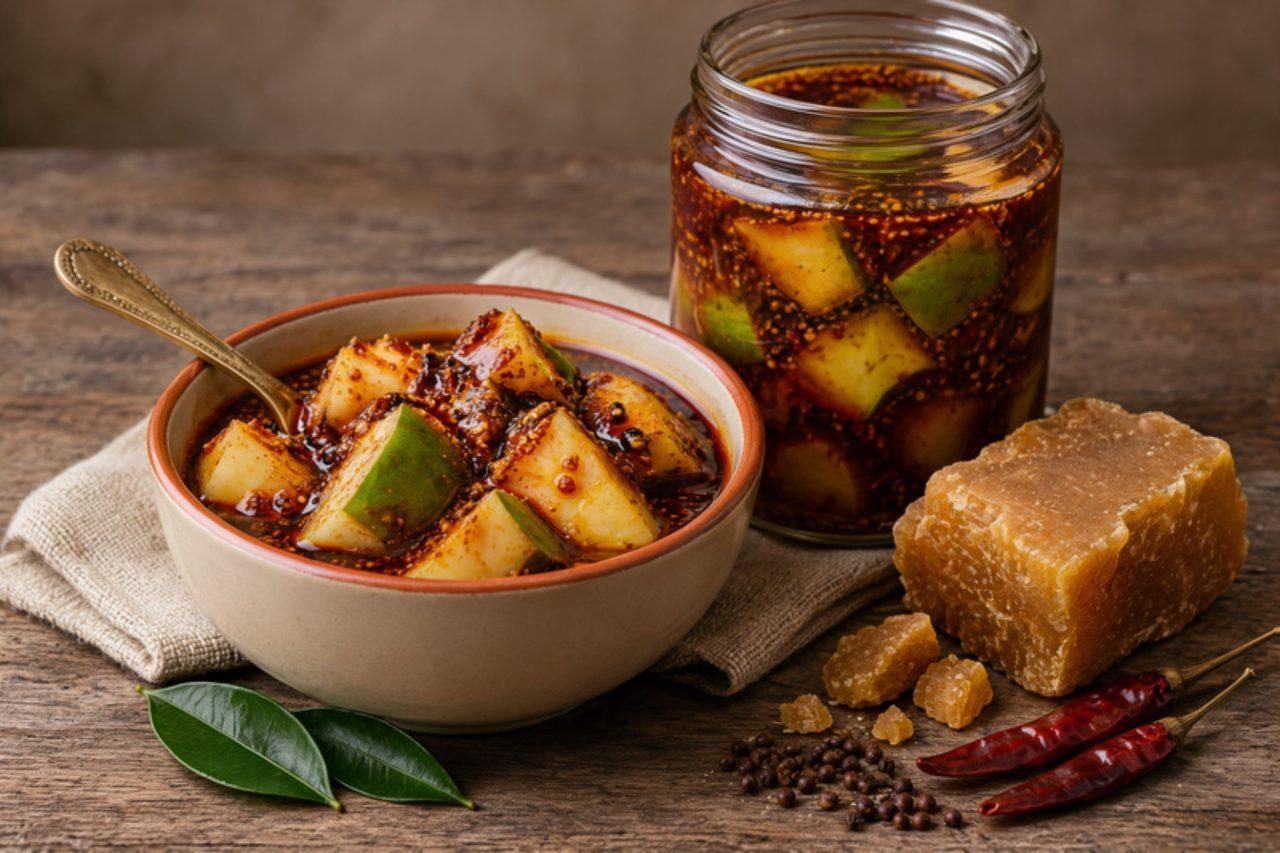
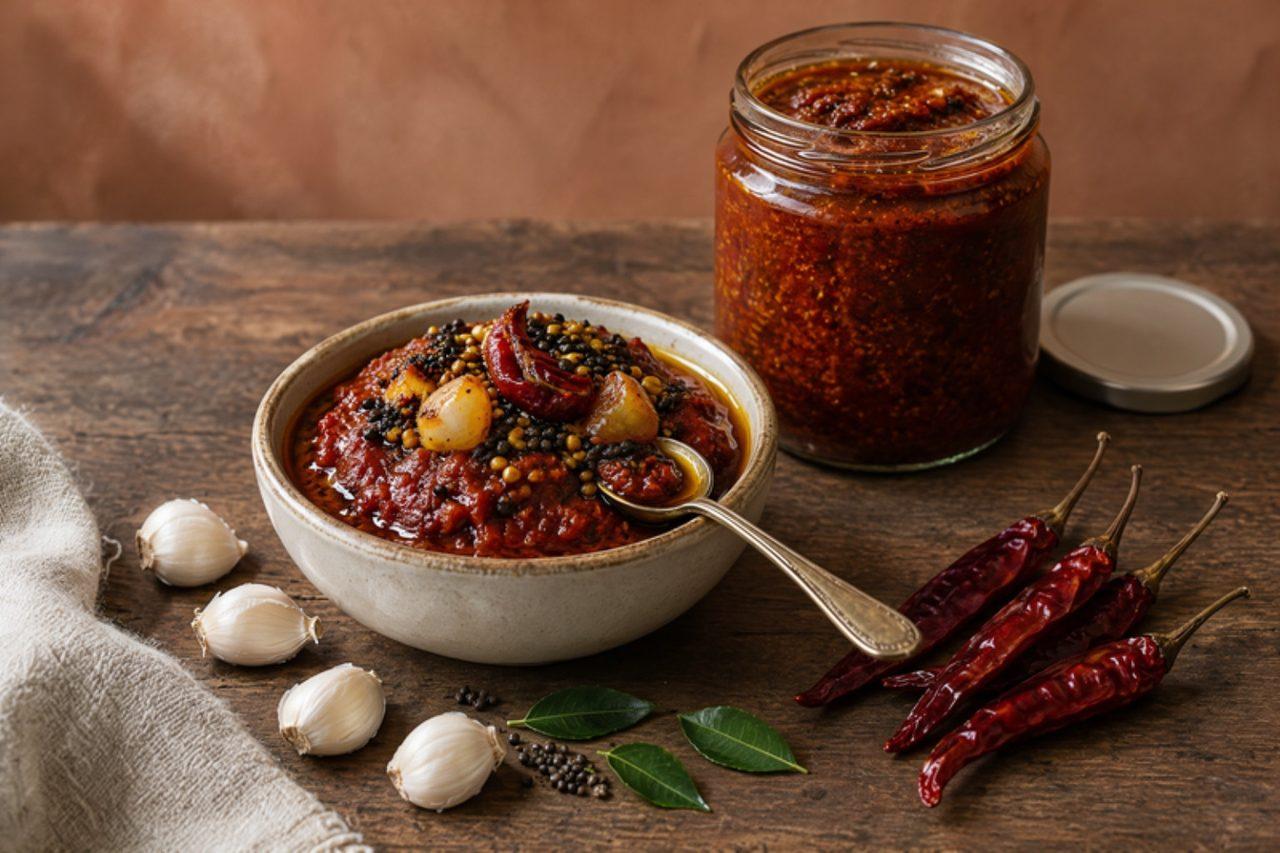
In the Godavari districts of coastal Andhra, the same May afternoon that produces a jar of fiery avakaya usually produces a second jar of bellam avakaya for the children and anyone who likes it sweet. The mangoes are hacked into chunks with their skin and the hard shell of the stone still attached, then tossed with chilli, mustard powder, salt and plenty of grated jaggery. Over three or four days the jaggery melts into a dark, glossy syrup that clings to every piece. It tastes sweet first, then the mustard catches the nose and the chilli warms the back of the throat; the mango stays firm and sour. Eat it with pesarattu, dosa, chapati or curd rice. The salt is about 8% of the mango weight and the fruit is acidic, so it keeps all year under oil in a dry jar. Common mistake: cutting the mangoes wet or leaving sap and water on them; any moisture invites mould, so dry each piece with a cloth. It is ready when no jaggery grains remain and a film of oil rises to the top. Chef's tip: wipe off the milky sap at the stalk end before cutting; it stings the skin and tastes bitter.

by KrazyBadal 0 views

Pesara avakaya

Pesara avakaya is the Krishna and Guntur districts' answer for anyone who finds classic avakaya too sharp. It is cut and mixed in the same summer weeks, from the same sour mangoes, but finely ground raw yellow moong dal replaces most of the mustard. The dal swells in the mango juice and oil and turns the masala thick, nutty and almost creamy, so it clings to each piece, while a little mustard keeps a hint of nose-tingle. It is still properly hot from the chilli. Eat it with hot rice and ghee, with pesarattu, or alongside a plate of curd rice. Some families add garlic; if you do, the jar must live in the fridge. Common mistake: grinding the dal coarsely, which leaves a gritty masala; sift it and regrind the bits. Another is skimping on oil: the dal absorbs a lot, so top up until the pickle is covered. The salt is about 9% of the mango weight. It is ready after three days, when the masala is thick and clinging and oil has risen to the surface. Chef's tip: warm the dal in a dry pan for 2–3 minutes without colouring it; it grinds finer and keeps better.

by KrazyBadal 0 views

Menthi avakaya

In East Godavari kitchens menthi avakaya is the mango pickle for people who love bitterness: instead of a mustard-heavy masala, it is built on fenugreek seeds roasted until golden and ground, with red chilli, salt and a tempering of mustard seeds and asafoetida in gingelly oil. Families make it in the hottest weeks of May, when the mangoes are at their sourest, and it is traditionally eaten through the summer with hot rice, ghee and a dal. The fenugreek gives a toasty, almost maple-like aroma and a pleasant bitter edge that sits against the sour mango and the chilli heat. The salt is about 9% of the mango weight, and the pickle keeps for a year under oil in a dry jar. Common mistake: roasting the fenugreek too dark; it turns acrid, and that bitterness spreads through the whole jar. Roast it slowly until golden and fragrant, then let it cool before grinding. It is ready after two or three days, when the mango has darkened, the fenugreek smell has mellowed and oil sits on top. Chef's tip: grind the fenugreek only when completely cold, or it turns pasty and clumps.

by KrazyBadal 0 views

Dosavakaya

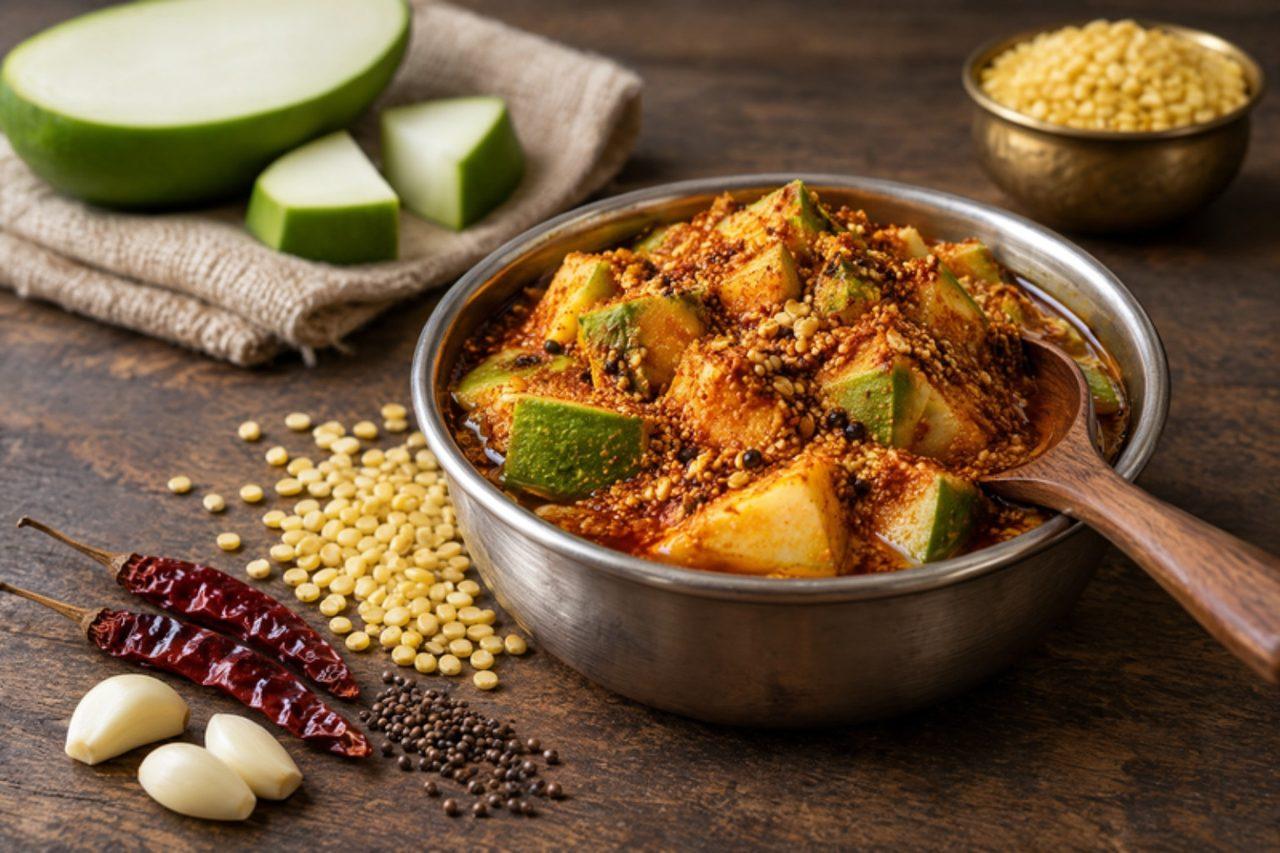
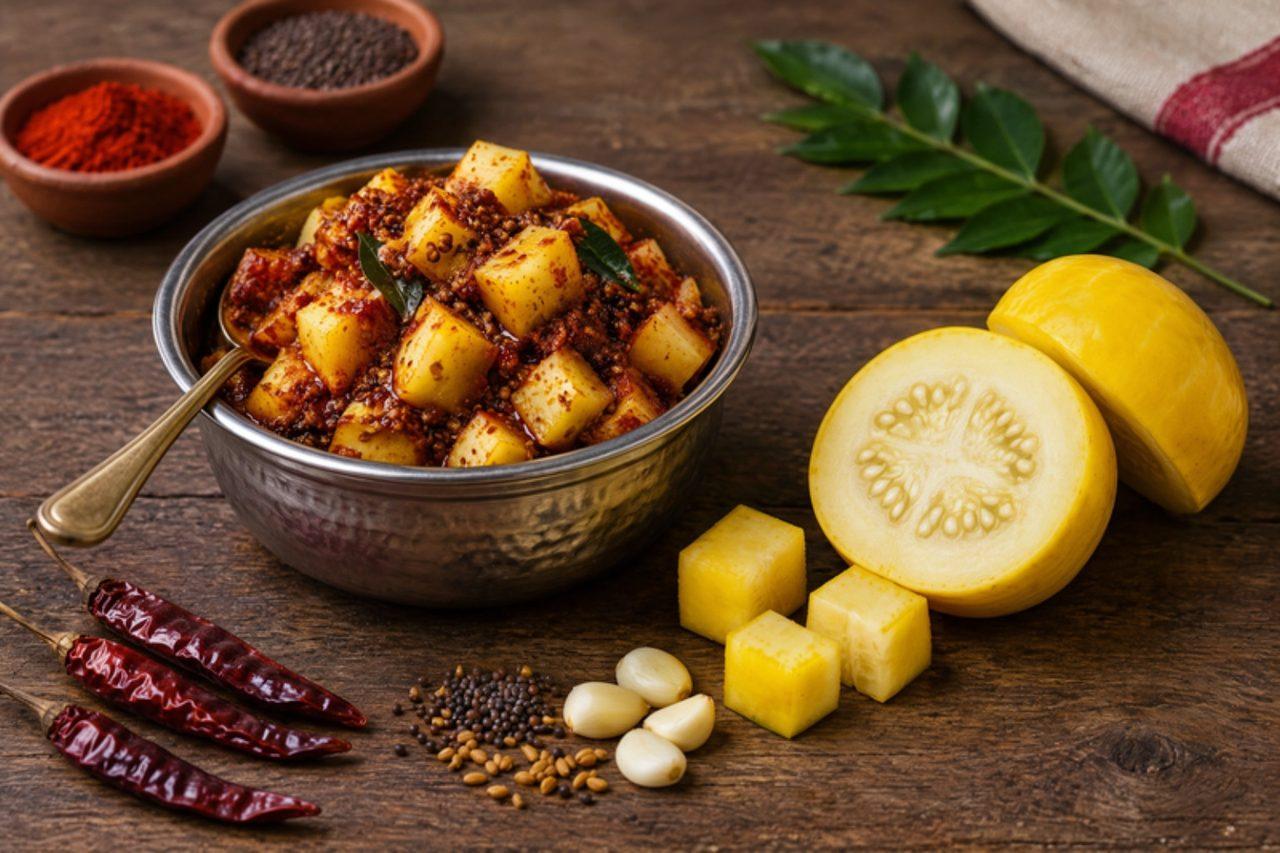
Dosavakaya is the everyday pickle of Andhra homes: no waiting for mango season, just a round yellow dosakaya cubed with its skin on and tossed with mustard powder, chilli, salt, garlic and raw gingelly oil. It is made in minutes, often for Sunday lunch or to go with a festive meal, and eaten over the next few days with hot rice and ghee, pappu or curd rice. It is crunchy, juicy and mustard-sharp, hot and tangy, and the cubes give off a little juice that loosens the masala into a sauce. Dosakaya is sold in Indian grocers abroad; if you cannot find it, use a firm field cucumber, seeded, and add a little extra lemon juice for the missing tang. Because it contains raw garlic and cucumber, it is a fridge pickle: acidified with lemon and eaten within a week. Common mistake: using a bitter cucumber; taste a sliver from each end before you cut, and discard any that taste bitter. It is ready 2–3 hours after mixing, when the masala has turned glossy and the cubes taste seasoned through. Chef's tip: keep the skin on; it holds the crunch.

by KrazyBadal 0 views

Cauliflower avakaya

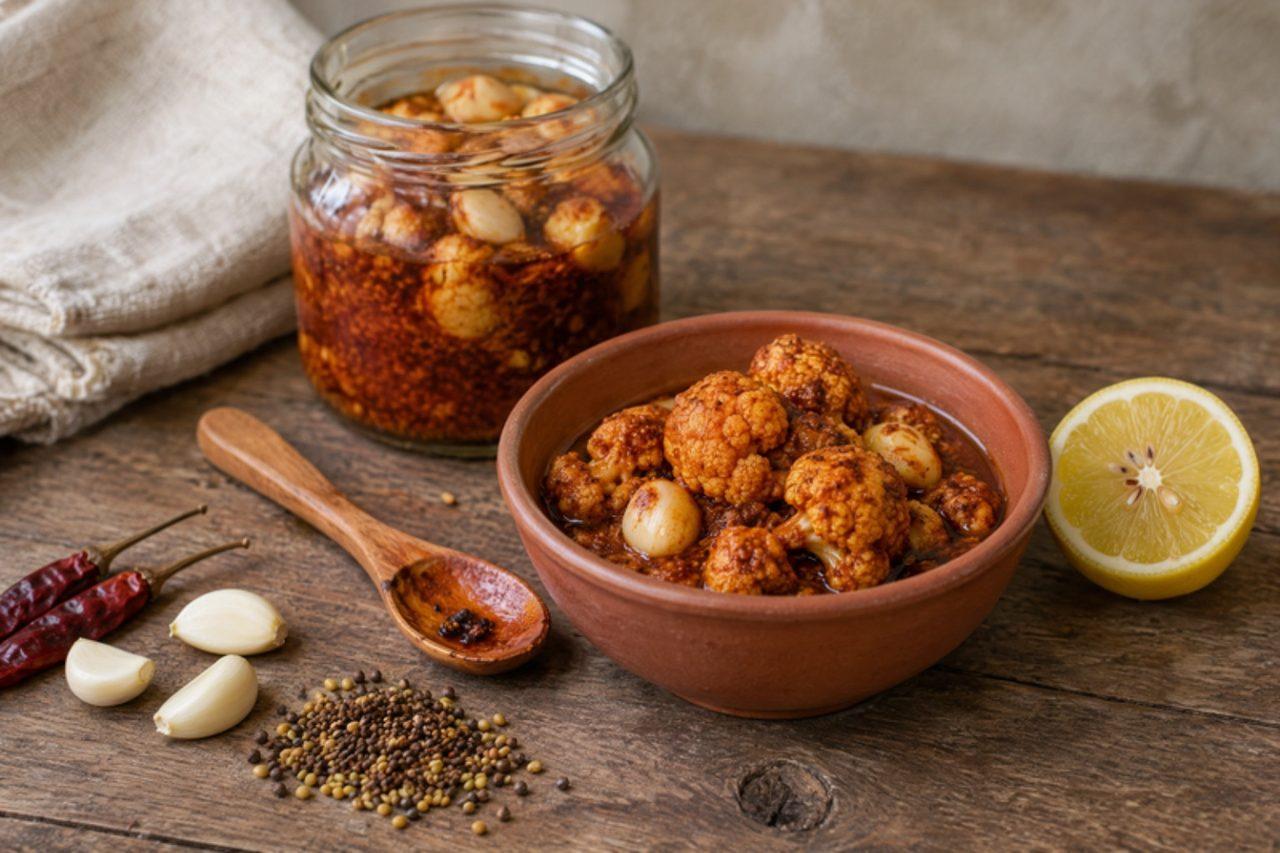
When the mango jars run low and the Andhra and Telangana winter brings piles of dense white cauliflower to the markets, from December to February, households make a cauliflower avakaya. Lemon juice stands in for the sour mango, and the florets are coated in the same masala of mustard powder, chilli, salt, fenugreek and garlic, tempered with gingelly oil. After two days the florets have soaked up the masala but still crunch; the pickle is hot, nose-tingling and bright with lemon. Serve it with hot rice and ghee, with chapati, or beside a plain dal. Cauliflower is not acidic by itself and this pickle contains raw garlic, so it is always kept in the fridge, with plenty of lemon. Common mistake: packing florets that are still damp; wash them in hot salted water to drive out any insects, then dry them for several hours until no moisture remains. It is ready when the florets taste seasoned to the core and the oil and lemon have formed a glossy red sauce. Chef's tip: cut the florets small, about 2 cm, so the masala can reach the middle.

by KrazyBadal 0 views

Pandu mirapakaya pachadi

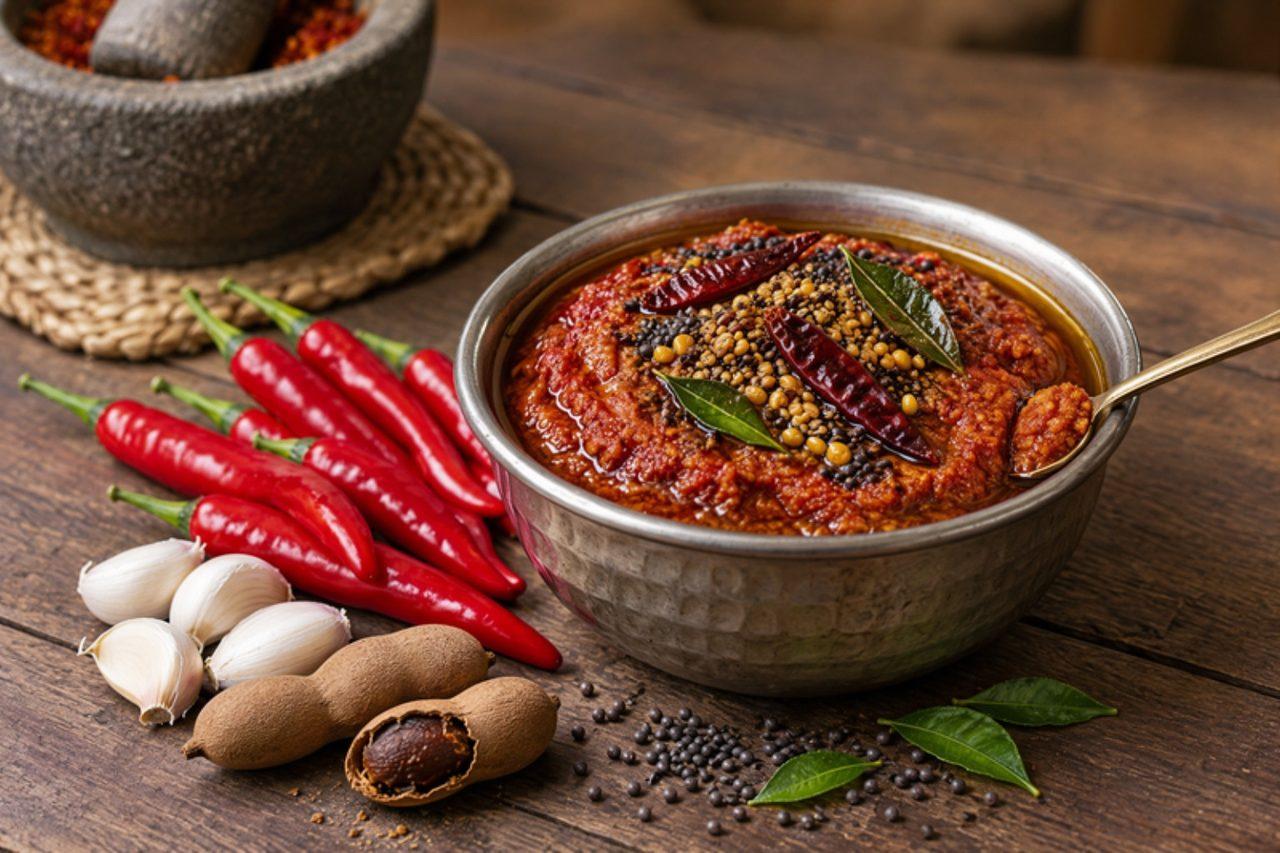
Guntur is chilli country, and when the fields turn red between January and March, Andhra kitchens buy fresh, fully ripe red chillies by the kilo for this pachadi. The chillies are chopped, salted and packed with tamarind for two days, then ground coarse with roasted fenugreek and sealed under a tempering of gingelly oil, mustard and hing. The result is brick red, fiery and fruity rather than smoky, with a sour backbone from the tamarind and a faint bitterness from the methi. A teaspoon is mashed into hot rice with a spoon of ghee or sesame oil, and it is just as good beside idli, dosa or pesarattu. The big mistake is washing the chillies and grinding them while still damp: water is what makes this pachadi spoil, so wipe them dry and leave them on a cloth for a few hours. It is ready when the paste is thick and glossy and the oil pools on top. Salt here is high on purpose, about 12 g for every 100 g of chillies, and the tamarind makes it acidic; even so, keep it in the fridge, where it lasts up to 6 months. Chef's tip: mix in a few Byadgi or Kashmiri chillies with the hot Guntur ones for a deeper red without extra fire.

by KrazyBadal 0 views

Chintakaya pachadi

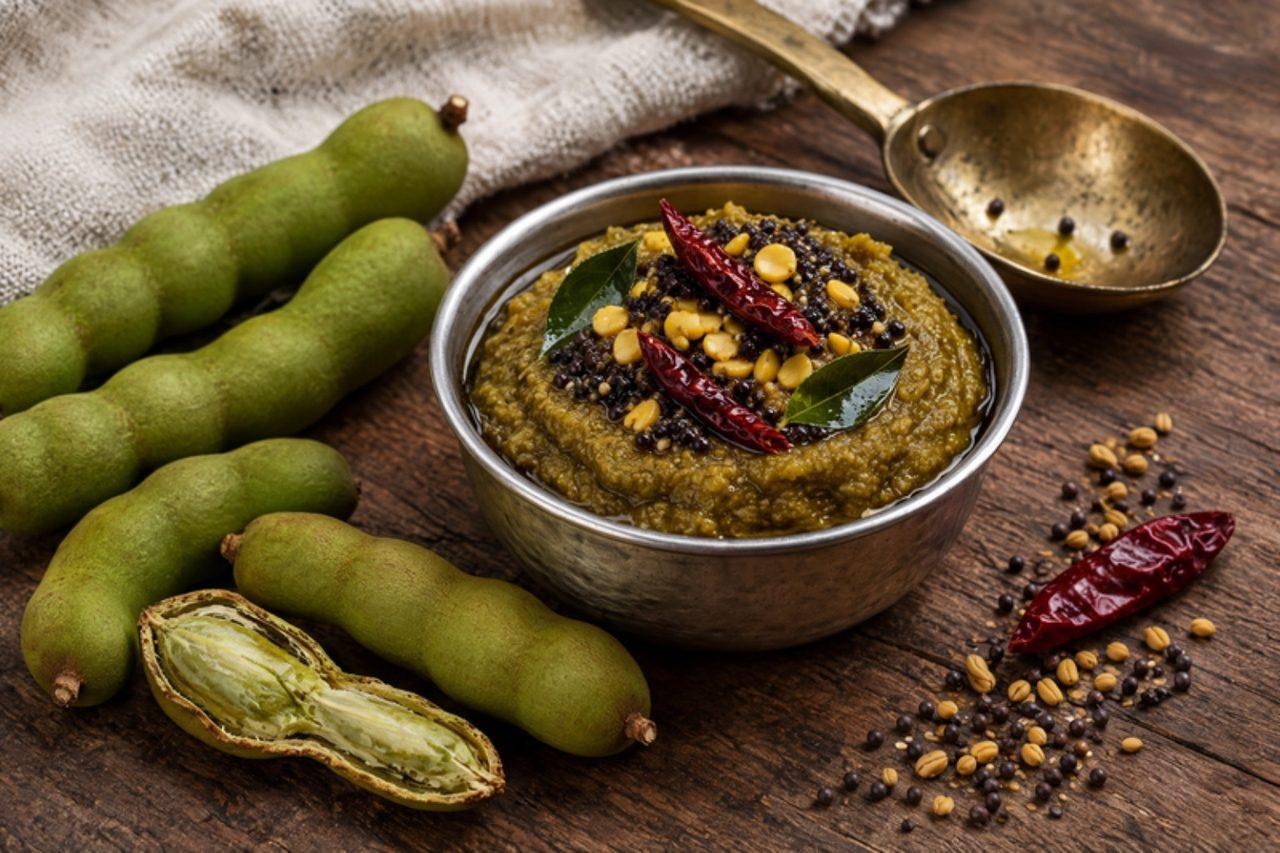
In Telangana and coastal Andhra, the tamarind trees hang heavy with tender green pods from December to February, and every household that can lays in a jar of chintakaya before the pods ripen and turn brown. The raw pods are pounded with salt and turmeric and left to mature into a sharp, olive-green base that keeps for the whole year. Small portions are then ground with chillies and finished with a crackling tadka whenever the family wants it. The taste is pure, mouth-puckering sourness with a fresh, almost apple-like green note, very different from ripe tamarind. Mix it into hot rice with sesame oil, or eat it with jonna rotte (sorghum flatbread) and raw onion. The common mistake is to let wet pods into the jar: wash the tamarind the day before, then spread it to dry completely. The salted base is very acidic and roughly 15% salt, so it keeps in a cool cupboard; the finished pachadi with chillies belongs in the fridge and is best within 3 weeks. It is ready when the paste is coarse, dark green and smells sharply sour. Chef's tip: roast dried chillies for a smoky winter version, or use green chillies for a brighter, fresher heat.

by KrazyBadal 0 views

Tomato oorugaya

When tomatoes flood the Madanapalle and Kurnool markets in the hot months and prices drop, Andhra cooks turn them into this deep red oorugaya. Chopped tomatoes are salted and cooked down with tamarind until most of the water has gone, then simmered in sesame oil with chilli, garlic and a freshly roasted fenugreek-mustard powder. The texture is a thick, almost jammy paste; the taste is tangy, salty and hot, with the slight bitterness of methi lifting the sweetness of ripe tomato. Mash a spoonful into steaming rice with ghee, or serve it with dosa, upma and curd rice. The common mistake is stopping too early: if water is left in the paste the pickle will spoil within days. Keep cooking until the paste holds together, leaves the sides of the pan and the oil separates and shines on the surface. Because it has garlic and tomatoes are not as acidic as tamarind alone, store it in the fridge, where it keeps up to 2 months. Chef's tip: use firm, fully ripe country tomatoes rather than watery salad ones; you will cook for less time and get a richer colour.

by KrazyBadal 0 views

Maangai thokku

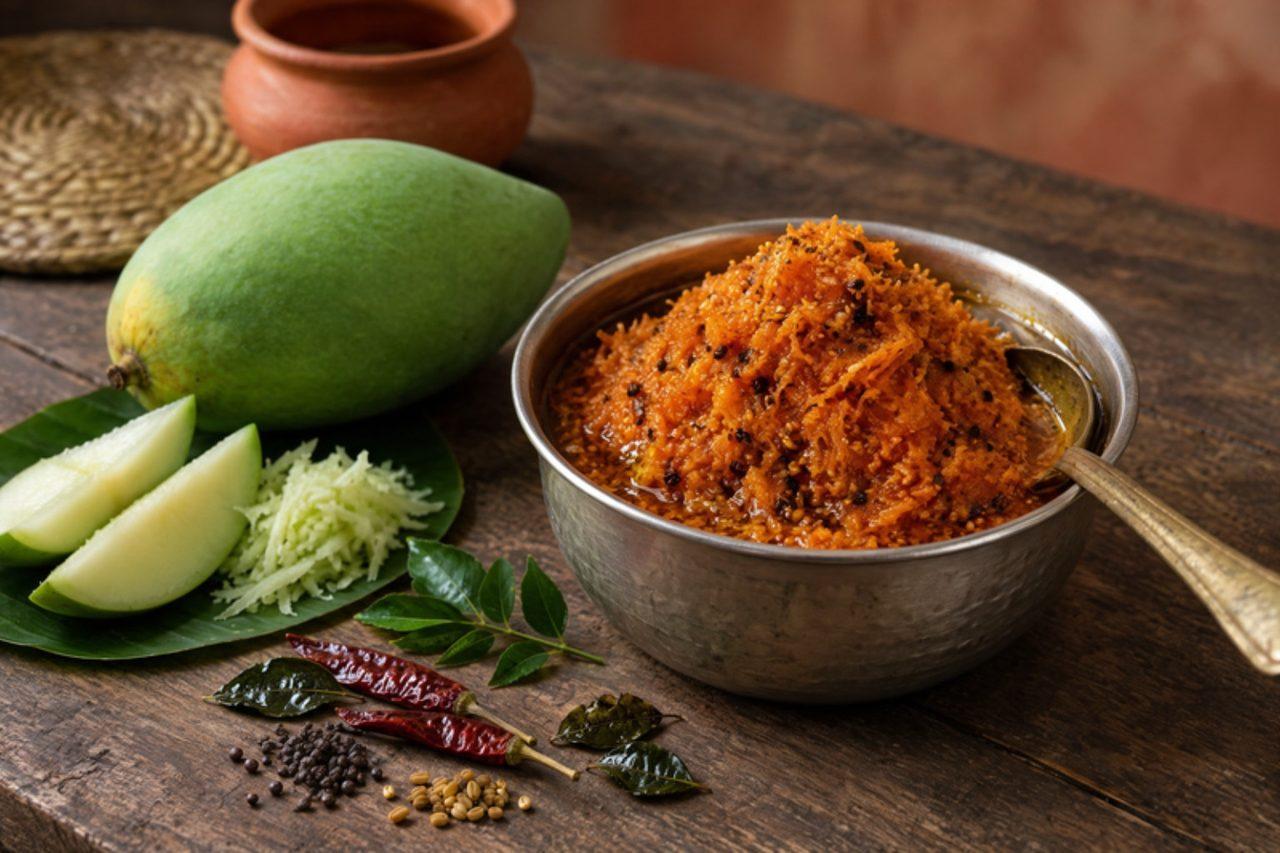
Thokku is the Tamil word for a pickle cooked down to a thick, spoonable mass, and maangai thokku is the one every Tamil Nadu home makes in April and May when the hard, sour Kili mooku (parrot-beak) mangoes are cheap. Grated mango is simmered in nallennai (gingelly oil) with chilli powder, salt and hing until it turns dark, glossy and jam-like, then finished with roasted fenugreek powder. It is sour first, then hot, with a nutty sesame taste and a little bitterness at the end. It is a classic partner for curd rice, a spoonful inside a dosa, or a travel companion with idli and lemon rice for train journeys. The usual mistake is grating the mango too fine or stirring it too little: a fine pulp sticks and burns. Use the large holes of the grater and keep stirring once it thickens. It is done when the mango has darkened, comes away from the pan in one mass and the oil oozes out around the edge. Kept in a dry jar under a film of oil it lasts about 2 weeks in a cool cupboard and 2 months in the fridge. Chef's tip: a teaspoon of jaggery at the end rounds off very sour mangoes without making the thokku sweet.

by KrazyBadal 0 views

Kannimanga achar

In central Kerala, around Thrissur and Kottayam, families watch the mango trees in January and February and pick the tiniest fruit, no bigger than a thumb joint, before the stone hardens. These kannimanga are salted whole in a tall ceramic bharani, left until shrivelled in their own brine, then mixed with freshly ground raw mustard, Kashmiri chilli and hing and left to mature for three or four weeks. This older, oil-free style keeps the mangoes crunchy and the brine thick, red and sinus-clearing from the raw mustard. The flavour is salty, sour and fiercely pungent; one mango and a spoon of brine is enough for a whole bowl of kanji (rice gruel) or curd rice. The common mistake is using water that has not been boiled and cooled, which brings in microbes and turns the brine slimy. It is ready when the mangoes are wrinkled but crisp and the brine tastes mellow rather than raw. Salt is high, about 20 g per 100 g of mango, and the fruit is very acidic; kept fully submerged in a dry jar it lasts a year in a cool place. Abroad, any tiny, hard green mango with a soft stone works. Chef's tip: keep a short stalk on each mango; it stops brine seeping in and softening the fruit.

by KrazyBadal 0 views

Vadukapuli naranga achar

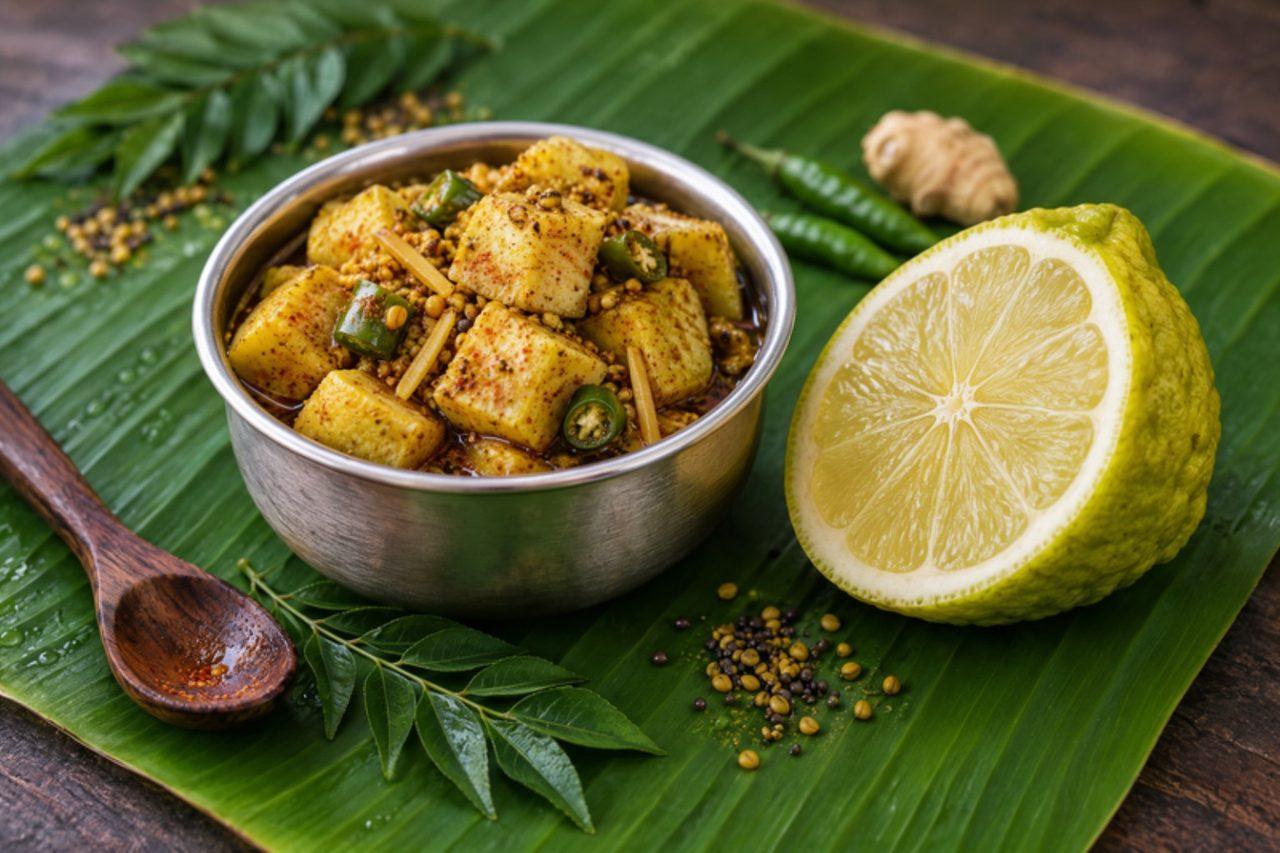
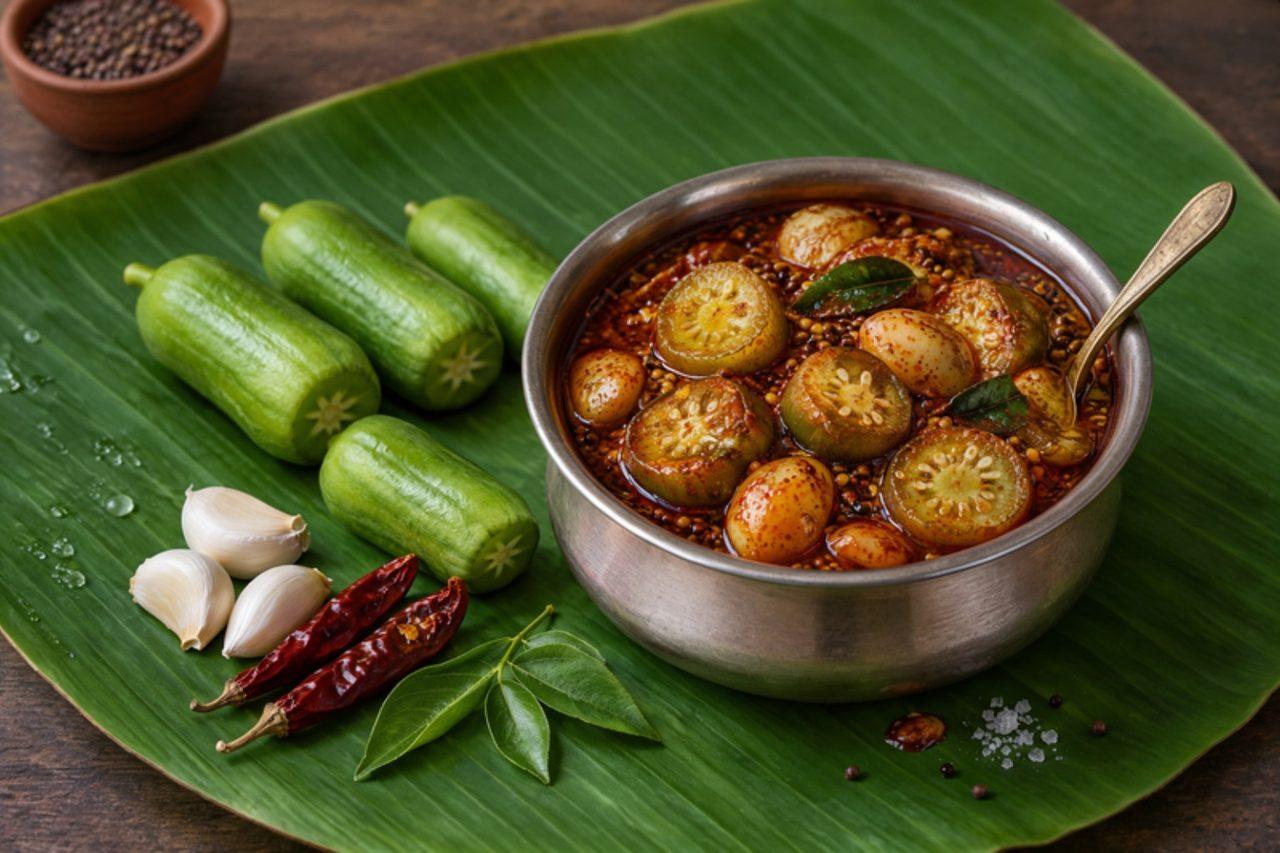
Vadukapuli naranga is a large, knobbly, thick-skinned wild lemon grown in Kerala backyards, and it is ripe just in time for Onam in August–September. Cut into small cubes with its spongy white pith and mixed with green chilli, ginger, chilli powder and a sesame-oil tempering, it becomes the pale yellow pickle dabbed on the end of every sadya banana leaf, next to inji puli and mango. It is sour, bitter and fresh at once, with juicy flesh and a soft, absorbent pith that soaks up the spices. It is just as welcome with curd rice or a simple moru curry. The common mistake is leaving the bitter seeds and the tough central core in; take them out or the whole jar turns harsh. It is ready to eat after a day, once the salt has drawn out the juice and the pieces look moist and slightly translucent. Because it has fresh ginger, green chilli and curry leaves, keep it in the fridge and eat within a month. Outside Kerala, use a citron or the biggest thick-skinned lemons you can find. Chef's tip: a spoon of vinegar sharpens the pickle and helps it keep; Kerala Christian homes often add one.

by KrazyBadal 0 views

Irumban puli achar

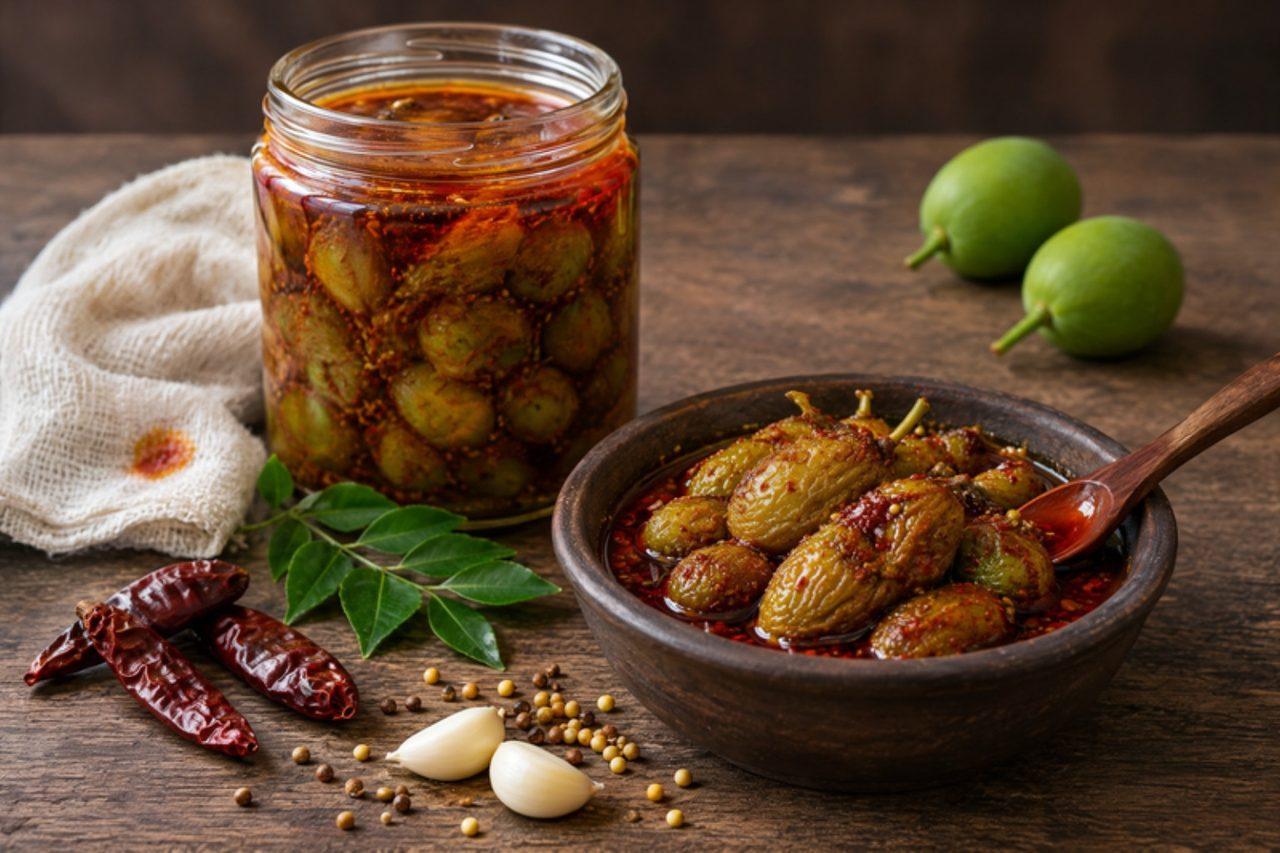
Almost every Kerala compound has an irumban puli tree, its trunk studded with clusters of small, cucumber-shaped green fruit so sour they make your eyes water. Through the monsoon months the tree fruits non-stop, and the surplus is salted and turned into this pickle. The bilimbi pieces soften into a tangy, juicy mass in a red masala of chilli, garlic and ginger cooked in gingelly oil, with roasted fenugreek giving a gentle bitterness. Eat it with kanji and payar (rice gruel and green gram), with a simple meal of rice, thoran and moru curry, or with chapati. The common mistake is cooking the fruit for too long: bilimbi is very watery and soft, and if stewed it breaks down to mush. Salt it first to draw out the water, then just warm it through in the masala for a couple of minutes. It is ready when the masala clings to the pieces and the oil glistens on top. Very acidic, but with fresh garlic and ginger, so store it in the fridge and use within a month. Abroad, use sour, green, unripe star fruit (its close relative) or green gooseberries. Chef's tip: dry the salted pieces in the sun for an afternoon for a firmer, chewier pickle.

by KrazyBadal 0 views

Pavakka achar

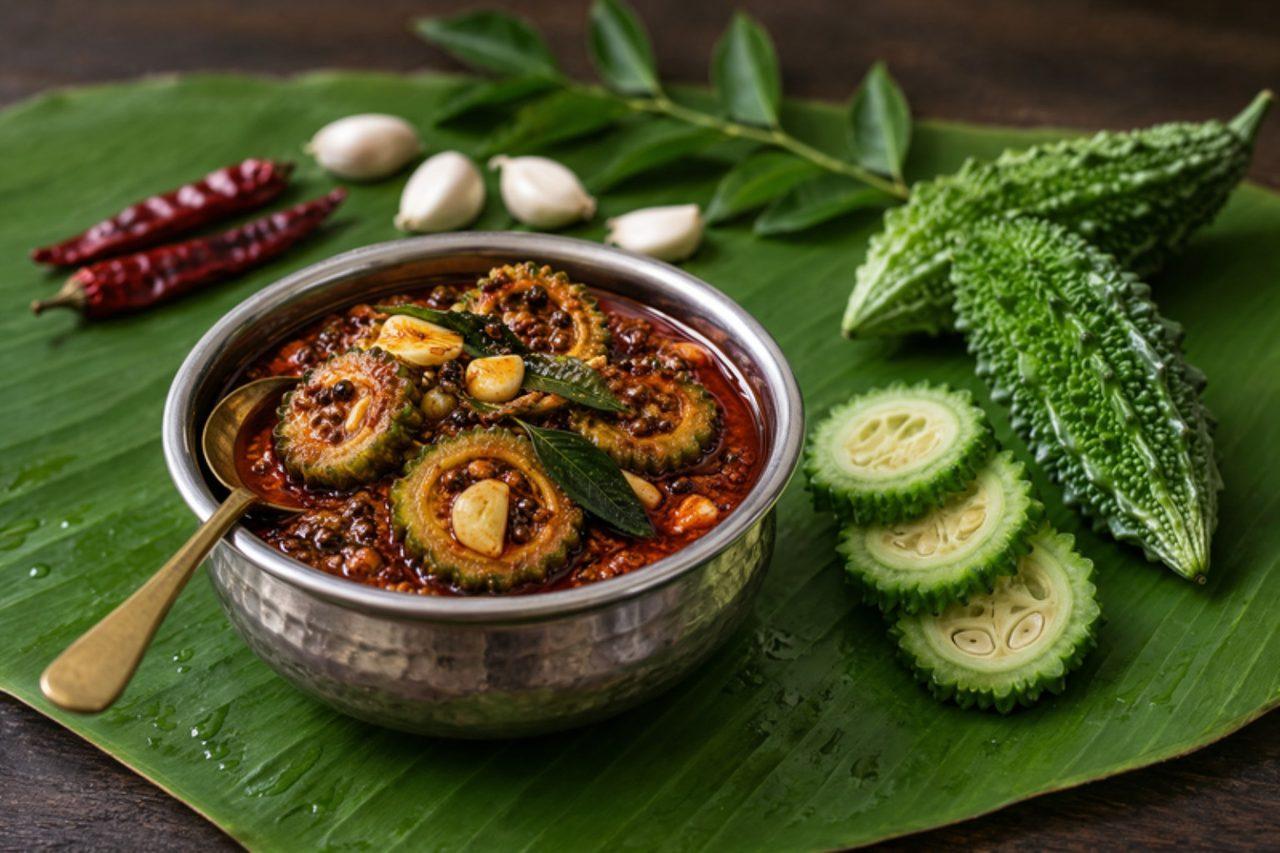
Bitter gourd pickle is a speciality of Kerala's Syrian Christian kitchens in Kottayam and Thiruvalla, made through the year and always on the table at Christmas and wedding lunches. Thin rounds of pavakka are salted to tame the bitterness, fried until crisp at the edges, then tossed in a garlicky, ginger-sharp masala of Kashmiri chilli and vinegar cooked in gingelly oil. The pieces stay slightly crunchy and chewy, the masala is tangy and hot, and the bitterness is there but rounded off by a little sugar. Eat it with rice and moru curry, appam or chapati. The common mistake is under-frying: pale, soft pavakka goes soggy and spoils fast in the vinegar. Fry until the rounds are deep golden and the bubbling in the oil almost stops. The masala is ready when the oil separates and the vinegar's sharp smell has mellowed. Because it holds garlic and ginger in oil, the vinegar (at least 5% acidity, never diluted) and the fridge both matter: keep it chilled and eat within a month. Chef's tip: choose small, dark green Kerala pavakka with tight ridges; they are firmer and less watery than the big pale ones.

by KrazyBadal 0 views

Eenthapazham achar

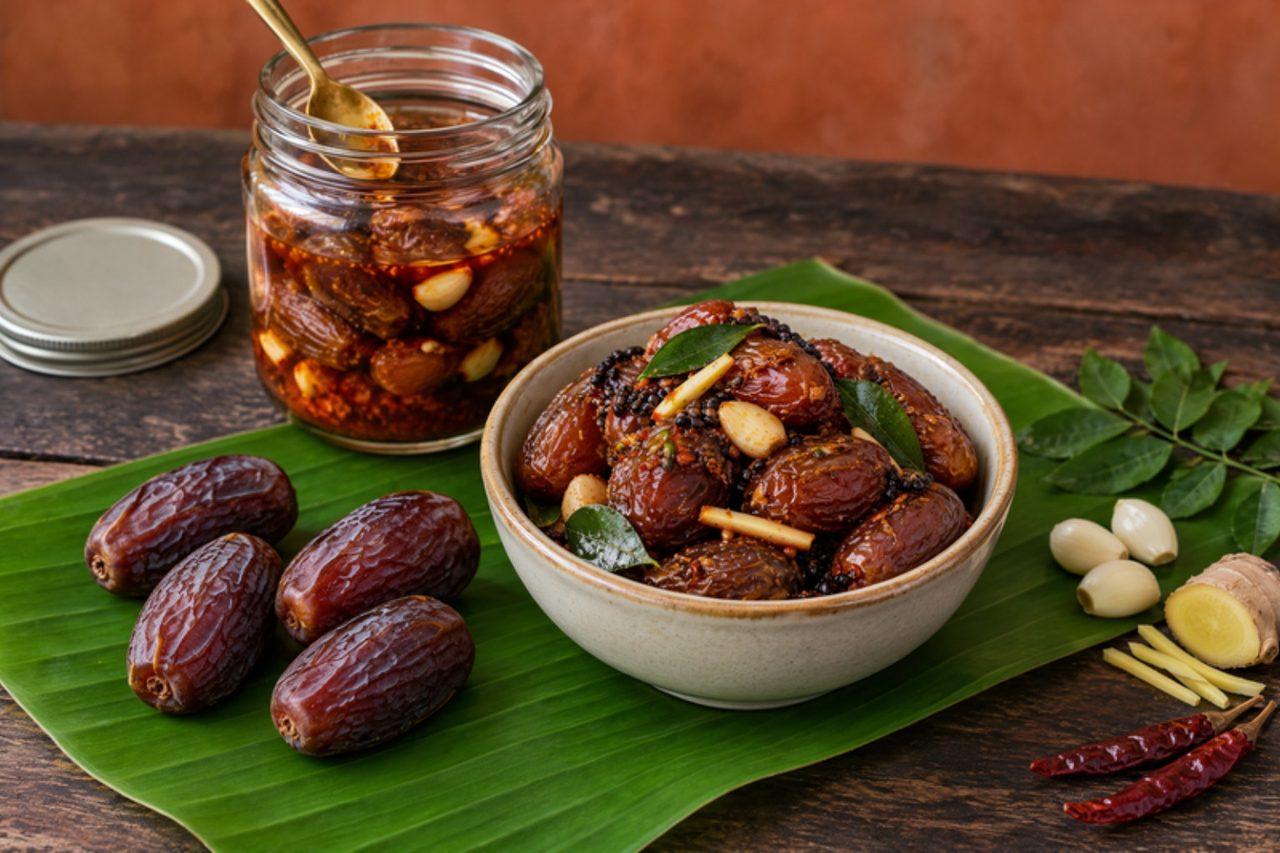
Date pickle came to Kerala with the Gulf, and in Malabar and central Travancore it has become a fixture at weddings, where it sits on the leaf beside the biriyani or the sadya rice. Pitted dates are simmered briefly in a gingelly-oil masala of garlic, ginger, green chilli and Kashmiri chilli, then loosened with vinegar and a little sugar. The dates stay plump and sticky, and the sauce is sweet, sour and gently hot all at once, like a spiced chutney with more punch. Serve it with ghee rice or biriyani, with chapati and a mild kurma, or tucked into a sandwich with cucumber. The common mistake is cooking the dates for too long so they dissolve into paste; add them at the end and warm them through for only a few minutes. It is ready when the masala is glossy and thick enough to cling to each date and the oil shines at the edges. With garlic and ginger in it, the vinegar (at least 5% acidity, undiluted) keeps it sharp, but it still belongs in the fridge: it keeps up to a month. Chef's tip: use soft, semi-dry dates rather than very sticky ones; they hold their shape and soak up the vinegar better.

by KrazyBadal 0 views

Chettinad chicken

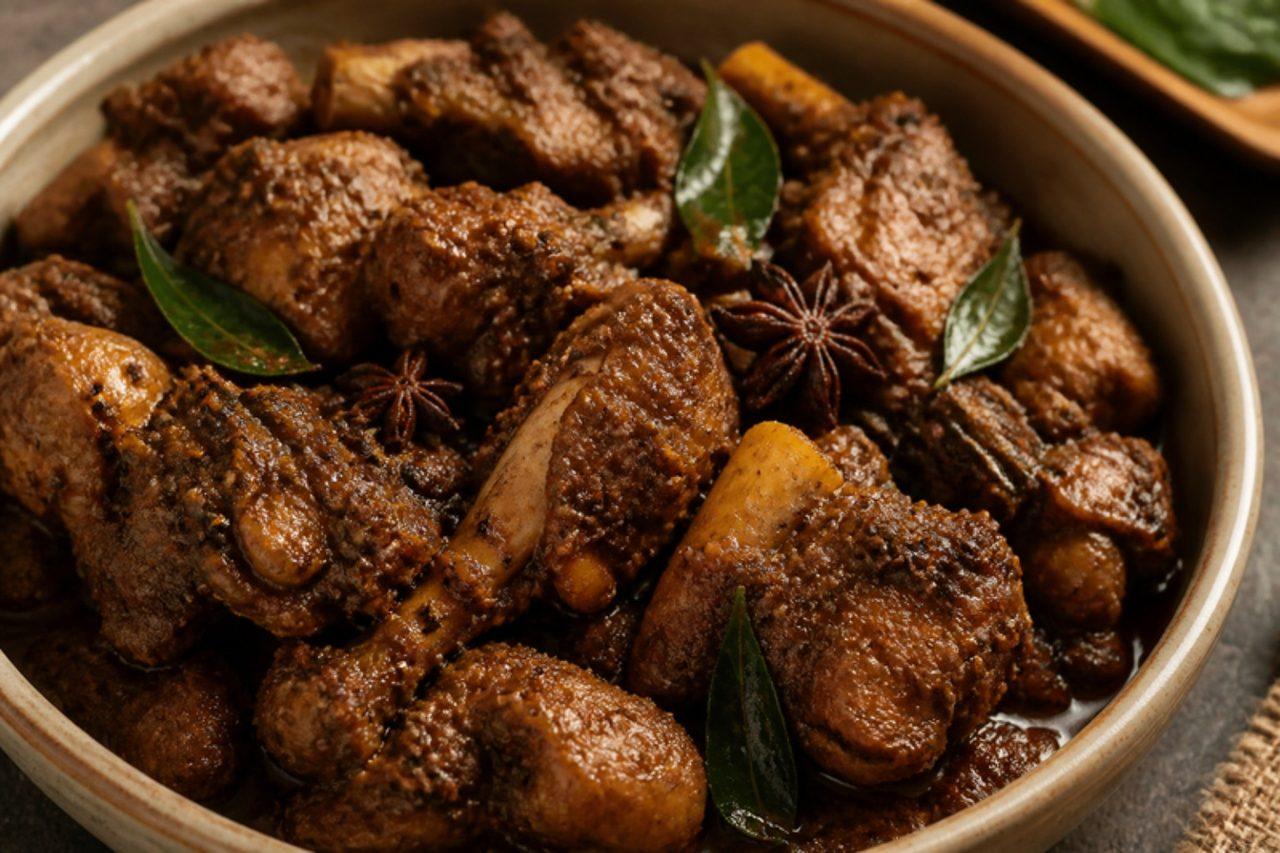
The Nattukottai Chettiar merchants of Karaikudi and the villages around it in southern Tamil Nadu built grand mansions on the spice trade, and their kitchens show it. Their chicken curry is built on a masala roasted and ground at home: dried red chillies, black pepper, fennel, star anise, coconut and the earthy lichen called kalpasi. It is hot, aromatic and deep brown, and in Chettinad it is eaten at Sunday lunch and festivals with rice, idiyappam or flaky parotta. Chef's tip: grind the roasted masala while it is still warm with a splash of water; the oils release and the paste comes out smooth.

by KrazyBadal 0 views

Goes well with gingelly