Skip to content

Recipes with lamb shoulder

44 recipes that use lamb shoulder, with photos, step-by-step instructions and cook times. The quickest, Jingisukan, takes 40 minutes. It is most often cooked with onion, garlic and coriander.

Got a few things in the fridge? Search by everything you have

Kibinai

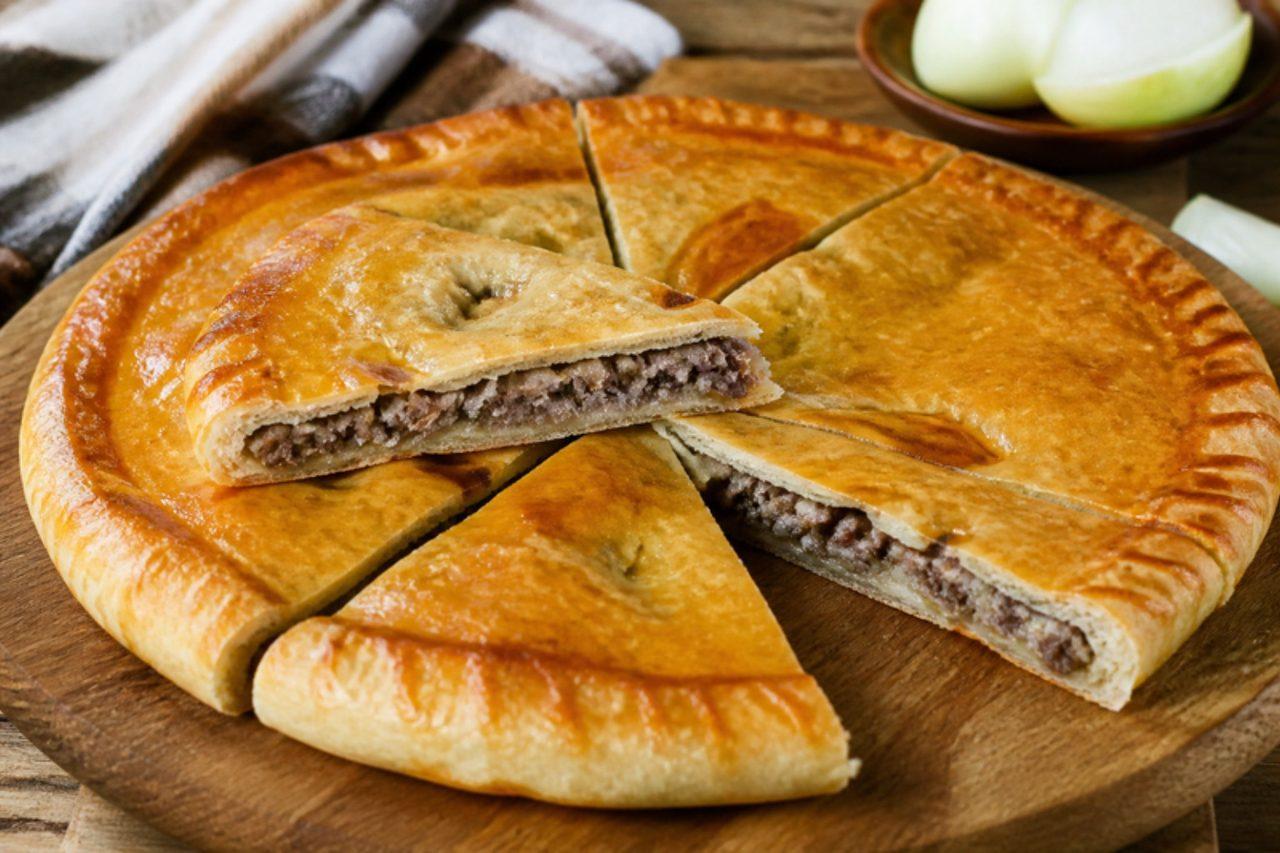
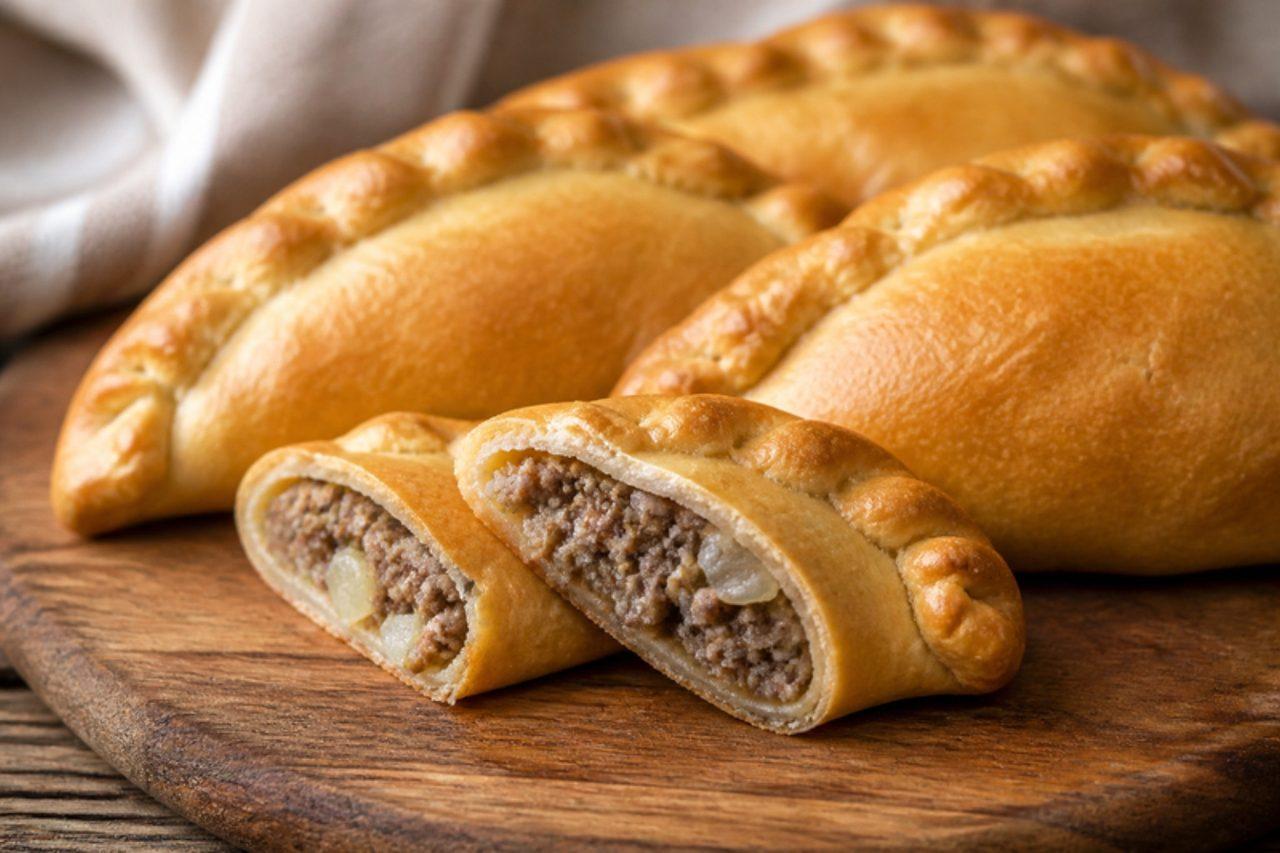
Kibinai are the pastries of the Karaim, a small Turkic community settled in Trakai, the lake-island castle town near Vilnius, since the 14th century. Every café along Karaimų street sells them hot from the oven: half-moon pastries of flaky, buttery dough with a juicy filling of chopped lamb and onion, crimped along the top. A common mistake is mincing the meat; the Karaim chop it into small cubes so the filling stays juicy. Chef's tip: use cold dough and bake hot, so the pastry flakes and the juices stay sealed inside. The filling must reach 71 °C.

by KrazyBadal 0 views
Dakhine (rice with peanut sauce and lamb)

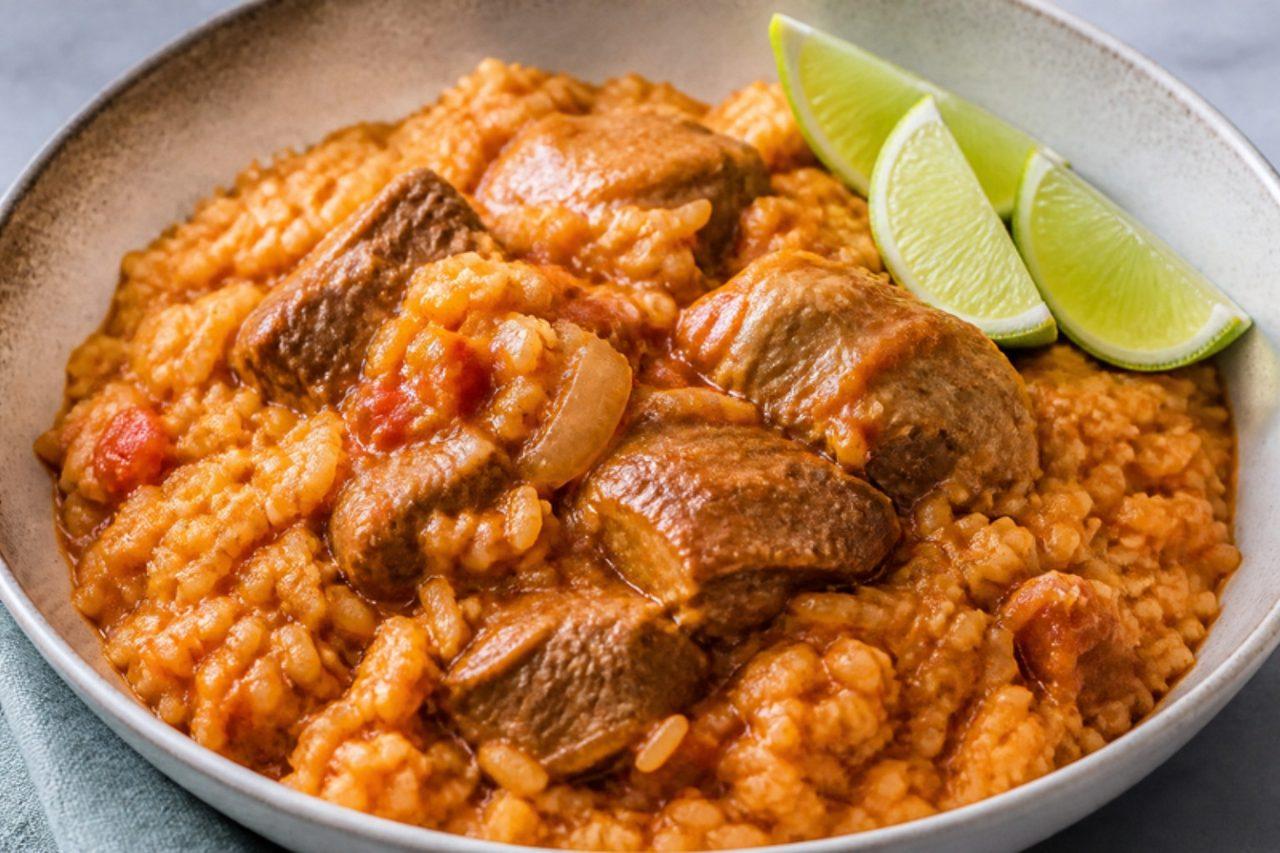
Somewhere between mafé and a risotto, dakhine is everyday Dakar comfort food: lamb or beef simmered in a peanut and tomato sauce, with the rice cooked right in the same pot until it soaks up all that nutty, savoury flavour. The result is thick, rich and very filling, the meat falling apart into the rice and a gentle heat from a whole Scotch bonnet. It is eaten from a shared bowl at lunchtime, with a squeeze of lime or a little chilli sauce on the side. Chef's tip: make sure the lamb is completely tender before the rice goes in, because the rice sets the timetable after that; adding it too early is the common mistake that leaves tough meat in mushy rice.

by KrazyBadal 0 views

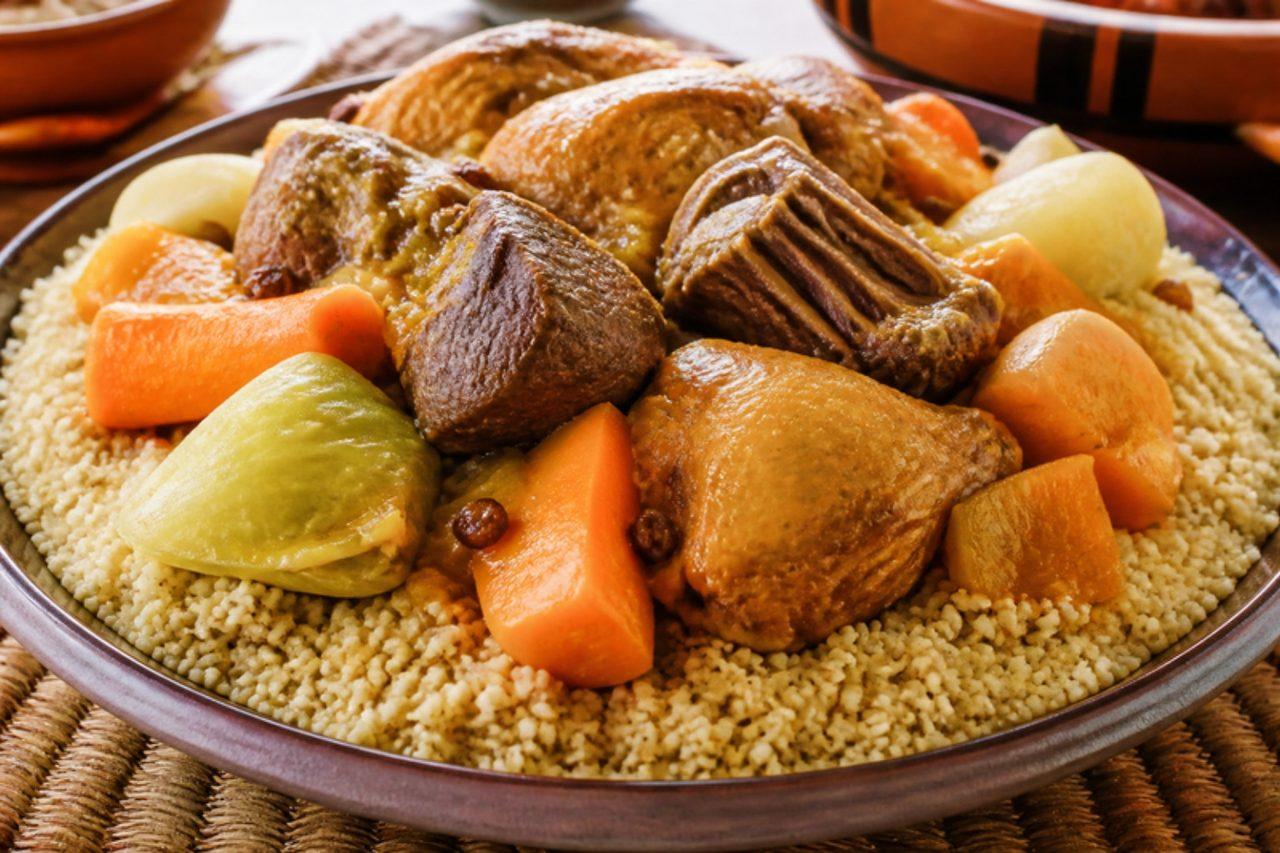
Bassi salté (festive millet couscous)

When a Senegalese family celebrates, a wedding, a baptism or a religious feast, bassi salté may well be the dish that comes out in huge enamel bowls. Fine millet couscous is steamed twice until feather-light, then crowned with lamb and chicken in a tomato-onion sauce with carrots, cabbage, turnips and sweet potato, and a sweet note from raisins. It is a long cook but most of it is simmering, and the reward is a dish that feeds a crowd: fluffy grains, rich sauce, tender meat and soft vegetables in every spoonful. Don't drown the millet when moistening it between steamings; it should be damp, not wet, or it turns into porridge. Chef's tip: cook the chicken only for the last 35 minutes and check that the thickest piece reaches 74 °C; added at the start with the lamb, it overcooks to dry shreds while the lamb is still tough.

by KrazyBadal 0 views

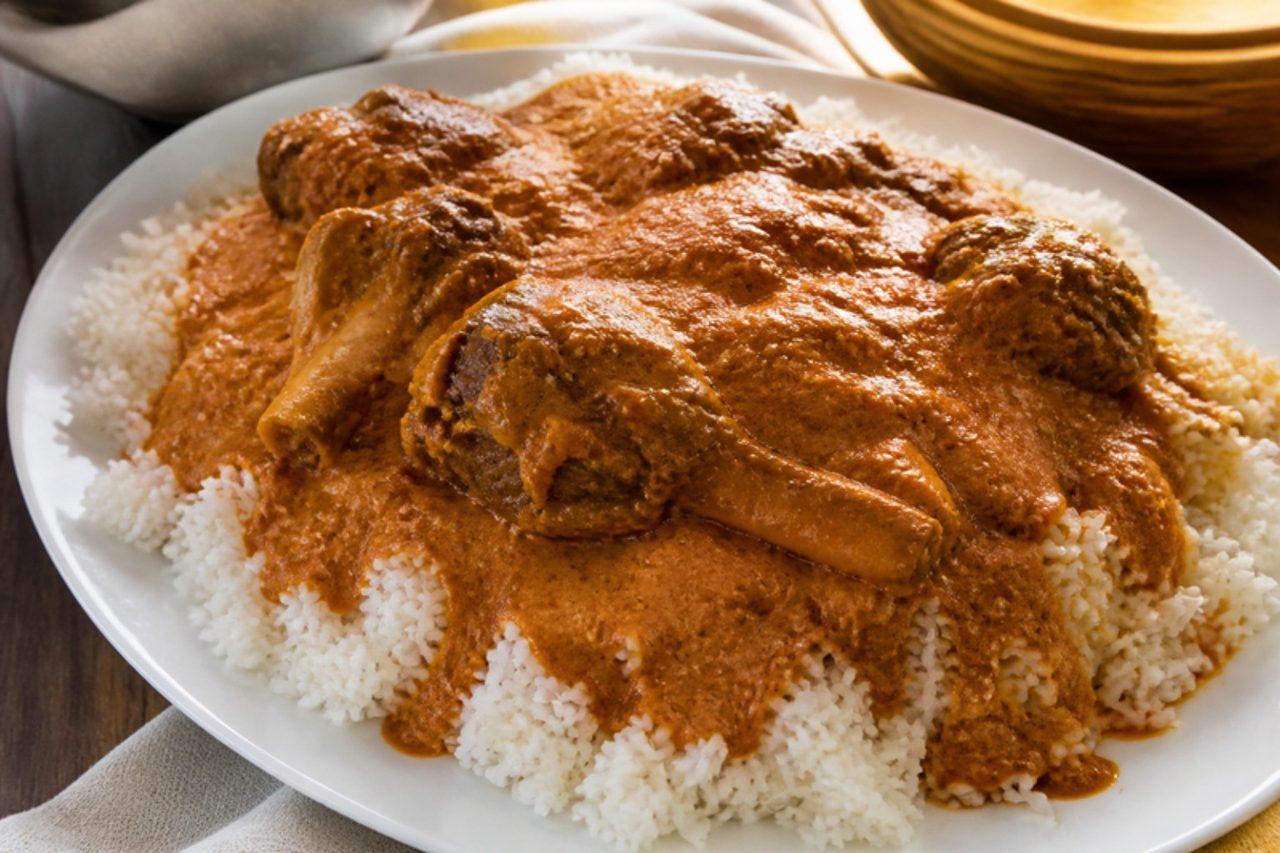
Lafidi (Guinean rice with lamb and peanut sauce)

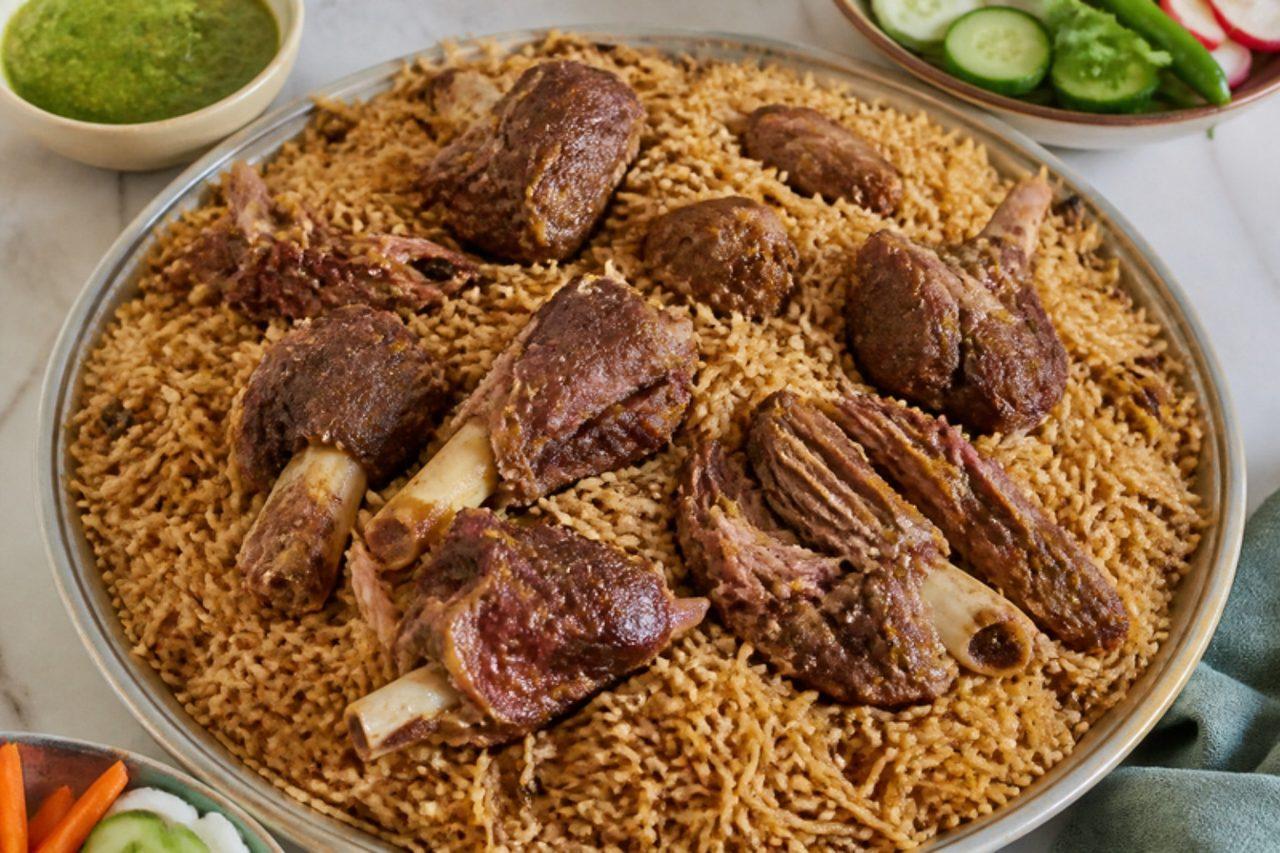
High in the green hills of the Fouta Djallon in Guinea, Fula (Peul) families prepare lafidi for feast days and for guests: a mound of white rice topped with tender lamb and a generous peanut sauce, served on a shared platter. Some households make it with a leaf sauce of cassava or sweet potato leaves instead; this version uses the peanut sauce, which is smooth, nutty and lightly tangy from tomato, with a steady warmth of chilli. The lamb is simmered slowly in the sauce, so it is soft enough to pull apart with your fingers. Chef's tip: simmer the peanut sauce uncovered and stir it from the bottom often; peanut sauces catch and burn easily, and a scorched taste runs through the whole pot.

100 minAfricanMeatGluten free
by KrazyBadal 0 views

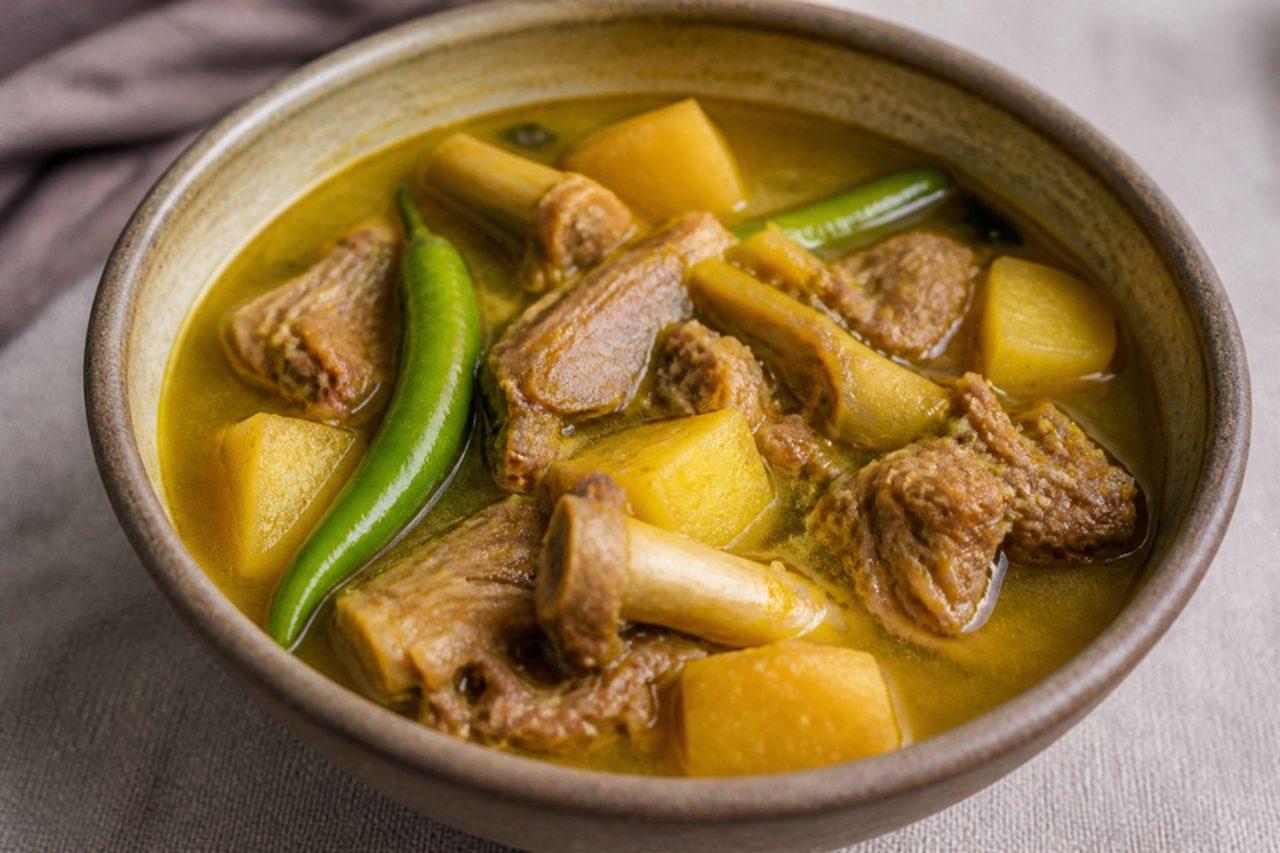
Ye-beg kikil

On chilly highland mornings, Addis Ababa's small eateries ladle out bowls of ye-beg kikil: chunks of lamb on the bone simmered slowly with onion, garlic, ginger, turmeric and whole green chillies until the meat slips off and the broth turns golden. There is no berbere, so it is gentle and clean-tasting, a welcome change from the red wats, and people sip the broth on its own as a pick-me-up after a long night or an illness. It is eaten with injera or bread, often with a little awaze on the side for those who want more heat. The usual mistake is boiling it hard, which clouds the broth and toughens the meat; keep it at a lazy simmer. Chef's tip: skim the grey foam carefully in the first 10 minutes for a clear, bright soup.

by KrazyBadal 0 views

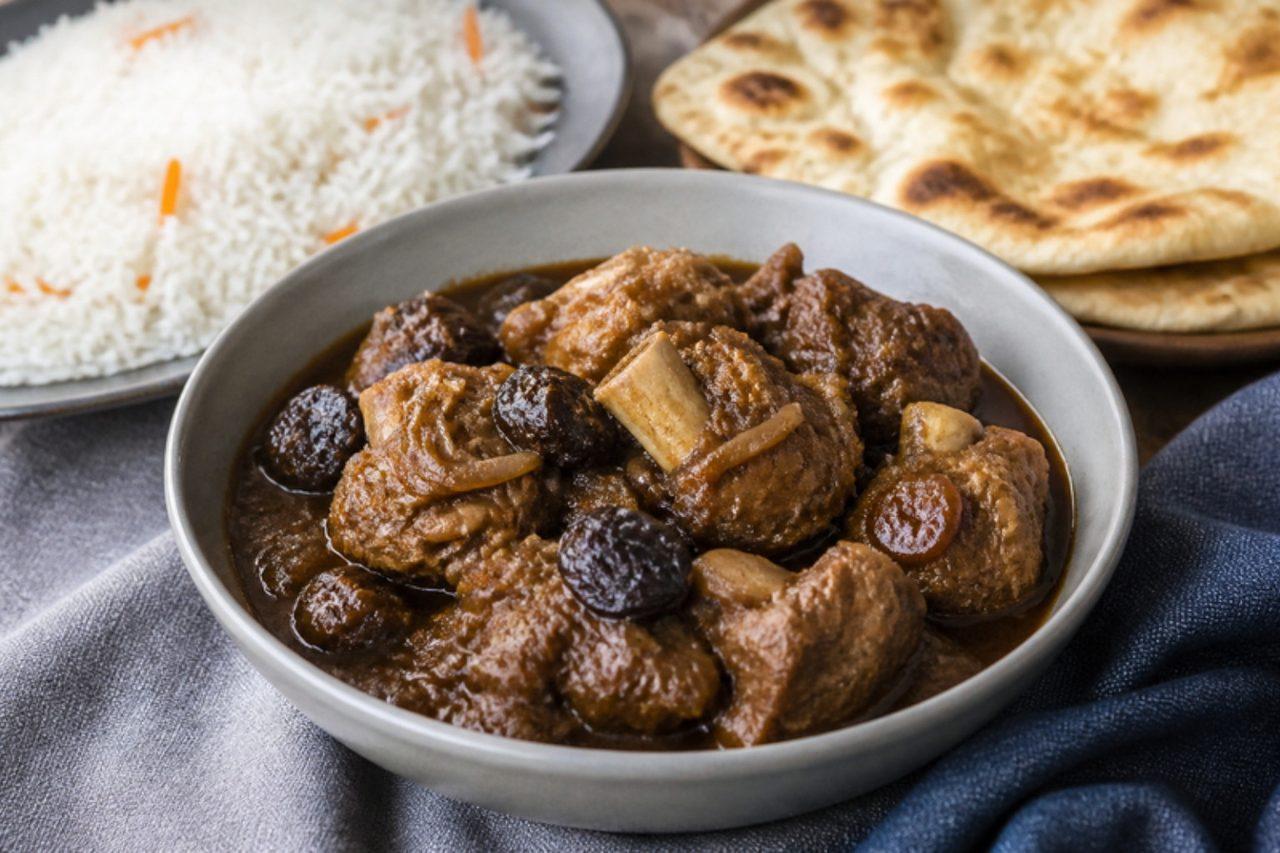
Qorma-e-alu bukhara

Of all the qormas served at Kabul dinner parties, the one with alu bukhara, small sour dried plums, is the one guests remember: lamb braised slowly in a dark sauce of caramelised onion, garlic and warm spices, with plums that collapse into it and leave a sweet-sour tang that cuts through the richness. It is ladled over chalow or eaten with naan, often alongside a lighter vegetable dish and a bowl of yogurt. Chicken works too, using thighs on the bone and halving the simmering time. Pale, half-fried onions give a thin, sweet sauce with none of the proper colour, so be patient and take them to a deep chestnut brown. Chef's tip: add the plums for the last half hour only; if they cook from the start they vanish completely and make the sauce too sour.

105 minAfghanMeatGluten free
by KrazyBadal 0 views

Landi palaw

Each autumn around Kandahar and in the high villages of the Pashtun belt, whole sheep are salted and hung in the cold, dry wind for weeks to make landi, a dark, dense cured lamb that sees families through winter, and landi palaw, rice cooked in its salty, gamey broth, is one of the great cold-weather dishes. Air-drying meat outdoors is not safe to copy in a home kitchen, so this version cures lamb in salt in the fridge for four days, which gives much of the firm texture and concentrated, savoury flavour; it is then cooked until completely tender. The rice comes out rich and meaty, eaten with a raw onion salad and pickled vegetables. Salting the rice before tasting the broth is the mistake to avoid, as the cured meat brings plenty of its own. Chef's tip: soak the cured lamb for 2 hours before cooking and change the water once, so the broth is savoury rather than briny.

by KrazyBadal 0 views

Chanakhi

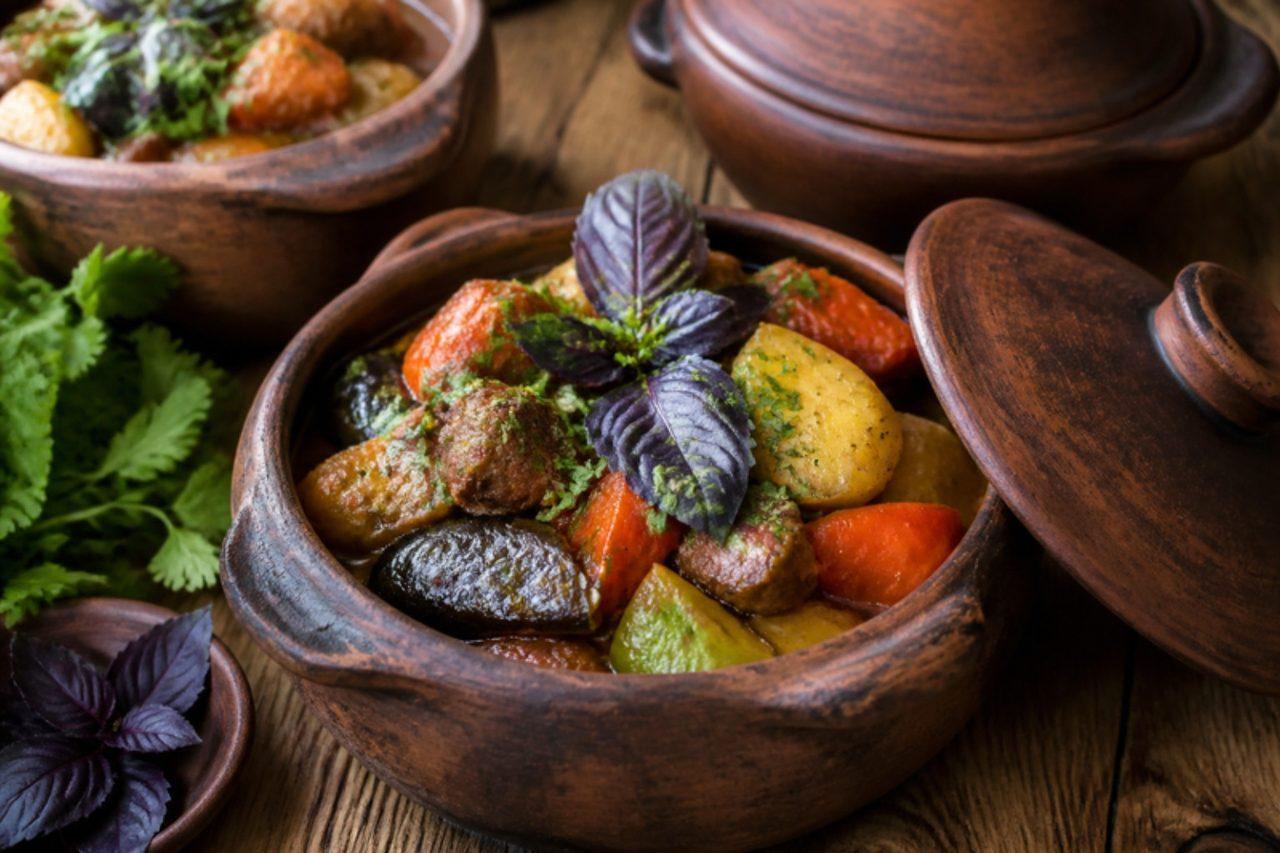
In Tbilisi homes and restaurants chanakhi arrives in its own small clay pot, the lid lifted at the table to release a cloud of steam smelling of lamb, tomato, basil and garlic. Lamb, potato, aubergine, onion and tomato are layered raw with herbs and left to cook slowly in their own juices, so the vegetables soak up the lamb fat and the meat goes spoon-soft. A common mistake is adding too much water; the vegetables release plenty, and a watery pot tastes flat. Chef's tip: put a tomato slice on top of each pot as a lid of its own, which bastes everything below as it melts.

150 minGeorgianMeatGluten free
by KrazyBadal 0 views

Chakapuli

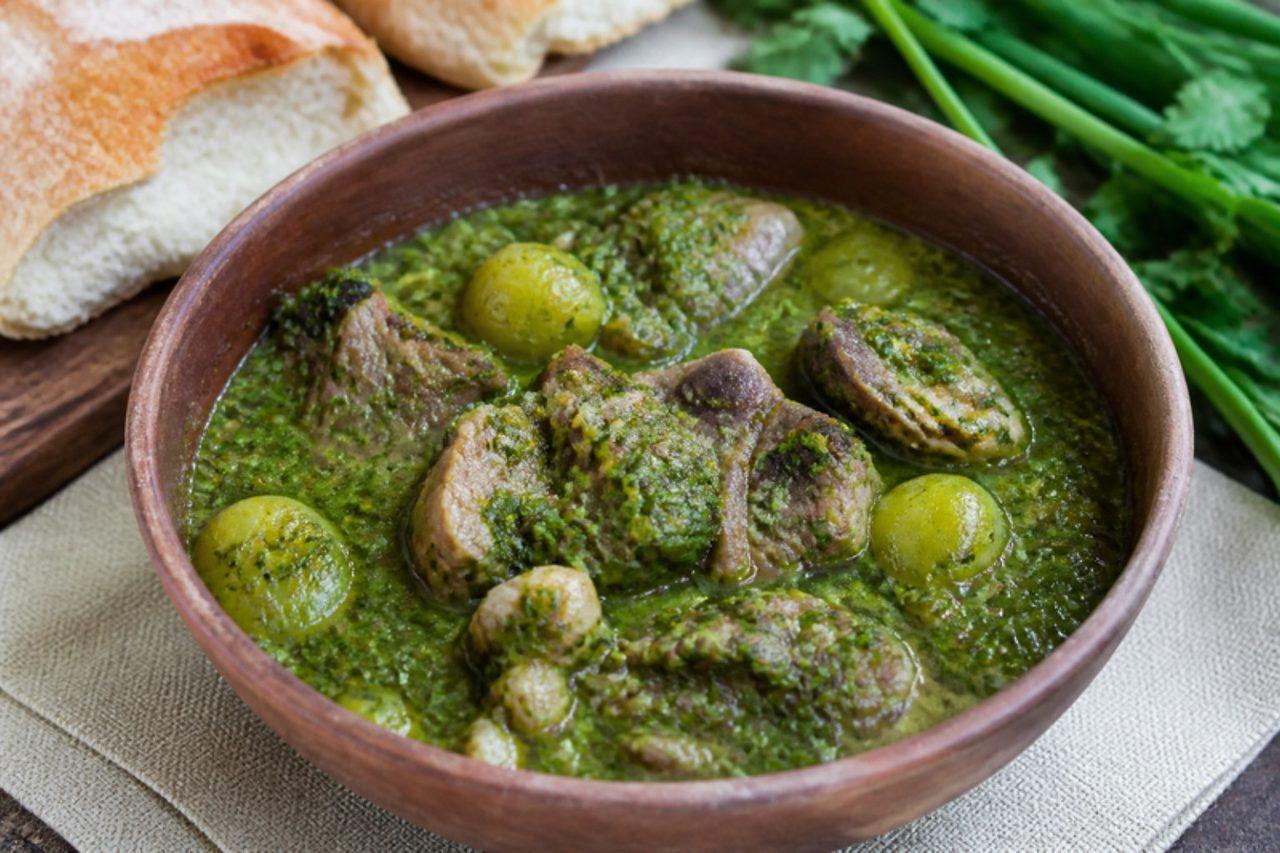
Chakapuli is the Easter dish of Kakheti, cooked when the first tarragon shoots and hard green tkemali plums appear in April: young lamb is stewed in Kakhetian white wine with heaps of tarragon, spring onion and coriander until the broth turns bright green and sour. It is eaten from deep bowls with shoti bread to soak up the juices. The recipe uses white wine, as it is traditionally made; for an alcohol-free pot, use the swap in the ingredient note. A common mistake is putting in all the herbs at the start, which turns them grey; half go in at the end for freshness. Chef's tip: if you can't find sour green plums, a squeeze of lemon and a spoon of tkemali sauce give the same tartness.

120 minGeorgianMeatGluten free
by KrazyBadal 0 views

Khashlama

Khashlama is a village dish from across Armenia, made in a big pot for family gatherings in Ararat and Kotayk: chunks of lamb on the bone, or beef, layered with onions, tomatoes, peppers and potatoes and cooked slowly with very little liquid, so the meat stews in its own juices and the vegetables soak them up. It is served in deep plates with lavash and lots of fresh herbs. A common mistake is adding water to cover; the result is a soup, not khashlama. Chef's tip: put the lamb on the bottom and the potatoes on top, so the meat browns slightly and the potatoes steam in the juices without breaking.

170 minArmenianMeatGluten free
by KrazyBadal 0 views

Turshu govurma

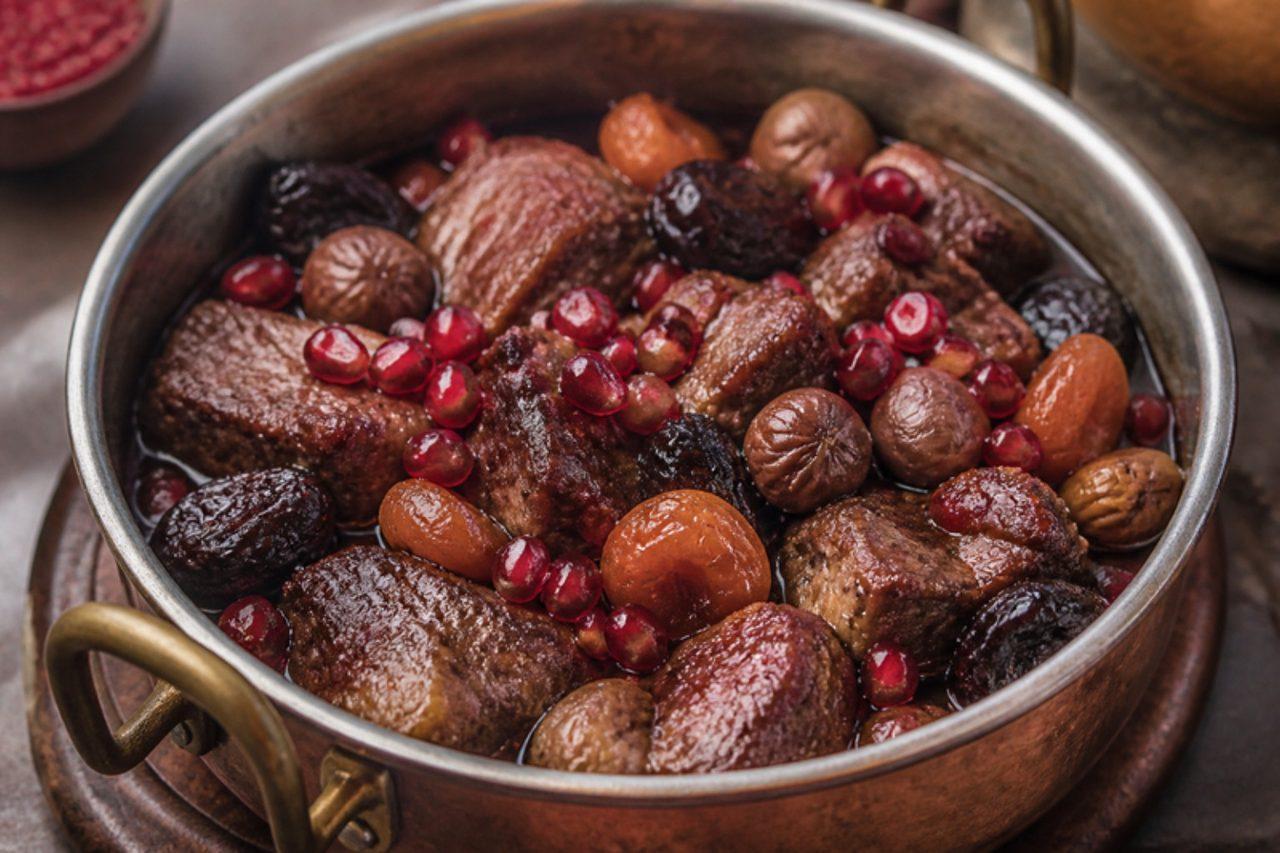
Turshu govurma, 'sour fry', is a rich southern dish from Lankaran and Masalli: lamb browned in butter or oil, then cooked slowly with onions, chestnuts, dried apricots, sour plums and a good pour of narsharab pomegranate sauce until dark, glossy and sweet-sour. It is served on top of plov at weddings or on its own with bread. A common mistake is adding the dried fruit too early, which turns it to mush. Chef's tip: finish with a pinch of saffron water and a handful of fresh pomegranate seeds, which brighten the dark sauce.

by KrazyBadal 0 views

Shavla

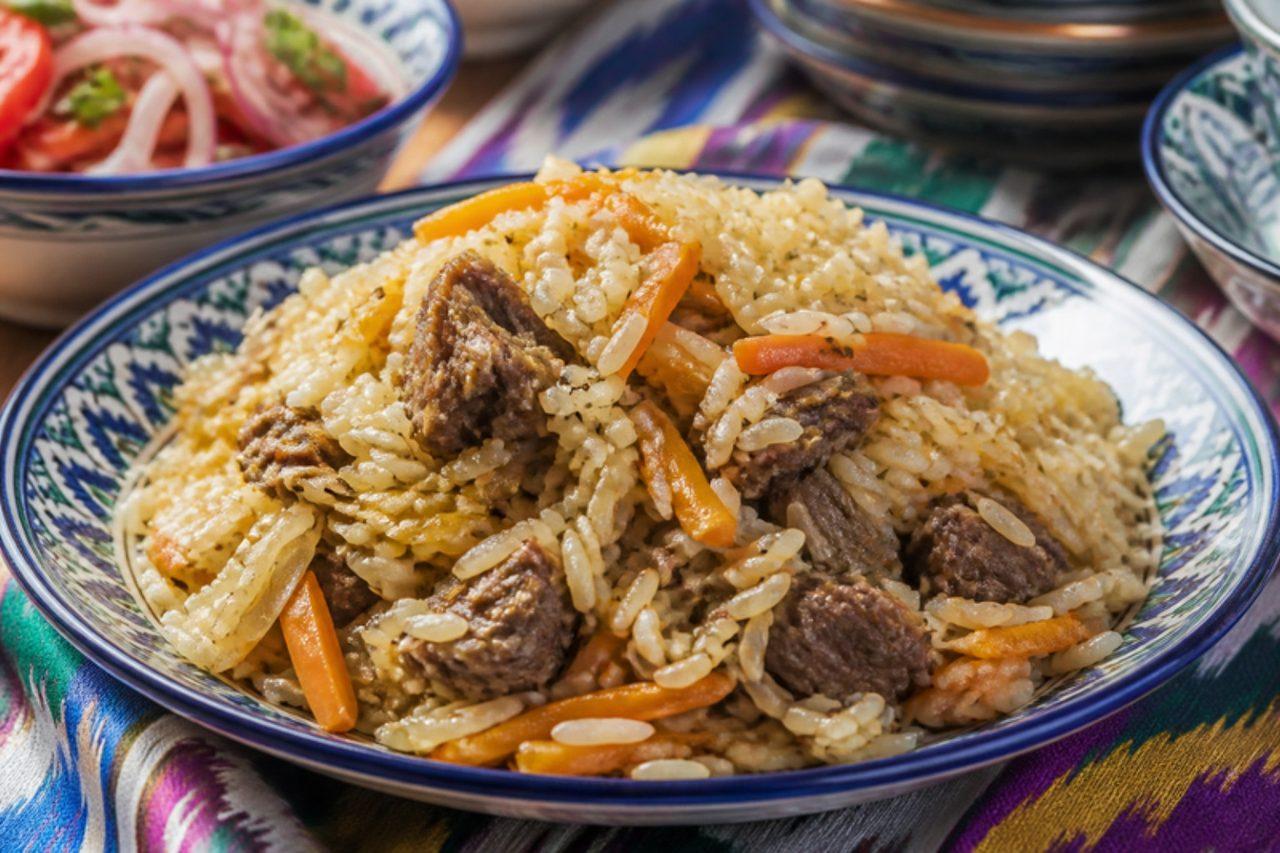
Shavla is the softer, homelier cousin of plov, made in Tashkent and Samarkand households when someone is unwell or for a weekday supper: the same lamb, onion and yellow carrot zirvak as plov, but cooked with more water and stirred so the rice turns soft and porridge-like. Children often prefer it, and it reheats well. A common mistake is treating it like plov and leaving it unstirred; shavla needs gentle stirring to turn creamy. Chef's tip: use short-grain rice and cook the zirvak until the carrots are soft and sweet before the rice goes in.

by KrazyBadal 0 views

Hasip

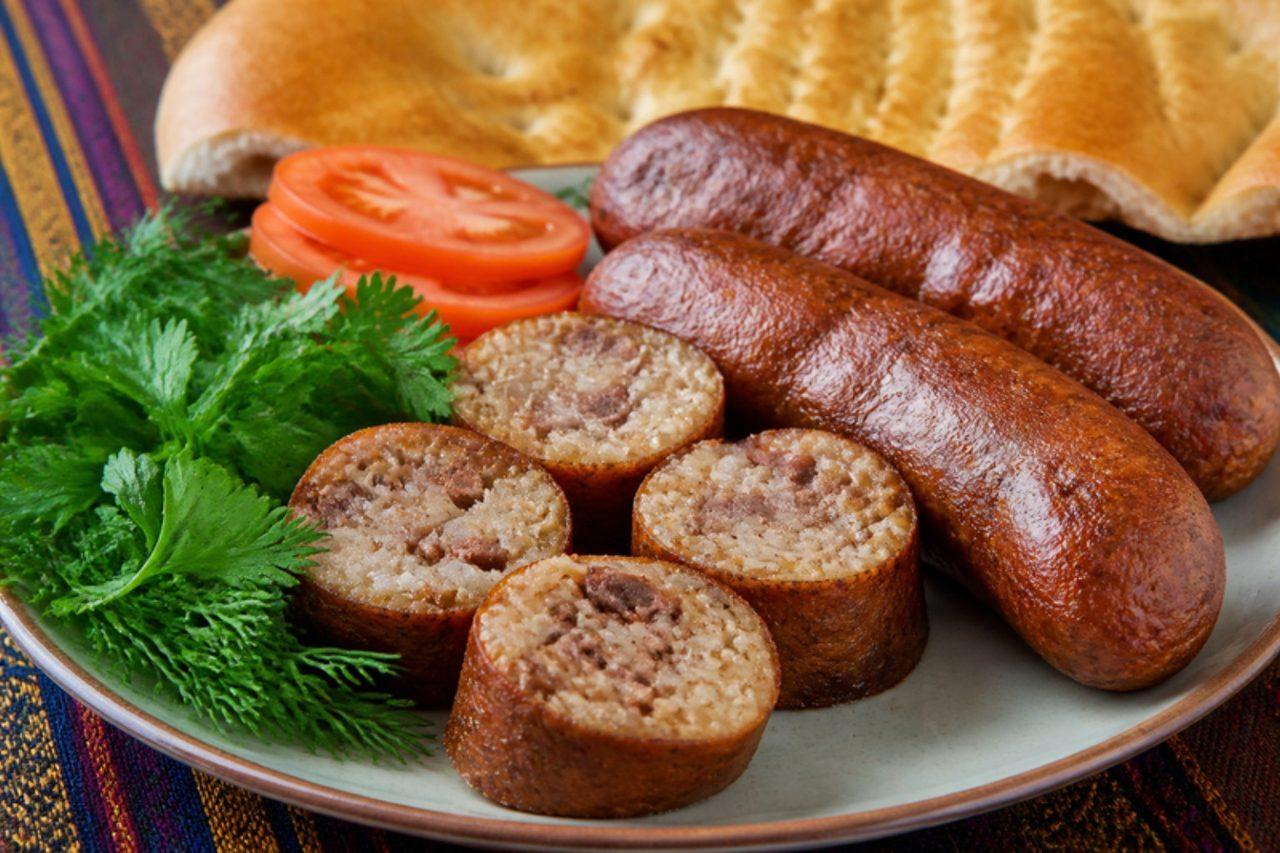
Hasip is the sausage of Bukhara, made after Kurban Hayit, the feast of the sacrifice: lamb casings stuffed with rice mixed with chopped lamb, liver and heart, onion and cumin, boiled until firm and then sliced and fried until crisp. Bukharan families serve it hot as a first course for guests. A common mistake is overfilling the casings; the rice swells and bursts them in the pot. Chef's tip: fill them only two-thirds full and prick well before simmering, then fry the slices in a dry pan so they crisp in their own fat. The filling must reach 71 °C.

180 minUzbekMeatGluten free
by KrazyBadal 0 views

Sirne

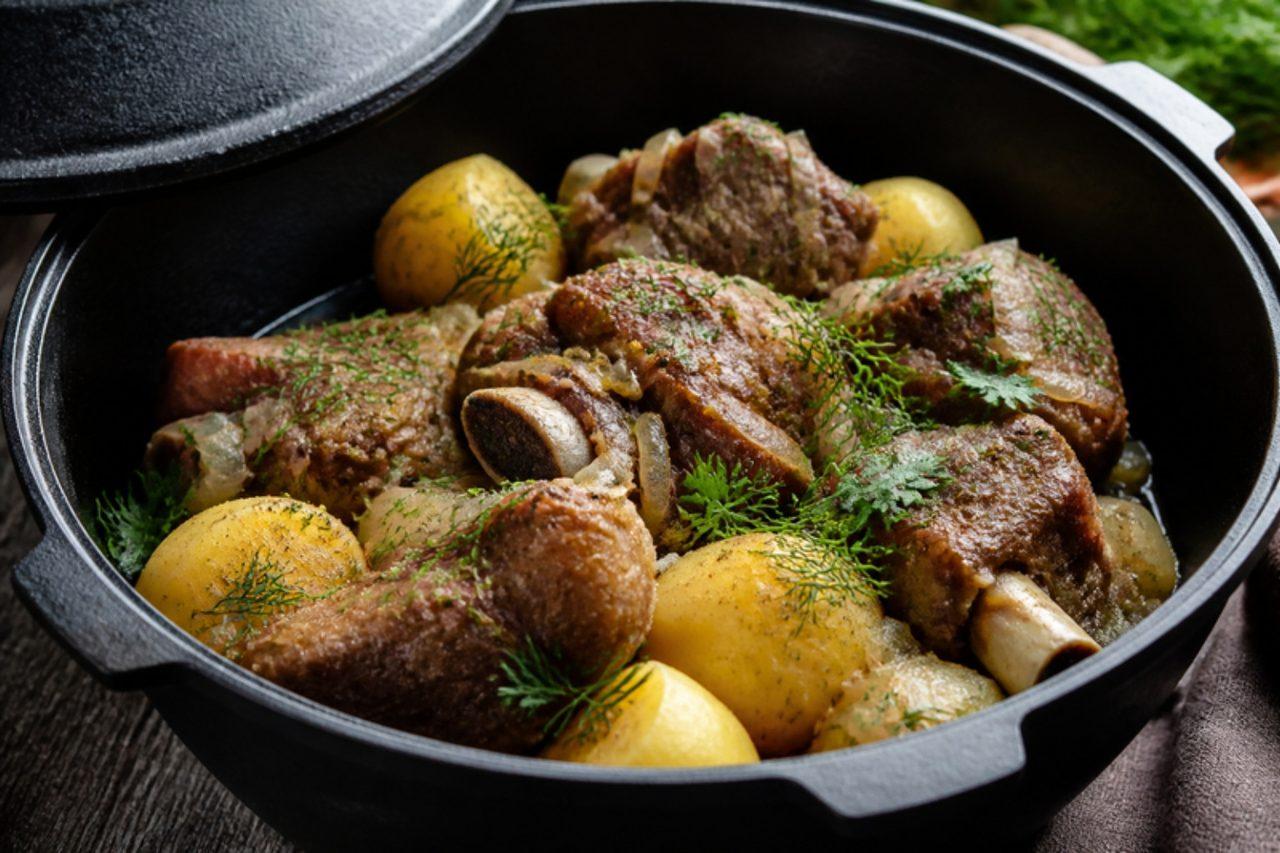
Sirne is a shepherds' dish from western and southern Kazakhstan: young lamb on the bone, onions and potatoes layered in a heavy kazan with almost no water, sealed tightly and cooked slowly so the meat steams and stews in its own juices and fat. It is lifted out onto a big platter for family gatherings. A common mistake is opening the pot during cooking, which lets the steam escape and dries the meat. Chef's tip: Kazakh cooks seal the lid with a rope of flour-and-water dough; at home a double layer of foil under the lid keeps every bit of steam in for the whole two hours.

140 minKazakhMeatGluten free
by KrazyBadal 0 views

Oshi burida

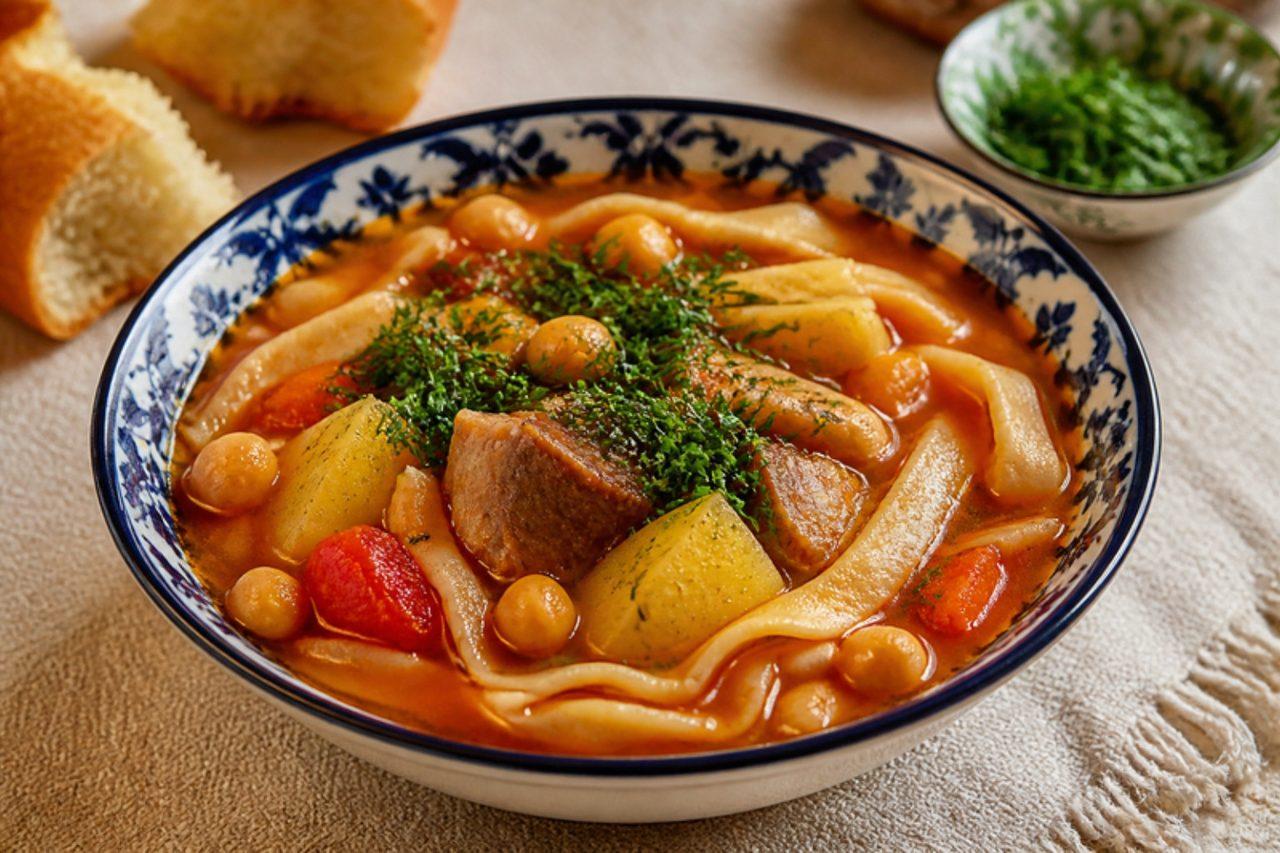
Oshi burida, 'cut noodle soup', is a winter staple in Dushanbe and the villages of the Zarafshan valley: hand-cut noodles in a broth of lamb, chickpeas, carrot, potato and tomato, finished with fresh herbs and a spoon of chakka, the Tajik strained yogurt. Tajik grandmothers cut the noodles thin and long on a big wooden board. A common mistake is skipping the soak for the chickpeas, which then never soften in time. Chef's tip: fry the lamb with the onion and tomato first, before adding water; the browned base gives the broth its depth.

130 minTajikSoups
by KrazyBadal 0 views

Dograma

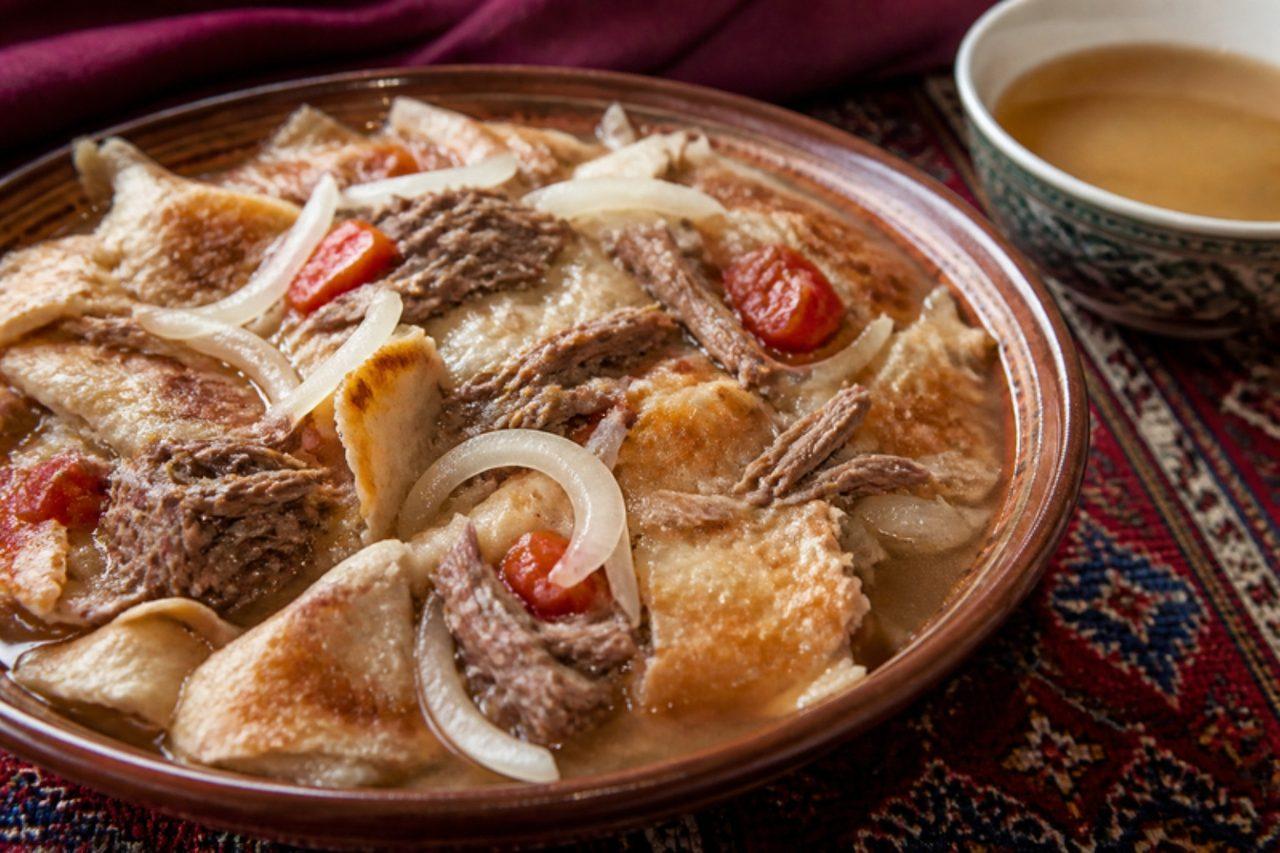
Dograma, from the Turkmen word for 'to chop', is the dish of Turkmen weddings and religious holidays, when families gather to tear fresh tamdyr bread into small pieces together. The bread is mixed with finely chopped boiled lamb or mutton, raw onion and tomato, then a rich, fatty broth is poured over and the bowl is eaten while hot. It is filling, simple and communal. A common mistake is using soft sliced bread, which turns to paste; dograma needs firm, chewy flatbread. Chef's tip: chop the meat and onion by hand very finely, and rub the onion with salt so it softens and mellows before mixing.

150 minTurkmenMeat
by KrazyBadal 0 views

Ishlekli

Ishlekli is the shepherds' pie of the Karakum desert: a large round of dough filled with chopped lamb and onion, sealed, and buried in sand heated by a fire, so it bakes slowly into a thick, golden crust filled with juicy meat. Turkmen families still make it on camping trips and at holidays in the countryside around Ashgabat. This version bakes it in a hot oven on a preheated tray. A common mistake is using lean meat, which makes the filling dry; the lamb fat bastes the inside as it bakes. Chef's tip: chop the lamb by hand rather than mincing it; small chunks stay juicy and give the pie its rustic texture. The filling should reach 71 °C.

100 minTurkmenMeat
by KrazyBadal 0 views

Gowurma

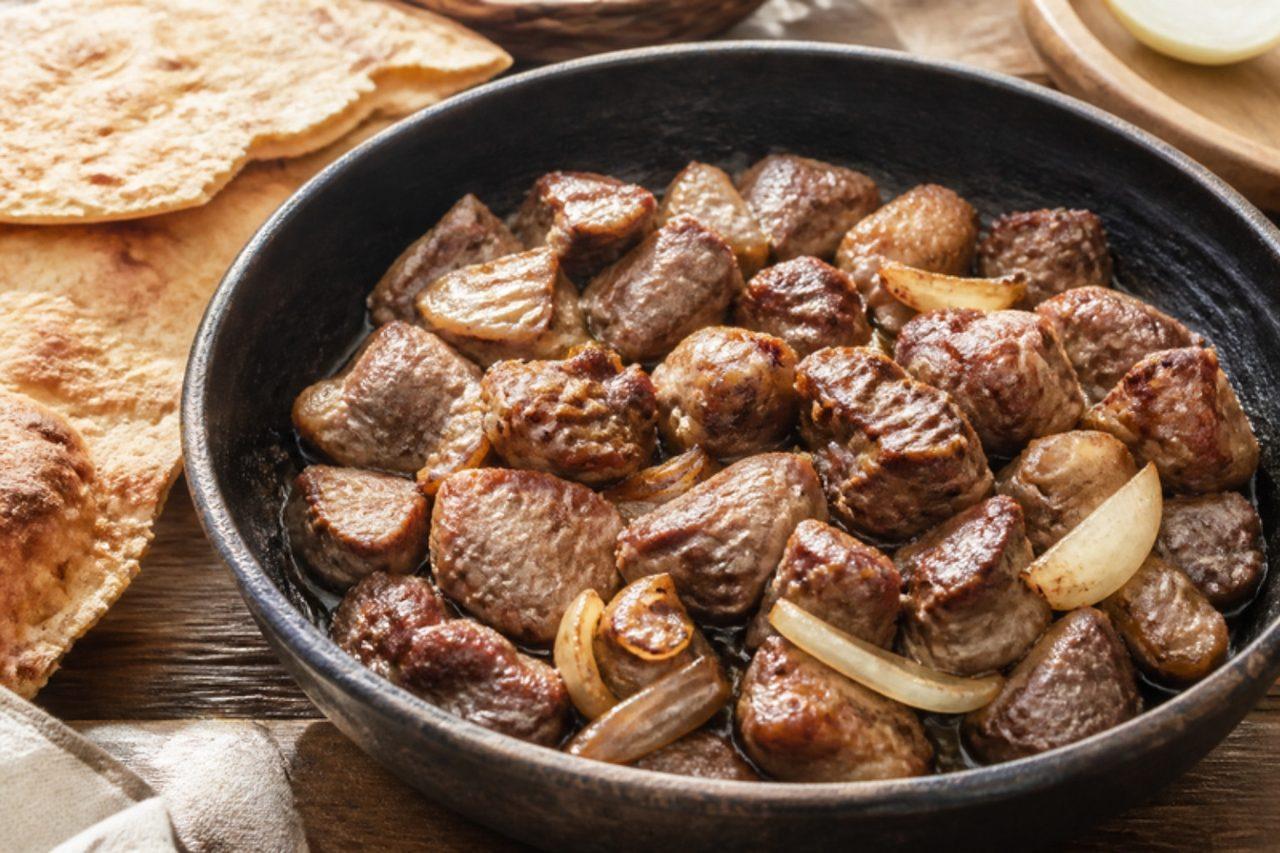
Gowurma is how Turkmen herders kept meat through the winter: lamb or mutton cut into pieces, salted and cooked slowly in its own rendered fat until tender and golden, then packed into clay pots under a layer of fat. Spoonfuls are reheated through the winter to fry with eggs, stir into rice or eat with bread and tea. Today it is kept in the fridge. A common mistake is cooking over high heat, which fries the outside hard before the inside softens. Chef's tip: make sure every piece is fully covered by fat in the jar; that seal is what keeps it. Store in the fridge and use within 2 weeks; always reheat until piping hot.

140 minTurkmenMeatGluten free
by KrazyBadal 0 views

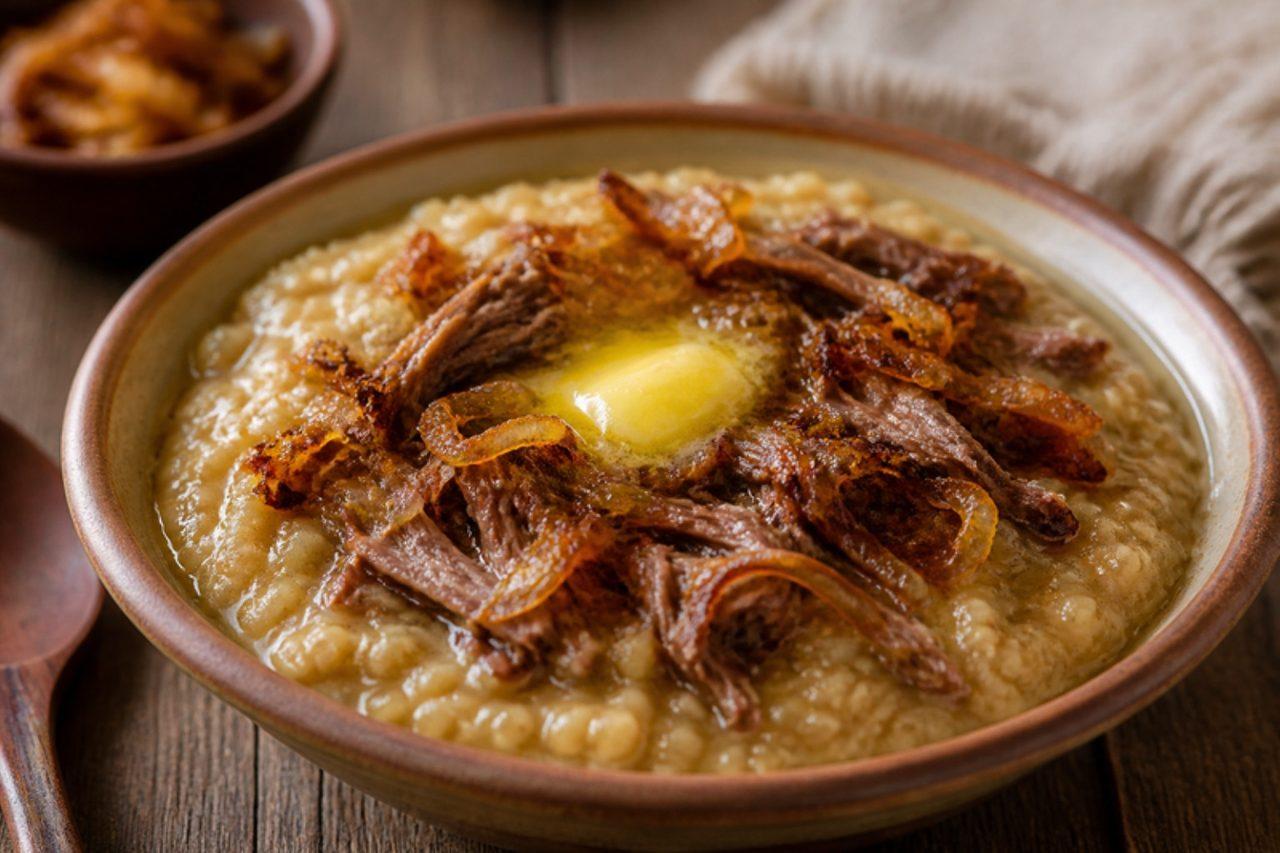
Yarma

Yarma is a filling porridge of cracked wheat cooked slowly with lamb until the grains break down and the dish turns thick and creamy, a dish of Turkmen homes and of religious gatherings, when it is cooked in huge pots and shared out. It is seasoned simply with salt, pepper and onion fried in butter or fat poured over the top. A common mistake is not stirring enough, which lets the wheat catch on the bottom. Chef's tip: beat the yarma hard with a wooden spoon in the last 15 minutes, so the lamb shreds into the grain and it turns smooth and creamy.

by KrazyBadal 0 views

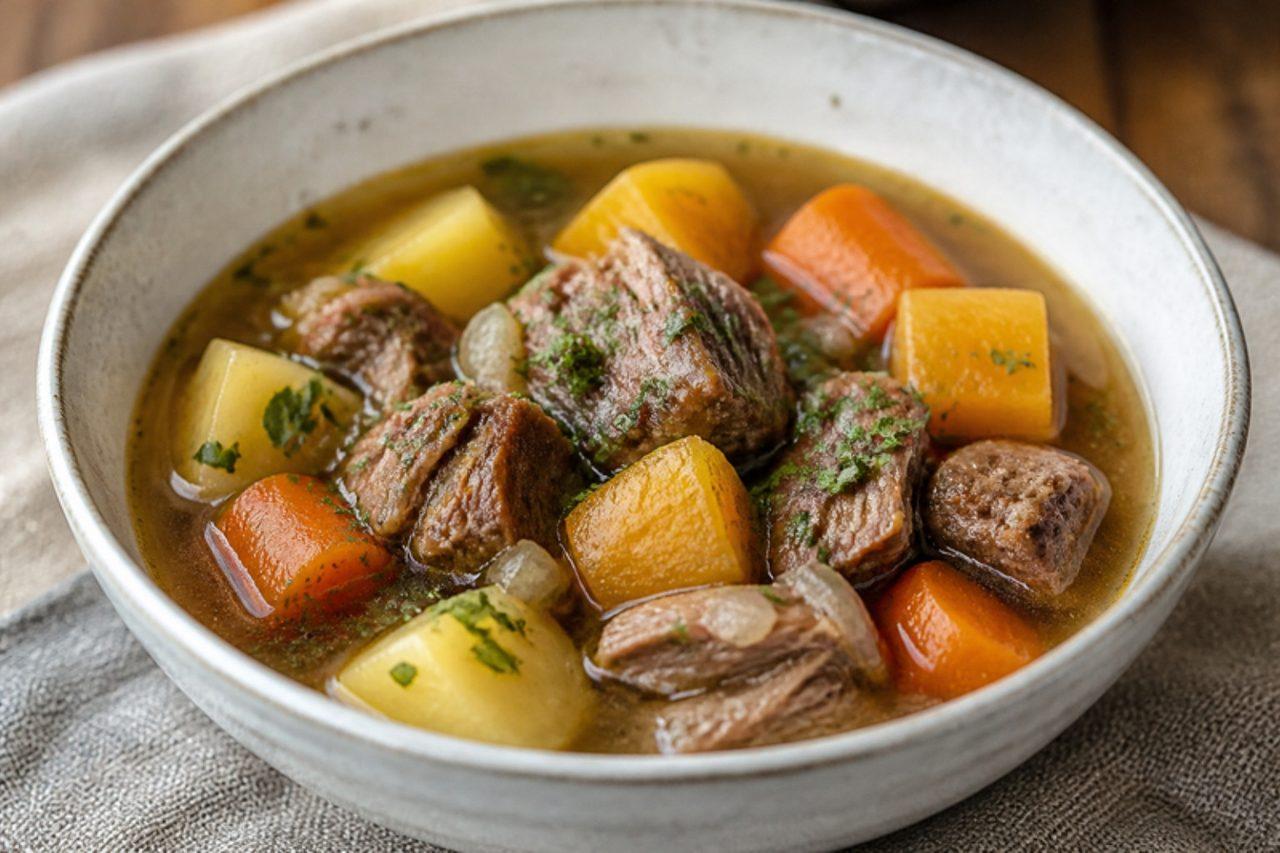
Kjötsúpa

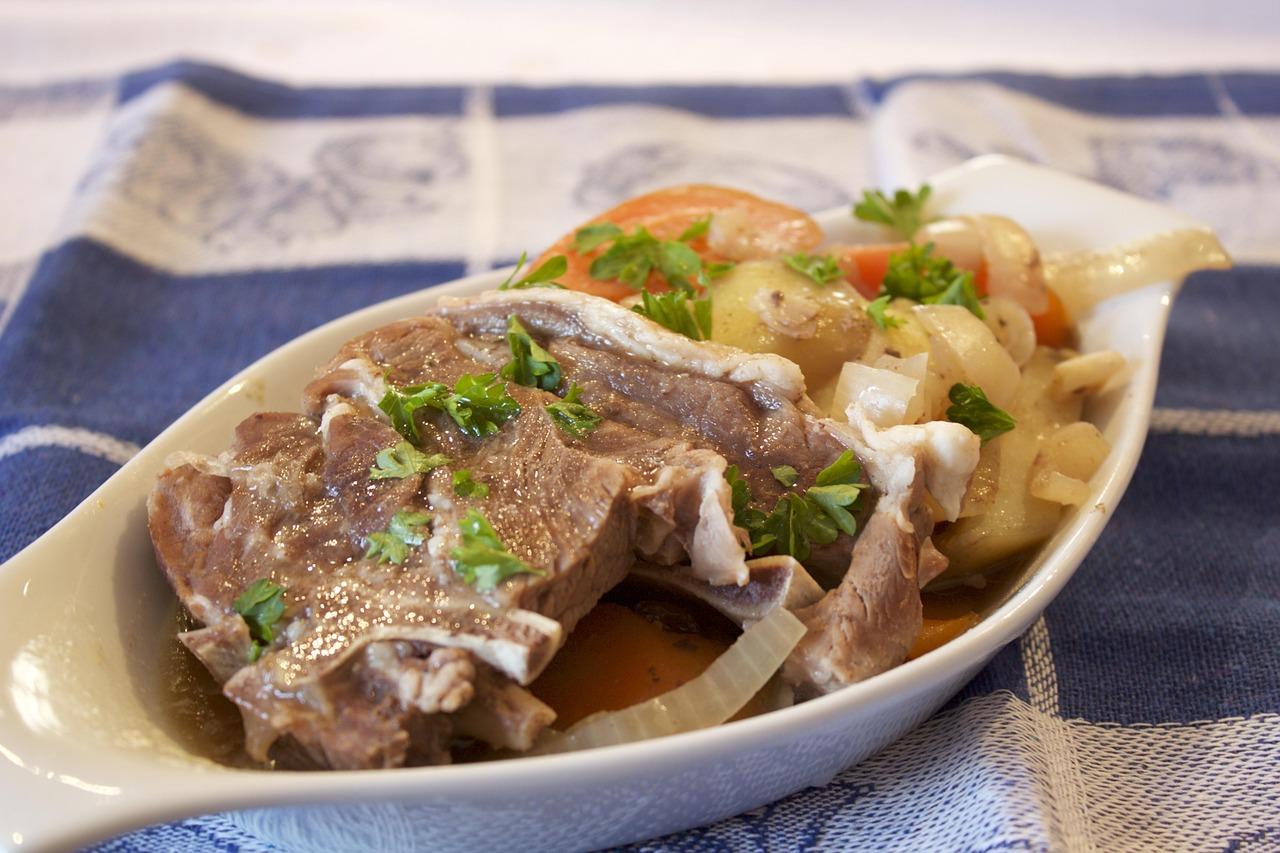
Kjötsúpa is the soup every Icelander grew up on, simmered from bony lamb shoulder with swede, potatoes, carrots, onion and a handful of rolled oats or rice to thicken it. Icelandic lamb is free-grazing and flavourful, and on the first day of winter in late October, Kjötsúpudagurinn, free soup is ladled out on Skólavörðustígur in Reykjavík. A common mistake is skimming too little at the start, which leaves a greasy, cloudy soup. Chef's tip: serve the meat on a plate beside the soup, as many Icelandic families do, so everyone can pull it from the bone.

by KrazyBadal 0 views

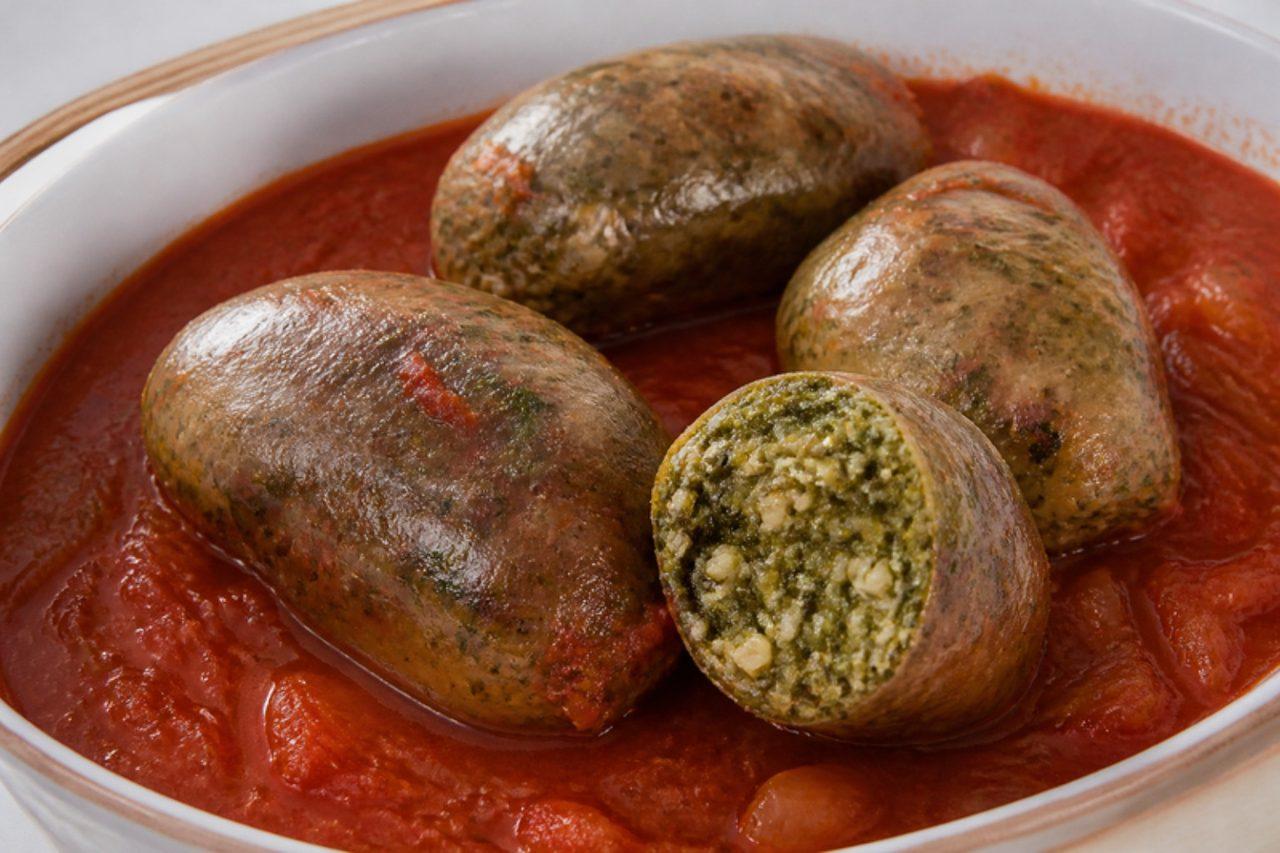
Osban (Tunisian stuffed lamb sausages)

Eid al-Adha in Tunisia means using every part of the sheep, and osban is how the tripe is honoured: cleaned pieces are sewn into pouches and packed with rice, chopped liver and lamb, chard, a big bunch of parsley and coriander, dried mint and harissa, then simmered in a red chickpea sauce and served over couscous. Families all over the country, from Tunis to the south, make a batch and freeze some for later. The filling cooks into a soft, herby, peppery sausage and the tripe turns tender. Buy tripe that the butcher has already cleaned and scalded, or use natural sausage casings for an easier version. Chef's tip: fill the pouches only two-thirds full and prick them with a needle; the rice swells as it cooks, and overstuffed osban burst, which is the most common mistake.

180 minTunisianMeat
by KrazyBadal 0 views

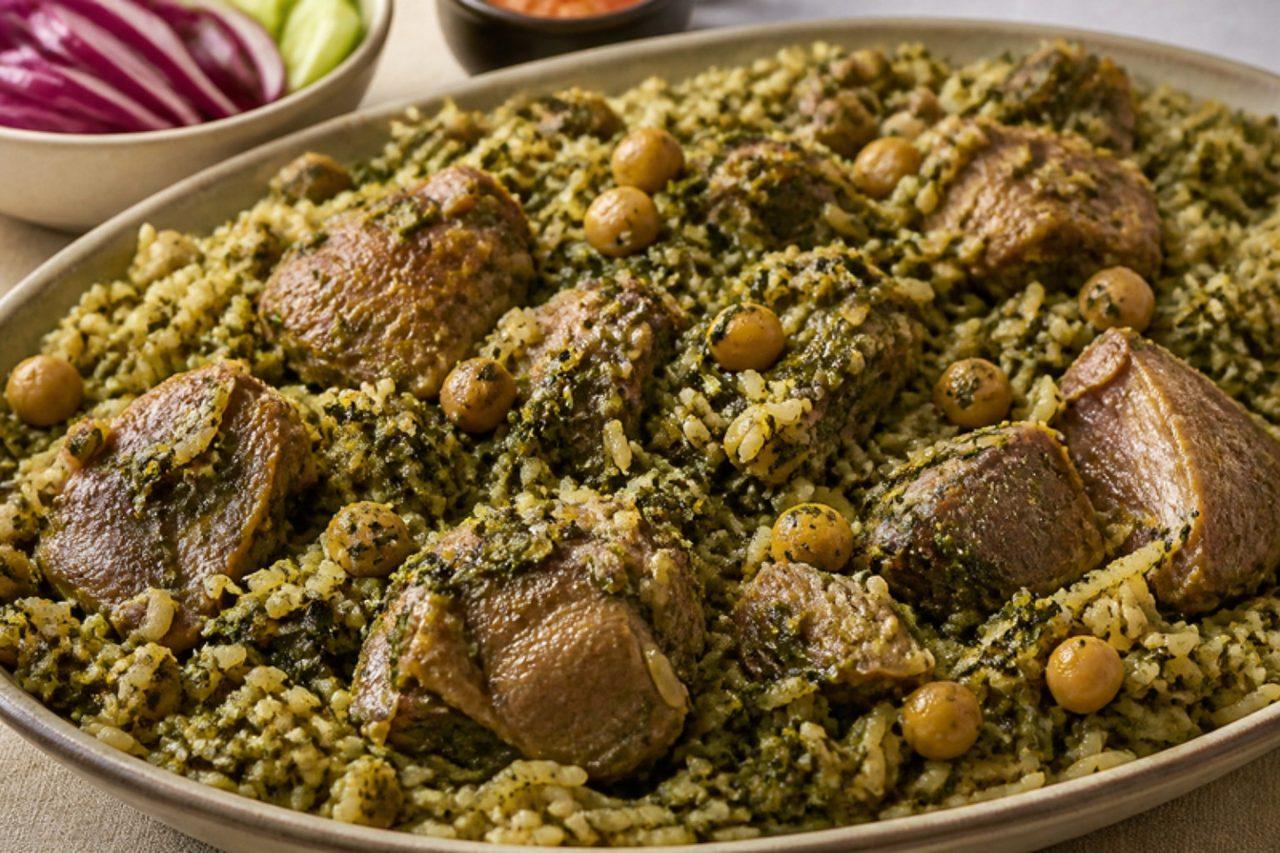
Rouz jerbi (Djerban steamed rice)

Djerba islanders cook rice the way the rest of Tunisia cooks couscous, in the top of a couscoussier: raw rice is mixed with small pieces of lamb, chopped spinach, a mound of herbs, chickpeas, tomato paste, harissa and spices, then steamed over boiling water until every grain is tender and stained red-gold. Rouz jerbi is a Friday and family-gathering dish on the island, served from one large platter. The rice stays separate and fluffy, the greens melt in, and the lamb picks up the scent of mint and tabil. Chef's tip: stir the rice from the bottom every 20 minutes; leaving it untouched is a common mistake, as the bottom turns soggy while the top stays hard.

by KrazyBadal 0 views

Djelbana (Algerian lamb and pea stew)

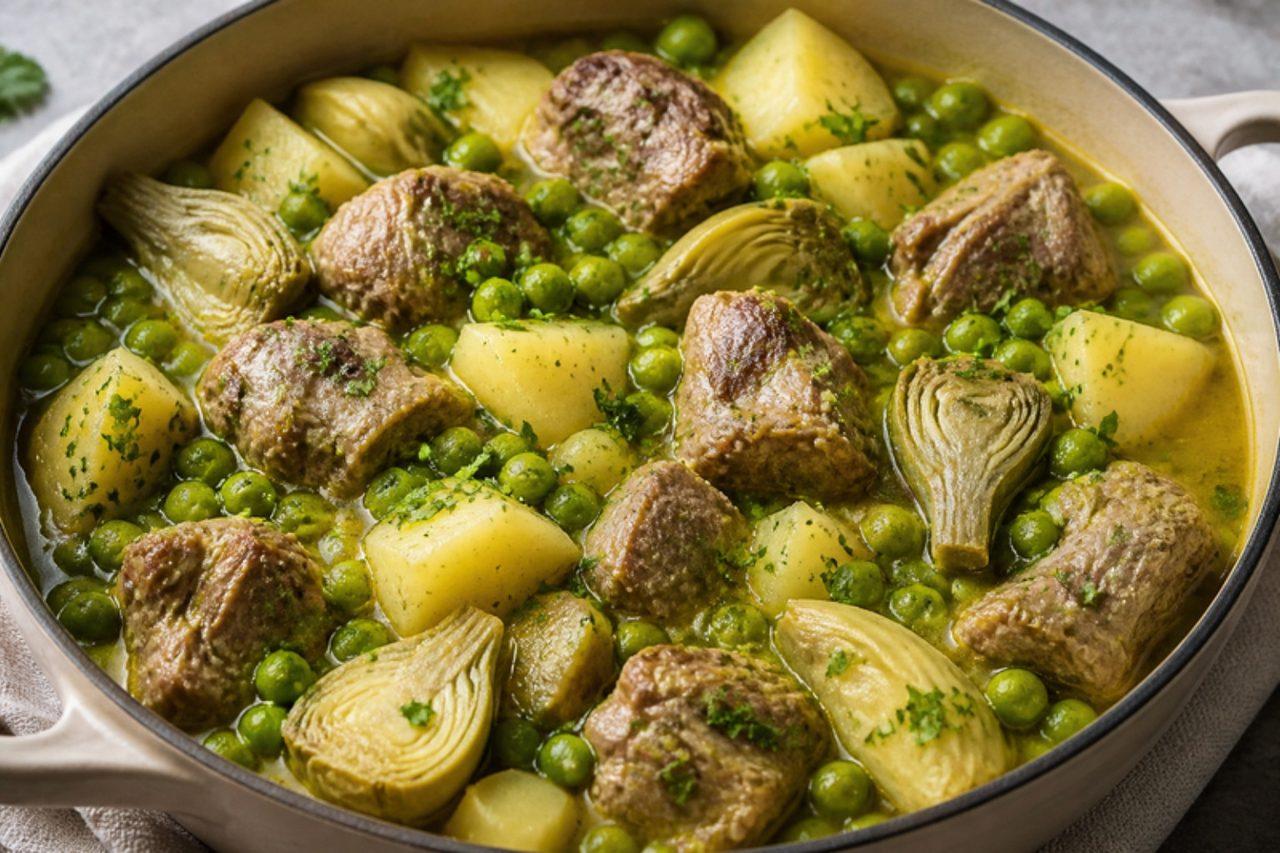
Spring markets in Algiers fill with sacks of fresh peas and violet artichokes, and that is the moment for djelbana, a light, pale stew of lamb, peas, artichoke hearts and potatoes cooked with onion, garlic and a little turmeric, finished with fresh coriander. Families serve it at lunch with plenty of bread to soak up the sauce; on meat-free days it is made the same way without the lamb. It tastes fresh, sweet and gently peppery rather than heavily spiced. Frozen peas and artichoke hearts are fine out of season. Chef's tip: add the peas only for the last 10 minutes; peas put in with the meat are the usual mistake and turn grey and mushy.

by KrazyBadal 0 views

Chbah essafra (almond fritters in lamb sauce)

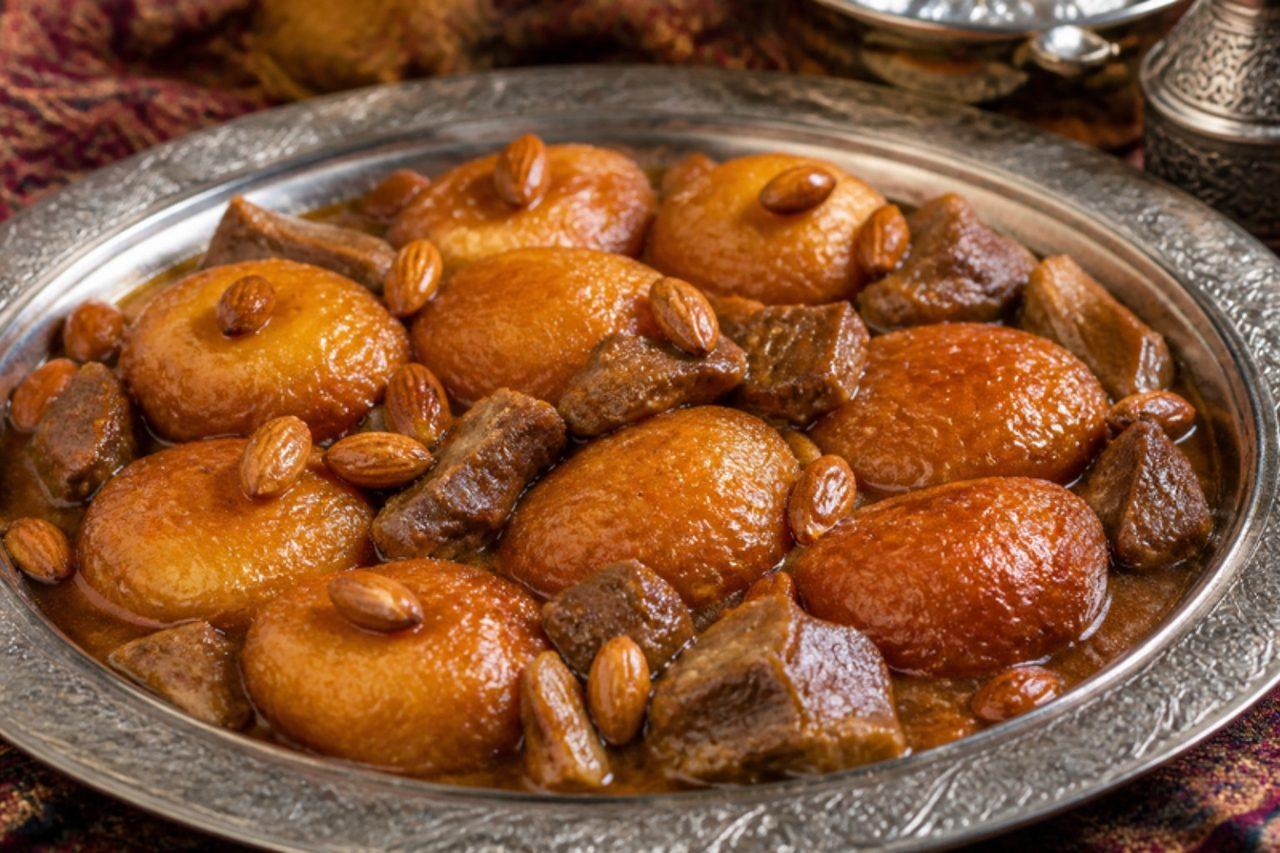
Cooks in Algiers bring out chbah essafra for weddings and grand family dinners, where it is served as the sweet main course: diamonds of almond paste scented with lemon and cinnamon are dipped in egg, fried golden and laid around tender lamb in a pale, buttery sauce sweetened with sugar and orange-blossom water. The contrast of savoury meat and soft, sweet almond is the point, and the dish is rich, so small portions with bread are usual. Chicken can replace the lamb, with a shorter cooking time. Chef's tip: warm the fritters in the sauce only at the table; dropping them into bubbling sauce is a common mistake, and they fall apart.

130 minAlgerianMeat
by KrazyBadal 0 views

Showing 24 of 44 recipes

Show more recipes

Page 1 of 2

Goes well with lamb shoulder