Skip to content

Recipes with konjac block

3 recipes that use konjac block, with photos, step-by-step instructions and cook times. The quickest, Konnyak jorim, takes 25 minutes. It is most often cooked with soy sauce, sugar and chikuwabu.

Got a few things in the fridge? Search by everything you have

Konnyak jorim

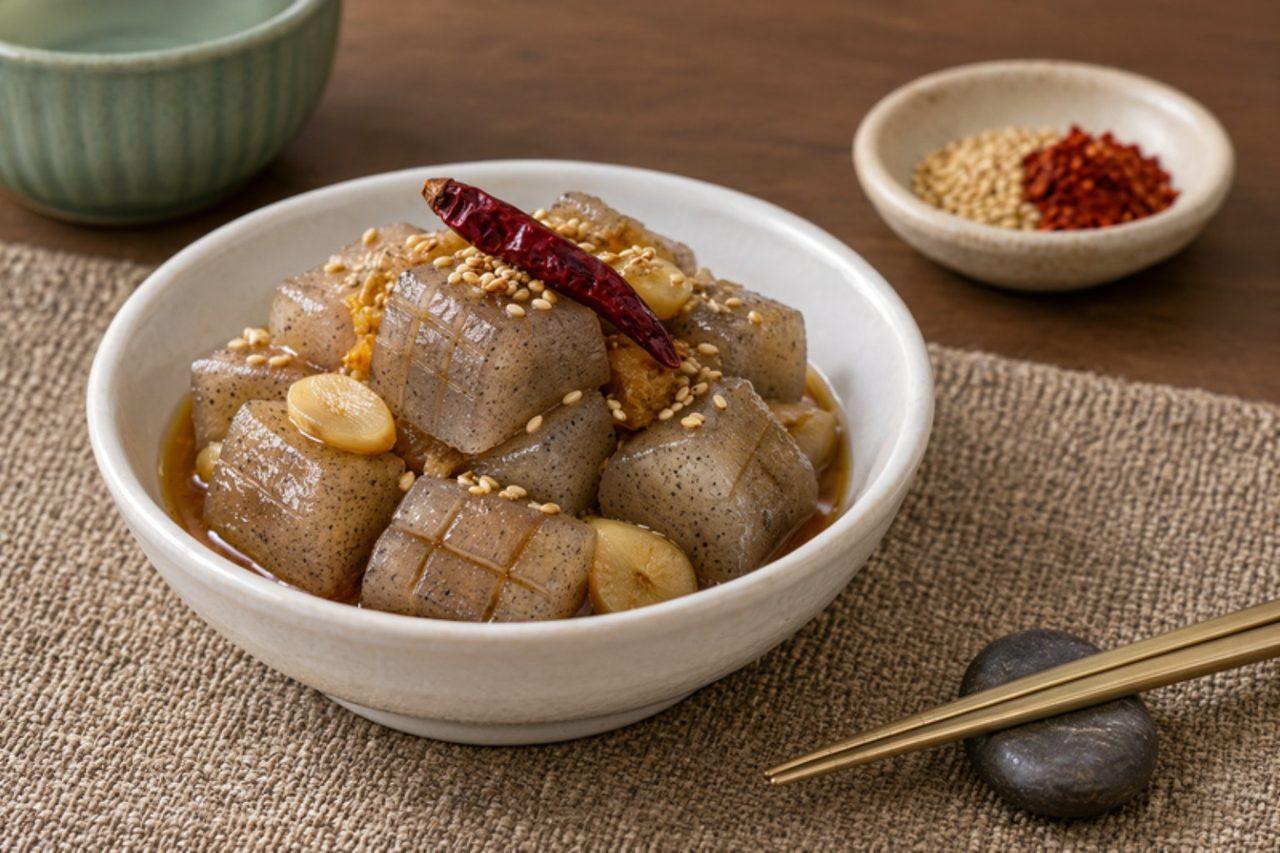
Konjac, the grey, jelly-like block made from a root called devil's tongue, has almost no calories, and in Korea it is braised in sweet soy until glossy and chewy, a popular dosirak banchan that never wilts. Its texture is the point: bouncy, with a savoury glaze clinging to every scored cube. The common mistake is skipping the blanch, which leaves konjac's slight fishy smell from the alkaline water it is set in. Chef's tip: score a shallow criss-cross on the cubes or tear them with a spoon rather than cutting, and the sauce grips the rough surfaces.

by KrazyBadal 0 views

Imoni (Yamagata taro and beef stew)

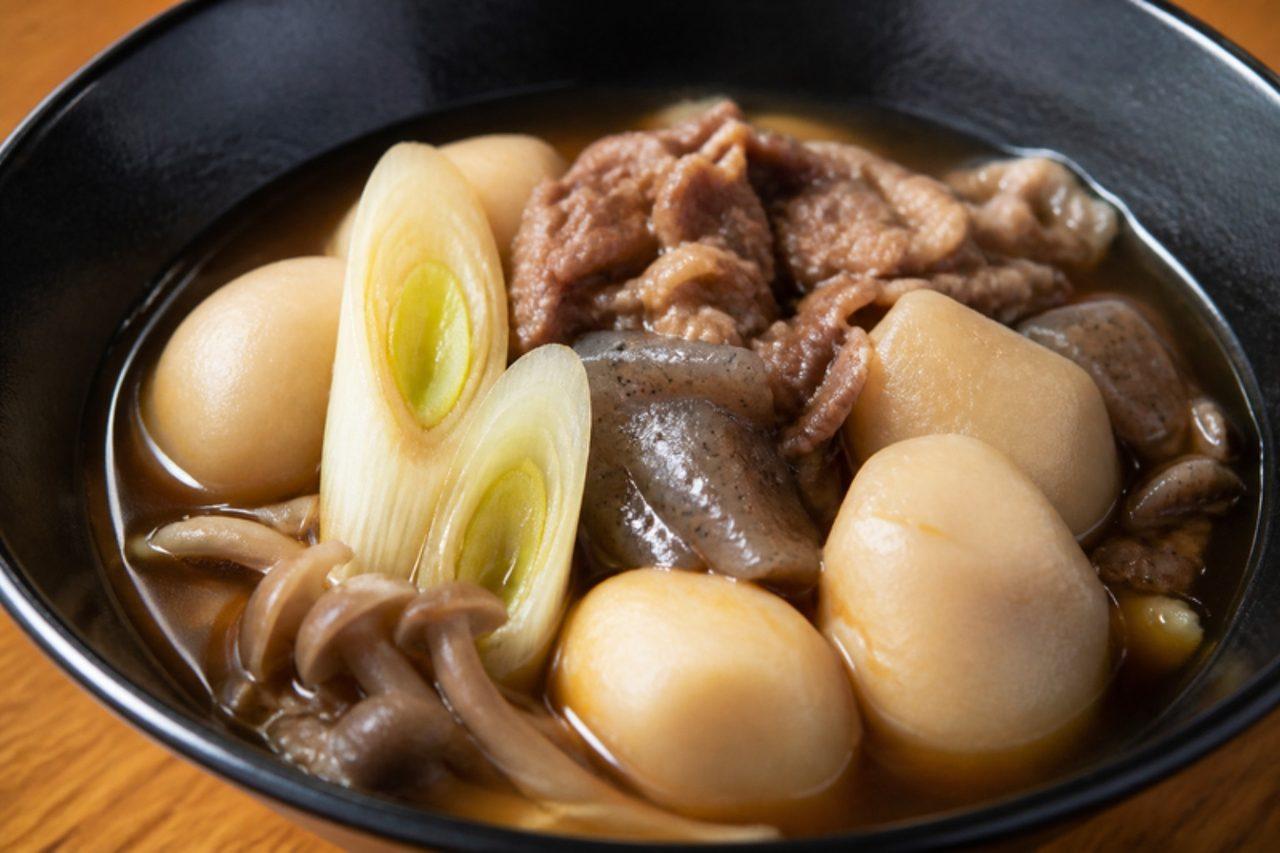
On autumn weekends in Yamagata, friends, families and workmates carry big pots, firewood and bags of taro down to the riverbanks and cook imoni outdoors; the gathering is called an imoni-kai. Yamagata city even holds a festival on the Mamigasaki River where the stew is made in a giant pot and ladled out with a mechanical digger. The Yamagata version uses beef and a soy broth, while neighbouring Miyagi makes it with pork and miso. Taro gives the soup a soft, slightly thick body, konjac adds bite and the leeks go in last so they stay sweet. Chef's tip: rub the peeled taro with salt and rinse it before cooking; this removes most of the slippery coating, so the broth stays clean rather than gluey.

by KrazyBadal 0 views

Oden (Tokyo style)

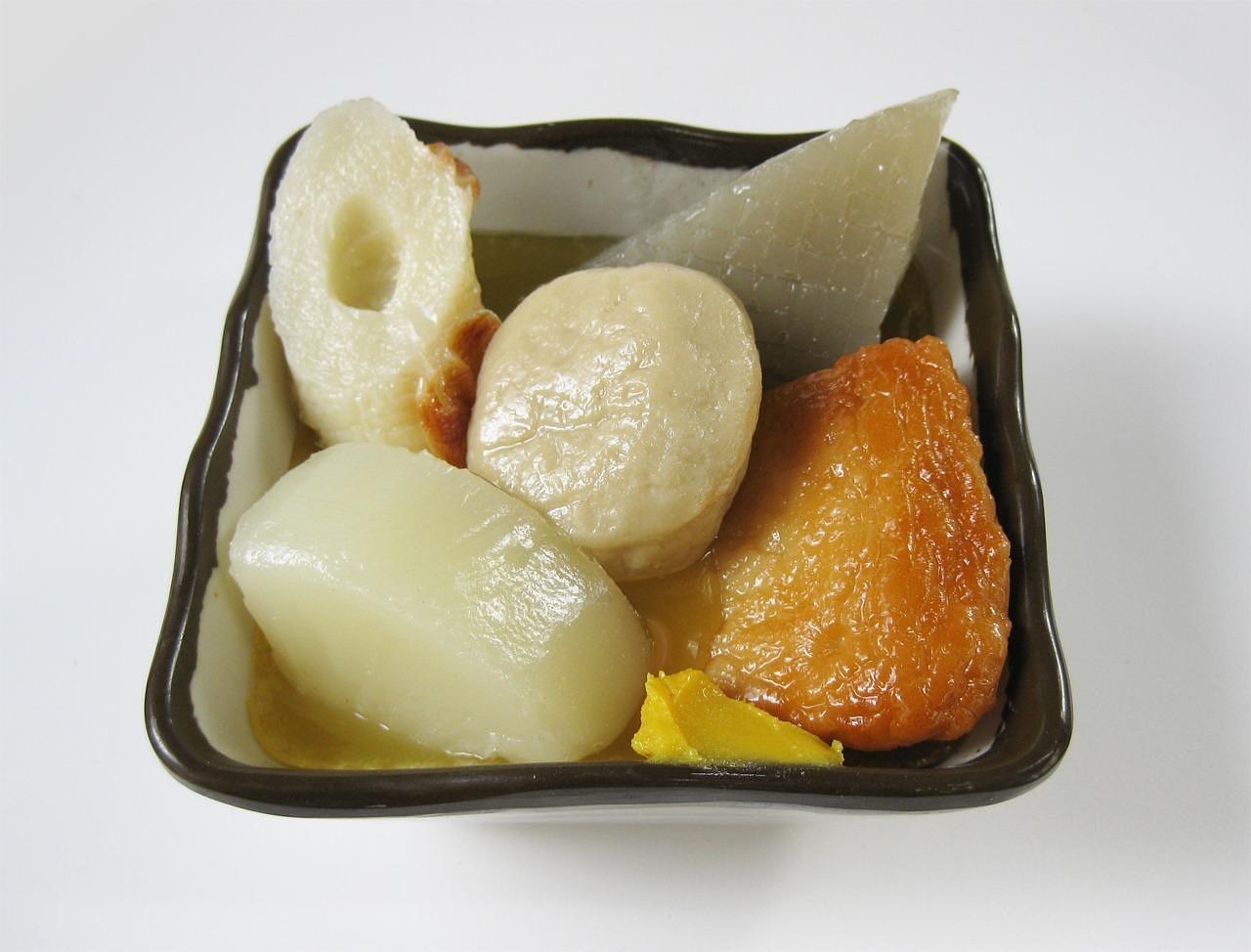
When the evenings turn cold, Tokyo's convenience stores set out steaming trays of oden by the till, and small oden bars and street stalls fill up with office workers. Tokyo's style uses a darker, soy-seasoned dashi than the paler Kansai one, and it includes chikuwabu, a chewy tube of wheat dough that is rarely seen outside the Kanto region. Everything simmers gently for a long time, so the daikon turns translucent and soaks up the broth. Serve it straight from the pot with a dab of hot Japanese mustard. Chef's tip: make oden a day ahead and let it cool in the broth overnight; the daikon and eggs take on far more flavour as they cool than while they boil.

by KrazyBadal 0 views

Goes well with konjac block