Skip to content

Recipes with gluten-free buckwheat flour

7 recipes that use gluten-free buckwheat flour, with photos, step-by-step instructions and cook times. The quickest, Mushroom and cheese galette, takes 25 minutes. It is most often cooked with butter, garlic and ghee.

Got a few things in the fridge? Search by everything you have

Žganci

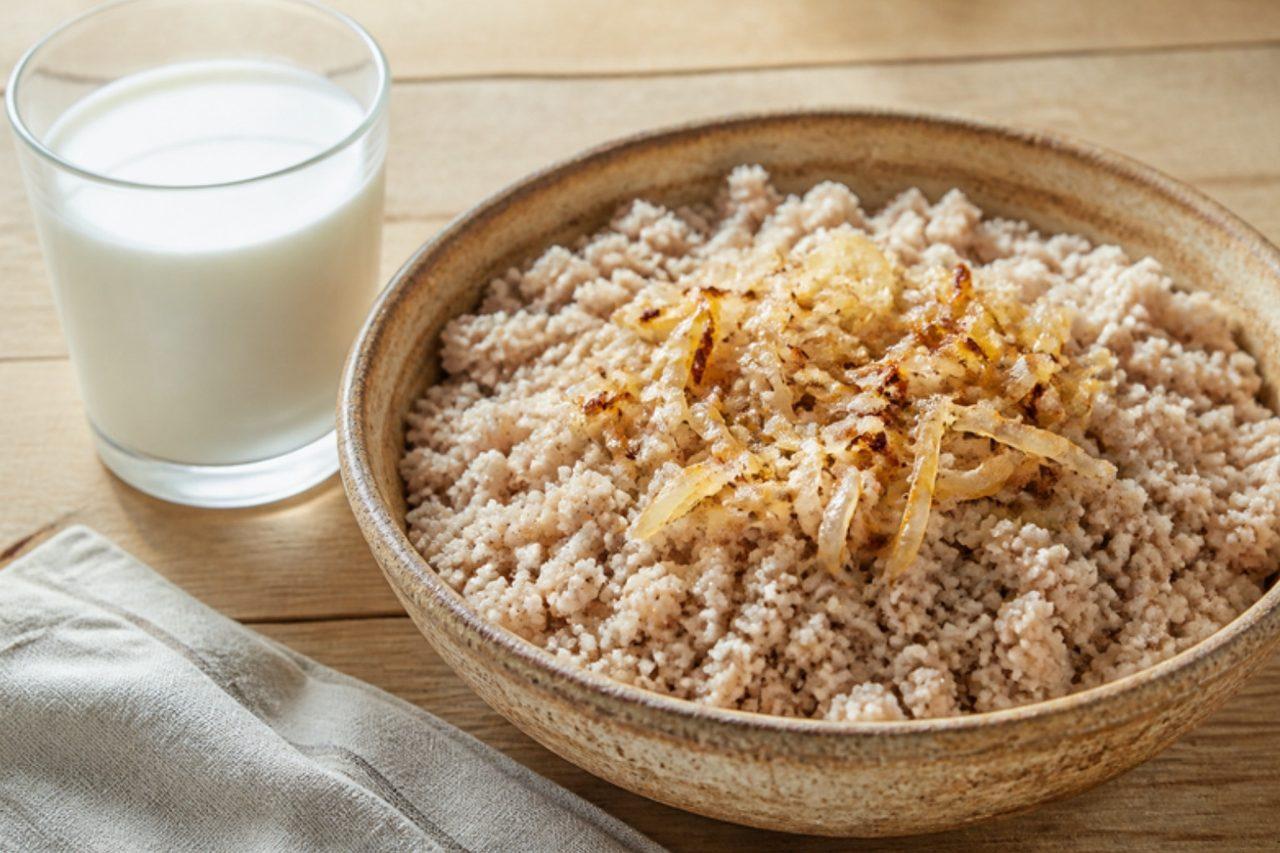
Before coffee was cheap in rural Slovenia, breakfast on farms in Gorenjska and Dolenjska was a bowl of ajdovi žganci with a mug of milk, or a scoop of them beside a ladle of sauerkraut or bean soup at lunch. Buckwheat flour is dropped into boiling salted water as a single lump, steamed through a hole poked in the middle, then broken up with a fork into small, crumbly, nutty lumps, a little like an earthy couscous. Traditionally lard and crisp pork cracklings (ocvirki) go over the top; this vegan version uses sunflower oil and deeply fried onions instead. Serve with sauerkraut, beans or a mushroom sauce. Buckwheat is naturally gluten free, but check the flour is labelled so. Stirring the flour in like polenta is where it goes wrong: leave the heap alone so it steams, or you get sticky gruel instead of crumbs. Chef's tip: keep the drained cooking water; it loosens leftovers and makes a good base for soup.

by KrazyBadal 0 views

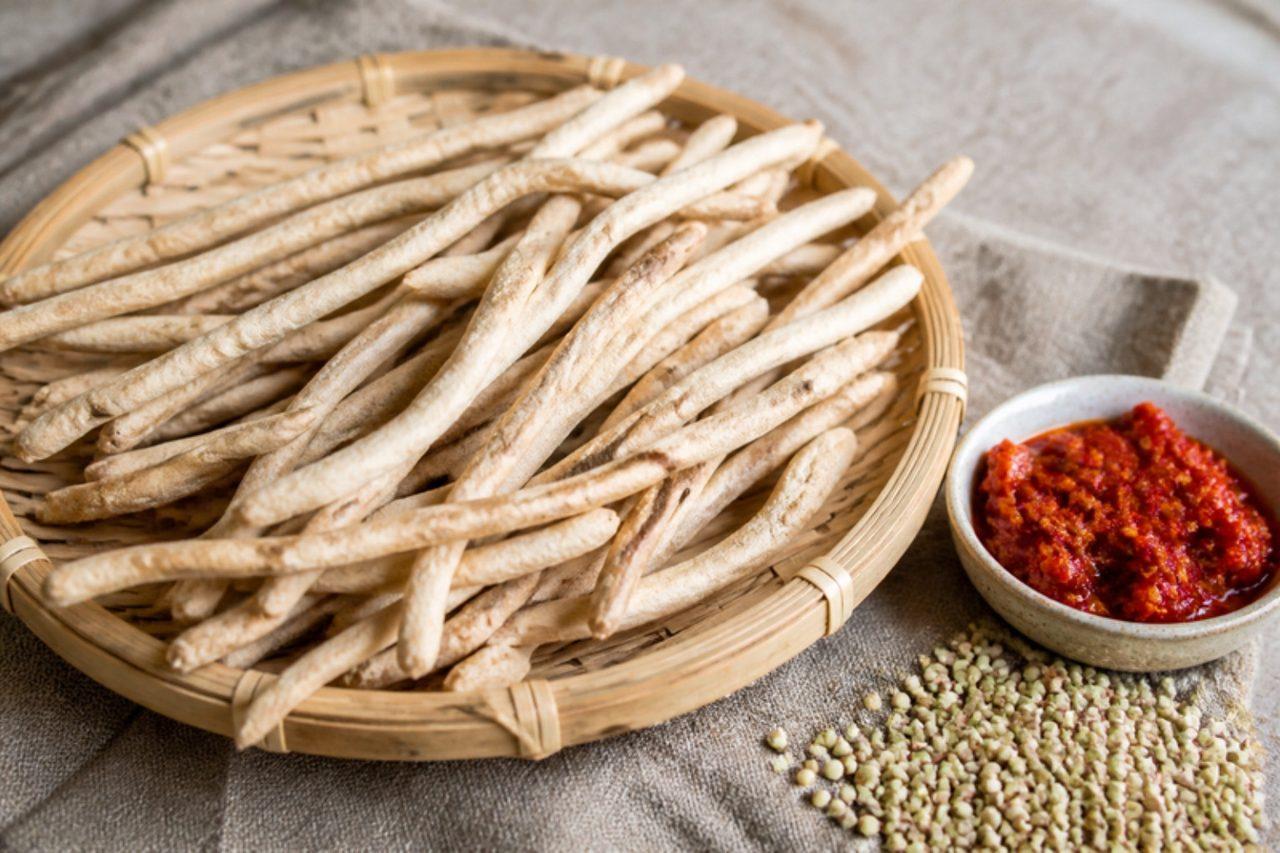
Kanchemba

In the Thakali villages of Thak Khola, kanchemba is what is fried when visitors arrive in the afternoon or when the family gathers on a winter evening, and it has since become a favourite snack in Thakali restaurants in Pokhara and Kathmandu. The buckwheat dough is seasoned with turmeric, chilli and a little onion, rolled into thick fingers, then deep-fried until crunchy outside and soft and nutty in the centre. A punchy dipping achar of tomato, chilli, garlic and roasted timur comes alongside, and the pair is eaten with a bowl of salty butter tea or a glass of hot water. The trouble usually starts when the fingers are too thick, so the middle stays pasty while the outside darkens. Chef's tip: keep the fingers no thicker than your own, and fry at a moderate heat so they cook through before they brown.

by KrazyBadal 0 views

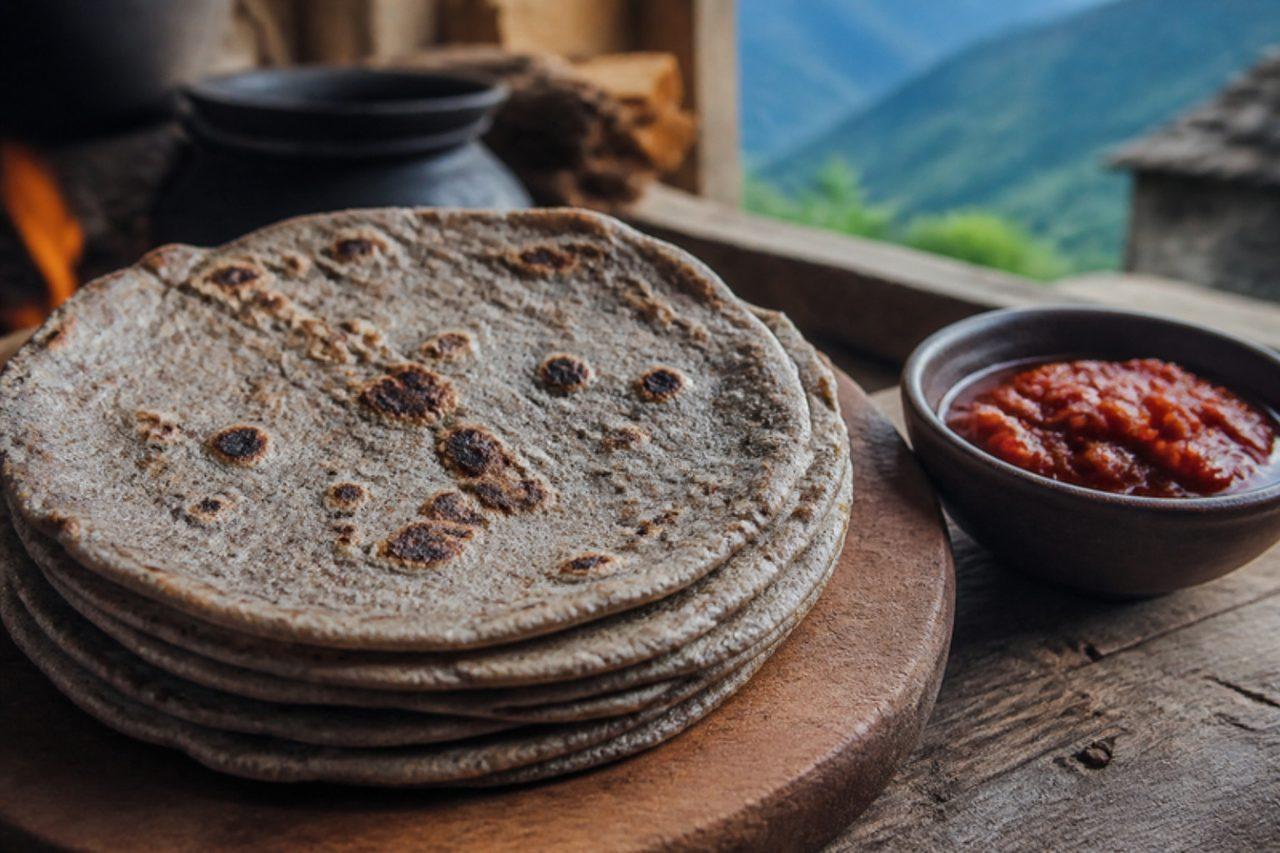
Phapar ko roti

Buckwheat grows in terraced fields right up to the edges of the Kali Gandaki gorge, and in Mustang, Manang and Dolpa the morning bread is phapar ko roti, cooked on an iron griddle over the kitchen fire and eaten warm with salt tea. The dough is just buckwheat flour, water and salt, sometimes with grated ginger or a little chopped onion, patted thin and cooked until speckled, and it has a nutty, faintly bitter flavour and a soft, slightly crumbly bite. Lodges serve it with a chilli and tomato achar, with fried eggs for trekkers, or drizzled with local apple-blossom honey (which, of course, makes it no longer vegan). Expect trouble if you try to roll it like a wheat roti; without gluten it cracks and tears. Chef's tip: pat the dough out between two sheets of baking paper with your palm, peel off the top sheet and flip it straight onto the hot pan.

by KrazyBadal 0 views

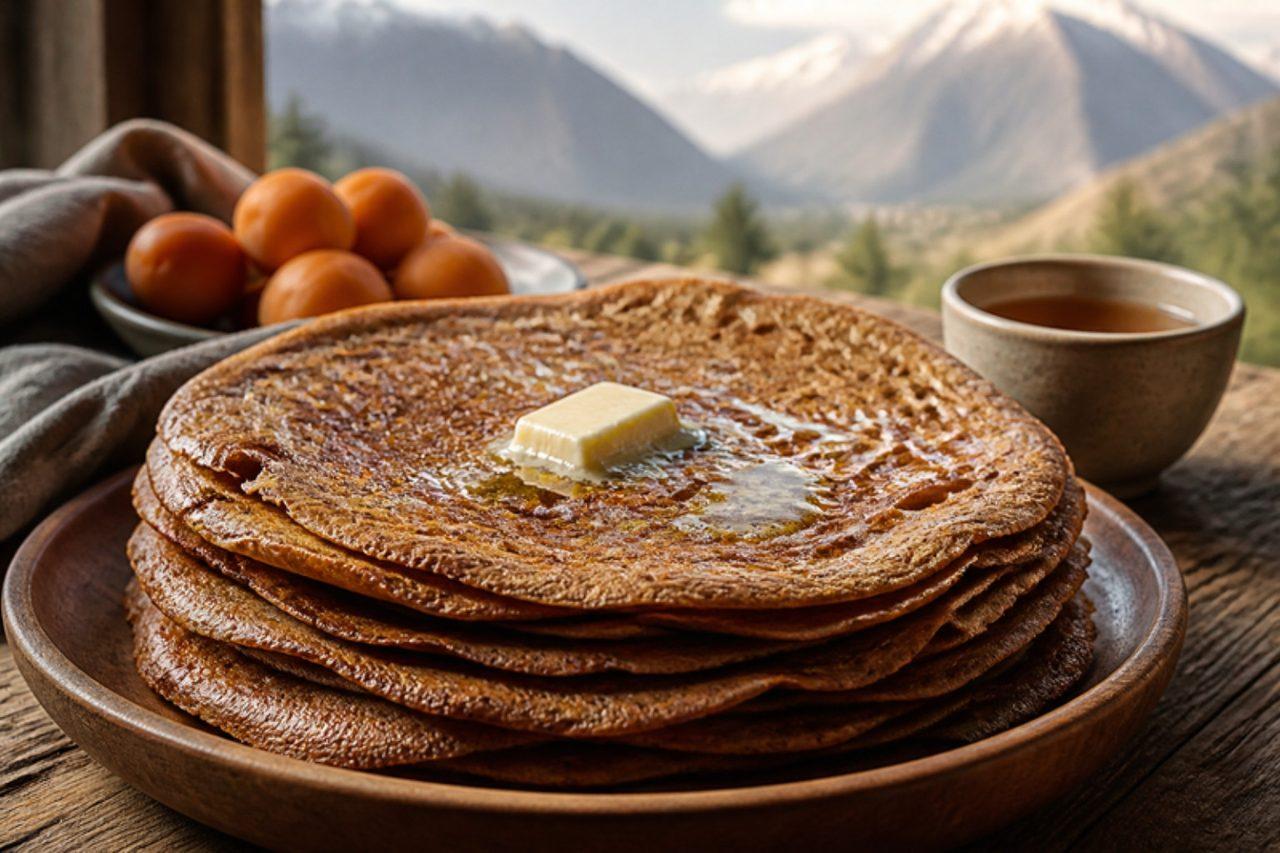
Giyaling

Buckwheat, known locally as bro, grows in the cold upper villages of Hunza and Nagar where wheat struggles, and giyaling are the thin, lacy pancakes made from its flour for breakfast. The batter is no more than buckwheat flour, water and a little milk, poured thin onto a hot griddle so the pancakes cook in a minute or two, with crisp edges and an earthy, nutty flavour. They are stacked and eaten warm, smeared with butter and a few drops of apricot-kernel oil, sometimes with a drizzle of honey and always with tea, especially on cold mornings. A thick, gloopy batter is the frequent mistake, because it makes heavy, raw-tasting pancakes. Chef's tip: rest the batter for 15 minutes, then thin it to the consistency of single cream, and buy flour labelled gluten-free if that matters to you, as buckwheat is often milled alongside wheat.

by KrazyBadal 0 views

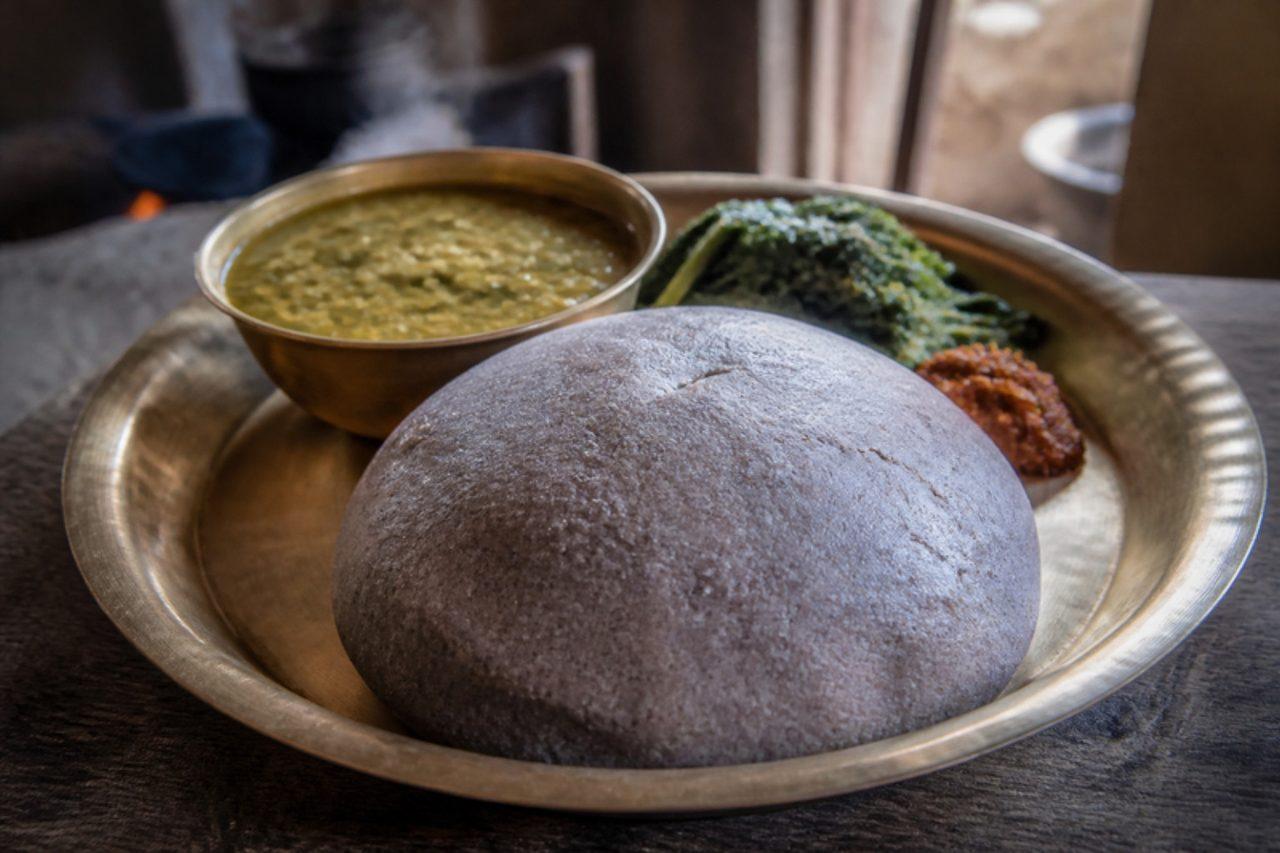
Dhido

Before rice reached every corner of Nepal, dhido was what filled bellies in the high villages of Jumla, Dolpa, Mustang and the middle hills, and it is now enjoying a comeback in Kathmandu restaurants as a wholesome, gluten-free choice. Buckwheat or millet flour is rained into boiling water and stirred with a flat wooden paddle until it becomes a smooth, heavy, elastic mass, which is eaten with the fingers, pinched off and dipped into a sour vegetable soup, a bowl of lentils or a fiery tomato pickle. It has an earthy, slightly bitter flavour and a satisfying, sticky texture that is meant to be swallowed rather than chewed. Lumps are what ruin it most often, and they come from adding the flour too quickly. Chef's tip: add the flour in a thin stream with one hand while stirring hard with the other, and keep beating for a full 10 minutes once it is all in.

by KrazyBadal 0 views

Aktori

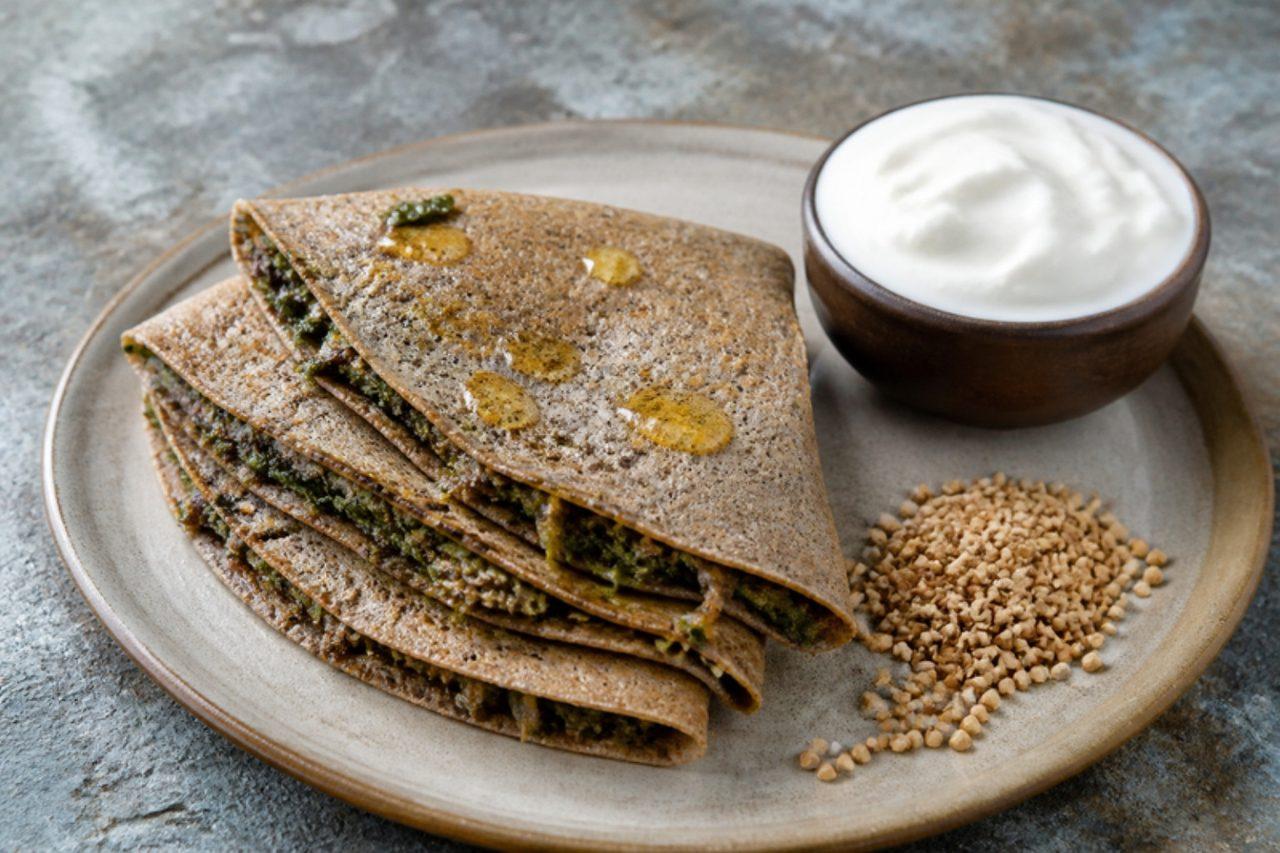
High in the Spiti and Lahaul valleys of Himachal Pradesh, where wheat struggles, buckwheat (kathu) grows in short summer fields and its leaves are eaten as a vegetable too. Aktori are thin buckwheat pancakes cooked with a layer of those greens inside, dotted with ghee and eaten warm with yogurt or salty butter tea. Families make them on festival mornings and through the long winter. Outside the valleys, spinach or young chard stands in well for buckwheat leaves. Chef's tip: keep the batter as thin as pouring cream; buckwheat has no gluten, so a thick batter cooks up gummy instead of tender.

by KrazyBadal 0 views

Mushroom and cheese galette

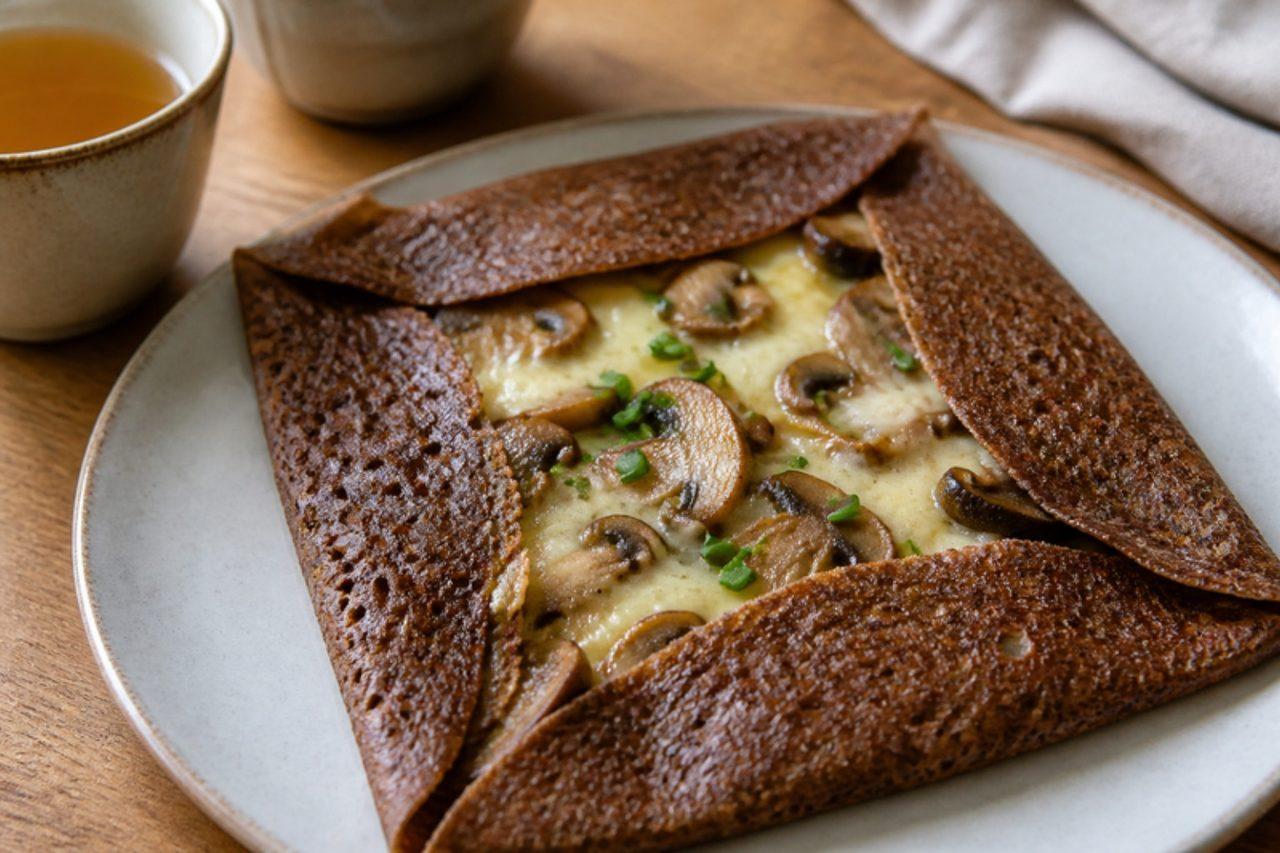
In Brittany, a galette is a large, lacy pancake made from buckwheat flour, water and salt: nutty, a little earthy and crisp at the edges. Crêperies all over the region fold them around savoury fillings and serve them with a bowl of dry cider. This one is filled with garlicky mushrooms, melted cheese and chives, folded into a square so the centre shows. Pure buckwheat is naturally gluten free, but check the packet, as some is milled alongside wheat. Emmental and Gruyère are usually made with animal rennet, so use a vegetarian alternative. Rest the batter if you have time: it can be made the night before. Chef's tip: the first galette is always a test; a pan that isn't hot enough is the common mistake that makes them pale and floppy instead of lacy and crisp.

by KrazyBadal 0 views

Goes well with gluten-free buckwheat flour