Skip to content

Recipes with fermented soybean paste

10 recipes that use fermented soybean paste, with photos, step-by-step instructions and cook times. The quickest, Kangkung goreng, takes 10 minutes. It is most often cooked with garlic, palm sugar and sugar.

Got a few things in the fridge? Search by everything you have

Kangkung goreng

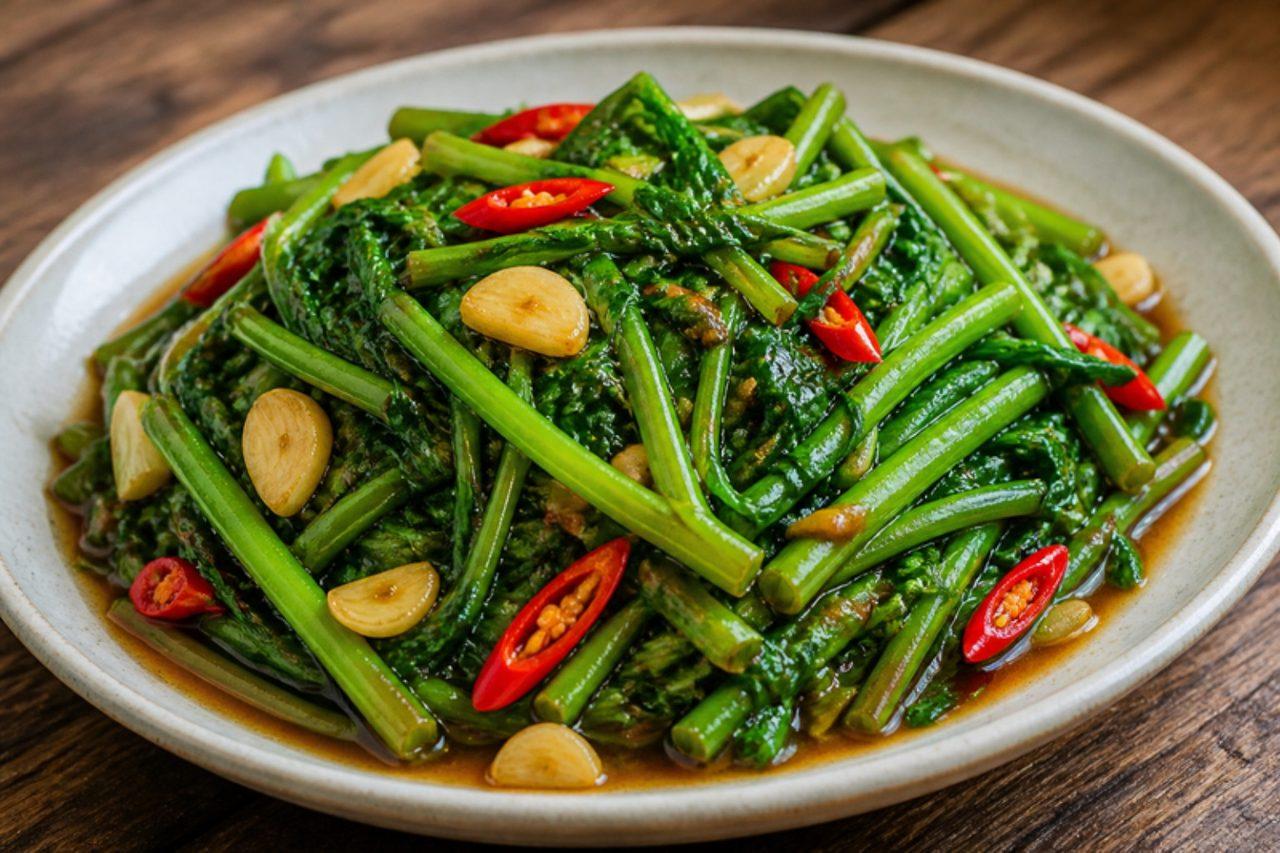
Kangkung grows in wet ditches and paddy edges right across Malaysia, and every zi char stall and kopitiam kitchen has a pile waiting for the wok. Ordered beside rice and a curry at lunch, or as one of several shared plates at night, it arrives glossy, hollow stems still crunchy, leaves just collapsed. Hawkers often fry it with belacan; this version gets its savoury punch from garlic, shallots, red chilli and a spoon of fermented soybean paste (tauco) instead. It's done in under five minutes. Chef's tip: dry the washed greens thoroughly in a salad spinner, because wet leaves cool the wok and steam instead of sizzle.

10 minSidesVeganSpicy
by KrazyBadal 0 views

Vegetarian popiah

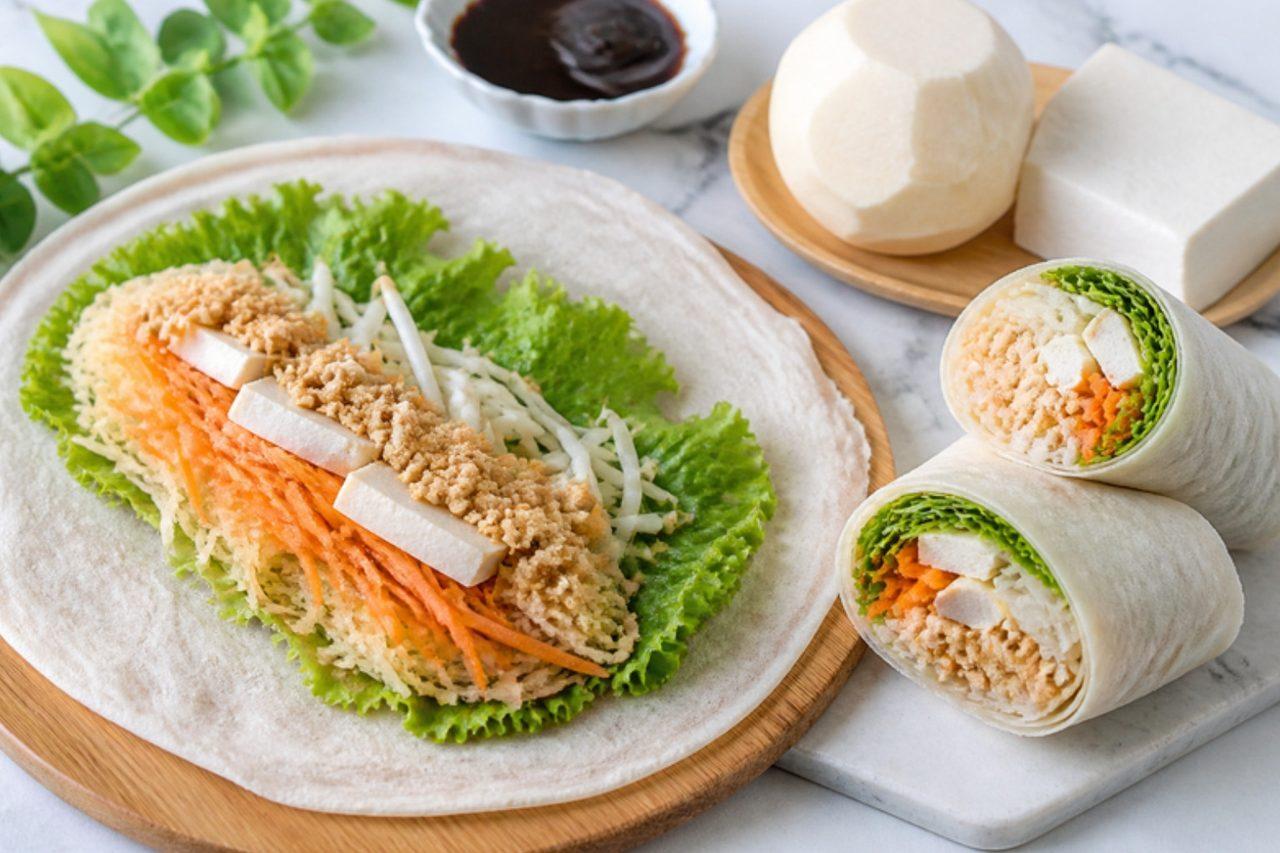
Popiah are the soft, fresh spring rolls that Hokkien and Peranakan families in Singapore make together at home, especially for Qing Ming and family reunions, with everyone wrapping their own at the table. Thin wheat skins are brushed with sweet sauce and chilli, then filled with a slow-braised mix of jicama (bangkuang) and carrot, plus lettuce, beansprouts, egg, peanuts and crispy shallots. This version leaves out the prawns and Chinese sausage and braises the filling in vegetable stock. Chef's tip: drain the braised filling very well before rolling; extra liquid tears the delicate skins.

by KrazyBadal 0 views

Kaeng pa (jungle curry)

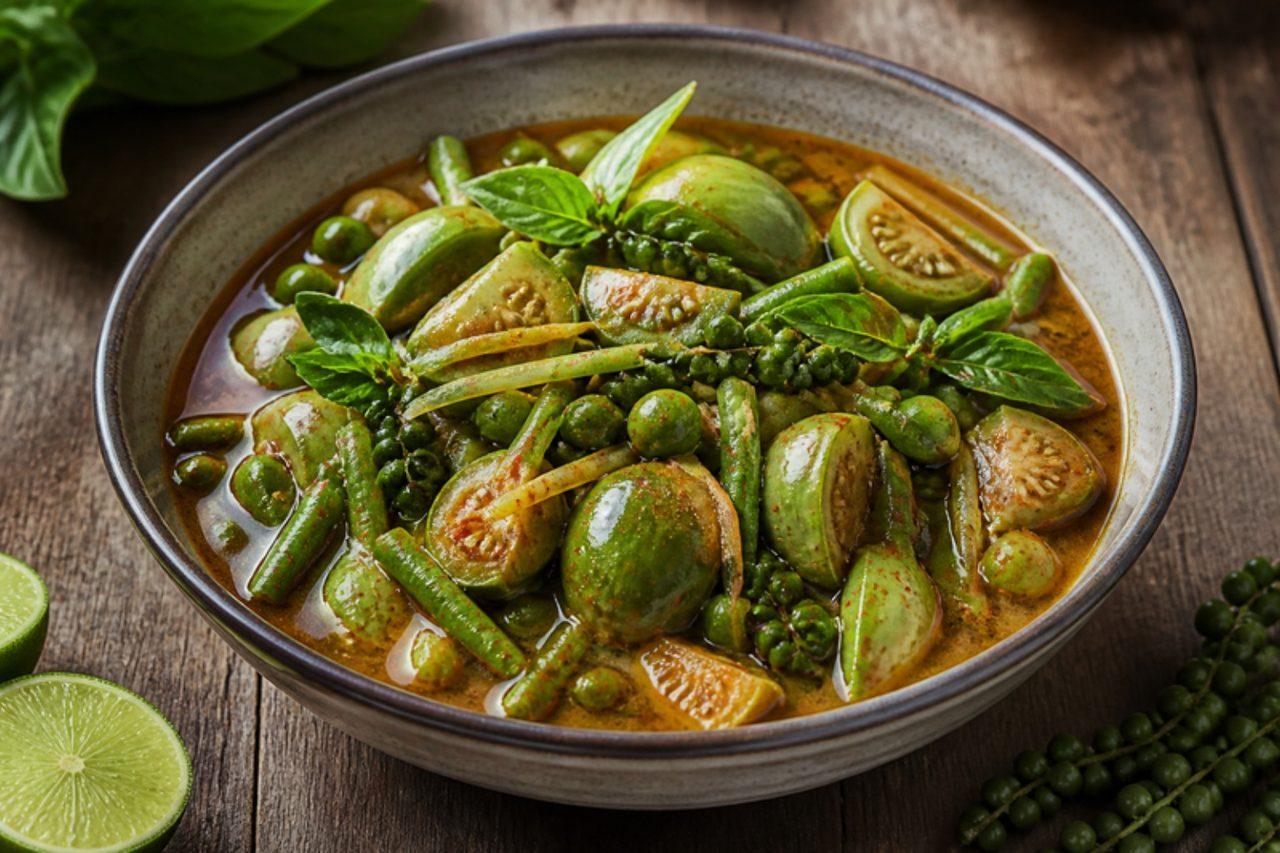
Kaeng pa means 'forest curry', and around Ayutthaya, Suphan Buri and the rice-farming plains north of Bangkok it is the curry cooked when there is no coconut to hand: a thin, fiery, herb-scented broth packed with whatever vegetables grew nearby. It turns up at roadside curry-and-rice shops in the Central region, ladled over jasmine rice at lunchtime. Without coconut milk the flavour is sharp and clean, carried by wild ginger (krachai), fresh green peppercorns and holy basil. This version uses a home-pounded red paste with no shrimp paste and seasons with soy sauce instead of fish sauce. Chef's tip: fry the paste in a little oil until it smells toasty before any water goes in; raw paste makes a curry that tastes flat and grassy.

35 minCurriesVeganGluten freeSpicy
by KrazyBadal 0 views

Kaeng tai pla jay (southern vegetable curry)

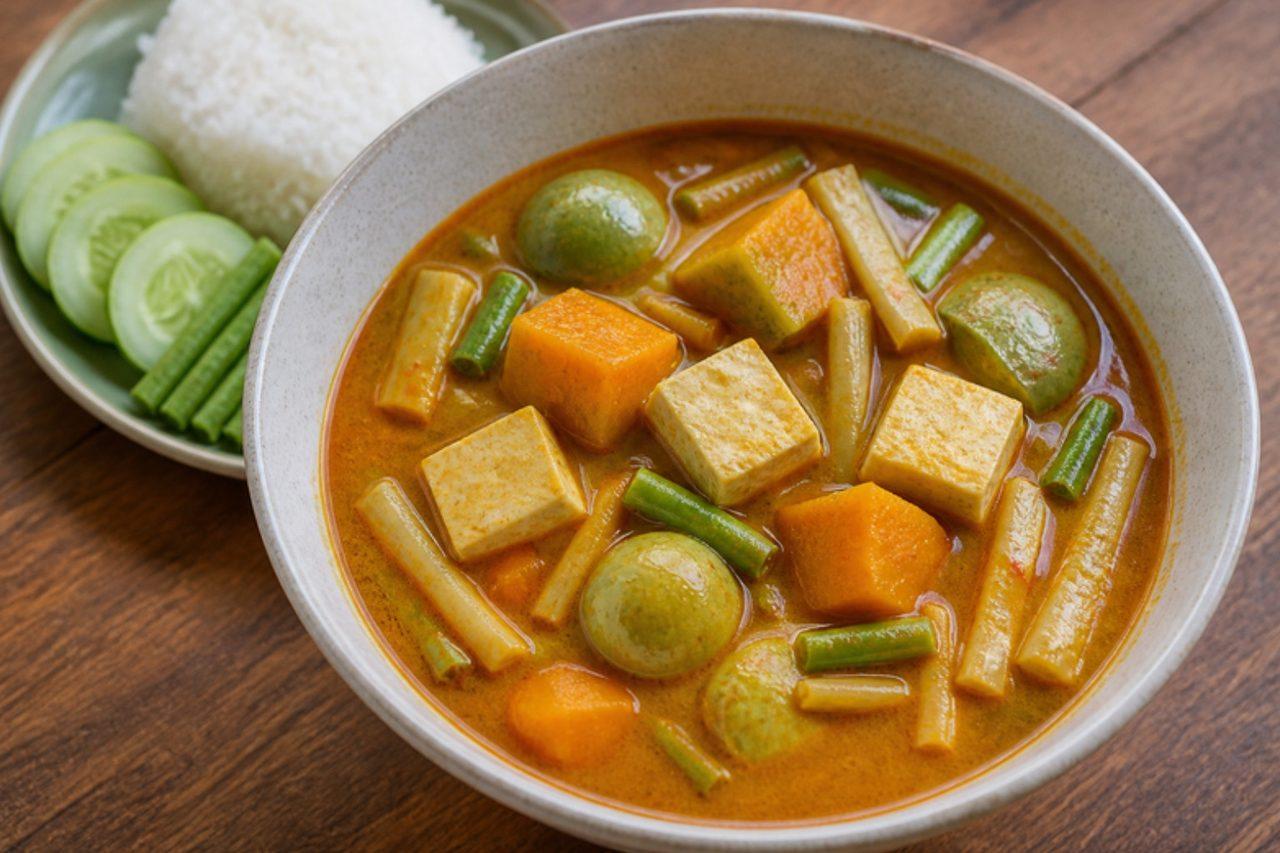
Kaeng tai pla is the boldest curry of southern Thailand, eaten from Surat Thani down to Hat Yai: a dark, pungent, fiercely hot broth of turmeric-heavy southern curry paste, pumpkin, bamboo shoots, aubergine and long beans, normally flavoured with fermented fish innards. During the Vegetarian Festival (thetsakan kin jay), held every autumn in Phuket and Trang, cooks make a 'jay' version with fermented soybean paste and roasted peanut, and that is the curry here. It is thinner than a coconut curry and served with rice and plenty of raw vegetables to cool the heat. Chef's tip: this curry is meant to be very hot. If you want less heat, add fewer bird's eye chillies to the paste but keep the black pepper and turmeric, which give it its character.

45 minCurriesVeganGluten freeSpicy
by KrazyBadal 0 views

Nyonya chap chye

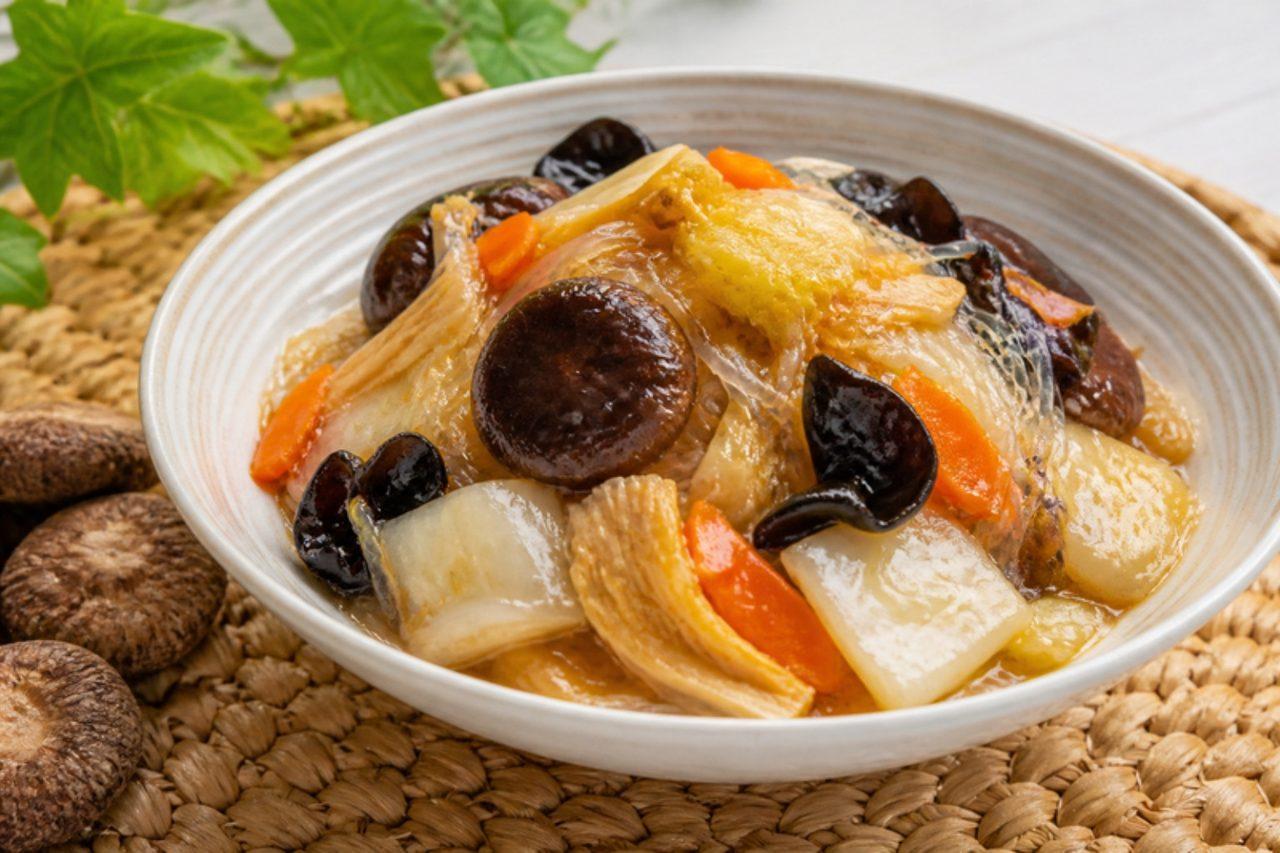
In Peranakan homes in Melaka and Penang, chap chye (mixed vegetables) is cooked in a big pot for Chinese New Year and family prayer days. Cabbage, dried shiitake, wood ear, lily buds and beancurd skin are braised with garlic and tau cheo, the salty fermented soybean paste, until everything is soft and the glass noodles have soaked up the savoury gravy. Many families add pork belly or prawns, but the vegetarian pot is just as traditional for the first day of the new year. It tastes better the next day. Chef's tip: fry the tau cheo with the garlic until it smells nutty before anything else goes in.

50 minVegetarianVegan
by KrazyBadal 0 views

Kueh pie tee

Pie tee are thin, crunchy fried cups shaped like little top hats, made with a brass mould dipped in batter and plunged into hot oil. Peranakan cooks in Melaka and Penang fill them with finely shredded jicama and carrot braised in garlic, then top them with egg, coriander and a dot of sweet chilli sauce. They are a festive starter for Chinese New Year and weddings. Prawns usually crown each cup; this version uses fine strips of omelette. If you have no mould, shop-bought cups are fine. Chef's tip: heat the mould in the oil before each dip; a cold mould won't hold the batter.

by KrazyBadal 0 views

Nom banh chok with green curry broth

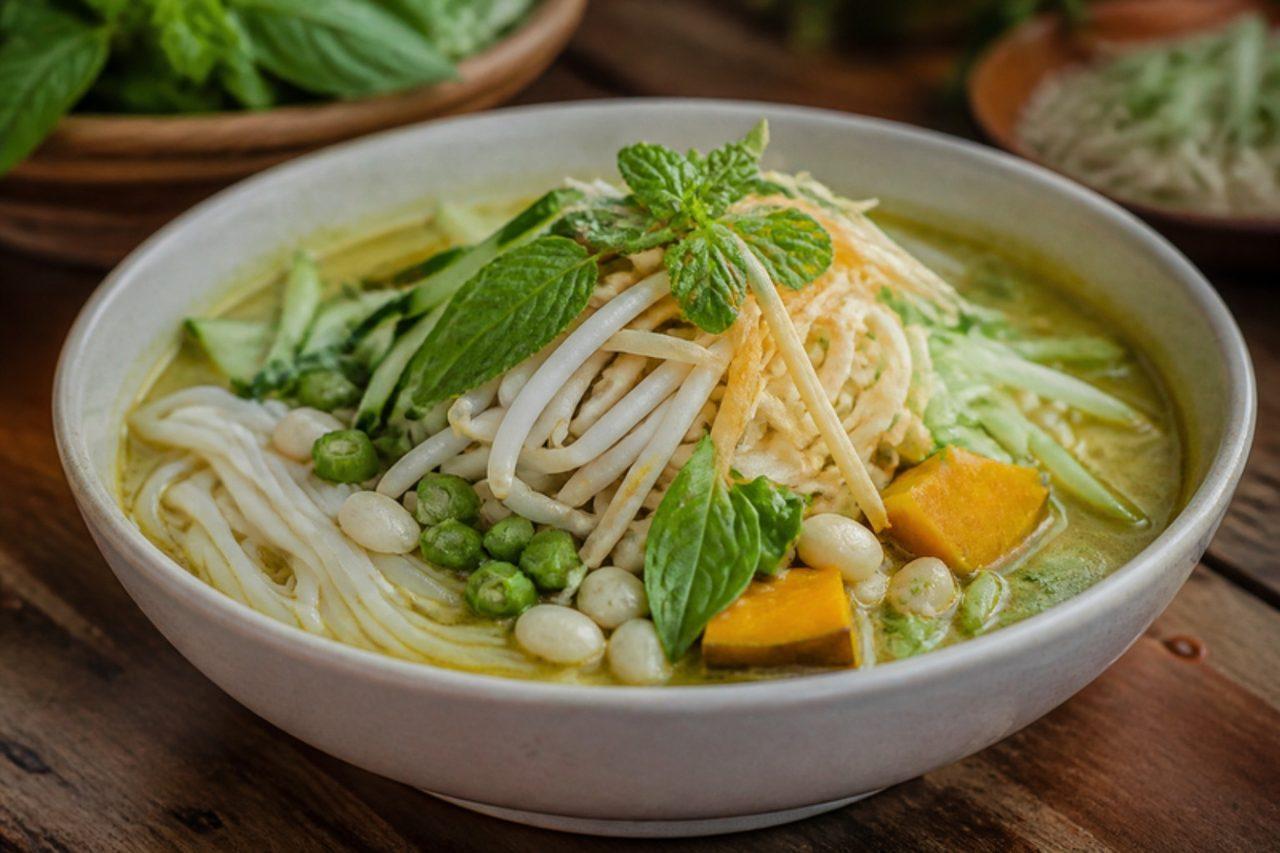
Before seven in the morning, women carrying baskets on shoulder poles sell nom banh chok across Cambodia; around Siem Reap there is even a lane of stalls near the temples known for it. Soft, slippery rice noodles are piled into a bowl, ladled with a pale green broth of kroeung and coconut milk, then buried under shredded banana blossom, cucumber, beansprouts, long beans and handfuls of herbs. The market version thickens the broth with pounded fish; here pumpkin and creamy white beans give it the same body. Chef's tip: be generous with the raw vegetables and herbs; the dish is meant to be more garden than noodle, and the cool crunch is what balances the warm broth.

by KrazyBadal 0 views

Vegetable samlor korko

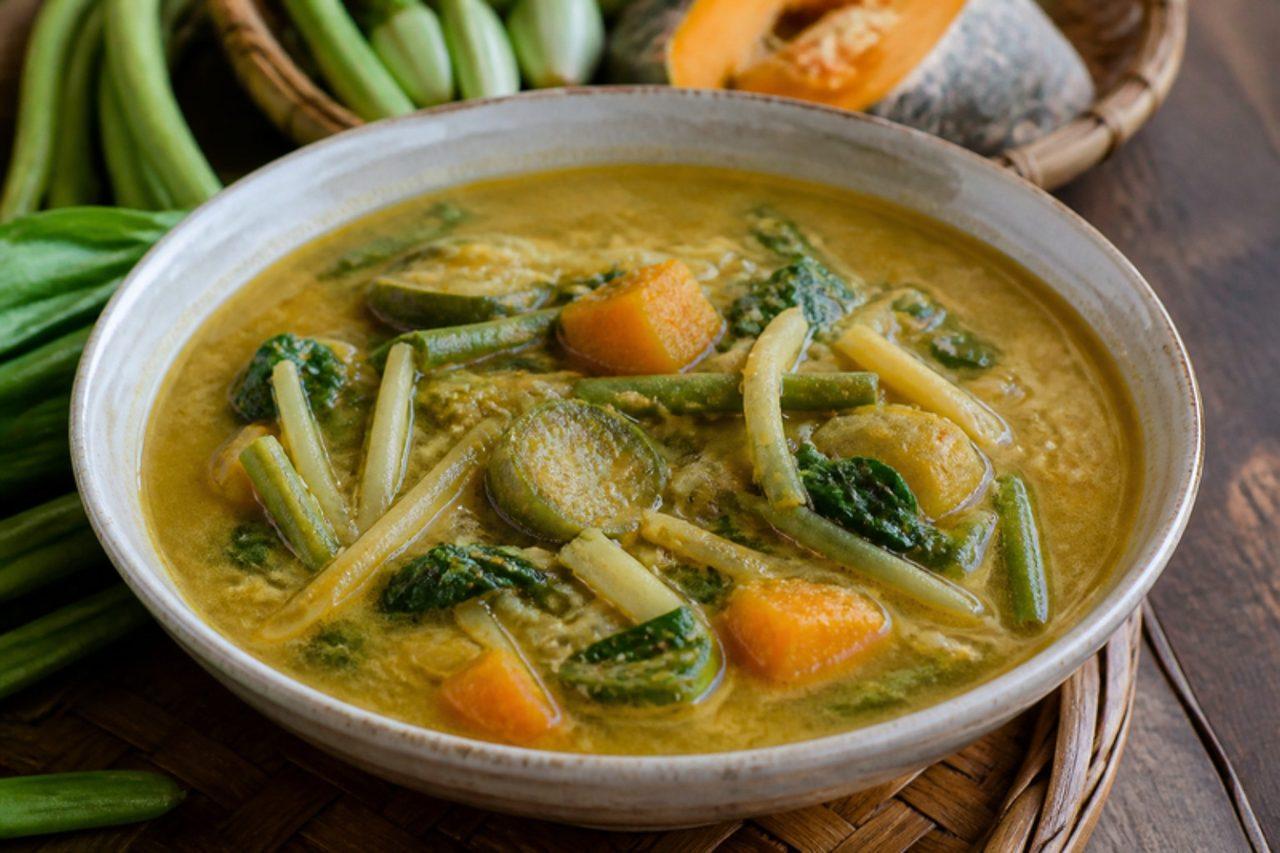
Samlor korko is called the national soup of Cambodia, cooked in villages from Battambang to Kampot and eaten at lunch with a bowl of rice. Its name means 'stirring soup', because the cook stands over the pot moving the vegetables as they go in one by one: green papaya, pumpkin, aubergine, long beans and leafy greens, all in a thin, herb-scented broth thickened with a spoonful of ground toasted rice. Prahok usually gives it its funk; fermented soybean paste and a little soy give depth here, and the soup stays light and full of vegetables. Chef's tip: toast the rice slowly until it is the colour of a hazelnut shell; that nutty smell is the backbone of the soup.

50 minSoupsVeganGluten free
by KrazyBadal 0 views

Ayam pongteh

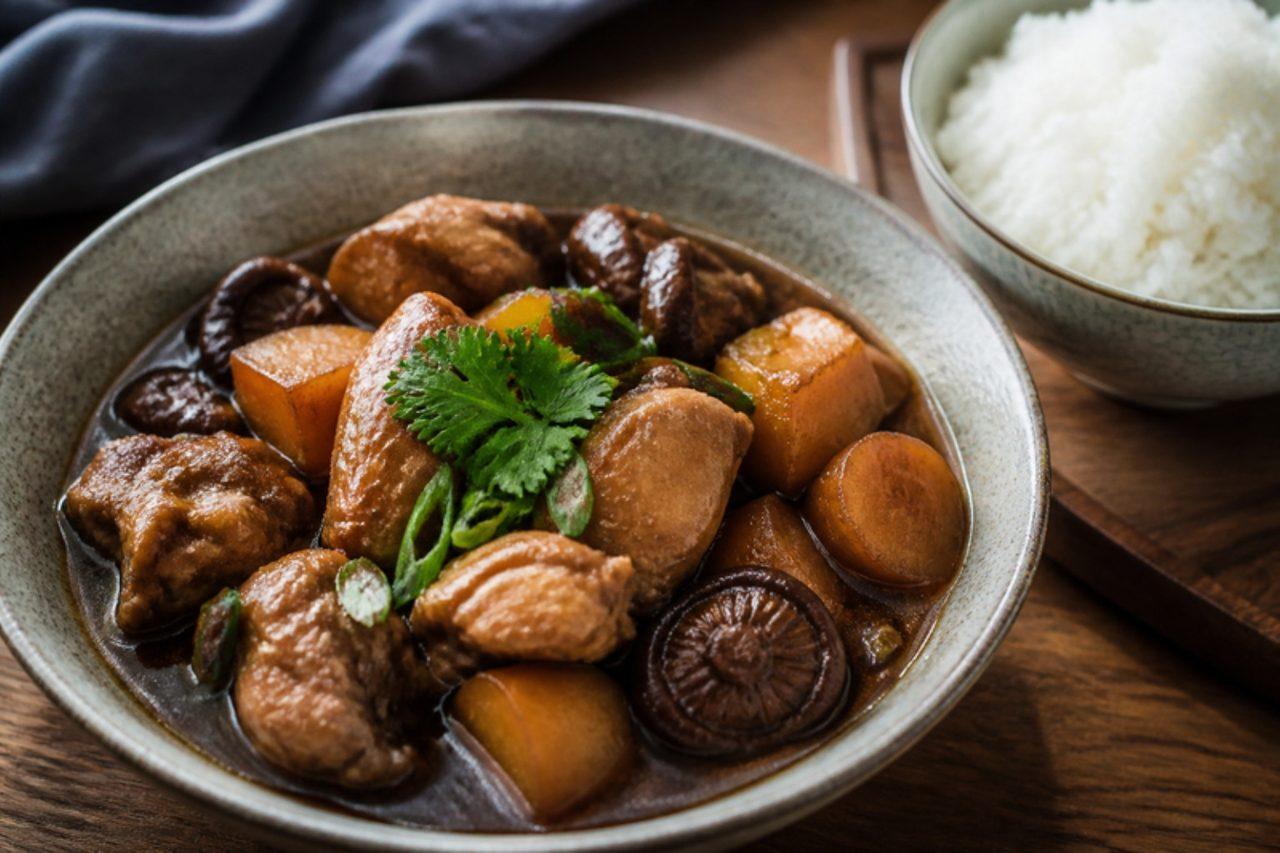
Melaka's Peranakan (Nyonya) kitchens cook ayam pongteh for family dinners and for the Chinese New Year reunion table: a dark, gentle braise of chicken and potatoes that has no chilli at all. Its savour comes from taucheo, salted fermented soybeans, fried with a lot of shallots and garlic, sweetened with palm sugar and coloured with dark soy. The gravy is thin, glossy and moreish, and the potatoes drink it up until they are soft enough to crush with a spoon. Spoon it over plain rice with sambal belacan on the side for anyone who wants heat. Chef's tip: pound the shallots rather than blending them to a purée; slightly coarse shallots melt into the gravy and give it body.

60 minChicken
by KrazyBadal 0 views

Khao man gai

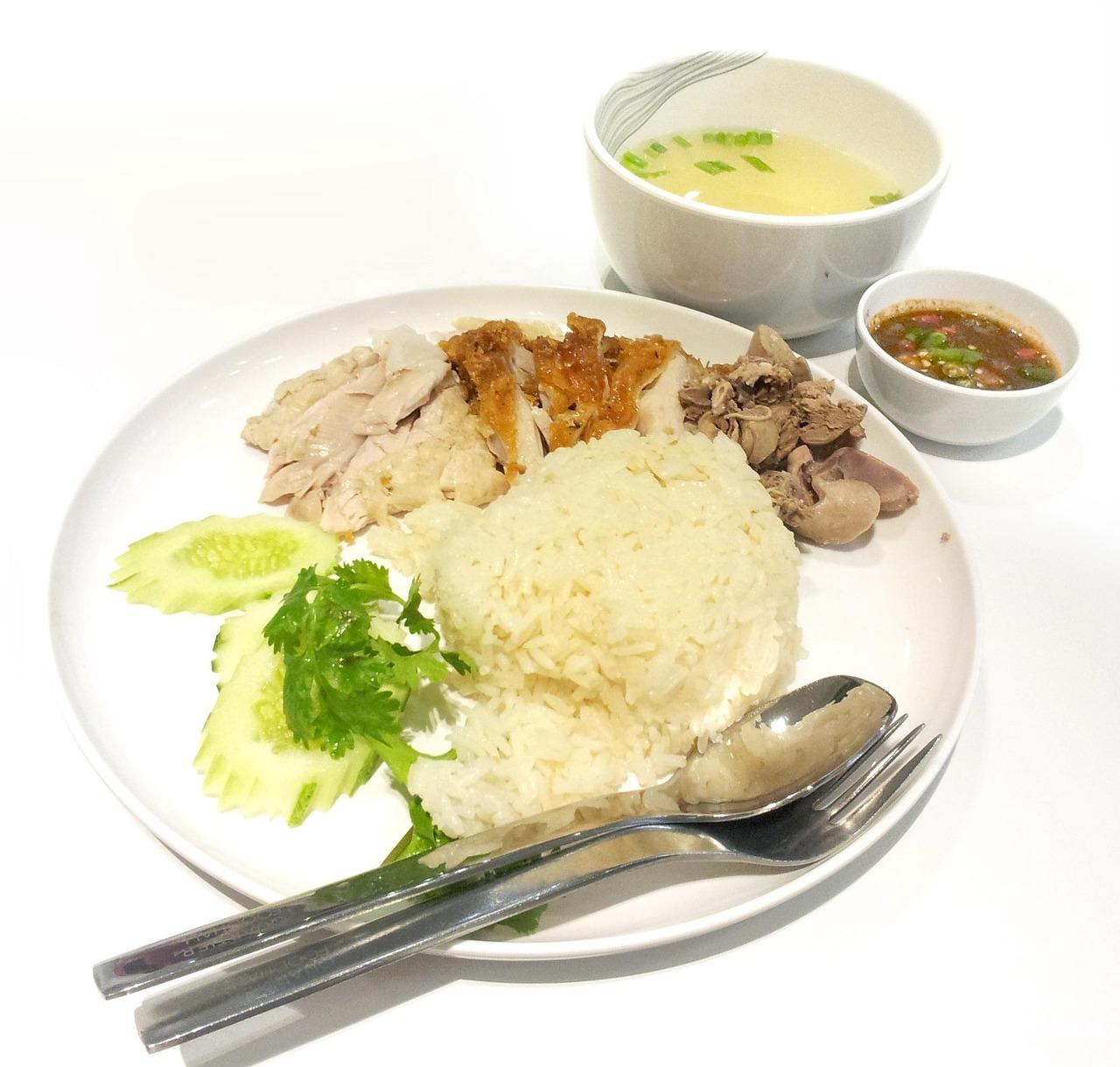
Around Pratunam market in Bangkok, the khao man gai stalls are easy to spot: a queue, pale poached chickens hanging in a glass cabinet, and a cook slicing with a cleaver at speed. Like its Hainanese ancestor, the dish pairs silky chicken with rice cooked in the bird's fat and broth, but the Thai plate stands apart for its sauce, a punchy mix of fermented soybeans (tao jiao), ginger, garlic, chilli and vinegar, and for the little bowl of clear broth with winter melon served on the side. Bangkok eats it for breakfast, lunch or a late supper, always with cucumber slices and coriander. Chef's tip: plunge the cooked chicken into iced water for 10 minutes; the skin firms to a jelly-like snap and the meat stays juicy.

75 minChicken
by KrazyBadal 0 views

Goes well with fermented soybean paste