
AI-generated image
Warabimochi
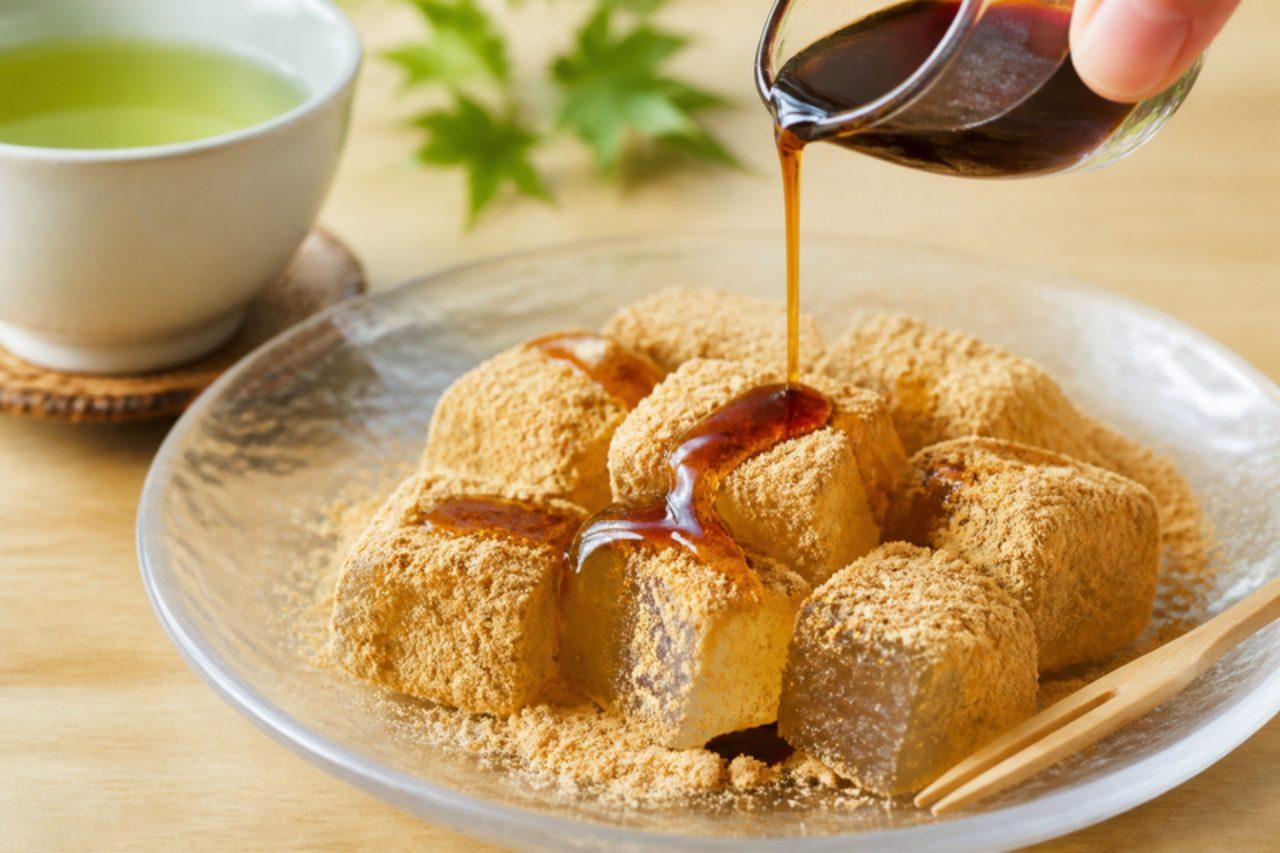
わらび餅 (warabimochi): wobbly, cool bracken-starch jelly rolled in toasted soybean flour with dark sugar syrup


Warabimochi is Kyoto's summer sweet. Made from the starch of bracken fern roots, it is not really mochi at all but a clear, wobbly jelly that melts on the tongue, and on hot afternoons teahouses around Gion and Arashiyama serve it chilled on ice. It is dusted with kinako, a nutty roasted soybean flour, and finished with kuromitsu, a dark syrup of Okinawan brown sugar. Real warabi starch is costly and greyish-brown, so most home cooks buy warabimochi-ko, a blend with sweet potato or tapioca starch, which gives a clearer jelly. Chef's tip: keep stirring hard once it turns clear. Two more minutes of beating over the heat is what makes it springy rather than gluey.
- Total time
- 25 min
- Difficulty
- easy
- Serves
- 4
Ingredients
For the jelly
For the kuromitsu syrup
To coat
Method
0/7 doneStep 1: Make the syrup: simmer 1 ¾ oz kokuto (Okinawan brown sugar) or dark muscovado and 3 ½ tbsp water in a small pan over low heat for 5 minutes until slightly thickened, like maple syrup. Cool. It thickens more as it cools.
5 minStep 2: Mix 4 tbsp kinako (roasted soybean flour), 1 tbsp sugar and 1 pinch salt. Spread half on a tray or plate.
Step 3: In a non-stick pan, whisk 1 ¾ oz warabi starch or warabimochi-ko, 1 ⅜ oz sugar and 1 cup water until there are no lumps. Set over medium heat and stir constantly with a wooden spatula.
2 minStep 4: After 3–4 minutes, cloudy lumps appear and it quickly turns into a thick, sticky mass. Lower the heat and keep beating it hard against the side of the pan for 2–3 minutes more until the whole mass is clear and very elastic.
6 minStep 5: Common mistake: stopping as soon as it thickens. White, cloudy patches mean raw starch, which tastes floury and doesn't wobble. Keep going until it's glassy all through.
Step 6: Scrape the hot jelly onto the kinako, dust the top with more kinako and let it cool for 10 minutes. Cut into 2 cm pieces with a wet knife or spatula and toss in the rest of the kinako.
10 minStep 7: Chill for 20–30 minutes at most, then serve in small bowls with 1 ¾ oz kokuto (Okinawan brown sugar) or dark muscovado syrup drizzled over. Eat the same day; it turns white and hard if left in the fridge too long.
Nutrition per serving
- Calories
- 190 kcal
- Protein
- 4 g
- Carbs
- 42 g
- Fat
- 2 g
- Fibre
- 1 g
Nutrition values are estimates.
KrazyBadal
Good to know
- How long does warabimochi take?
- About 25 minutes in total: 10 minutes to prepare and 15 minutes to cook.
- How many people does it serve?
- 4 as written. Change the servings above the ingredients and every amount scales to match.
- Is it vegan?
- Yes. It has no meat, fish, dairy or eggs.
- Is it gluten free?
- Yes, as written. Check the labels on stock, sauces and spice mixes, which sometimes contain gluten.
- What can I use instead of sugar?
- Caster sugar, same amount.
- What can I use instead of sugar?
- Caster sugar, same amount.
Reviews
No reviews yet. Be the first to cook it.
Rate this recipe
Sign in to rate and review this recipe.
You might also like
Okonomiyaki
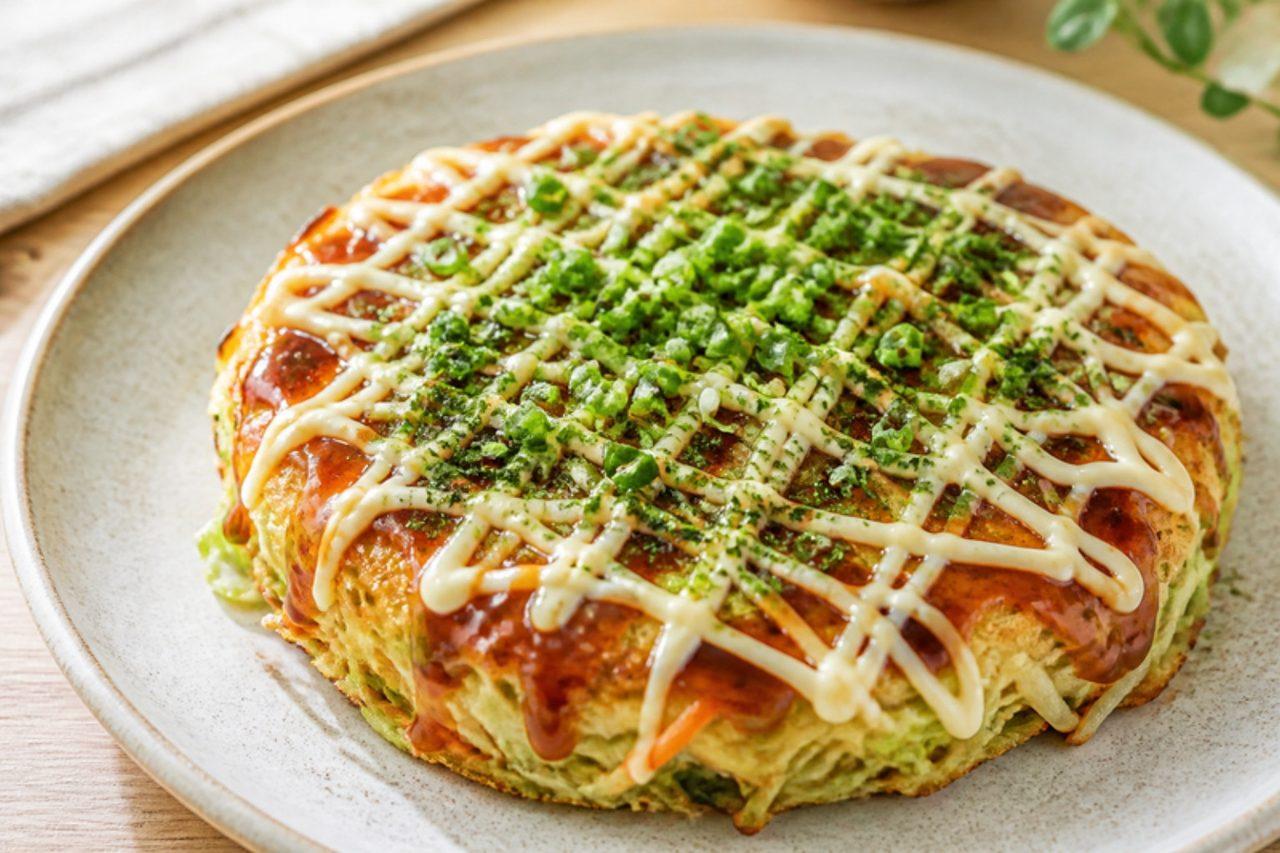
Okonomiyaki (お好み焼き, 'grilled as you like it') is the pride of Osaka, where it's cooked on hot iron griddles in lively restaurants. Finely shredded cabbage is folded into a light batter with egg and spring onion, then fried into a thick, soft pancake with a crisp outside. It's painted with a fruity brown sauce and zigzagged with mayonnaise. Bonito flakes are usual on top; this vegetarian version uses seaweed flakes and pickled ginger instead. Chef's tip: don't press the pancake down with your spatula while it cooks. Osaka cooks leave it alone so the cabbage steams inside and stays light and fluffy; pressing squeezes out the air.
Baklava
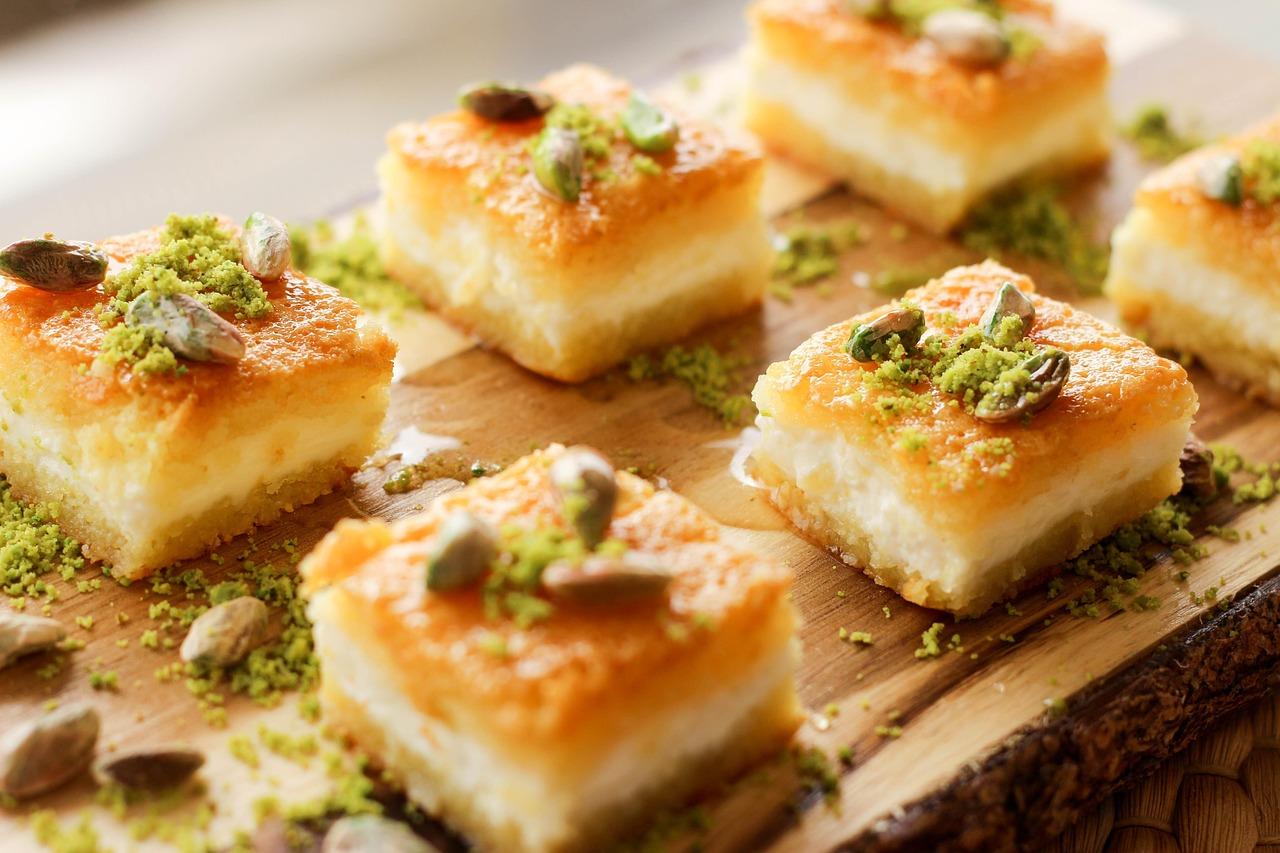
The famous layered pastry: crisp sheets of buttered fillo sandwich a filling of almonds, pistachios and cashews spiced with cinnamon, cardamom and saffron. After baking, the hot baklava is soaked in a syrup of sugar, honey, lemon, rose and cardamom and decorated with almond and pistachio flakes. Cut into 40 diamonds; serve with fresh cream or ice cream.
Miso soup
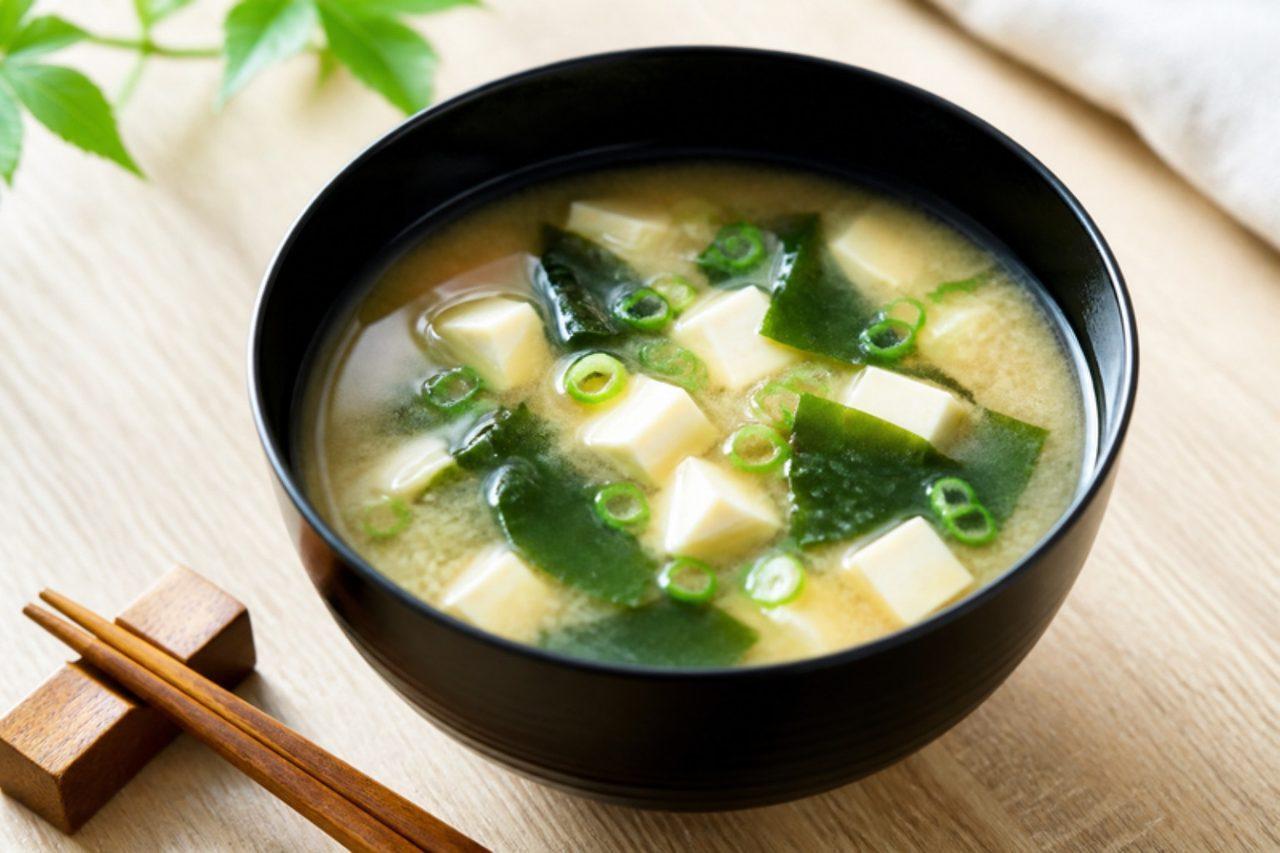
Miso soup (味噌汁) is drunk every day in homes all over Japan, at breakfast as well as dinner, beside a bowl of rice. The base is dashi; this vegan version uses kombu and dried shiitake instead of bonito, which gives it a deep, rounded flavour. Silken tofu and wakame seaweed are the classic fillings. It takes ten minutes; just remember not to boil the miso. Chef's tip: add the miso at the very end and never let it boil. Boiling kills the miso's fresh, fermented aroma; Japanese cooks say the soup should only 'smile', with the surface barely trembling.
