
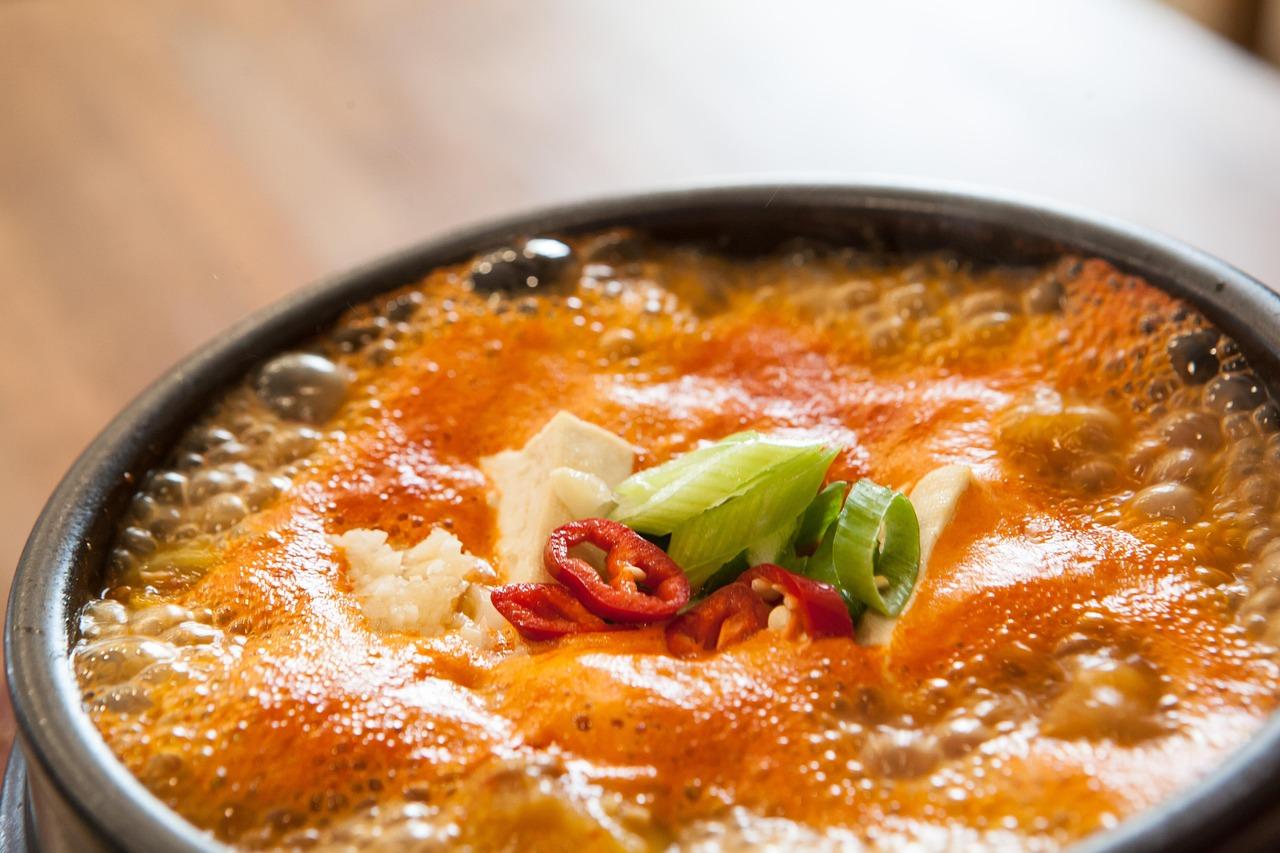
Sundubu jjigae
순두부찌개: spicy silken-tofu stew with clams, prawns and pork, finished with an egg

All over Korea, small lunch restaurants bring sundubu jjigae to the table still boiling in a black stone pot, with a raw egg on the side to crack in while it bubbles. The stew is built on very soft, unpressed tofu, which breaks into creamy curds in a red, chilli-oil broth. Seafood and pork go in together here, though you can use just one. Have it with a bowl of rice and some kimchi; it's especially welcome on a cold day. Chef's tip: fry the chilli flakes gently in oil with the pork and garlic before adding liquid; this red chilli oil gives the stew its colour and a deep, rounded heat.
- Total time
- 25 min
- Difficulty
- easy
- Serves
- 2
Ingredients
For the chilli base
For the stew
Method
0/7 doneStep 1: Before cooking, tap any open 7 oz live clams on the worktop; throw away any that don't close. Rinse the rest.
Step 2: Heat 1 tbsp vegetable oil and 1 tsp toasted sesame oil in a small heavy pot or stone pot over a medium heat. Add 3 ½ oz pork shoulder or belly, 3 cloves garlic and ¼ onion and stir-fry for 2 to 3 minutes, until the pork is no longer pink.
3 minStep 3: Turn the heat to low and stir in 1 ½ tbsp Korean chilli flakes (gochugaru). Cook for 30 to 60 seconds, until the oil turns red; take care, as chilli flakes burn fast and go bitter.
1 minStep 4: Pour in 1 ¾ cups anchovy-kelp stock or water, turn up the heat and bring to the boil. Add 7 oz live clams and ¼ courgette, cover and boil for 3 to 4 minutes, until the clams open. Throw away any that stay shut.
4 minStep 5: Spoon in 12 ½ oz silken (extra-soft) tofu in big pieces. Common mistake: stirring the pot from now on. Silken tofu breaks into a cloudy mush if you stir it; gently push it into the broth with the back of a spoon instead, keeping large soft curds.
Step 6: Add 6 raw prawns, 1 tbsp Korean soup soy sauce (guk-ganjang) and 1 tsp fish sauce and simmer for 2 to 3 minutes, until the prawns are pink and opaque all through. Taste and add 1 pinch salt if needed.
3 minStep 7: Crack 2 eggs into the bubbling stew and scatter over 1 spring onion and 1 green or red chilli. Cook for 1 minute for a soft, runny yolk, or 3 minutes with the lid on for a set yolk; set is the safer choice for young children, pregnant women and older people. Serve at once, still bubbling, with rice.
2 min
Nutrition per serving
- Calories
- 380 kcal
- Protein
- 33 g
- Carbs
- 10 g
- Fat
- 22 g
- Fibre
- 2 g
Nutrition values are estimates.
KrazyBadal
Good to know
- How long does sundubu jjigae take?
- About 25 minutes in total: 10 minutes to prepare and 15 minutes to cook.
- How many people does it serve?
- 2 as written. Change the servings above the ingredients and every amount scales to match.
- Is it very spicy?
- It has some heat. Use less chilli for a milder version, or more if you like it hot.
- What can I use instead of toasted sesame oil?
- Toasted sesame seeds ground with a little vegetable oil.
- What can I use instead of garlic?
- ½ tsp garlic paste or ⅛ tsp garlic powder per clove.
Reviews
No reviews yet. Be the first to cook it.
Rate this recipe
Sign in to rate and review this recipe.
You might also like
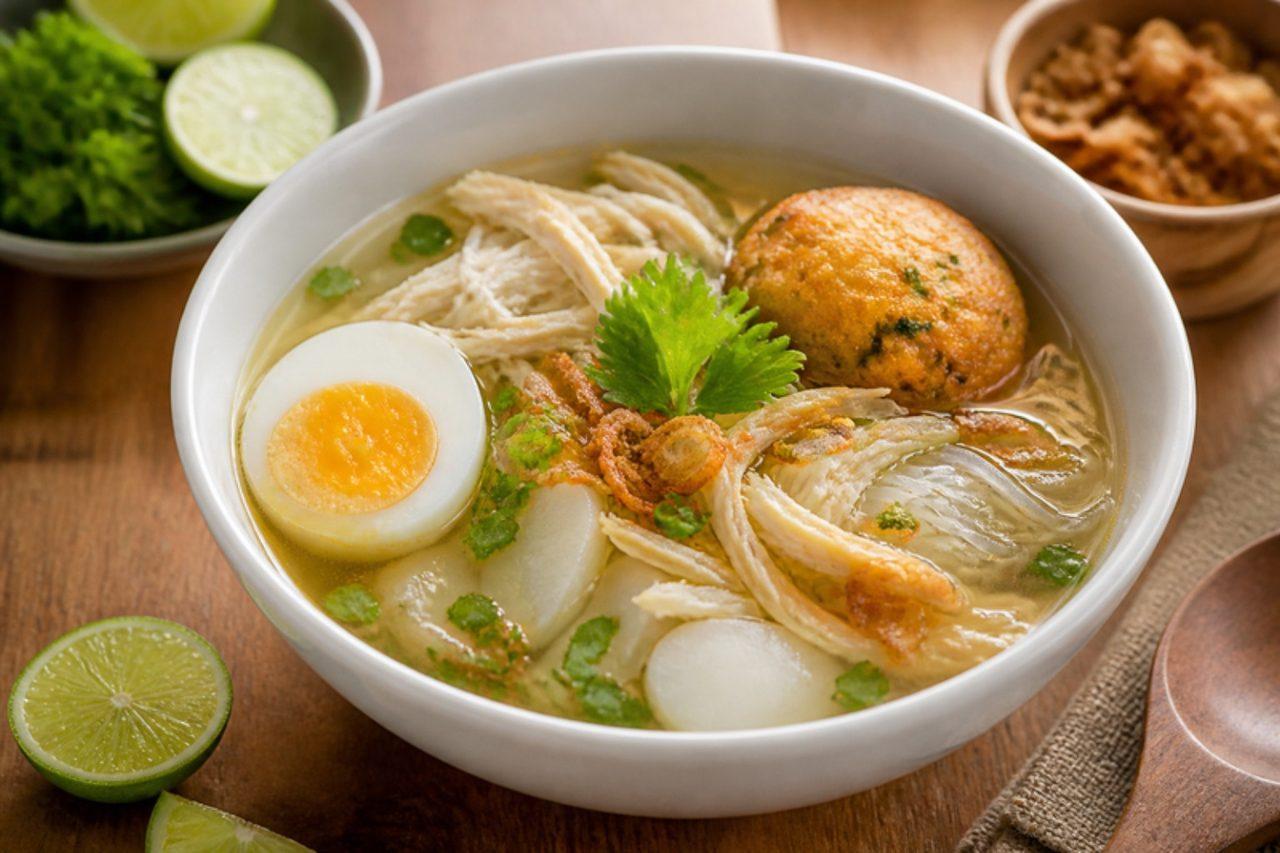
Soto Banjar
Along the rivers of Banjarmasin in South Kalimantan, breakfast often means soto Banjar eaten at a wooden riverside warung, sometimes after a dawn trip to the floating market. Unlike the turmeric sotos of Java, this broth is pale and clear, perfumed with the sweet spices that traders brought up the river centuries ago: cinnamon, cloves, star anise, cardamom and nutmeg. Shredded chicken, glass noodles, carrot and a boiled egg go into the bowl with rice cakes, and lime and a little chilli sharpen it at the table. Chef's tip: toast the whole spices in the pan for a minute before the paste goes in; it brings out their sweetness without the dusty edge of ground spice.


Tteokbokki
Tteokbokki (떡볶이) is Korea's best-loved street snack: chewy cylinders of rice cake simmered in a thick, glossy, sweet and spicy red sauce. It became a classic in Seoul, where it is sold from street stalls and snack bars in every neighbourhood. Street versions use anchovy stock and fish cakes; this vegan version uses a quick kelp and shiitake stock with cabbage and spring onions, and has all the same punch. Eat it hot, while the rice cakes are soft and stretchy. Chef's tip: keep stirring and scrape the bottom; the rice cakes release starch that thickens the sauce but also catches. The sauce is right when it clings to the spoon in a glossy coat.


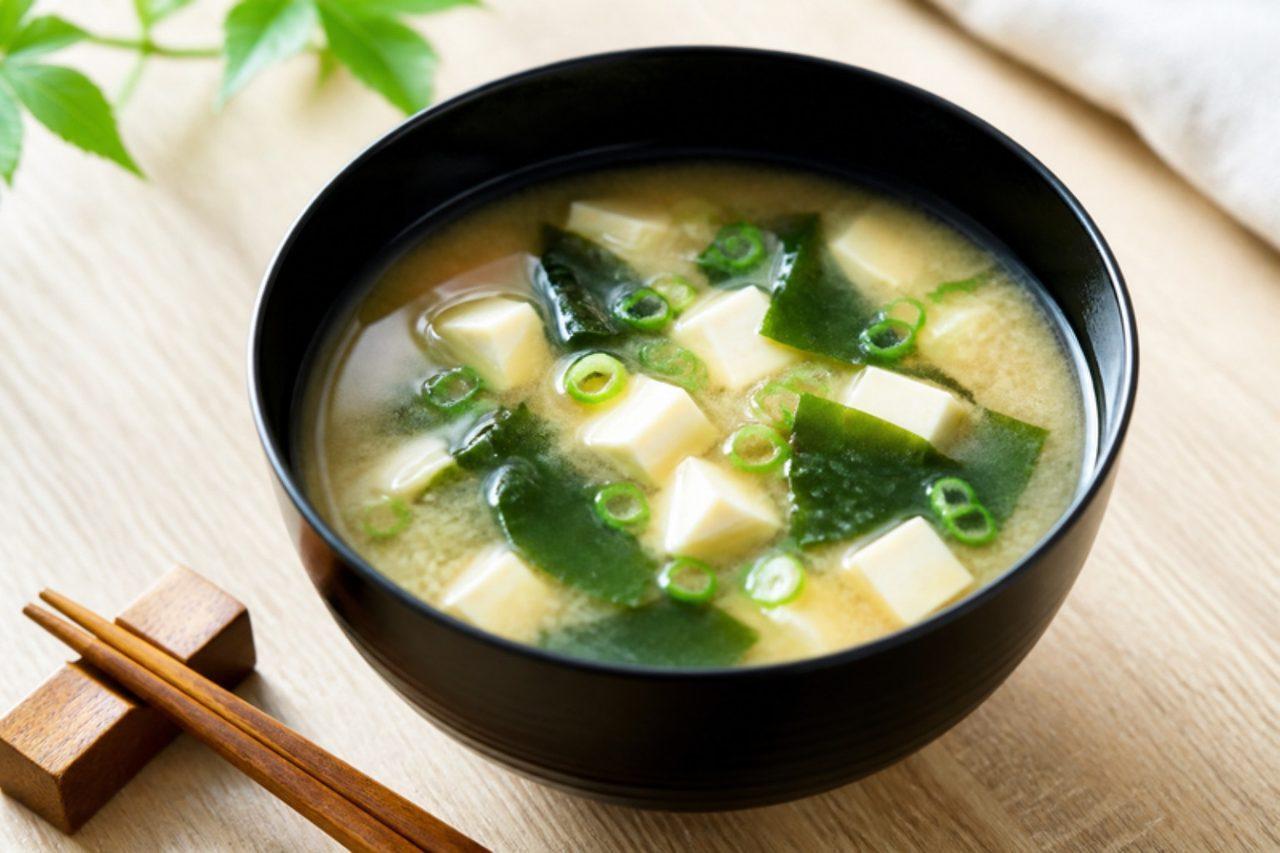
Miso soup
Miso soup (味噌汁) is drunk every day in homes all over Japan, at breakfast as well as dinner, beside a bowl of rice. The base is dashi; this vegan version uses kombu and dried shiitake instead of bonito, which gives it a deep, rounded flavour. Silken tofu and wakame seaweed are the classic fillings. It takes ten minutes; just remember not to boil the miso. Chef's tip: add the miso at the very end and never let it boil. Boiling kills the miso's fresh, fermented aroma; Japanese cooks say the soup should only 'smile', with the surface barely trembling.