
AI-generated image
Salmorejo cordobés
Thick, velvety chilled tomato and bread cream from Córdoba
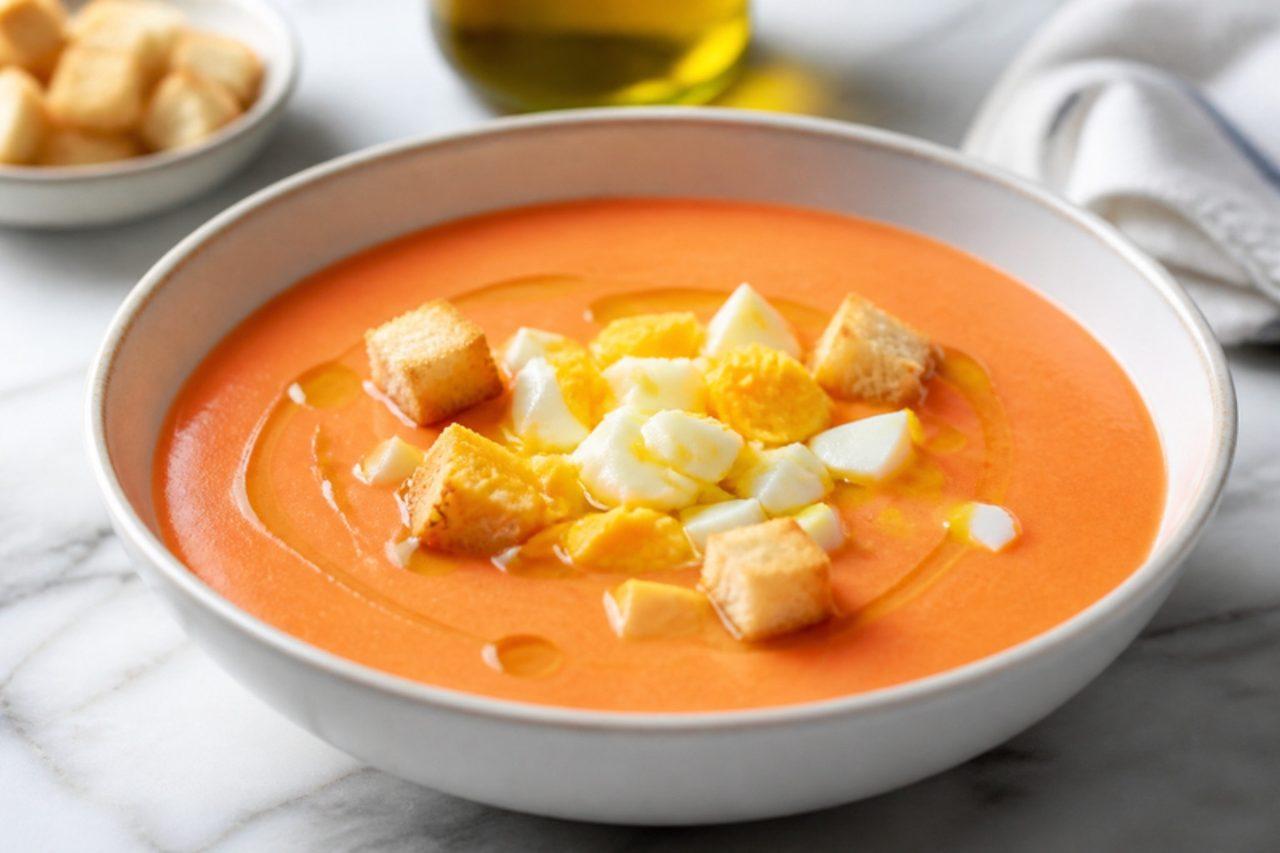
Salmorejo is Córdoba's answer to gazpacho: thicker, richer and simpler, made with just ripe tomatoes, bread, garlic, olive oil and salt, blended into a cream so dense a spoon almost stands up in it. In Córdoba it is served in a shallow earthenware bowl as a first course or tapa, topped with chopped hard-boiled egg and diced cured ham; this vegetarian version keeps the egg (leave it out for a vegan dish) and adds a few crunchy croutons and a thread of olive oil. Chef's tip: use bread with a dense, tight crumb, like a day-old Spanish 'pan de telera' or a firm white loaf; airy supermarket bread makes salmorejo thin and gluey.
- Total time
- 15 min
- Difficulty
- easy
- Serves
- 4
Ingredients
For the salmorejo
To garnish
Method
0/6 doneStep 1: Blend 2 ¼ lb very ripe tomatoes with 1 ½ tsp salt for 1–2 minutes until completely liquid, then push through a sieve to remove skin and seeds. You should have about 900 ml of juice.
2 minStep 2: Pour the tomato back into the blender, add 7 oz day-old dense white bread and 1 clove garlic and leave for 10 minutes, until the bread is fully soaked and soft.
10 minStep 3: Blend on high for 2 minutes until smooth. With the motor running, add ¾ cup extra virgin olive oil (Andalusian picual if possible) in a slow, thin stream; the cream will turn pale orange, glossy and thick.
3 minStep 4: Taste and add 1 tsp sherry vinegar and more salt if needed. If it's too thick to blend, add a splash of cold water; if too thin, add a little more bread and blend again. It should coat a spoon thickly.
Step 5: Chill for at least 1 hour, or up to 3 days, covered.
Step 6: Spoon into shallow bowls, make a little well in the middle and top with 2 hard-boiled egg and 4 tbsp small bread croutons. Finish with a thread of 1 tbsp extra virgin olive oil.
Nutrition per serving
- Calories
- 450 kcal
- Protein
- 9 g
- Carbs
- 34 g
- Fat
- 31 g
- Fibre
- 4 g
Nutrition values are estimates.
KrazyBadal
Good to know
- How long does salmorejo cordobés take?
- About 15 minutes in total.
- How many people does it serve?
- 4 as written. Change the servings above the ingredients and every amount scales to match.
- Is it vegetarian?
- Yes. It has no meat or fish.
- Can I make it ahead?
- Yes. It keeps well, so you can cook it earlier in the day or the day before and reheat it.
- What can I use instead of very ripe tomatoes?
- Tinned chopped tomatoes: a 400g tin for about 6 tomatoes (in cooked dishes, not salads).
- What can I use instead of garlic?
- ½ tsp garlic paste or ⅛ tsp garlic powder per clove.
Reviews
No reviews yet. Be the first to cook it.
Rate this recipe
Sign in to rate and review this recipe.
You might also like
Soto Banjar
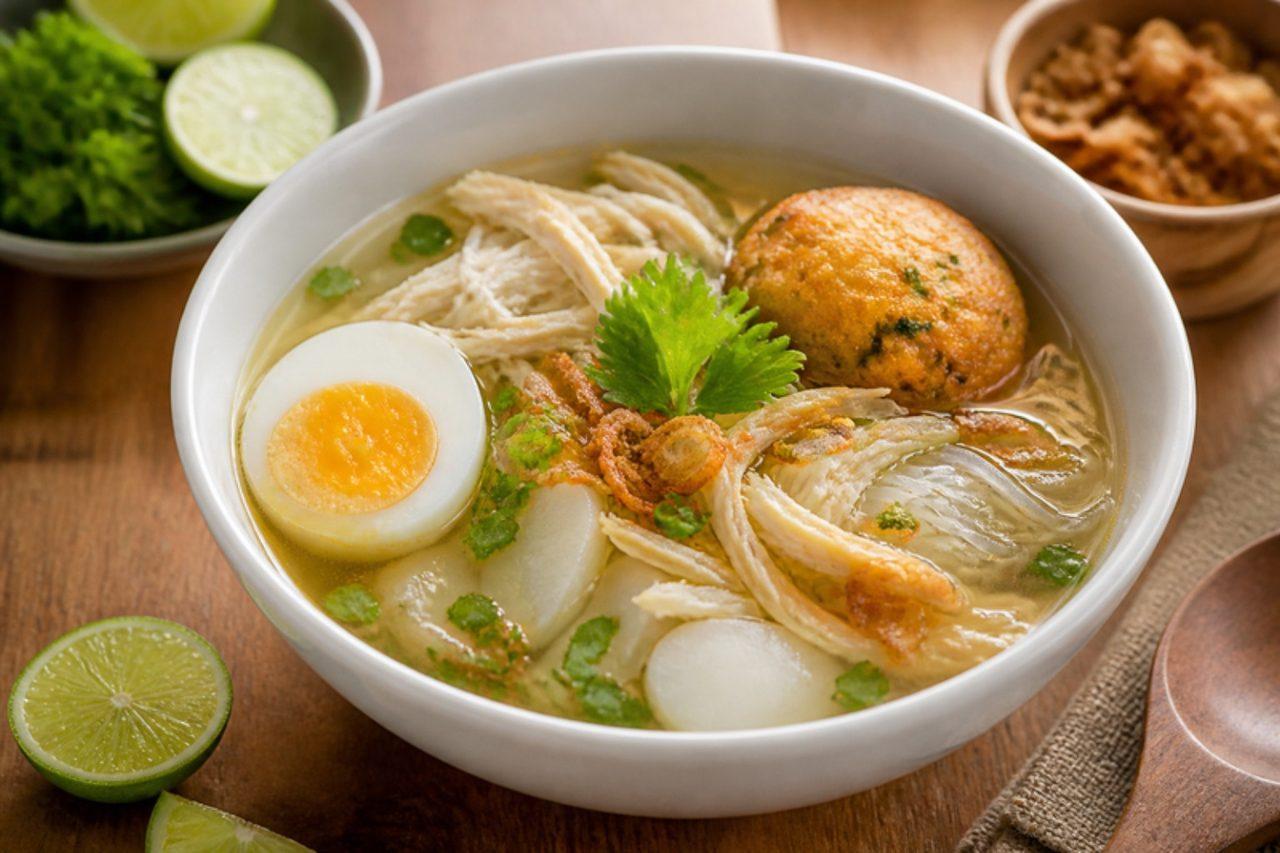
Along the rivers of Banjarmasin in South Kalimantan, breakfast often means soto Banjar eaten at a wooden riverside warung, sometimes after a dawn trip to the floating market. Unlike the turmeric sotos of Java, this broth is pale and clear, perfumed with the sweet spices that traders brought up the river centuries ago: cinnamon, cloves, star anise, cardamom and nutmeg. Shredded chicken, glass noodles, carrot and a boiled egg go into the bowl with rice cakes, and lime and a little chilli sharpen it at the table. Chef's tip: toast the whole spices in the pan for a minute before the paste goes in; it brings out their sweetness without the dusty edge of ground spice.

Miso soup
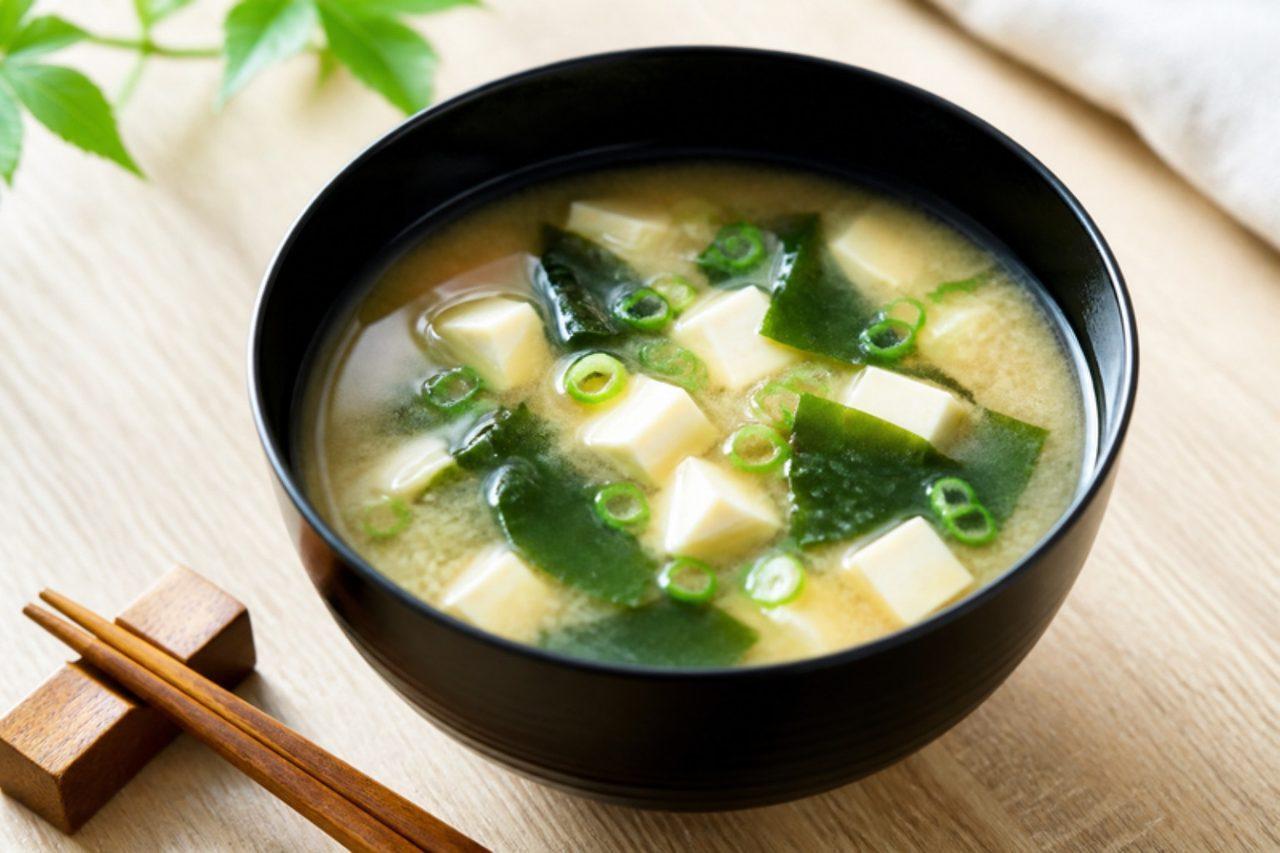
Miso soup (味噌汁) is drunk every day in homes all over Japan, at breakfast as well as dinner, beside a bowl of rice. The base is dashi; this vegan version uses kombu and dried shiitake instead of bonito, which gives it a deep, rounded flavour. Silken tofu and wakame seaweed are the classic fillings. It takes ten minutes; just remember not to boil the miso. Chef's tip: add the miso at the very end and never let it boil. Boiling kills the miso's fresh, fermented aroma; Japanese cooks say the soup should only 'smile', with the surface barely trembling.

Horchata de chufa
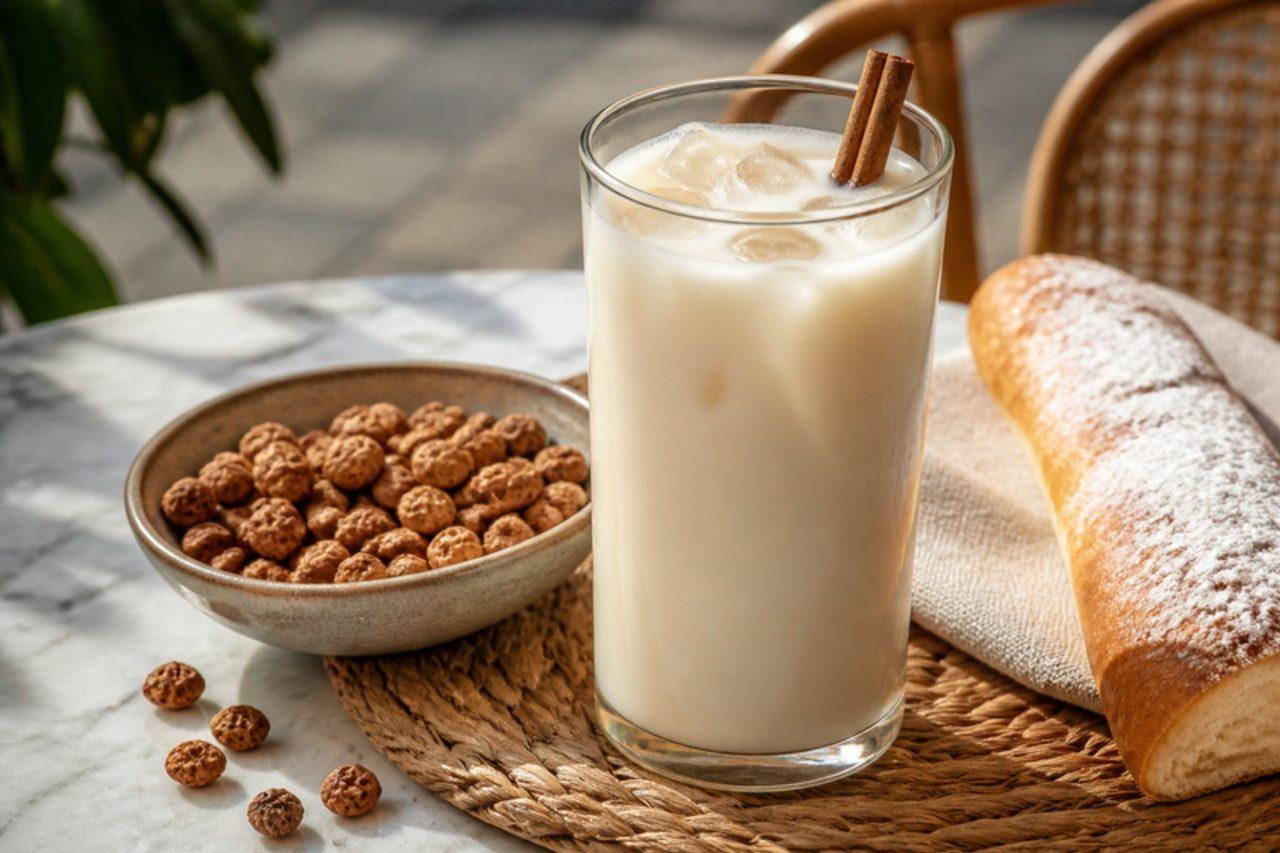
Horchata de chufa is the drink of Valencia's summer, sold ice-cold in the city's horchaterías with long, soft fartons pastries for dipping. It is made from chufas, or tiger nuts: small wrinkled tubers grown around the village of Alboraya just north of Valencia, which have their own protected designation of origin. Soaked, ground with water, strained and sweetened, they give a creamy, nutty, naturally dairy-free milk with a hint of cinnamon. Valencians drink it very cold, or half-frozen as 'granizada'. Chef's tip: soak the tiger nuts for a full 24 hours and change the water once; they must be plump and soft enough to blend into a fine pulp, or the horchata will be thin and taste of raw starch.