
AI-generated image
Qursan
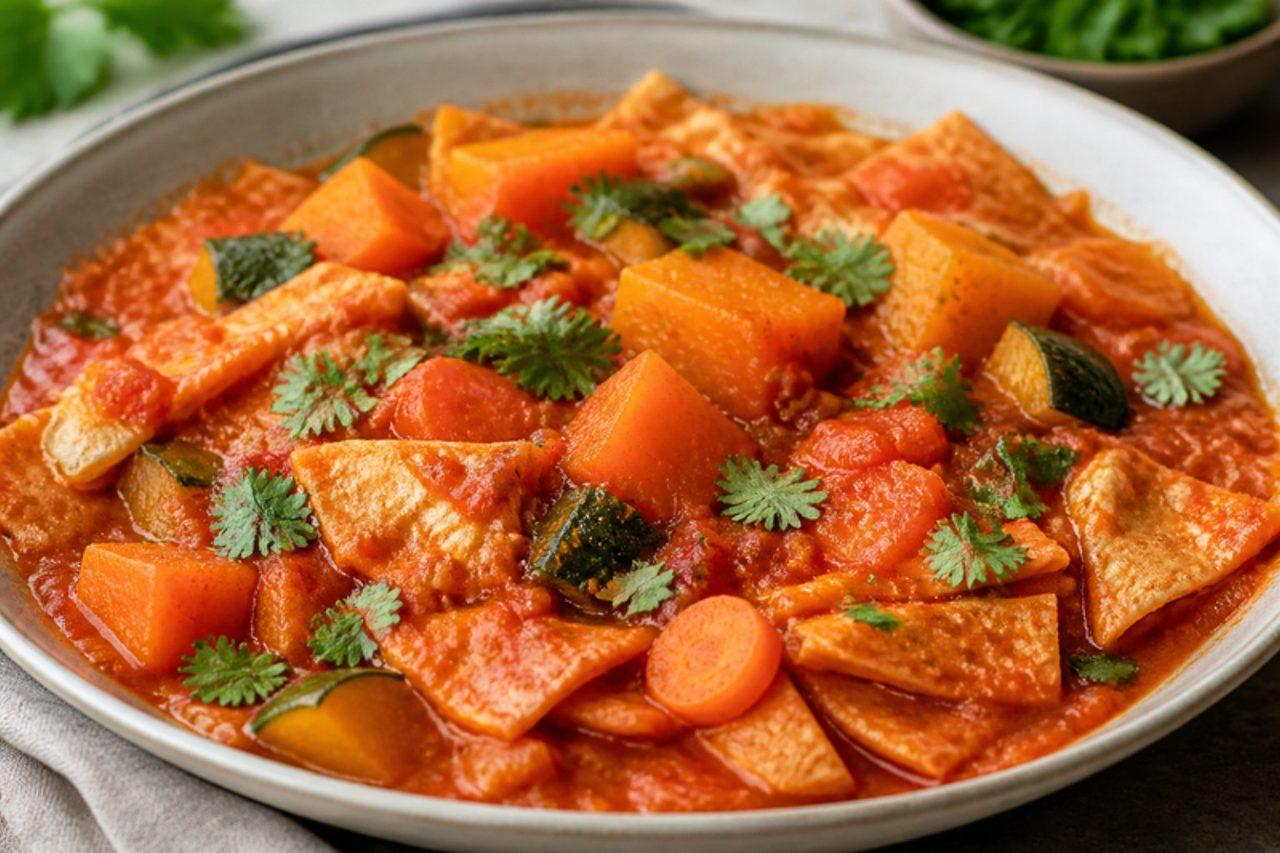
Qursan (قرصان): Najdi paper-thin wheat breads soaked in a pumpkin and courgette stew

Qursan is old Najdi home cooking from the farms around Riyadh and Qassim: thin wholemeal breads are cooked on a griddle, dried, then torn into a spiced stew until they soften into silky, pasta-like sheets. It is a family dish for Fridays and winter evenings, eaten from one big tray. Traditionally the stew is built on lamb; this version is vegetarian, with pumpkin, courgette and carrot simmered in a tomato and dried-lime broth seasoned with Gulf spices. The bread should soak but not dissolve, so the classic mistake is adding it too early and stirring it to mush. Fold it in at the end and let it rest off the heat. Serve with daqqus and fresh herbs. Chef's tip: cook the breads until properly dry and crisp; soft breads turn gummy in the broth.
- Total time
- 120 min
- Difficulty
- medium
- Serves
- 4
Ingredients
For the breads
- 10 ½ oz wholemeal flour
- ½ tsp salt
- ¾ cup water
For the stew
- 3 tbsp olive or vegetable oil
- 2 onionschopped
- 4 garlic clovescrushed
- 1 green chillislit
- 2 tbsp tomato paste
- 3 tomatoeschopped
- 1 tsp ground cumin
- ½ tsp ground turmeric
- 2 dried black limespierced
- 14 oz pumpkinpeeled, 3 cm chunks
- 2 carrotsthickly sliced
- 2 courgettesthick half-moons
- 1.5 litres vegetable stock
- 1 tsp salt
To serve
- 1 handful fresh coriander (optional)chopped
Shop this recipe on Amazon
Spices & pantry
Fresh ingredients (7)
Links open Amazon in a new tab. As an Amazon Associate, WhatToEat.Today earns from qualifying purchases.
Method
0/10 doneStep 1: Mix 10 ½ oz wholemeal flour and ½ tsp salt with ¾ cup water into a firm dough. Knead for 3 minutes, cover and rest for 20 minutes.
20 minStep 2: Divide into 6 pieces and roll each as thin as you can, to about 30 cm. Cook one at a time in a dry pan or griddle over a medium heat until dry and lightly spotted, 1–2 minutes a side.
15 minStep 3: Lay the breads on a rack until crisp and brittle, at least 20 minutes, or dry them in a 250°F oven for 10 minutes.
Step 4: For the stew, heat 3 tbsp olive or vegetable oil in a large pot over a medium heat and fry 2 onions until soft and golden, 8 minutes.
8 minStep 5: Add 4 garlic cloves and 1 green chilli for 1 minute, then 2 tbsp tomato paste for another minute until it darkens.
2 minStep 6: Add 3 tomatoes, 2 tsp baharat or bezar spice mix, 1 tsp ground cumin, ½ tsp ground turmeric and 2 dried black limes and cook until the tomatoes break down, 5 minutes.
5 minStep 7: Add 14 oz pumpkin, 2 carrots, 1.5 litres vegetable stock and 1 tsp salt. Bring to the boil, then simmer until the carrot is nearly tender, 15 minutes.
15 minStep 8: Add 2 courgettes and simmer until all the vegetables are soft but holding their shape, 10 minutes. Taste for salt; the broth should be well seasoned and tangy.
10 minStep 9: Take off the heat. Break the dried breads into palm-sized pieces and push them gently under the broth. Cover and leave for 5–8 minutes until soft and silky but not falling apart.
8 minStep 10: Serve in a wide dish, the vegetables piled on top, with 1 handful fresh coriander.
Nutrition per serving
- Calories
- 390 kcal
- Protein
- 11 g
- Carbs
- 64 g
- Fat
- 11 g
- Fibre
- 12 g
Nutrition values are estimates.
KrazyBadal
Good to know
- How long does qursan take?
- About 120 minutes in total: 40 minutes to prepare and 80 minutes to cook.
- How many people does it serve?
- 4 as written. Change the servings above the ingredients and every amount scales to match.
- Is it vegan?
- Yes. It has no meat, fish, dairy or eggs.
- What can I use instead of onions?
- 2 shallots per onion.
- What can I use instead of garlic cloves?
- ½ tsp garlic paste or ⅛ tsp garlic powder per clove.
Reviews
No reviews yet. Be the first to cook it.
Rate this recipe
Sign in to rate and review this recipe.
You might also like
Sayur lodeh
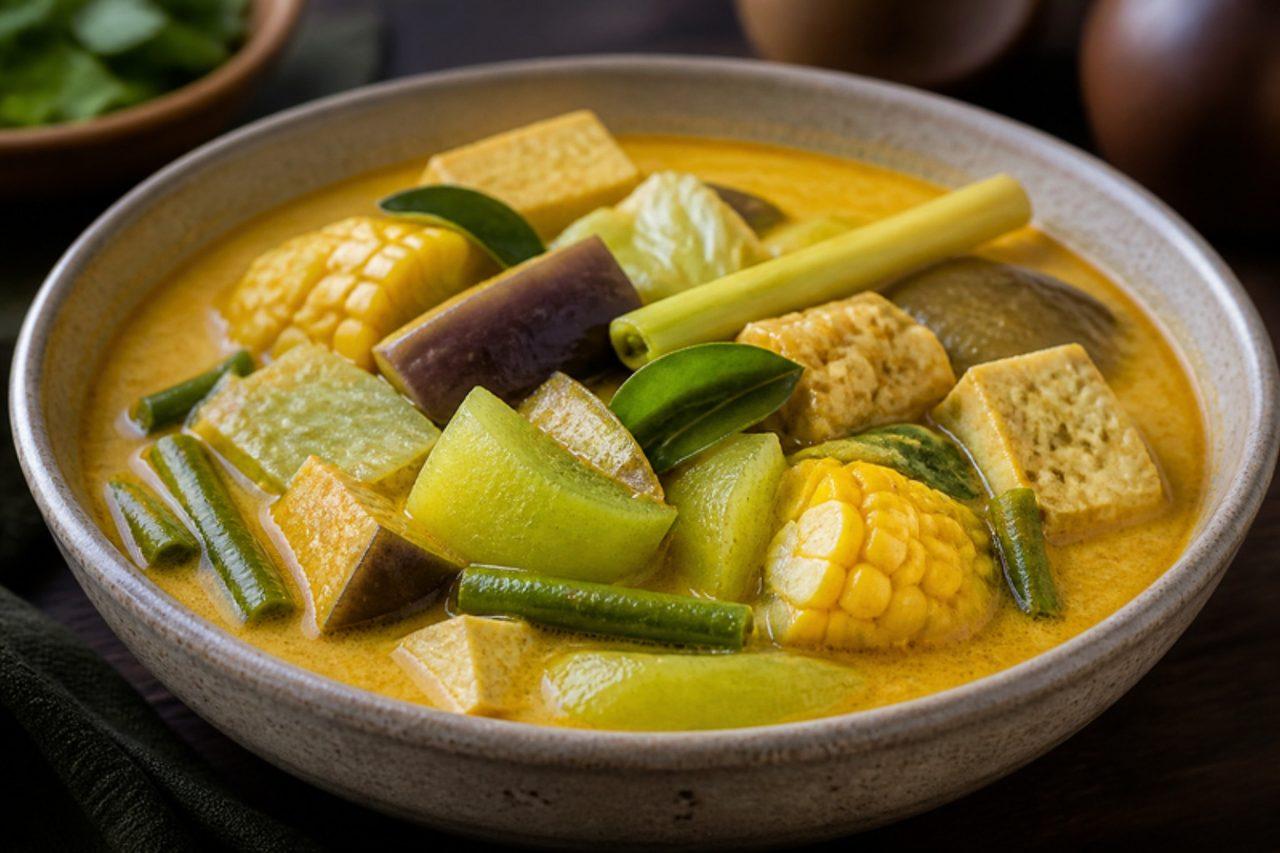
Sayur lodeh is everyday cooking in Central Java, made in big pots in Solo and Semarang kitchens and ladled over rice, with lontong rice cakes at Lebaran, or alongside opor and sambal goreng on festive tables. It's soupy rather than thick: a fragrant broth of coconut milk, galangal, lemongrass and lime leaf that carries chunks of aubergine, long beans, chayote and sweetcorn, plus tempeh and tofu to make it a meal. The flavour is mellow and slightly sweet, so the heat comes from sambal on the side. Chef's tip: keep the pot at a gentle simmer once the coconut milk goes in and stir now and then — a rolling boil splits the coconut milk into oily curds.
 Indonesian


Polos curry
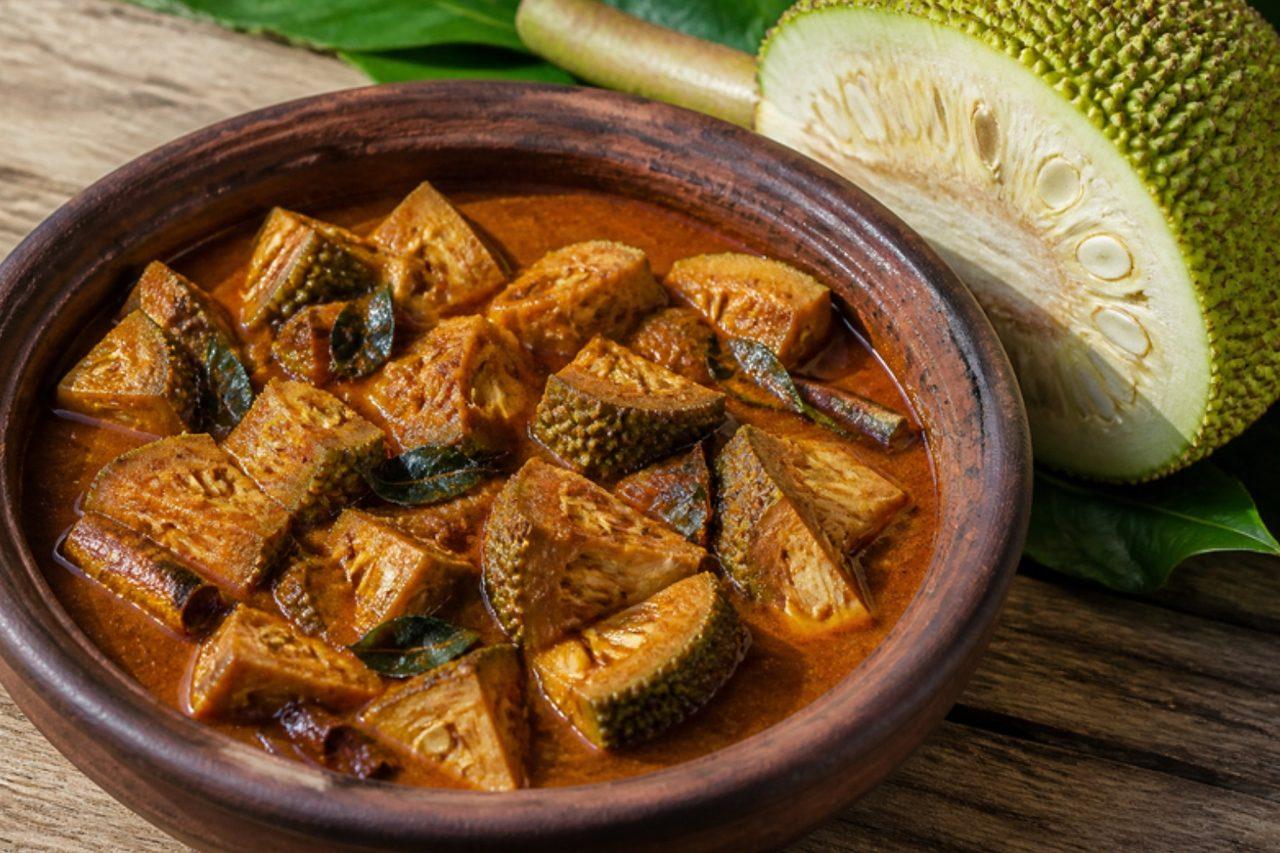
Polos is the tiny unripe jackfruit picked in the Western and Sabaragamuwa provinces long before it sweetens, and cooked low and slow it becomes one of the island's most loved festival curries, especially at Sinhala and Tamil New Year in April and at wedding lunches. The firm, pale flesh soaks up a very dark roasted curry powder, garlic, ginger, goraka (a smoky souring fruit) and coconut milk until it turns almost black-brown and tastes rich, sour and meaty. Fresh polos is hard to find abroad; tinned young green jackfruit in brine works well. A frequent mistake is not cooking it long enough, which leaves it squeaky; the pieces must be soft enough to break with a spoon. Chef's tip: oil your hands and knife before cutting fresh jackfruit; the sticky white sap washes off oiled skin but not dry skin.
 Sri Lankan

Bagara baingan
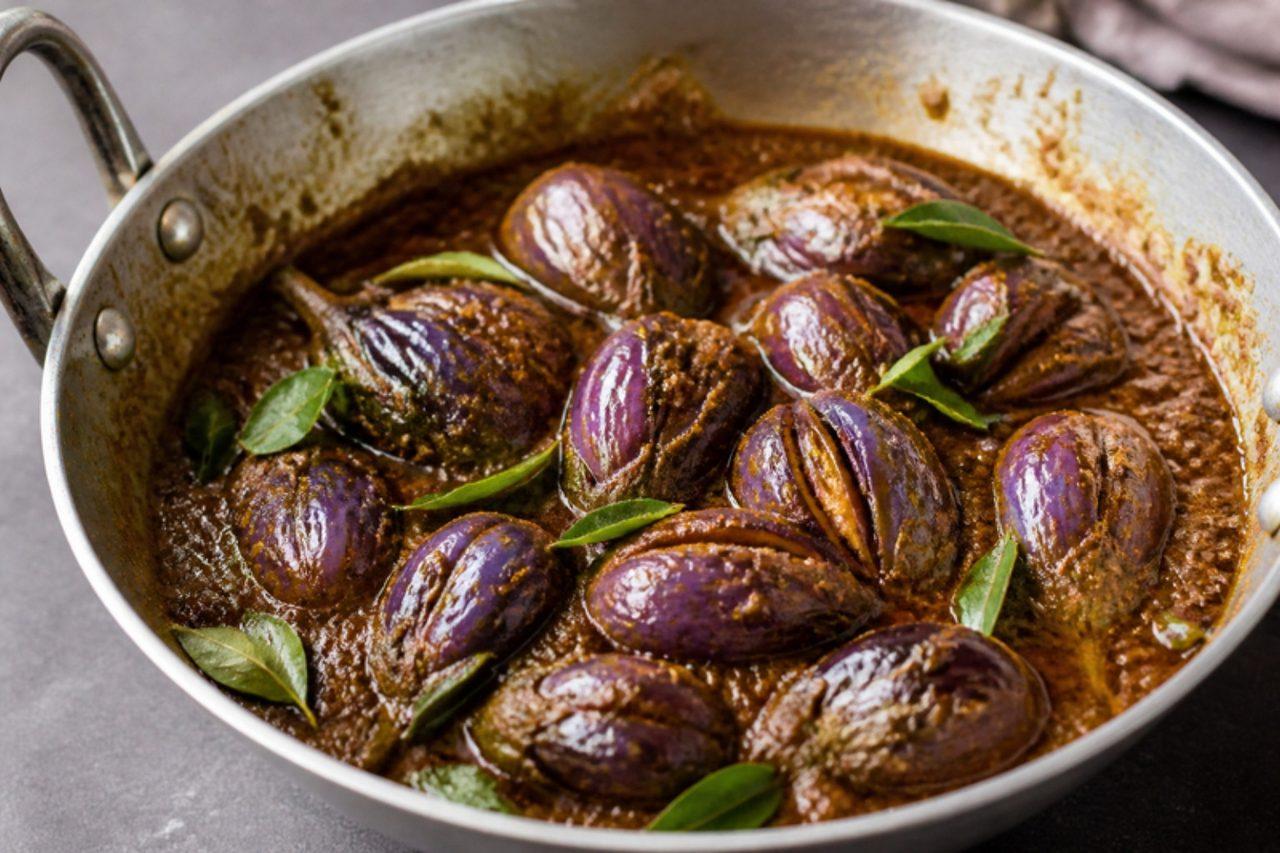
Bagara baingan is a Hyderabadi wedding dish of small aubergines cooked whole in a dark, tangy gravy of roasted peanuts, sesame, dried coconut and tamarind. Unlike a Gujarati stuffed brinjal, the aubergines here are only quartered at the base and fried until silky, then left to soak up a thin-but-rich sauce that is finished with a tempering, the 'baghar' that gives the dish its name. It's sour, nutty and gently spiced, and is served with biryani, bagara rice or plain rice. Chef's tip: choose small, glossy purple aubergines that feel heavy for their size; soft, light ones are full of seeds and turn mushy before the gravy has a chance to cling.
 Indian