
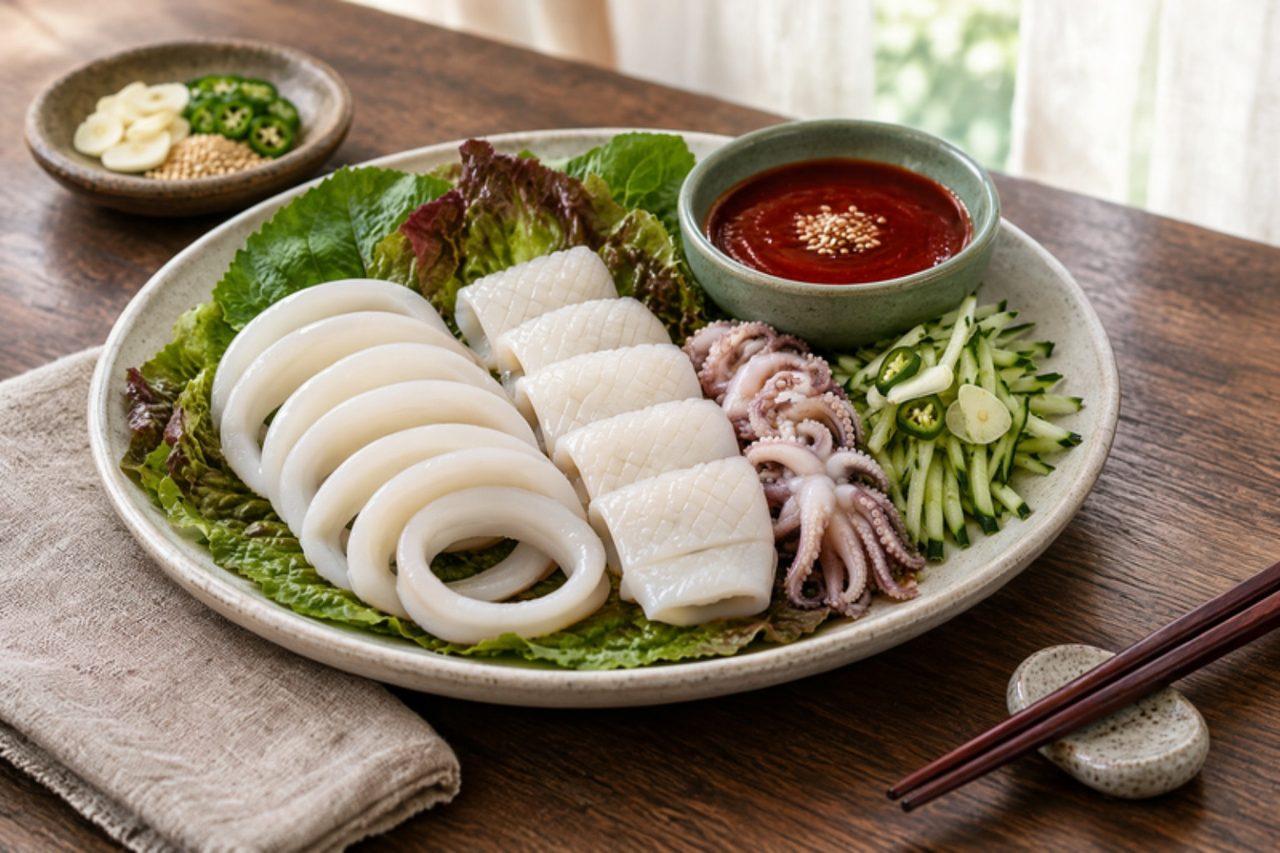
AI-generated image
Ojingeo sukhoe
오징어숙회 (ojingeo sukhoe): blanched squid with cucumber and sweet-sour chilli dipping sauce

Ojingeo sukhoe is a summer favourite in the fishing towns of Gangwon and on Ulleungdo island, where squid are landed overnight and served at home and in harbour restaurants within hours. The squid is scored, blanched for barely a minute so it stays tender, sliced into rings and eaten with crisp cucumber, lettuce and chogochujang, a tangy chilli-vinegar sauce. Suitable as part of a balanced diet: lean protein and fresh vegetables. About 160 kcal and 10 g carbohydrate per portion; the teaspoon of sugar in the sauce is optional, or use a sweetener. The usual mistake is overcooking: squid goes from tender to rubbery after about 90 seconds. Chef's tip: plunge it into iced water the moment it curls, so the cooking stops instantly.
- Total time
- 15 min
- Difficulty
- easy
- Serves
- 4
Ingredients
For the squid
- 1 ⅓ lb squid, cleanedtubes and tentacles
- 1 cucumbercut into batons
For the chogochujang
- 2 tbsp gochujang
- 2 tbsp rice vinegar
- 1 tsp sugar (or sweetener)optional
- 1 clove garliccrushed
- 1 tsp toasted sesame seeds
Shop this recipe on Amazon
Spices & pantry
Fresh ingredients (3)
Links open Amazon in a new tab. As an Amazon Associate, WhatToEat.Today earns from qualifying purchases.
Method
0/5 doneStep 1: Score the inside of the 1 ⅓ lb squid, cleaned tubes in a fine criss-cross with a sharp knife, without cutting through.
5 minStep 2: Bring a pan of water to a rolling boil, add the squid and cook for 60–90 seconds, just until it turns white and opaque and curls up.
2 minStep 3: Lift straight into a bowl of iced water, then drain well and slice the tubes into rings.
2 minStep 4: Mix the 2 tbsp gochujang, 2 tbsp rice vinegar, 1 tsp sugar (or sweetener), 1 clove garlic and 1 tsp toasted sesame seeds into a smooth sauce.
2 minStep 5: Arrange the squid with the 1 cucumber and 8 lettuce or perilla leaves and serve with the sauce for dipping. Eat within the day and keep chilled.
1 min
Nutrition per serving
- Calories
- 160 kcal
- Protein
- 24 g
- Carbs
- 10 g
- Fat
- 2 g
- Fibre
- 1 g
Nutrition values are estimates.
KrazyBadal
Good to know
- How long does ojingeo sukhoe take?
- About 15 minutes in total: 10 minutes to prepare and 5 minutes to cook.
- How many people does it serve?
- 4 as written. Change the servings above the ingredients and every amount scales to match.
- What can I use instead of cucumber?
- Courgette, same weight (in salads, use young ones).
- What can I use instead of rice vinegar?
- Cider vinegar with a pinch of sugar, same amount.
Reviews
No reviews yet. Be the first to cook it.
Rate this recipe
Sign in to rate and review this recipe.
You might also like
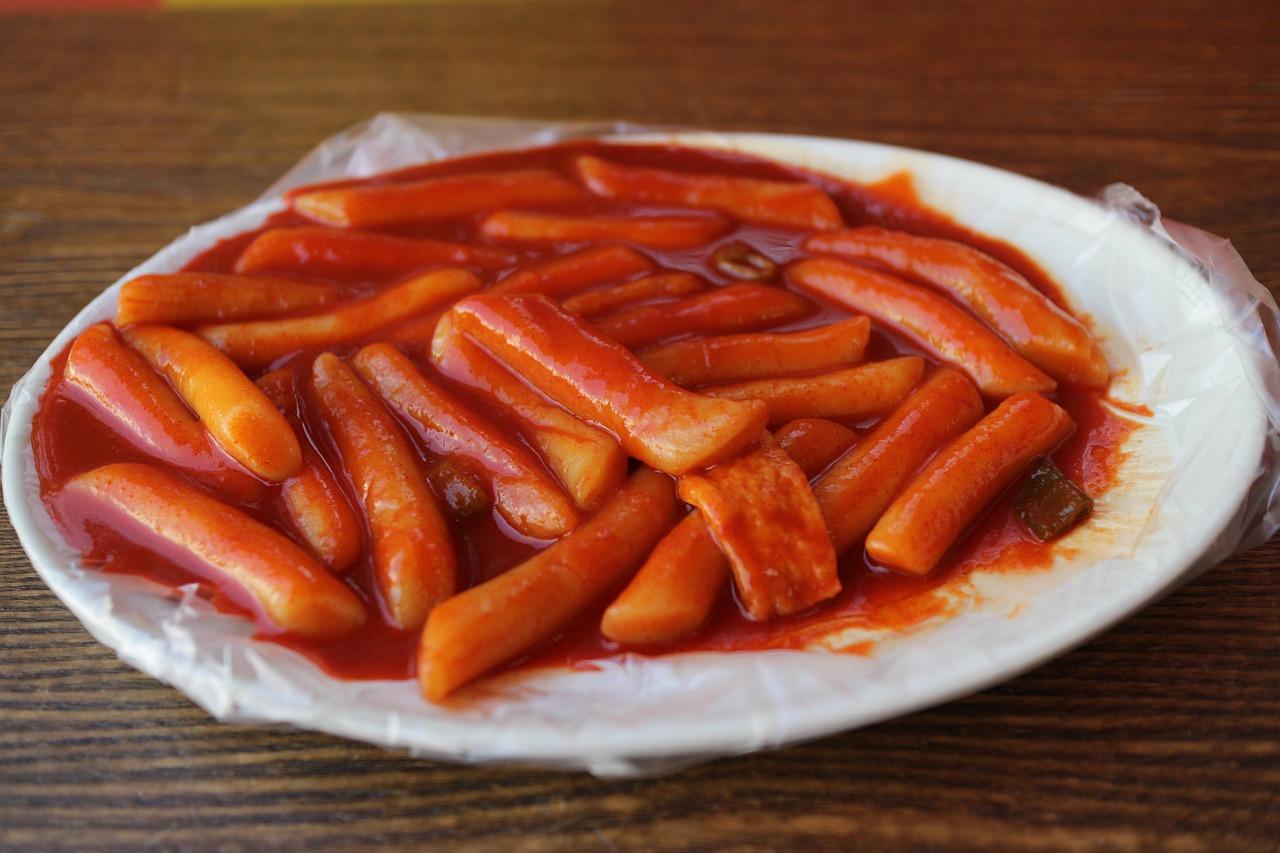
Tteokbokki
Tteokbokki (떡볶이) is Korea's best-loved street snack: chewy cylinders of rice cake simmered in a thick, glossy, sweet and spicy red sauce. It became a classic in Seoul, where it is sold from street stalls and snack bars in every neighbourhood. Street versions use anchovy stock and fish cakes; this vegan version uses a quick kelp and shiitake stock with cabbage and spring onions, and has all the same punch. Eat it hot, while the rice cakes are soft and stretchy. Chef's tip: keep stirring and scrape the bottom; the rice cakes release starch that thickens the sauce but also catches. The sauce is right when it clings to the spoon in a glossy coat.


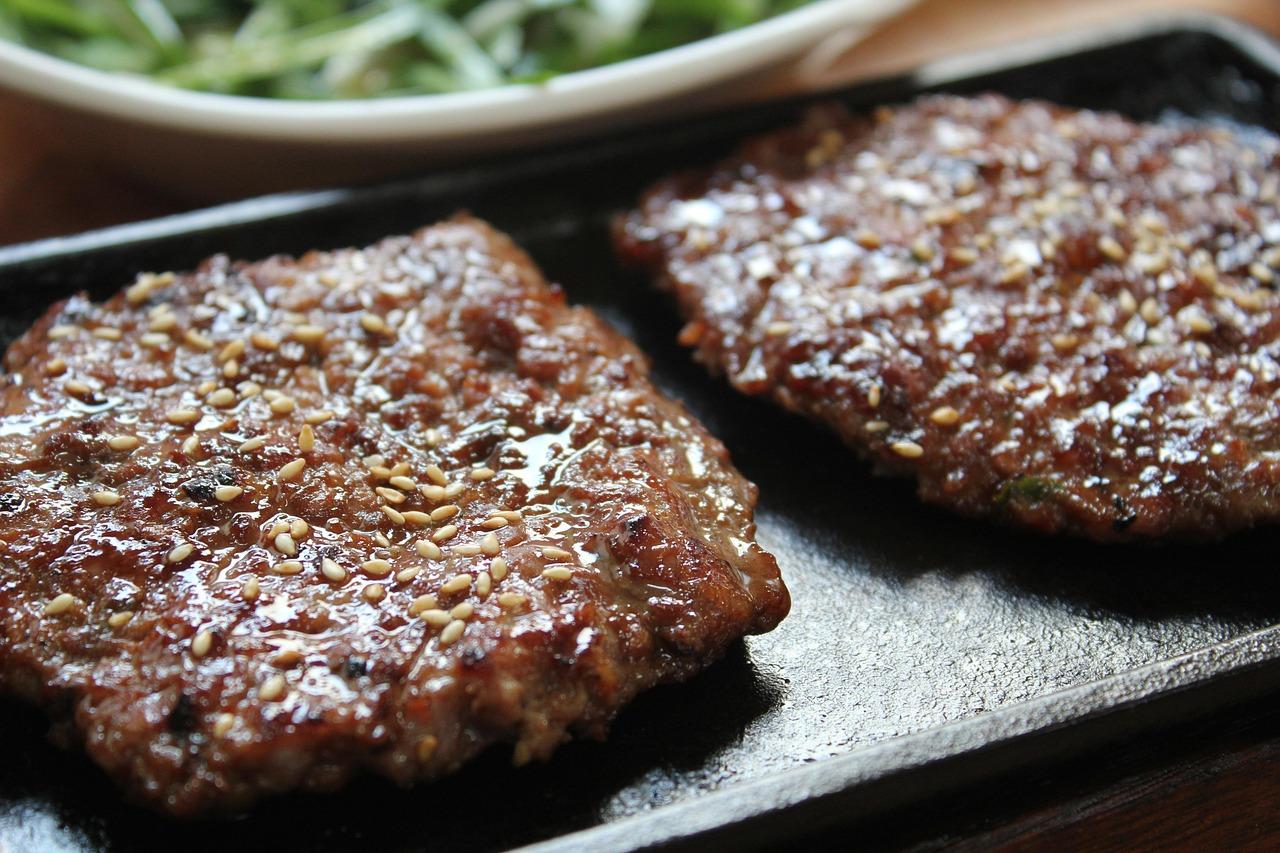
Tteokgalbi
Tteokgalbi is rib meat chopped finely, pressed back into neat slabs and grilled, so it's soft enough to eat without struggling with a bone. Two places in South Jeolla claim it: Damyang, the bamboo county, where all-beef patties come with rice steamed in bamboo tubes, and Gwangju's Songjeong district, whose restaurant street near the railway station mixes beef with pork. This home version uses minced beef and pork, seasoned with soy, garlic and pear, then brushed with a soy and honey glaze as it cooks. Serve with rice, lettuce and a few banchan; leftovers are good cold in a lunchbox. Chef's tip: slap the mince against the bowl for a few minutes; it turns sticky and the patties hold together on the grill without any breadcrumbs.
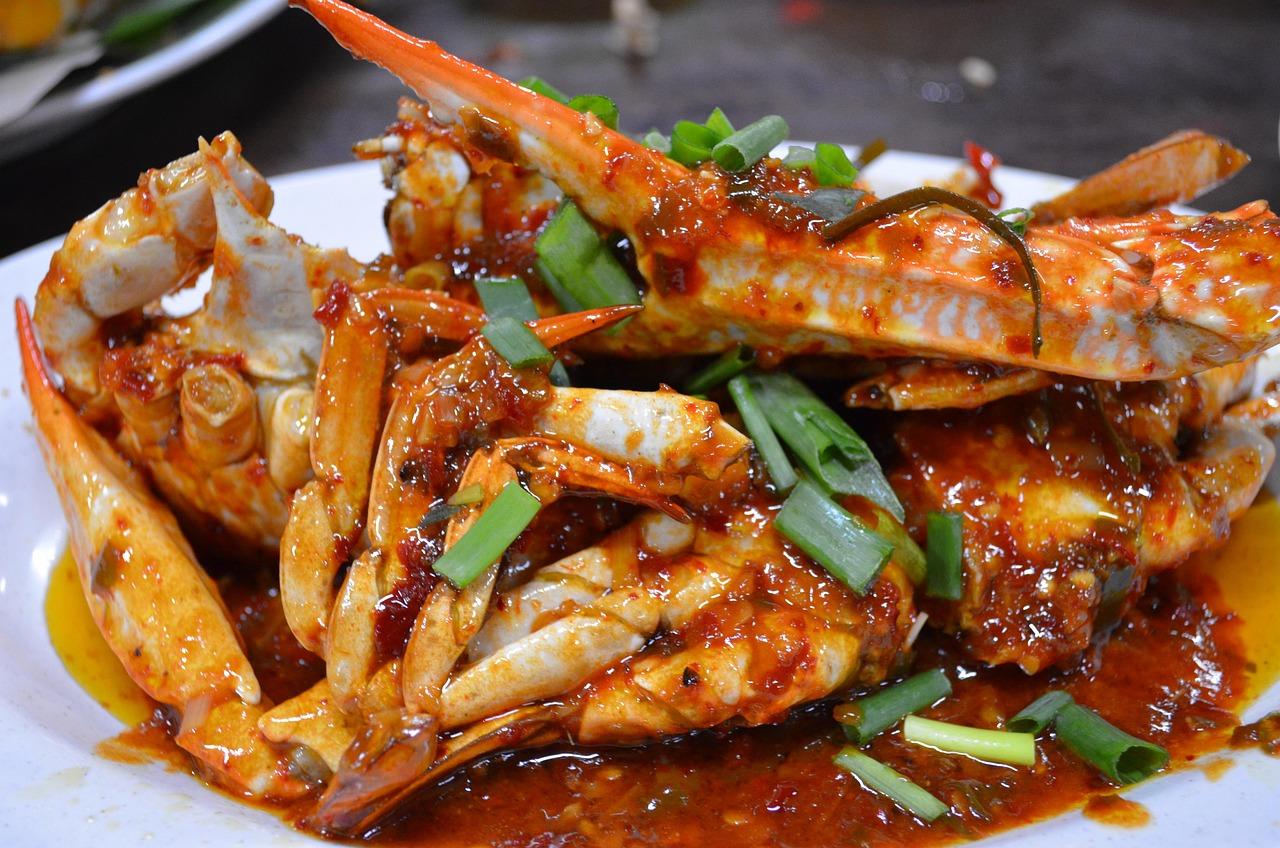
Singapore chilli crab
Chilli crab was first sold from a pushcart on the Kallang river in the 1950s and is now the dish visitors queue for along Singapore's East Coast seafood strip. Big mud crabs are cut up, wok-fried and simmered in a thick, sweet, tangy and gently hot sauce of chilli, tomato and garlic, which is then silked with beaten egg. Everyone eats with their hands and mops up the sauce with fried or steamed mantou buns. It is a weekend or celebration meal, messy and loud. Buy crabs live or freshly cooked the same day from a fishmonger you trust. Discard any live crab that doesn't move, smells of ammonia or has a cracked, leaking shell. The common mistake is boiling the sauce after adding the egg, which scrambles it into lumps; pour it in a thin stream over a low heat. Chef's tip: ask the fishmonger to clean and quarter the crab for you, and crack each claw lightly with the back of a cleaver so the sauce soaks in.
 Singaporean