
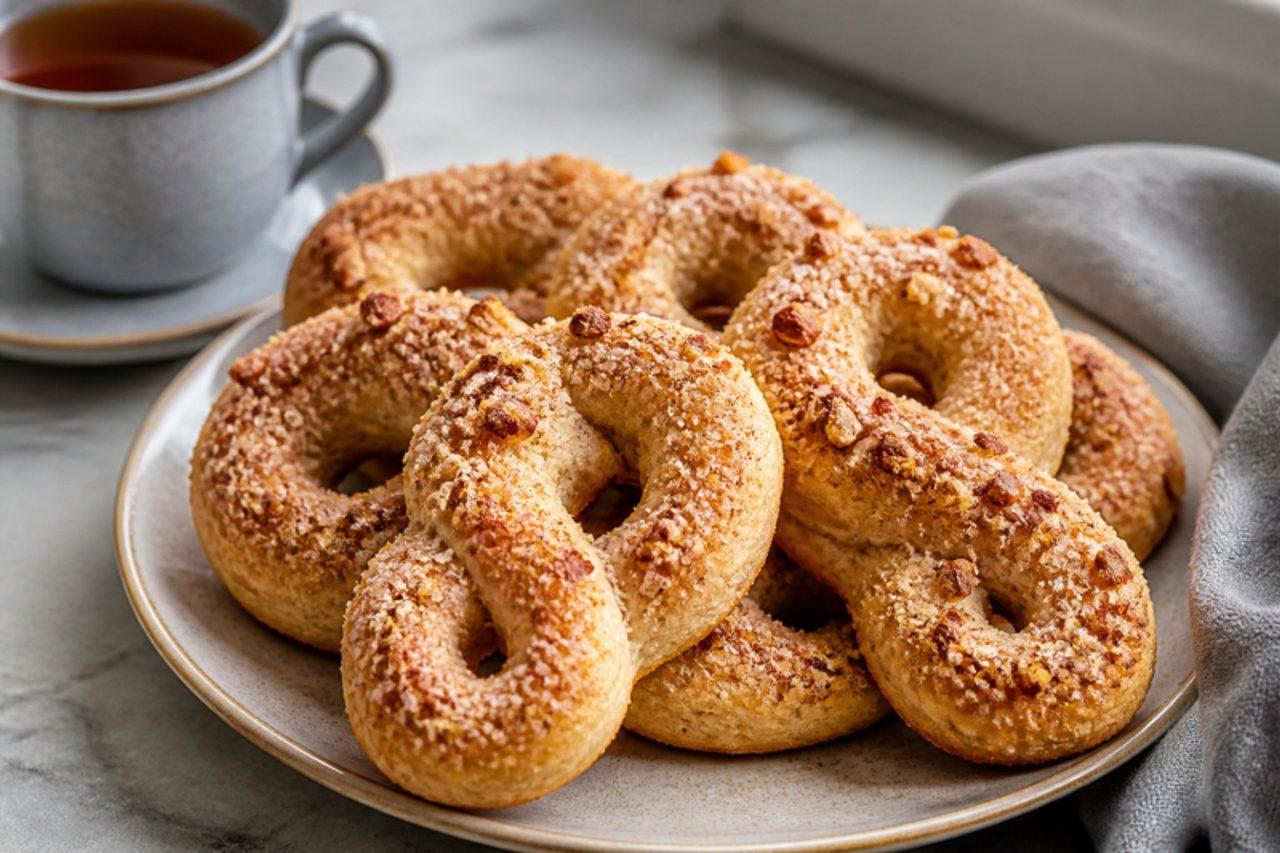
AI-generated image
Krakelinge
Figure-eight butter biscuits
Cape figure-of-eight butter biscuits with sugar and almonds

These twisted figure-of-eight biscuits came to the Western Cape with Dutch settlers and have stayed a fixture of Cape kitchens ever since, especially in older Afrikaans and Cape Malay households. You will find them in Boland towns at church bazaars and on Christmas tea tables, and they suit an afternoon pot of tea perfectly. The dough is rich and short; the tops are dipped in egg white and then in sugar mixed with chopped almonds and cinnamon, so they bake to a crackly, sparkling crust. The dip is an egg glaze; milk works too, with a little less shine. Chef's tip: roll the ropes on an unfloured surface, because a dusting of flour makes them slide and crack when you twist them; if the dough is too cold it snaps, so let it soften for a few minutes first.
- Total time
- 60 min
- Difficulty
- medium
- Serves
- 12
Ingredients
For the dough
- 5 ½ oz buttersoftened
- 2 ⅛ oz caster sugar
- 1 egg yolk
- 1 tsp vanilla extract
- 9 oz plain flour
- 1 pinch salt
- 1 tbsp milkif needed
For the topping
- 1 egg whitelightly beaten (or 3 tbsp milk for an egg-free dip)
- 1 ¾ oz granulated sugar
- 1 ¾ oz almondsfinely chopped
- ½ tsp ground cinnamon
Shop this recipe on Amazon
Links open Amazon in a new tab. As an Amazon Associate, WhatToEat.Today earns from qualifying purchases.
Method
0/8 doneStep 1: Cream 5 ½ oz butter and 2 ⅛ oz caster sugar until pale, then beat in 1 egg yolk and 1 tsp vanilla extract.
Step 2: Mix in 9 oz plain flour and 1 pinch salt to a soft dough, adding 1 tbsp milk only if it is dry. Wrap and chill for 20 minutes.
20 minStep 3: Heat the oven to 350°F (325°F fan) and line two trays with baking paper.
Step 4: Put 1 egg white in a shallow bowl. On a plate, mix 1 ¾ oz granulated sugar, 1 ¾ oz almonds and ½ tsp ground cinnamon.
Step 5: Roll walnut-sized pieces of dough into ropes about 20 cm long and 8 mm thick. Twist each rope into a figure eight, crossing the ends in the middle and pressing them together.
Step 6: Dip the top of each biscuit into the egg white, then press it into the sugar and almonds. Set on the trays, coated side up.
Step 7: Bake for 12–15 minutes, until the bases are golden and the sugar is crisp and lightly caramelised.
15 minStep 8: Cool on the trays for 5 minutes, then on a rack. Store in an airtight tin for up to two weeks.
Nutrition per serving
- Calories
- 225 kcal
- Protein
- 4 g
- Carbs
- 25 g
- Fat
- 13 g
- Fibre
- 1 g
Nutrition values are estimates.
KrazyBadal
Good to know
- How long does krakelinge take?
- About 60 minutes in total: 45 minutes to prepare and 15 minutes to cook.
- How many people does it serve?
- 12 as written. Change the servings above the ingredients and every amount scales to match.
- Is it vegetarian?
- Yes. It has no meat or fish.
- Can I make it ahead?
- Yes. It keeps well, so you can cook it earlier in the day or the day before and reheat it.
- What can I use instead of butter?
- The same weight of ghee or coconut oil (for frying and most baking).
- What can I use instead of caster sugar?
- Caster sugar, same amount.
Reviews
No reviews yet. Be the first to cook it.
Rate this recipe
Sign in to rate and review this recipe.
You might also like
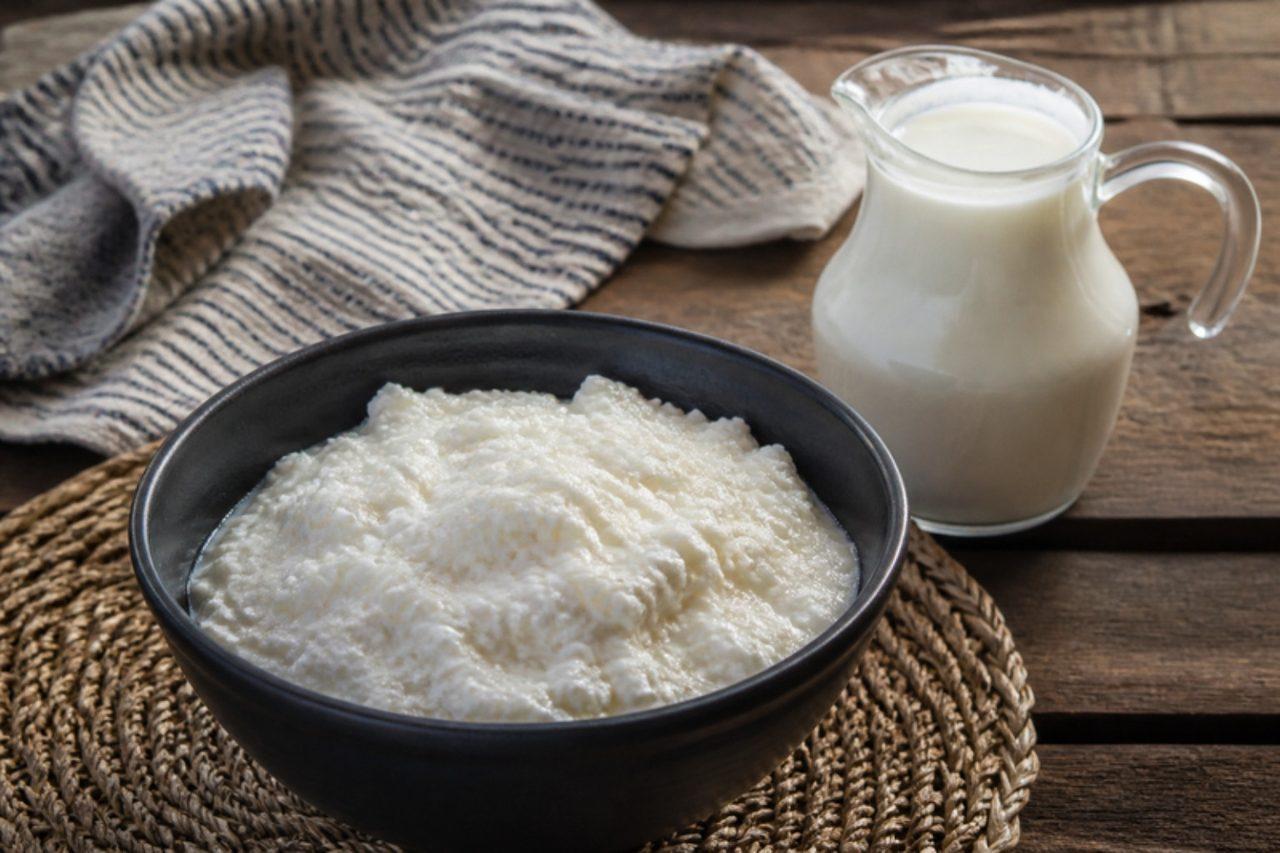
AmasiFermented milk with crumbly pap
Thick, tangy amasi was once soured in calabashes in Zulu and Xhosa homesteads, and it is still the drink-cum-meal that many South Africans crave on a hot afternoon, poured over crumbly pap as umvubo. At home it is easy and safe with pasteurised full-fat milk and a spoon of live cultured buttermilk as the starter; never use raw milk. Expect something like a pourable, sharper yoghurt with soft curds, cooling against the dry, crumbly maize. The common mistake is fermenting somewhere too warm, which makes the milk separate into watery whey and rubbery lumps. Chef's tip: once it has set, chill it for a few hours before eating; the cold firms the curd and rounds out the sourness.

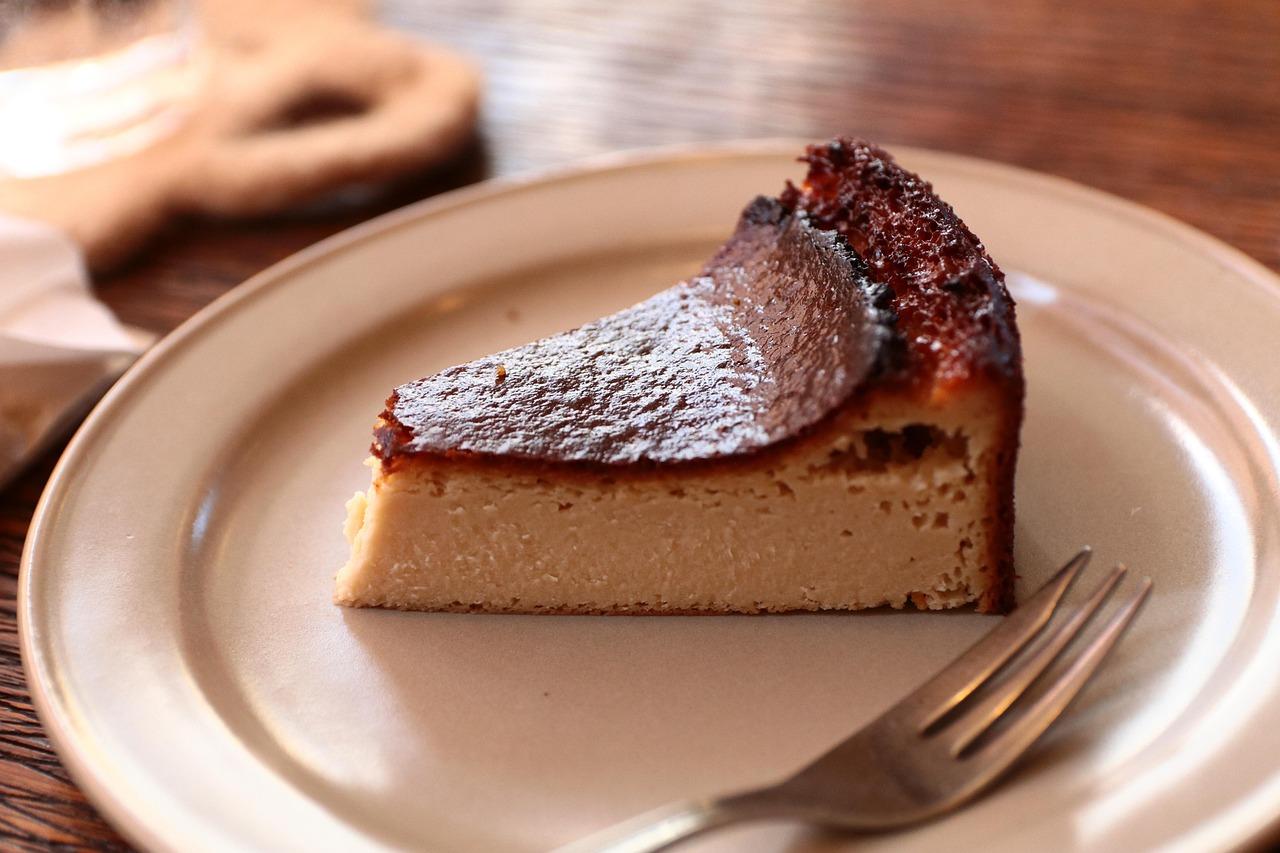
Basque burnt cheesecake
This crustless cheesecake was created in the early 1990s at La Viña, a pintxos bar in the old town of San Sebastián (Donostia) in the Basque Country, and is now famous around the world. It's baked very hot so the top caramelises almost black and the sides rise and crack, while the middle stays soft and creamy, almost runny. There's no base and no water bath, and the rough, rustic look is the point: it's lined with crumpled baking paper. La Viña uses a spoonful of wheat flour; cornflour does the same job and keeps it gluten free. Chef's tip: take it out of the oven while the centre still wobbles like a soft set custard; it firms up as it cools, and if it looks set in the oven, the middle will be dry instead of creamy.
 Spanish
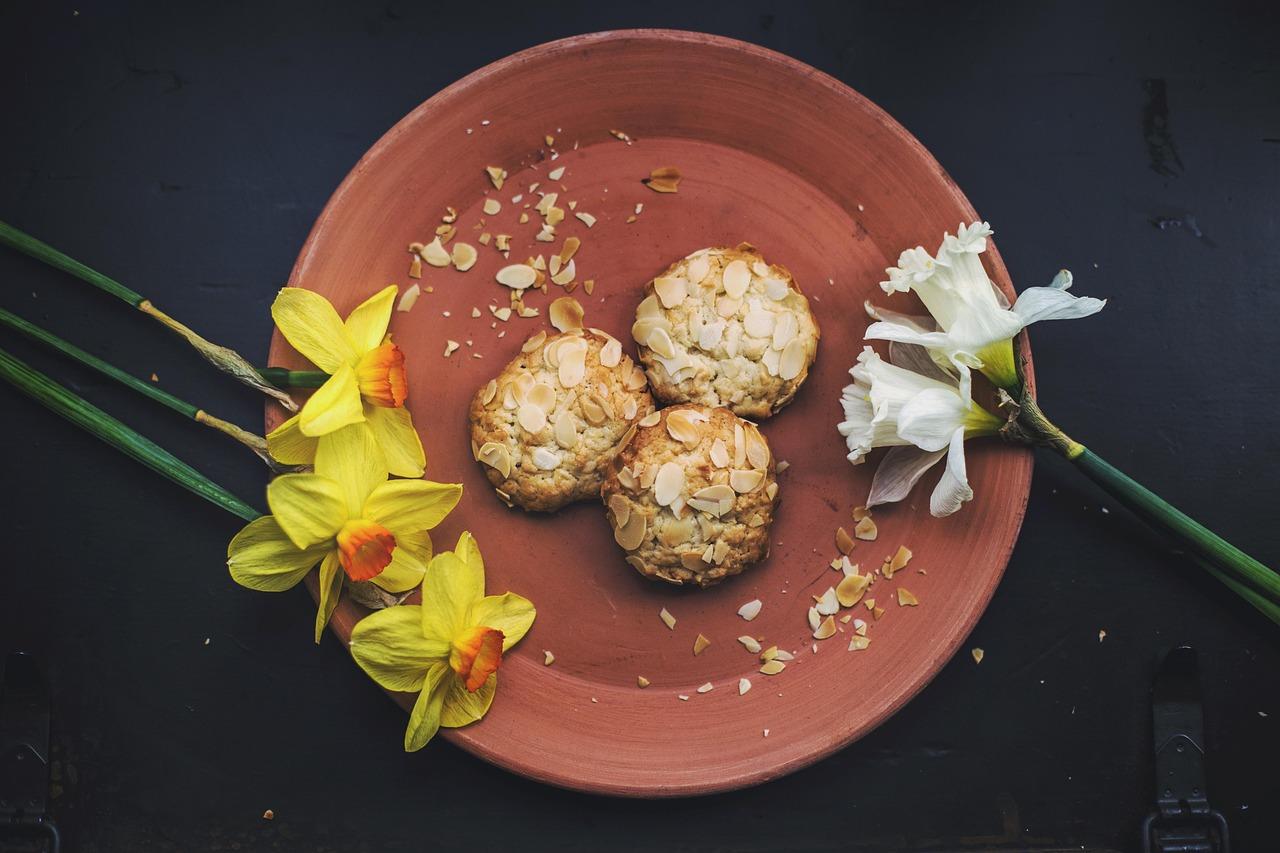
Almond cookiesOat, coconut and almond cookies
A big batch of crunchy cookies with rolled oats, coconut, chopped almonds and chunks of cooking chocolate. For a change, use cashew nuts instead of almonds.