
AI-generated image
Kinzanji miso
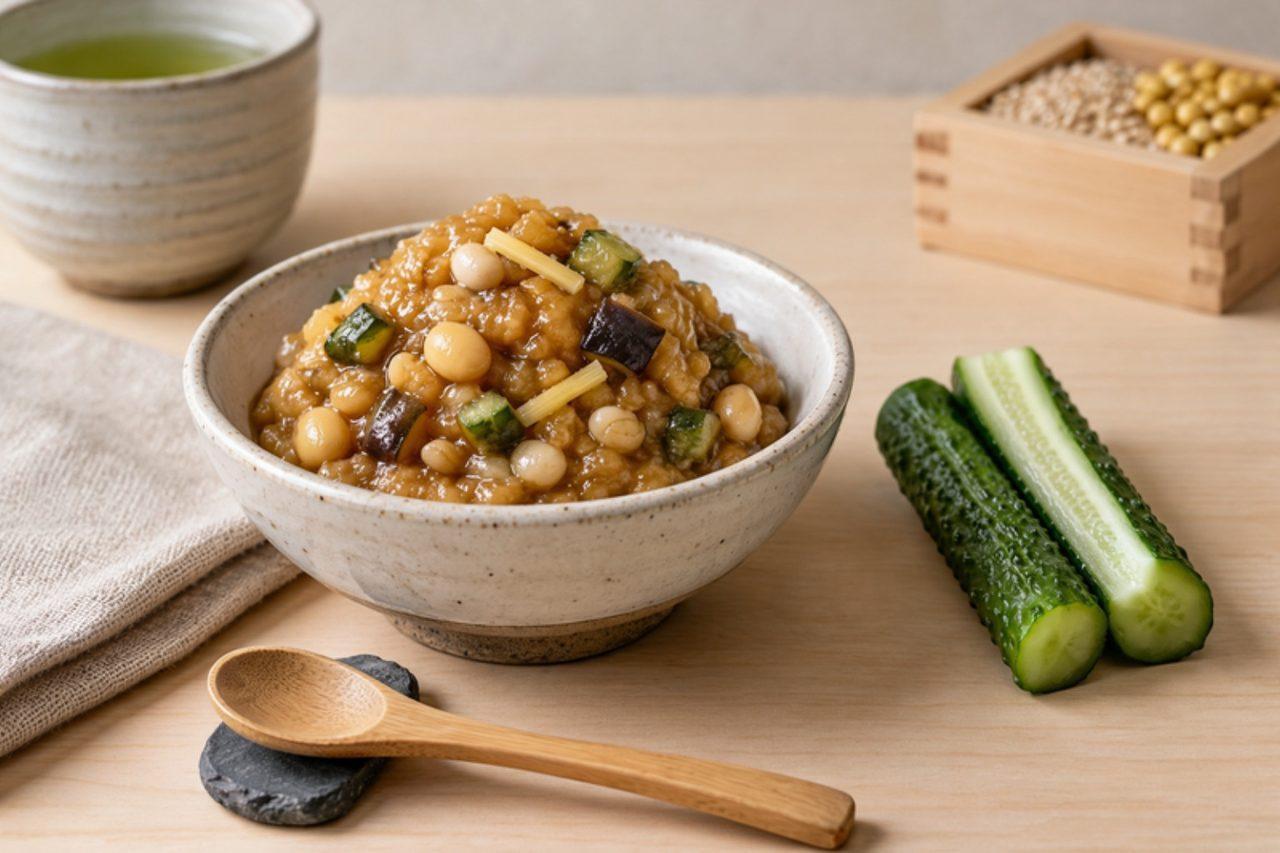
金山寺味噌: Wakayama's chunky 'eating miso' of barley koji, roasted soybeans, aubergine, cucumber and ginger, spooned over rice


Kinzanji miso is not for soup. It is a chunky, sweet-savoury 'name-miso', a miso you eat straight, spooned onto hot rice, tucked into a cucumber stick or set beside rice porridge at breakfast. Legend says a monk brought the method from Jingshan Temple in China to Yuasa in Wakayama, where the run-off liquid became Japan's first soy sauce. Traditionally it is made in summer, when aubergines and uri melons are plentiful, and eaten through autumn and winter. You can see every ingredient: soft barley grains, nutty roasted soybean pieces, little cubes of aubergine and cucumber, threads of ginger, all bound in a glossy brown paste. This home version uses ready-made barley koji. The common mistake is adding the vegetables wet; salt them, then squeeze hard, or the extra water thins the salt and invites spoilage. It is ready when the barley grains are soft, the mix smells sweet and soy-like, and it tastes rich and rounded, after about four weeks; then it is sweetened and kept cold. Japanese melon (shirouri) is traditional; firm cucumber is the usual substitute. Chef's tip: a spoonful on a cold block of tofu with a little chopped spring onion is the best snack you can make in 30 seconds.
- Total time
- 105 min
- Difficulty
- hard
- Serves
- 20
Ingredients
For the beans and koji
- 3 ½ oz dried soybeans
- 14 oz barley koji (mugi koji)from Japanese grocers or online
- 1 ¾ oz fine sea saltfor the koji
For the vegetables
- 7 oz aubergineJapanese aubergine if possible
- 7 oz firm cucumberor Japanese white melon (shirouri)
- 0.6 oz fine sea salt4% of the vegetable weight
- 1 oz fresh gingerpeeled, in fine matchsticks
- ⅛ oz kombua 5 cm square, cut into thin strips
Shop this recipe on Amazon
What you'll need
Spices & pantry
Fresh ingredients (3)
Links open Amazon in a new tab. As an Amazon Associate, WhatToEat.Today earns from qualifying purchases.
Method
0/9 doneStep 1: Toast the 3 ½ oz dried soybeans in a dry, heavy pan over a medium-low heat, shaking often, for 15 minutes, until golden brown, crackling and smelling nutty. Cool, then crack in a bag with a rolling pin and blow or sift away the loose skins.
15 minStep 2: Soak the cracked beans in warm water for 2 hours, drain, then simmer in fresh water for 25–30 minutes, until tender but holding their shape. Drain and cool to below 95°F.
30 minStep 3: Meanwhile, cut the 7 oz aubergine and 7 oz firm cucumber into 7 mm dice, toss with 0.6 oz fine sea salt and leave for 1 hour, until limp. Squeeze very hard in a cloth until no more liquid comes out.
15 minStep 4: Clean the jar or container and lid: wash in hot soapy water, rinse, then dry in a 250°F oven for 10 minutes (or pour boiling water over and in it and air-dry upside down). Let it cool; it must be completely dry. Use a 2 litre jar or crock.
Step 5: Crumble the 14 oz barley koji (mugi koji) into a large bowl and rub with 1 ¾ oz fine sea salt until evenly mixed. Add the cooled soybeans, the squeezed vegetables, 1 oz fresh ginger and ⅛ oz kombu, and mix well with clean hands.
10 minStep 6: Pack tightly into the clean container, pressing out air. Smooth the top, press cling film onto the surface and put a plate with a weight of about 500 g on top.
5 minStep 7: Leave in a cool, dark place (18–77°F) for 3–4 weeks. Once a week, stir from the bottom with a clean, dry spoon, then smooth, re-cover and weight. Liquid rising on top is normal: stir it back in. It is ready when the barley is soft and the whole smells sweet and soy-like.
Step 8: Normal: dark liquid, small bubbles, a sweet, slightly alcoholic, soy-sauce smell. Bad: fuzzy coloured mould, slime, a putrid smell, or pink or black patches; throw it all away.
Nutrition per serving
- Calories
- 115 kcal
- Protein
- 4 g
- Carbs
- 22 g
- Fat
- 1 g
- Fibre
- 2 g
Nutrition values are estimates.
KrazyBadal
Good to know
- How long does kinzanji miso take?
- About 105 minutes in total: 60 minutes to prepare and 45 minutes to cook.
- How many people does it serve?
- 20 as written. Change the servings above the ingredients and every amount scales to match.
- Is it vegan?
- Yes. It has no meat, fish, dairy or eggs.
- Can I make it ahead?
- Yes. It keeps well, so you can cook it earlier in the day or the day before and reheat it.
- What can I use instead of firm cucumber?
- Courgette, same weight (in salads, use young ones).
- What can I use instead of fresh ginger?
- ¼ tsp ground ginger per tbsp fresh (add it with the spices).
Reviews
No reviews yet. Be the first to cook it.
Rate this recipe
Sign in to rate and review this recipe.
You might also like
Okonomiyaki
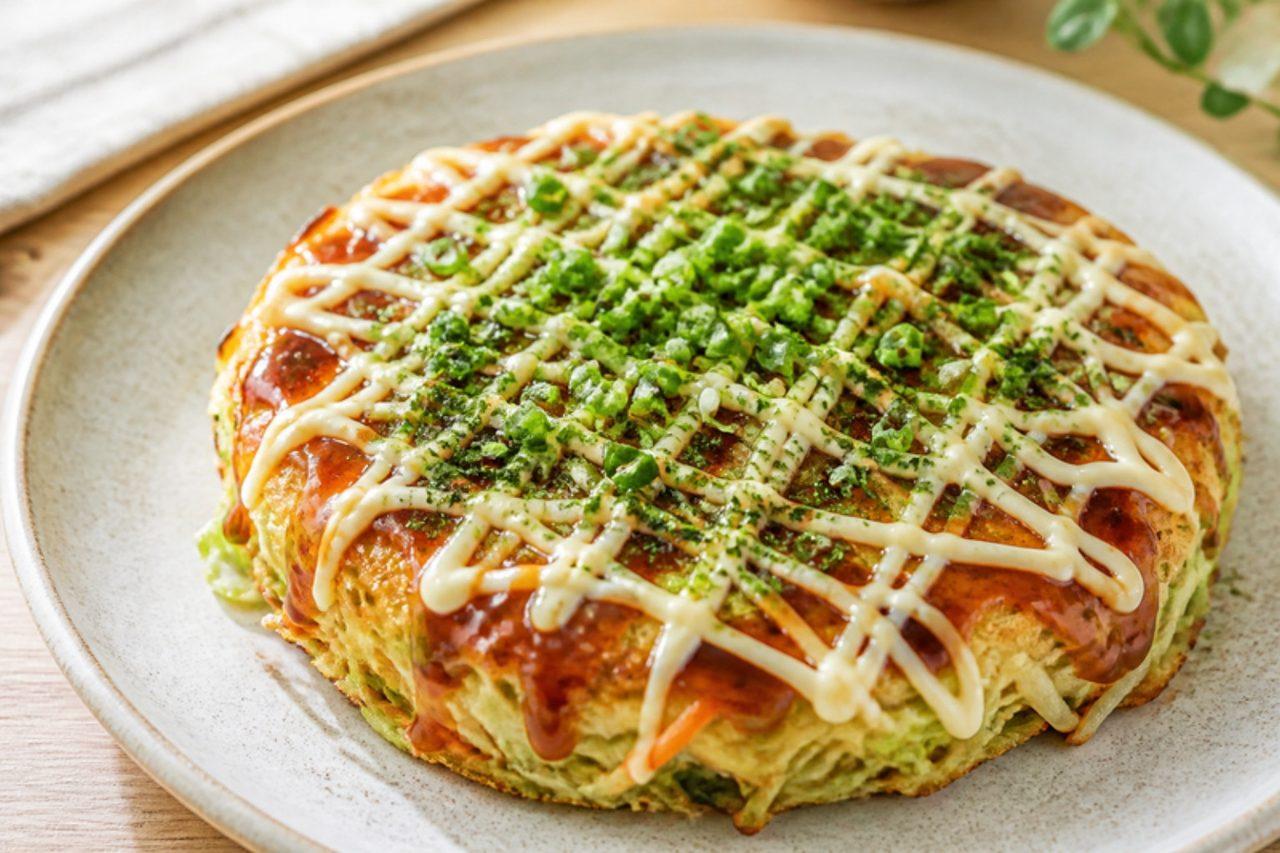
Okonomiyaki (お好み焼き, 'grilled as you like it') is the pride of Osaka, where it's cooked on hot iron griddles in lively restaurants. Finely shredded cabbage is folded into a light batter with egg and spring onion, then fried into a thick, soft pancake with a crisp outside. It's painted with a fruity brown sauce and zigzagged with mayonnaise. Bonito flakes are usual on top; this vegetarian version uses seaweed flakes and pickled ginger instead. Chef's tip: don't press the pancake down with your spatula while it cooks. Osaka cooks leave it alone so the cabbage steams inside and stays light and fluffy; pressing squeezes out the air.
Vegan nuoc cham
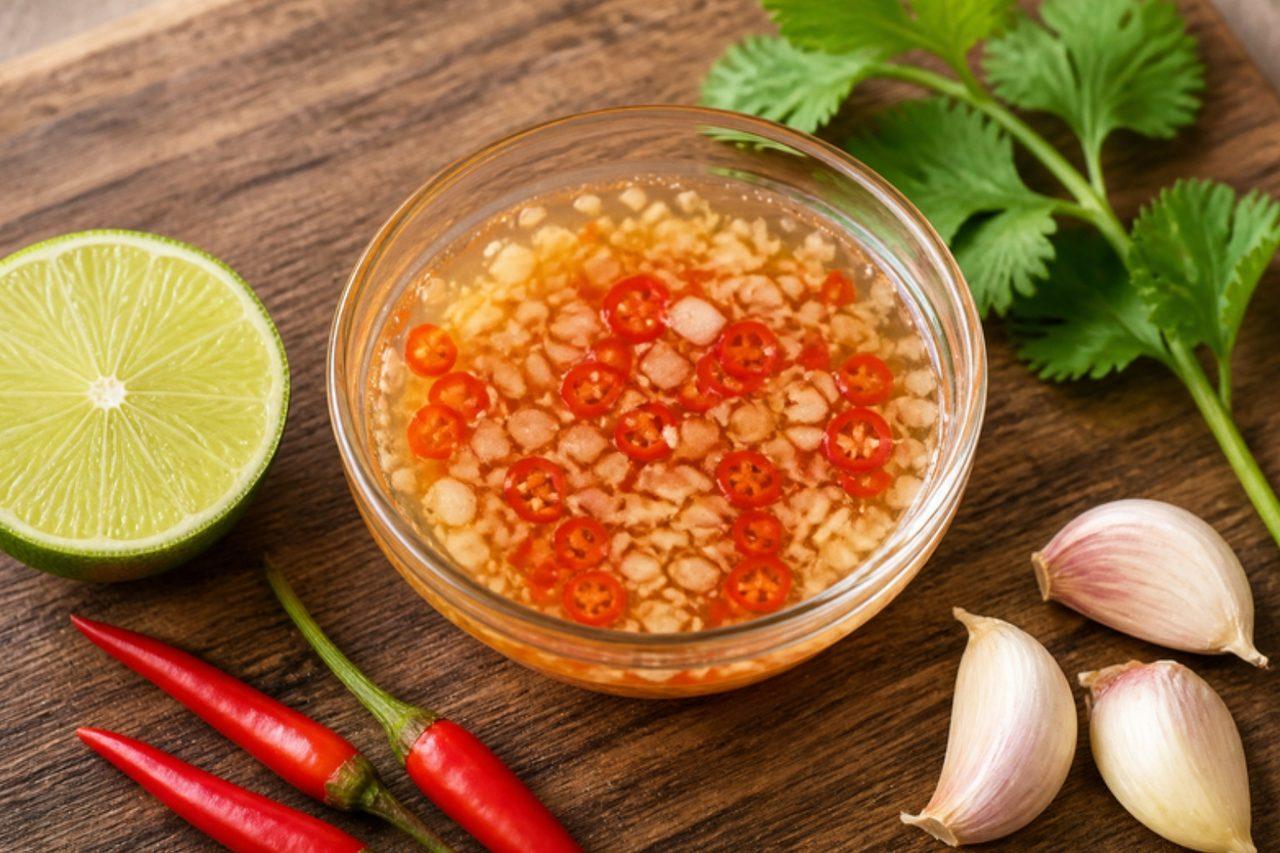
Nước chấm is the dipping sauce that goes with almost everything in Vietnam: spring rolls, bánh xèo, noodle salads and broken rice. Buddhist vegetarian cooks, all over the country, make it without fish sauce, using light soy sauce and a little coconut water for the deep, rounded taste. It should be thin, clear and pale amber, with flecks of garlic and chilli floating on top. Chef's tip: dissolve the sugar in the warm water first, then add the lime and soy, and stir in the garlic and chilli last, pounded with a pinch of sugar, so they float on the surface instead of sinking.
 Vietnamese

Mint and onion chutney
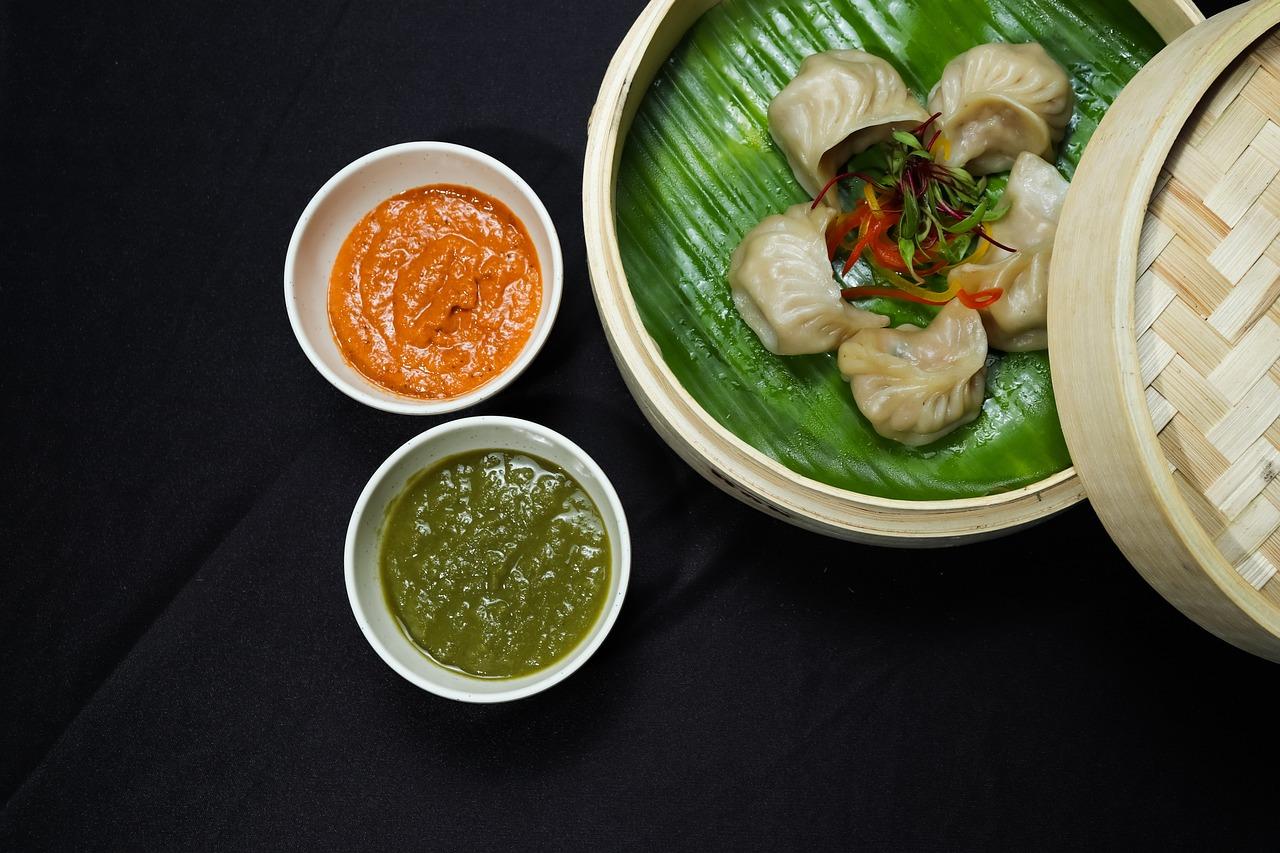
Onions fried gently until soft and sweet, then blended with fresh mint, green chilli and lemon juice. It's a mellow, fresh-tasting chutney that is great with bhajias, samosas, kebabs and tikka, or spread in sandwiches.
 Indian
