
AI-generated image
Karonde ka achar
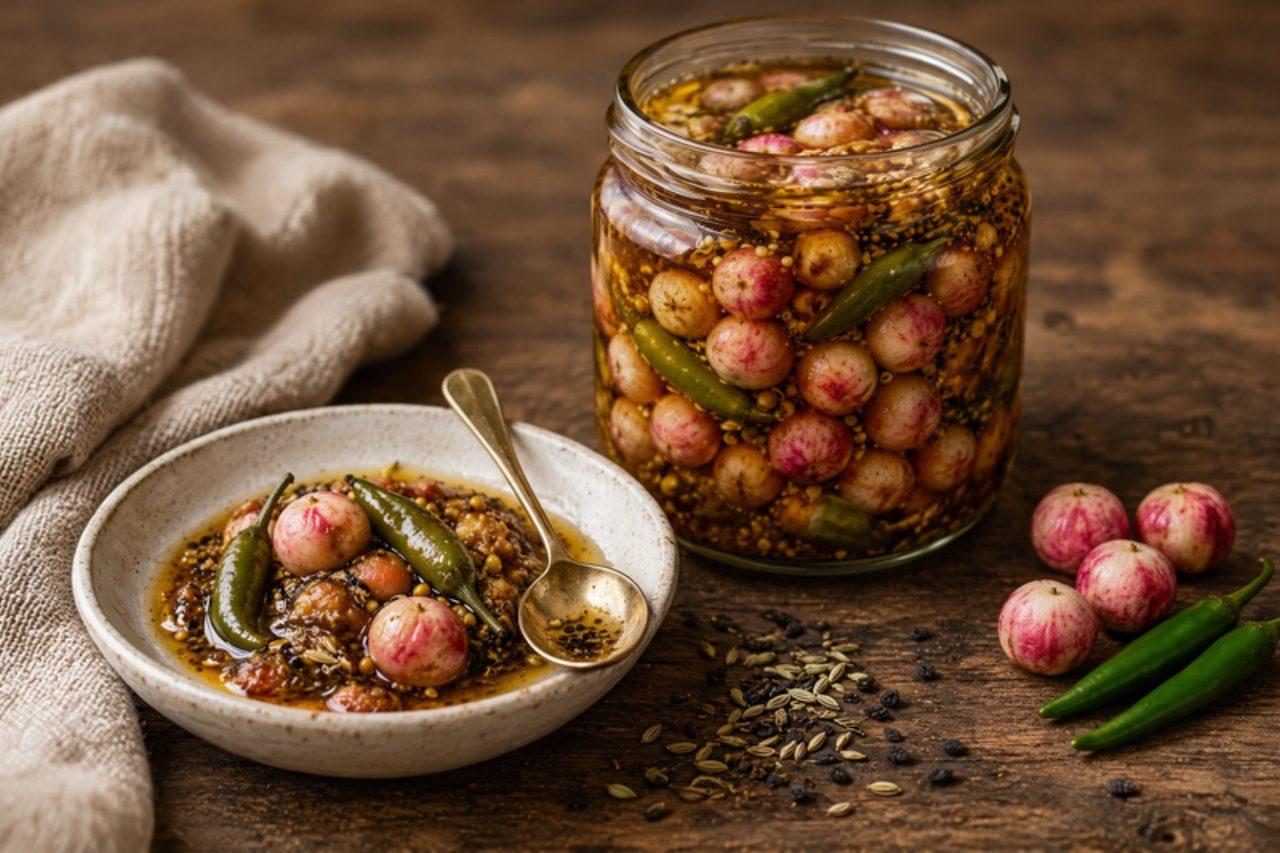
करौंदे का अचार: pink-blushed karonda berries and green chillies under smoked mustard oil with fennel and nigella


When the thorny karonda bushes along Punjab and Rajasthan field edges fruit in July and August, the small green berries with rosy cheeks end up in jars of karonde ka achar. The fruit is very sour and slightly bitter-milky when raw, so it suits a bold mustard-oil pickle: halved berries and slit green chillies are salted, dried for a day, then tossed with crushed fennel, nigella, fenugreek and mustard. After a week the berries turn soft and sour-tangy, the chillies mellow, and the oil smells of saunf. Eat it with paratha, moong dal khichdi or a plain bowl of curd rice. Karonda is hard to find abroad; firm fresh cranberries are the closest substitute in sourness and size. Common mistake: skipping the drying day; wet fruit thins the oil and invites mould. It is ready when the berries yield to the teeth and the spice coat has darkened. Because it holds fresh green chillies under oil, keep this jar in the fridge for up to 2 months, berries always under oil, dry spoon every time; discard if you see mould, fizzing or an off smell. Chef's tip: wear gloves when halving karonda, the white latex is sticky and stains fingers.
- Total time
- 40 min
- Difficulty
- easy
- Serves
- 16
Ingredients
For the fruit
- 1 ⅛ lb karonda berriesor firm fresh cranberries
- 8 fat green chilliesslit lengthways
- 1 ½ tbsp salt
- 1 tsp ground turmeric
For the masala
- 2 tbsp fennel seeds (saunf)
- 2 tbsp yellow mustard seeds
- 1 tsp nigella seeds (kalonji)
- 1 tbsp red chilli powder
- ¼ tsp gluten-free asafoetida
- 1 tbsp salt
- 2 tbsp lemon juiceextra acid because the green chillies are fresh
- ¾ cup mustard oil
Shop this recipe on Amazon
What you'll need
Spices & pantry
Fresh ingredients (3)
Links open Amazon in a new tab. As an Amazon Associate, WhatToEat.Today earns from qualifying purchases.
Method
0/8 doneStep 1: Wash the 1 ⅛ lb karonda berries and 8 fat green chillies and dry them thoroughly. Halve the berries and flick out the seeds with the tip of a knife (cranberries just need halving).
20 minStep 2: Toss with 1 ½ tbsp salt and 1 tsp ground turmeric in a dry bowl and leave for 2 hours. Pour off any juice, then spread on a clean cloth in sun or a warm airy room for about a day, until the cut faces look dry and slightly wrinkled.
5 minStep 3: Clean the jar and lid: wash in hot soapy water, rinse, then dry in a 250°F oven for 10 minutes (or boil for 10 minutes and air-dry upside down on a rack). Let it cool completely; jar, lid, bowl and spoons must be bone dry.
10 minStep 4: Dry-roast 2 tbsp fennel seeds (saunf) and 1 tsp fenugreek seeds (methi dana) in a pan over a low heat for about 2 minutes, until fragrant and a shade darker. Cool, then crush coarsely with 2 tbsp yellow mustard seeds in a mortar and stir in 1 tsp nigella seeds (kalonji).
4 minStep 5: Heat ¾ cup mustard oil in a pan over a high heat until it smokes and the colour lightens from deep yellow to pale gold, about 3 minutes. Turn off the heat and let it cool until just warm.
4 minStep 6: Mix the crushed spices with 1 tbsp red chilli powder, ¼ tsp gluten-free asafoetida and 1 tbsp salt, moisten with 3 tbsp of the warm oil, then add the dried fruit and chillies and the 2 tbsp lemon juice. Toss until every piece is coated.
3 minStep 7: Pack into the jar, pressing down, and pour in the rest of the oil when cold so it covers the fruit by 2 cm. Close and refrigerate.
Step 8: Shake the jar daily for 7 days. It is ready when the berries are tender and the masala smells mellow rather than raw. Keep in the fridge up to 2 months, fruit under oil, dry spoon each time; discard if mould, fizzing, a slimy texture or a rotten smell appears.
Nutrition per serving
- Calories
- 110 kcal
- Protein
- 1 g
- Carbs
- 4 g
- Fat
- 11 g
- Fibre
- 2 g
Nutrition values are estimates.
KrazyBadal
Good to know
- How long does karonde ka achar take?
- About 40 minutes in total: 30 minutes to prepare and 10 minutes to cook.
- How many people does it serve?
- 16 as written. Change the servings above the ingredients and every amount scales to match.
- Is it vegan?
- Yes. It has no meat, fish, dairy or eggs.
- Is it gluten free?
- Yes, as written. Check the labels on stock, sauces and spice mixes, which sometimes contain gluten.
- Is it very spicy?
- It has some heat. Use less chilli for a milder version, or more if you like it hot.
- Can I make it ahead?
- Yes. It keeps well, so you can cook it earlier in the day or the day before and reheat it.
- What can I use instead of ground turmeric?
- Leave it out (it mostly adds colour).
- What can I use instead of fennel seeds (saunf)?
- Aniseeds, same amount (a stronger liquorice taste).
Reviews
No reviews yet. Be the first to cook it.
Rate this recipe
Sign in to rate and review this recipe.
You might also like
Masala khakhra
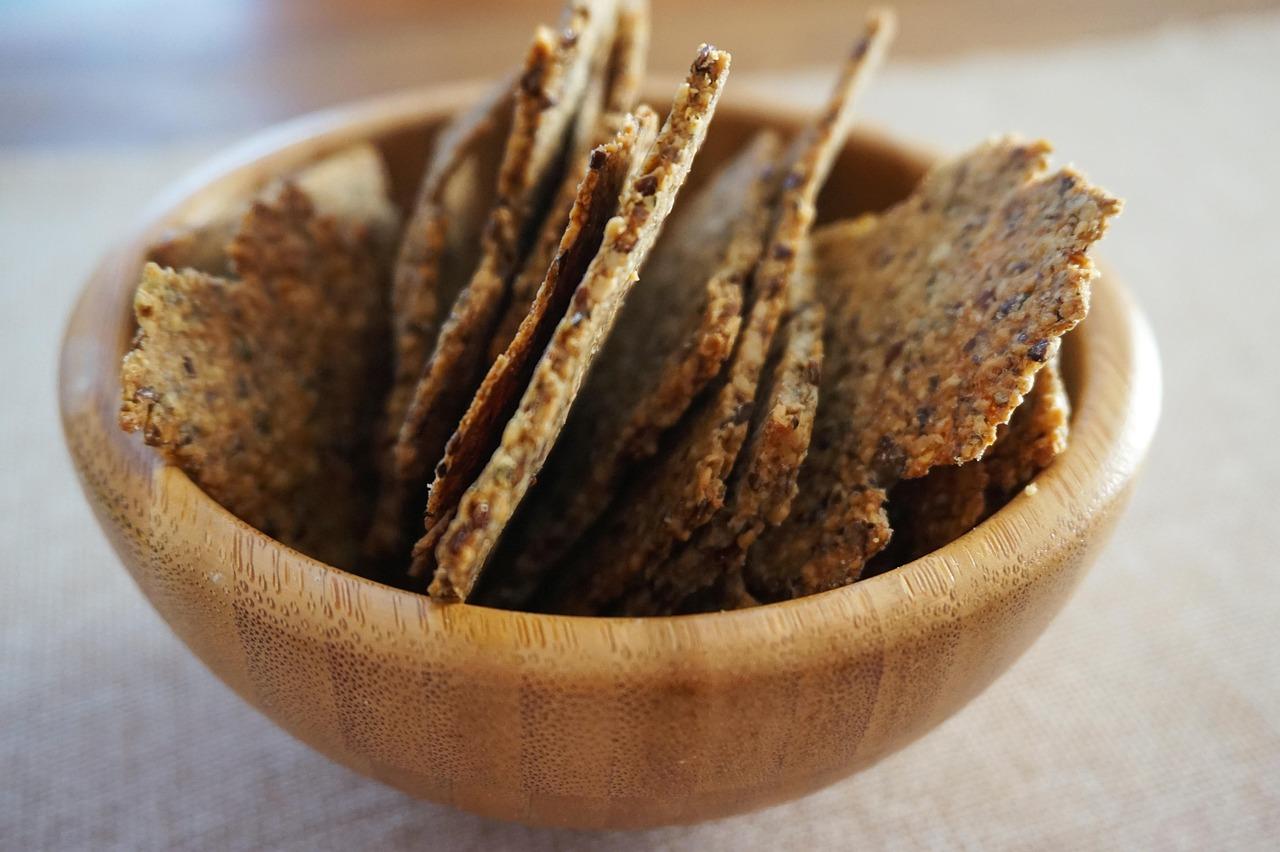
Khakhra are thin chapaties roasted slowly on a griddle until they turn crisp, like a cracker. This masala version adds gram flour, fresh fenugreek, turmeric and chilli to the wheat dough. They are a light Gujarati breakfast or tea-time snack, and lovely with pickle, chutney or a smear of butter. You can also make them in a roti maker.

Sabudana khichdi
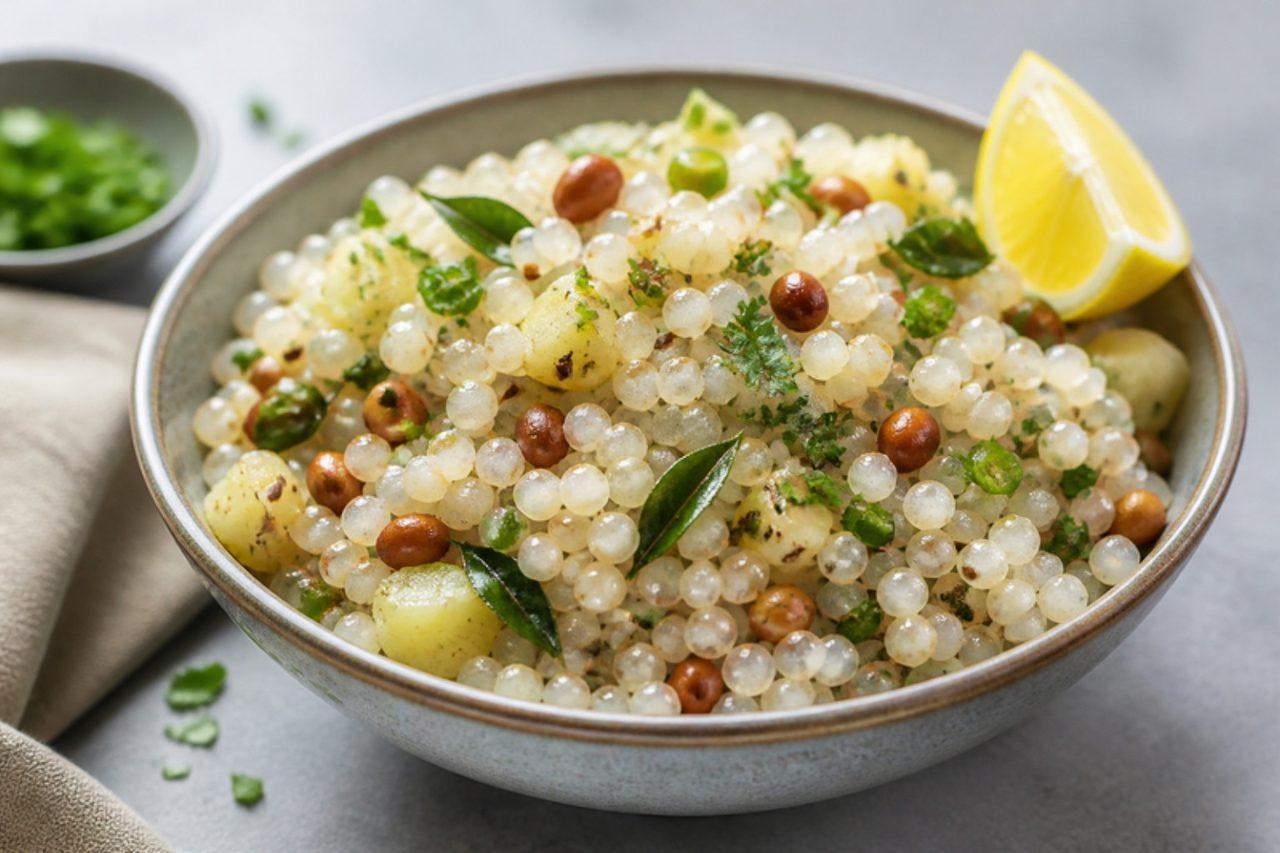
Sabudana khichdi is the dish that sees Maharashtra through every vrat (fast), from Navratri to Ekadashi, but it's so good that people eat it any day of the week. Soaked sago pearls are tossed in a pan with crushed roasted peanuts, cubes of potato, cumin and green chilli until each pearl turns glassy and separate, then finished with lemon and coriander. It's soft, chewy, nutty and gently hot. Fasting rules vary from family to family, so check yours; this version uses rock salt and no asafoetida, onion or garlic. Traditionally it's cooked in ghee; use ghee instead of oil if you aren't keeping it vegan. Chef's tip: soak the sago in just enough water to cover by the height of the pearls themselves, no more; too much water is the reason khichdi turns into one sticky lump.

Bagara baingan
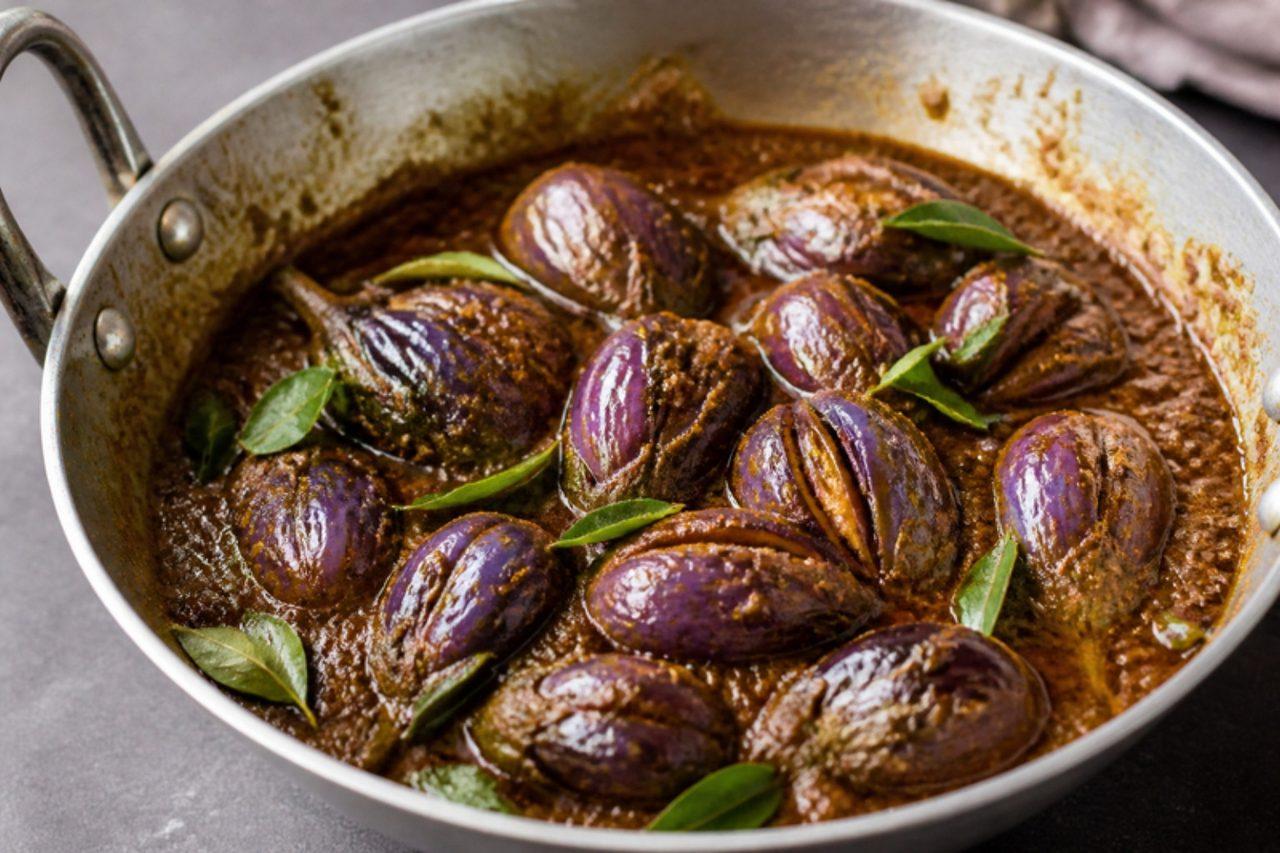
Bagara baingan is a Hyderabadi wedding dish of small aubergines cooked whole in a dark, tangy gravy of roasted peanuts, sesame, dried coconut and tamarind. Unlike a Gujarati stuffed brinjal, the aubergines here are only quartered at the base and fried until silky, then left to soak up a thin-but-rich sauce that is finished with a tempering, the 'baghar' that gives the dish its name. It's sour, nutty and gently spiced, and is served with biryani, bagara rice or plain rice. Chef's tip: choose small, glossy purple aubergines that feel heavy for their size; soft, light ones are full of seeds and turn mushy before the gravy has a chance to cling.