 Korean
 Spicy
Jjamppong
Spicy seafood noodle soup
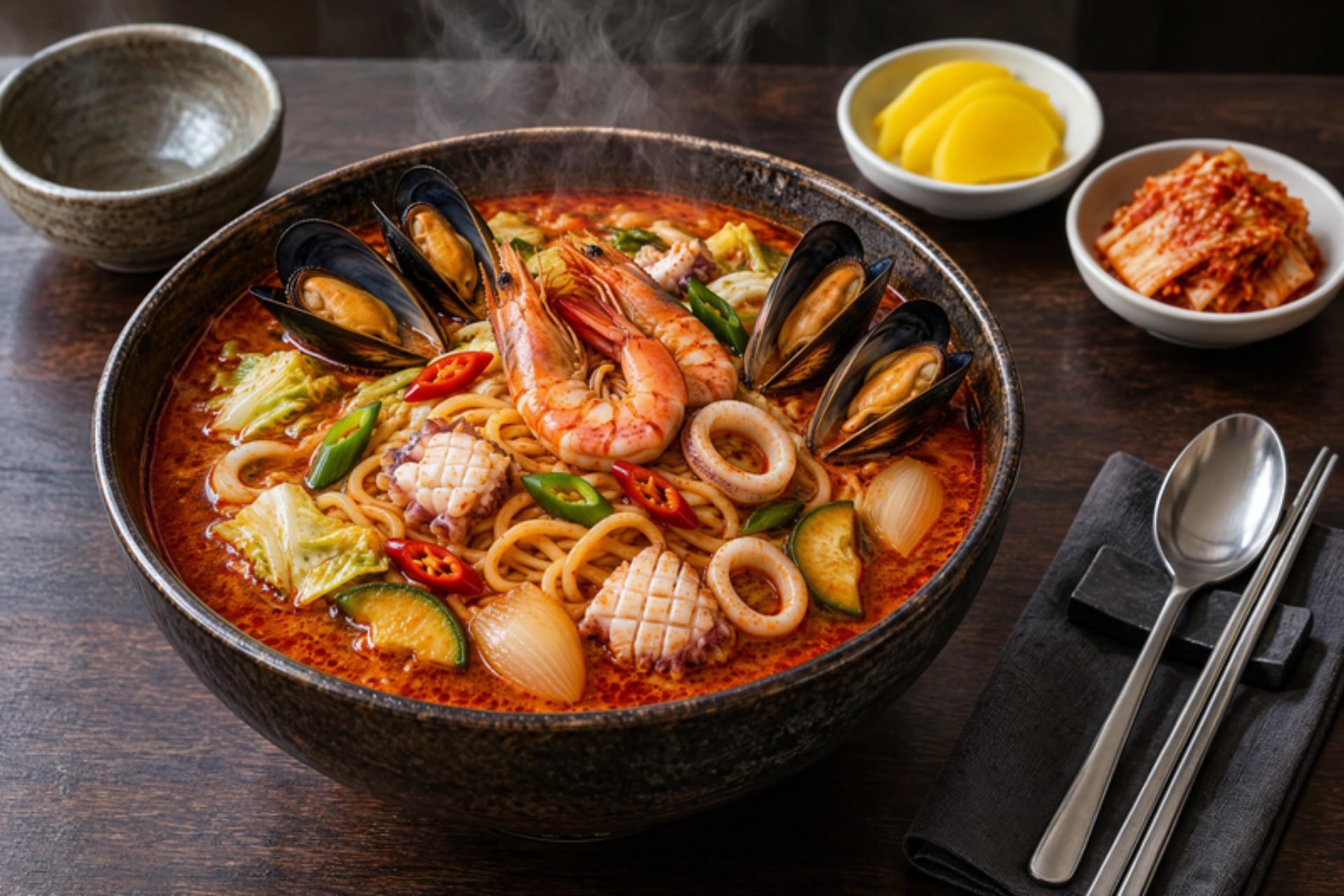
Jjamppong (짬뽕): fiery red seafood and vegetable noodle soup from Korean-Chinese restaurants
Jjamppong was born in the Chinese restaurants of Incheon's Chinatown, where cooks from Shandong adapted their noodle soup to Korean tastes, and today it is the spicy half of the eternal Korean dilemma: jjamppong or black-bean jajangmyeon, delivered to offices and homes on a rainy day. Mussels, prawns and squid are stir-fried with a little pork, cabbage and onion in smoky chilli oil, then simmered into a deep red broth over thick wheat noodles. This recipe contains pork (thin strips of shoulder) and shellfish. The common mistake is scorching the chilli flakes over a fierce heat: they turn black and bitter in seconds, so add them with the pan pulled off the heat. Chef's tip: let the vegetables catch and char slightly in the wok before the stock goes in; that smoky edge, called bul-mat, is what makes restaurant jjamppong taste the way it does.
- Prep
- 25 min
- Cook
- 25 min
- Difficulty
- Medium
- Serves
- 4
- Per serving
- 540 kcal
Ingredients
For the seafood and pork
- 14 oz musselsin their shells
- 7 oz raw king prawnspeeled and deveined
- 7 oz squidcleaned, cut into rings or strips
- 3 ½ oz pork shouldercut into thin strips
For the soup
- 3 tbsp neutral oil
- 4 cloves garlicfinely chopped
- 1 tsp fresh gingergrated
- 3 spring onionssliced, green and white kept apart
- 1 onionthinly sliced
- 5 ½ oz white cabbagecut into strips
- 1 carrotsmall, cut into thin batons
- ½ courgettecut into half-moons
- 2 tbsp soy sauce
- 1 tbsp oyster sauce
- 5 cups chicken stock
- ½ tsp salt
- ¼ tsp ground black pepper
For the noodles
Tick what you have; the rest goes in the basket.
Method
0/9 doneStep 1: Scrub 14 oz mussels under cold running water and pull off the hairy beards. Tap any open ones on the worktop: discard any that stay open, and any with cracked or broken shells. Keep the rest in the fridge until needed.
Step 2: Heat 3 tbsp neutral oil in a wok or large pan over a medium heat. Add 4 cloves garlic, 1 tsp fresh ginger and the white parts of 3 spring onions and stir for 1 minute, until fragrant but not brown.
1 minStep 3: Add 3 ½ oz pork shoulder and stir-fry over a high heat for 2 minutes, until it is no longer pink; it finishes cooking in the soup to at least 160°F.
2 minStep 4: Pull the pan off the heat and stir in 3 tbsp gochugaru (Korean chilli flakes) for 20 seconds, until the oil turns brick red and smells smoky. Put it back over a high heat.
Step 5: Add 1 onion, 5 ½ oz white cabbage, 1 carrot and ½ courgette and stir-fry for 3–4 minutes, letting them catch a little at the edges, until wilted.
4 minStep 6: Add 2 tbsp soy sauce and 1 tbsp oyster sauce, let them sizzle for a few seconds, then pour in 5 cups chicken stock. Bring to the boil and simmer for 5 minutes.
5 minStep 7: Meanwhile, cook 14 oz fresh thick wheat noodles (jjamppong or udon noodles) in a separate pan of boiling water according to the packet, usually 2–3 minutes, until chewy. Drain, rinse briefly in hot water and divide between four deep bowls.
3 minStep 8: Add the mussels, 7 oz raw king prawns and 7 oz squid to the soup. Cover and simmer for 3–4 minutes, until the mussels open, the prawns are pink and opaque all through and the squid turns white. Discard any mussels that stay closed. Don't cook longer or the squid turns rubbery.
4 minStep 9: Season the soup with ½ tsp salt and ¼ tsp ground black pepper. Ladle the soup, seafood and vegetables over the noodles, scatter with the green parts of the spring onions and serve at once.
KrazyBadal
Reviews
No reviews yet. Be the first to cook it.
Rate this recipe
Sign in to rate and review this recipe.