
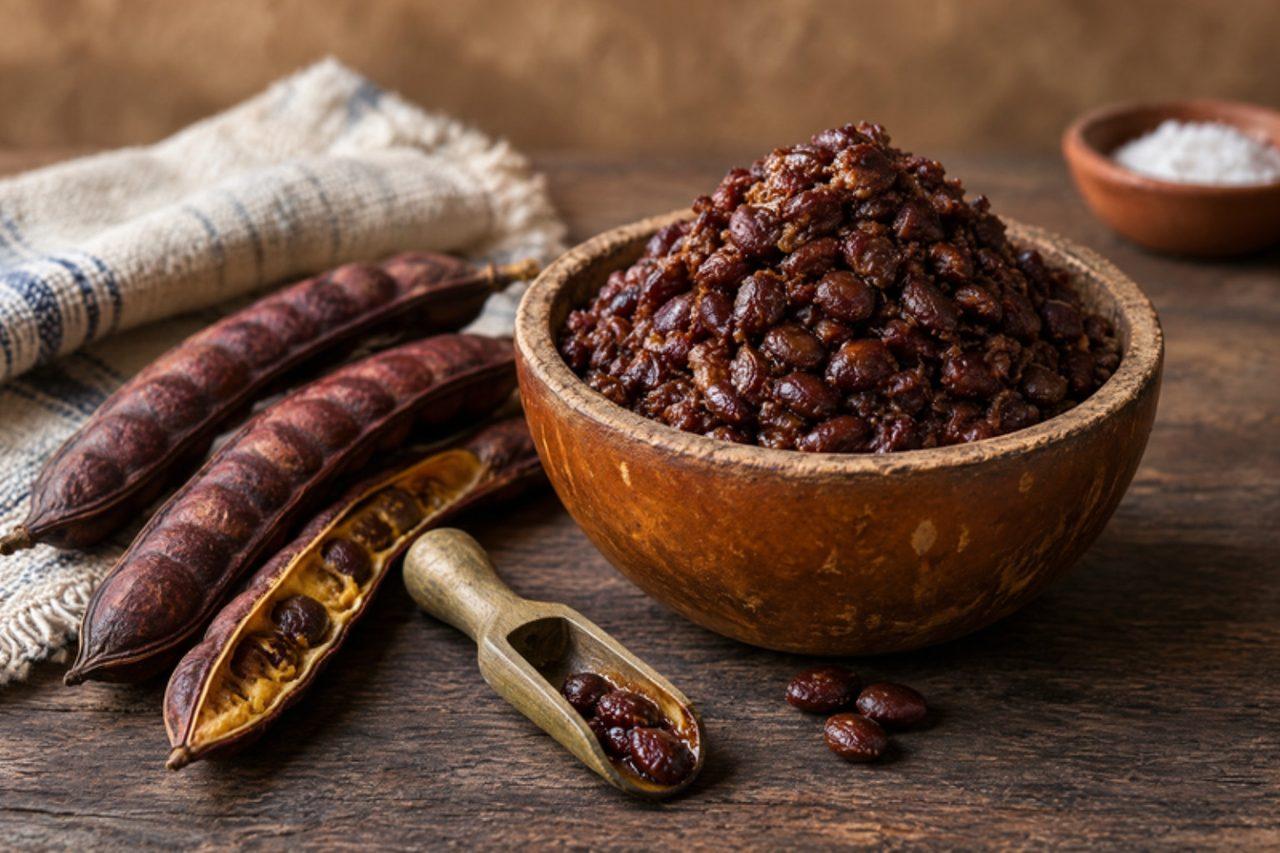
AI-generated image
Iru
Iru: locust beans boiled, hulled and fermented warm into the pungent, savoury heart of Yoruba stews


In Yoruba towns from Ibadan to Ogbomoso, iru is the smell of a good stew: a spoonful of the dark, fermented locust beans melted into efo riro, ofada ayamase, gbegiri and ewedu changes the whole pot. Making it is women's work passed down over generations, done in the dry season when the yellow pods of the African locust bean tree (igba) ripen. The seeds are boiled for hours, rubbed free of their black hulls, boiled again and wrapped warm in leaves for two or three days, when a sticky bacterial ferment covers them. Iru woro is left whole; iru pete is mashed. Expect a powerful ammonia-and-cheese smell, a soft, sticky texture and a deep savoury, almost meaty taste once cooked. Common mistake: fermenting too cool; below 30 °C the beans go sour and grey instead of developing the rich, sticky coat. Keep them in a warm oven with only the light on, or in a cooler box with a hot-water bottle. It is ready when the beans are dark brown, sticky and covered in fine white threads. Chef's tip: dried locust beans are sold at West African shops; fermented soybeans make a fair substitute.
- Total time
- 480 min
- Difficulty
- hard
- Serves
- 20
Ingredients
For the iru
- 1 ⅛ lb dried African locust bean seedsigba seeds, from West African shops
- 4 litres waterfor boiling, plus extra for rubbing
- 4 banana or plantain leavesor baking paper and a clean cloth
- ½ oz saltadded after fermenting
Shop this recipe on Amazon
What you'll need
Spices & pantry
Fresh ingredients (1)
Links open Amazon in a new tab. As an Amazon Associate, WhatToEat.Today earns from qualifying purchases.
Method
0/8 doneStep 1: Rinse the 1 ⅛ lb dried African locust bean seeds, put them in a large pot with the 4 litres water and boil over a medium heat for 5–6 hours (or 1½ hours in a pressure cooker), topping up with boiling water, until the black hulls soften and split when squeezed.
360 minStep 2: Drain and, while warm, rub the beans hard between your palms or pound them lightly in a mortar to loosen the hulls.
20 minStep 3: Tip into a big bowl of water and swirl; the black hulls float and can be poured off. Repeat until you are left with clean yellow-cream cotyledons.
25 minStep 4: Boil the cleaned beans in fresh water for 1 hour until soft, then drain thoroughly while hot.
60 minStep 5: Wilt the 4 banana or plantain leaves over a gas flame for a few seconds so they fold without tearing, line a basket or bowl with them, pile in the hot beans and wrap tightly.
10 minStep 6: Keep at 35–104°F for 2–3 days (oven with only the light on, or a cooler box with a hot-water bottle changed twice a day). Normal: a strong ammonia smell, a sticky white coating and threads when you lift a bean. Bad: fuzzy green, black or pink mould, a sour-rotten smell like spoiled meat, or grey slime — throw it all away.
Step 7: Unwrap, mix in the ½ oz salt, and leave whole for iru woro or mash roughly for iru pete.
5 minStep 8: Keep in a covered jar in the fridge for up to 2 weeks, or freeze in small portions for 6 months. Always fry or simmer it in stew before eating; a tablespoon seasons a pot for four.
Nutrition per serving
- Calories
- 65 kcal
- Protein
- 6 g
- Carbs
- 4 g
- Fat
- 4 g
- Fibre
- 2 g
Nutrition values are estimates.
KrazyBadal
Good to know
- How long does iru take?
- About 480 minutes in total: 60 minutes to prepare and 420 minutes to cook.
- How many people does it serve?
- 20 as written. Change the servings above the ingredients and every amount scales to match.
- Is it vegan?
- Yes. It has no meat, fish, dairy or eggs.
- Is it gluten free?
- Yes, as written. Check the labels on stock, sauces and spice mixes, which sometimes contain gluten.
- Can I make it ahead?
- Yes. It keeps well, so you can cook it earlier in the day or the day before and reheat it.
Reviews
No reviews yet. Be the first to cook it.
Rate this recipe
Sign in to rate and review this recipe.
You might also like
Vegetable brown stock
A hearty stock that's simmered for 2 hours, then blended and strained, so the potato gives it body. Its deeper flavour suits thick soups, gravies and stews. Freeze it in portions so it's ready when you need it.


Chaat masala
Chaat masala is the tangy, salty, slightly sulphurous sprinkle that makes chaat taste like chaat. Dried mango (amchur) gives the sourness and black salt the distinctive savoury edge. Sprinkle it over fruit, salads, raita, chips and street-food snacks.
 Indian

Bean sprouts
Sprouting whole green grams makes them crunchier, quicker to cook and more nutritious. All you need is muslin, water and a warm spot, and they're ready in 3–4 days. Use them in salads, bhel, usal and stir-fries. Any other whole pulse sprouts the same way.