
AI-generated image
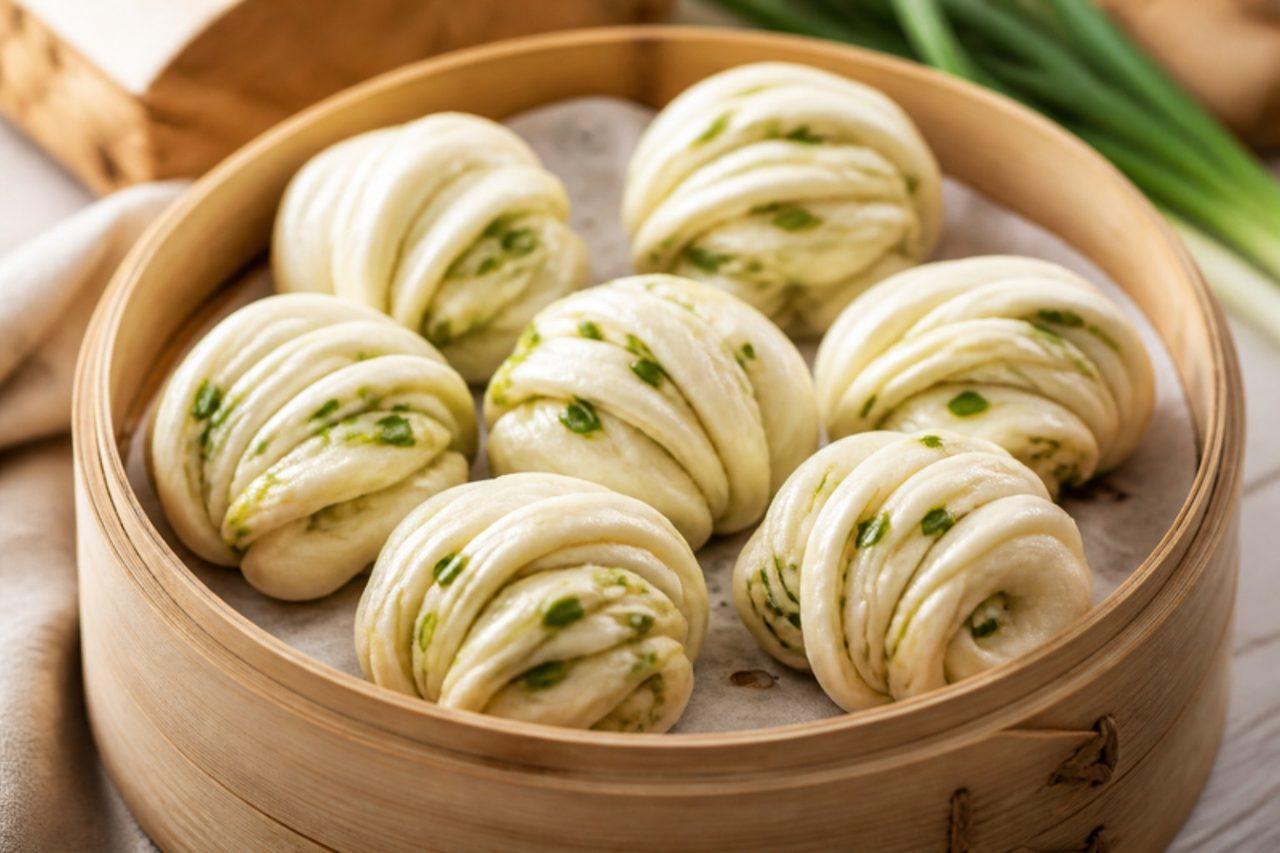
Hua juan (scallion flower rolls)
花卷 · northern China's twisted steamed buns layered with spring onion, salt and oil


Hua juan, 'flower rolls', are what a northern Chinese household makes when plain mantou feel too plain: the same dough is rolled out, spread with spring onion, salt and a little oil, then cut and twisted so the layers open into petals as it steams. Families in Hebei, Beijing and Shandong eat them for breakfast with millet porridge or with a stew for supper. The common mistake is spreading the filling to the very edge and pressing too hard while twisting, which squashes the layers together so you lose the flower. Chef's tip: dust the oiled surface with a little flour before rolling it up; it keeps the layers separate so they peel apart after steaming.
- Total time
- 115 min
- Difficulty
- medium
- Serves
- 10
Ingredients
For the dough
- 1 ⅛ lb plain flour
- ⅛ oz instant yeast
- ½ oz sugar
- 1 ¼ cups lukewarm water
For the filling
- 2 tbsp vegetable oil
- 1 tsp salt
- 1 tbsp plain flour
- 5 spring onionsfinely chopped, green parts mostly
Shop this recipe on Amazon
What you'll need
Spices & pantry
Fresh ingredients (1)
Links open Amazon in a new tab. As an Amazon Associate, WhatToEat.Today earns from qualifying purchases.
Method
0/8 doneStep 1: Mix 1 ⅛ lb plain flour, ⅛ oz instant yeast and ½ oz sugar, then stir in 1 ¼ cups lukewarm water and knead for 10 minutes until smooth and fairly firm. Cover and leave for about 1 hour, until doubled.
70 minStep 2: Knead the risen dough for 2 minutes to knock out the air, then roll it out on a floured surface into a rectangle about 40 × 30 cm and 4 mm thick.
5 minStep 3: Brush with 2 tbsp vegetable oil, leaving a 1 cm border clear, sprinkle evenly with 1 tsp salt and ½ tsp ground Sichuan pepper or five-spice, dust lightly with 1 tbsp plain flour and scatter over 5 spring onions.
Step 4: Roll up from a long side into a firm log and cut it into 20 pieces about 2 cm wide.
Step 5: Stack two pieces on top of each other, cut sides facing out. Press a chopstick down across the middle of the stack, then pull the ends gently and twist them under so the cut sides fan open like petals. Repeat to make 10 rolls.
Step 6: Put the rolls on squares of baking paper in a steamer basket, cover and leave for 20 minutes until puffy.
20 minStep 7: Steam over boiling water on a medium heat for 15 minutes. Turn off the heat and leave covered for 5 minutes before opening.
20 minStep 8: Serve warm, pulling the layers apart with your fingers.
Nutrition per serving
- Calories
- 220 kcal
- Protein
- 6 g
- Carbs
- 41 g
- Fat
- 4 g
- Fibre
- 2 g
Nutrition values are estimates.
KrazyBadal
Good to know
- How long does hua juan (scallion flower rolls) take?
- About 115 minutes in total: 100 minutes to prepare and 15 minutes to cook.
- How many people does it serve?
- 10 as written. Change the servings above the ingredients and every amount scales to match.
- Is it vegan?
- Yes. It has no meat, fish, dairy or eggs.
- What can I use instead of plain flour?
- Self-raising flour, same amount (then leave out the baking powder).
- What can I use instead of sugar?
- Caster sugar, same amount.
Reviews
No reviews yet. Be the first to cook it.
Rate this recipe
Sign in to rate and review this recipe.
You might also like
ChipaCheese bread rings
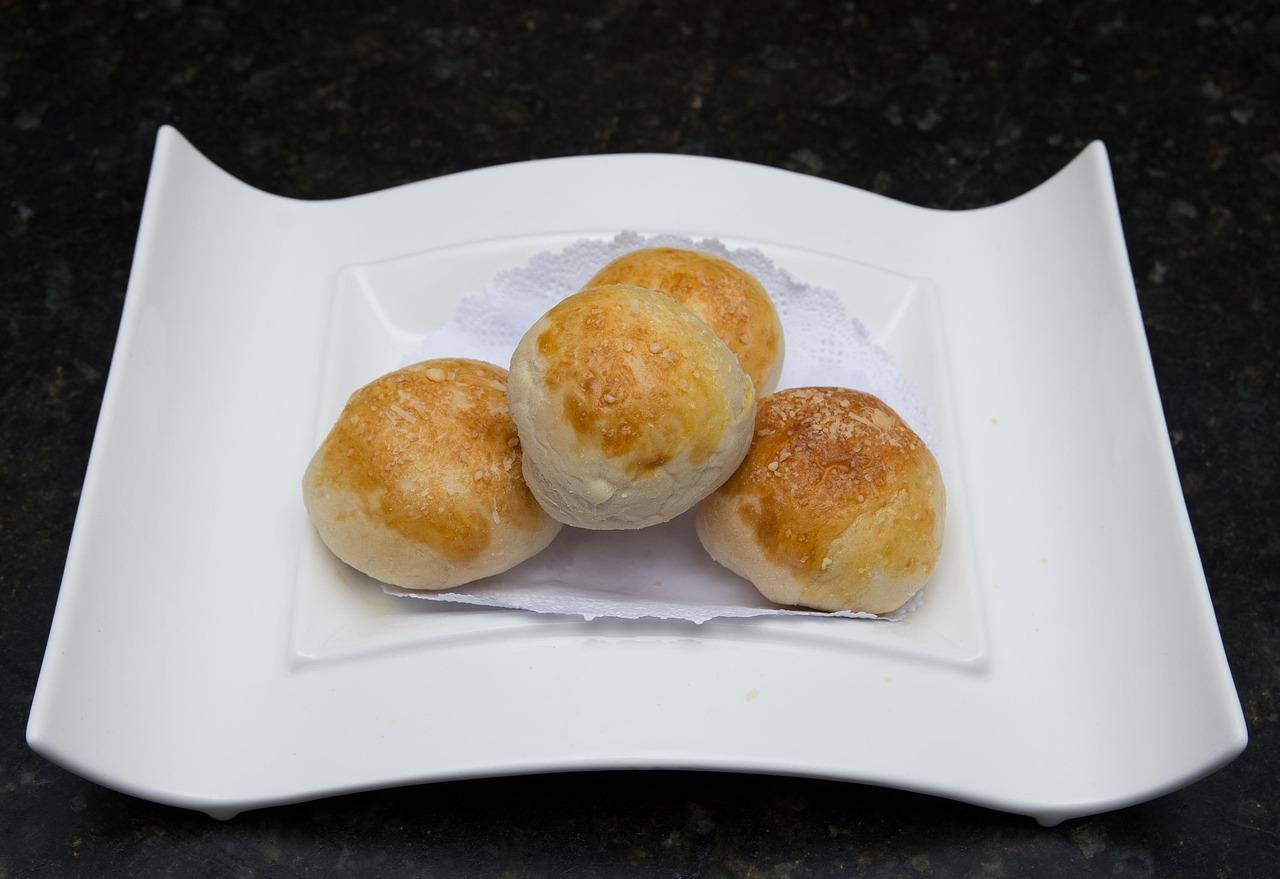
In Paraguay you hear 'chipa, chipa!' called by vendors with big baskets on buses and street corners, and every family bakes it for Holy Week, when chipa is the food of Good Friday. Cassava starch, a little cornmeal, butter, eggs and a lot of hard cheese are kneaded into a dough scented with aniseed, shaped into rings or small rolls and baked in a hot oven, traditionally a domed clay tatakua. It's chewy, crisp outside and best warm with cocido (toasted yerba tea). Chef's tip: the dough should feel soft and slightly greasy; add milk a spoon at a time, as too much makes the chipa spread flat.
 Paraguayan

SalufPuffy flatbread
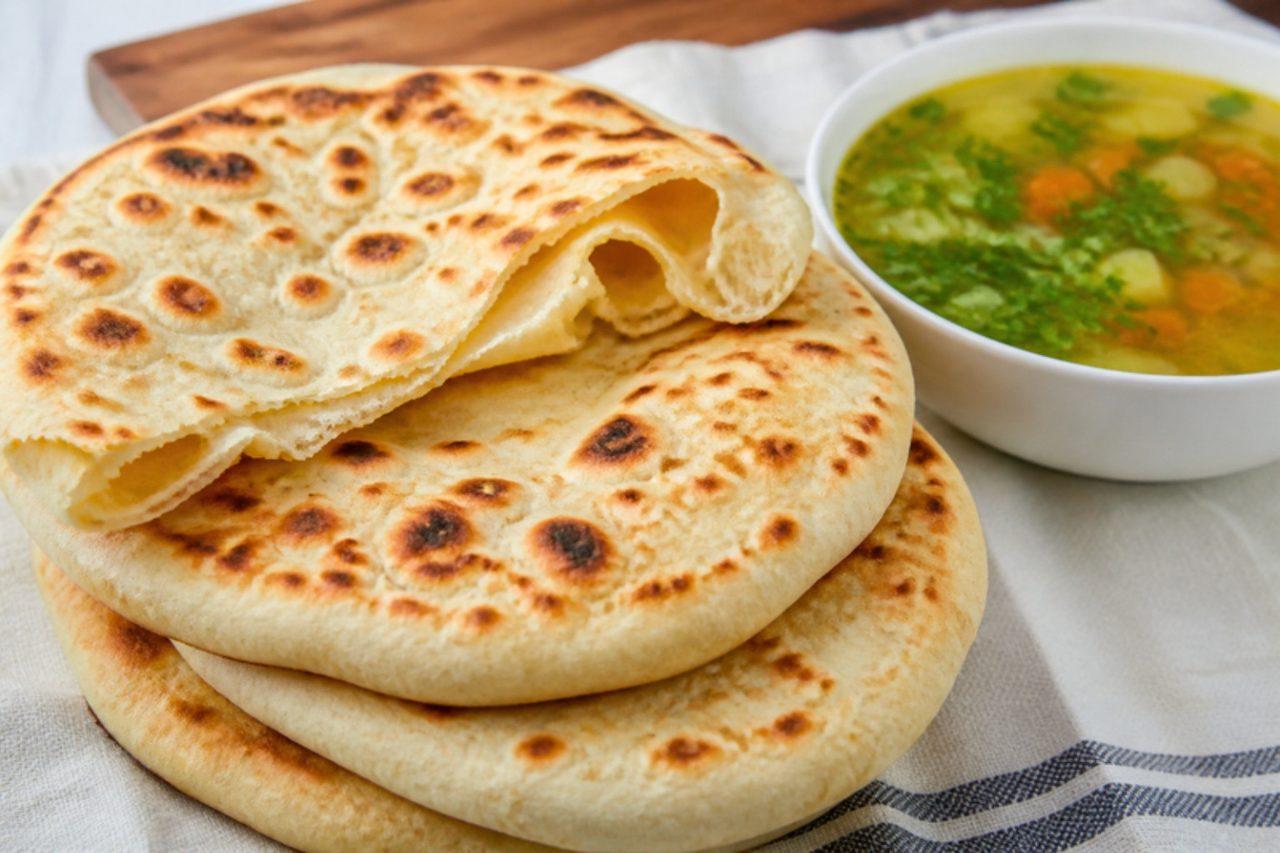
Saluf is the everyday bread of Yemenite Israelis, slapped onto a hot pan or taboon in Rosh HaAyin and Sha'arayim in Rehovot and eaten with marak temani, hilbe and zhug. It is soft and blistered, thicker than pita and with no pocket, made to tear and dunk. Home cooks often roll it too thin, which gives a cracker; it should be about 1 cm thick so it stays pillowy. Chef's tip: cook it under a lid on a very hot dry pan for the first minute, which traps steam and puffs it the way a taboon does.
 Israeli

Akki rottiRice flour flatbread
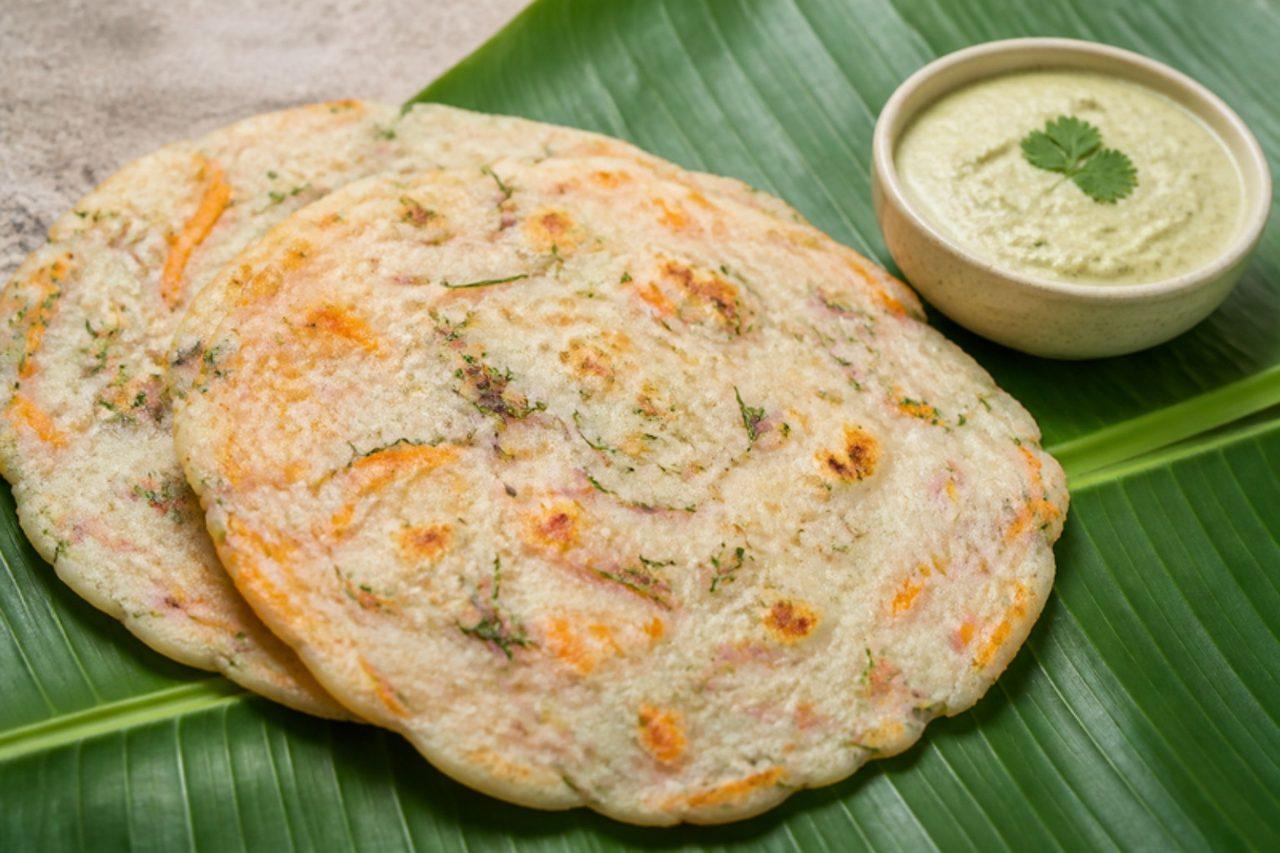
Akki rotti is the breakfast of Bengaluru and the old Mysore country: rice flour mixed with grated vegetables, dill, coconut and green chilli, patted out thin by hand straight onto a cold pan, then cooked until speckled and crisp at the edges. Every home has its own mix; dill (sabbasige soppu) is the classic flavour, but cucumber, carrot or fenugreek all turn up. It is eaten hot off the pan with coconut chutney or a dab of ghee and spicy chutney powder, and it is naturally gluten-free. Chef's tip: work with two pans in turn, patting the next rotti onto a cooled pan while the first one cooks; patting onto a hot pan burns your fingers and gives an uneven rotti.
 Indian