
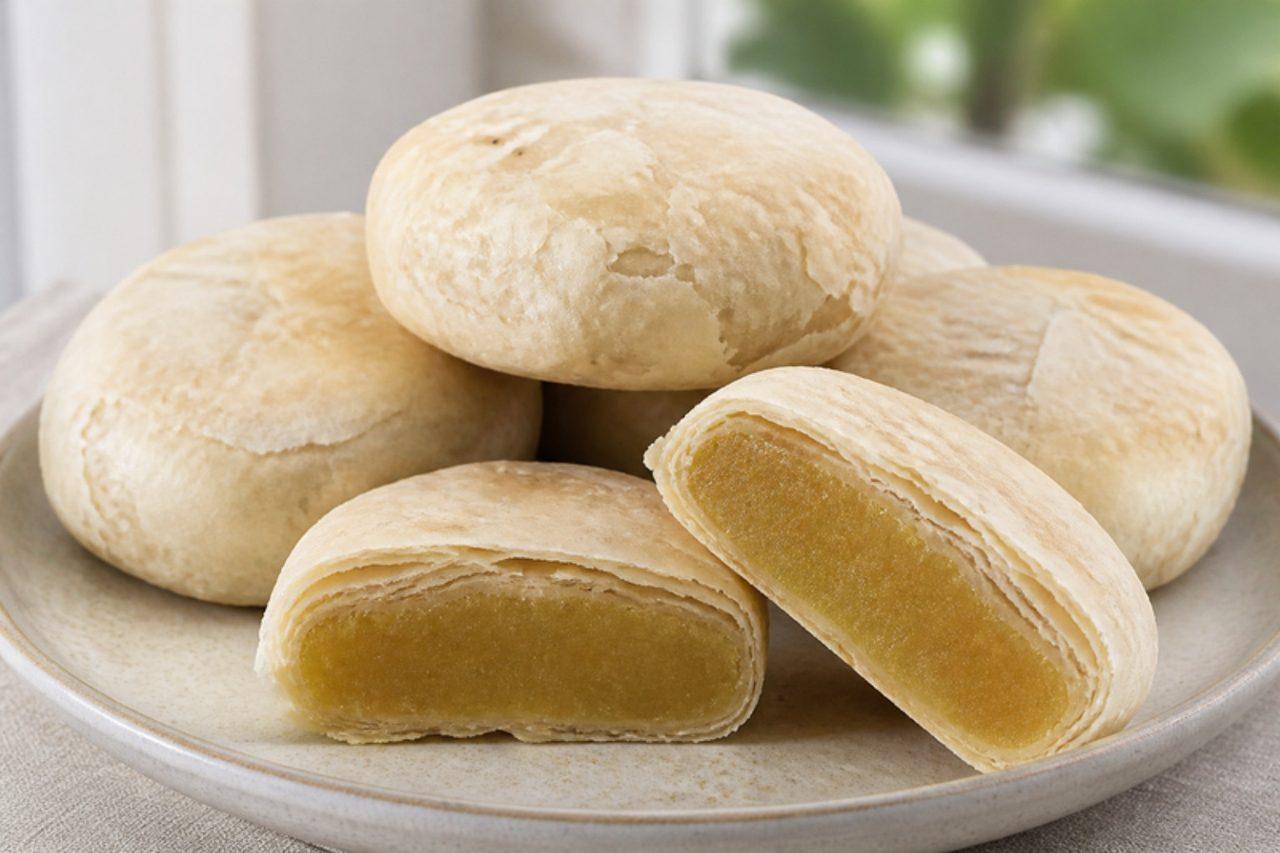
AI-generated image
Hopia mungo
Mung bean pastries
Flaky Chinese-Filipino mung bean pastries


Binondo, Manila's old Chinatown, is where Filipinos queue for hopia, flat little pastries with a paper-thin, flaky skin and a dense, sweet filling. Brought over by Hokkien bakers, they are now sold everywhere from provincial bus stations to convenience stores, and a box is a standard pasalubong (gift) after a trip. The classic is hopia mungo, filled with yellow mung bean paste; purple ube is the other favourite, and you can swap 300 g of sweetened ube halaya for the mung beans. Hopia pastry is traditionally made with lard; this version uses vegetable oil and shortening, so it is vegan. Chef's tip: dry the mung bean paste in the pan until a spoonful holds its shape when rolled; a soft paste is the commonest mistake, and it squeezes out of the seams as you flatten the pastries.
- Total time
- 112 min
- Difficulty
- medium
- Serves
- 12
Ingredients
For the mung bean filling
- 7 oz peeled split mung beanssoaked for 2 hours
- 2 cups water
- 4 oz caster sugar
- 3 tbsp neutral oil
- ¼ tsp salt
For the water dough
- 7 oz plain flour
- 1 tbsp caster sugar
- 3 ½ tbsp neutral oil
- ¼ cup water
For the oil dough
- 4 oz plain flour
- 2 ⅛ oz vegetable shortening
Shop this recipe on Amazon
What you'll need
Spices & pantry
Fresh ingredients (1)
Links open Amazon in a new tab. As an Amazon Associate, WhatToEat.Today earns from qualifying purchases.
Method
0/10 doneStep 1: Drain 7 oz peeled split mung beans, put them in a pan with 2 cups water and simmer for 20–25 minutes, until completely soft. Drain off any extra water and mash or blend to a smooth purée.
30 minStep 2: Return the purée to the pan with 4 oz caster sugar, 3 tbsp neutral oil and ¼ tsp salt. Cook over a medium-low heat, stirring and scraping, for 10–15 minutes until it is a stiff paste that holds its shape. Cool and divide into 12 balls.
30 minStep 3: Mix 7 oz plain flour and 1 tbsp caster sugar, add 3 ½ tbsp neutral oil and ¼ cup water and knead for 5 minutes to a smooth, soft dough. Cover and rest for 20 minutes.
25 minStep 4: Work 2 ⅛ oz vegetable shortening into 4 oz plain flour with your fingers until it forms a soft paste.
Step 5: Roll the water dough into a 25 × 35 cm rectangle. Spread the oil dough evenly over it, leaving a 1 cm border. Roll up tightly from a long side into a log.
Step 6: Flatten the log gently, fold it in three, then roll it out again into a long strip and roll it up into a log once more. Cut into 12 even slices.
10 minStep 7: Heat the oven to 400°F (350°F fan) and line a tray with baking paper.
Step 8: Lay a slice cut side up and roll it into a 9 cm round, keeping the edges thinner than the middle. Wrap it around a ball of filling, pinch shut and roll gently into a flat disc about 7 cm wide and 1.5 cm thick.
15 minStep 9: Place the hopia seam side down on the tray and bake for 12 minutes. Turn them over and bake for another 8–10 minutes, until both flat sides are blistered pale gold and the edges are flaky.
22 minStep 10: Cool on a rack. They keep for 5 days in an airtight box; reheat in a dry pan over a low heat to crisp the pastry.
Nutrition per serving
- Calories
- 270 kcal
- Protein
- 6 g
- Carbs
- 37 g
- Fat
- 11 g
- Fibre
- 3 g
Nutrition values are estimates.
KrazyBadal
Good to know
- How long does hopia mungo take?
- About 112 minutes in total: 90 minutes to prepare and 22 minutes to cook.
- How many people does it serve?
- 12 as written. Change the servings above the ingredients and every amount scales to match.
- Is it vegan?
- Yes. It has no meat, fish, dairy or eggs.
- Can I make it ahead?
- Yes. It keeps well, so you can cook it earlier in the day or the day before and reheat it.
- What can I use instead of caster sugar?
- Caster sugar, same amount.
- What can I use instead of plain flour?
- Self-raising flour, same amount (then leave out the baking powder).
Reviews
No reviews yet. Be the first to cook it.
Rate this recipe
Sign in to rate and review this recipe.
You might also like
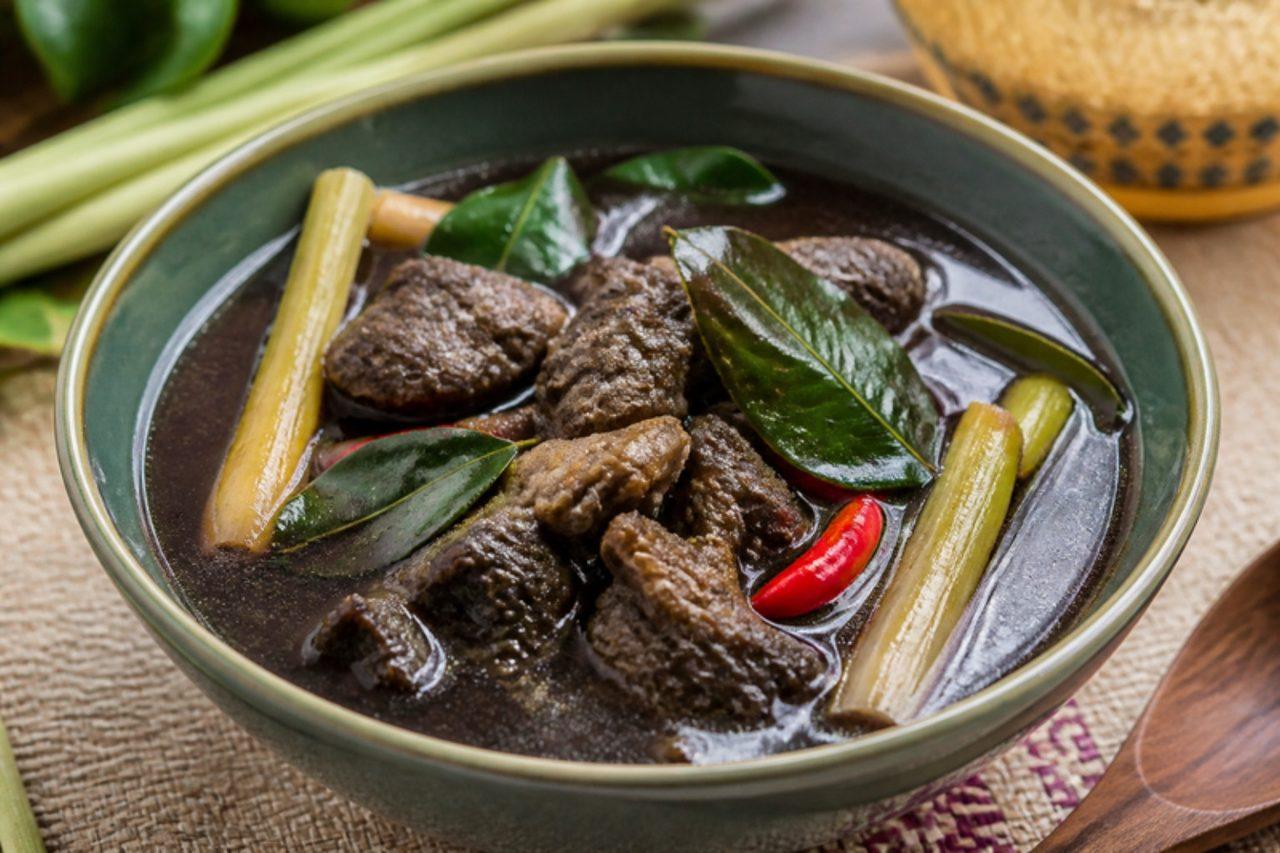
Tiyula itumBlack beef soup
Tiyula itum, 'black soup', is the pride of the Tausug people of Sulu in the far south of the Philippines, cooked for weddings, Eid celebrations and when guests come home. Beef (it is a halal, pork-free dish) is simmered with ginger, lemongrass and turmeric, then darkened with pamapa itum, a paste of grated coconut toasted until almost black and pounded with spices. The broth looks dramatic but tastes smoky, earthy and gently peppery, with heat from chillies. Serve it with plain rice. Chef's tip: toast the coconut slowly, stirring all the time, until it is very dark brown but not ashy; burnt-to-ash coconut tastes bitter and ruins the soup.

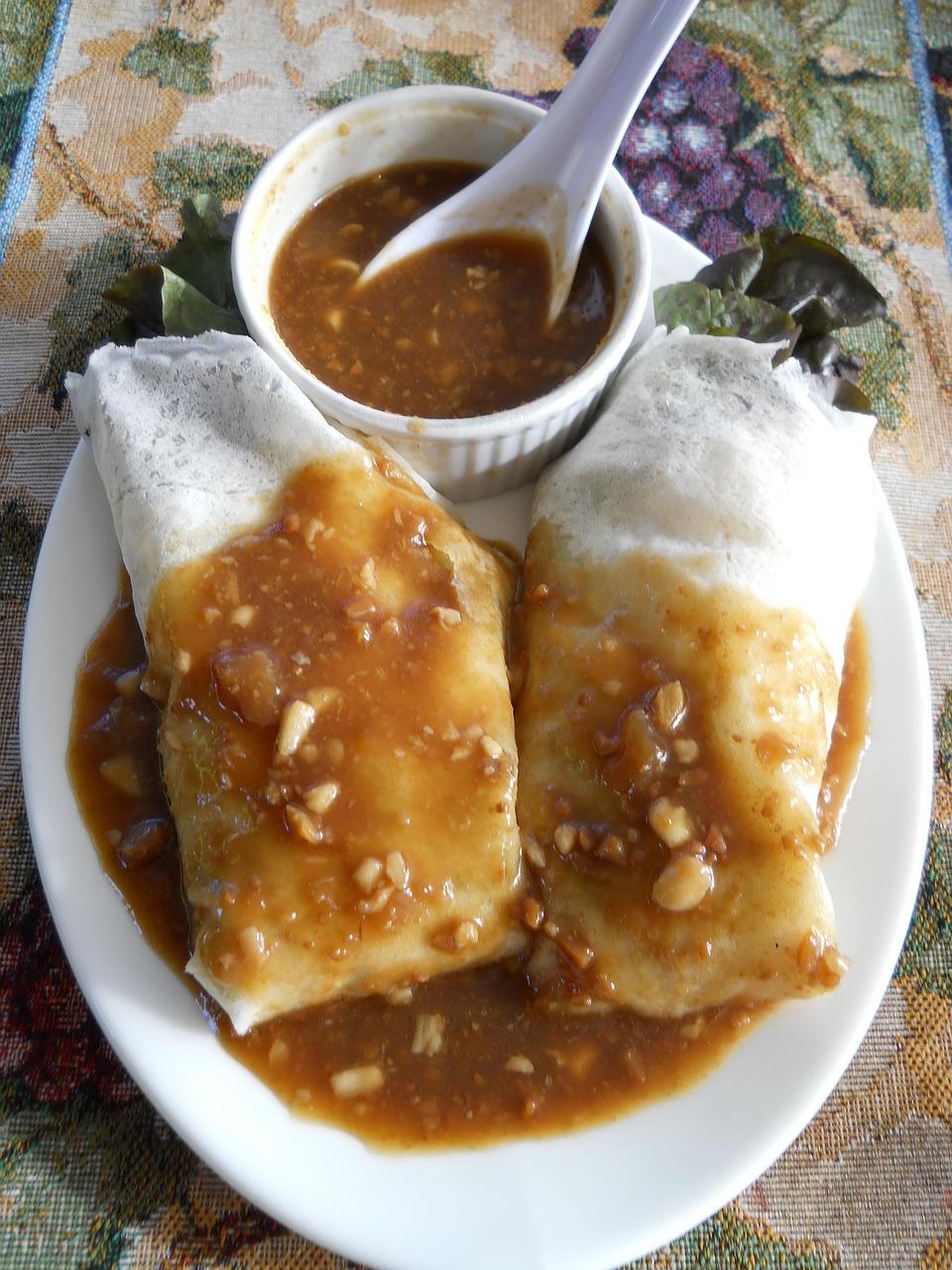
Lumpiang sariwaFresh vegetable spring rolls
Lumpiang sariwa ('fresh lumpia') is the unfried cousin of the crisp Filipino spring roll, served at fiestas, family gatherings and as a substantial afternoon merienda around Manila and the Tagalog provinces. A thin, soft egg crepe is wrapped around a lettuce leaf and a warm sauté of sweet potato, jicama, carrot, green beans, cabbage and tofu, then covered in a glossy brown garlic sauce and a shower of crushed peanuts. In Negros the filling is heart of palm (ubod) instead. It is eaten with a knife and fork, or carefully by hand. Chef's tip: make the crepes thin enough that you can almost see light through them; thick ones turn rubbery and hide the filling.
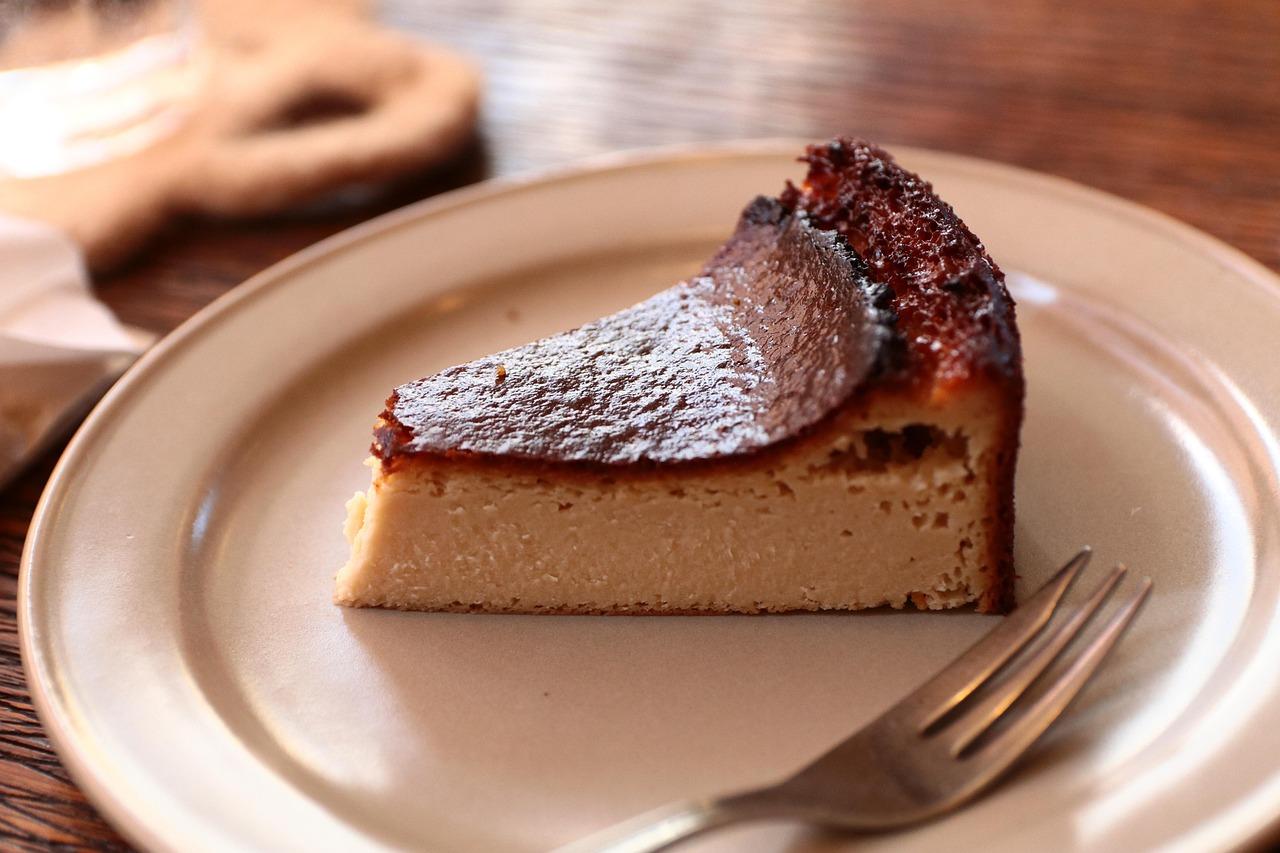
Basque burnt cheesecake
This crustless cheesecake was created in the early 1990s at La Viña, a pintxos bar in the old town of San Sebastián (Donostia) in the Basque Country, and is now famous around the world. It's baked very hot so the top caramelises almost black and the sides rise and crack, while the middle stays soft and creamy, almost runny. There's no base and no water bath, and the rough, rustic look is the point: it's lined with crumpled baking paper. La Viña uses a spoonful of wheat flour; cornflour does the same job and keeps it gluten free. Chef's tip: take it out of the oven while the centre still wobbles like a soft set custard; it firms up as it cools, and if it looks set in the oven, the middle will be dry instead of creamy.
 Spanish