
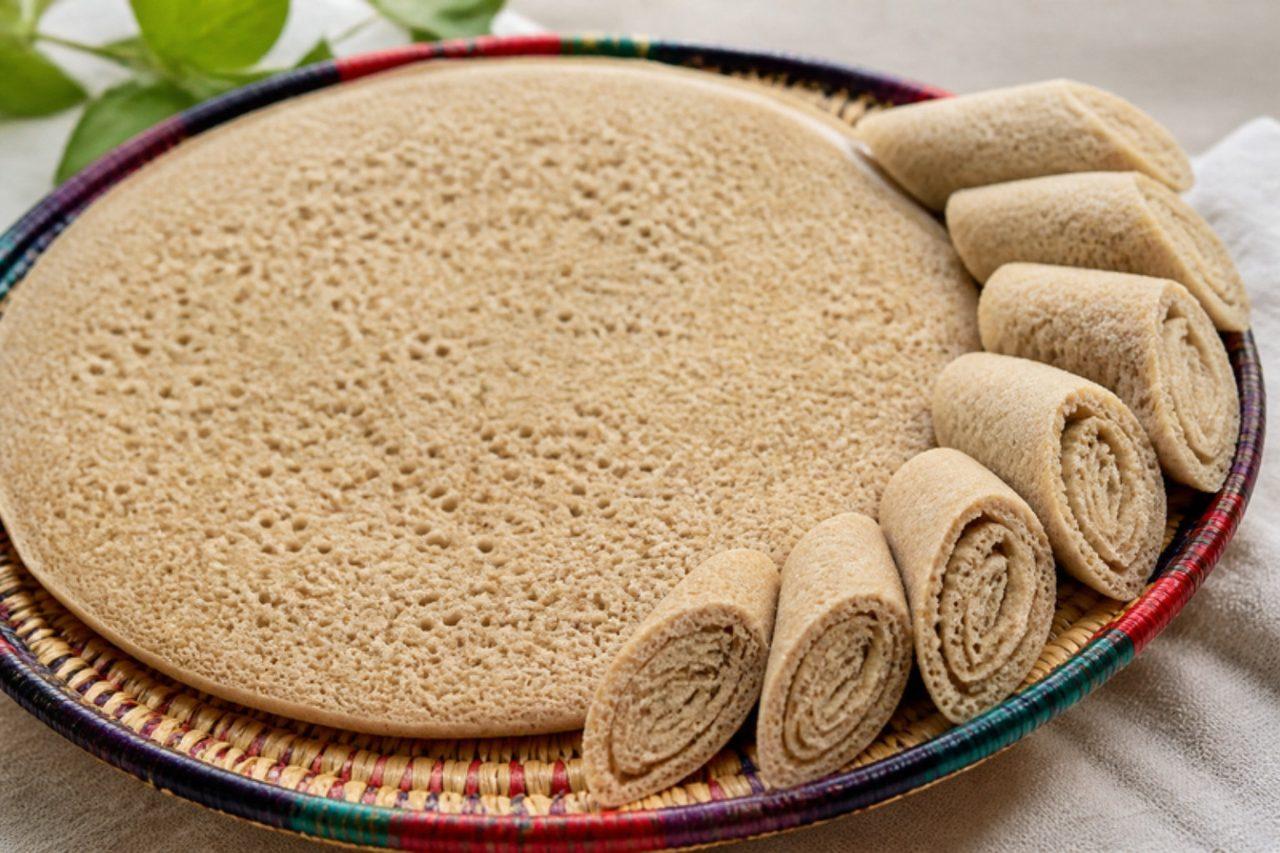
AI-generated image
Ethiopian injera
Spongy fermented rice-flour flatbread with a home-made starter

Injera is the soft, spongy, slightly sour flatbread eaten with Ethiopian stews: you tear it and scoop the food up with it. This home version uses rice and plain flour fermented with a home-made starter over a few days, then cooked on one side until covered in tiny holes. Serve rolled and sliced with missir wat, azifa and atter kik. Any fermented batter left over keeps in the fridge for the next batch.
- Total time
- 70 min
- Difficulty
- hard
- Serves
- 8
Ingredients
For the starter
For the thick batter
For the thin batter
For cooking
Method
0/11 doneStep 1: Make the starter (home-made yeast): mix 2 tbsp plain flour, 1 tsp sugar and ½ cup water in a jar, cover loosely and leave to ferment in a warm place for 2 days, until bubbly and sour-smelling.
Step 2: Mix 13 oz rice flour, 4 ½ oz plain flour, 3 ¼ cups water and 1 pinch salt into a thick batter.
Step 3: Stir the starter into the thick batter, cover and leave for 2 days to ferment.
Step 4: For the thin batter, stir in 1 cup boiling water, mix well and leave for 5 hours.
Step 5: Take one cup of batter at a time in a bowl, add a pinch of ¼ tsp bicarbonate of soda and stir thoroughly.
Step 6: Heat an Ethiopian injera cooker, or a large non-stick flat pan or griddle, and grease it with a little 2 tbsp oil using a small piece of cloth.
Step 7: Pour in the batter and spread it out with a flat spoon into a big, thin round about 30 cm across.
Step 8: Cover and cook for 2 minutes on a low heat, without turning.
2 minStep 9: When the surface is covered with bubbles and has a rough texture all over, lift it off and leave to cool.
Step 10: Repeat with the remaining batter, adding a pinch of bicarb to each cup.
30 minStep 11: Roll each injera with the smooth side on top and cut into diagonal slices about 4 cm wide. Serve with missir wat, azifa and atter kik.
Nutrition per serving
- Calories
- 260 kcal
- Protein
- 4 g
- Carbs
- 55 g
- Fat
- 2 g
- Fibre
- 2 g
Nutrition values are estimates.
KrazyBadal
Good to know
- How long does ethiopian injera take?
- About 70 minutes in total: 30 minutes to prepare and 40 minutes to cook.
- How many people does it serve?
- 8 as written. Change the servings above the ingredients and every amount scales to match.
- Is it vegan?
- Yes. It has no meat, fish, dairy or eggs.
- Can I make it ahead?
- Yes. It keeps well, so you can cook it earlier in the day or the day before and reheat it.
- What can I use instead of plain flour?
- Self-raising flour, same amount (then leave out the baking powder).
- What can I use instead of sugar?
- Caster sugar, same amount.
Reviews
No reviews yet. Be the first to cook it.
Rate this recipe
Sign in to rate and review this recipe.
You might also like
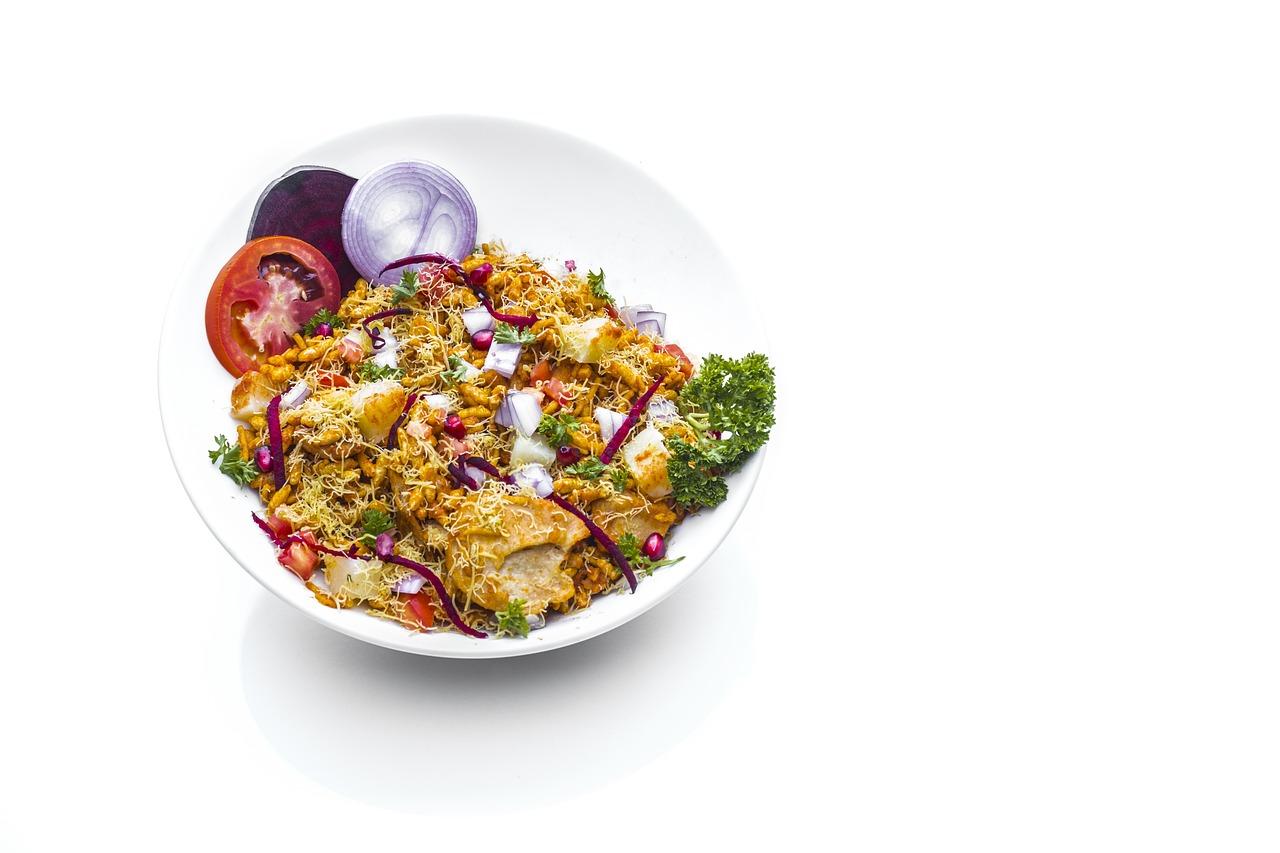
Coastal Mombasa mix
A Mombasa street-food bowl: chickpeas and potato simmered in coconut milk with raw mango and chilli, ladled into small bowls and topped with crisp lentil fritters, crunchy chevdo and red, green and tamarind chutneys. Make the fritters and chevdo ahead and assemble at the table. It's sweet, sour, hot and crunchy all at once.

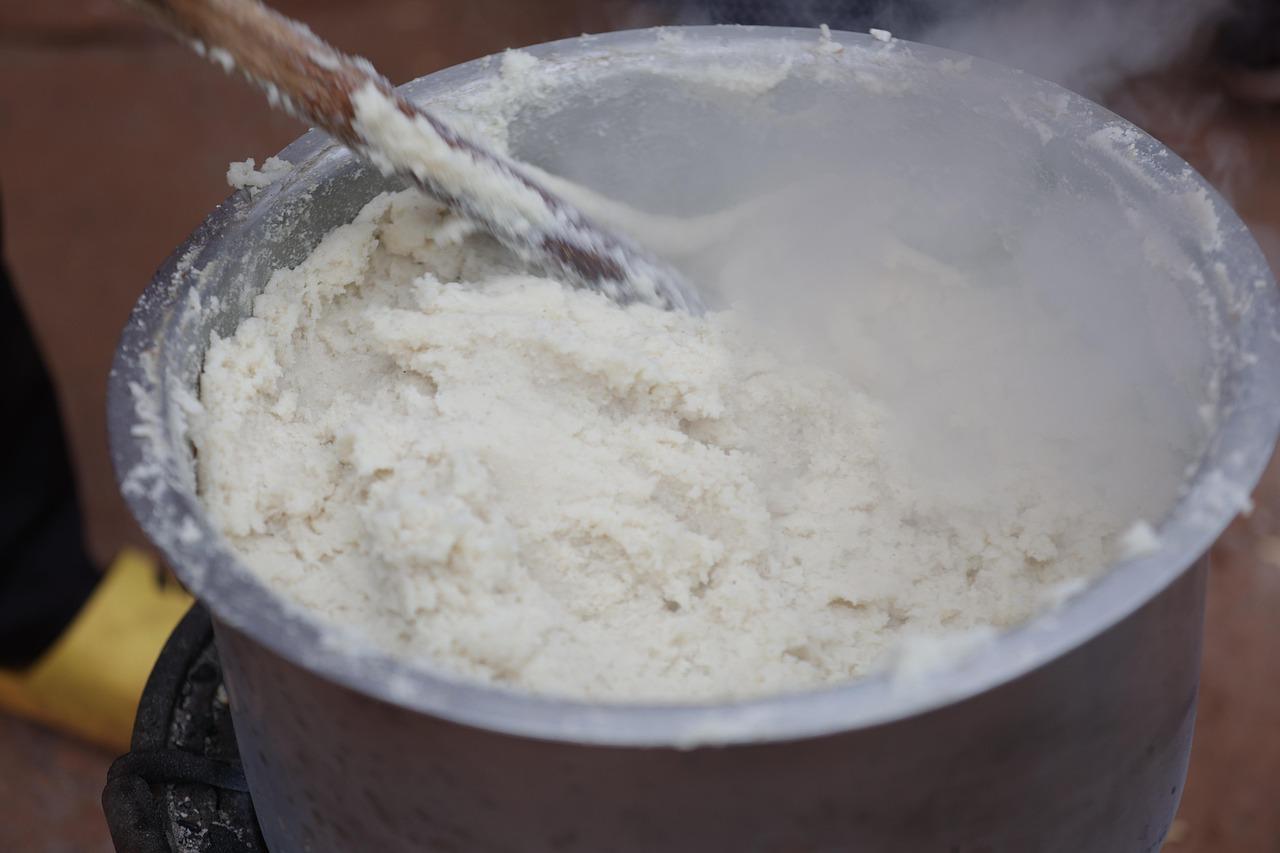
Masala ugali
Ugali, East Africa's staple of maize meal cooked into a stiff porridge, given a lift with toasted cumin, butter, fresh coriander and green chilli. Stir it hard and keep it soft. Serve hot with sukumawiki or any stew.

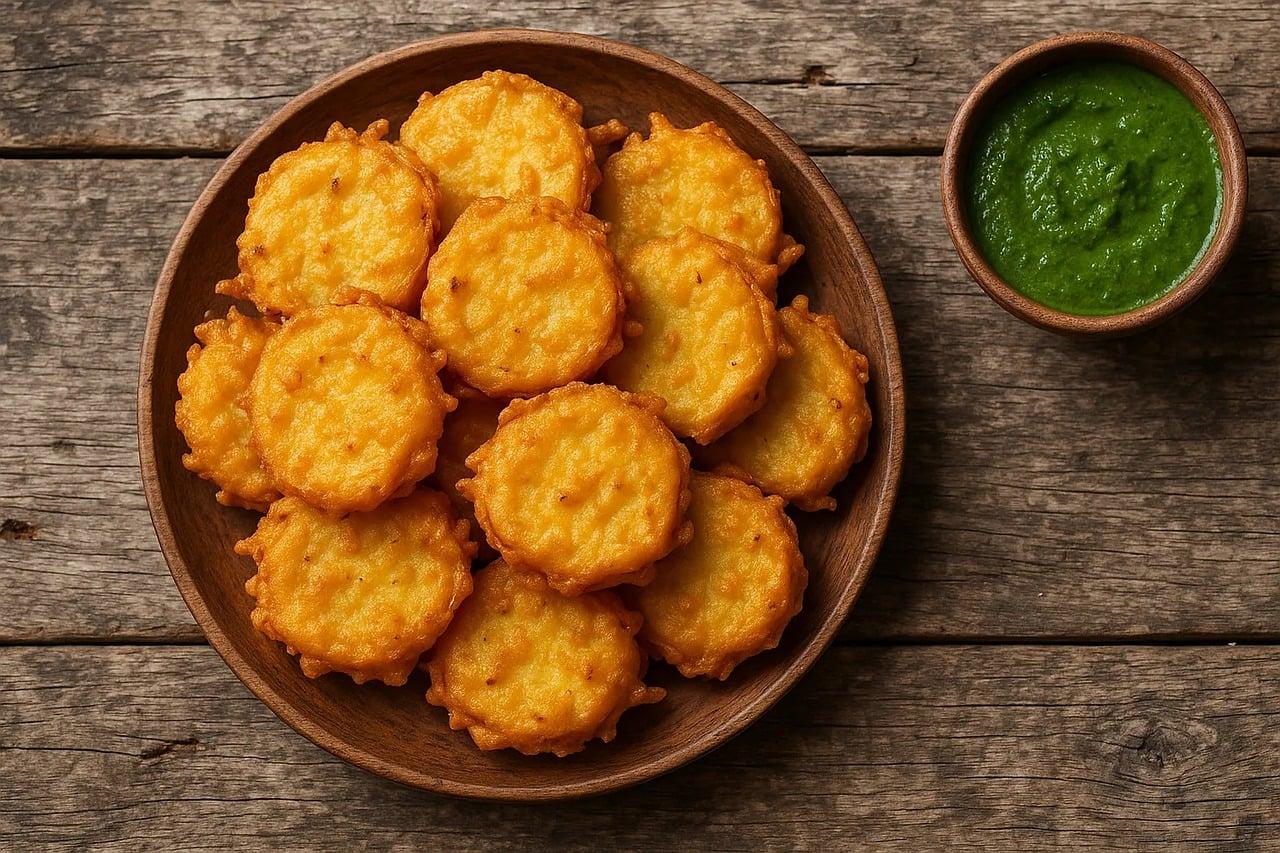
Maru crispy bhajiya
The famous East African potato bhajiya: wafer-thin potato slices coated in a garlicky, chilli gram-flour batter and fried until crisp. Make them in small batches so the batter doesn't go watery. Serve hot with maru bhajiya chutney.
