
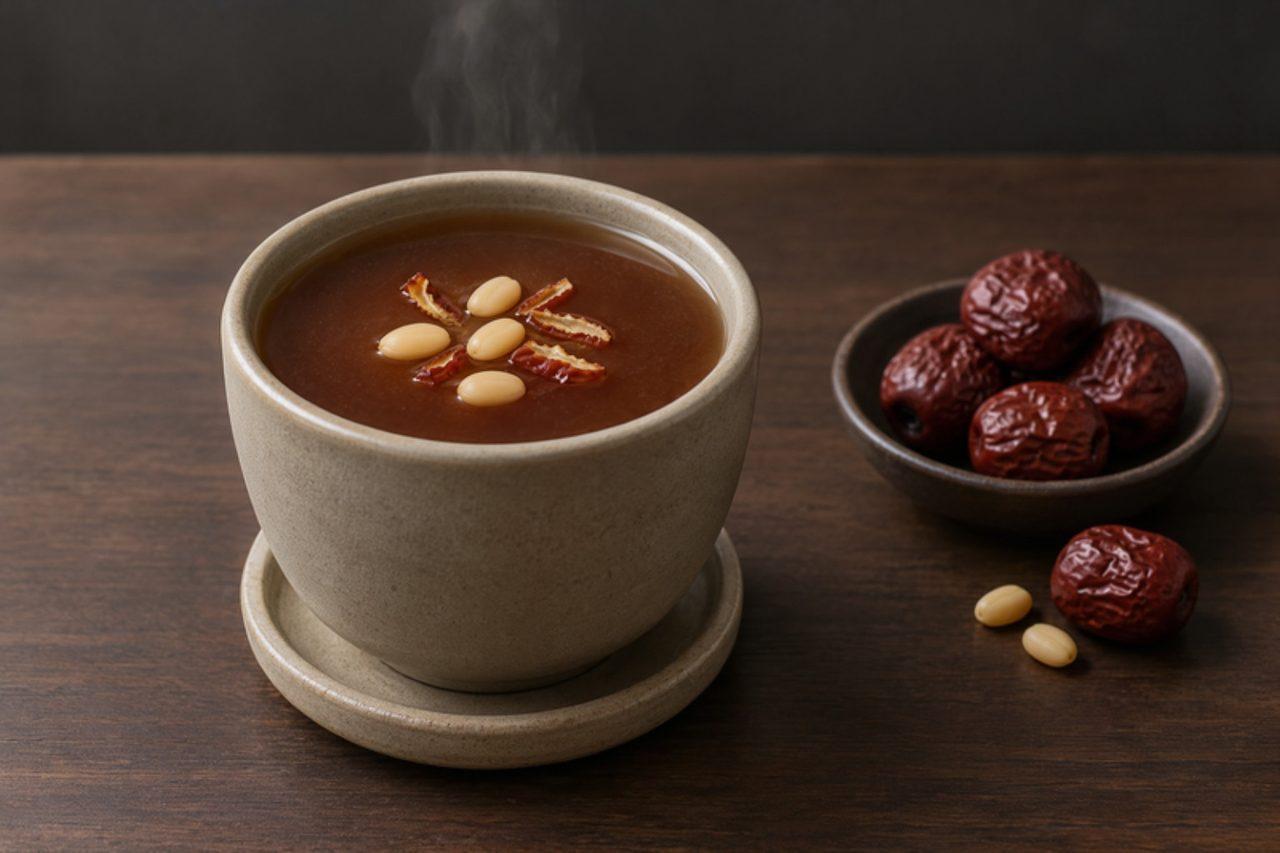
AI-generated image
Daechu-cha (jujube tea)
대추차: dried jujubes simmered for hours with ginger and cinnamon, then pressed into a thick, honey-sweet amber tea


Boeun county in North Chungcheong is famous for its large, sweet jujubes, harvested each October and sold at a lively autumn festival. Once dried, they become daechu-cha, the deep amber tea Korean traditional teahouses in Insadong and Jeonju serve from late autumn to early spring, topped with pine nuts. Long, slow simmering with ginger and a stick of cinnamon draws out a flavour like dates, caramel and baked apple; pressing the softened flesh through a sieve gives the tea its velvety, almost soup-thick body. It is traditionally drunk to warm up on cold nights. The common mistake is simply boiling whole jujubes and straining: the skins stay sealed, the tea comes out thin and pale, and most of the sweetness is thrown away. Slit each jujube, simmer until the flesh slides off the stone, then mash the pulp through the sieve. It is ready when the liquid has reduced by about half, is dark amber and lightly coats a spoon. Keep it covered in the fridge for up to 5 days and reheat gently. Chef's tip: a few slices of fresh ginger added in the last 20 minutes give a brighter heat than ginger boiled for the whole time.
- Total time
- 110 min
- Difficulty
- easy
- Serves
- 6
Ingredients
For the tea
- 7 oz dried jujubes (daechu)about 40; Chinese red dates are the same fruit
- 1 oz fresh gingerthinly sliced
- 1 cinnamon stickabout 8 cm
- 8 ¼ cups water
- 3 tbsp honeyor to taste
To garnish
- 1 tbsp pine nuts (optional)
- 2 dried jujube, thinly slivered (optional)
Shop this recipe on Amazon
What you'll need
Spices & pantry
Fresh ingredients (1)
Links open Amazon in a new tab. As an Amazon Associate, WhatToEat.Today earns from qualifying purchases.
Method
0/7 doneStep 1: Rinse 7 oz dried jujubes (daechu) in cold water, rubbing them between your hands, and drain. Cut a slit down the side of each one with a small knife.
8 minStep 2: Put the jujubes, ½ oz fresh ginger and 1 cinnamon stick in a large pot with 8 ¼ cups water. Bring to the boil over high heat.
10 minStep 3: Lower the heat, cover with the lid ajar and simmer gently for 1 hour, until the jujubes are plump and soft and the water is light brown.
60 minStep 4: Add the remaining ½ oz fresh ginger and simmer uncovered for 20–25 minutes more, until the liquid has reduced by about half and the flesh slides easily off the stones.
25 minStep 5: Lift out the cinnamon and ginger. Pour the rest through a sieve set over a bowl and press the jujubes hard with the back of a ladle, scraping the pulp from under the sieve into the tea; discard skins and stones.
5 minStep 6: Return to the pot, warm for 2 minutes and stir in 3 tbsp honey until dissolved. The tea should be dark amber and lightly coat a spoon.
2 minStep 7: Serve hot in small cups, topped with 1 tbsp pine nuts and 2 dried jujube, thinly slivered.
1 min
Nutrition per serving
- Calories
- 130 kcal
- Protein
- 1 g
- Carbs
- 32 g
- Fat
- 0 g
- Fibre
- 3 g
Nutrition values are estimates.
KrazyBadal
Good to know
- How long does daechu-cha (jujube tea) take?
- About 110 minutes in total: 10 minutes to prepare and 100 minutes to cook.
- How many people does it serve?
- 6 as written. Change the servings above the ingredients and every amount scales to match.
- Is it vegetarian?
- Yes. It has no meat or fish.
- Is it gluten free?
- Yes, as written. Check the labels on stock, sauces and spice mixes, which sometimes contain gluten.
- Can I make it ahead?
- Yes. It keeps well, so you can cook it earlier in the day or the day before and reheat it.
- What can I use instead of fresh ginger?
- ¼ tsp ground ginger per tbsp fresh (add it with the spices).
- What can I use instead of cinnamon stick?
- ½ tsp ground cinnamon per stick.
Reviews
No reviews yet. Be the first to cook it.
Rate this recipe
Sign in to rate and review this recipe.
You might also like
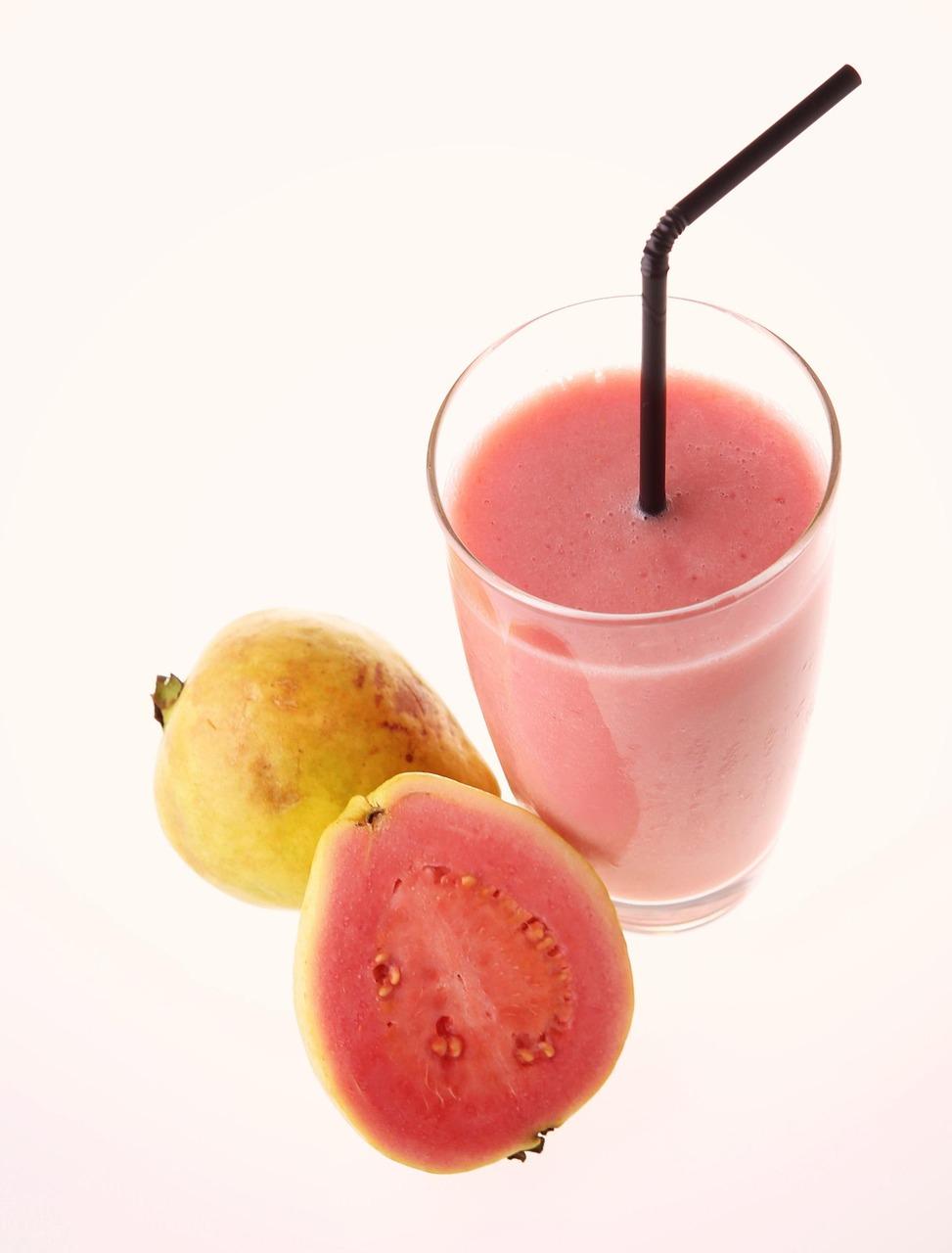
Guava delight
A thick, fragrant blend of ripe guava, mango and banana, boosted with a spoonful of guava powder from the health shop. The book calls it a modern-day vitality drink, drawing on guava's long use in traditional Indian medicine. Serve it well chilled; sieve it if you don't like the little guava seeds.


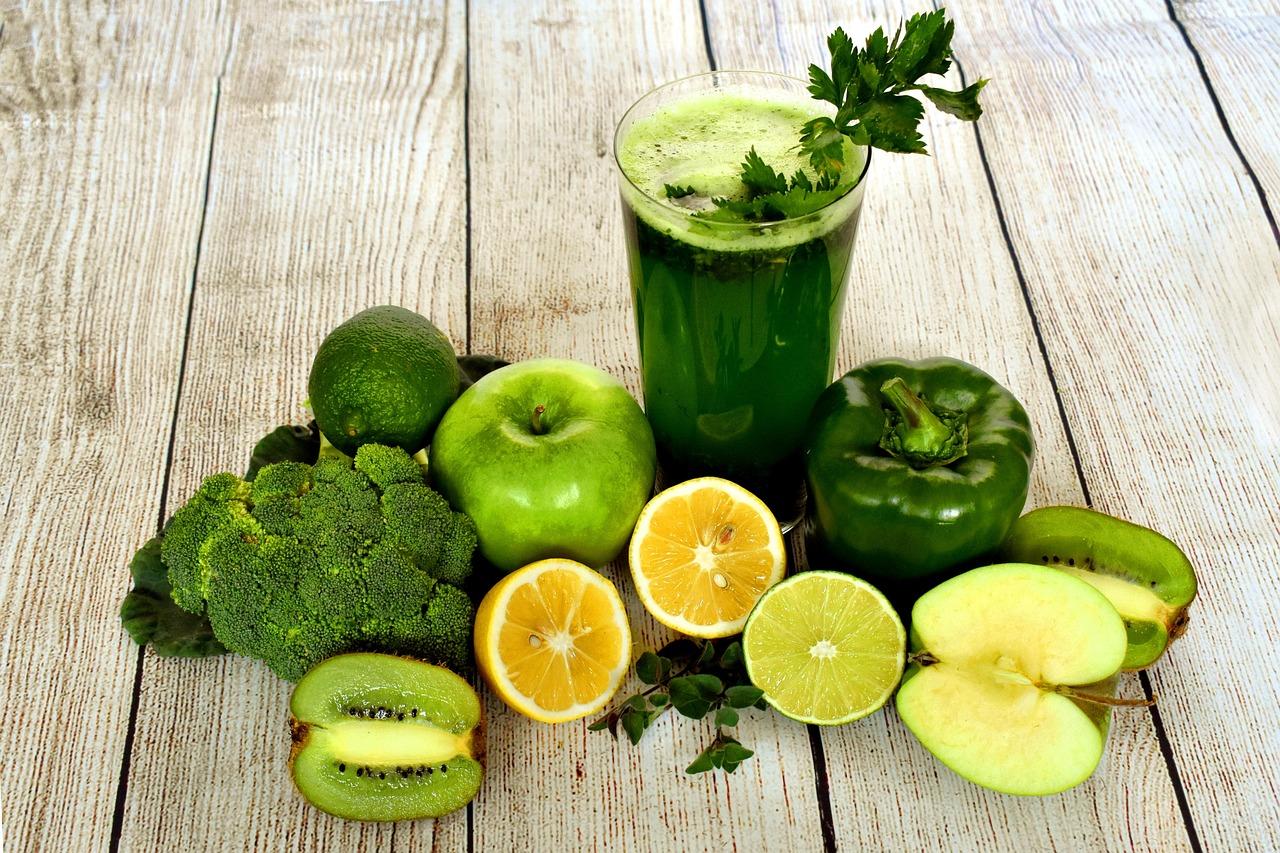
Power pack
A sweet, energising juice of apples, pears and kiwi fruit with a stick of celery, all used unpeeled for extra goodness. It's naturally sweet, so it needs no sugar. Serve well chilled.
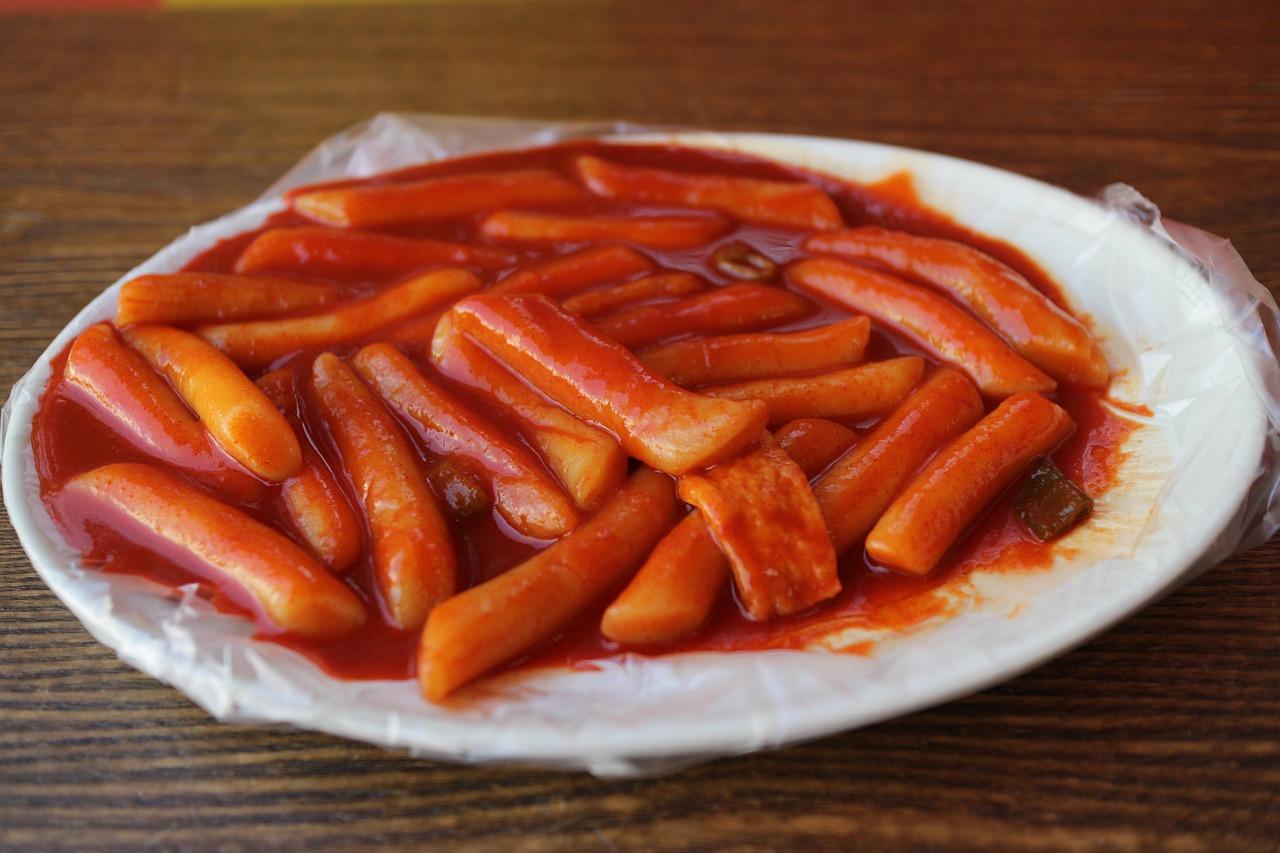
Tteokbokki
Tteokbokki (떡볶이) is Korea's best-loved street snack: chewy cylinders of rice cake simmered in a thick, glossy, sweet and spicy red sauce. It became a classic in Seoul, where it is sold from street stalls and snack bars in every neighbourhood. Street versions use anchovy stock and fish cakes; this vegan version uses a quick kelp and shiitake stock with cabbage and spring onions, and has all the same punch. Eat it hot, while the rice cakes are soft and stretchy. Chef's tip: keep stirring and scrape the bottom; the rice cakes release starch that thickens the sauce but also catches. The sauce is right when it clings to the spoon in a glossy coat.
