Skip to content

Recipes with red amaranth

3 recipes that use red amaranth, with photos, step-by-step instructions and cook times. The quickest, Lal mathachi bhaji (red amaranth stir-fry), takes 18 minutes. It is most often cooked with dried red chillies, garlic and green chilli.

Got a few things in the fridge? Search by everything you have

Choddo shaakFourteen leafy greens stir-fry

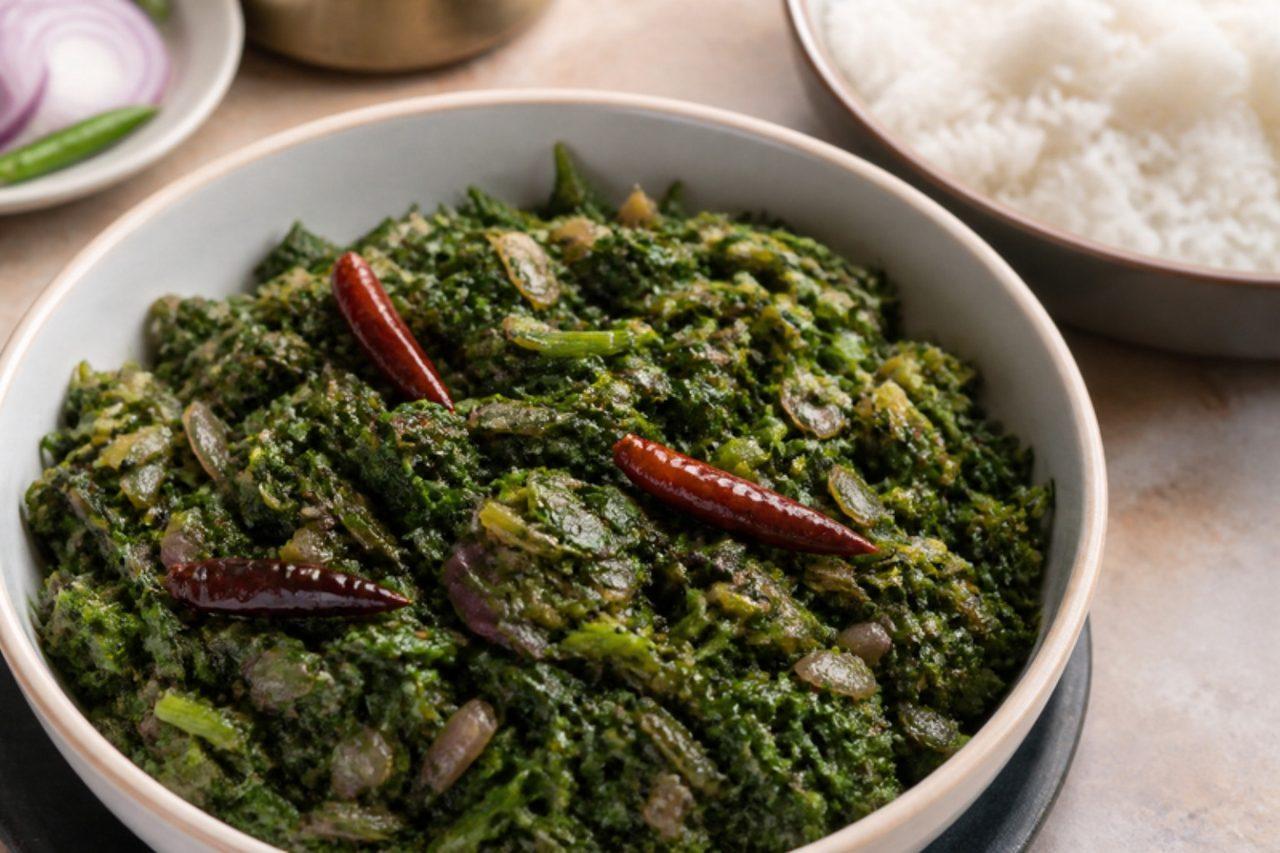
On Bhoot Chaturdashi, the night before Kali Puja and Diwali, Bengali homes light fourteen lamps for their ancestors and eat a dish of fourteen greens at lunch to keep illness and restless spirits away. Markets in Kolkata sell bundles already mixed for the day: spinach, red and green amaranth, Malabar spinach, water spinach, fenugreek, mustard and radish greens, bathua, jute leaves, pumpkin leaves, helencha and a few neem leaves for bitterness. Fried briefly in mustard oil with nigella and dried chilli, they cook down to an earthy, slightly bitter, faintly sweet tangle. It is eaten as the first course with hot rice and a drizzle of ghee for those who want it. If you can't find all fourteen, use what your grocer has; the mix matters more than the exact list. Chef's tip: cook it uncovered after the first wilt so the water evaporates; choddo shaak should be dry and glossy, not stewed.

by KrazyBadal 0 views

Lal mathachi bhaji (red amaranth stir-fry)

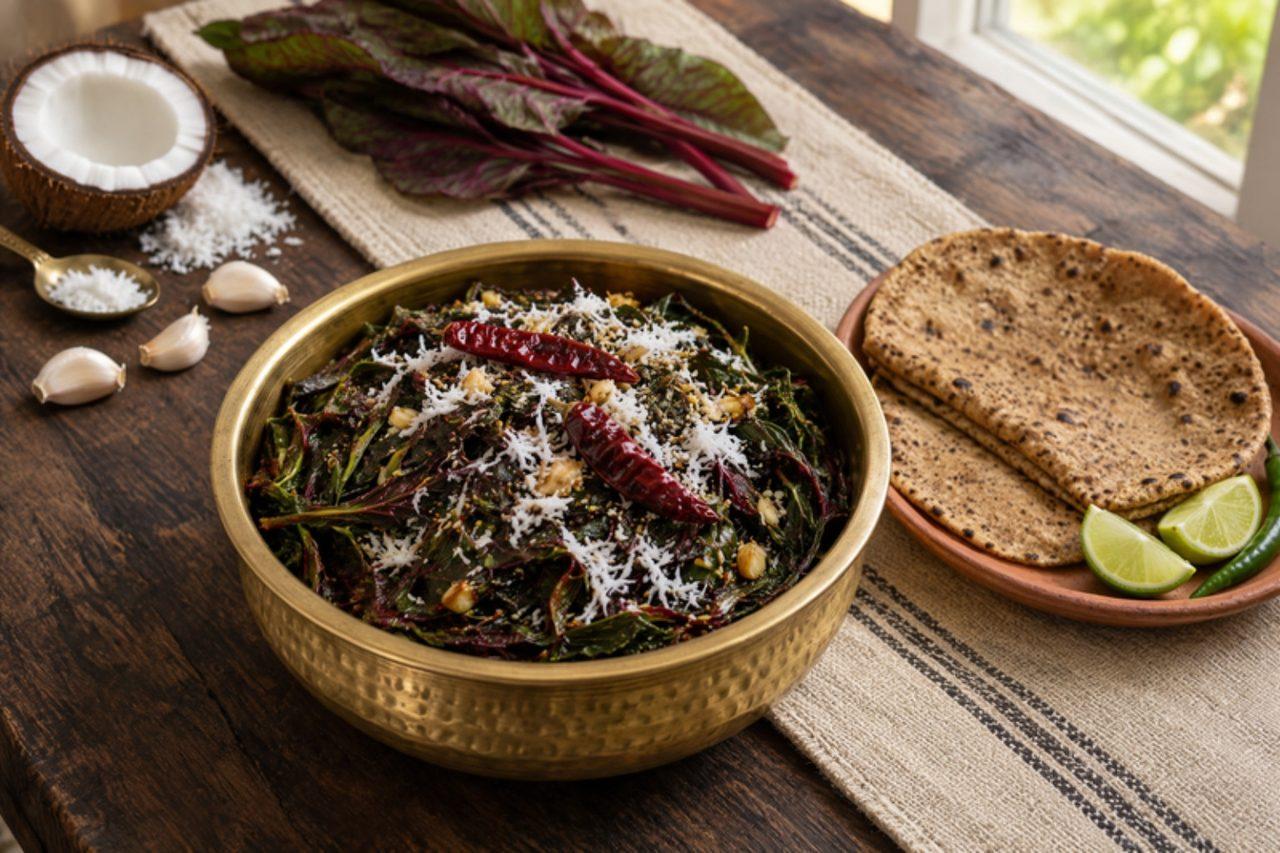
In Mumbai and the Konkan, bunches of red math (amaranth) with their magenta stems come in during the monsoon, and this quick garlicky bhaji turns the dabba's chapatis pink at the edges. It is cooked fast in a hot pan so the leaves stay bright, then finished with a little fresh coconut, the coastal touch that sets it apart from the Bengali way with the same leaf. The mistake is cooking it covered for a long time, which turns it grey and watery. Chef's tip: chop the tender stems finely and cook them for a minute before the leaves go in, so everything is done at the same moment.

by KrazyBadal 0 views

Lal shak bhajiStir-fried red amaranth

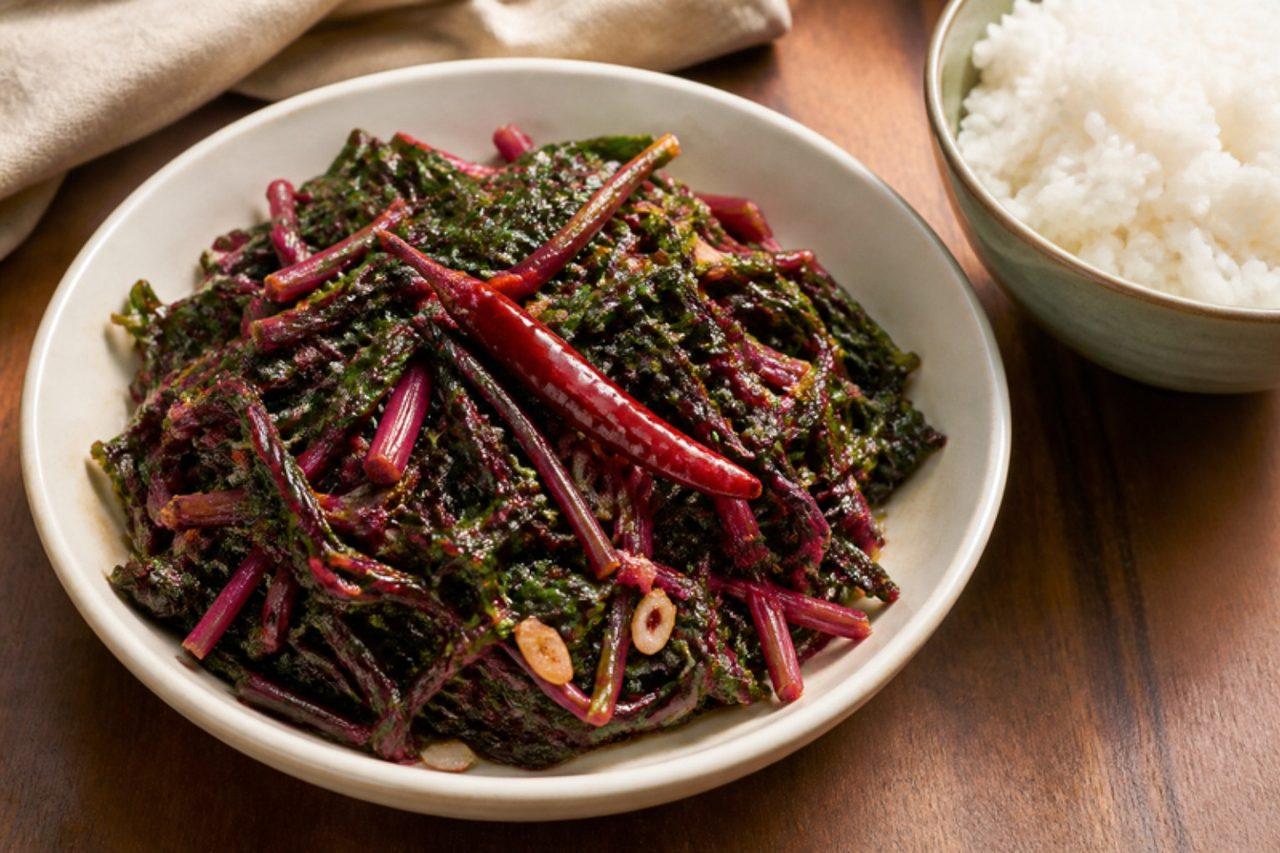
Bunches of lal shak, red amaranth with leaves streaked in crimson, are one of the cheapest and most common greens in any Bangladeshi bazar, and almost every lunch table has a bowl of it, cooked quickly with garlic and a dried chilli. The leaves wilt into a soft, slightly earthy tangle and bleed a beautiful magenta juice that turns the rice pink, which children love. It is served with plain rice and dal as the first course of a meal, before any fish or meat, the way Bengali meals traditionally start with something bitter or green. Adding water is unnecessary and the common slip; the leaves release plenty of their own and simply need to cook down uncovered. Chef's tip: wash the leaves well in several changes of water, as amaranth holds a lot of grit near the roots.

by KrazyBadal 0 views

Goes well with red amaranth