Skip to content

Recipes with mung bean starch

3 recipes that use mung bean starch, with photos, step-by-step instructions and cook times. The quickest, Chuanbei liangfen, takes 25 minutes. It is most often cooked with sugar, pandan leaves and chinkiang black vinegar.

Got a few things in the fridge? Search by everything you have

ซาหริ่ม (Sarim, mung bean noodles in coconut syrup)

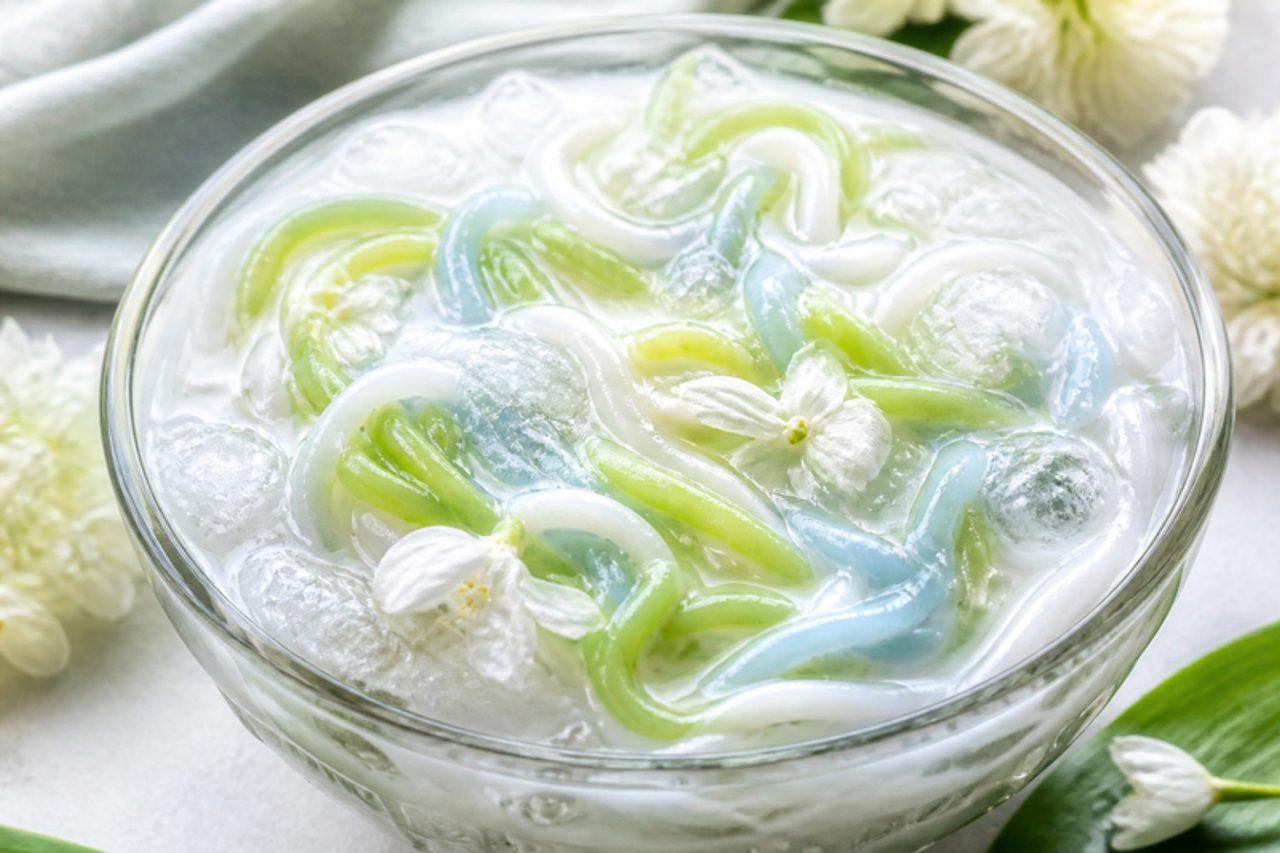
Sarim is an old dessert of central Thailand, served at temple fairs and in market dessert shops on sweltering afternoons: thin, slippery strands in pastel green, blue and white, floating in a pale coconut syrup over a mound of crushed ice. The strands are almost flavourless and very soft, so the syrup does the work; in Thailand it is scented with jasmine flowers or the smoke of a scented candle, and here with pandan and optional fresh jasmine. It is naturally egg-free: the strands are pure mung bean starch cooked with water into a clear, thick paste, which sets into a soft gel the moment it hits ice water. Pandan juice and butterfly pea flowers give the colours, so there is no need for dyes. Serve it straight away, as a light end to a spicy meal. Chef's tip: cook the paste until it turns fully glossy and see-through; the common mistake is stopping while it is still milky, which gives strands that break and taste floury.

by KrazyBadal 0 views

Khanom takoPandan coconut cream jelly cups

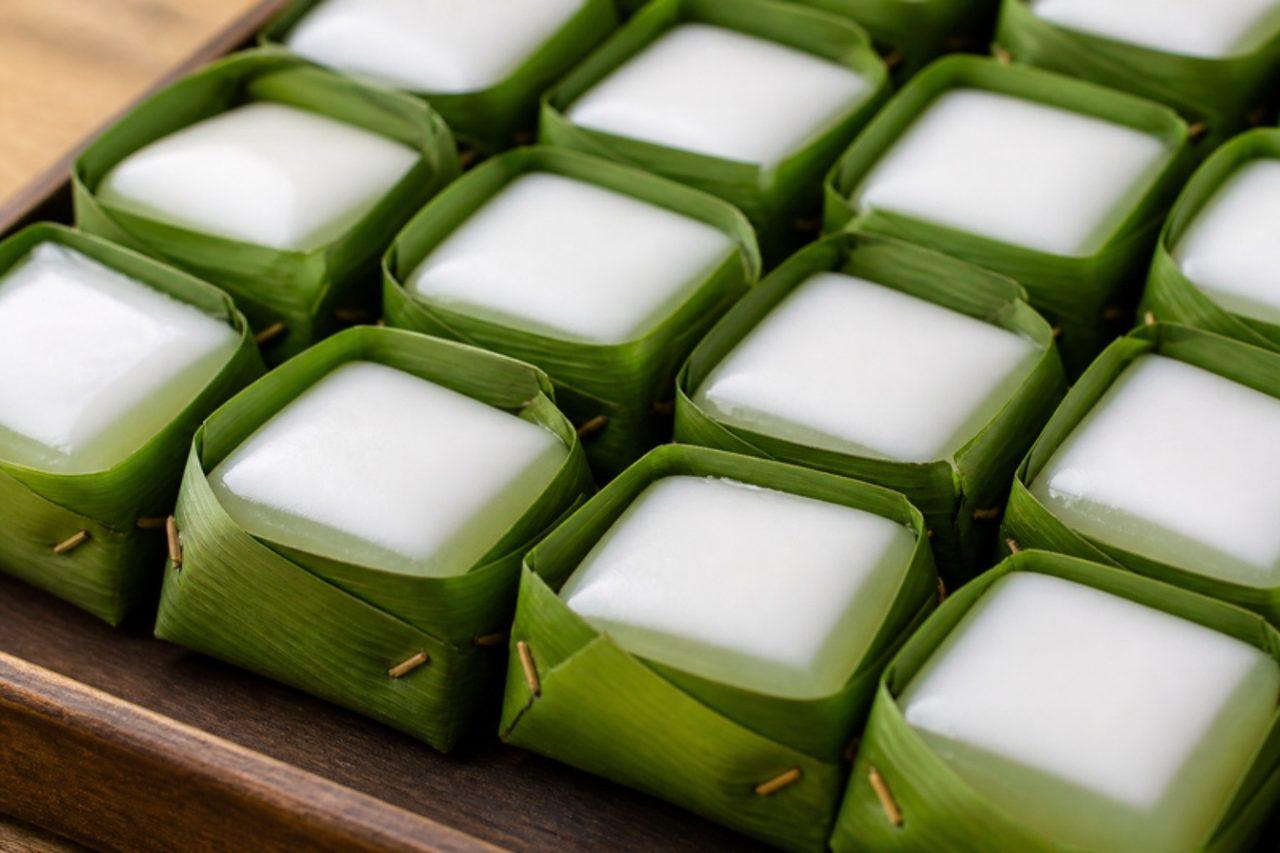
Little boxes of folded pandan leaf filled with jelly sit on the trays of every khanom seller in central Thailand, from Chatuchak's dessert stalls to the morning market in Nakhon Pathom. The base is firm, cool and green with diced water chestnut for crunch; the thick white top is coconut cream set with rice flour and seasoned with a clear note of salt, which is the whole point. They are eaten as a mid-afternoon snack, two or three at a time. Chef's tip: most people undersalt the coconut layer; it should taste lightly salty on its own, so the sweet base underneath sings.

by KrazyBadal 0 views

Chuanbei liangfenMung bean jelly in chilli oil

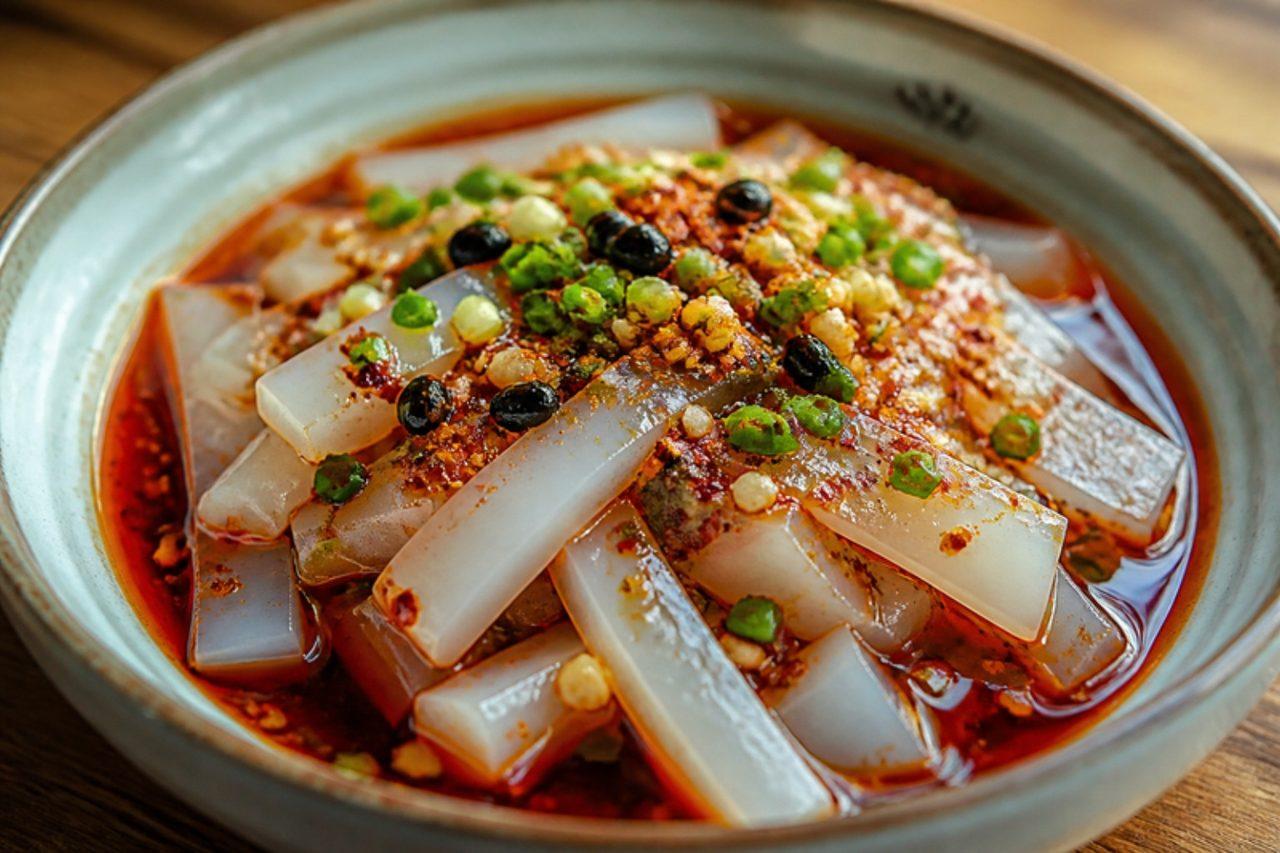
Nanchong, in the hills of north Sichuan, is famous for this snack: a soft, wobbly jelly set from bean starch, cut into thick ribbons and drowned in a red, glossy dressing. Street sellers keep it in big blocks and slice it to order, and people eat it as a mid-afternoon snack or a cold starter on hot days. The jelly itself tastes of almost nothing; the slippery texture and the punchy dressing are the point. Chef's tip: let the jelly set fully in the fridge, ideally overnight, so it is firm enough to cut cleanly but still trembles.

by KrazyBadal 0 views

Goes well with mung bean starch