Skip to content

Recipes with korean radish

8 recipes that use korean radish, with photos, step-by-step instructions and cook times. The quickest, Jeonju kongnamul gukbap, takes 35 minutes. It is most often cooked with spring onion, garlic and sugar.

Got a few things in the fridge? Search by everything you have

Baechu kimchi

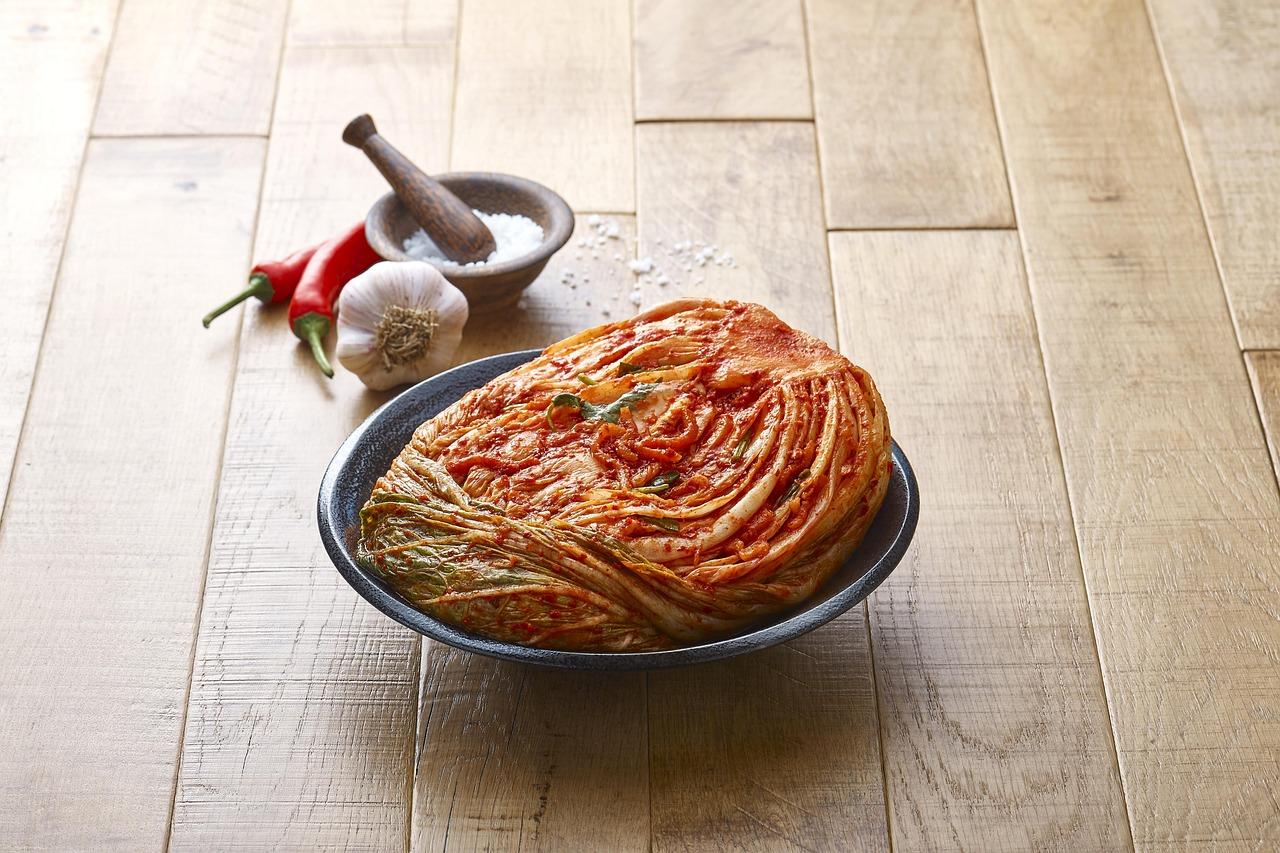
Baechu kimchi (배추김치) is the napa cabbage kimchi served at almost every Korean meal, from Seoul to Jeju. Salted cabbage quarters are rubbed leaf by leaf with a red paste of chilli flakes, garlic, ginger, radish and spring onion, then left to ferment until sour, fizzy and deeply savoury. Most recipes use fish sauce and salted shrimp; this one gets its depth from kelp stock and tamari, so it is vegetarian and gluten free. Eat it fresh after a day or two, or let it sour for a few weeks for kimchi fried rice, stews and pancakes. Salting takes about 2 hours, then allow 1–2 days for fermenting. Chef's tip: the salting is everything. Under-salted cabbage goes mushy and spoils; over-salted kimchi is harsh. Test a thick white stem: when it bends without snapping, rinse.

150 minBasicsVeganGluten freeSpicy
by KrazyBadal 0 views

Kkakdugi

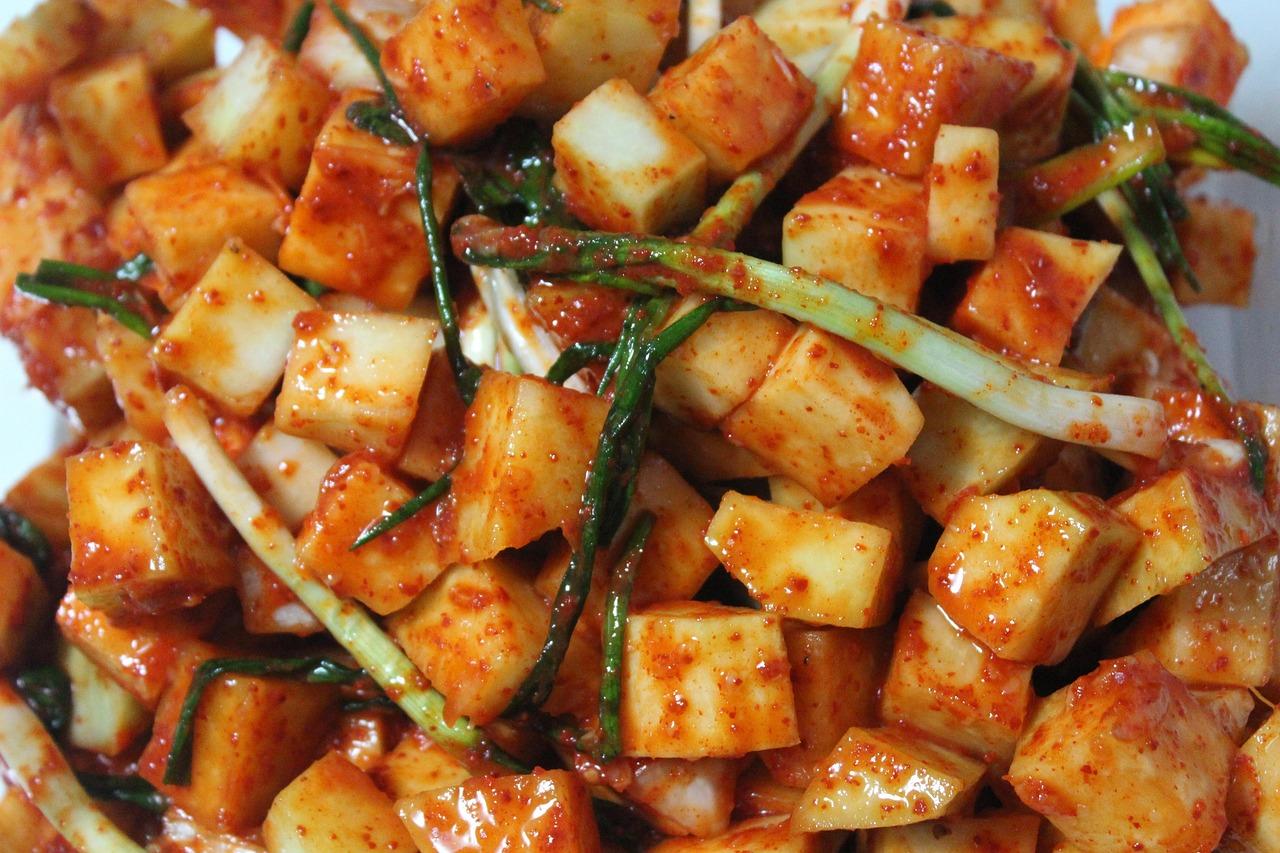
Kkakdugi (깍두기) is kimchi made from chunky cubes of Korean radish instead of cabbage. It is quicker to make than cabbage kimchi and stays crunchy and juicy, with a sweet, peppery bite. Made all over Korea, it is the classic partner to rich soups and noodles. Traditional versions are seasoned with fish sauce and salted shrimp; here soy sauce and a little grated pear give the same savoury-sweet depth, keeping it vegan. Ready to eat after a day or two of fermenting. Chef's tip: rub in the chilli flakes on their own first, before the wet seasonings. The red then clings to every cube, and the radish keeps its crunch.

40 minBasicsVeganSpicy
by KrazyBadal 0 views

Vegetable mandu-guk

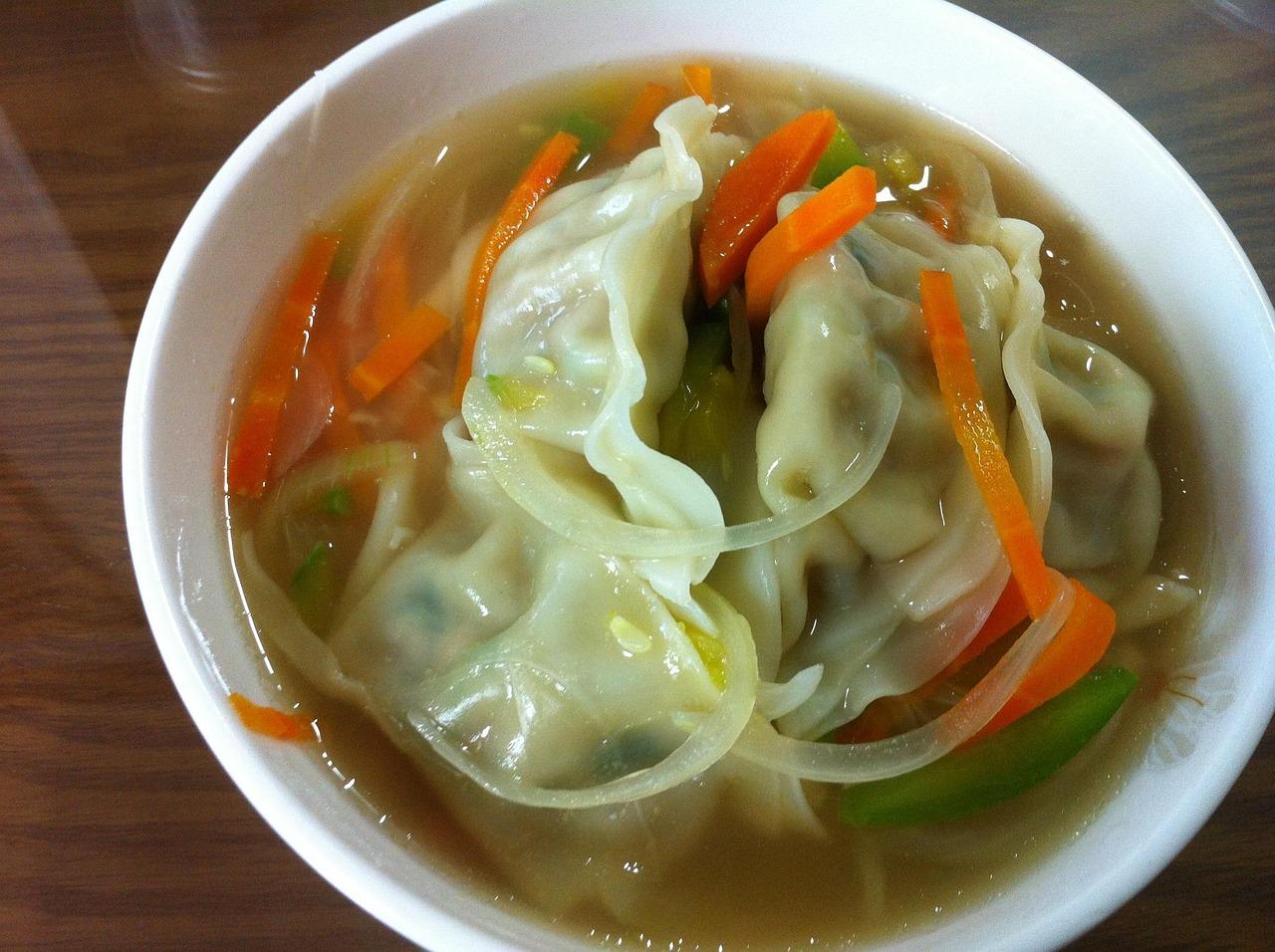
In Seoul and the surrounding Gyeonggi province, the first meal of Seollal (Lunar New Year) is often mandu-guk (만두국): plump dumplings and coin-shaped rice cakes floating in clear broth, finished with ribbons of yellow and white egg and strips of toasted laver. The northern half of the peninsula has always favoured dumplings over rice cake soup, and Seoul families tend to combine the two. These mandu are filled with tofu, glass noodles, cabbage, mushrooms and chives, and the broth is a kelp and shiitake stock instead of beef. Fold the dumplings a day ahead and the soup comes together in 15 minutes. Chef's tip: squeeze the tofu and cabbage hard in a cloth; a wet filling turns the wrappers soggy and the dumplings split in the pot.

75 minSoups
by KrazyBadal 0 views

Gujeolpan

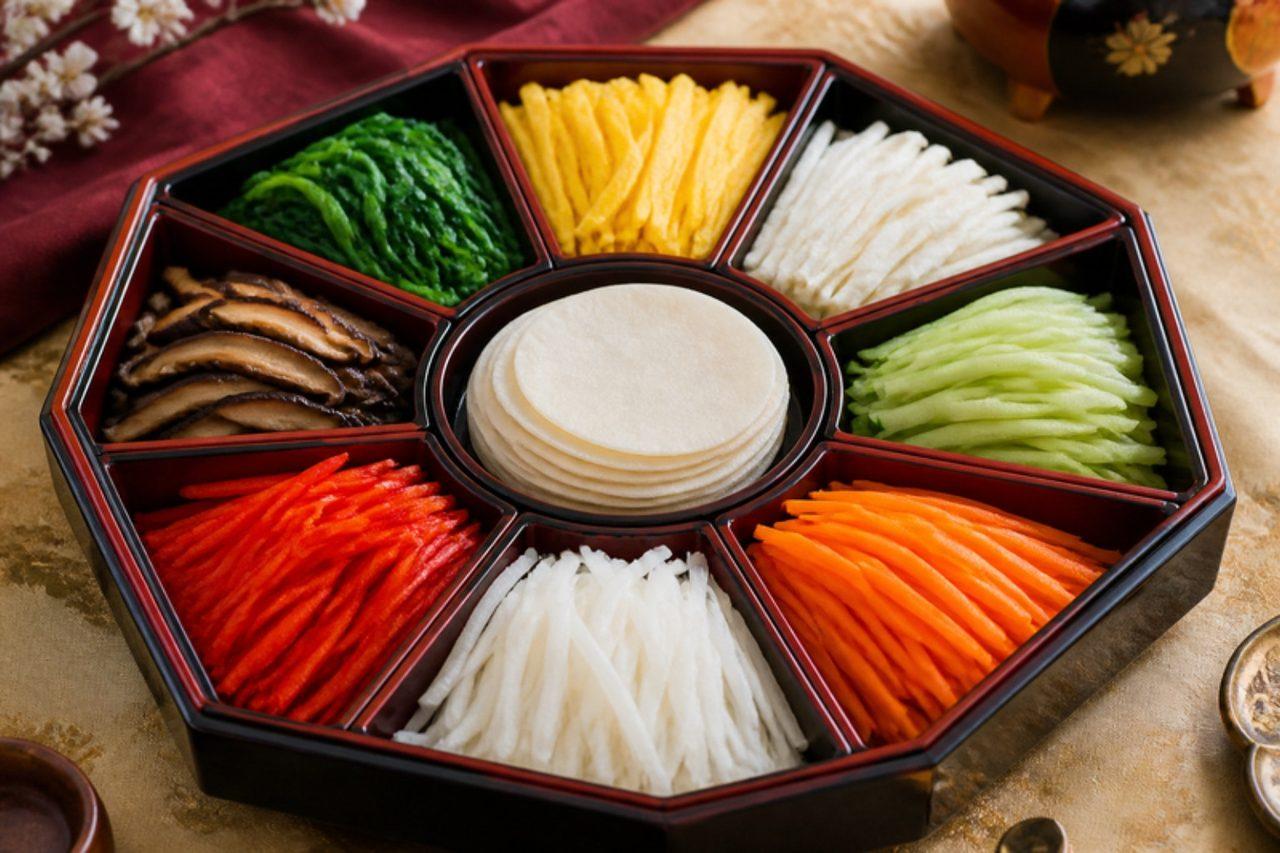
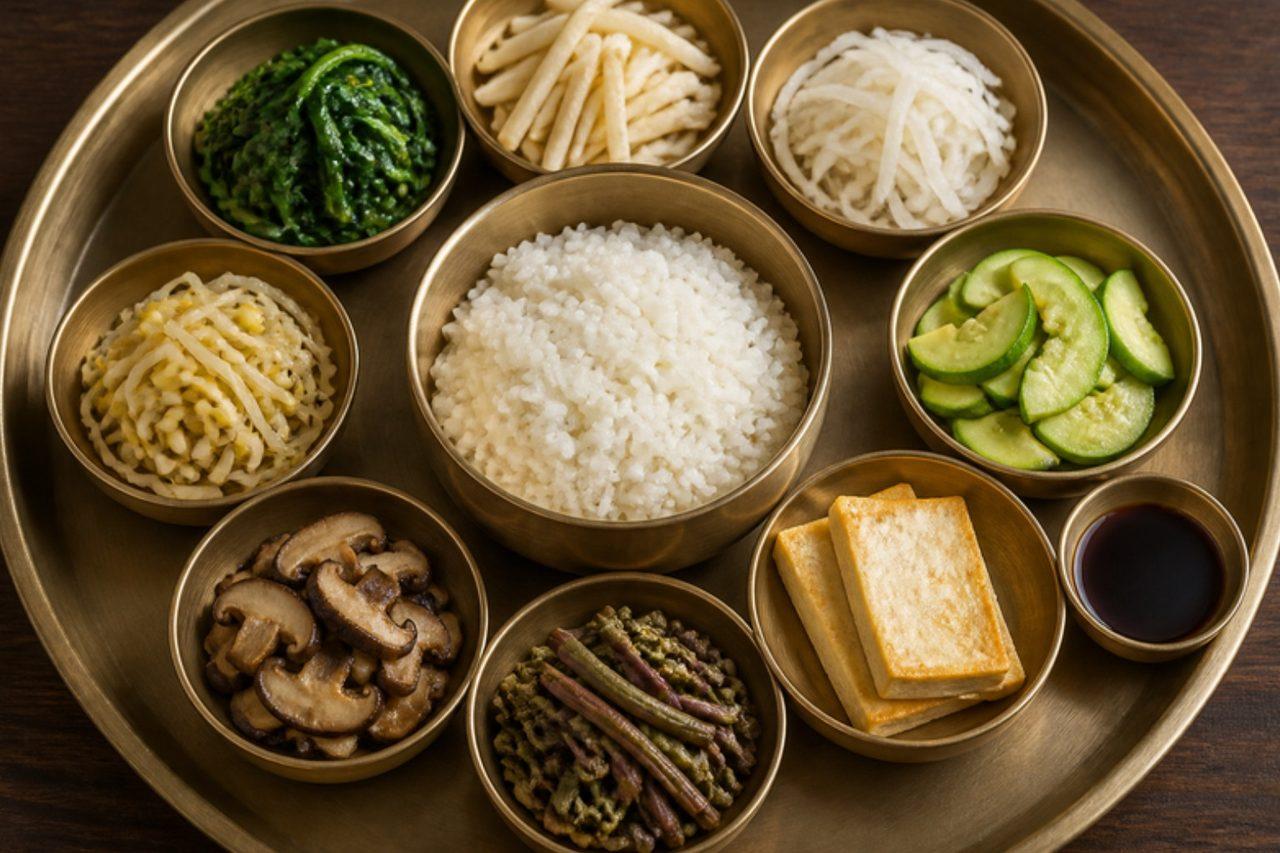
Gujeolpan (구절판) takes its name from the octagonal lacquered tray it is served on: eight outer compartments of finely cut, separately seasoned fillings around a stack of paper-thin wheat crêpes in the middle. It was a dish of the Seoul royal court and noble households, and it still appears at weddings, 60th birthdays and Seollal tables, where everyone builds their own little rolls. Classic trays include beef; this one keeps all the colour with shiitake, wood ear, cucumber, carrot, peppers, radish and yellow and white egg. It takes patience rather than skill. Chef's tip: cut every filling into matchsticks the same length as the crêpes are wide, about 5 cm, so each roll closes neatly.

by KrazyBadal 0 views

Jeonju kongnamul gukbap

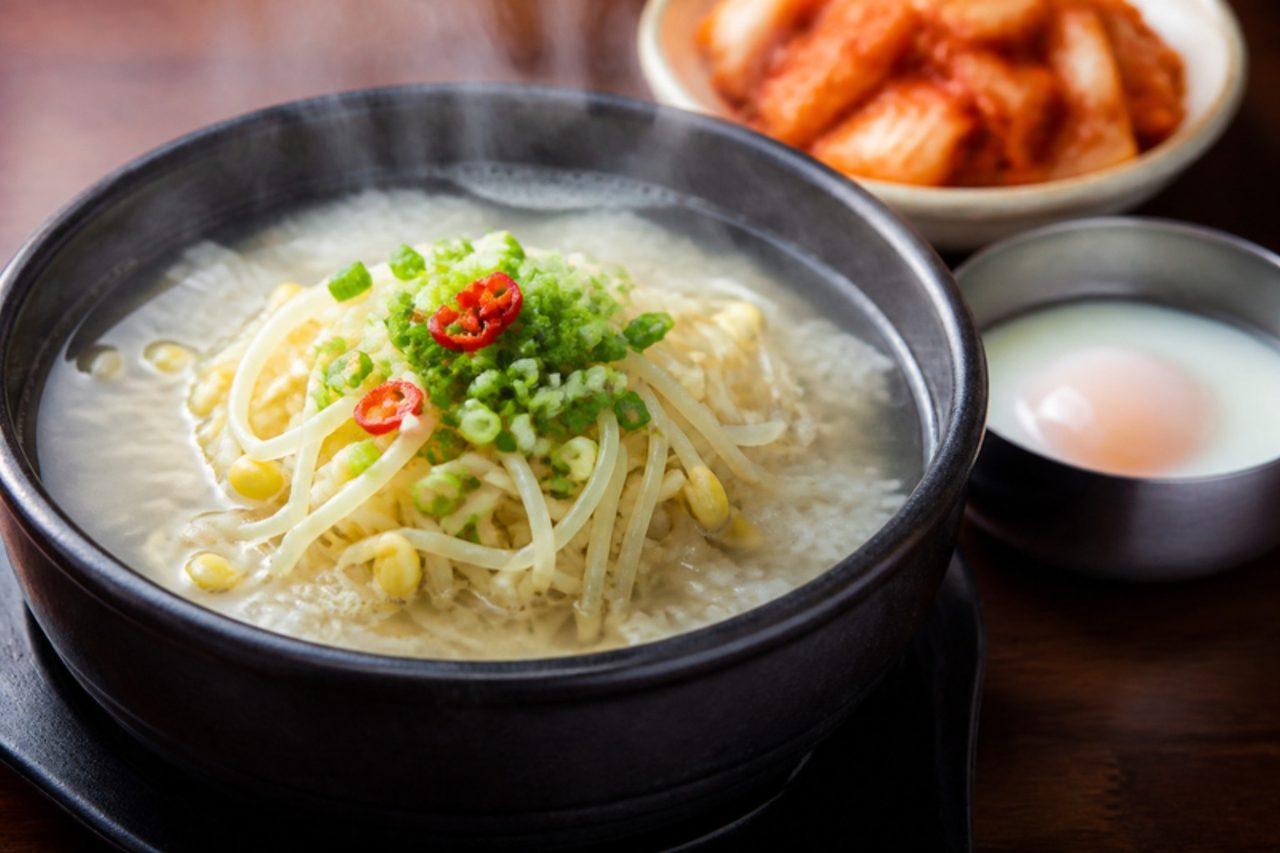
Jeonju, the North Jeolla city known for bibimbap, starts its day with kongnamul gukbap (콩나물국밥): a scalding clay bowl of clear soybean-sprout broth over rice, sharp with garlic and chilli, served before dawn to market traders and, famously, to anyone with a hangover. Many Jeonju shops bring a half-cooked egg in a separate cup, which you season with a little broth and crumbled seaweed and slurp first. The usual broth is anchovy based, with salted shrimp at the table; here it is kelp, shiitake and soup soy sauce. Chef's tip: keep the lid on while the sprouts cook and don't open it until they are done; lifting it early is said to give them a raw, grassy smell.

35 minSoups
by KrazyBadal 0 views

Heotjesatbap

In Andong, the old Confucian town of North Gyeongsang, the scholars of the yangban class were said to want the food from jesa, the rite offered to ancestors, without waiting for a rite to come round, so they cooked the same dishes and called them heotjesatbap (헛제삿밥), 'fake rite rice'. Restaurants by Andong's dam still serve it: a bowl of rice to be mixed with brown, white and green namul and seasoned with soy sauce, never chilli, because ritual food avoids red pepper and garlic. The full table includes grilled fish and beef skewers; this vegetarian version keeps the vegetables and tofu jeon that make up most of it. Chef's tip: cook each namul separately with only salt, soy or sesame, so each keeps its own taste and colour when you mix the bowl.

by KrazyBadal 0 views

Bingtteok

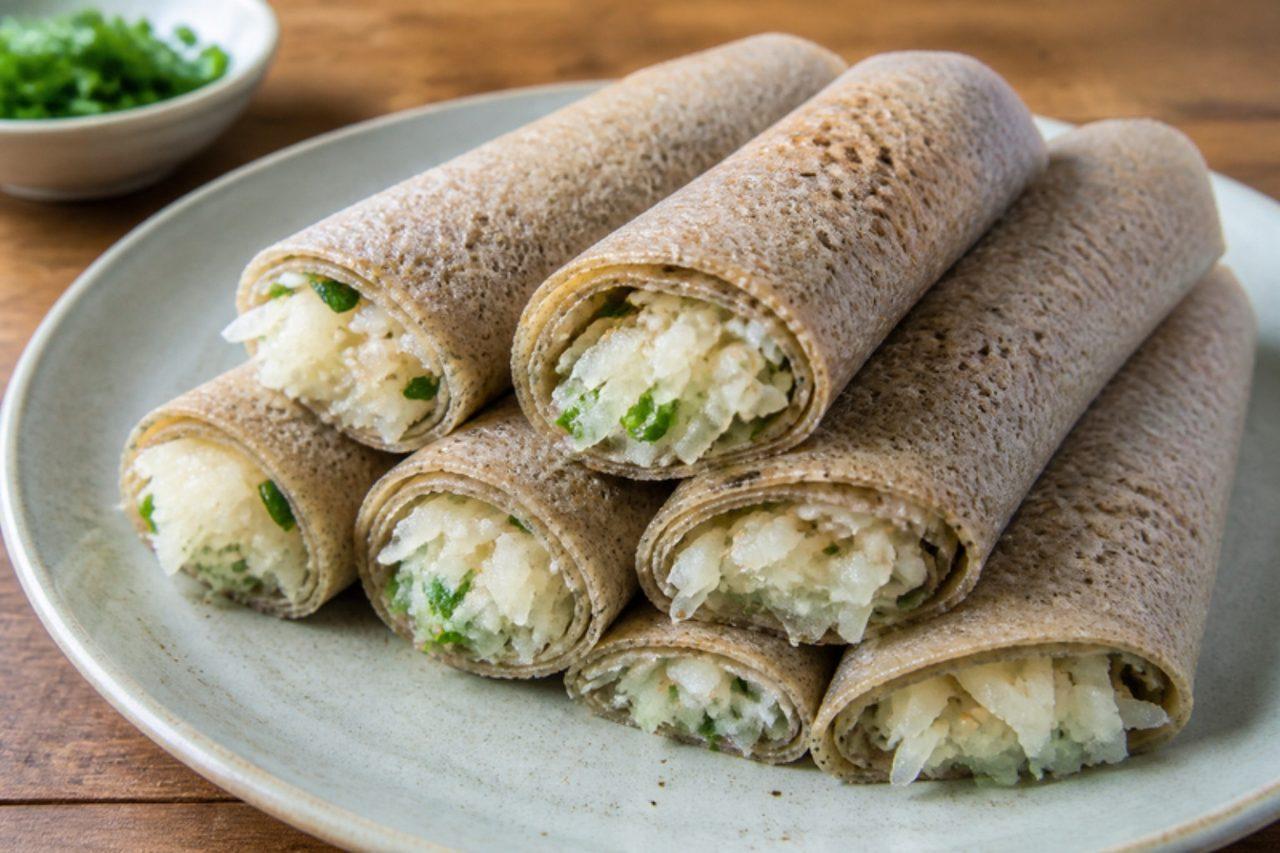
Bingtteok (빙떡) comes from Jeju island, where volcanic soil grew buckwheat and radish better than rice. Thin, almost translucent buckwheat crêpes are rolled around a filling of blanched radish seasoned only with salt, sesame and spring onion. The flavour is gentle and nutty, and it was traditionally brought to funerals, weddings and village gatherings, sometimes with a cup of makgeolli. Today you find it at Jeju's Dongmun and Seogwipo markets beside more fiery snacks. Chef's tip: pour a little batter and swirl the pan fast, or spread it with the back of a ladle; bingtteok crêpes should be so thin you can almost see through them.

by KrazyBadal 0 views

Mul naengmyeon

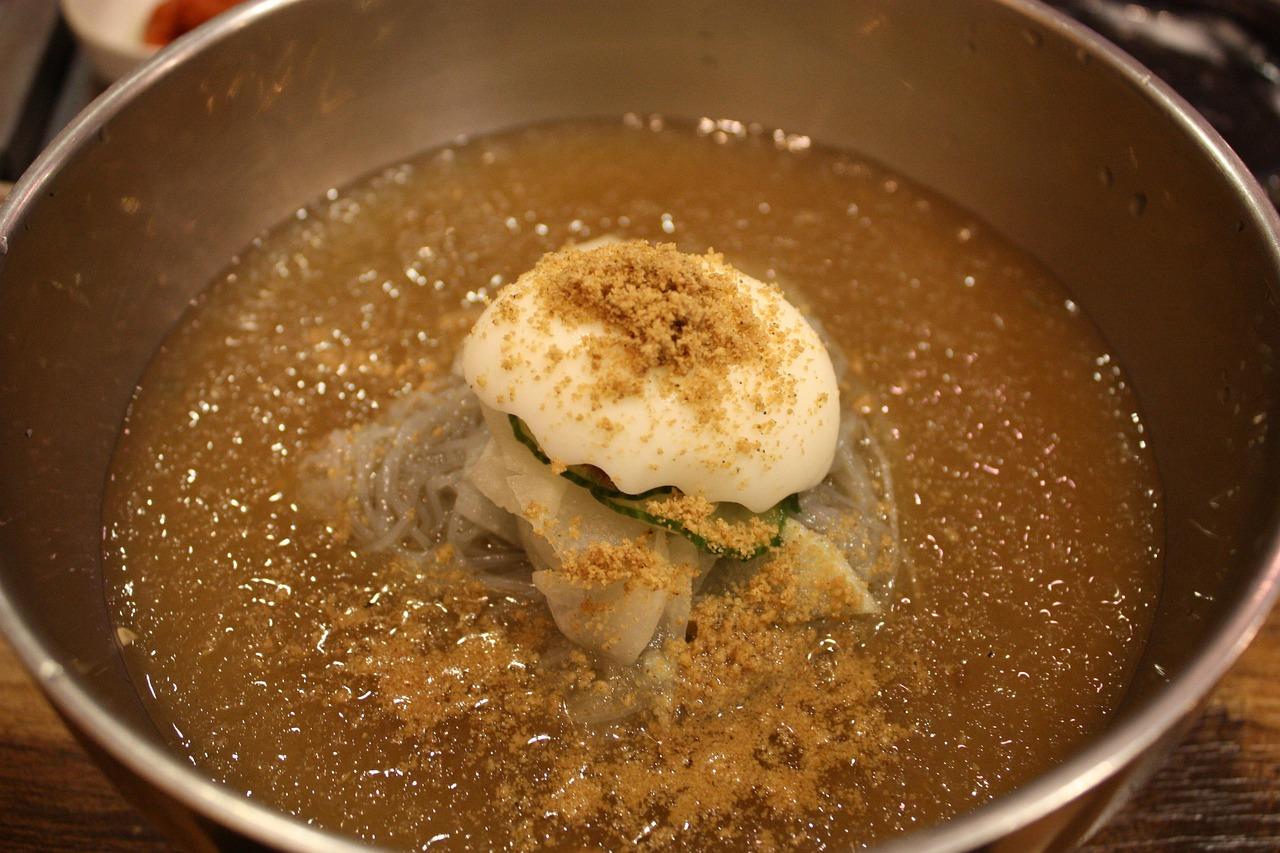
Mul naengmyeon comes from Pyongyang, where it was once a winter dish eaten in heated rooms; after the war, northern cooks opened naengmyeon houses in Seoul, and now it is the first thing people crave on a sticky summer afternoon. The beef broth is served almost frozen, slightly sweet and sharp with vinegar, over long, springy buckwheat noodles. Bottles of vinegar and hot mustard sit on every table so you can adjust each bowl. Plan ahead: the broth needs at least 4 hours in the fridge, or make it the day before. Chef's tip: put the strained broth in the freezer for the last hour, so it turns slushy just as you serve.

by KrazyBadal 0 views

Goes well with korean radish