Skip to content

Recipes with jakhya seeds

6 recipes that use jakhya seeds, with photos, step-by-step instructions and cook times. The quickest, Jholi, takes 30 minutes. It is most often cooked with mustard oil, turmeric and dried red chillies.

Got a few things in the fridge? Search by everything you have

Jholi

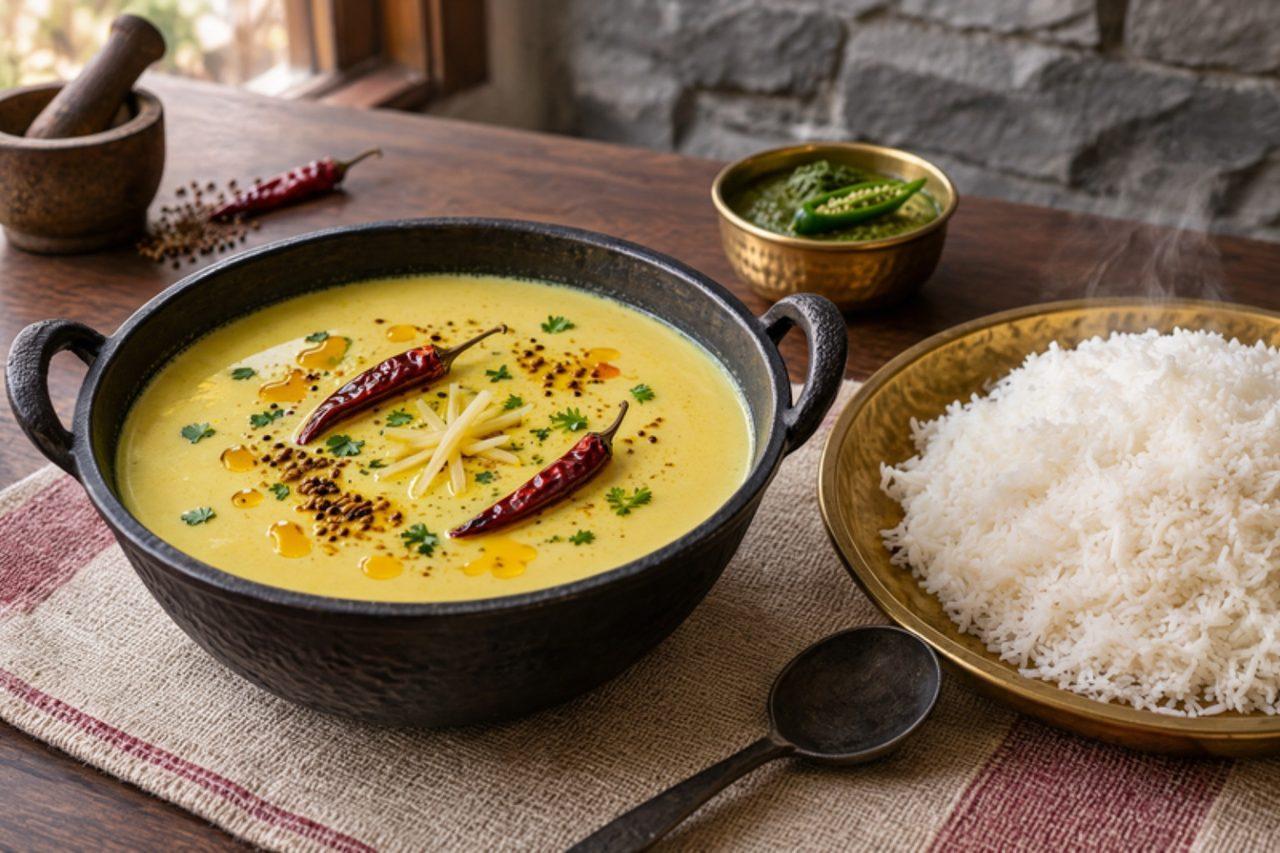
Jholi is the thin, everyday kadhi of Kumaon, cooked when there is curd in the house and no time for pakoras, and spooned over rice for a quick lunch. It is tempered with jakhya, a tiny crunchy hill seed with a mustardy bite, and coloured gold with turmeric. Because there are no fritters, it is lighter and tangier than a Punjabi kadhi. The common mistake is letting it boil before the gram flour has cooked in, which splits the curd into grains. Chef's tip: keep stirring in one direction until the first bubble; after that the jholi is stable and can simmer on its own.

by KrazyBadal 0 views

Dubuk

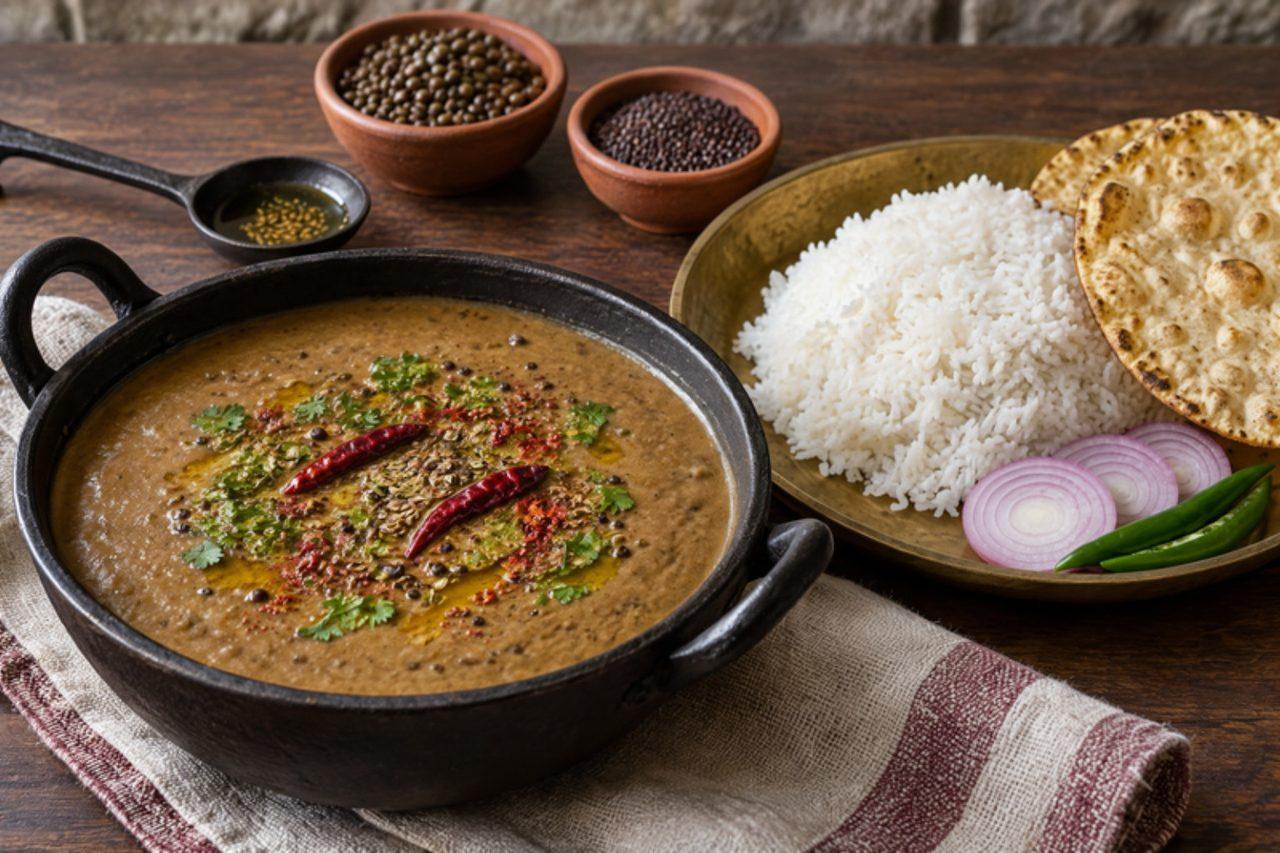
Dubuk is a Kumaoni winter staple from the hill villages around Almora and Pithoragarh, where soaked bhatt (black soybean) or gahat is ground on a stone and simmered slowly in an iron kadhai until it turns thick and dark. It is eaten with plain rice on cold evenings, and the iron pot gives it its slightly earthy colour and taste. Toor dal or a mix of toor and urad works well if you cannot find pahadi lentils. The common mistake is grinding the lentils to a fine paste and boiling hard, which makes dubuk gluey; grind coarse and keep the simmer gentle. Chef's tip: stir in a spoon of the rice paste only at the end, and only if the gravy needs body, because the lentils thicken a lot as they stand.

by KrazyBadal 0 views

Phaanu

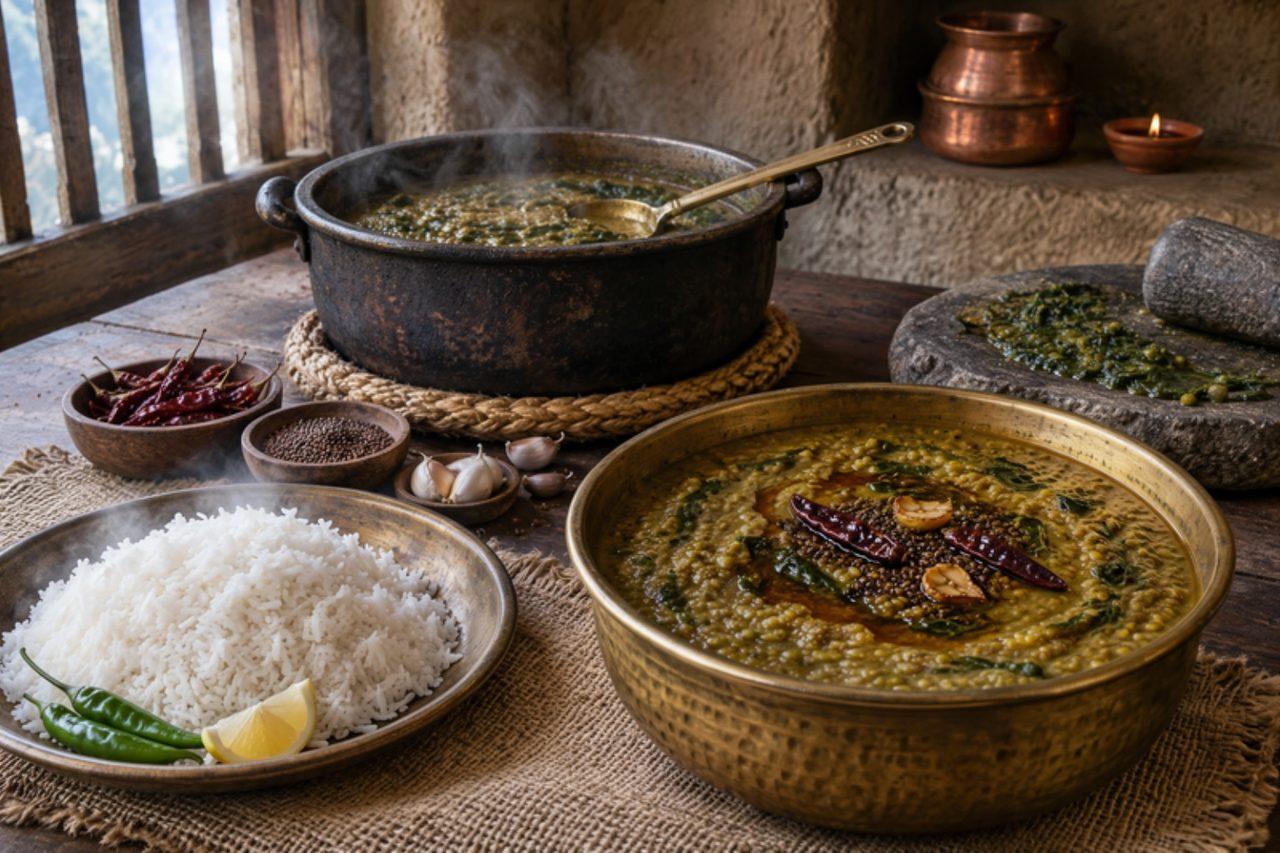
Phaanu is everyday food in Garhwal's hill villages, from Pauri to Tehri, made on cold days and in large pots for family gatherings. Mixed lentils are soaked overnight, ground to a coarse paste and simmered slowly in an iron pot until the paste turns into a thick, earthy stew, with spinach or other greens and a mustard-oil and jakhya tempering. It is eaten with steamed rice and a little ghee. The usual mistake is adding the paste to the pot and walking away; for the first 10 minutes it must be stirred constantly or it forms lumps and sticks to the bottom. Chef's tip: whisk the lentil paste into cold water before it goes on the heat; it thickens smoothly and never catches.

by KrazyBadal 0 views

Kumaoni ras

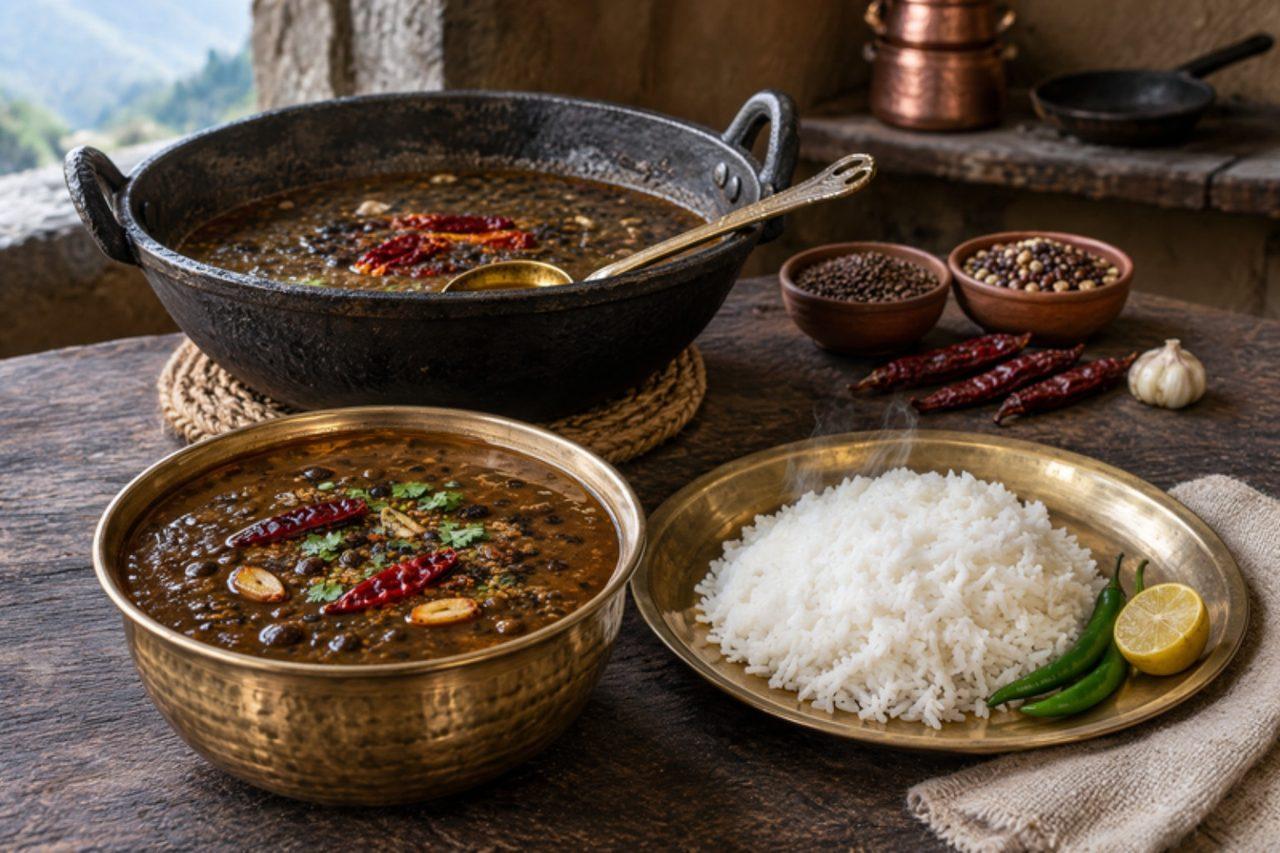
In the hill villages of Kumaon in Uttarakhand, ras is cooked through the cold months in a heavy iron kadhai that sits on the fire for hours; the iron turns the broth dark and earthy, and families drink it with rice or mandua (finger millet) roti. Several whole dals, here horse gram (gahat), black soybeans (bhatt), black urad and green moong, are simmered until their liquid becomes a rich, brown, silky broth, lightly thickened with ground rice and finished with a crackling mustard-oil tempering of jakhya seeds. The cooked dal solids are eaten too, as a dry side. The usual mistake is hurrying: the broth needs long, slow simmering to turn silky and full-flavoured. Chef's tip: jakhya (wild mustard seed) is sold in Uttarakhand shops; cumin is a fair stand-in.

by KrazyBadal 0 views

Kandalee ka saag

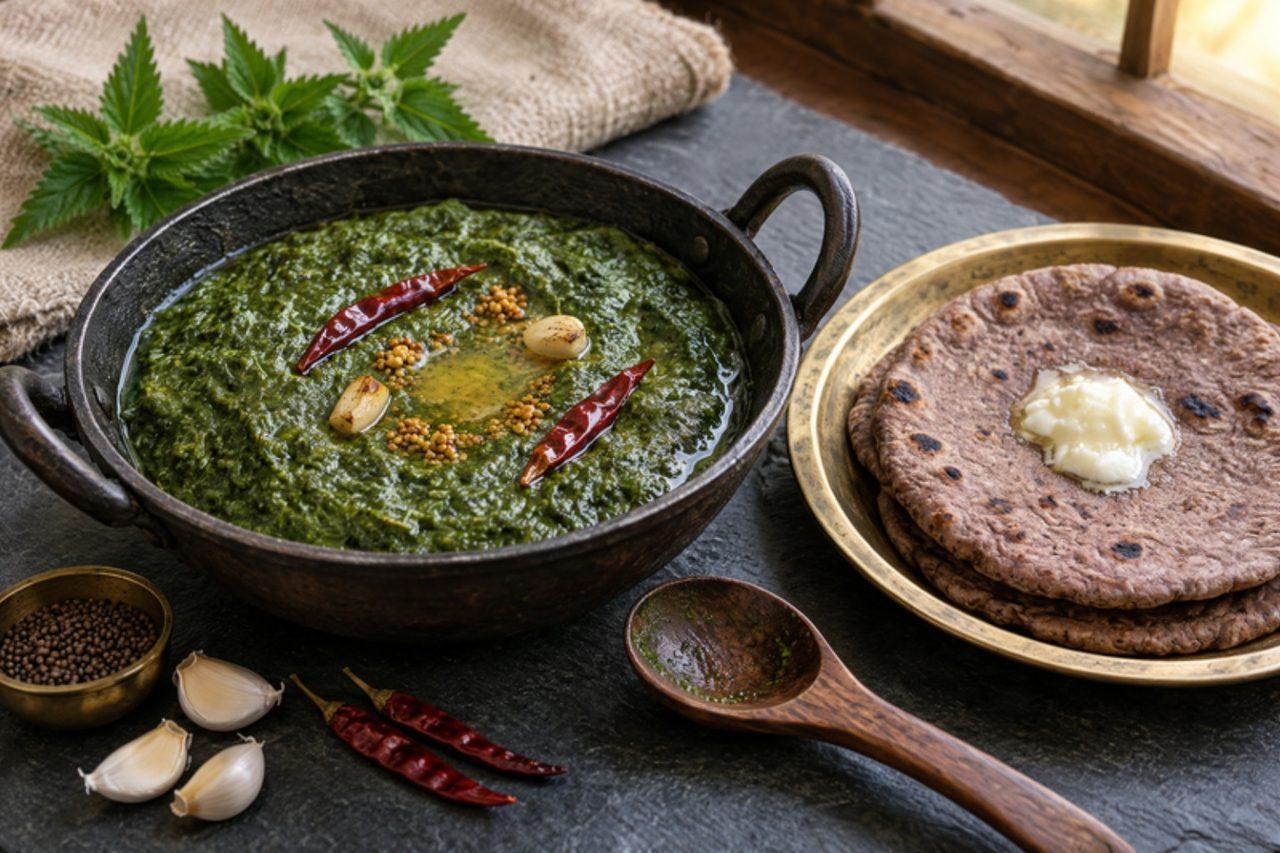
Every spring in Uttarakhand people pick the soft tips of kandalee (bichhu ghas, stinging nettle) from field edges and cook them into a deep green saag with garlic, chilli and a spoon of rice paste, eaten with mandua roti or rice. Nettles taste like a rich, mineral spinach and the sting disappears completely once they are blanched. Always wear gloves or use tongs when picking and washing them. The common mistake is skipping the blanch and going straight to the pan, which leaves stringy stems and some sting. Chef's tip: squeeze the blanched nettles well and chop fine before cooking; this is what gives the smooth, creamy texture hill cooks are proud of.

by KrazyBadal 0 views

Thechwani

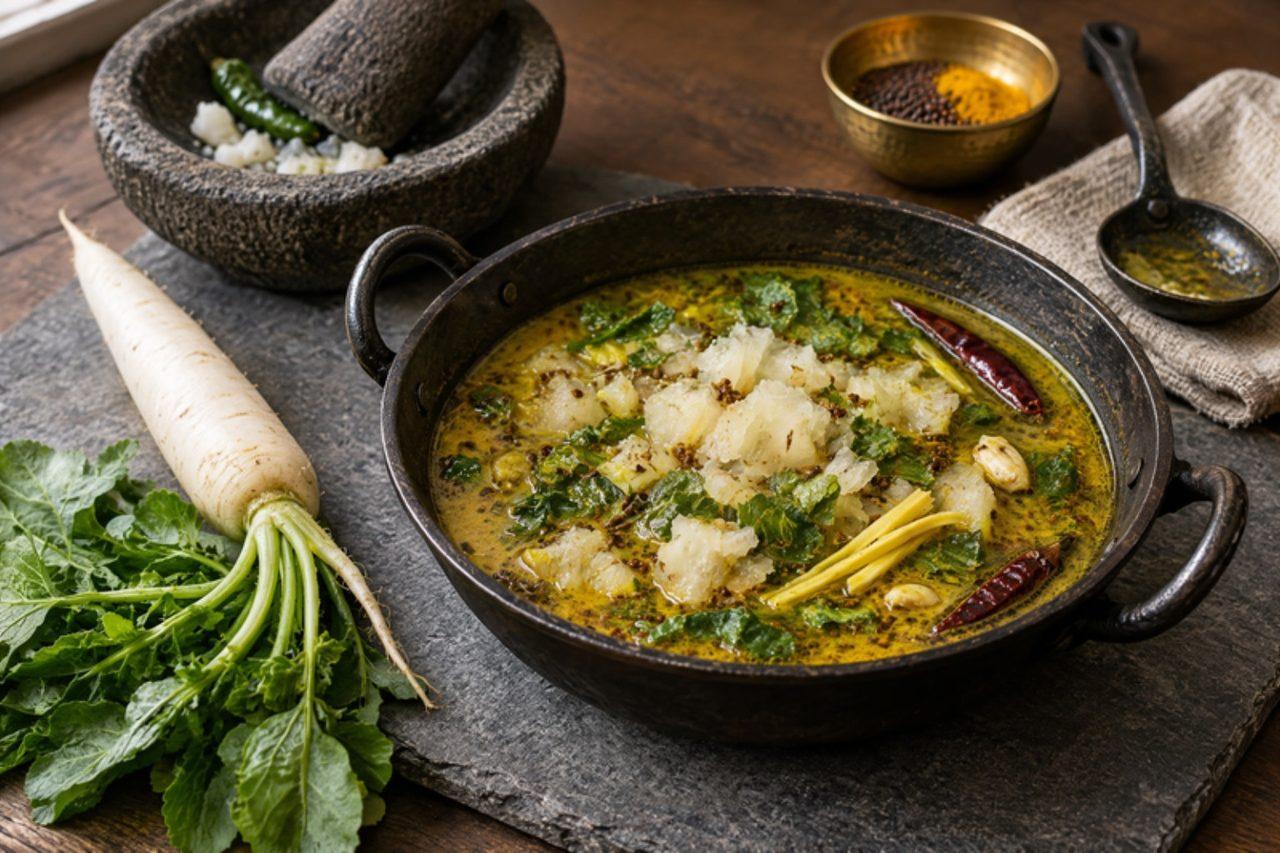
Thechwani is a winter dish from the hill villages of Garhwal, Uttarakhand, cooked when the radishes are fat and sweet. Instead of chopping, the radish (or potato) is bashed with a stone or pestle so it cracks into rough pieces with lots of surface, then simmered in an iron kadhai with mustard oil, jakhya seeds and a little tomato. The broken pieces soak up the spices, and the iron pot darkens the gravy. It is eaten with rice or mandua (finger-millet) roti. Jakhya, a crunchy wild seed, is sold in hill stores; cumin is the swap. The usual mistake is slicing the radish neatly with a knife, which keeps the spices on the outside. Chef's tip: add the radish greens, finely chopped, in the last 5 minutes for colour and a peppery bite.

by KrazyBadal 0 views

Goes well with jakhya seeds