Skip to content

Recipes with hulled millet

6 recipes that use hulled millet, with photos, step-by-step instructions and cook times. The quickest, Talkan, takes 20 minutes. It is most often cooked with butter, sugar and ayran or plain yogurt thinned with water.

Got a few things in the fridge? Search by everything you have

Kulish

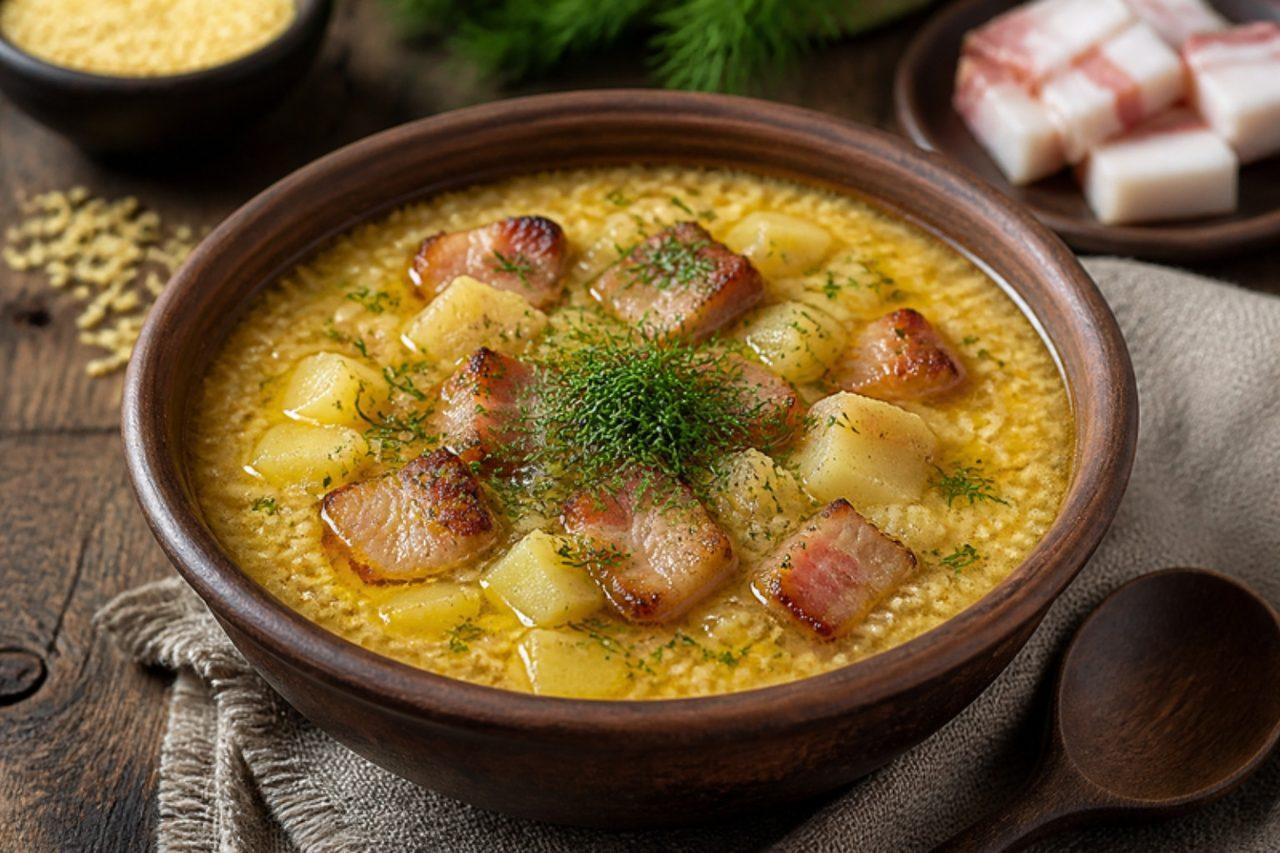
The Zaporizhian Cossacks of the Dnipro steppe cooked kulish in a black kettle over a campfire, and it is still the dish of fishing trips, summer camps and folk festivals on the island of Khortytsia. Millet, potato and onion simmer together into something halfway between a thick soup and a loose porridge, then a sizzling spoonful of fried salo, the salted pork fatback, goes in for smoky, savoury depth. It is humble, golden and comforting, best eaten hot with rye bread and a raw onion or pickle. The most common mistake is skipping the hot rinse of the millet, which leaves the porridge bitter. Kulish thickens as it stands, so loosen leftovers with a splash of water. Chef's tip: fry the salo slowly until the cubes are crisp, then fry the onion in the rendered fat; that fat carries all the flavour through the pot.

by KrazyBadal 0 views

Talkan

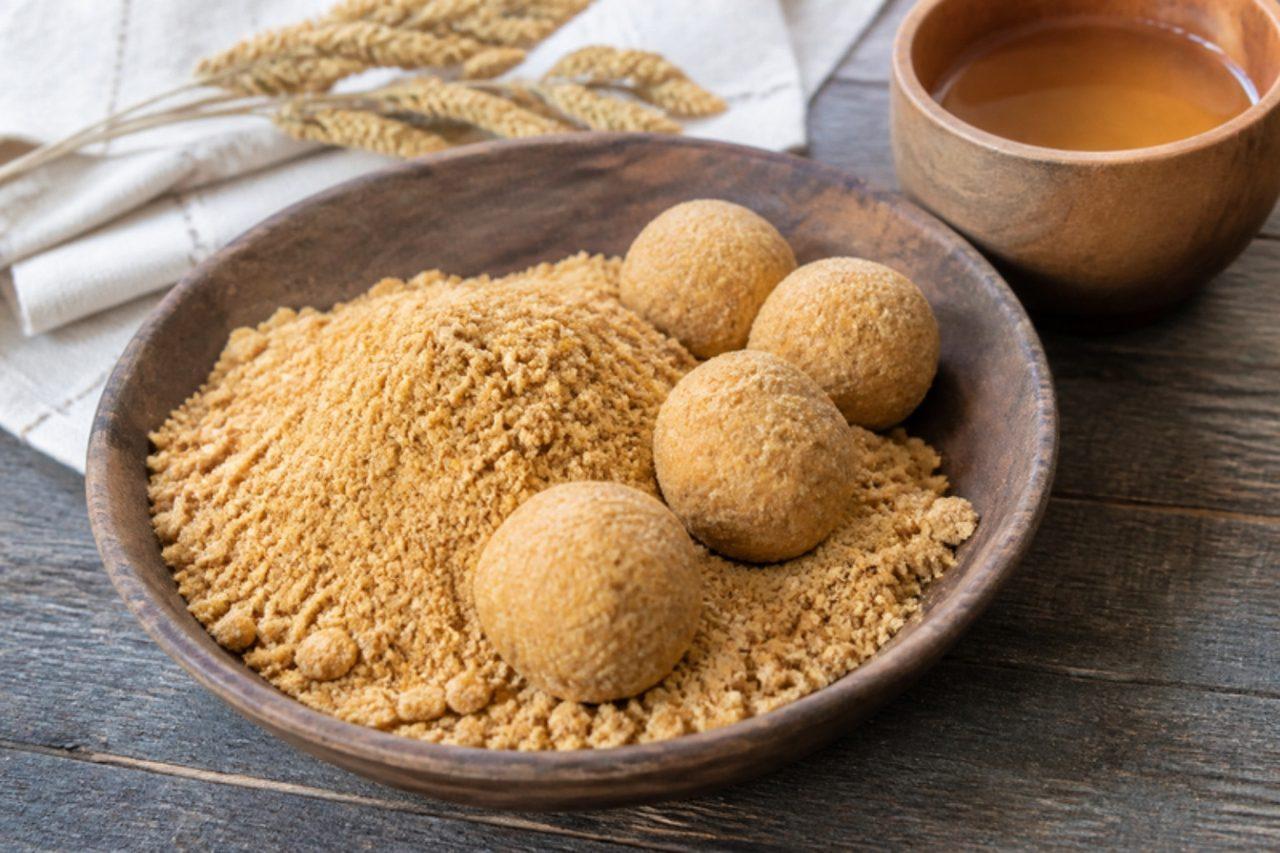
Talkan is an ancient nomad food from the Kazakh steppe: grain roasted in a dry kazan and ground into a fine, nutty flour that keeps for months and needs no cooking. In Kazakh homes it is mixed with melted butter and sugar or honey into crumbly sweets for children, stirred into hot milk tea, or pressed into balls for travel. Ready-made talkan is sold in Kazakh markets; roasting your own millet or wheat flour works well. A common mistake is roasting over high heat, which scorches the outside of the grains and leaves a bitter taste. Chef's tip: roast until it smells like popcorn, then grind finely while warm.

by KrazyBadal 0 views

Tary

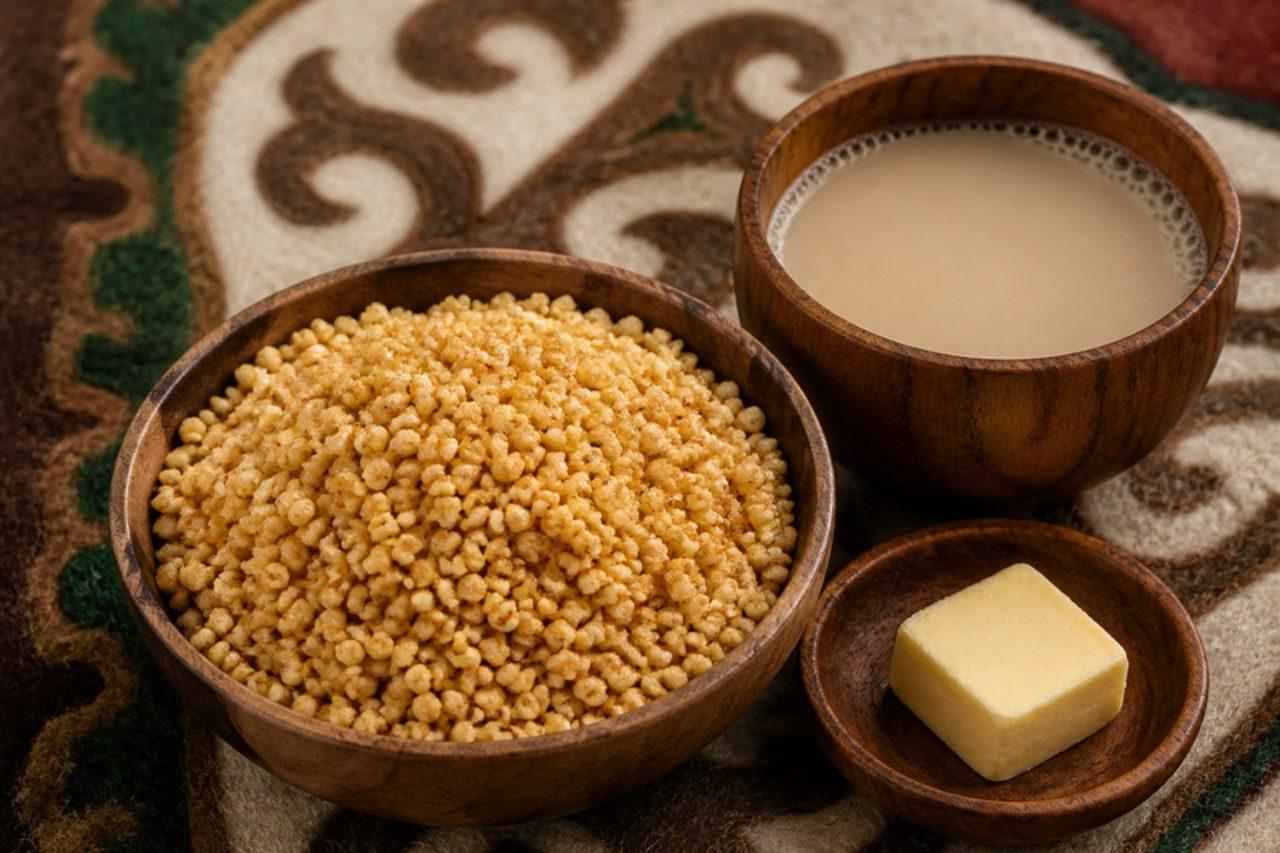
Tary is roasted millet, the oldest grain of the Kazakh steppe: soaked, boiled briefly, then roasted in a kazan until crunchy and golden, so it keeps for months in a leather bag. In Kazakh homes a bowl of tary sits on the dastarkhan tablecloth beside the tea, and people stir a spoonful into their milk tea, sprinkle it over sour cream or eat it with butter and sugar. A common mistake is skipping the pre-cooking, which leaves the grains rock-hard. Chef's tip: steam the millet briefly before roasting; the starch sets and the grains puff and crunch rather than shatter.

by KrazyBadal 0 views

Nauryz kozhe

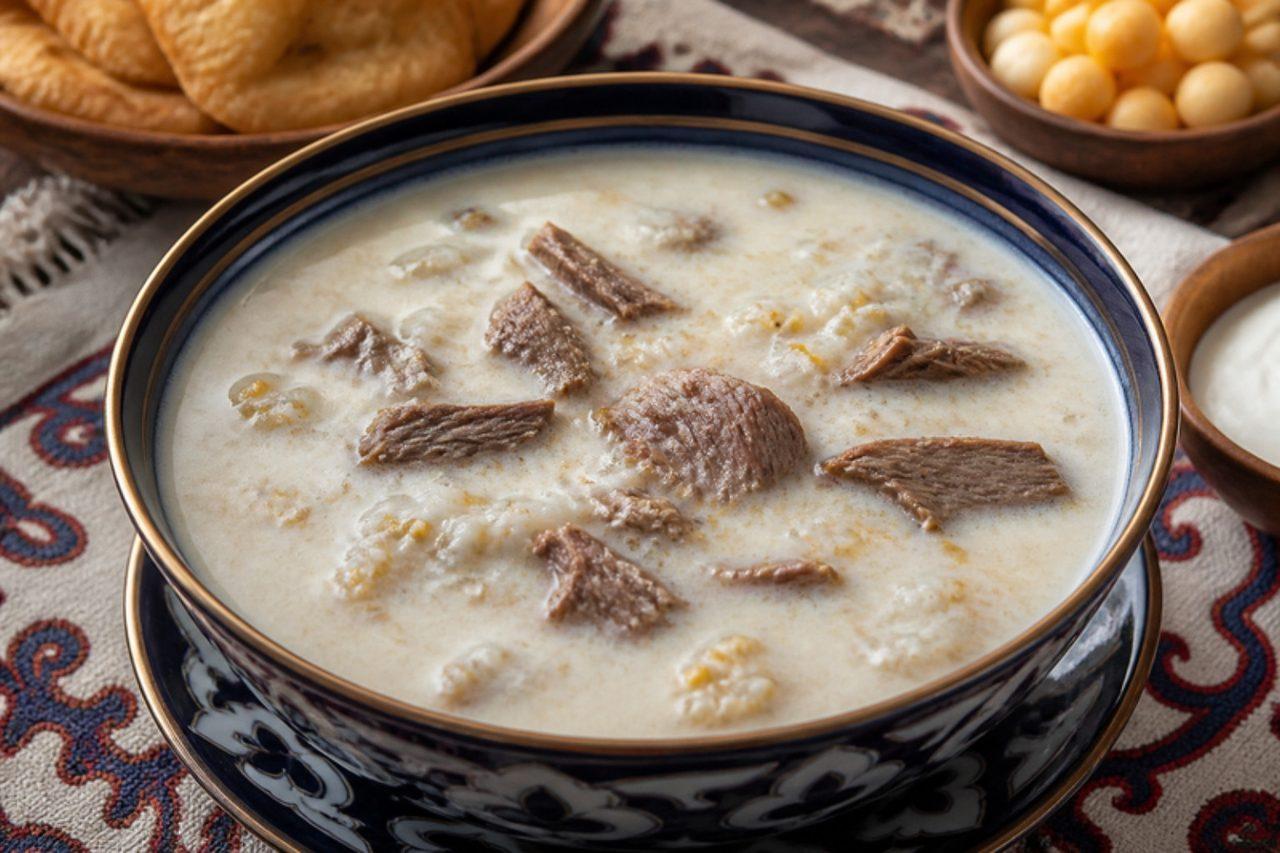
Nauryz kozhe is cooked in every Kazakh home and in big cauldrons on city squares in Almaty and Astana for Nauryz, the spring new year on 22 March. It must contain seven ingredients, standing for the seven blessings: water, meat, salt, grain, a second grain, milk and a sour milk such as ayran, and it is shared with neighbours so the year ahead is full. The meat is traditionally smoked horse meat or kazy kept from winter; this recipe uses beef, as the site does not use horse. A common mistake is adding the milk while the soup is boiling hard, which curdles it. Chef's tip: cool the pot for a few minutes before stirring in the milk and ayran, so the kozhe stays smooth and gently sour.

140 minKazakhSoups
by KrazyBadal 0 views

Budbud kabog

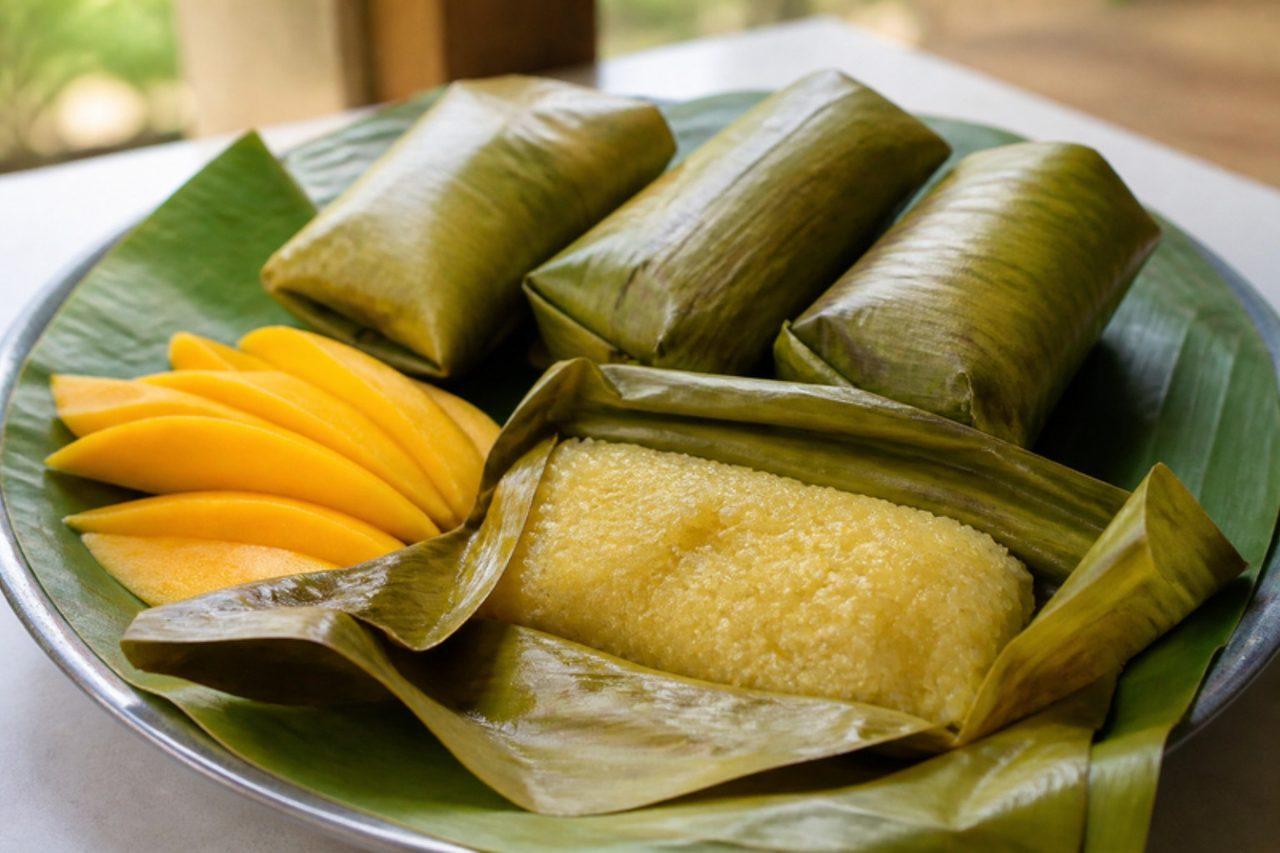
Budbud is the Visayan name for sticky rice rolls steamed in banana leaf, and the famous kabog version from Tanjay, Negros Oriental, uses millet instead of rice. The millet is cooked thick in coconut milk and sugar, rolled into banana leaves and steamed until it sets into a soft, slightly grainy log. In Dumaguete it is breakfast with ripe mango and a cup of tablea hot chocolate. Chef's tip: wilt the banana leaves briefly over a flame or in hot water so they fold without splitting.

by KrazyBadal 0 views

Zhent

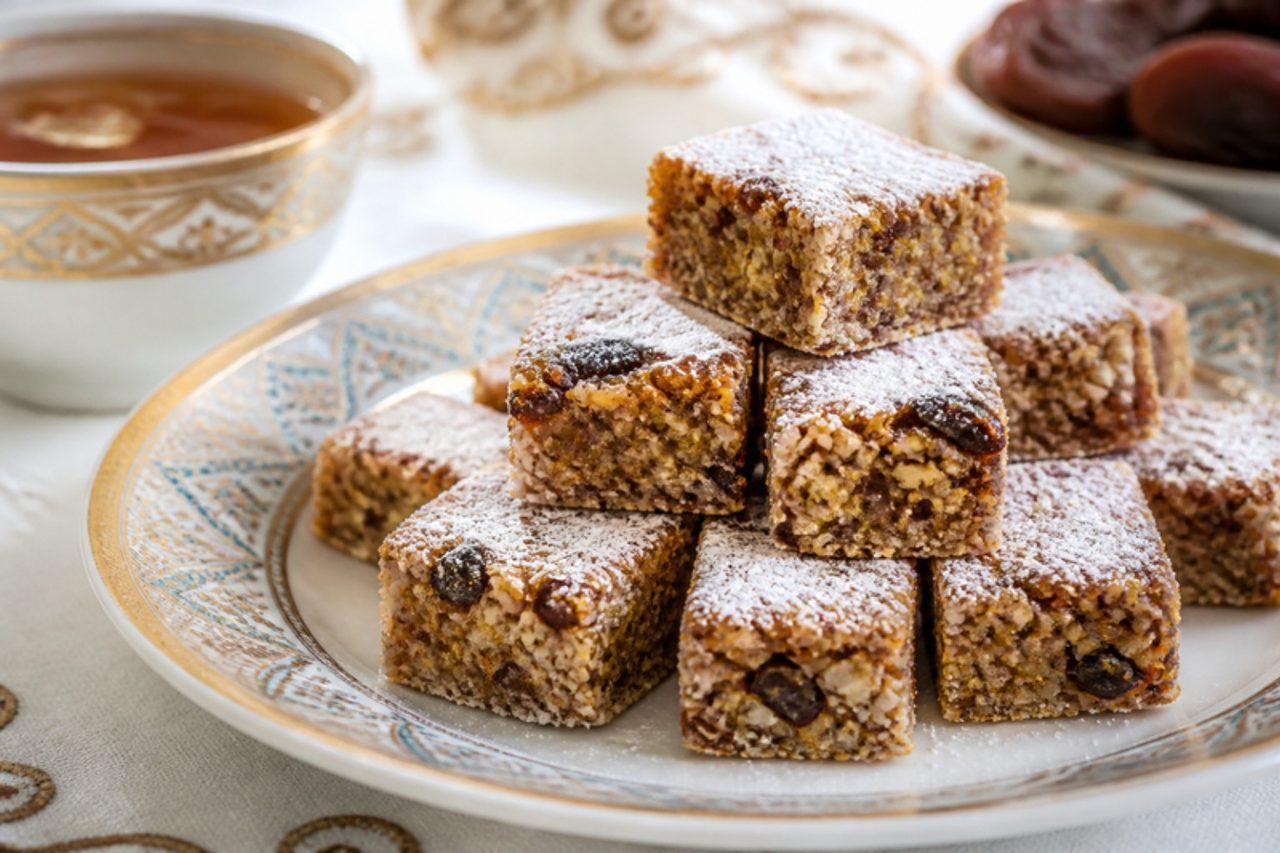
Zhent is one of the oldest Kazakh sweets: toasted millet (tary) pounded with dried kurt, dates or raisins, and bound with butter and honey into a crumbly, rich square. Herders made it to carry on long rides, and today it appears on the dastarkhan at Nauryz and weddings in southern Kazakhstan, beside baursak and dried fruit. It tastes nutty, salty-sour from the kurt and sweet, a bit like shortbread with a sharp edge. Chef's tip: toast the millet in a dry pan until it pops and smells like popcorn; under-toasted millet tastes raw and grassy.

by KrazyBadal 0 views

Goes well with hulled millet