Skip to content

Recipes with dry ginger powder

5 recipes that use dry ginger powder, with photos, step-by-step instructions and cook times. The quickest, Kabok, takes 25 minutes. It is most often cooked with jaggery, cardamom and desiccated coconut.

Got a few things in the fridge? Search by everything you have

Teliya maah

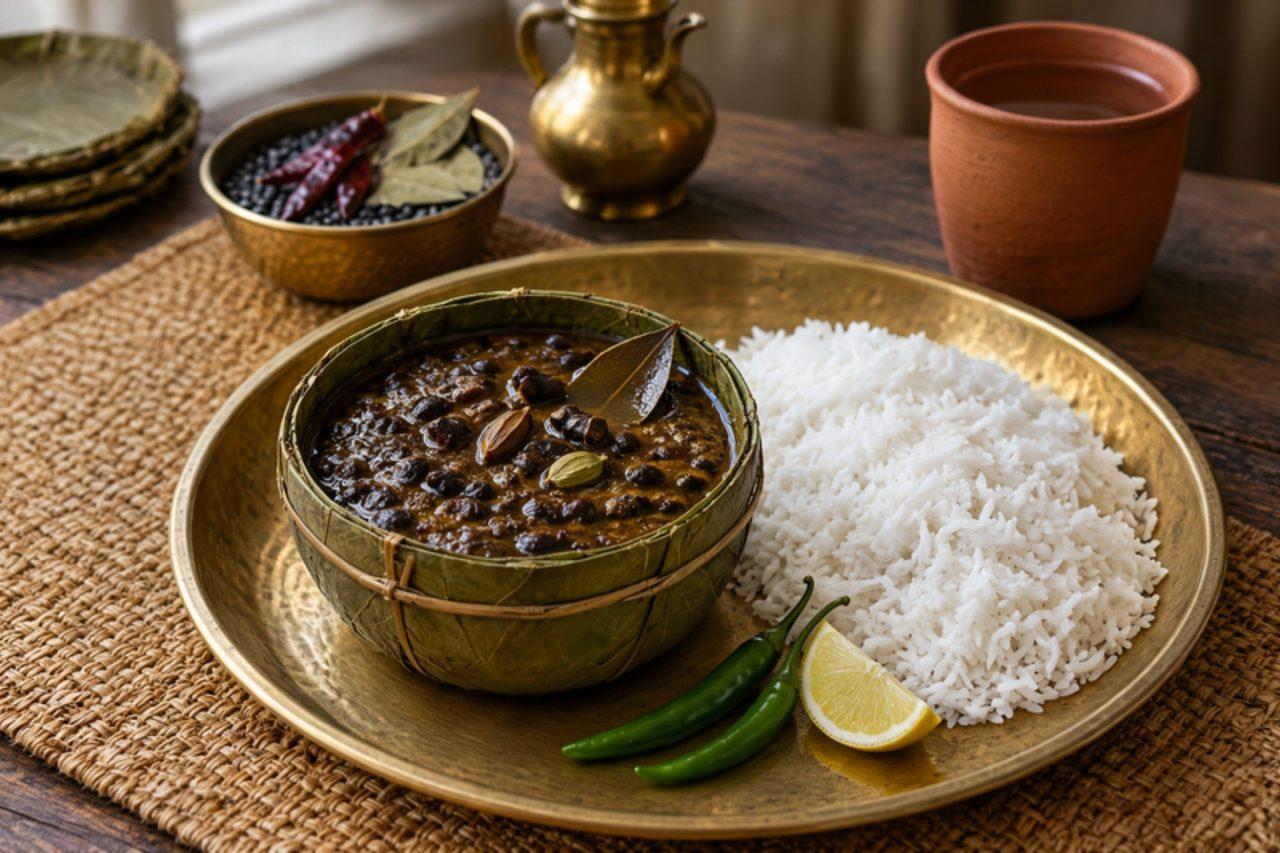
Teliya maah is one of the dishes of the Himachali dham, the feast cooked by hereditary cooks (botis) in big brass pots for weddings and temple fairs in Mandi, Kangra and Chamba, and served on leaf plates with rice. Whole black urad is cooked slowly with plenty of mustard oil, whole spices, ginger and fennel until each bean is soft but whole and glossy with oil; like most dham dishes, it uses no onion or garlic. Serve with rice and a sour madra or khatta. The usual mistake is stirring hard once the urad is soft, which turns it into a mushy dal instead of separate, oily beans. Slow-cooker option: put the soaked urad, spices and water on low for 8 hours, then finish uncovered on the hob. Chef's tip: heat the mustard oil until it smokes, then let it cool for a minute, which takes away its raw bite before the spices go in.

by KrazyBadal 0 views

Nadru achar

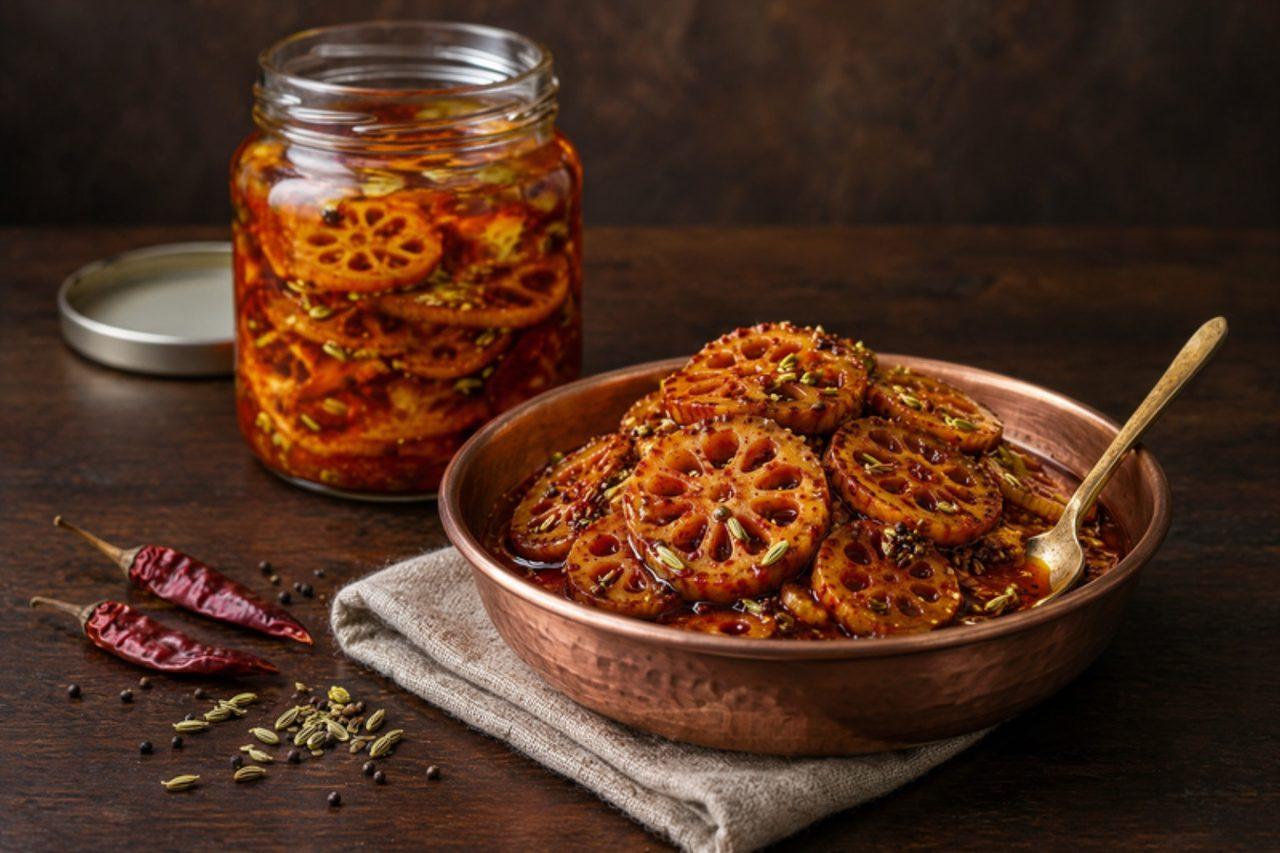
On the lakes around Srinagar, lotus stems are pulled up through the late autumn into winter and sold in muddy bundles at the floating market on Dal Lake. Kashmiri Pandit and Muslim households alike turn some of the harvest into nadru achar, a winter pickle eaten with rice, haakh (collard greens) and nadru yakhni when fresh vegetables are scarce. Thin slices are blanched, dried and dressed with mustard oil, ground fennel, sonth (dry ginger), deep-red Kashmiri chilli and vinegar. The result is crunchy rather than soft, earthy and lacy, with a warm, slightly smoky heat. Common mistake: not washing the hollow channels; mud hides inside, so rinse every slice under running water. Lotus stem grows in lake water and must always be cooked before pickling; never pickle it raw. It is ready when the slices have taken the red colour right into the holes and taste sour through, about 2 days. Keep it in the fridge for up to 1 month, under oil, with a dry spoon; discard if you see mould, fizzing or slime, or smell anything rotten. Chef's tip: buy stems that are pale cream and closed at both ends; open ends let mud in.

by KrazyBadal 0 views

Kabok

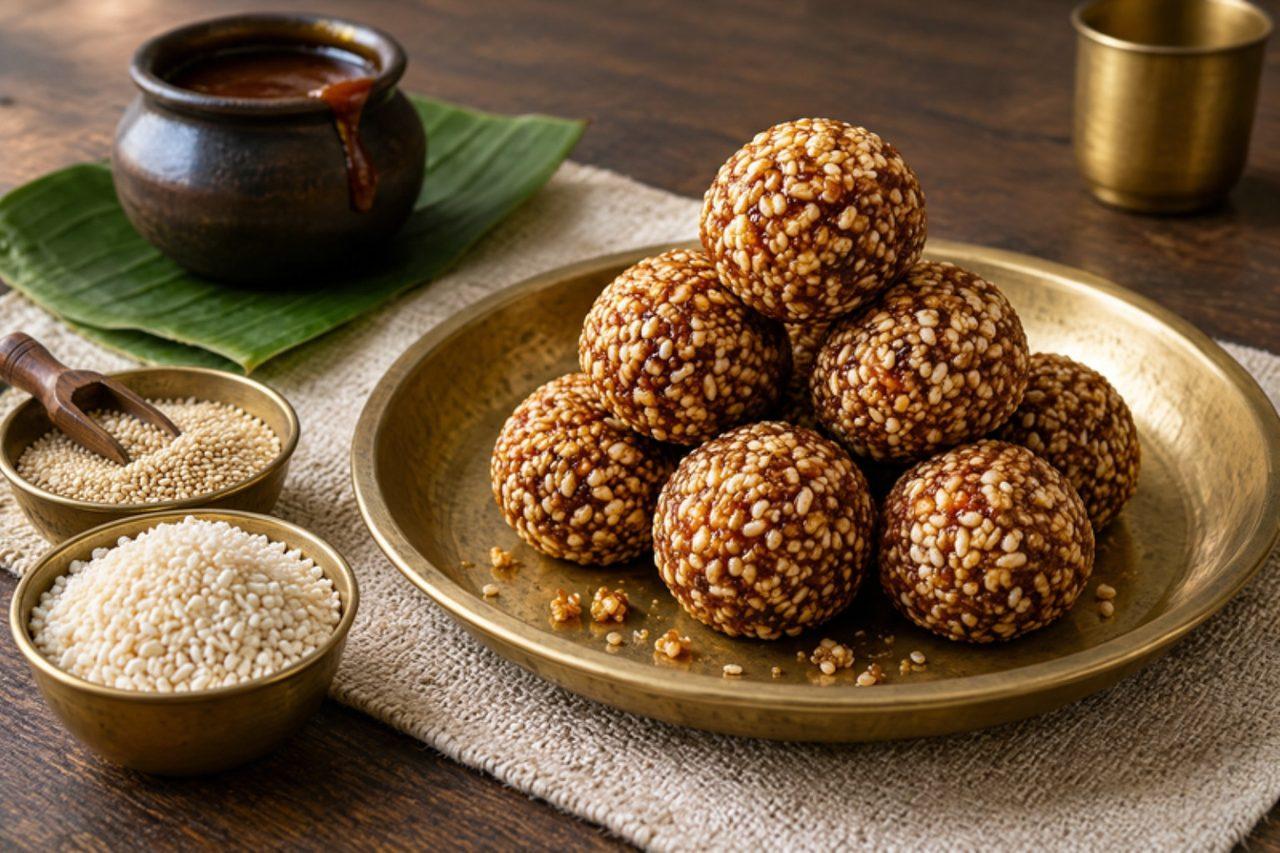
Kabok are crunchy balls of puffed rice and sesame bound with hot jaggery syrup, made in Meitei homes for Yaoshang, Cheiraoba and temple offerings. Black puffed rice is used in some villages, giving dark, toasty kabok. The key is the syrup: cook it to the hard-ball stage, when a drop in cold water sets into a firm ball, or the balls will fall apart. The common mistake is shaping with dry hands; wet them so the hot mixture doesn't stick or burn. Chef's tip: warm the puffed rice in the oven for a few minutes first so it stays crisp.

by KrazyBadal 0 views

Gundar pak

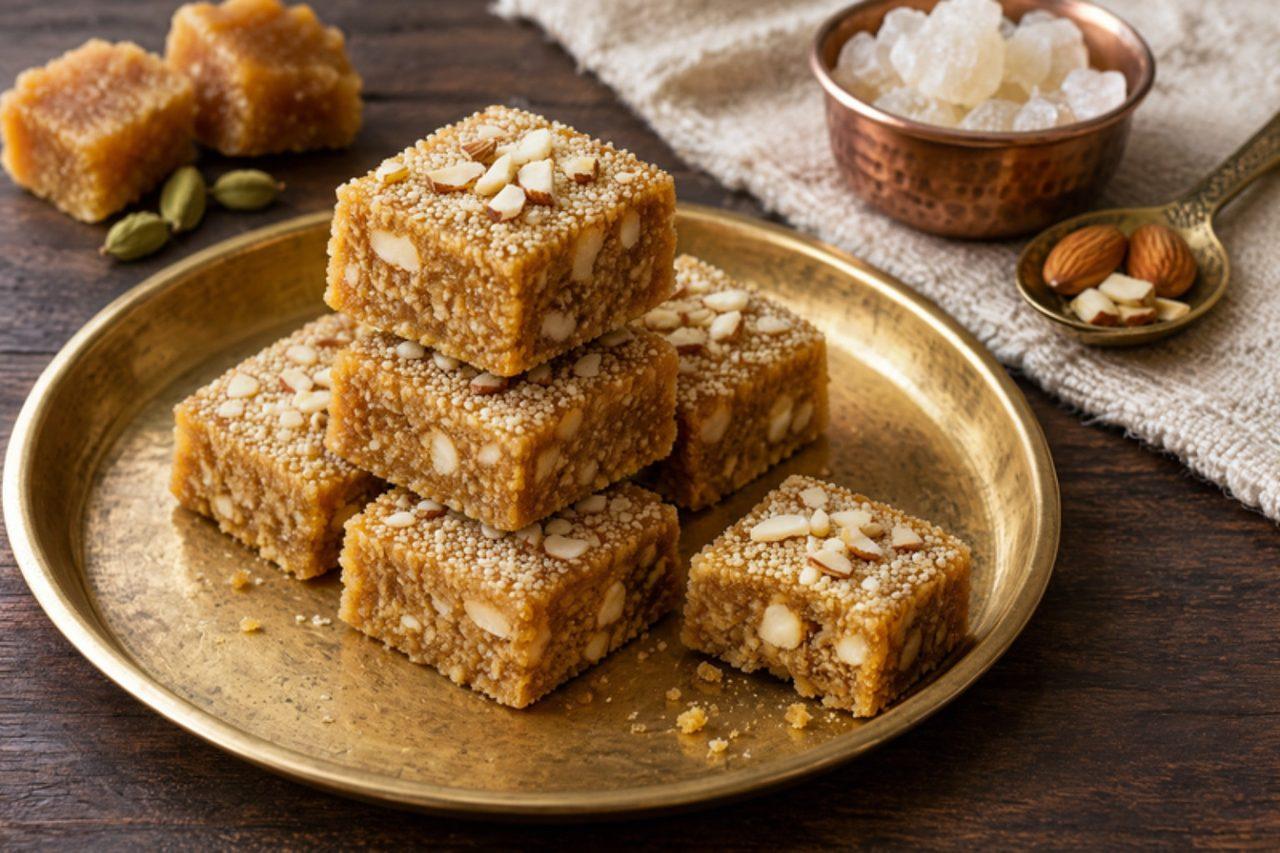
When the first cold mornings reach Rajkot and Junagadh, Kathiawadi kitchens fry a big batch of gundar, the edible acacia gum, in ghee and set it into this dense, crunchy pak, eaten one square a day with tea through December and January. Here the gum is the star: it puffs into crisp white popcorn-like pieces that give the fudge its crackle, while wheat flour, jaggery, dry ginger and coconut hold it together. The common mistake is frying the gum in ghee that is too cool, so it stays hard and glassy and sticks to your teeth; it must puff fully within seconds. Chef's tip: crush the puffed gum only lightly with a rolling pin so you still bite into small crunchy nuggets.

by KrazyBadal 0 views

Sooth pak

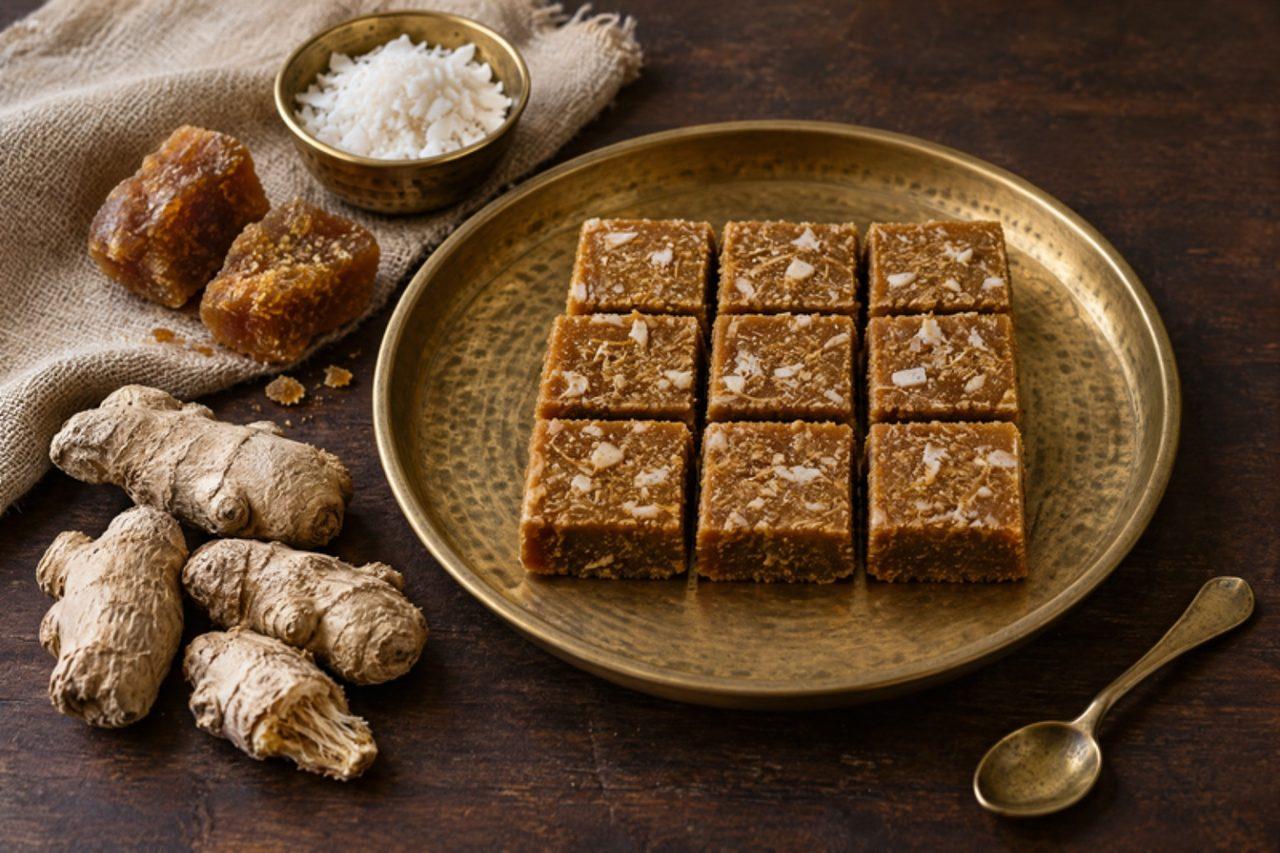
In Saurashtra a new mother is handed a tin of sooth pak within days of giving birth, and the rest of the family quietly helps themselves when winter colds arrive. It is a small, potent square: plenty of dry ginger roasted in ghee, softened by jaggery and wheat flour, with a little puffed gum and coconut for texture, so one piece warms you right through. The mistake to avoid is roasting the ginger powder on its own in very hot ghee, which scorches it in seconds and leaves the pak bitter. Chef's tip: grind dry ginger root yourself in a spice grinder just before cooking; the flavour is far brighter than old packet powder.

by KrazyBadal 0 views

Goes well with dry ginger powder