Skip to content

Recipes with beansprouts

11 recipes that use beansprouts, with photos, step-by-step instructions and cook times. The quickest, Vegetarian char kway teow, takes 25 minutes. It is most often cooked with garlic, light soy sauce and sugar.

Got a few things in the fridge? Search by everything you have

Zhajiangmian with mushroom and tofu

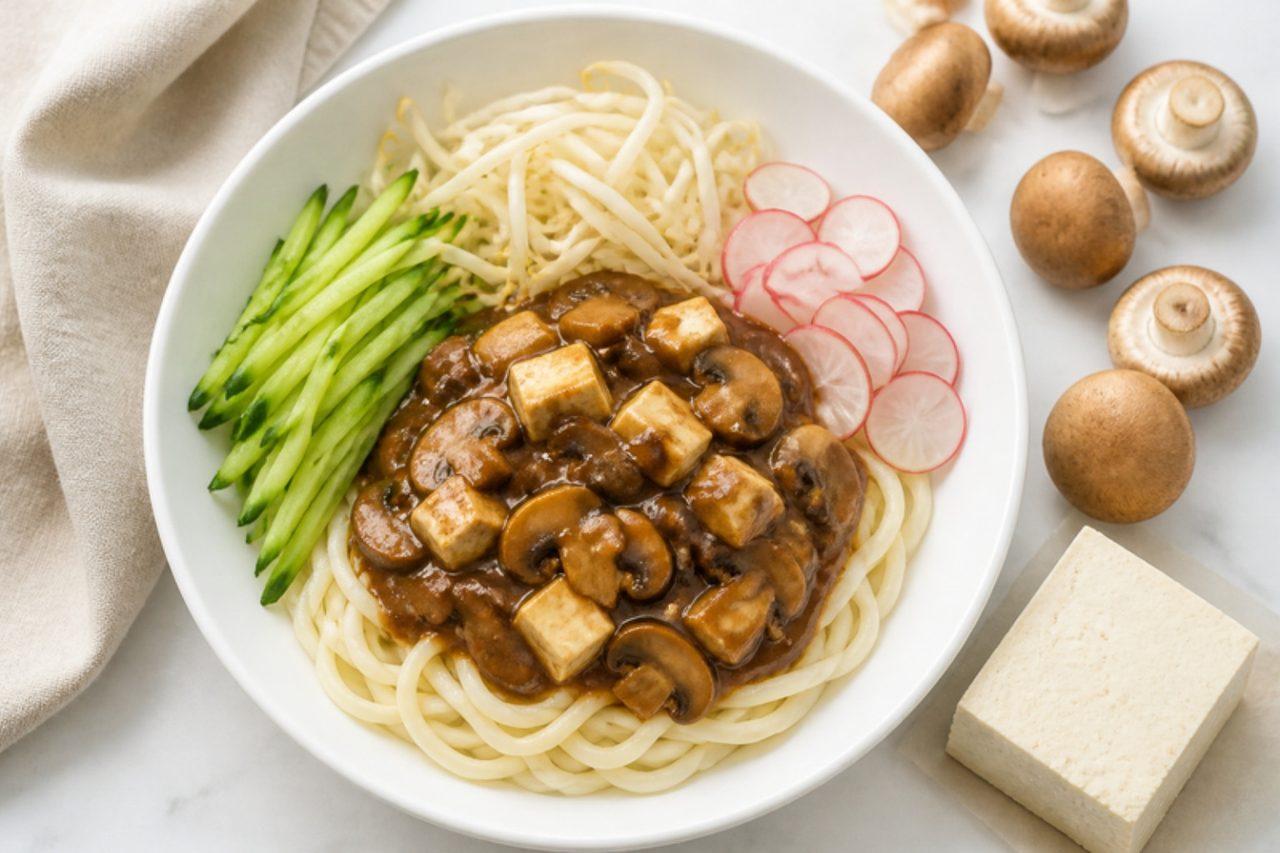
Zhajiangmian is old Beijing's comfort food, eaten in hutong noodle houses and at home on hot summer days. Thick wheat noodles are topped with a dark, salty-sweet sauce of fermented soybean paste fried slowly in oil, then piled with raw cucumber, radish and beansprouts that you mix in at the table. Pork is traditional; diced firm tofu and mushrooms give the sauce the same chunky body here. Chef's tip: fry the bean paste gently and patiently, on a low heat, until the oil separates out and it smells toasty; rushed, it tastes raw and harsh.

by KrazyBadal 0 views
Vegetable cheung fun

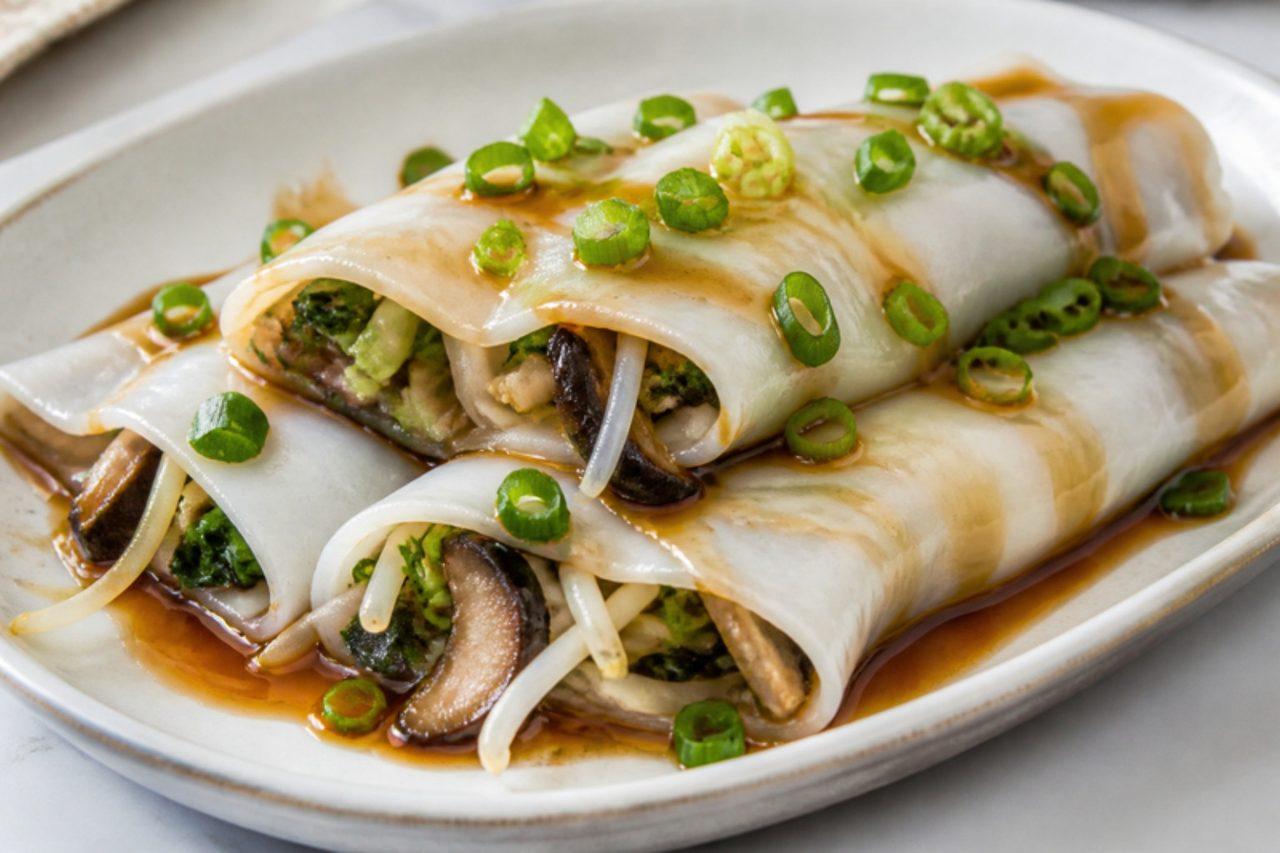
Cheung fun are the slippery rice-noodle rolls of Guangdong. In Guangzhou you see them steamed to order on cloth-lined trays at breakfast stalls, and at dim sum they arrive in a pool of sweet soy. This home version uses a flat tray in a wok, and fills the rolls with shiitake, Chinese chives and beansprouts. Chef's tip: stir the batter every time before you pour; the starch sinks in seconds, and an unstirred batter gives a thin, torn sheet.

by KrazyBadal 0 views

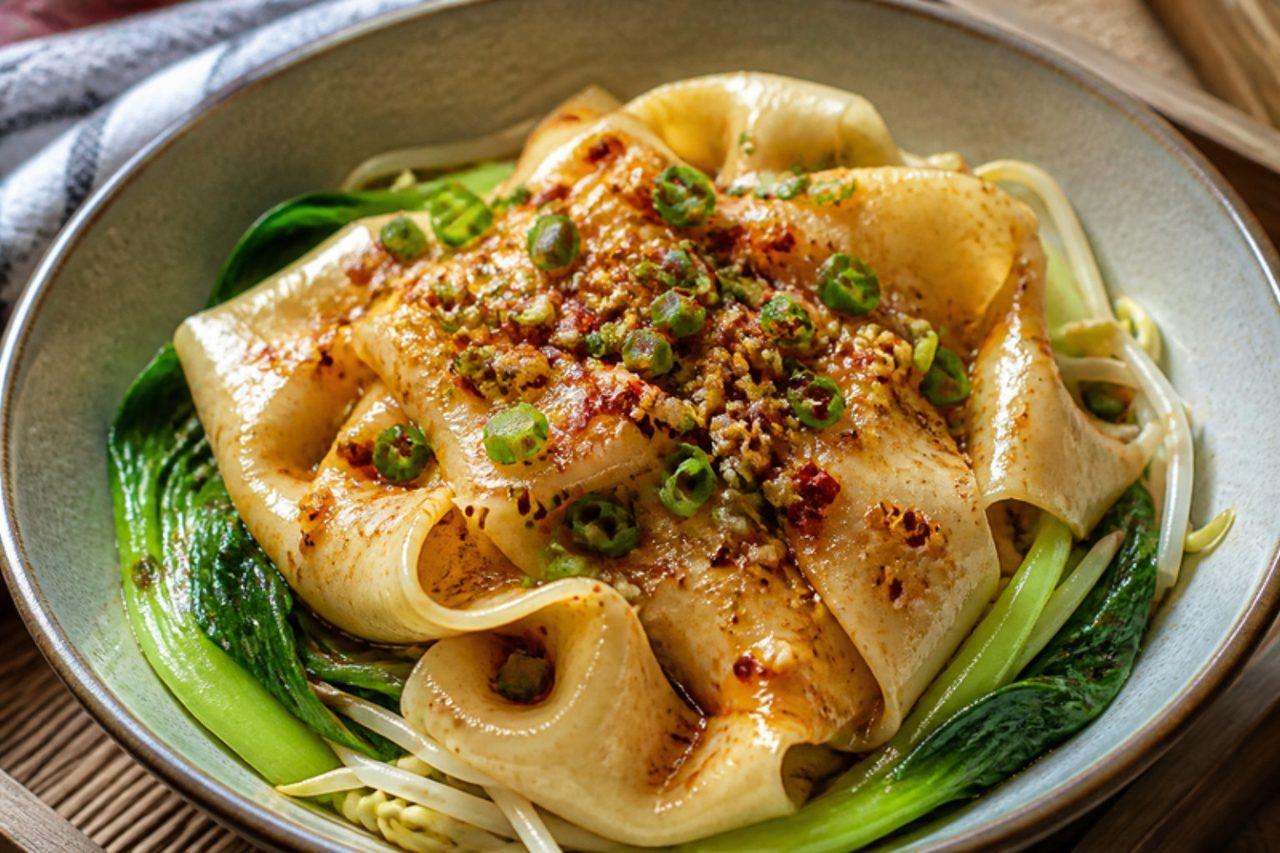
Biang biang noodles

Biang biang mian are the wide, belt-like noodles of Xi'an in Shaanxi, named, some say, after the slapping sound the dough makes as it's pulled and banged on the counter. The written character for biang is one of the most complicated in Chinese. Each noodle is as wide as a belt and chewy; the classic topping is chilli flakes, garlic and spring onion, sizzled with smoking hot oil, then splashed with vinegar and soy. Chef's tip: let the oiled dough pieces rest for at least 30 minutes, longer if you can; relaxed gluten stretches long and thin without snapping.

by KrazyBadal 0 views

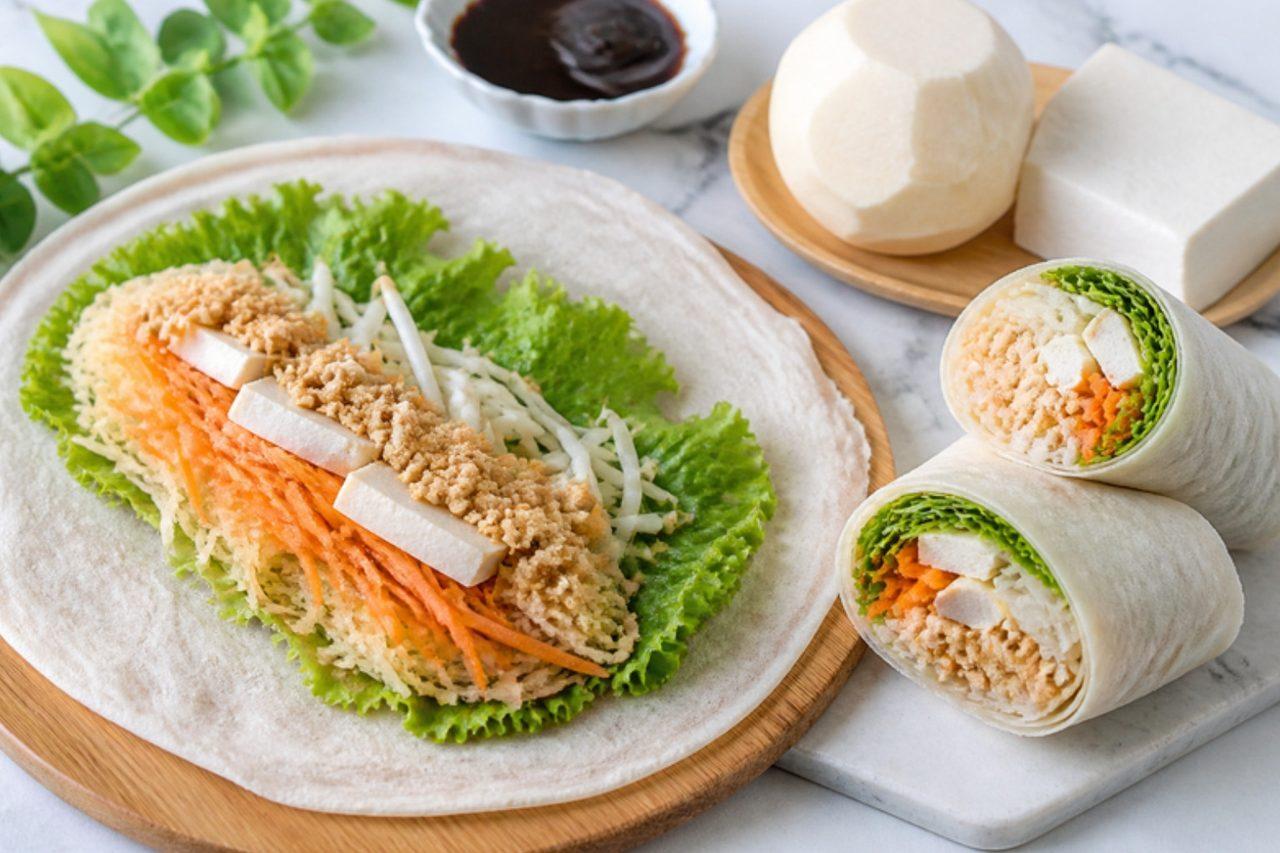
Vegetarian popiah

Popiah are the soft, fresh spring rolls that Hokkien and Peranakan families in Singapore make together at home, especially for Qing Ming and family reunions, with everyone wrapping their own at the table. Thin wheat skins are brushed with sweet sauce and chilli, then filled with a slow-braised mix of jicama (bangkuang) and carrot, plus lettuce, beansprouts, egg, peanuts and crispy shallots. This version leaves out the prawns and Chinese sausage and braises the filling in vegetable stock. Chef's tip: drain the braised filling very well before rolling; extra liquid tears the delicate skins.

by KrazyBadal 0 views

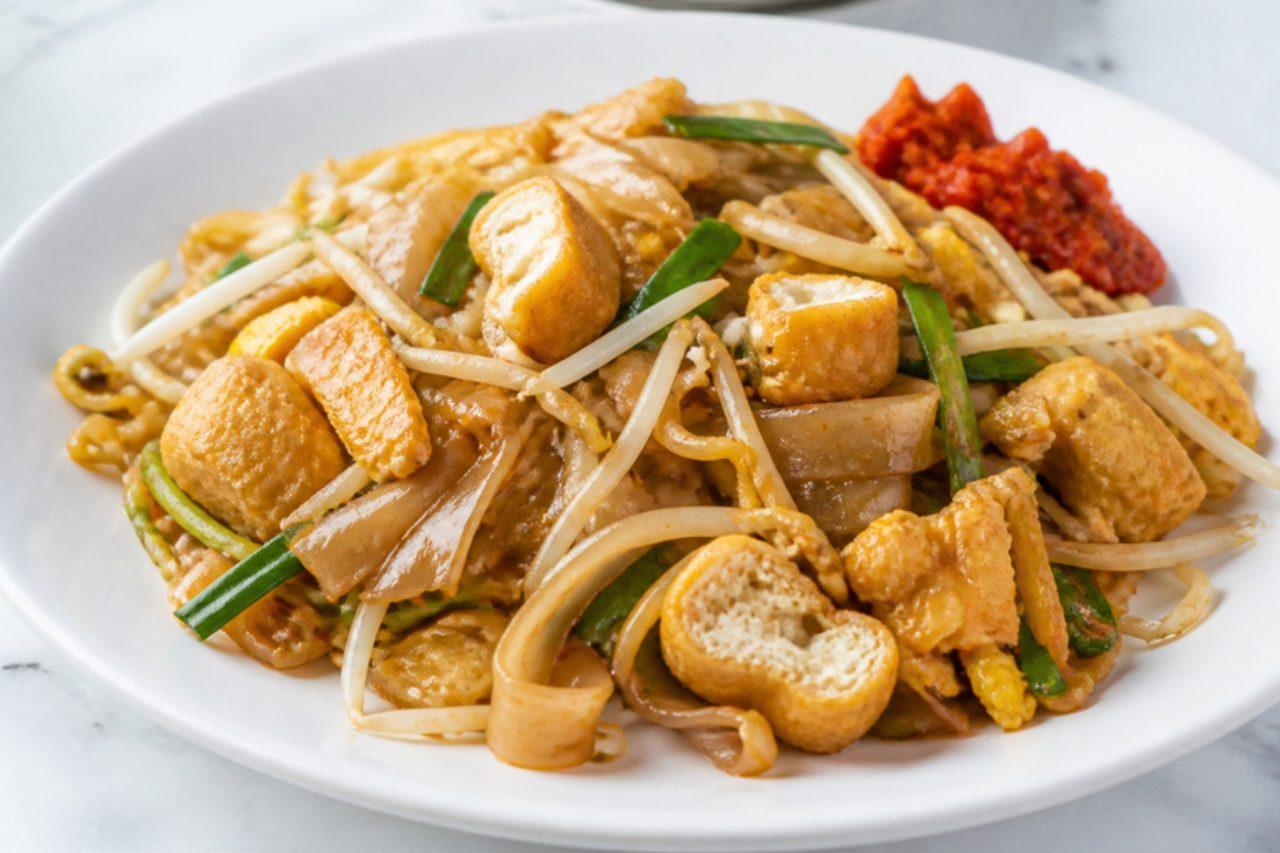
Vegetarian char kway teow

Char kway teow is the dish Singaporeans queue for at hawker centres like Old Airport Road and Zion Riverside: flat rice noodles and yellow noodles tossed over a roaring wok with dark sweet soy, egg, beansprouts and chives until smoky and sticky. The classic uses lard, cockles and Chinese sausage; this vegetarian version gets its richness from fried tofu puffs and plenty of garlic, and its char from a very hot pan. Chef's tip: cook one or two portions at a time; a crowded pan can't get hot enough for the smoky wok hei that defines the dish.

by KrazyBadal 0 views

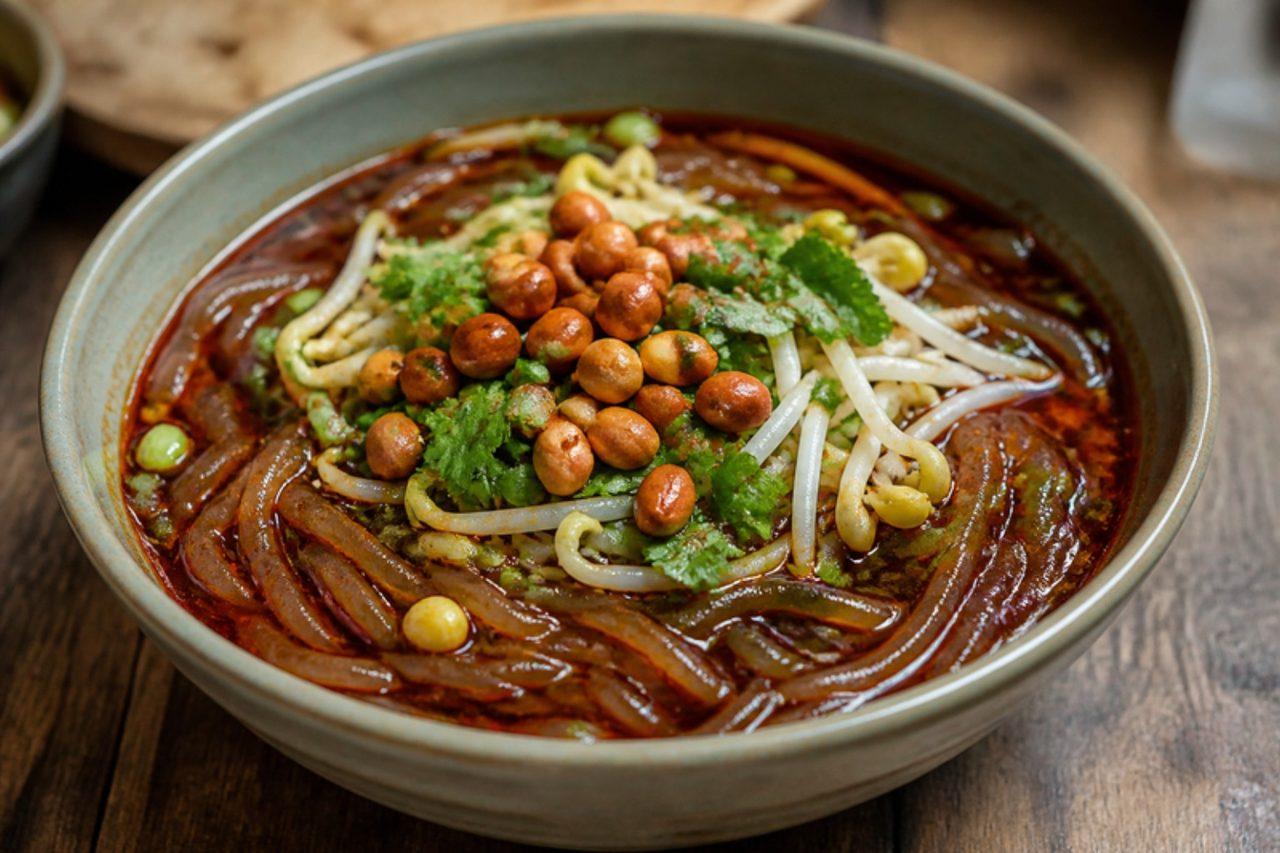
Suan la fen

Chongqing's hot and sour noodles are made from sweet potato starch, so they are chewy, bouncy and almost clear. They come in a broth that is sharp with black vinegar and red with chilli, topped with fried peanuts or soybeans and a spoonful of pickled greens. Students live on it, and it's a favourite late-night snack across the south-west. Plan for the 30-minute soak for the dried noodles. Chef's tip: add the vinegar to the bowl, not the pan; boiled vinegar loses the sharp edge that makes this dish.

by KrazyBadal 0 views

Guiyang si wa wa

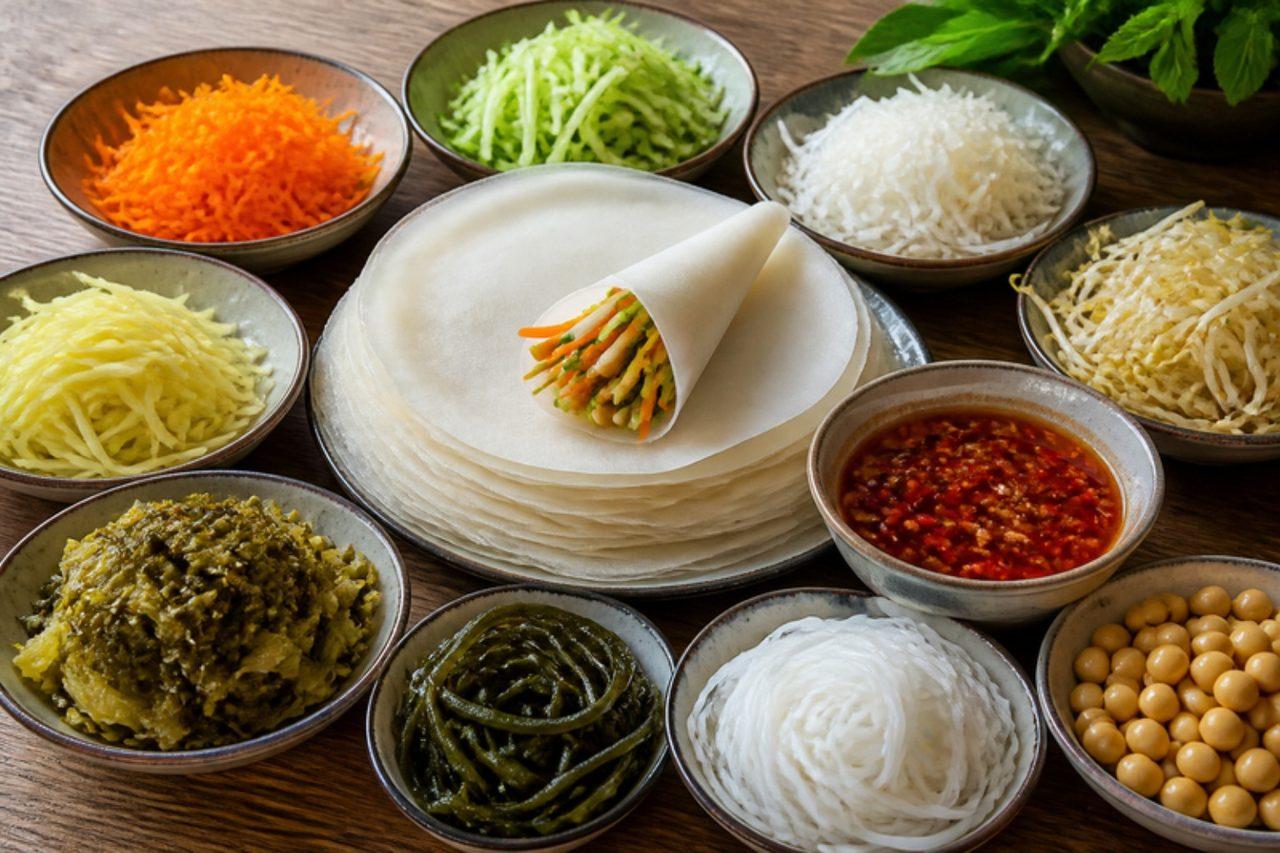
Guiyang's favourite street snack is a do-it-yourself meal: stalls set out twenty or more small bowls of shredded vegetables, and each person wraps a few strands in a pancake no bigger than a palm, folds it like a swaddled baby and pours in a spoonful of sour, chilli-flecked broth. It's light, crunchy and fun to eat with friends. Use as many fillings as you like; the more colours, the better. Chef's tip: shred everything as fine as you can, so the little parcels stay neat and each mouthful has several flavours.

by KrazyBadal 0 views

Xi'an liangpi

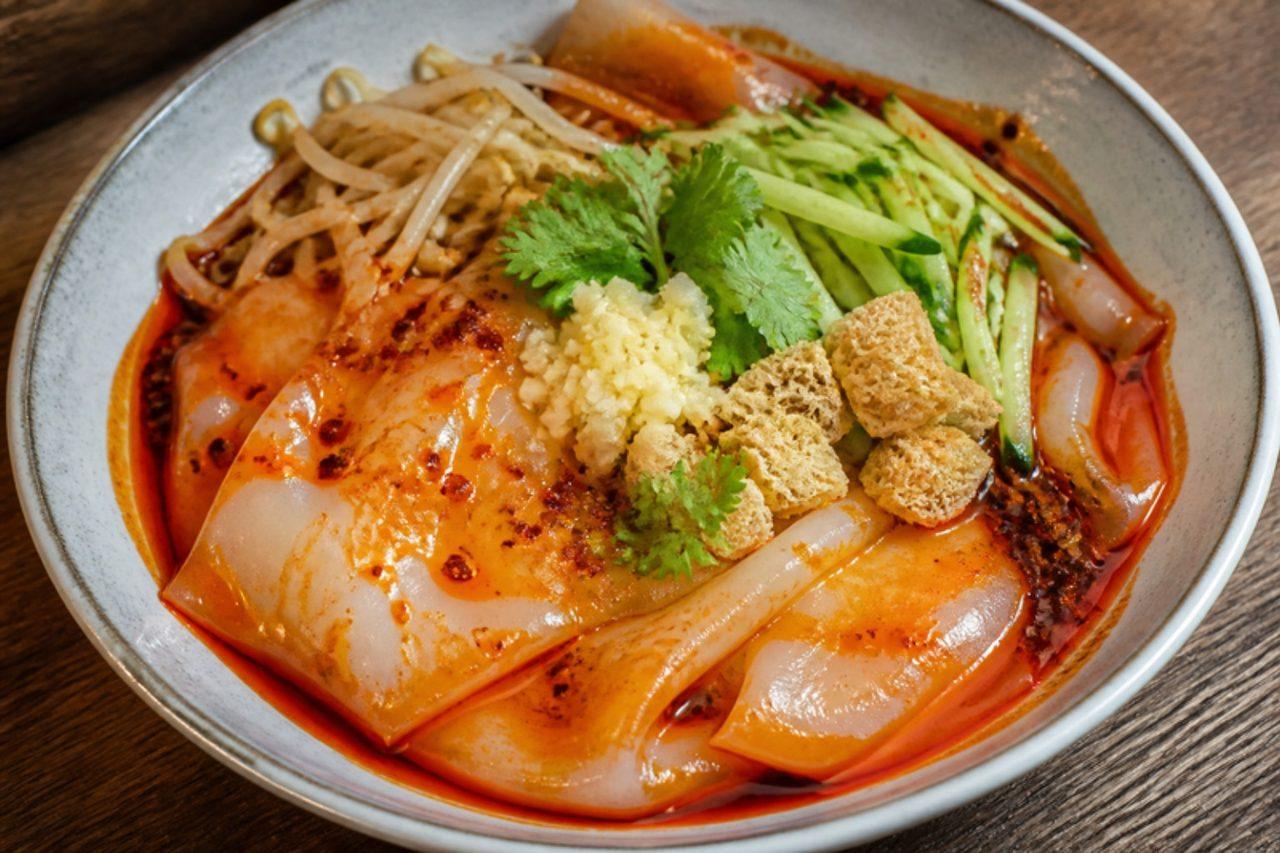
In Xi'an's Muslim Quarter, cooks peel liangpi off steaming trays all day, cut it into wide ribbons and toss it with chilli oil, black vinegar, garlic water and cubes of springy gluten. It's eaten cold, often with a flatbread, as a summer lunch. Gansu's niangpi, from Lanzhou and Tianshui, is the same dish with thicker sheets and more garlic, so it's covered here too. You wash a flour dough to split the starch from the gluten, so allow 4 hours for the starch to settle. Chef's tip: stir the starch water every time before you ladle it, because the starch sinks fast.

by KrazyBadal 0 views

Nom banh chok with green curry broth

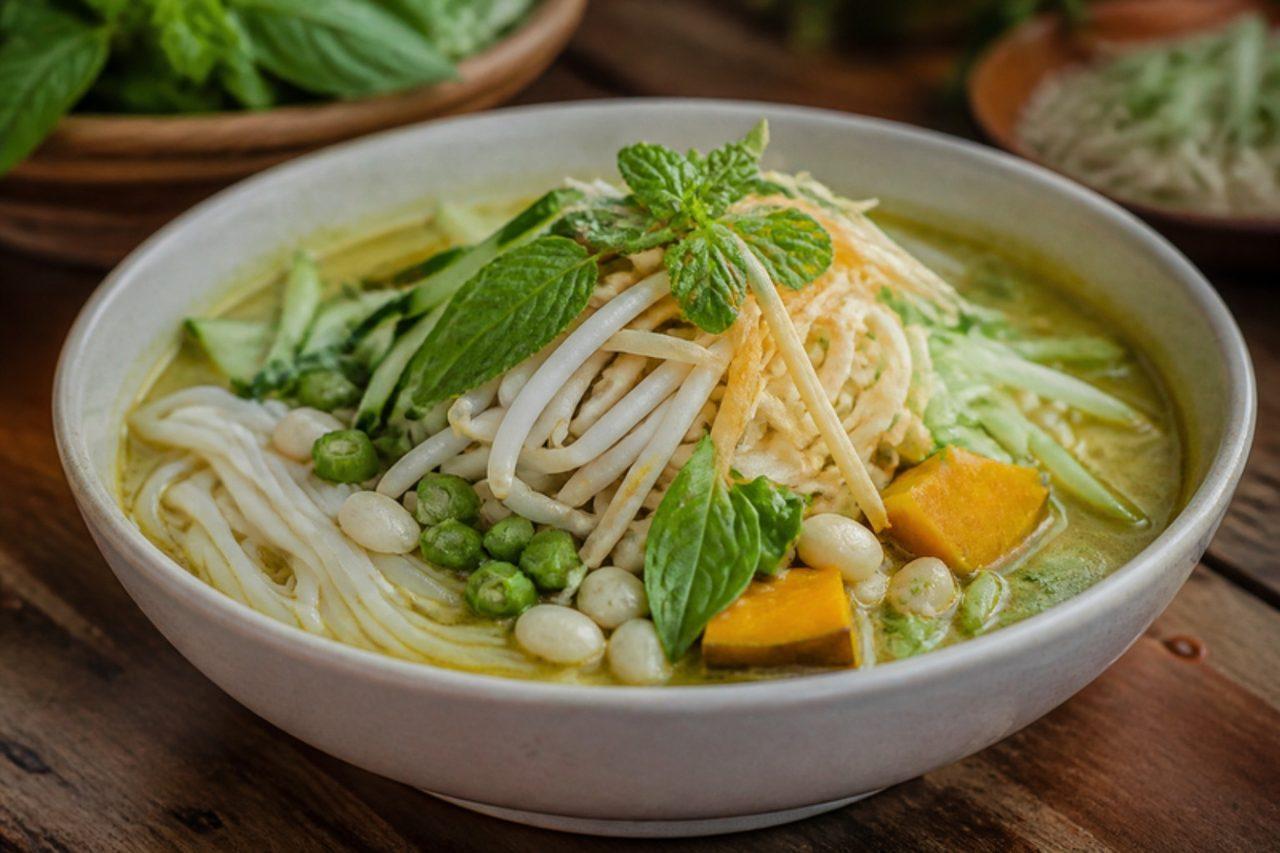
Before seven in the morning, women carrying baskets on shoulder poles sell nom banh chok across Cambodia; around Siem Reap there is even a lane of stalls near the temples known for it. Soft, slippery rice noodles are piled into a bowl, ladled with a pale green broth of kroeung and coconut milk, then buried under shredded banana blossom, cucumber, beansprouts, long beans and handfuls of herbs. The market version thickens the broth with pounded fish; here pumpkin and creamy white beans give it the same body. Chef's tip: be generous with the raw vegetables and herbs; the dish is meant to be more garden than noodle, and the cool crunch is what balances the warm broth.

by KrazyBadal 0 views

Khao poon with tofu and vegetables

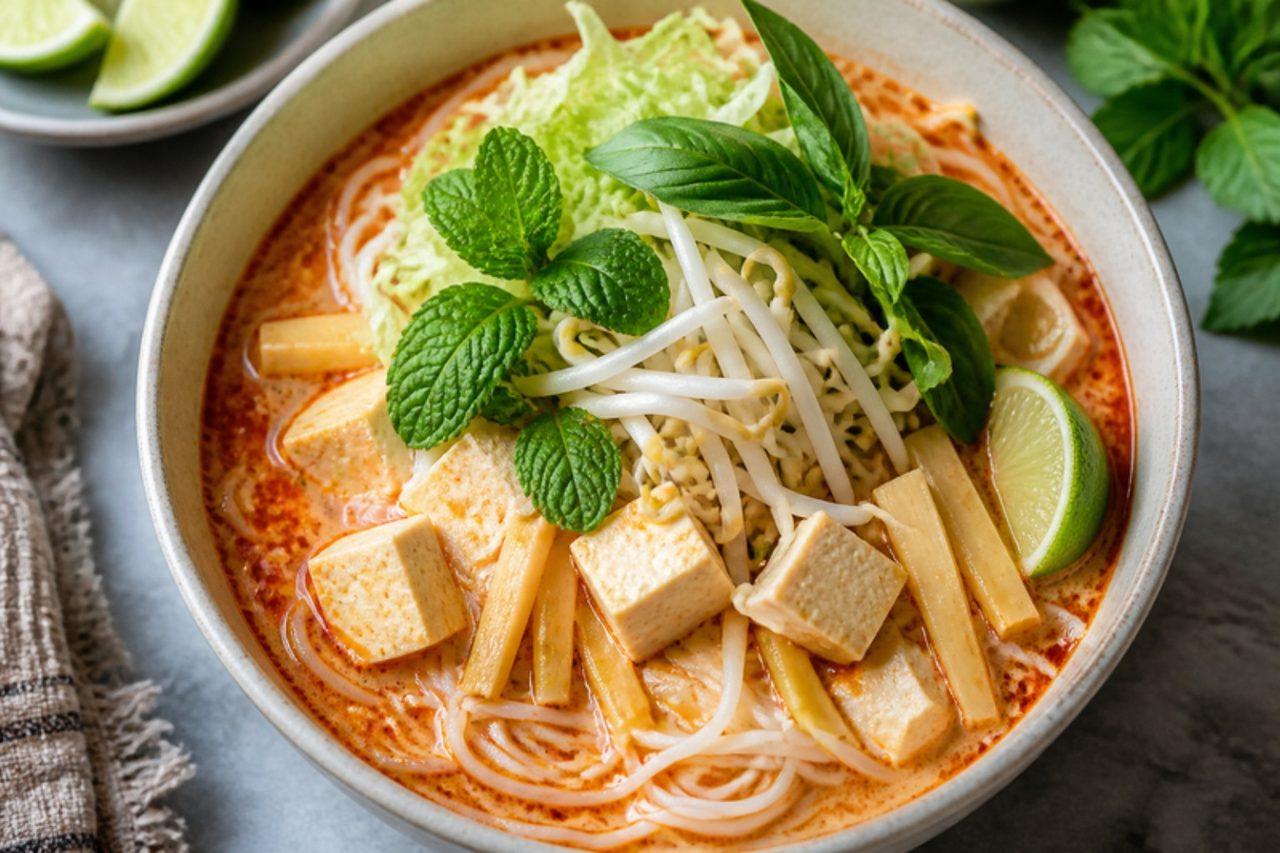
Khao poon is celebration food in Laos, ladled out at weddings, baci ceremonies and big family gatherings, and sold at morning markets in Vientiane by women with huge steaming pots. Fine round rice noodles sit under a spicy, red-tinged broth of coconut milk, lemongrass and galangal, and everyone adds their own shredded cabbage, banana blossom, beansprouts, mint and lime. The usual chicken or fish is swapped for golden fried tofu and bamboo shoots. Chef's tip: fry the red chilli paste in the coconut cream until oil seeps out in red drops on the surface; that's when the colour and heat are fully released.

by KrazyBadal 0 views

Singapore Hokkien prawn mee

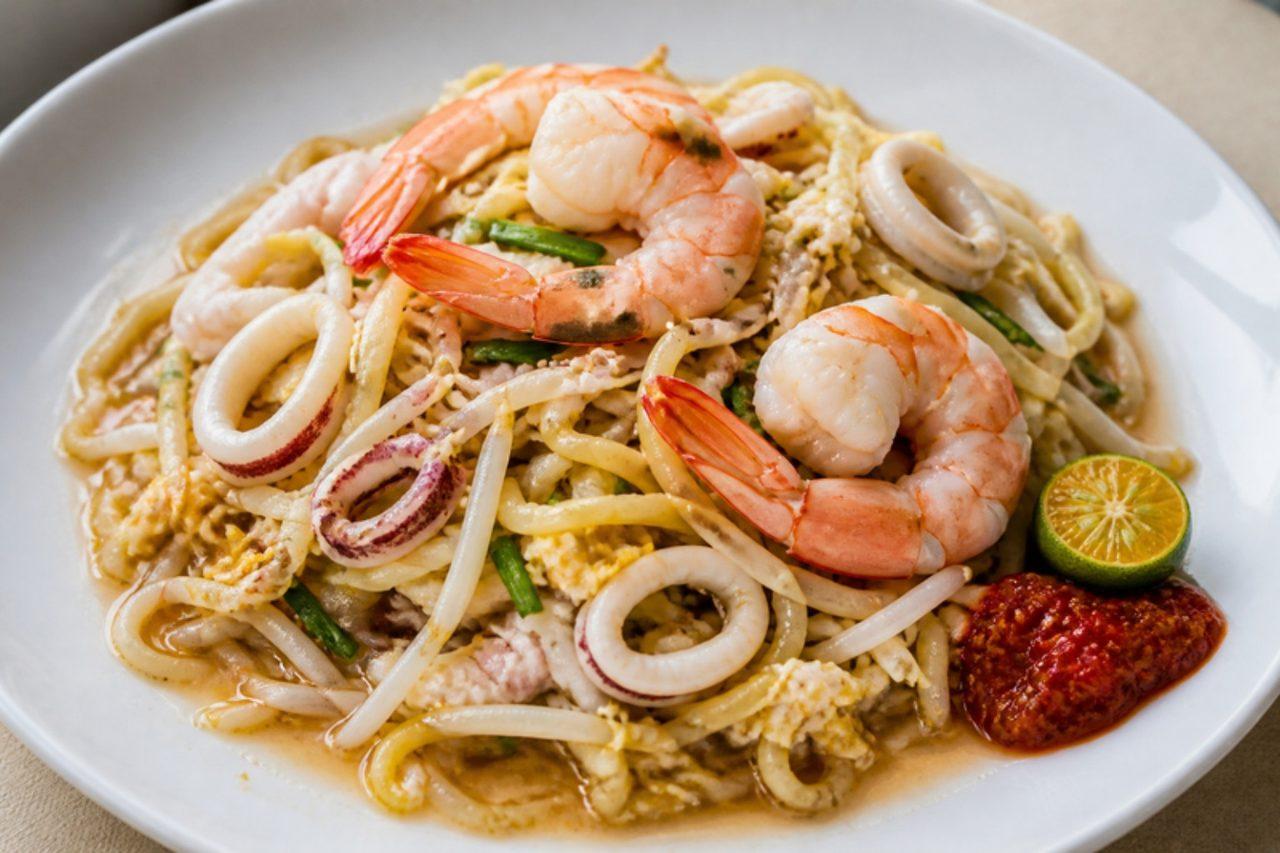
Singapore's Hokkien mee is nothing like the dark, soy-coated noodles of Kuala Lumpur: here yellow egg noodles and thick rice vermicelli are fried with egg, then braised in a cloudy, intensely savoury stock made from prawn heads and shells until the noodles soak it up and stay just wet. Hawkers at Old Airport Road and Geylang serve it with lime and fiery sambal belacan on a square of paper or opeh leaf. It is a late-lunch or supper dish, eaten hot from the wok. Traditional versions use pork belly and pork lard; this one uses prawns and squid only, with vegetable oil. The common mistake is adding all the stock at once, which makes it soupy; add it in two goes and let the noodles drink it. Chef's tip: fry the prawn heads hard until they turn deep orange before adding water; the stock is the whole dish.

by KrazyBadal 0 views

Goes well with beansprouts