
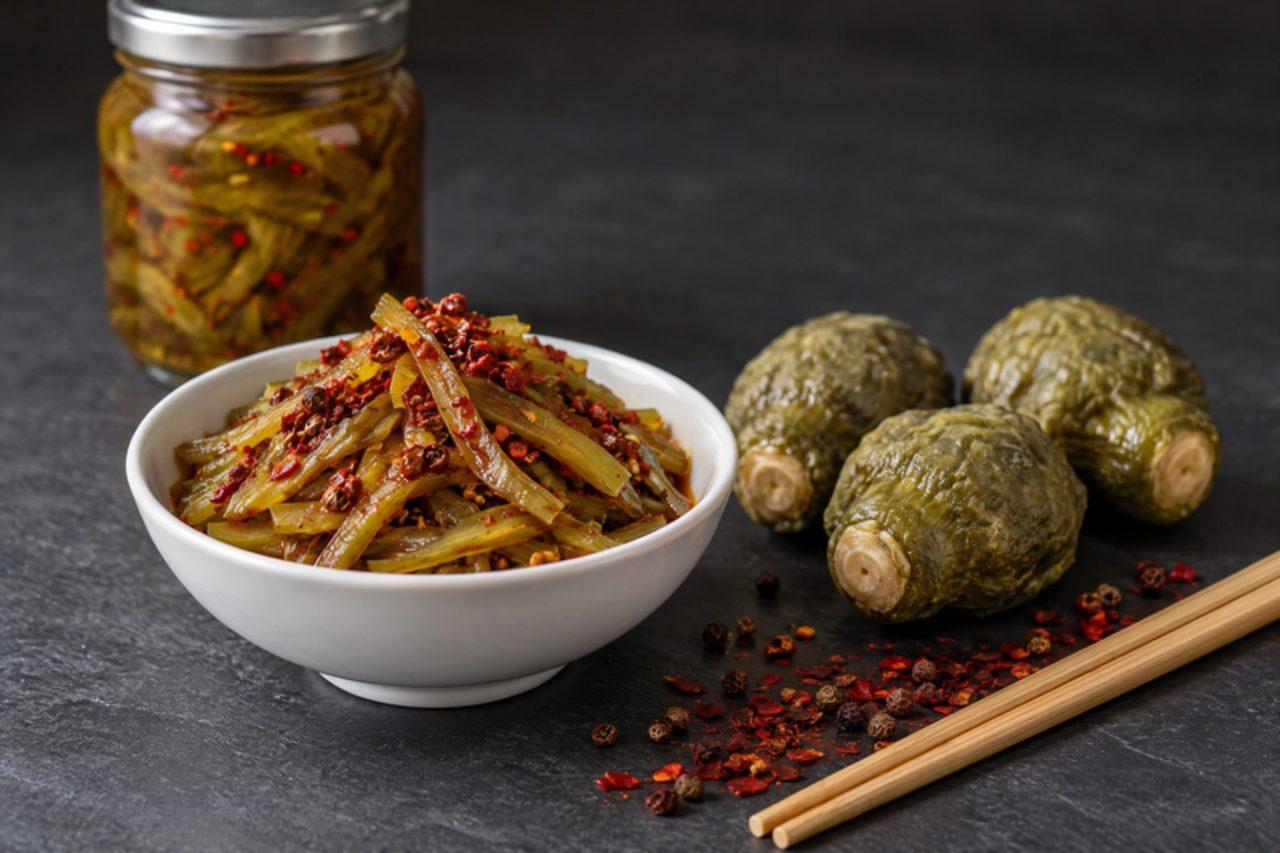
AI-generated image
Zha cai
榨菜: knobbly mustard stems salted, pressed and cured with chilli and Sichuan pepper into a crunchy relish


Every winter along the Yangtze at Fuling, below Chongqing, the knobbly stem tubers of a mustard plant are strung on bamboo racks to dry in the river wind, then salted, pressed and cured in great pottery jars. That is zha cai, literally pressed vegetable, and a little dish of its shreds sits beside a bowl of rice congee at breakfast across China, or gets tossed into pork noodle soup. The taste is salty, sour-savoury and gently numbing from Sichuan pepper, with a dense, squeaky crunch. Fresh zha cai tubers are rare abroad; kohlrabi has the same texture and works very well. Common mistake: not pressing out enough water between the two saltings, which leaves it limp and diluted. It is ready after about 2 weeks in the fridge, when the pieces have turned translucent at the edges and taste rounded rather than raw. Salt here is high, about 12% of the dried weight in total, so it keeps 3 months in the fridge with a clean dry spoon; discard if fuzzy mould, slime or a rotten smell appears. Chef's tip: soak slices for 10 minutes before cooking if you find them too salty; that is how Chongqing cooks do it.
- Total time
- 65 min
- Difficulty
- medium
- Serves
- 20
Ingredients
For the stems
- 2 ¼ lb zha cai mustard tubersor kohlrabi, peeled
- 1 ⅜ oz coarse saltfirst salting, 4%
- 1 ⅜ oz coarse saltsecond salting
For the cure
- 2 tbsp coarse Sichuan chilli flakes
- 1 tbsp Sichuan peppercorns
- 1 tsp fennel seeds
- 1 ⅛ in cassia bark
- ½ oz salt
- 1 tsp sugar
Shop this recipe on Amazon
Spices & pantry
Links open Amazon in a new tab. As an Amazon Associate, WhatToEat.Today earns from qualifying purchases.
Method
0/8 doneStep 1: Peel the 2 ¼ lb zha cai mustard tubers, removing any woody parts, and cut into 3–4 cm chunks with a flat side. Lay them on a rack in a dry, breezy spot (or under a fan) for 2 days, until the surfaces are leathery and they have lost about a third of their weight.
20 minStep 2: First salting: toss the chunks with 1 ⅜ oz coarse salt in a large glass or steel bowl, put a plate on top and weigh it down with 2–3 kg (a pan of water). Leave in a cool place for 24 hours; plenty of brine will come out.
5 minStep 3: Drain, then squeeze the chunks hard by hand or in a cloth until no more liquid drips. Toss with 1 ⅜ oz coarse salt, weigh down again and leave another 24 hours.
10 minStep 4: Drain and squeeze again, as firmly as you can; the pieces should feel firm and dense, almost rubbery.
10 minStep 5: Toast 1 tbsp Sichuan peppercorns, 2 star anise, 1 tsp fennel seeds and 1 ⅛ in cassia bark in a dry pan over a low heat for 3–4 minutes, until fragrant. Cool and grind to a coarse powder.
5 minStep 6: Wash a 1 litre jar in hot soapy water, rinse and dry it in a 250°F oven for 10 minutes; cool completely.
10 minStep 7: Toss the pressed chunks with the spice powder, 2 tbsp coarse Sichuan chilli flakes, ½ oz salt and 1 tsp sugar until evenly red.
Step 8: Pack very tightly into the jar, pressing out air pockets with the back of a spoon, close, and cure in the fridge for 2 weeks. It is ready when the cut faces look translucent and it tastes savoury and rounded. Keep in the fridge up to 3 months; discard if fuzzy mould, slime or a rotten smell appears. Slice or shred to serve.
Nutrition per serving
- Calories
- 15 kcal
- Protein
- 1 g
- Carbs
- 2 g
- Fat
- 0 g
- Fibre
- 1 g
Nutrition values are estimates.
KrazyBadal
Good to know
- How long does zha cai take?
- About 65 minutes in total: 60 minutes to prepare and 5 minutes to cook.
- How many people does it serve?
- 20 as written. Change the servings above the ingredients and every amount scales to match.
- Is it vegan?
- Yes. It has no meat, fish, dairy or eggs.
- Is it gluten free?
- Yes, as written. Check the labels on stock, sauces and spice mixes, which sometimes contain gluten.
- Is it very spicy?
- It has some heat. Use less chilli for a milder version, or more if you like it hot.
- Can I make it ahead?
- Yes. It keeps well, so you can cook it earlier in the day or the day before and reheat it.
- What can I use instead of star anise?
- ½ tsp aniseeds or fennel seeds per star.
- What can I use instead of fennel seeds?
- Aniseeds, same amount (a stronger liquorice taste).
Reviews
No reviews yet. Be the first to cook it.
Rate this recipe
Sign in to rate and review this recipe.
You might also like
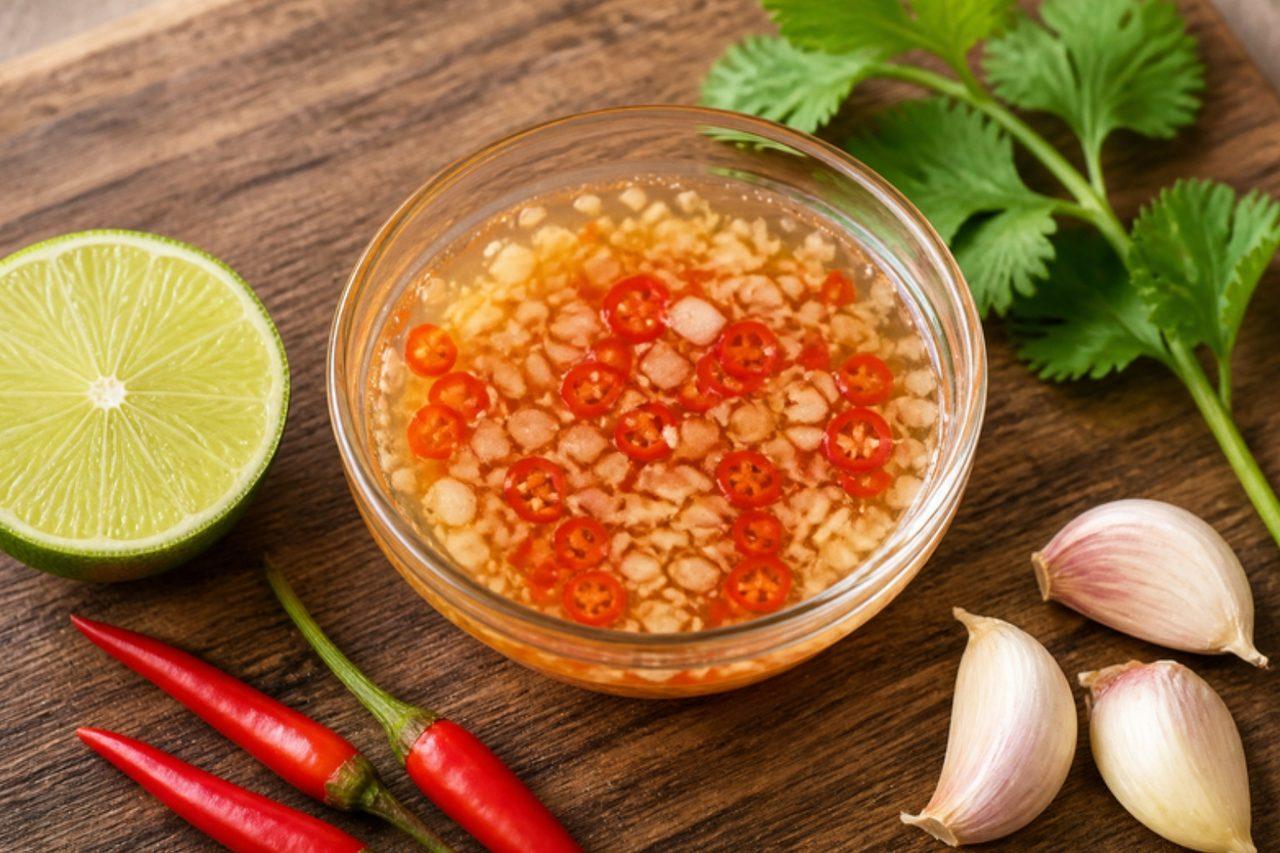
Vegan nuoc cham
Nước chấm is the dipping sauce that goes with almost everything in Vietnam: spring rolls, bánh xèo, noodle salads and broken rice. Buddhist vegetarian cooks, all over the country, make it without fish sauce, using light soy sauce and a little coconut water for the deep, rounded taste. It should be thin, clear and pale amber, with flecks of garlic and chilli floating on top. Chef's tip: dissolve the sugar in the warm water first, then add the lime and soy, and stir in the garlic and chilli last, pounded with a pinch of sugar, so they float on the surface instead of sinking.
 Vietnamese

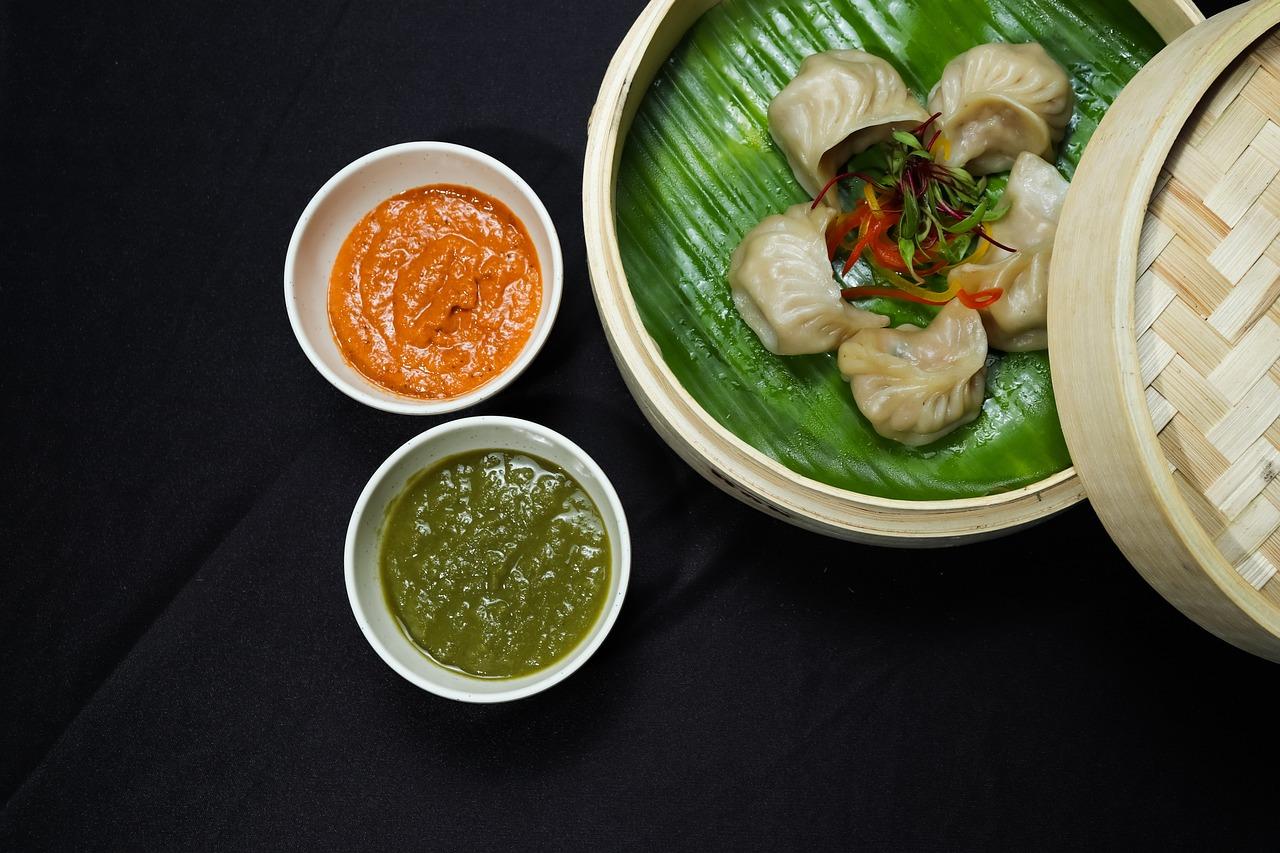
Mint and onion chutney
Onions fried gently until soft and sweet, then blended with fresh mint, green chilli and lemon juice. It's a mellow, fresh-tasting chutney that is great with bhajias, samosas, kebabs and tikka, or spread in sandwiches.
 Indian

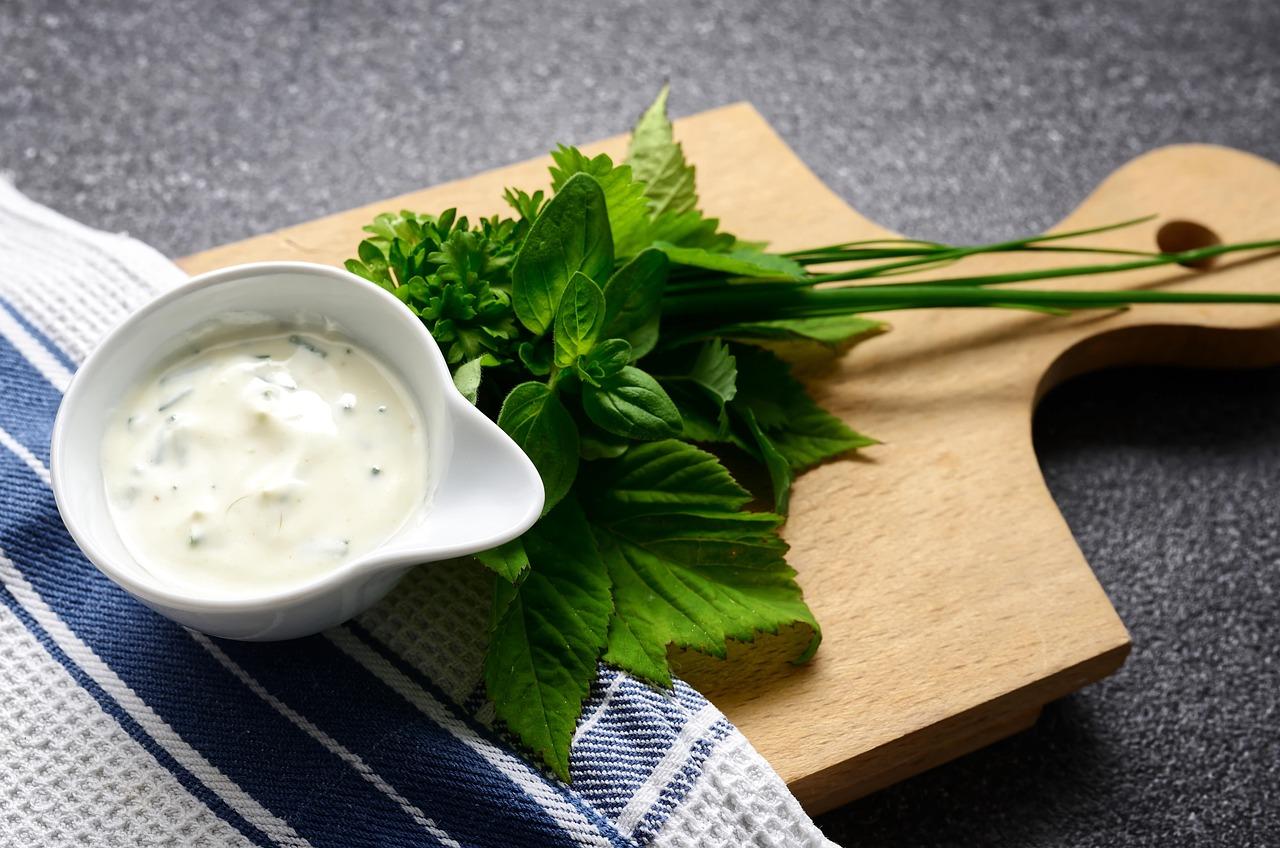
Sour cream dip
A simple, tangy dip made with thick home-made cottage cheese (hung yogurt) or ready-made sour cream, seasoned with garlic, chilli, black pepper and vinegar. Serve it cold with crisps, nachos and jacket potatoes. The book's other dips use this as their 'sour cream'.