
AI-generated image
Taiwanese salty soy milk
Savoury soy milk with youtiao
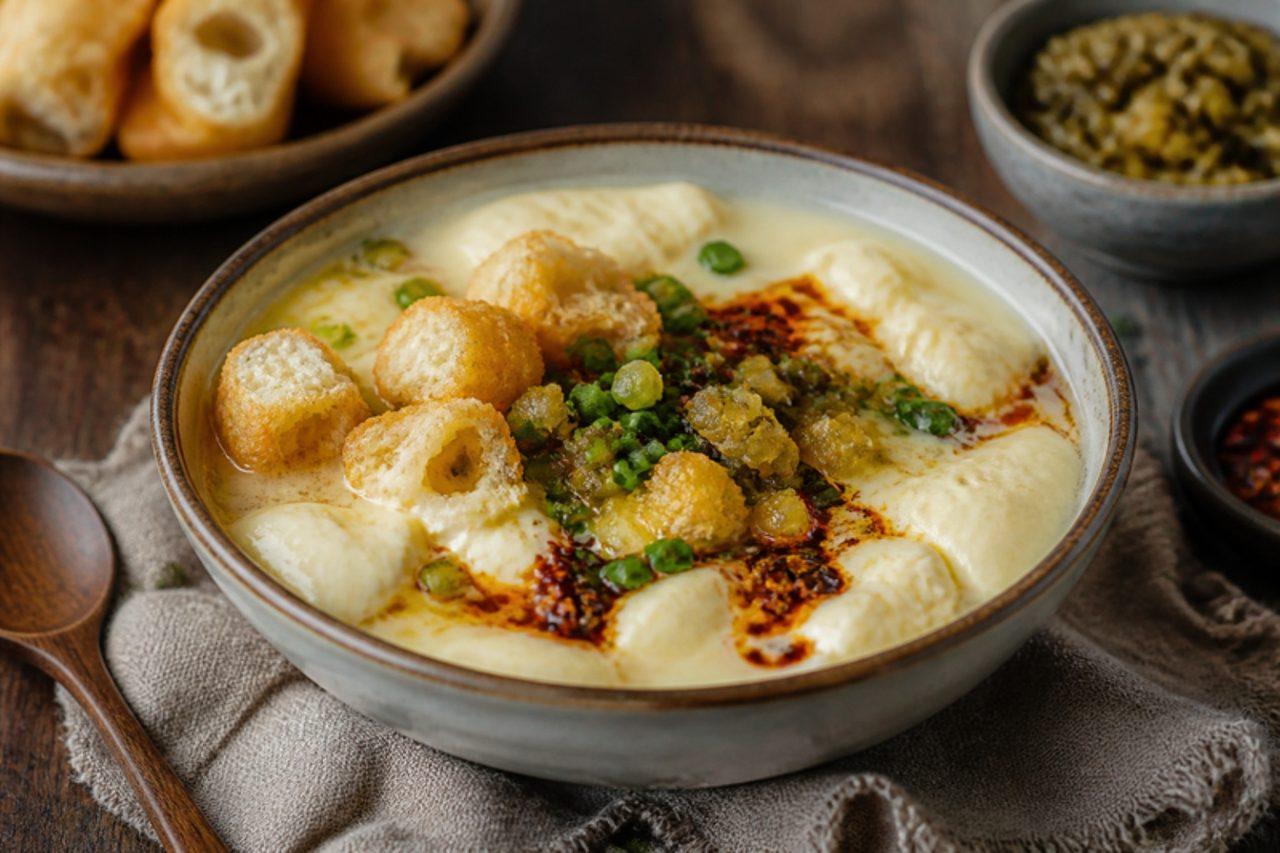
Xián dòujiāng (鹹豆漿): hot soy milk set into soft curds with vinegar, soy and crisp youtiao

Long before sunrise, the soy-milk shops of Yonghe, just across the river from Taipei, pour bowl after bowl of this savoury breakfast for taxi drivers, students and night-shift workers. Scalding unsweetened soy milk hits a splash of vinegar and soy sauce in the bowl and splits into trembling, cloud-like curds, somewhere between a soup and a soft tofu pudding. Shops usually add dried shrimp; this vegetarian bowl gets its savoury crunch from chopped pickled radish, scallion, chilli oil and torn pieces of youtiao, with a sesame flatbread on the side. Pouring soy milk that is merely warm is where most people go wrong: it must be just off the boil, or it stays thin and never curdles. Chef's tip: pour the milk from a height in one go and don't stir, so the curds form big, soft clouds.
- Total time
- 15 min
- Difficulty
- easy
- Serves
- 2
Ingredients
For the soy milk
- 2 ½ cups unsweetened soy milk
In each bowl
- 1 tbsp light soy sauce
- 1 tsp toasted sesame oil
- 2 tbsp preserved radish (cai pu)rinsed, squeezed and finely chopped
- 1 spring onionfinely sliced
- 1 youtiao (Chinese fried dough stick)day-old is fine, cut into 2 cm pieces
To serve
- 1 tsp chilli oil (optional)
- 1 pinch ground white pepper (optional)
Shop this recipe on Amazon
What you'll need
Spices & pantry
Fresh ingredients (2)
Links open Amazon in a new tab. As an Amazon Associate, WhatToEat.Today earns from qualifying purchases.
Method
0/6 doneStep 1: If the 1 youtiao (Chinese fried dough stick) is soft or stale, crisp it in a 350°F oven or air fryer for 3–4 minutes until it crackles when pressed.
4 minStep 2: Meanwhile, put 2 tbsp preserved radish (cai pu) in a dry pan over a medium heat and toss for 2 minutes, until it smells sweet and toasty. This takes away its raw saltiness.
2 minStep 3: Divide 2 tbsp black vinegar or rice vinegar, 1 tbsp light soy sauce and 1 tsp toasted sesame oil between two deep bowls, then add the radish and half the ½ spring onion.
Step 4: Heat 2 ½ cups unsweetened soy milk in a saucepan over a medium heat, stirring the bottom so it doesn't catch, until it rises and starts to foam at the edges, about 5 minutes. Watch it closely: soy milk boils over in seconds.
5 minStep 5: Pour the very hot milk straight into the bowls from about 20 cm high, in one steady stream. Leave it for 30 seconds without stirring; you'll see soft curds float up.
Step 6: Top with the youtiao pieces, the rest of the ½ spring onion, 1 tsp chilli oil and 1 pinch ground white pepper. Eat straight away, while the youtiao is still crisp.
Nutrition per serving
- Calories
- 290 kcal
- Protein
- 14 g
- Carbs
- 28 g
- Fat
- 13 g
- Fibre
- 2 g
Nutrition values are estimates.
KrazyBadal
Good to know
- How long does taiwanese salty soy milk take?
- About 15 minutes in total: 5 minutes to prepare and 10 minutes to cook.
- How many people does it serve?
- 2 as written. Change the servings above the ingredients and every amount scales to match.
- Is it vegetarian?
- Yes. It has no meat or fish.
- What can I use instead of unsweetened soy milk?
- Oat, soy or almond milk, same amount (use unsweetened for savoury dishes).
- What can I use instead of black vinegar or rice vinegar?
- Cider vinegar with a pinch of sugar, same amount.
Reviews
No reviews yet. Be the first to cook it.
Rate this recipe
Sign in to rate and review this recipe.
You might also like
Sabudana khichdiSago with peanuts and potato
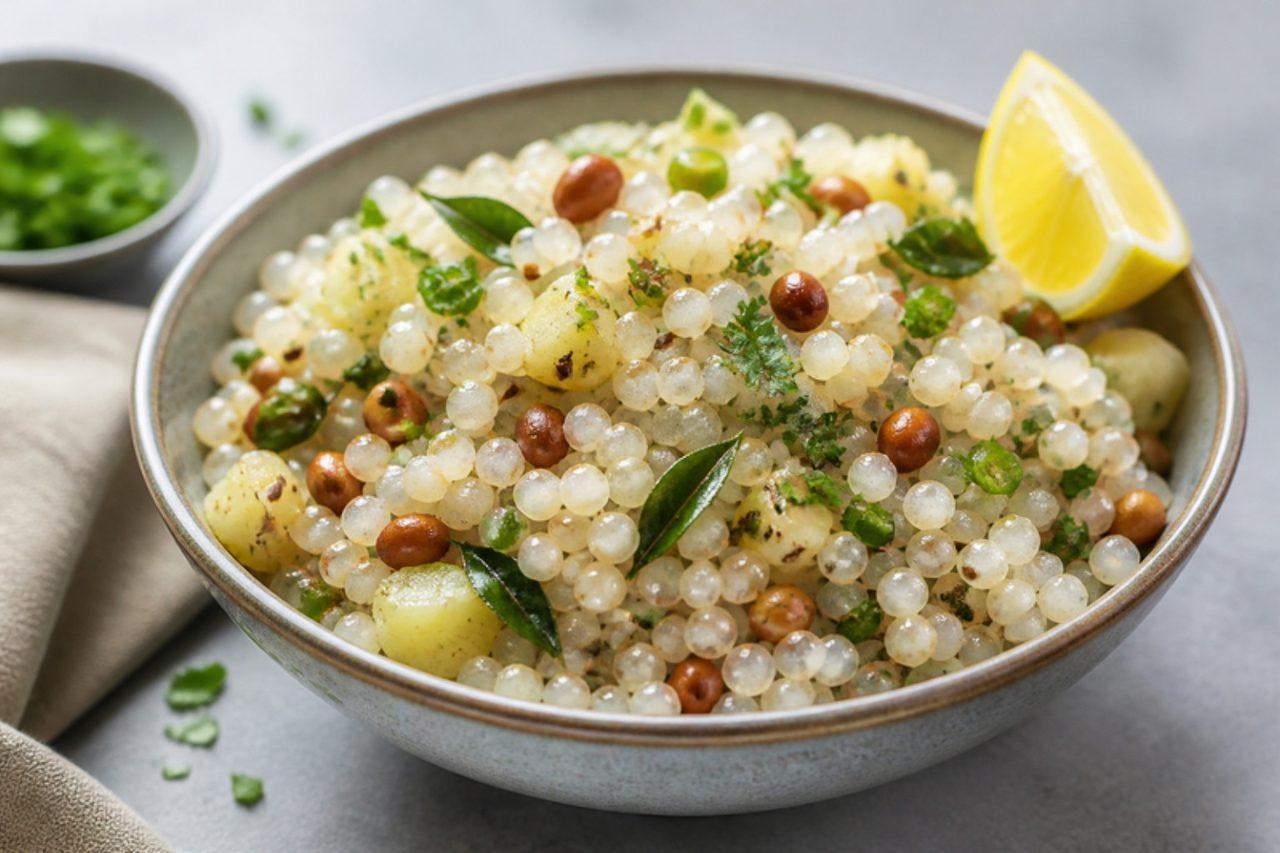
Sabudana khichdi is the dish that sees Maharashtra through every vrat (fast), from Navratri to Ekadashi, but it's so good that people eat it any day of the week. Soaked sago pearls are tossed in a pan with crushed roasted peanuts, cubes of potato, cumin and green chilli until each pearl turns glassy and separate, then finished with lemon and coriander. It's soft, chewy, nutty and gently hot. Fasting rules vary from family to family, so check yours; this version uses rock salt and no asafoetida, onion or garlic. Traditionally it's cooked in ghee; use ghee instead of oil if you aren't keeping it vegan. Chef's tip: soak the sago in just enough water to cover by the height of the pearls themselves, no more; too much water is the reason khichdi turns into one sticky lump.
 Indian


Taiwanese grilled corn
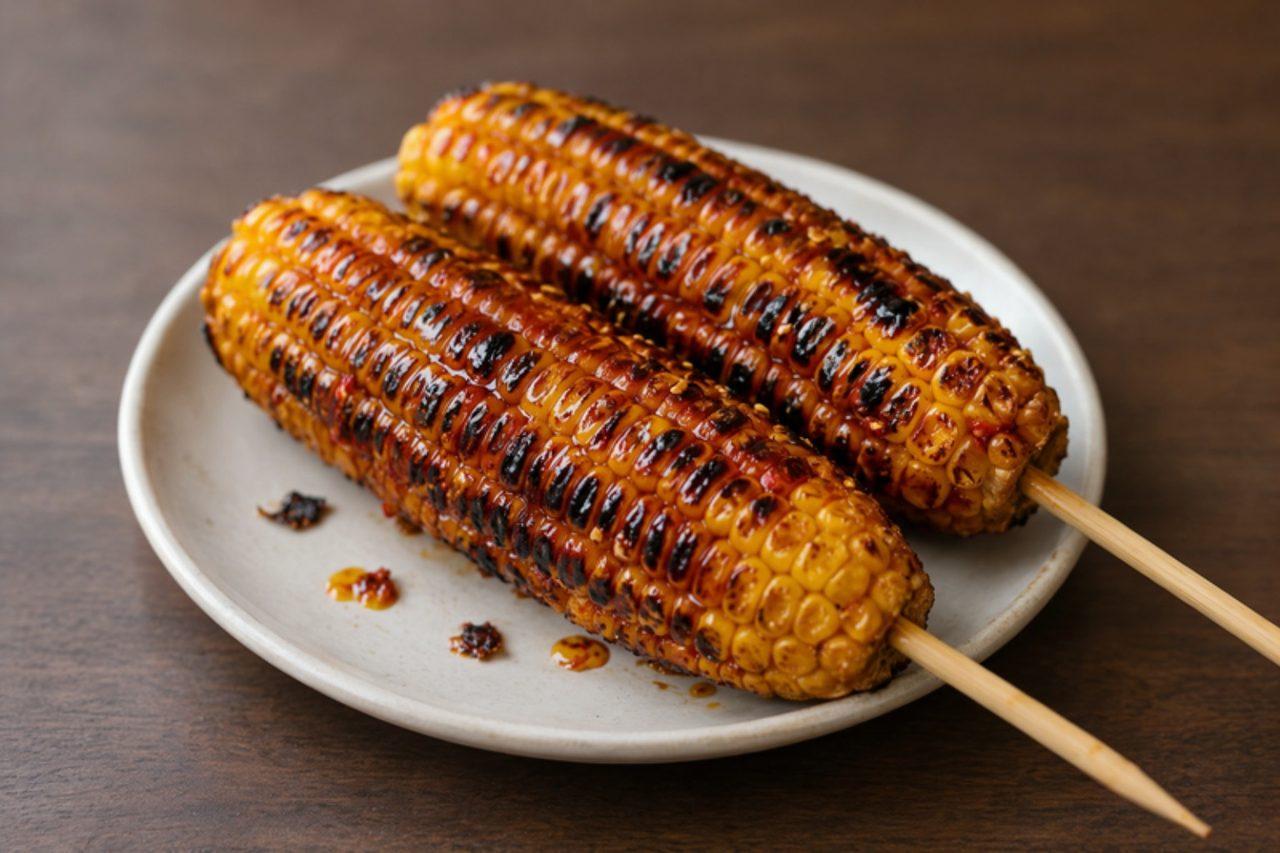
At Raohe and Shilin night markets the grilled-corn stalls are easy to find: look for the queue and the smoky, sweet smell. Cobs are par-cooked, then turned slowly over charcoal while the cook brushes them with a dark glaze of sacha sauce, thick soy paste, garlic and chilli, layer after layer, until the kernels are sticky, slightly charred and deeply savoury. It is eaten hot from a paper sleeve while walking the market. Sacha (shacha) sauce, a Taiwanese barbecue paste, usually contains dried fish and shrimp; vegetarian sacha is sold in Asian shops. Contains soy, wheat and fish. Chef's tip: brush thin coats and turn often; one thick coat burns before the corn chars.
Doi chiraFlattened rice with curd
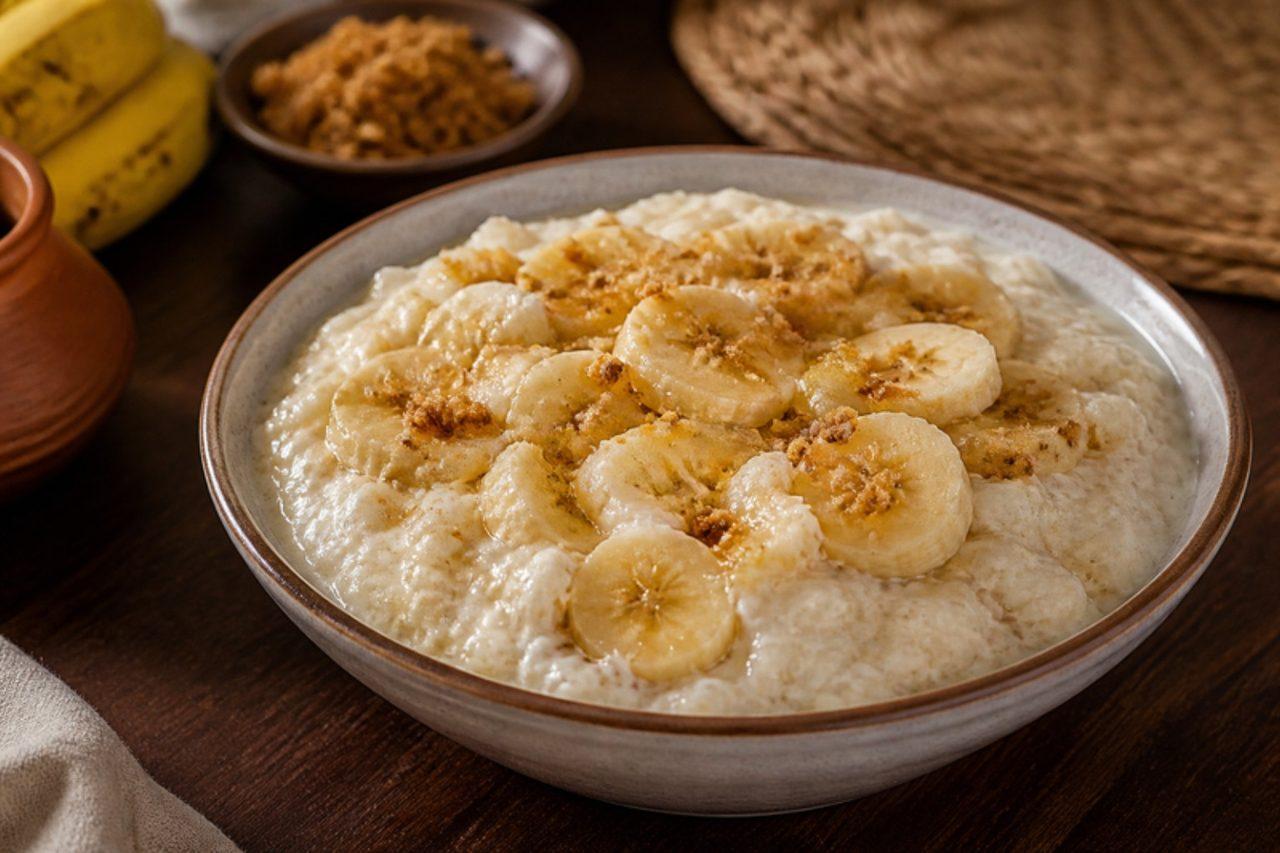
Nothing is cooked for doi chira, which is why it has been the breakfast of farmers and fishermen in Barisal for generations: flattened rice is rinsed, softened in thick, slightly sour curd and sweetened with jaggery or sugar, then mashed together with a ripe banana. The texture is soft and creamy with a little chew from the rice flakes, and the taste is cool, sweet and tangy. It is eaten on hot summer mornings, at village fairs and as part of the Pohela Boishakh spread, and it is a favourite of children and of anyone fasting who wants something gentle. The usual misstep is soaking the chira for too long, which turns it to paste; a quick rinse is all it needs before the curd does the rest. Chef's tip: use thick-cut chira, not the thin kind for frying, so the flakes hold their shape.
 Bangladeshi