
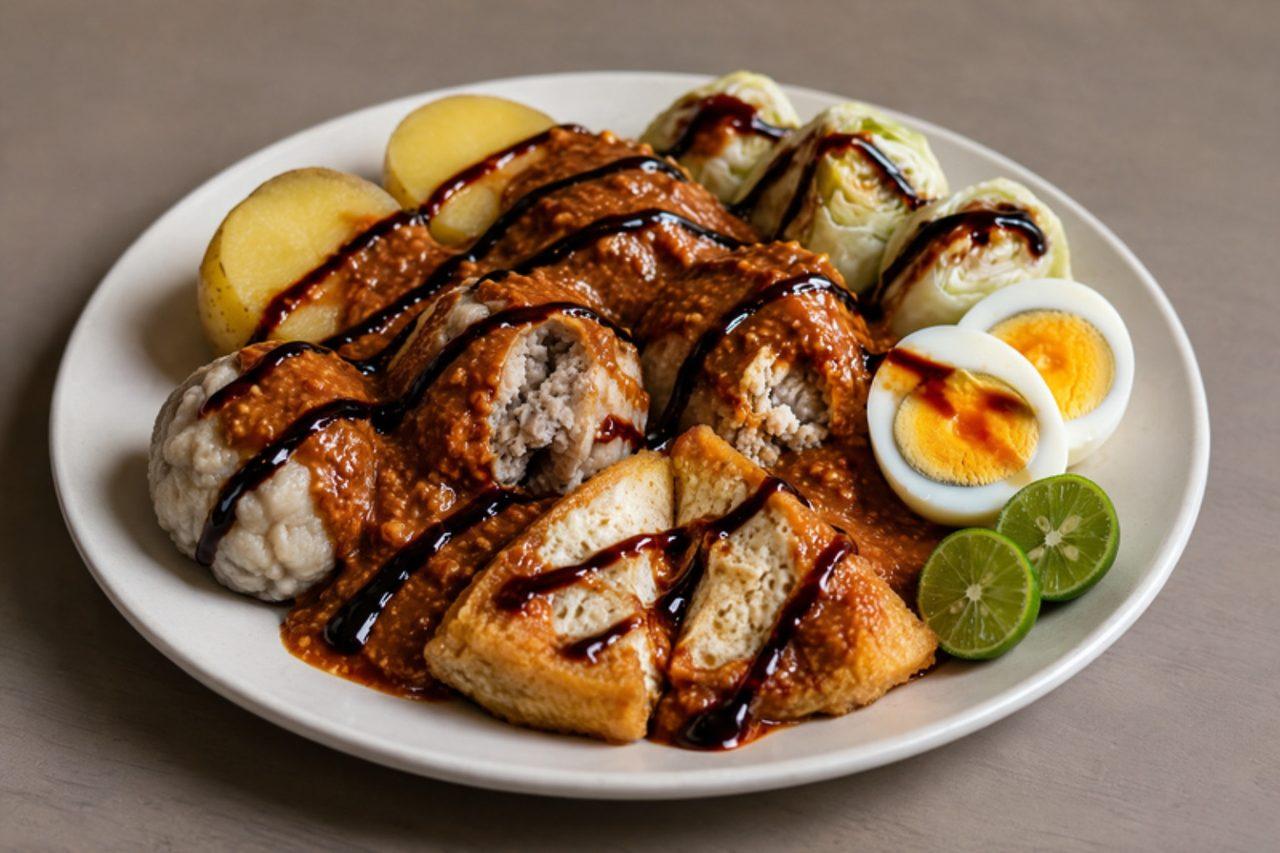
AI-generated image
Siomay
Siomay Bandung: steamed mackerel dumplings with potato, cabbage, tofu and egg under peanut sauce and sweet soy

Siomay travelled from Bandung to Jakarta on the backs of bicycles: the vendors' tall aluminium steamers still clank through housing estates and park outside offices in Kuningan at lunch. Inside sit dumplings of mackerel and tapioca, stuffed tofu, cabbage rolls, potato, bitter melon and eggs, all kept hot over steam, then snipped into pieces with scissors and buried under a thick, garlicky peanut sauce with kecap manis and lime. The fish dumplings are soft but springy. Contains fish, peanuts, soy, egg and wheat (in the wrappers and kecap). Chef's tip: keep the fish and the bowl cold while you mix; warm fish paste goes mushy and won't hold its bounce.
- Total time
- 75 min
- Difficulty
- medium
- Serves
- 4
Ingredients
For the fish paste
- 14 oz Spanish mackerel (tenggiri) or other firm white fish filletskinned, boned and chilled
- 4 oz tapioca starch
- 2 garlic clovesgrated
- 2 spring onionsfinely sliced
- 1 tsp salt
- ½ tsp ground white pepper
- ¼ cup iced water
For the siomay
- 7 oz firm tofucut into 4 triangles
- 2 small waxy potatoespeeled and halved
- 1 bitter melon (optional)small, cut into 4 rings and seeded
- 2 eggs
For the peanut sauce
- 5 ½ oz roasted peanuts
- 1 tbsp palm sugar
- ½ tsp salt
- 1 cup hot water
- 1 tsp tamarind paste
To serve
- 2 limeshalved
- 2 tbsp sambal (chilli paste) (optional)
Shop this recipe on Amazon
What you'll need
Spices & pantry
Fresh ingredients (8)
Links open Amazon in a new tab. As an Amazon Associate, WhatToEat.Today earns from qualifying purchases.
Method
0/7 doneStep 1: Blend 14 oz Spanish mackerel (tenggiri) or other firm white fish fillet in a food processor until smooth. Add 4 oz tapioca starch, 1 egg white, 2 garlic cloves, 2 spring onions, 1 tsp salt, ½ tsp ground white pepper and ¼ cup iced water and pulse to a sticky, smooth paste. Common mistake: letting the fish warm up; keep it chilled until the moment you shape it.
10 minStep 2: Spoon a heaped tablespoon of paste into the centre of each of 12 round wonton (siomay) wrappers and gather the sides up into open-topped cups. Make a slit in each 7 oz firm tofu triangle and press in a little paste.
10 minStep 3: Blanch 4 large cabbage leaves for 1 minute to soften, lay a tablespoon of paste on each leaf and roll up tightly. Pack the rings of 1 bitter melon with paste, if using.
8 minStep 4: Boil 2 small waxy potatoes for 10 minutes, until a knife slides in, and boil 2 eggs for 10 minutes, then cool the eggs and peel them.
10 minStep 5: Set everything in a steamer over boiling water and steam for 20 minutes, until the fish paste is firm, opaque and springs back when pressed, and the cabbage rolls are tender. Steam in two batches if needed.
20 minStep 6: Meanwhile, blend 5 ½ oz roasted peanuts, 2 garlic cloves, 1 red chilli, 1 tbsp palm sugar and ½ tsp salt with 1 cup hot water and 1 tsp tamarind paste until smooth. Simmer in a small pan for 5 minutes, stirring, until thick enough to coat a spoon, adding a splash of water if it gets stiff.
8 minStep 7: Cut the dumplings, tofu, cabbage rolls, potato and halved eggs into bite-sized pieces with scissors onto plates. Pour over the peanut sauce, drizzle with 3 tbsp kecap manis (sweet soy sauce), squeeze over 2 limes and add 2 tbsp sambal (chilli paste) to taste.
Nutrition per serving
- Calories
- 590 kcal
- Protein
- 34 g
- Carbs
- 52 g
- Fat
- 27 g
- Fibre
- 6 g
Nutrition values are estimates.
KrazyBadal
Good to know
- How long does siomay take?
- About 75 minutes in total: 35 minutes to prepare and 40 minutes to cook.
- How many people does it serve?
- 4 as written. Change the servings above the ingredients and every amount scales to match.
- What can I use instead of garlic cloves?
- ½ tsp garlic paste or ⅛ tsp garlic powder per clove.
- What can I use instead of spring onions?
- Chives, or a little finely sliced onion.
Reviews
No reviews yet. Be the first to cook it.
Rate this recipe
Sign in to rate and review this recipe.
You might also like
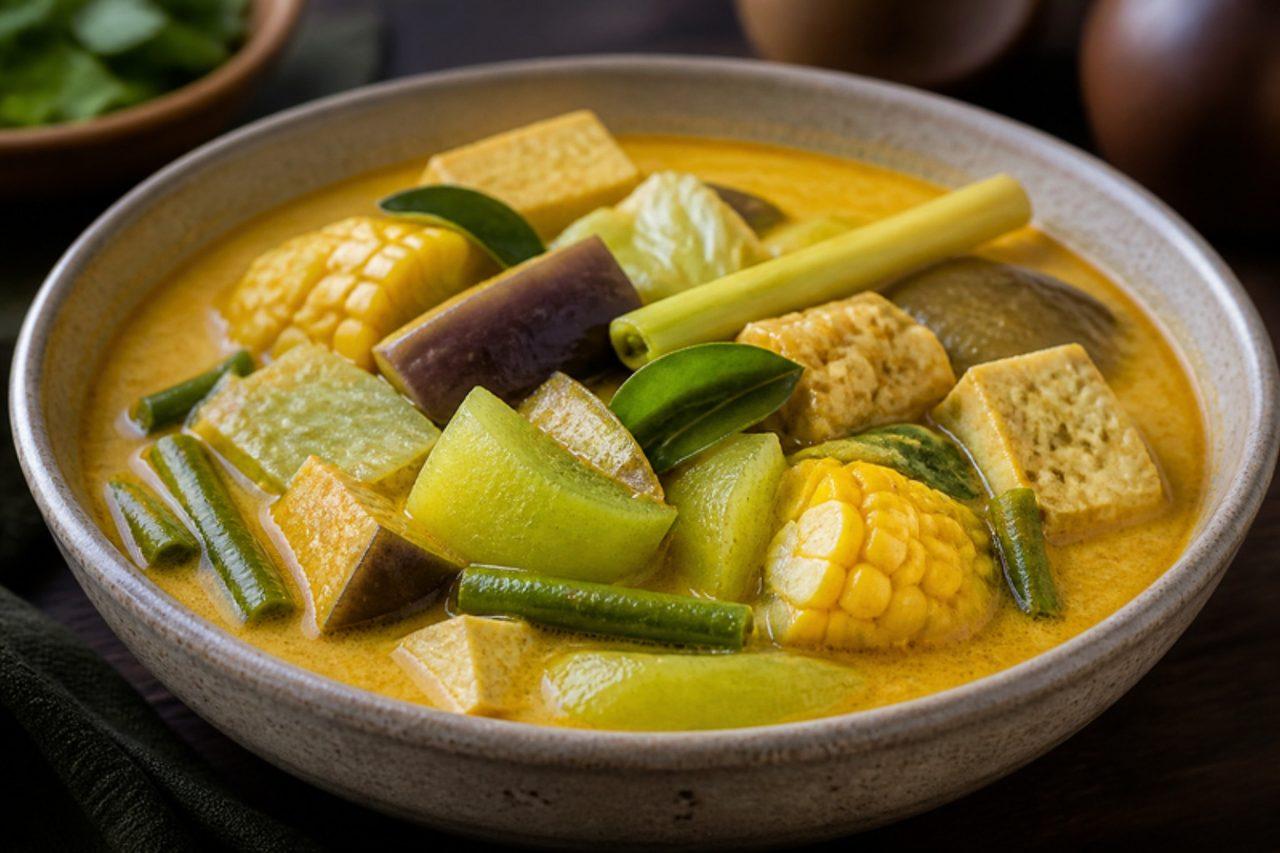
Sayur lodeh
Sayur lodeh is everyday cooking in Central Java, made in big pots in Solo and Semarang kitchens and ladled over rice, with lontong rice cakes at Lebaran, or alongside opor and sambal goreng on festive tables. It's soupy rather than thick: a fragrant broth of coconut milk, galangal, lemongrass and lime leaf that carries chunks of aubergine, long beans, chayote and sweetcorn, plus tempeh and tofu to make it a meal. The flavour is mellow and slightly sweet, so the heat comes from sambal on the side. Chef's tip: keep the pot at a gentle simmer once the coconut milk goes in and stir now and then — a rolling boil splits the coconut milk into oily curds.


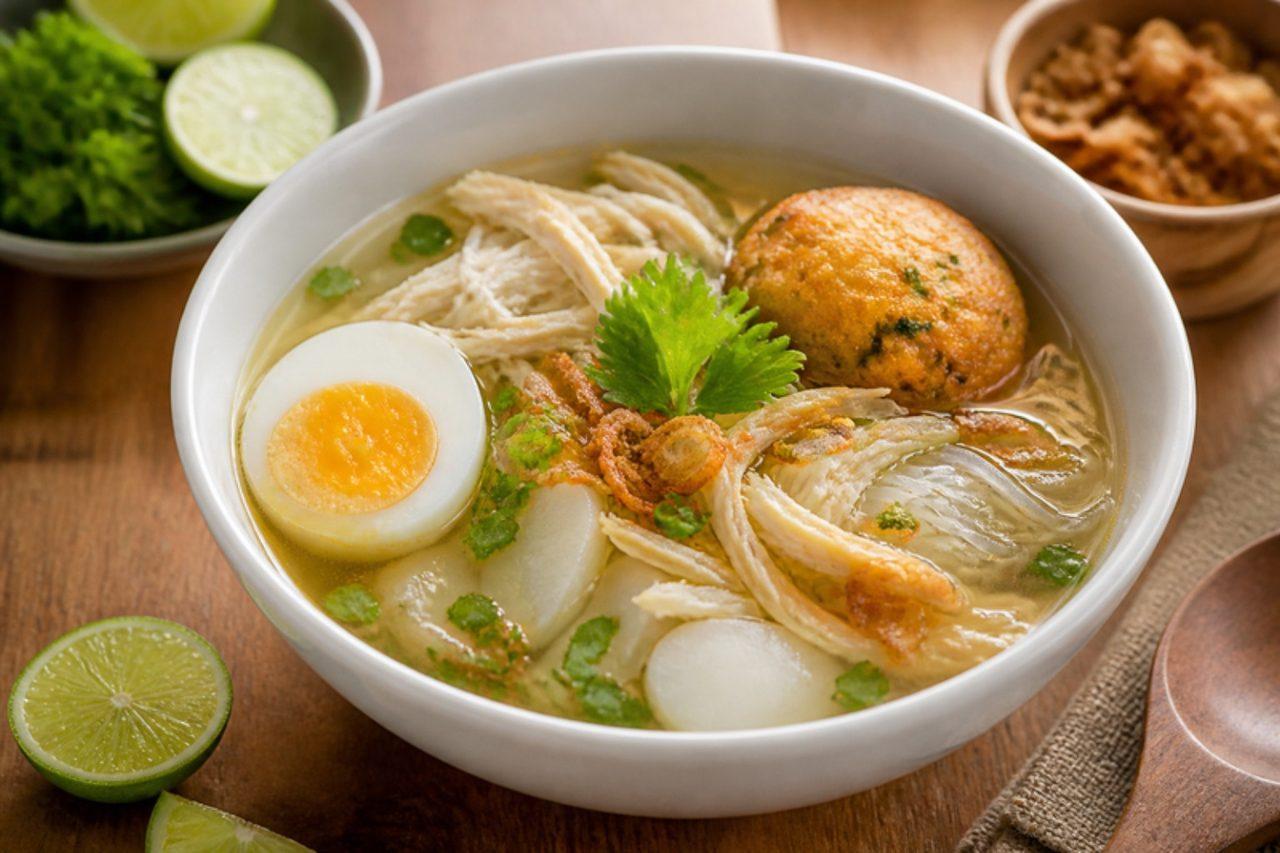
Soto Banjar
Along the rivers of Banjarmasin in South Kalimantan, breakfast often means soto Banjar eaten at a wooden riverside warung, sometimes after a dawn trip to the floating market. Unlike the turmeric sotos of Java, this broth is pale and clear, perfumed with the sweet spices that traders brought up the river centuries ago: cinnamon, cloves, star anise, cardamom and nutmeg. Shredded chicken, glass noodles, carrot and a boiled egg go into the bowl with rice cakes, and lime and a little chilli sharpen it at the table. Chef's tip: toast the whole spices in the pan for a minute before the paste goes in; it brings out their sweetness without the dusty edge of ground spice.
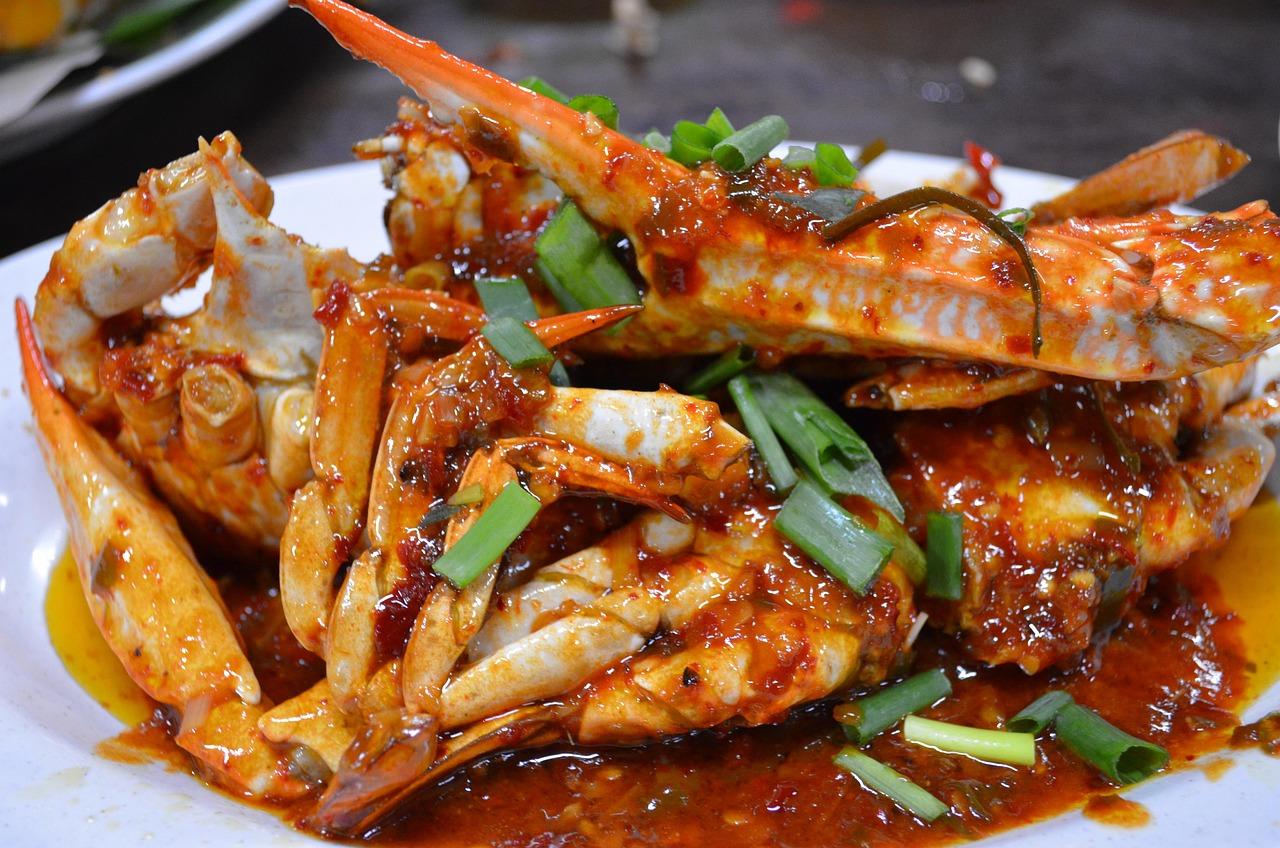
Singapore chilli crab
Chilli crab was first sold from a pushcart on the Kallang river in the 1950s and is now the dish visitors queue for along Singapore's East Coast seafood strip. Big mud crabs are cut up, wok-fried and simmered in a thick, sweet, tangy and gently hot sauce of chilli, tomato and garlic, which is then silked with beaten egg. Everyone eats with their hands and mops up the sauce with fried or steamed mantou buns. It is a weekend or celebration meal, messy and loud. Buy crabs live or freshly cooked the same day from a fishmonger you trust. Discard any live crab that doesn't move, smells of ammonia or has a cracked, leaking shell. The common mistake is boiling the sauce after adding the egg, which scrambles it into lumps; pour it in a thin stream over a low heat. Chef's tip: ask the fishmonger to clean and quarter the crab for you, and crack each claw lightly with the back of a cleaver so the sauce soaks in.
 Singaporean
